
John Medina
DR. JOHN J. MEDINA, a developmental molecular biologist, has a lifelong fascination with how the mind reacts to and organizes information. He is the author of the New York Times bestseller "Brain Rules: 12 Principles for Surviving and Thriving at Work, Home, and School" -- a provocative book that takes on the way our schools and work environments are designed. His latest book is a must-read for parents and early-childhood educators: "Brain Rules for Baby: How to Raise a Smart and Happy Child from Zero to Five." Medina is an affiliate Professor of Bioengineering at the University of Washington School of Medicine. He lives in Seattle, Washington, with his wife and two boys. www.brainrules.net
30 Books Written
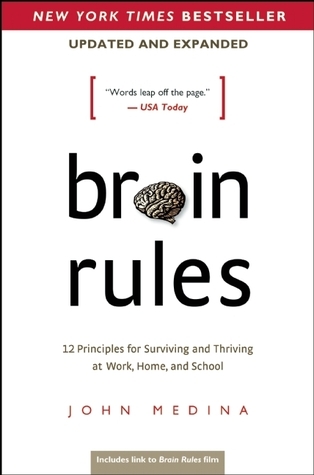
Brain Rules (Updated and Expanded): 12 Principles for Surviving and Thriving at Work, Home, and School
by John Medina
Rating: 4.1 ⭐
• 4 recommendations ❤️
Most of us have no idea what's really going on inside our heads. Yet brain scientists have uncovered details every business leader, parent, and teacher should know--like the need for physical activity to get your brain working its best.How do we learn? What exactly do sleep and stress do to our brains? Why is multi-tasking a myth? Why is it so easy to forget--and so important to repeat new knowledge? Is it true that men and women have different brains?In Brain Rules, Dr. John Medina, a molecular biologist, shares his lifelong interest in how the brain sciences might influence the way we teach our children and the way we work. In each chapter, he describes a brain rule--what scientists know for sure about how our brains work--and then offers transformative ideas for our daily lives.Medina's fascinating stories and infectious sense of humor breathe life into brain science. You'll learn why Michael Jordan was no good at baseball. You'll peer over a surgeon's shoulder as he proves that most of us have a Jennifer Aniston neuron. You'll meet a boy who has an amazing memory for music but can't tie his own shoes.You will discover Every brain is wired differentlyExercise improves cognitionWe are designed to never stop learning and exploringMemories are volatileSleep is powerfully linked with the ability to learnVision trumps all of the other sensesStress changes the way we learnIn the end, you'll understand how your brain really works--and how to get the most out of it.

Brain Rules for Baby: How to Raise a Smart and Happy Child from Zero to Five
by John Medina
Rating: 4.3 ⭐
What’s the single most important thing you can do during pregnancy? What does watching TV do to a child’s brain? What’s the best way to handle temper tantrums? Scientists know.In his New York Times bestseller Brain Rules, Dr. John Medina showed us how our brains really work—and why we ought to redesign our workplaces and schools. Now, in Brain Rules for Baby, he shares what the latest science says about how to raise smart and happy children from zero to 5. This book is destined to revolutionize parenting. Just one of the surprises: The best way to get your children into the college of their choice? Teach them impulse control.Brain Rules for Baby bridges the gap between what scientists know and what parents practice. Through fascinating and funny stories, Medina, a developmental molecular biologist and dad, unravels how a child’s brain develops--and what you can do to optimize it.You will view your children—and how to raise them—in a whole new light. You’ll learn:Where nature ends and nurture beginsWhy men should do more household choresWhat you do when emotions run hot affects how your child turns outTV is harmful for children under 2Your child’s ability to relate to others predicts her future math performanceSmart and happy are inseparable. Pursuing your child’s intellectual success at the expense of his happiness achieves neitherPraising effort is better than praising intelligenceThe best predictor of academic performance is not IQ. It’s self controlWhat you do right now—before pregnancy, during pregnancy, and through the first five years—will affect your children for the rest of their lives. Brain Rules for Baby is an indispensable guide.

Brain Rules for Aging Well: 10 Principles for Staying Vital, Happy, and Sharp
by John Medina
Rating: 4.1 ⭐
How come I can never find my keys? Why don't I sleep as well? Why do my friends keep repeating the same stories? What can I do to keep my brain sharp? Scientists know. Your Aging Brain, by developmental molecular biologist Dr. John Medina, gives you the facts -- and the prescription to age well -- in his engaging signature style.With so many discoveries over the years, science is literally changing our minds about the optimal care and feeding of the brain. All of it is captivating. A great deal of it is unexpected.In his New York Times bestseller Brain Rules, Dr. Medina showed us how our brains really work--and why we ought to redesign our workplaces and schools to match. Now, in Your Aging Brain, he shares how you can make the most of the years you have left. In a book destined to be a classic on aging, Medina's fascinating stories and infectious sense of humor breathe life into the science.Your Aging Brain, is organized into four sections, each laying out familiar problems with surprising solutions. First up, an overview: looking under the hood of an aging brain as it motors through life. The second part focuses on the feeling brain, using topics ranging from relationships and stress to happiness and gullibility to illustrate how our emotions change with age. The third focuses on the thinking brain, explaining how various cognitive gadgets such as working memory and executive function change with time. Each section is sprinkled with practical advice: for example, a certain style of dancing may be better for your brain than eating fish. Medina explains not only how taking certain actions can improve your brain's performance, but also what is known about the brain science behind each intervention.The final section is about the future. Your future. It's filled with topics as joyful as retirement and as heartbreaking as Alzheimer's. Medina connects all of the chapters into a plan, checklist-style, for maintaining your brain health.You may already be experiencing the sometimes unpleasant effects of the aging process. Or you may be deeply concerned about your loved ones who are. Either way, Your Aging Brain is for you.

Inside your head sits the most complex object in the known universe - the human brain. This amazing organ has unique powers to make predictions about the future, form relationships with other people, adapt to rapidly changing circumstances, and so much more. We all have a basic conception of how our brains function, but when did you last dive into the fascinating world of neuroscience to truly understand the inner workings of your mind? For decades, the field of neuroscience has been in a near-constant state of disruptive transformation, as we continually learn more about our incredible brains. Thanks to rapid advances in technology and in our understanding of the brain, today’s neuroscience research goes far beyond trying to understand how the brain works, and into the search for proven ways to optimize brain performance. In Your Best Brain, Professor John J. Medina - an award-winning scientist, New York Times best-selling author, and leading advocate for brain research - delivers 24 exciting lectures that probe the origins of consciousness, memory, emotion, attention, intelligence, and beyond. He focuses on five key areas of study in neuroscience: the brain’s physical structure and function, and how it enabled us to become the planet’s apex predator; the ways in which the brain processes information, and how that relates to intelligence; the intricacies of emotions and socialization, and how empathy is a vital survival mechanism; how our brains develop and change throughout our lifetimes; and how we can best use and expand our cerebral processing performance. After gaining a thorough understanding of the science behind your best brain, you’ll learn scientifically proven methods for improving your memory, boosting your creativity, and keeping your mind sharp for years to come.

Attack of the Teenage Brain: Understanding and Supporting the Weird and Wonderful Adolescent Learner
by John Medina
Rating: 3.6 ⭐
Marvel at the neuroscientific reasons why smart teens make dumb decisions!Behold the mind-controlling power of executive function!Thrill to a vision of a better school for the teenage brain! Whether you're a parent interacting with one adolescent or a teacher interacting with many, you know teens can be hard to parent and even harder to teach. The eye-rolling, the moodiness, the wandering attention, the drama . It's not you, it's them. More specifically, it's their brains. In accessible language and with periodic references to Star Trek , motorcycle daredevils, and near-classic movies of the '80s, developmental molecular biologist John Medina, author of the New York Times best-seller Brain Rules , explores the neurological and evolutionary factors that drive teenage behavior and can affect both achievement and engagement. Then he proposes a research-supported counterattack: a bold redesign of educational practices and learning environments to deliberately develop teens' cognitive capacity to manage their emotions, plan, prioritize, and focus. Attack of the Teenage Brain! is an enlightening and entertaining read that will change the way you think about teen behavior and prompt you to consider how else parents, educators, and policymakers might collaborate to help our challenging, sometimes infuriating, often weird, and genuinely wonderful kids become more successful learners, in school and beyond.

Brain Rules for Work: the science of thinking smarter in the office and at home
by John Medina
Rating: 3.9 ⭐
Bestselling author Dr John Medina turns his expertise to the professional world, guiding the reader through what brain science and evolutionary biology have to say about topics ranging from office space and work-life balance to power dynamics and work interactions.Medina discusses vital questions to do with the workplace in the time of Covid-19, such as how to keep people interested in a presentation, how to keep oneself engaged in work and the office, and how to be productive — all based on scientific peer-reviewed research. He also covers topics such as why taking breaks in nature during the workday improves productivity; how planning a meeting beforehand makes it more effective; why an open-office plan isn’t a good office plan; how a more diverse team is a more potent team; what exactly about talking to co-workers online is so exhausting; why allowing for failure is vital to a company’s success; and many, many other topics.As ever, Medina’s charming descriptions and hilarious anecdotes break the science down to practical applications that every reader can understand and benefit from.

The Science of Sleep, by developmental molecular biologist Dr. John Medina, gives you the facts - and the prescription to sleep well - in his signature engaging style. Adapted from Medina's Brain Rules for Aging Well: 10 Principles for Staying Vital, Happy, and Sharp, you'll learn how the sleep cycle is born of a constant tension between hormones and brain regions vying to keep you awake and hormones and brain regions trying to make you go to sleep. This is called opponent-process theory.Sleep, scientists are finding, doesn't have as much to do with energy restoration as it does with processing memories and flushing out toxins in the brain. As you grow older, your sleep cycle becomes more fragmented, particularly the part of the cycle during which toxins are flushed out of the brain. Accruing good sleep habits by middle age (a stable sleep routine; no caffeine, alcohol, or nicotine six hours prior to going to sleep) is the best way to avoid sleep-related cognitive decline in old age. You may already be experiencing the sometimes unpleasant effects of the aging process. Or you may be deeply concerned about your loved ones who are. Either way, The Science of Sleep is for you.

An introduction to clinical depression details causes, treaments, and common misconceptions of the disease for both patients and caregivers.

A few gray hairs and a couple of wrinkles are often the first visible signs of aging on our bodies. For most of us, however, aging remains largely a mystery. We can only wonder why we have to age and what casualty of age hovers nearby. Written in everyday language, The Clock of Ages takes us on a tour of the aging human body--all from a research scientist's point of view. From the deliberate creation of organisms that live three times their natural span to the isolation of genes that may allow humans to do the same, The Clock of Ages also examines the latest discoveries in geriatric genetics. Sprinkled throughout the pages are descriptions of the aging of many historical figures, such as Florence Nightingale, Jane Austen, Billy the Kid, Napoleon, and Casanova. These stories underscore the common bond of senescence that unites us all. The Clock of Ages tells us why.


What makes us react or feel the way we do? If you have ever asked yourself this question, then let gifted writer John Medina take you on a fascinating tour of the questions involved in the quest to understand the biological basis of human behavior. By describing the gap that exists between a human behavior and a human gene, this captivating book both clarifies and debunks ideas about the genetic roots of behavior, from the genes of divorce to the tendency to eat chocolate. Using Dante's The Divine Comedy as an organizing framework, The Genetic Inferno explains each of the "seven deadly sins"--lust, gluttony, avarice, sloth, wrath, envy, and pride--in terms of twentieth century genes and brains. Written by a practicing research scientist, this book is not only for biologists, but for literature majors, business people, and parents--indeed anyone interested in how our genes work to make us behave the way we do.

DR. JOHN J. MEDINA, biolog molecular specializat în cercetarea genelor implicate în dezvoltarea creierului uman si genetica tulburarilor psihice, este profesor asociat la Universitatea din Washington, Scoala de Medicina, în cadrul Departamentului de Bioinginerie, precum si la Universitatea Pacific din Seattle, unde conduce Centrul de Cercetare Aplicata a Creierului. De asemenea, este si director fondator al Institutului de Cercetare Talaris, cu sediul în Seattle, centru axat pe cercetarea modului în care sugarii codifica si proceseaza în mod cognitiv informatiile, la nivel celular si molecular. Cercetatorul american construieste o punte între ceea ce stiu oamenii de stiinta si practica parentala de zi cu zi într-o maniera accesibila, plina de umor, care transforma o carte stiintifica într-un roman pasionant despre calatoria pe care creierul copilului vostru va trebui sa o faca pana ce îsi va atinge ultima treapta de actualizare a propriului potential. • Care este cel mai important lucru pe care îl puteti face în timpul sarcinii? • Cat timp e bine sa stea copilul dumneavoastra în fata televizorului? • Care este cel mai bun mod de a gestiona izbucnirile bruste de manie ale copiilor? • De ce barbatii ar trebui sa aloce mai mult timp treburilor casnice? • Este sau nu bataia rupta din rai? • Care este cel mai bun factor predictiv al performantei academice a bebelusului tau?Omul de stiinta John Medina stie raspunsurile la toate aceste întrebari si la multe altele, asadar, respirati adanc si patrundeti, alaturi de John Medina, în universul fascinant al creierului copilului dumneavoastra. Un pas mic, pe care orice parinte ar trebui sa-l faca pentru a-i asigura bebelusului un destin fericit.


Comment apprenons-nous ? Quels sont les effets réels du sommeil ou du stress sur notre cerveau ? Pourquoi est-il si facile d’oublier et si important de « réviser » ses connaissances ? Dans ce livre, l’auteur expose les 12 lois du cerveau et nous aide à améliorer notre vie quotidienne. Un livre indispensable dans lequel nous prenons conscience que l ’activité ph ysique booste nos capacités intellectuelles et que nous sommes faits pour apprendre et explorer tout au long de notre vie, même à un âge avancé ! "Le biologiste John Medina nous invite à découvrir comment mieux utiliser notre cerveau en toute circonstance et à tout âge de la vie. En s’appuyant sur des données scientifiques et en ponctuant sa démonstration de conseils et suggestions, il trace un parcours en douze étapes comme autant de “lois”. » Psychologies Magazine John Medina est biologiste en développement moléculaire et consultant-chercheur. Il est également professeur en ingénierie biomédicale à l’école de médecine de l’Université de Washington et a fondé et dirigé le Centre de recherche sur le cerveau et l’enseignement appliqué.Il vit à Seattle dans l’État de Washington.

Defines what Alzheimer's disease is and what it does to the brain; provides details on symptoms, diagnosis, and treatment; and offers suggestions for caregivers


«John Medina analizza il funzionamento del cervello in un linguaggio semplice, spiegando il suo ruolo sul posto di lavoro... uno stile di scrittura che fa balzare le parole fuori dalla pagina. »«USA TODAY»E se il posto di lavoro fosse costruito su misura per il cervello, come un guanto è fatto su misura per una mano? Come sarebbero le sedi lavorative se la logica del profitto prendesse sul serio la logica della funzione cerebrale? Come progetteremmo i flussi di lavoro? Come sarebbero gli spazi fisici di lavoro? Quale ambiente favorirebbe al meglio la creatività, la produttività e la semplice capacità di fare le cose?L’obiettivo di John Medina è rispondere a domande del genere. Indagheremo il modo in cui l’applicazione delle neuroscienze comportamentali e cognitive può migliorare la produttività. Queste informazioni sono rilevanti sia che lavoriate nella sede della vostra azienda sia nello spazio confortevole di casa che avete adibito a ufficio. Scopriremo perché ci sentiamo così stanchi dopo le riunioni su Zoom, vedremo cosa possiamo fare al nostro ufficio, per essere più sereni, evitare conflitti ed essere più creativi. Esamineremo i principi delle neuroscienze cognitive che sono alla base del lavoro di squadra, e scopriremo i modi più efficaci per strutturare le nostre presentazioni. Scopriremo i vantaggi del lavoro agile (economici per le aziende, e un più equilibrato stile di vita per i lavoratori), sapremo riconoscere lo stile di gestione dei nostri capi (se si basa sul prestigio o sulla dominanza) e a disinnescarne i difetti.Con il suo usuale stile divertito, ironico e ricco di storie – ma sempre informativo e aggiornato alle ultimissime ricerche nel campo delle neuroscienze – Medina ci guida, ancora una volta con efficacia, attraverso dieci semplici regole nell’intricato groviglio della nostra moderna vita lavorativa. Il cervello al lavoro è la migliore divulgazione scientifica messa al servizio di ognuno di noi.


Naturalmente intelligenti. Istruzioni per lo sviluppo armonioso del cervello dei bambini della prima età
by John Medina
Rating: 4.3 ⭐
Cosa sappiamo per certo sul funzionamento del cervello, e in particolare sul cervello dei bambini? Pur essendo l'organo più misterioso del nostro organismo, sappiamo tanto, ma non tutto. Che cos'è che ci rende intelligenti? Che cosa può rendere intelligenti i bambini? Perché alcuni lo sono più di altri? E perché certi bambini che sembrano non esserlo, in realtà lo sono? Sappiamo che la forza dell'intelligenza non scaturisce da un unico principio perfetto, ma dalla nostra vasta e differenziata diversità Sappiamo che lo sviluppo cerebrale dei bambini ha un bisogno esclusivo, totale, delle cure affettuose e continue dei genitori. Sappiamo che un ambiente pedagogico adatto può guidare un bambino ad apprendere processi grandi e complicati a partire da processi più piccoli, così come sappiamo che il cervello di un neonato non è pronto a sopravvivere nel mondo senza un adeguato, costante insegnamento - il che, in altri termini, significa che ai nostri bambini dobbiamo insegnare tutto. Ma sappiamo anche che nessun tipo di educazione potrà mai cambiare il fatto che più o meno la metà del potenziale intellettivo di un bambino è su base genetica...
Discusses the AIDS epidemic, how you can and cannot aquire it, how the virus is transferred from one person to another, how AIDS destroys the body, and how to become part of the solution

With so many discoveries over the years, science is literally changing our minds about the optimal care and feeding of the brain. All of it is captivating. A great deal of it is unexpected. Do I have Alzheimer's? by developmental molecular biologist Dr. John Medina gives you the facts - and the prescription to age well - in his engaging signature style. In this chapter, adapted from Medina's Brain Rules for Aging Well: 10 Principles for Staying Vital, Happy, and Sharp, you'll learn to look for 10 signs before asking, "Do I have Alzheimer's?" and why neuroscientists have a tough job teasing out typical, everyday aging from abnormal brain pathology.Just because you might show symptoms doesn't mean a pathology exists. One in ten Americans over 65 lives with Alzheimer's. It is the most expensive disease to treat in the world. The average amount of time people live with an Alzheimer's diagnosis before they die is four to eight years.You may already be experiencing the sometimes unpleasant effects of the aging process. Or you may be deeply concerned about your loved ones who are. Either way, Do I have Alzheimer's? is for you.


Brain Rules for Baby (Updated and Expanded): How to Raise a Smart and Happy Child from Zero to Five
by John Medina
Rating: 5.0 ⭐
What’s the single most important thing you can do during pregnancy? What does watching TV do to a child’s brain? What’s the best way to handle temper tantrums? Scientists know. In his New York Times best seller Brain Rules, Dr. John Medina showed us how our brains really work - and why we ought to redesign our workplaces and schools. Now, in Brain Rules for Baby, he shares what the latest science says about how to raise smart and happy children from zero to five. This book is destined to revolutionize parenting. Just one of the The best way to get your children into the college of their choice? Teach them impulse control. Brain Rules for Baby bridges the gap between what scientists know and what parents practice. Through fascinating and funny stories, Medina, a developmental molecular biologist and dad, unravels how a child’s brain develops - and what you can do to optimize it. You will view your children - and how to raise them - in a whole new light. You’ll Where nature ends and nurture begins. Why men should do more household chores. What you do when emotions run hot affects how your baby turns out, because babies need to feel safe above all. TV is harmful for children under two. Your child’s ability to relate to others predicts her future math performance. Smart and happy are inseparable. Pursuing your child’s intellectual success at the expense of his happiness achieves neither. Praising effort is better than praising intelligence. The best predictor of academic performance is not IQ. It’s self-control. What you do right now - before pregnancy, during pregnancy, and through the first five years - will affect your children for the rest of their lives. Brain Rules for Baby is an indispensable guide.

Should your company use personality tests? Which ones are helpful and which ones should be avoided? And just what traits can personality tests detect? Brain Rules author Dr. John Medina answers these and other questions in this audiobook companion to his newest book, Brain Rules for Work, called Personality. In this chapter, John explores some of the history of personality tests and examines what role these tests should play in hiring practices. Whether you’re a manager looking to incorporate personality tests into your hiring program or an employee interested in the science (or lack thereof) behind many of the most popular tests, Personality is an entertaining and informative read.

Brain Rules for Baby (Updated and Expanded), Gentle Discipline, How to Stop Losing Your Sh*t Your Kids, The Awakened Family 4 Books Collection Set
by John Medina
Rating: 4.0 ⭐
Please Note That The Following Individual Books As Per Original ISBN and Cover Image In this Listing shall be Dispatched Brain Rules for Baby (Updated and Expanded), Gentle Discipline, How to Stop Losing Your Sh*t Your Kids, The Awakened Family 4 Books Collection Brain Rules for Baby (Updated and Expanded):In his New York Times bestseller Brain Rules, Dr. John Medina showed us how our brains really work—and why we ought to redesign our workplaces and schools. Now, in Brain Rules for Baby, he shares what the latest science says about how to raise smart and happy children from zero to five. This book is destined to revolutionize parenting.Gentle Discipline is an essential part of raising happy and successful kids, but as more and more parents are discovering, conventional approaches often don't work, and can even lead to more frustration, resentment, power struggles, and shame. Enter Sarah Ockwell-Smith, a popular parenting expert who believes there's a better way.How to Stop Losing Your Sh*t Your 'Funny, honest and most importantly really, really useful.' - Helen McGinn, author of The Knackered Mother's Wine ClubSo, you're losing your sh*t with your kids. You scream, you shout, you snap at them. You're cranky and irritable more often than you'd like to admit. You know how you want to parent; you want to be a calmer, more rational and intentional parent.The Awakened We all have the capacity to raise children who are highly resilient and emotionally connected. However, many of us are unable to because we are blinded by modern misconceptions of parenting and our own inner limitations. In The Awakened Family, I show you how you can cultivate a relationship with your children so they can thrive.

Es geht nicht darum, möglichst lange zu leben, sondern gut länger zu leben. Der Entwicklungsbiologe Medina liefert wertvolle Tipps, wie wir unser Gehirn optimal pflegen und ihm Nahrung geben können. Die Leser*innen erfahren in diesem Buch alles, was sie über die Ursachen und Auswirkungen des Alterns wissen müssen. Der Autor zeigt, wie Älterwerden eine erfüllende Erfahrung sein kann, von der die Leser*innen und ihr Gehirn für den Rest ihres Lebens profitieren. Das Buch beschreibt nicht nur, wie das Gehirn altert, sondern auch, wie man die Abnutzungserscheinungen des Alterns verringern kann. Themen sind unter - wie die Gedächtnisleistung gesteigert werden kann - warum Freundschaften überlebenswichtig sind - warum man länger lebt, wenn man mehrere Stunden pro Tag ein Buch liest - warum bestimmte Videospiele die Problemlösungsfähigkeit verbessern können «Brain Rules fürs Älterwerden» ist in vier Teile 1. Das soziale, "fühlende" Beziehungen, Wohlbefinden, Gutgläubigkeit im Alter sowie die Veränderung der Emotionen mit den Jahren 2. Das denkende Wie verändern sich die Gehirnstrukturen, wenn wir älter werden? 3. Der Kö Wie können bestimmte Übungen, Ernährung und Schlaf den altersbedingten Abbau verlangsamen? 4. Die Der Ruhestand und die Unvermeidbarkeit des Todes Die ersten drei Teile sind gespickt mit praktischen Ratschlägen. Medina zeigt, wie bestimmte Maßnahmen die Leistung verbessern können und welche neurowissenschaftlichen Erkenntnisse diesen Maßnahmen zugrunde liegen.

Et si les neurosciences étaient la clé pour nous aider à mieux travailler en équipe, à développer notre intelligence collective et émotionnelle, en un mot à être plus épanoui et motivé au travail ?C'est ce que nous démontre John Medina dans son ouvrage en défendant ce postulat : il est temps d'adapter le monde du travail au fonctionnement cérébral plutôt que l'inverse. Il en tire 10 lois à destination des managers et des salarié.es. pour accroître créativité et bien-être au sein des organisations. Il y développe notamment les points clés suivants :1. Le cerveau se détruit par la routine et se nourrit du changement2. Rien ne sert de motiver, il faut faire confiance aux gens3. Faire des pauses dans la nature pendant la journée de travail améliore la productivité4. Comment limiter la fatigue et le stress dans le travail à distance5. Le pouvoir de la déconnection...John Medina est biologiste moléculaire et consultant-chercheur. Il est également professeur en ingénierie biomédicale à l’école de médecine de l’Université de Washington et a fondé et dirigé deux instituts de recherche sur le cerveau. Il vit à Seattle. Il est reconnu comme l’un des plus grands neuroscientifiques de notre époque.

Internet Address & Password Logbook for cactus cover.: The Personal Internet Address & Password Logbook
by John Medina
Tired of losing track of the websites you visit (whether frequently or infrequently), along with all those usernames and passwords? Now you can keep them all in one convenient place! This time- and headache-saving little volume is organized pages, with space to list websites, usernames, passwords, and extra notes. You can also record notes on home network configurations, software license numbers, etc., too, in pages in the back of the keeps logbook. Removable label makes logbook discreet. Logbook makes a practical accessory for home or office. 6'' wide x 9'' high for cactus cover. 100 pages.
Die Uhr des Lebens: Wie und warum wir älter werden
by John Medina