Loading genres...
Explore the best books about Travel genre.

Vagabonding is about taking time off from your normal life--from six weeks to four months to two years--to discover and experience the world on your own terms. Veteran shoestring traveler Rolf Potts shows how anyone with an independent spirit can achieve the dream of extended overseas travel. Visit the vagabonding community's hub at www dot vagabonding dot net.
"It took me a long time and most of the world to learn what I know about love and fate and the choices we make, but the heart of it came to me in an instant, while I was chained to a wall and being tortured."So begins this epic, mesmerizing first novel set in the underworld of contemporary Bombay. Shantaram is narrated by Lin, an escaped convict with a false passport who flees maximum security prison in Australia for the teeming streets of a city where he can disappear.Accompanied by his guide and faithful friend, Prabaker, the two enter Bombay's hidden society of beggars and gangsters, prostitutes and holy men, soldiers and actors, and Indians and exiles from other countries, who seek in this remarkable place what they cannot find elsewhere.As a hunted man without a home, family, or identity, Lin searches for love and meaning while running a clinic in one of the city's poorest slums, and serving his apprenticeship in the dark arts of the Bombay mafia. The search leads him to war, prison torture, murder, and a series of enigmatic and bloody betrayals. The keys to unlock the mysteries and intrigues that bind Lin are held by two people. The first is Khader Khan: mafia godfather, criminal-philosopher-saint, and mentor to Lin in the underworld of the Golden City. The second is Karla: elusive, dangerous, and beautiful, whose passions are driven by secrets that torment her and yet give her a terrible power.Burning slums and five-star hotels, romantic love and prison agonies, criminal wars and Bollywood films, spiritual gurus and mujaheddin guerrillas—this huge novel has the world of human experience in its reach, and a passionate love for India at its heart. Based on the life of the author, it is by any measure the debut of an extraordinary voice in literature.

Title: Emergency( This Book Will Save Your Life) <>Binding: Paperback <>Author: NeilStrauss <>Publisher: HarperPaperbacks

A quest across America, from the northernmost tip of Maine to California’s Monterey PeninsulaTo hear the speech of the real America, to smell the grass and the trees, to see the colors and the light—these were John Steinbeck's goals as he set out, at the age of fifty-eight, to rediscover the country he had been writing about for so many years.With Charley, his French poodle, Steinbeck drives the interstates and the country roads, dines with truckers, encounters bears at Yellowstone and old friends in San Francisco. Along the way he reflects on the American character, racial hostility, the particular form of American loneliness he finds almost everywhere, and the unexpected kindness of strangers.

The inspiration behind hit family drama The Durrells.Part of the Macmillan Collector’s Library; a series of stunning, clothbound, pocket sized classics with gold foiled edges and ribbon markers. These beautiful books make perfect gifts or a treat for any book lover. This edition features an afterword by Peter Olney, former Keeper of Birds at the London Zoo, and a distinguished ornithologist who was awarded the Zoological Society of London's Silver Medal in 2003.My Family and Other Animals is Gerald Durrell's hilarious account of five years in his childhood spent living with his family on the island of Corfu. With snakes, scorpions, toads, owls and geckos competing for space with one bookworm brother and another who's gun-mad, as well as an obsessive sister, young Gerald has an awful lot of natural history to observe. This richly detailed, informative and riotously funny memoir of eccentric family life is a twentieth-century classic.

The Pulitzer Prize-winning view of the continent, across the fortieth parallel and down through 4.6 billion yearsTwenty years ago, when John McPhee began his journeys back and forth across the United States, he planned to describe a cross section of North America at about the fortieth parallel and, in the process, come to an understanding not only of the science but of the style of the geologists he traveled with. The structure of the book never changed, but its breadth caused him to complete it in stages, under the overall title Annals of the Former World.Like the terrain it covers, Annals of the Former World tells a multilayered tale, and the reader may choose one of many paths through it. As clearly and succinctly written as it is profoundly informed, this is our finest popular survey of geology and a masterpiece of modern nonfiction.Annals of the Former World is the winner of the 1999 Pulitzer Prize for Nonfiction.

The fascinating account of a pioneering ethnobotanist’s travels in the Amazon—at once a gripping adventure story, a passionate argument for conservationism, and an investigation into the healing power of plants, by the author of The What Everyone Needs to KnowFor thousands of years, healers have used plants to cure illness. Aspirin, the world's most widely used drug, is based on compounds originally extracted from the bark of a willow tree, and more than a quarter of medicines found on pharmacy shelves contain plant compounds. Now Western medicine, faced with health crises such as AIDS, Alzheimer's disease, and cancer, has begun to look to the healing plants used by indigenous peoples to develop powerful new medicines. Nowhere is the search more promising than in the Amazon, the world's largest tropical forest, home to a quarter of all botanical species on this planet—as well as hundreds of Indian tribes whose medicinal plants have never been studied by Western scientists. In Tales of a Shaman's Apprentice, ethnobotanist Mark J. Plotkin recounts his travels and studies with some of the most powerful Amazonian shamans, who taught him the plant lore their tribes have spent thousands of years gleaning from the rain forest.For more than a decade, Dr. Plotkin raced against time to harvest and record new plants before the rain forests' fragile ecosystems succumb to overdevelopment—and before the Indians abandon their own culture and learning for the seductive appeal of Western material culture. Tales of a Shaman's Apprentice relates nine of the author's quests, taking the reader along on a wild odyssey as he participates in healing rituals; discovers the secret of curare, the lethal arrow poison that kills in minutes; tries the hallucinogenic snuff epena that enables the Indians to speak with their spirit world; and earns the respect and fellowship of the mysterious shamans as he proves that he shares both their endurance and their reverence for the rain forest.

In this updated paperback edition of a "rich, readable, and authoritative" Fortune) book, Wall Street Journal reporter Petzinger tells the dramatic story of how a dozen men, including Robert Crandall of American Airlines, Frank Borman of Eastern, and Richard Ferris of United, battled for control of the world's airlines. 416 pp. Radio drive-time pubilcity. 20,000 print.

The Appalachian Trail stretches from Georgia to Maine and covers some of the most breathtaking terrain in America—majestic mountains, silent forests, sparking lakes. If you’re going to take a hike, it’s probably the place to go. And Bill Bryson is surely the most entertaining guide you’ll find. He introduces us to the history and ecology of the trail and to some of the other hardy (or just foolhardy) folks he meets along the way—and a couple of bears. Already a classic, A Walk in the Woods will make you long for the great outdoors (or at least a comfortable chair to sit and read in).

Two ebullient young men search for Truth the Zen way: from marathon wine-drinking bouts, poetry jam sessions, and "yabyum" in San Francisco's Bohemia to solitude in the high Sierras and a vigil atop Desolation Peak in Washington State. Published just a year after On the Road put the Beat Generation on the map, The Dharma Bums is sparked by Kerouac's expansiveness, humor, and a contagious zest for life. One of the best and most popular of Kerouac's autobiographical novels, The Dharma Bums is based on experiences the writer had during the mid-1950s while living in California, after he'd become interested in Buddhism's spiritual mode of understanding. One of the book's main characters, Japhy Ryder, is based on the real poet Gary Snyder, who was a close friend and whose interest in Buddhism influenced Kerouac.RUNNING TIME ➼ 7hrs. and 16mins.©1958 Jack Kerouac (P)2020 Penguin Audio

At once an incredible adventure narrative and a penetrating biographical portrait, The River of Doubt is the true story of Theodore Roosevelt’s harrowing exploration of one of the most dangerous rivers on earth.The River of Doubt—it is a black, uncharted tributary of the Amazon that snakes through one of the most treacherous jungles in the world. Indians armed with poison-tipped arrows haunt its shadows; piranhas glide through its waters; boulder-strewn rapids turn the river into a roiling cauldron.After his humiliating election defeat in 1912, Roosevelt set his sights on the most punishing physical challenge he could find, the first descent of an unmapped, rapids-choked tributary of the Amazon. Together with his son Kermit and Brazil’s most famous explorer, Cândido Mariano da Silva Rondon, Roosevelt accomplished a feat so great that many at the time refused to believe it. In the process, he changed the map of the western hemisphere forever.Along the way, Roosevelt and his men faced an unbelievable series of hardships, losing their canoes and supplies to punishing whitewater rapids, and enduring starvation, Indian attack, disease, drowning, and a murder within their own ranks. Three men died, and Roosevelt was brought to the brink of suicide. The River of Doubt brings alive these extraordinary events in a powerful nonfiction narrative thriller that happens to feature one of the most famous Americans who ever lived.From the soaring beauty of the Amazon rain forest to the darkest night of Theodore Roosevelt’s life, here is Candice Millard’s dazzling debut.

Exupery was a prize-winning novelist, professional mail pilot, airborne adventurer, war correspondent, commercial test pilot, and the author of a popular children's book The Little Prince. Wind, Sand, and Stars more than all the others is a synthesis of his skill as a writer and his life as a flier. It is a collage of anecdotes, speculations and peotic reflections the earth and its inhabitants as seen from the air, all glued together by one basic them: that the airplane has broght man into confrontation with the elemnets of the univeerse, and thus has given him a new perspective on his own nature.

Fear and Loathing in Las Vegas is the best chronicle of drug-soaked, addle-brained, rollicking good times ever committed to the printed page. It is also the tale of a long weekend road trip that has gone down in the annals of American pop culture as one of the strangest journeys ever undertaken.

Winner of the National Book AwardThis bestselling, groundbreaking exploration of the Far North is a classic of natural history, anthropology, and travel writing.The Arctic is a perilous place. Only a few species of wild animals can survive its harsh climate. In this modern classic, Barry Lopez explores the many-faceted wonders of the Far North: its strangely stunted forest, its mesmerizing aurora borealis, its frozen seas. Musk oxen, polar bears, narwhal, and other exotic beasts of the region come alive through Lopez’s passionate and nuanced observations. And, as he examines the history and culture of the indigenous people, along with parallel narratives of intrepid, often underprepared and subsequently doomed polar explorers, Lopez drives to the heart of why the austere and formidable Arctic is also a constant source of breathtaking beauty, beguilement, and wonder.Written in prose as memorably pure as the land it describes, Arctic Dreams is a timeless mediation on the ability of the landscape to shape our dreams and to haunt our imaginations.

Longitude is the dramatic human story of an epic scientific quest. The "longitude problem" was the thorniest dilemma of the eighteenth century. Lacking the ability to measure longitude, sailors throughout the great ages of exploration had been literally lost at sea.At the heart of Dava Sobel's fascinating brief history of astronomy, navigation and horology stands the figure of John Harrison, self-taught Yorkshire clockmaker, and his forty-year obsession with building the perfect timekeeper. Battling against the establishment, Harrison stood alone in pursuit of his solution and the £20,000 reward offered by Parliament.

A scientific investigation and personal adventure story about zombis and the voudoun culture of Haiti by a Harvard scientist.In April 1982, ethnobotanist Wade Davis arrived in Haiti to investigate two documented cases of zombis—people who had reappeared in Haitian society years after they had been officially declared dead and had been buried. Drawn into a netherworld of rituals and celebrations, Davis penetrated the vodoun mystique deeply enough to place zombification in its proper context within vodoun culture. In the course of his investigation, Davis came to realize that the story of vodoun is the history of Haiti—from the African origins of its people to the successful Haitian independence movement, down to the present day, where vodoun culture is, in effect, the government of Haiti’s countryside.The Serpent and the Rainbow combines anthropological investigation with a remarkable personal adventure to illuminate and finally explain a phenomenon that has long fascinated Americans.

In his new work, Michel Houellebecq combines erotic provocation with a terrifying vision of a world teetering between satiety and fanaticism, to create one of the most shocking, hypnotic, and intelligent novels in years.In his early forties, Michel Renault skims through his days with as little human contact as possible. But following his father’s death he takes a group holiday to Thailand where he meets a travel agent—the shyly compelling Valérie—who begins to bring this half-dead man to life with sex of escalating intensity and audacity. Arcing with dreamlike swiftness from Paris to Pattaya Beach and from sex clubs to a terrorist massacre, Platform is a brilliant, apocalyptic masterpiece by a man who is widely regarded as one of the world’s most original and daring writers.

From Pulitzer Prize-winner Katherine Boo, a landmark work of narrative nonfiction that tells the dramatic and sometimes heartbreaking story of families striving toward a better life in one of the twenty-first century's great, unequal cities.In this brilliantly written, fast-paced book, based on three years of uncompromising reporting, a bewildering age of global change and inequality is made human. Annawadi is a makeshift settlement in the shadow of luxury hotels near the Mumbai airport, and as India starts to prosper, Annawadians are electric with hope. Abdul, a reflective and enterprising Muslim teenager, sees "a fortune beyond counting" in the recyclable garbage that richer people throw away. Asha, a woman of formidable wit and deep scars from a childhood in rural poverty, has identified an alternate route to the middle class: political corruption. With a little luck, her sensitive, beautiful daughter - Annawadi's "most-everything girl" - will soon become its first female college graduate. And even the poorest Annawadians, like Kalu, a fifteen-year-old scrap-metal thief, believe themselves inching closer to the good lives and good times they call "the full enjoy." But then Abdul the garbage sorter is falsely accused in a shocking tragedy; terror and a global recession rock the city; and suppressed tensions over religion, caste, sex, power and economic envy turn brutal. As the tenderest individual hopes intersect with the greatest global truths, the true contours of a competitive age are revealed. And so, too, are the imaginations and courage of the people of Annawadi. With intelligence, humor, and deep insight into what connects human beings to one another in an era of tumultuous change, Behind the Beautiful Forevers carries the reader headlong into one of the twenty-first century's hidden worlds, and into the lives of people impossible to forget.

This is the remarkable behind-the-scenes story of the creation and growth of Airbnb, the online lodging platform that has become, in under a decade, the largest provider of accommodations in the world. At first just the wacky idea of cofounders Brian Chesky, Joe Gebbia, and Nathan Blecharczyk, Airbnb has disrupted the $500 billion hotel industry, and its $30 billion valuation is now larger than that of Hilton and close to that of Marriott. Airbnb is beloved by the millions of members in its “host” community and the travelers they shelter every night. And yet, even as the company has blazed such an unexpected path, this is the first book solely dedicated to the phenomenon of Airbnb.Fortune editor Leigh Gallagher explores the success of Airbnb along with the more controversial side of its story. Regulators want to curb its rapid expansion; hotel industry leaders wrestle with the disruption it has caused them; and residents and customers alike struggle with the unintended consequences of opening up private homes for public consumption. This is also the first in‑depth study of Airbnb's leader, Brian Chesky, the quirky and curious young CEO, as he steers the company into new markets and increasingly uncharted waters.

The dramatic story of explorer Douglas Mawson and "the most outstanding solo journey ever recorded in Antarctic history" (Sir Edmund Hillary, mountaineer and explorer) For weeks in Antarctica, Douglas Mawson faced some of the most daunting conditions ever known to blistering wind, snow, and cold; the loss of his companion, dogs, supplies, and even the skin on his hands and feet. But despite constant thirst, starvation, disease, and snow blindness—he survived.Sir Douglas Mawson is remembered as the young Australian who would not go to the South Pole with Robert Scott in 1911. Instead, he chose to lead his own expedition on the less glamorous mission of charting nearly 1,500 miles of Antarctic coastline and claiming its resources for the British Crown. His party of three set out through the mountains across glaciers in 60-mile-per-hour winds. Six weeks and 320 miles out, one man fell into a crevasse—along with the tent, most of the equipment, the dogs' food, and all except a week's supply of the men's provisions.Mawson's Will is the unforgettable story of one man's ingenious practicality, unbreakable spirit, and how he continued his meticulous scientific observations even in the face of death. When the expedition was over, Mawson had added more territory to the Antarctic map than anyone else of his time. Thanks to Bickel's moving account, Mawson can be remembered for the vision and dedication that make him one of the world's great explorers.

The story of two generations of scientific explorers in South America—Richard Evans Schultes and his protégé Wade Davis—an epic tale of adventure and a compelling work of natural history.In 1941, Professor Richard Evan Schultes took a leave from Harvard and disappeared into the Amazon, where he spent the next twelve years mapping uncharted rivers and living among dozens of Indian tribes. In the 1970s, he sent two prize students, Tim Plowman and Wade Davis, to follow in his footsteps and unveil the botanical secrets of coca, the notorious source of cocaine, a sacred plant known to the Inca as the Divine Leaf of Immortality.A stunning account of adventure and discovery, betrayal and destruction, One River is a story of two generations of explorers drawn together by the transcendent knowledge of Indian peoples, the visionary realms of the shaman, and the extraordinary plants that sustain all life in a forest that once stood immense and inviolable.

In a malarial outpost in the South American rain forest, two misplaced gringos converge and clash. Martin Quarrier has come to convert the fearful and elusive Niaruna Indians to his brand of Christianity. Lewis Moon, a stateless mercenary who is himself part Indian, has come to kill them on behalf of the local commandant. Out of their struggle Peter Matthiessen has created an electrifying moral thriller, a novel of Conradian richness that explores both the varieties of spiritual experience and the politics of cultural genocide.

Un grand classique de la littérature alpine enfin réimprimé dans sa version illustrée à l'occasion des 25 ans de Guérin. Lionel Terray signe la plus admirable et la plus sincère autobiographie d'alpiniste.Préface de Jean-Christophe Rufin.

Note: This book was originally published as Not a Hazardous Sport. When British anthropologist Nigel Barley set up home among the Dowayo people in northern Cameroon, he knew how fieldwork should be conducted. Unfortunately, nobody had told the Dowayo. His compulsive, witty account of first fieldwork offers a wonderfully inspiring introduction to the real life of a cultural anthropologist doing research in a Third World area. Both touching and hilarious, Barley's unconventional story—in which he survived boredom, hostility, disaster, and illness—addresses many critical issues in anthropology and in fieldwork.

C'est sur un paquebot trop confortable, en route pour l'Amérique du Sud, que Stefan Zweig eut l'idée de cette odyssée biographique. Il songea aux conditions épouvantables des voyages d'autrefois, au parfum de mort salée qui flottait sur les bougres et les héros, à leur solitude. Il songea à Magellan, qui entreprit, le 20 septembre 1519, à 39 ans, le premier voyage autour du monde. Un destin exceptionnel... Sept ans de campagne militaire en Inde n'avaient rapporté à Magellan le Portugais qu'indifférence dans sa patrie. Il convainc alors le roi d'Espagne, Charles-Quint, d'un projet fou ; " Il existe un passage conduisant de l'océan Atlantique à l'océan Indien. Donnez-moi une flotte et je vous le montrerai et je ferai le tour de la terre en allant de l'est à l'ouest " (C'était compter sans l'océan Pacifique, inconnu à l'époque..). Jalousies espagnoles, erreurs cartographiques, rivalités, mutineries, désertions de ses seconds pendant la traversée, froids polaires, faim et maladies, rien ne viendra à bout de la détermination de Magellan, qui trouvera à l'extrême sud du continent américain le détroit qui porte aujourd'hui son nom. Partie de Séville avec cinq cotres et 265 hommes, l'expédition reviendra trois ans plus tard, réduite à 18 hommes sur un raffiot. Epuisée, glorieuse. Sans Magellan qui trouva une mort absurde lors d'une rixe avec des sauvages aux Philippines, son exploit accompli. Dans ce formidable roman d'aventures, Zweig exalte la volonté héroïque de Magellan, qui prouve qu'" une idée animée par le génie et portée par la passion est plus forte que tous les éléments réunis et que toujours un homme, avec sa petite vie périssable, peut faire de ce qui a paru un rêve à des centaines de générations une réalité et une vérité impérissables ".

One night in the reform club, Phileas Fogg bets his companions that he can travel across the globe in just eighty days. Breaking the well-established routine of his daily life, he immediately sets off for Dover with his astonished valet Passepartout. Passing through exotic lands and dangerous locations, they seize whatever transportation is at hand—whether train or elephant—overcoming set-backs and always racing against the clock.

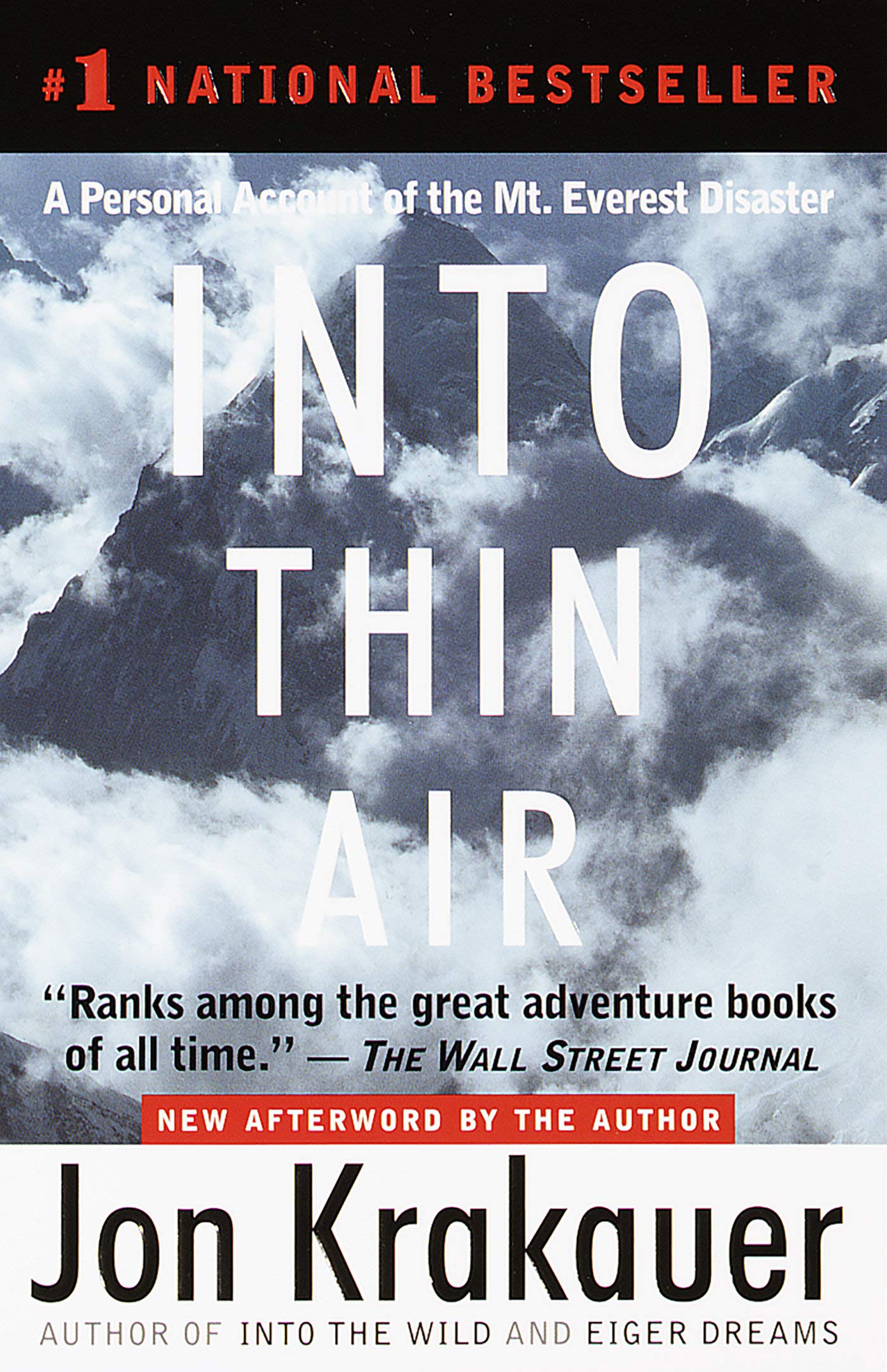
When Jon Krakauer reached the summit of Mt. Everest in the early afternoon of May 10, 1996, he hadn't slept in fifty-seven hours and was reeling from the brain-altering effects of oxygen depletion. As he turned to begin his long, dangerous descent from 29,028 feet, twenty other climbers were still pushing doggedly toward the top. No one had noticed that the sky had begun to fill with clouds. Six hours later and 3,000 feet lower, in 70-knot winds and blinding snow, Krakauer collapsed in his tent, freezing, hallucinating from exhaustion and hypoxia, but safe. The following morning, he learned that six of his fellow climbers hadn't made it back to their camp and were desperately struggling for their lives. When the storm finally passed, five of them would be dead, and the sixth so horribly frostbitten that his right hand would have to be amputated.Into Thin Air is the definitive account of the deadliest season in the history of Everest by the acclaimed journalist and author of the bestseller Into the Wild. On assignment for Outside Magazine to report on the growing commercialization of the mountain, Krakauer, an accomplished climber, went to the Himalayas as a client of Rob Hall, the most respected high-altitude guide in the world. A rangy, thirty-five-year-old New Zealander, Hall had summited Everest four times between 1990 and 1995 and had led thirty-nine climbers to the top. Ascending the mountain in close proximity to Hall's team was a guided expedition led by Scott Fischer, a forty-year-old American with legendary strength and drive who had climbed the peak without supplemental oxygen in 1994. But neither Hall nor Fischer survived the rogue storm that struck in May 1996.Krakauer examines what it is about Everest that has compelled so many people -- including himself -- to throw caution to the wind, ignore the concerns of loved ones, and willingly subject themselves to such risk, hardship, and expense. Written with emotional clarity and supported by his unimpeachable reporting, Krakauer's eyewitness account of what happened on the roof of the world is a singular achievement.

Whether she is contemplating the history of walking as a cultural and political experience over the past two hundred years (Wanderlust), or using the life of photographer Eadweard Muybridge as a lens to discuss the transformations of space and time in late nineteenth-century America (River of Shadows), Rebecca Solnit has emerged as an inventive and original writer whose mind is daring in the connections it makes. A Field Guide to Getting Lost draws on emblematic moments and relationships in Solnit's own life to explore the issues of wandering, being lost, and the uses of the unknown. The result is a distinctive, stimulating, and poignant voyage of discovery.

This beautifully written, heartfelt memoir touched a nerve among both readers and reviewers. Elizabeth Gilbert tells how she made the difficult choice to leave behind all the trappings of modern American success (marriage, house in the country, career) and find, instead, what she truly wanted from life. Setting out for a year to study three different aspects of her nature amid three different cultures, Gilbert explored the art of pleasure in Italy and the art of devotion in India, and then a balance between the two on the Indonesian island of Bali. By turns rapturous and rueful, this wise and funny author (whom "Booklist" calls "Anne Lamott's hip, yoga- practicing, footloose younger sister") is poised to garner yet more adoring fans.

A magnificent work of history, biography and adventure.If the quest for Mount Everest began as a grand imperial gesture, as redemption for an empire of explorers that had lost the race to the Poles, it ended as a mission of regeneration for a country and a people bled white by war. Of the twenty-six British climbers who, on three expedtions (1921-24), walked 400 miles off the map to find and assault the highest mountain on Earth, twenty had seen the worst of the fighting. Six had been severely wounded, two others nearly died of disease at the Front, one was hospitalized twice with shell shock. Three as army surgeons dealt for the duration with the agonies of the dying. Two lost brothers, killed in action. All had endured the slaughter, the coughing of the guns, the bones and barbed wire, the white faces of the dead.In a monumental work of history and adventure, ten years in the writing, Wade Davis asks not whether George Mallory was the first to reach the summit of Everest, but rather why he kept on climbing on that fateful day. His answer lies in a single phrase uttered by one of the survivors as they retreated from the "The price of life is death." Mallory walked on because for him, as for all of his generation, death was but "a frail barrier that men crossed, smiling and gallant, every day." As climbers they accepted a degree of risk unimaginable before the war. They were not cavalier, but death was no stranger. They had seen so much of it that it had no hold on them. What mattered was how one lived, the moments of being alive.For all of them Everest had become an exalted radiance, a sentinel in the sky, a symbol of hope in a world gone mad.

The riveting story of how a young man turned $25 into more than 200 schools around the world and the guiding steps anyone can take to lead a successful and significant life.Adam Braun began working summers at hedge funds when he was just sixteen years old, sprinting down the path to a successful Wall Street career. But while traveling he met a young boy begging on the streets of India, who after being asked what he wanted most in the world, simply answered, “A pencil.” This small request led to a staggering series of events that took Braun backpacking through dozens of countries before eventually leaving one of the world’s most prestigious jobs to found Pencils of Promise, the organization he started with just $25 that has since built more than 200 schools around the world.The Promise of a Pencil chronicles Braun’s journey to find his calling, as each chapter explains one clear step that every person can take to turn your biggest ambitions into reality, even if you start with as little as $25. His story takes readers behind the scenes with business moguls and village chiefs, world-famous celebrities and hometown heroes. Driven by compelling stories and shareable insights, this is a vivid and inspiring book that will give you the tools to make your own life a story worth telling.*All proceeds from this book will support Pencils of Promise.

A deeply rendered self-portrait of a lifelong surfer by the acclaimed New Yorker writerBarbarian Days is William Finnegan’s memoir of an obsession, a complex enchantment. Surfing only looks like a sport. To initiates, it is something else entirely: a beautiful addiction, a demanding course of study, a morally dangerous pastime, a way of life. Raised in California and Hawaii, Finnegan started surfing as a child. He has chased waves all over the world, wandering for years through the South Pacific, Australia, Asia, Africa. A bookish boy, and then an excessively adventurous young man, he went on to become a distinguished writer and war reporter. Barbarian Days takes us deep into unfamiliar worlds, some of them right under our noses—off the coasts of New York and San Francisco. It immerses the reader in the edgy camaraderie of close male friendships annealed in challenging waves.Finnegan shares stories of life in a whites-only gang in a tough school in Honolulu even while his closest friend was a Hawaiian surfer. He shows us a world turned upside down for kids and adults alike by the social upheavals of the 1960s. He details the intricacies of famous waves and his own apprenticeships to them. Youthful folly—he drops LSD while riding huge Honolua Bay, on Maui—is served up with rueful humor. He and a buddy, their knapsacks crammed with reef charts, bushwhack through Polynesia. They discover, while camping on an uninhabited island in Fiji, one of the world’s greatest waves. As Finnegan’s travels take him ever farther afield, he becomes an improbable anthropologist: unpicking the picturesque simplicity of a Samoan fishing village, dissecting the sexual politics of Tongan interactions with Americans and Japanese, navigating the Indonesian black market while nearly succumbing to malaria. Throughout, he surfs, carrying readers with him on rides of harrowing, unprecedented lucidity.Barbarian Days is an old-school adventure story, an intellectual autobiography, a social history, a literary road movie, and an extraordinary exploration of the gradual mastering of an exacting, little understood art. Today, Finnegan’s surfing life is undiminished. Frantically juggling work and family, he chases his enchantment through Long Island ice storms and obscure corners of Madagascar.

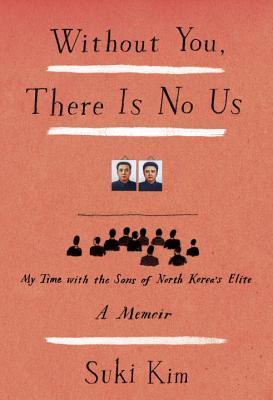
A haunting memoir of teaching English to the sons of North Korea's ruling class during the last six months of Kim Jong-il's reignEvery day, three times a day, the students march in two straight lines, singing praises to Kim Jong-il and North Korea: Without you, there is no motherland. Without you, there is no us. It is a chilling scene, but gradually Suki Kim, too, learns the tune and, without noticing, begins to hum it. It is 2011, and all universities in North Korea have been shut down for an entire year, the students sent to construction fields - except for the 270 students at Pyongyang University of Science and Technology (PUST), a walled compound where portraits of Kim Il-sung and Kim Jong-il look on impassively from the walls of every room, and where Suki has accepted a job teaching English. Over the next six months, she will eat three meals a day with her young charges and struggle to teach them to write, all under the watchful eye of the regime. Life at PUST is lonely and claustrophobic, especially for Suki, whose letters are read by censors and who must hide her notes and photographs not only from her minders but from her colleagues - evangelical Christian missionaries who don't know or choose to ignore that Suki doesn't share their faith. She is mystified by how easily her students lie, unnerved by their obedience to the regime. To them, everything in North Korea is the best, the tallest, the most delicious, the envy of all nations. Still, she cannot help but love them - their boyish enthusiasm, their eagerness to please, the flashes of curiosity that have not yet been extinguished. As the weeks pass, she begins to hint at the existence of a world beyond their own - at such exotic activities as surfing the Internet or traveling freely and, more dangerously, at electoral democracy and other ideas forbidden in a country where defectors risk torture and execution. The students in turn offer Suki tantalizing glimpses into their lives, from their thoughts on how to impress girls to their disappointment that soccer games are only televised when the North Korean team wins. Then Kim Jong-il dies, leaving the students devastated, and leading Suki to question whether the gulf between her world and theirs can ever be bridged.Without You, There Is No Us offers a moving and incalculably rare glimpse of life in the world's most unknowable country, and at the privileged young men she calls "soldiers and slaves."

Jon Ronson meets David Grann in this fascinating, wildly entertaining adventure and travel story about how culture can make us go totally insaneThe Geography of Madness is an investigation of "culture-bound" syndromes, which are far stranger than they sound. Why is it, for example, that some men believe, against all reason, that vandals stole their penises, even though they're in good physical shape? In The Geography of Madness, acclaimed magazine writer Frank Bures travels around the world to trace culture-bound syndromes to their sources—and in the process, tells a remarkable story about the strange things all of us believe.Book Club Discussion Questions: For the paperback edition, a list of book club discussion questions is also being issued. If you’d like to add the The Geography of Madness to your group’s reading list, here are several conversation starters:1) One main themes of The Geography of Madness is that stories (about the world, about our lives, about our bodies) are contagious. Can you think of a story, or an experience, that changed what you believed was possible?2) Do you believe the brain and the mind are the same thing? If not, what is the difference? 3) The stories in The Geography of Madness raise the question of free will: How much do you choose the life you live? How much do you learn (or catch) you life choices from those around you? 4) Have you ever found yourself immersed in a situation where you did not know the rules? What was that like?5) In The Geography of Madness, the author argues that our mindset and our expectations have biological consequences. Does that resemble your experience? If so, how?6) Try to imagine living in a world where it was possible to have your genitals stolen, either by magic or by ghosts. How would you protect yourself?7) In The Geography of Madness, the author argues that a strong sense of self—of your story— can help to activate your endogenous (internal) healing systems and vice versa. Do you remember a time when a stressful or difficult period seemed to be followed by a health problem or sickness? 8) In The Geography of Madness, did anyone’s genital actually disappear? If not, what happened? Does it matter?9) Is there a belief that everyone around you holds, but that you don’t share? How did you come to doubt this?10) The Handbook of Depression points to a genetic marker associated with greater vulnerability to depression. Yet this link only holds true in Western cultures. Why would that be?11) Have you ever had a health problem you were afraid to talk about, or that others didn’t believe in?12) In The Geography of Madness, the author argues that cultural syndromes are “real” syndromes, but that their causes might not lie where we think they do. Do you think they are “real” or “imaginary”? 13) Over the last few years, gluten intolerance has been rising. This rise occurs at a time of increasing anxiety about the relationship between food, health and identity. What’s changed: our bodies or our culture?14) After reading The Geography of Madness, how would you describe what culture is?15) How much does a your culture create you? How much do you create your culture?16) Have you ever had a cultural syndrome?

Gloria Steinem—writer, activist, organizer, and one of the most inspiring leaders in the world—now tells a story she has never told before, a candid account of how her early years led her to live an on-the-road kind of life, traveling, listening to people, learning, and creating change. She reveals the story of her own growth in tandem with the growth of an ongoing movement for equality. This is the story at the heart of My Life on the Road.

Inspired by the author's own pilgrimage of walking the legendary Camino de Santiago across Spain comes Rebirth, a novel of reconciliation and forgiveness.After losing his estranged father, Amit wanders across Europe and embarks on the five-hundred and fifty mile Camino de Santiago to reconcile his inner conflict. It is on this path that he begins reflecting on relationships and forgiveness, to find answers we all seek. As Amit runs from his life, it soon becomes clear that it's impossible to run from himself. It is a universal pilgrimage, and a teaching-tale about love, forgiveness, and facing our fears.Told in the traditions of Paulo Coelho and Mitch Albom, the story gets to the heart of some of life's most enlightening lessons about family, devotion, and ambition.

A searing, deeply moving memoir of illness and recovery that traces one young woman’s journey from diagnosis to remission and, ultimately, a road trip of healing and self-discovery.In the summer after graduating from college, Suleika Jaouad was preparing, as they say in commencement speeches, to enter "the real world". She had fallen in love and moved to Paris to pursue her dream of becoming a war correspondent. The real world she found, however, would take her into a very different kind of conflict zone.It started with an itch - first on her feet, then up her legs, like 1,000 invisible mosquito bites. Next came the exhaustion, and the six-hour naps that only deepened her fatigue. Then a trip to the doctor and, a few weeks shy of her 23rd birthday, a diagnosis: leukemia, with a 35 percent chance of survival. Just like that, the life she had imagined for herself had gone up in flames. By the time Jaouad flew home to New York, she had lost her job, her apartment, and her independence. She would spend much of the next four years in a hospital bed, fighting for her life and chronicling the saga in a column for The New York Times.When Jaouad finally walked out of the cancer ward - after three and a half years of chemo, a clinical trial, and a bone marrow transplant - she was, according to the doctors, cured. But as she would soon learn, a cure is not where the work of healing ends; it’s where it begins. She had spent the past 1,500 days in desperate pursuit of one goal - to survive. And now that she’d done so, she realized that she had no idea how to live.How would she reenter the world and live again? How could she reclaim what had been lost? Jaouad embarked - with her new best friend, Oscar, a scruffy terrier mutt - on a 100-day, 15,000-mile road trip across the country. She set out to meet some of the strangers who had written to her during her years in the hospital: a teenage girl in Florida also recovering from cancer; a teacher in California grieving the death of her son; a death-row inmate in Texas who’d spent his own years confined to a room. What she learned on this trip is that the divide between sick and well is porous, that the vast majority of us will travel back and forth between these realms throughout our lives. Between Two Kingdoms is a profound chronicle of survivorship and a fierce, tender, and inspiring exploration of what it means to begin again.
From the two-time NBCC Finalist, an emotionally resonant, fiercely imaginative new novel about a family whose road trip across America collides with an immigration crisis at the southwestern border--an indelible journey told with breathtaking imagery, spare lyricism, and profound humanity.A mother and father set out with their two children, a boy and a girl, driving from New York to Arizona in the heat of summer. Their destination: Apacheria, the place the Apaches once called home.Why Apaches? asks the ten-year-old son. Because they were the last of something, answers his father.In their car, they play games and sing along to music. But on the radio, there is news about an "immigration crisis": thousands of kids trying to cross the southwestern border into the United States, but getting detained--or lost in the desert along the way.As the family drives--through Virginia to Tennessee, across Oklahoma and Texas--we sense they are on the brink of a crisis of their own. A fissure is growing between the parents, one the children can almost feel beneath their feet. They are led, inexorably, to a grand, harrowing adventure--both in the desert landscape and within the chambers of their own imaginations.Told through several compelling voices, blending texts, sounds, and images, Lost Children Archive is an astonishing feat of literary virtuosity. It is a richly engaging story of how we document our experiences, and how we remember the things that matter to us the most. With urgency and empathy, it takes us deep into the lives of one remarkable family as it probes the nature of justice and equality today.

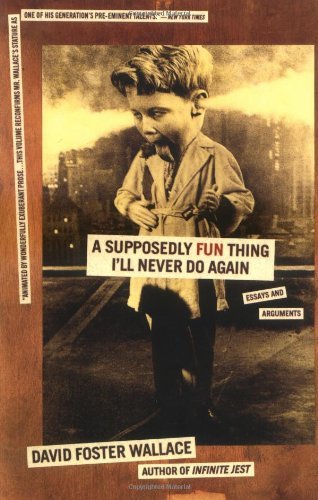
In this exuberantly praised book — a collection of seven pieces on subjects ranging from television to tennis, from the Illinois State Fair to the films of David Lynch, from postmodern literary theory to the supposed fun of traveling aboard a Caribbean luxury cruiseliner — David Foster Wallace brings to nonfiction the same curiosity, hilarity, and exhilarating verbal facility that has delighted readers of his fiction, including the bestselling Infinite Jest.

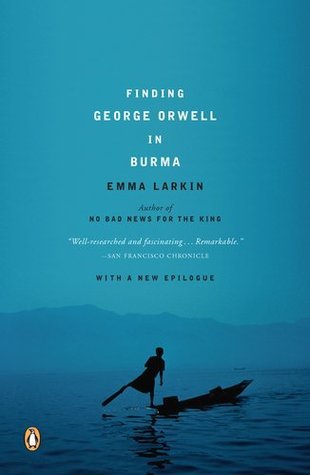
A fascinating political travelogue that traces the life and work of George Orwell, author of 1984 and ANIMAL FARM, in Southeast AsiaOver the years the American writer Emma Larkin has spent traveling in Burma, also known as Myanmar, she's come to know all too well the many ways this brutal police state can be described as "Orwellian." The life of the mind exists in a state of siege in Burma, and it long has. But Burma's connection to George Orwell is not merely metaphorical; it is much deeper and more real. Orwell's mother was born in Burma, at the height of the British raj, and Orwell was fundamentally shaped by his experiences in Burma as a young man working for the British Imperial Police. When Orwell died, the novel-in-progress on his desk was set in Burma. It is the place George Orwell's work holds in Burma today, however, that most struck Emma Larkin. She was frequently told by Burmese acquaintances that Orwell did not write one book about their country - his first novel, Burmese Days - but in fact he wrote three, the "trilogy" that included Animal Farm and Nineteen Eighty-Four . When Larkin quietly asked one Burmese intellectual if he knew the work of George Orwell, he stared blankly for a moment and then said, "Ah, you mean the prophet!"In one of the most intrepid political travelogues in recent memory, Emma Larkin tells of the year she spent traveling through Burma using the life and work of George Orwell as her compass. Going from Mandalay and Rangoon to poor delta backwaters and up to the old hill-station towns in the mountains of Burma's far north, Larkin visits the places where Orwell worked and lived, and the places his books live still. She brings to vivid life a country and a people cut off from the rest of the world, and from one another, by the ruling military junta and its vast network of spies and informers. Using Orwell enables her to show, effortlessly, the weight of the colonial experience on Burma today, the ghosts of which are invisible and everywhere. More important, she finds that the path she charts leads her to the people who have found ways to somehow resist the soul-crushing effects of life in this most cruel police state. And George Orwell's moral clarity, hatred of injustice, and keen powers of observation serve as the author's compass in another sense they are qualities she shares and they suffuse her book - the keenest and finest reckoning with life in this police state that has yet been written.

In 1968, nine sailors set off on the most daring race ever to single-handedly circumnavigate the globe nonstop. It was a feat that had never been accomplished and one that would forever change the face of sailing. Ten months later, only one of the nine men would cross the finish line and earn fame, wealth, and glory. For the others, the reward was madness, failure, and death. In this extraordinary book, Peter Nichols chronicles a contest of the individual against the sea, waged at a time before cell phones, satellite dishes, and electronic positioning systems. A Voyage for Madmen is a tale of sailors driven by their own dreams and demons, of horrific storms in the Southern Ocean, and of those riveting moments when a split-second decision means the difference between life and death.

Learn all the French argot (slang), dirty words, and necessary tools of communication your teachers left out of their lesson plans with this essential survival guide to understanding everyday French.Deliciously saucy and full of wit Merde! is a practical guide for understanding French, as it really is spoken. This real-life resource is for anyone who remembers thumbing through English/French dictionaries for such words as "toilet paper" and "damn," as well as for the far more interesting, titillating terms that would never be used in polite conversation. But real French isn't spoken with the intent of being polite... With epithets for every occasion, a range of colorful idioms, and a wealth of come-ons and put-downs, this is the only language book you'll need to prepare for a trip to the city of lights.

Perceptive, funny, and nostalgic, E.B. White's stroll around Manhattan remains the quintessential love letter to the city, written by one of America's foremost literary figures. The New York Times has named Here is New York one of the ten best books ever written about the metropolis, and The New Yorker calls it "the wittiest essay, and one of the most perceptive, ever done on the city.

This is a remarkable book about a man (perhaps the most important and original philosopher of our age), a society (the corrupt Austro-Hungarian Empire on the eve of dissolution), and a city (Vienna, with its fin-de siecle gaiety and corrosive melancholy). The central figure in this study of a crumbling society that gave birth to the modern world is Wittgenstein, the brilliant and gifted young thinker. With others, including Freud, Viktor Adler, and Arnold Schoenberg, he forged his ideas in a classical revolt against the stuffy, doomed, and moralistic lives of the old regime. As a portrait of Wittgenstein, the book is superbly realized; it is even better as a portrait of the age, with dazzling and unusual parallels to our own confused society. Allan Janik and Stephen Toulmin have acted on a striking premise: an understanding of prewar Vienna, Wittgenstein s native city, will make it easier to comprehend both his work and our own problems .This is an independent work containing much that is challenging, new, and useful. New York Times Book Review."

The distinguished explorer and writer recounts his rediscovery of the Bushmen, outcast survivors from Stone Age Africa. Faced with constant attack from all the peoples who followed them, the last of the Bushmen have retreated to the scorching depths of the Kalahari Desert in southern Africa. After a gruelling trek, van der Post finds the Bushmen, thriving in one of the world’s most inhospitable landscapes, with their physical peculiarities, their cave art and their joyful music-making intact.

The narratives in this book are of journeys made in three wildernesses - on a coastal island, in a Western mountain range, and on the Colorado River in the Grand Canyon. The four men portrayed here have different relationships to their environment, and they encounter each other on mountain trails, in forests and rapids, sometimes with reserve, sometimes with friendliness, sometimes fighting hard across a philosophical divide.

The Yage an early epistolary novel by William S. Burroughs, whose 1952 account of himself as Junkie, published under the pseudonym William Lee, ended "Yage may be the final fix." In letters to Allen Ginsberg, an unknown young poet in New York, his journey to the Amazon jungle is recorded, detailing picaresque incidents of search for telepathic-hallucinogenic-mind-expanding drug Yage (Ayahuasca, or Banisteriopsis Caapé) used by Amazon Indian doctors for finding lost objects, mostly bodies and souls. Author and recipient of these letters met again in New York, Xmas 1953, pruned and edited the writings to form a single book. Correspondence contains first seeds of later Burroughsian fantasy in Naked Lunch. Seven years later Ginsberg in Peru writes his old guru an account of his own visions and terrors with the same drug, appealing for further counsel. Burroughs' mysterious reply is sent. The volume concludes with two a short note from Ginsberg on his return from the Orient years later reassuring Self that he is still here on earth, and a final poetic cut-up by Burroughs, "I Am Dying Meester?"

Begun in 1959 by a twenty-two-year-old Hunter S. Thompson, The Rum Diary is a tangled love story of jealousy, treachery, and violent alcoholic lust in the Caribbean boomtown that was San Juan, Puerto Rico, in the late 1950s. The narrator, freelance journalist Paul Kemp, irresistibly drawn to a sexy, mysterious woman, is soon thrust into a world where corruption and get-rich-quick schemes rule and anything (including murder) is permissible.

In the early 1990s three young people attracted to the ambitious global peacekeeping work of the UN cross paths in Cambodia. Andrew strives for a better world through his life-saving work as a doctor. Heidi, a social worker, is in need of a challenge and a paycheck, and Ken is fresh from Harvard and brimful of idealism. As their stories interweave through the years, from Rwanda, Bosnia and Somalia to Haiti, the trio reveal a world of witnessed atrocities, primal fear, desperate loneliness and base desires. They fend off terror and futility with revelry, humour and sex; ask hard questions about the world order America has created, the true power of the UN, and whether there is any possibility for change. This is a startling celebration of the power of humour and friendship, of the limits of human compassion, and the need for a warm body and a cold beer during a Condition Echo lockdown. A book that shows the human cost of global politics and the tragic truth that wars are much more avoidable than our governments would ever admit. A brilliant, provocatively funny and fast moving book.

For at some period of a man's life; at all events of some lives; in some rare state of the mind, it is all at once revealed to him as by a miracle that nothing is ever blotted out.

'This was much more than a bunch of guys out on an exploring and collecting expedition. This was a military expedition into hostile territory'. In 1803 President Thomas Jefferson selected his personal secretary, Captain Meriwether Lewis, to lead a pioneering voyage across the Great Plains and into the Rockies. It was completely uncharted territory; a wild, vast land ruled by the Indians. Charismatic and brave, Lewis was the perfect choice and he experienced the savage North American continent before any other white man. UNDAUNTED COURAGE is the tale of a hero, but it is also a tragedy. Lewis may have received a hero's welcome on his return to Washington in 1806, but his discoveries did not match the president's fantasies of sweeping, fertile plains ripe for the taking. Feeling the expedition had been a failure, Lewis took to drink and piled up debts. Full of colourful characters - Jefferson, the president obsessed with conquering the west; William Clark, the rugged frontiersman; Sacagawea, the Indian girl who accompanied the expedition; Drouillard, the French-Indian hunter - this is one of the great adventure stories of all time and it shot to the top of the US bestseller charts. Drama, suspense, danger and diplomacy combine with romance and personal tragedy making UNDAUNTED COURAGE an outstanding work of scholarship and a thrilling adventure.

Mr. China tells the rollicking story of a young man who goes to China with the misguided notion that he will help bring the Chinese into the modern world, only to be schooled by the most resourceful and creative operators he would ever meet. Part memoir, part parable, Mr. China is one man's coming-of-age story where he learns to respect and admire the nation he sought to conquer.

From the star of No Reservations, Anthony Bourdain's New York Times-bestselling chronicle of travelling the world in search the globe's greatest cuilnary adventuresThe only thing "gonzo gastronome" and internationally bestselling author Anthony Bourdain loves as much as cooking is traveling. Inspired by the question, "What would be the perfect meal?," Tony sets out on a quest for his culinary holy grail, and in the process turns the notion of "perfection" inside out. From California to Cambodia, A Cooks' Tour chronicles the unpredictable adventures of America's boldest and bravest chef.Fans of Bourdain will find much to love in revisting this classic culinary and travel memoir.

In the spring of 2000, Harper's Magazine sent James McManus to Las Vegas to cover the World Series of Poker, in particular the progress of women in the $23 million event, and the murder of Ted Binion, the tournament's prodigal host, purportedly done in by a stripper and her boyfriend. But when McManus arrives, the lure of the tables compels him to risk his entire Harper's advance in a long-shot attempt to play in the tournament himself. This is his deliciously suspenseful account of the tournament--the players, the hand-to-hand combat, his own unlikely progress in it--and the delightfully seedy carnival atmosphere that surrounds it. Positively Fifth Street is a high-stakes adventure and a terrifying but often hilarious account of one man's effort to understand what Edward O. Wilson has called "Pleistocene exigencies"--the eros and logistics of our competitive instincts.

Like a lovely psychedelic sophist, McKenna recounts his adventures with psychoactive plants in the Amazon Basin. Either a profoundly psychotic episode or a galvanizing glimpse into the true nature of time & mind, McKenna is a spellbinding storyteller, providing plenty of down-to-earth reasons for preserving the planet.Preface1 The Call of the Secret2 Into the Devil's Paradise3 Along a Ghostly Trail 4 Camped by a Doorway 5 A Brush with the Other6 Kathmandu Interlude 7 A Violet Psychofluid8 The Opus Clarified 9 A Conversation Over Saucers10 More on the Opus 11 The Experiment at La Chorrera12 In the Vortex 13 At Play in the Fields of the Lord14 Looking Backward 15 A Saucer Full of Secrets16 Return 17 Waltzing the Enigma18 Say What Does It Mean?19 The Coming of the Strophariad20 The Hawaiian Connection EpilogueAcknowledgmentsFurther Reading

Sparkling with irrepressible wit, City of Djinns peels back the layers of Delhi's centuries-old history, revealing an extraordinary array of characters along the way—from eunuchs to descendants of great Moguls. With refreshingly open-minded curiosity, William Dalrymple explores the seven "dead" cities of Delhi as well as the eighth city—today's Delhi. Underlying his quest is the legend of the djinns, fire-formed spirits that are said to assure the city's Phoenix-like regeneration no matter how many times it is destroyed. Entertaining, fascinating, and informative, City of Djinns is an irresistible blend of research and adventure.

Scientists have only recently learned that the particles of an oxygen atom vibrate in a major key and that blades of grass ‘sing.” Europe’s foremost jazz producer takes the reader on an exhilarating journey through Asia, Europe, Africa, and Latin America, exploring the musical traditions of diverse cultures and reaffirming what the ancients have always known--the world is sound, rhythm, and vibration. Berendt’s book is alive with his experiences--living in Bali, studying at a Zen monastery in Kyoto, and encountering budding jazz stars in Indonesia, Japan, Europe, and the United States. Drawing from his friendships with composers and performers as well as his knowledge of new physics and Tantra, cybernetics, Sufism, and the works of Hermann Hesse, he reveals the importance of sound in shaping cultural and spiritual life worldwide. A tribute to the work of many of the greatest figures of our age--including Hans Kayser, Jean Gebser, Sufi Hazrat lnayat Khan, musicians John Coltrane and Ravi Shankar--Berendt’s book suggests that hearing, rather than seeing, is the key to a more spiritual experience of consciousness. His discussion of sound in relation to mathematics, logic, sacred geometry, myth, and sexuality is practical as well as theoretical, offering readers a variety of techniques for developing the ear as an organ of spiritual perception.

Salzman captures post-cultural revolution China through his adventures as a young American English teacher in China and his shifu-tudi (master-student) relationship with China's foremost martial arts teacher.In 1982, Salzman flew off to teach English in Changsha, China. He writes of bureaucrats, students and Cultural Revolution survivors, stripping none of their complexity and humanity. He's gentle with their idiocies, saving his sharpest barbs for himself (it's his pants that split from zipper to waist whilst demonstrating martial arts in Canton). Though dribs of history and drabs of classical lore seep through, this is mostly a personal tale, noted by the Los Angeles Times for "the charmingly unpretentious manner in which it penetrates a China inaccessible to other foreigners."

Six Months Off is a complete guide to planning and taking the break you've been dreaming of, without losing your job or your nest egg, or alienating your family and friends.

A combination memoir, cookbook, and travelogue describes one man's efforts to live on the land while attempting to re-create the recipes from Escoffier's 1903 magnum opus Le Guide Culinaire and searching for the frequently esoteric ingredients called for in the various dishes. Reprint.

This best-selling classic, which the New York Times called “the classiest ‘how-to’ text on landscape color photography ever published,” captures the unique artistic vision of the late Galen Rowell, one of America’s greatest outdoor photographers. Here Rowell assembled eighty of his finest images, along with the stories behind them—what he was after and how he achieved it.The photographs (and the details of their creation) are arranged in eight exhibits according to visual themes, reflecting Rowell’s fascination with the infinitely varying qualities of light found in mountain landscapes. He explains how film and the human eye see differently, how he selected and composed the content of his work, how he worked with optical phenomena and natural light, and how equipment and adventure interact in the field.The engaging text also recounts Rowell’s development as a photographer, his philosophy and techniques for creating “dynamic landscapes,” and his adventures in remote, dangerous, and beautiful places—from California’s Yosemite Valley to almost-inaccessible peaks in China.

Japon haiku şairlerinin en büyüğü olarak kabul edilen Matsuo Başô’nun (1644-1694) beş yolculuğunda tuttuğu notlar ve onlarla birlikte yazılan haikulardan oluşuyor Kuzeye Giden İnce Yol. Büyük usta Başô’nun yazdıklarının yanında Nobuyuki Yuasa’nın Başô ve dönemini anlatan derinlikli “sunuş”u kitabı eksiksiz hale getiriyor. Coşkun Yerli’nin ustalıklı çevirisiyle. “Bir Nisan’da tapınakların en kutsalını ziyaret etmek için Nikko Dağı’na çıktım.Bu dağa eskiden Niko denirmiş. Başrahip Kukai tapınağı bu dağda yaptırdığında, dağın adını Nikko, yani ‘güneşin parlak ışıkları’ olarak değiştirmiş. Kukai bin yıl sonrasını görme gücüne sahipti herhalde, bu dağ şimdi tüm tapınakların en kutsalına konak olmuş, iyiliksever kudretiyle ülkeye egemen, halkı kucaklıyor, güneşin parlak ışıkları gibi. Bu tapınak üzerine daha fazla söz etmek onun kutsallığına gölge düşürmek olur. İçimi bir korku sarıyor, güneşte parlayan körpe yapraklara bakarken.”

s/t: Charles Darwin's Journal of ResearchesWhen the Beagle sailed out of Devonport on 27 December 1831, Charles Darwin was twenty-two and setting off on the voyage of a lifetime. It was to last five years and transform him from an amiable and somewhat aimless young man into a scientific celebrity. Even more vitally, it was to set in motion the intellectual currents that culminated in the arrival of The Origin of Species in Victorian drawing-rooms in 1859. His journal, reprinted here in a shortened version, is vivid and immediate, showing us a naturalist making patient observations, above all in geology. As well as a profusion of natural history detail, it records many other things that caught Darwin’s eye, from civil war in Argentina to the new colonial settlements of Australia. The editors have provided an excellent introduction and notes for this Penguin Classics edition, which also contains maps and appendices, including an essay on scientific geology and the Bible by Robert FitzRoy, Darwin’s friend and captain of the Beagle.

This 1942 memoir (not a complete autobiography) by Beryl Markham chronicles her experiences growing up in Kenya (then British East Africa) in the early 1900s, and her stellar careers as racehorse trainer and bush pilot. Markham was the first woman in East Africa to be granted a commercial pilot's license, piloting passengers and supplies to remote corners of Africa. She became the first person to fly solo across the Atlantic from east to west. Considered a classic of outdoor literature and ranked #8 by National Geographic Adventure in 2008 on its list of the 100 best adventure books.

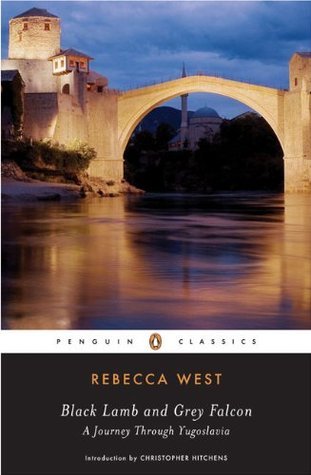
Written on the brink of World War II, Rebecca West's classic examination of the history, people, and politics of Yugoslavia illuminates a region that is still a focus of international concern. A magnificent blend of travel journal, cultural commentary, and historical insight, Black Lamb and Grey Falcon probes the troubled history of the Balkans, and the uneasy relationships amongst its ethnic groups. The landscape and the people of Yugoslavia are brilliantly observed as West untangles the tensions that rule the country's history as well as its daily life.

In a breathtaking adventure story, the paranoid and brilliant inventor Allie Fox takes his family to live in the Honduran jungle, determined to build a civilization better than the one they've left. Fleeing from an America he sees as mired in materialism and conformity, he hopes to rediscover a purer life. But his utopian experiment takes a dark turn when his obsessions lead the family toward unimaginable danger.

When Desert Solitaire was first published in 1968, it became the focus of a nationwide cult. Rude and sensitive. Thought-provoking and mystical. Angry and loving. Both Abbey and this book are all of these and more. Here, the legendary author of The Monkey Wrench Gang, Abbey's Road and many other critically acclaimed books vividly captures the essence of his life during three seasons as a park ranger in southeastern Utah. This is a rare view of a quest to experience nature in its purest form--the silence, the struggle, the overwhelming beauty. But this is also the gripping, anguished cry of a man of character who challenges the growing exploitation of the wilderness by oil and mining interests, as well as by the tourist industry.Abbey's observations and challenges remain as relevant now as the day he wrote them. Today, Desert Solitaire asks if any of our incalculable natural treasures can be saved before the bulldozers strike again.

The epic of Chicago is the story of the emergence of modern America. Here, witness Chicago's growth from a desolate fur-trading post in the 1830s to one of the world's most explosively alive cities by 1900.Donald Miller's powerful narrative embraces it all: Chicago's wild beginnings, its reckless growth, its natural calamities (especially the Great Fire of 1871), its raucous politics, its empire-building businessmen, its world-transforming architecture, its rich mix of cultures, its community of young writers and journalists, and its staggering engineering projects -- which included the reversal of the Chicago River and raising the entire city from prairie mud to save it from devastating cholera epidemics. The saga of Chicago's unresolved struggle between order and freedom, growth and control, capitalism and community, remains instructive for our time, as we seek ways to build and maintain cities that retain their humanity without losing their energy. City of the Century throbs with the pulse of the great city it brilliantly brings to life.

"A devoted Buddhist and a spokesman for Tibetan culture, Lama Anagarika Govinda was one of the last foreigners to journey through Tibet before the Chinese invasion of 1950. Govinda's luminous and candid account is a spectacular and gloriously poetic story of exploration and discovery, and a sensitive and lucid interpretation of Tibetan traditions. Comprised of elements from several genres - spiritual journals, adventure narratives, anthropological field reports, and philosophical commentaries, The Way of the White Clouds is one of the twentieth century's classic spiritual autobiographies and an invaluable document about a place and a way of thinking that are virtually defined by their mysteries." Robert Thurman's perceptive new introduction to the volume places Govinda's writings in historical context and expands understanding of Tibet, Buddhism, and the life of a remarkable man.

Michael Kelly, who traveled through every country touched by the Gulf War, moved about as a free-lance journalist for the Boston Globe and the New Republic. He traveled through much of the Middle East during and after the Gulf War, watching the bombs fall on Baghdad and waiting for Scuds in Tel Aviv, inspecting the gold bathroom fixtures installed by the U.S. Army Corps of Engineers in the empire's temporary palace in Kuwait City and dining with Kurdish chieftains in remote mountain camps in northern Iran.When ground war in Iraq began, Michael Kelly rented a four-wheel-drive Nissan Safari, borrowed some camouflage pants and gas-proof rubber gloves, and set off across the desert, where he was mistaken for an advance party of the American Army and surrendered to by a batch of bewildered Iraqi soldiers. In Kuwait after the liberation, he listened to horrific tales of torture and rape, and walked among the grotesque remains of the bombed-out retreating Iraqi army on the roads home. Later, when Kelly went to Kurdistan, he hiked into forbidden Iraqi territory and then traveled with various guerrilla bands at war with Saddam Hussein. He got out of Iraq by swimming across a river into Turkey in the company of smugglers. Kelly's story is witty, moving, and dramatically compelling, at once superb reporting and the very best travel writing. By avoiding the human story of the Gulf War, he has given us an indispensable piece of our history."Restrained yet explosive dispatches from the front . . . Kelly demonstrates a keen eye for the telling detail, a well-developed sense of irony . . . courage and enterprise."--National Magazine

'Her writing makes your mouth water.' -- Financial Times'Unique among the classics of gastronomic writing . . . a book about adult loss, survival, and love.' -- New York Review of BooksA classic of food writing that redefined the genre, The Gastronomical Me is a memoir of travel, love and loss, but above all hunger.In 1929 M.F.K. Fisher left America for France, where she tasted real French cooking for the first time. It inspired a prolific career as a food and travel writer. In The Gastronomical Me Fisher traces the development of her appetite, from her childhood in America to her arrival in Europe, where she embarked on a whole new way of eating, drinking, and living. She recounts unforgettable meals shared with an assortment of eccentric characters, set against a backdrop of mounting pre-war tensions.Here are meals as seductions, educations, diplomacies, and communions, in settings as diverse as a bedsit above a patisserie, a Swiss farm, and cruise liners across oceans. In prose convivial and confiding, Fisher illustrates the art of ordering well, the pleasures of dining alone, and how to eat so you always find nourishment, in both head and heart.'Many authors whisper, as though to a diary, or chat, as though to a friend, but Fisher communicates with the heady directness of a lover.' -- Bee Wilson, author of The Way We Eat Now'She is not just a great food writer. She is a great writer, full stop.' -- Rachel Cooke, Observer'The greatest food writer who has ever lived.' -- Simon Schama'Poet of the appetites.' -- John Updike'I do not know of anyone in the United States who writes better prose.' -- W.H. Auden

The seventy-fifth anniversary edition of the classic book about Cape Cod, "written with simplicity, sympathy, and beauty" (New York Herald Tribune)A chronicle of a solitary year spent on a Cape Cod beach, The Outermost House has long been recognized as a classic of American nature writing. Henry Beston had originally planned to spend just two weeks in a seaside cottage, but was so possessed by the mysterious beauty of his surroundings that he found he "could not go."Instead, he sat down to try and capture in words the wonders of the magical landscape he found himself in thrall to: the migrations of seabirds, the rhythms of the tide, the windblown dunes, and the scatter of stars in the changing sky. Beston argued that, "The world today is sick to its thin blood for the lack of elemental things, for fire before the hands, for water, for air, for the dear earth itself underfoot." Seventy-five years after they were first published, Beston's words are more true than ever.

When Coca-Cola entered the French market with a hard-core bottom-line management style, they were met with boycotts in cafes and supermarkets. At the launch of Euro Disney in Paris, Mickey Mouse was greeted by angry protestors hurling tomatoes and eggs. As a culture, the French are fiercely independent yet romantic, conservative yet avant-garde, rational yet emotional.Written for anyone interested in or interacting with the French, Au Contraire!: Figuring Out the French unearths the often-invisible cultural forces that govern behavior. Gilles Asselin and Ruth Mastron draw upon their own experiences as consultants and trainers, as well as that of expatriate students and professionals, to offer the best and most useful analysis and advice on French-American intercultural relations. Going beyond the obvious, this bilingual and bicultural author team explores what lies behind what we the assumptions, attitudes, patterns of thought and beliefs that make the French so.French.In a global world filled with multinational mergers and international partnerships, Au Contraire! provides context and perspective on what happens when Americans and the French come together at work, at home, and in any social setting, touching on issues like education, play, friendship, romance and politics. They highlight the dynamics of working and managing across the French and American cultural divide with an in-depth case study of how pharmaceutical giant Rhone-Poulenc Rorer overcame challenges by fostering cross-cultural teamwork. With a quick and useful guide to social etiquette and professional guidelines for managers working in the United States and in France, Au Contraire! provides critical tools to develop creative and appropriate responses to any situation, based on a deep understanding of the unique dynamics of these two cultures.

“Here is poetry of courage and passion, which manages to be tender and achingly sensual and what is often called ‘political’ at the same time. This is a major new voice.” — Margaret AtwoodThe Country Between Us opens with a series of poems about El Salvador, where Carolyn Forché worked as a journalist and was closely involved with the political struggle in that tortured country in the late 1970's. Forché's other poems also tend to be personal, immediate, and moving. Perhaps the final effect of her poetry is the image of a sensitive, brave, and engaged young woman who has made her life a journey. She has already traveled to many places, as these poems indicate, but beyond that is the sense of someone who is, in Ignazio Silone's words, coming from far and going far.

The Long Way is Bernard Moitessier's own incredible story of his participation in the first Golden Globe Race, a solo, non-stop circumnavigation rounding the three great Capes of Good Hope, Leeuwin, and the Horn. For seven months, the veteran seafarer battled storms, doldrums, gear-failures, knock-downs, as well as overwhelming fatigue and loneliness. Then, nearing the finish, Moitessier pulled out of the race and sailed on for another three months before ending his 37,455-mile journey in Tahiti. Not once had he touched land.

“A California classic . . . California, it should be remembered, was very much the wild west, having to wait until 1850 before it could force its way into statehood. so what tamed it? Mr. Starr’s answer is a combination of great men, great ideas and great projects.”— The EconomistFrom the age of exploration to the age of Arnold, the Golden State’s premier historian distills the entire sweep of California’s history into one splendid volume. Kevin Starr covers it Spain’s conquest of the native peoples of California in the early sixteenth century and the chain of missions that helped that country exert control over the upper part of the territory; the discovery of gold in January 1848; the incredible wealth of the Big Four railroad tycoons; the devastating San Francisco earthquake of 1906; the emergence of Hollywood as the world’s entertainment capital and of Silicon Valley as the center of high-tech research and development; the role of labor, both organized and migrant, in key industries from agriculture to aerospace. In a rapid-fire epic of discovery, innovation, catastrophe, and triumph, Starr gathers together everything that is most important, most fascinating, and most revealing about our greatest state.Praise for California“[A] fast-paced and wide-ranging history . . . [Starr] accomplishes the feat with skill, grace and verve.” — Los Angeles Times Book Review“Kevin Starr is one of california’s greatest historians, and California is an invaluable contribution to our state’s record and lore.” —MarIa ShrIver, journalist and former First Lady of California“A breeze to read.” — San Francisco

The Sailor's Classics library introduces a new generation of readers to the best books ever written about small boats under sail In the autumn of 1968, Donald Crowhurst set sail from England to participate in the first single-handed nonstop around-the-world sailboat race. Eight months later, his boat was found in the mid-Atlantic, intact but with no one on board. In this gripping reconstruction, journalists Nicholas Tomalin and Ron Hall tell the story of Crowhurst's ill-fated voyage.

This book is perhaps the jewel in Prospect Book's crown. Within a few months of its first appearance in 1986 it was hailed as a modern classic. Fiona MacCarthy wrote in The Times that, 'the book is a large and grandiose life history, a passionate narrative of extremes of experience.'; Jeremy Round called Patience Gray 'he high priestess of cooking';, whose book pushes the form of the cookery book as far as it can go. Angela Carter remarked that it was less a cookery book that a summing-up of the genre of the late-modern British cookery book. The work has attracted a cult following in the United States, where passages have been read out at great length on the radio; and it has been anthologized by Paul Levy in The Penguin Book of Food and Drink. It was given a special award by the Andre Simon Book Prize committee in 1987.

An exemplary travelogue of danger and achievement by the Frenchwoman Madame Alexandra David–Neel of her 1923 expedition to Tibet, the fifth in her series of Asian travels, and her personal recounting of her journey to Lhasa, Tibet's forbidden city. In order to penetrate Tibet and reach Lhasa, she used her fluency of Tibetan dialects and culture, disguised herself as a beggar with yak hair extensions and inked skin and tackled some of the roughest terrain and climate in the World. With the help of her young companion, Yongden, she willingly suffered the primitive travel conditions, frequent outbreaks of disease, the ever–present danger of border control and the military to reach her goal.The determination and sheer physical fortitude it took for this woman, delicately reared in Paris and Brussels, is inspiration for men and women alike.David–Neel is famous for being the first Western woman to have been received by any Dalai Lama and as a passionate scholar and explorer of Asia, hers is one of the most remarkable of all travellers tales.

Beginning in the year 711 and continuing for nearly a thousand years, the Islamic presence survived in Spain, at times flourishing, and at other times dwindling into warring fiefdoms. But the culture and science thereby brought to Spain, including long-buried knowledge from Greece, largely forgotten during Europe’s Dark Ages, was to have an enduring impact on the country as it emerged into the modern era. In this gracefully written history, Richard Fletcher reveals the Moorish culture in all its fascinating disparity and gives us history at its best: here is vivid storytelling by a renowned scholar.

Scarred by decades of conflict and occupation, the craggy African nation of Eritrea has weathered the world's longest-running guerrilla war. The dogged determination that secured victory against Ethiopia, its giant neighbor, is woven into the national psyche, the product of cynical foreign interventions. Fascist Italy wanted Eritrea as the springboard for a new, racially pure Roman empire; Britain sold off its industry for scrap; the United States needed a base for its state-of-the-art spy station; and the Soviet Union used it as a pawn in a proxy war. In I Didn't Do It for You , Michela Wrong reveals the breathtaking abuses this tiny nation has suffered and, with a sharp eye for detail and a taste for the incongruous, tells the story of colonialism itself and how international power politics can play havoc with a country's destiny.

In the high Alpine valley of La Grande Chartreuse, Roy Andries de Groot discovered by accident a charming and unpretentious little inn, L’Auberge de L’Atre Fleuri. Impressed by the devotion of its owners — les Mesdemoiselles Artraud and Girard — to perpetuating the tradition of supreme country dining, Mr. de Groot returned to the inn to record their recipes for natural country soups, heavy winter stews, roasted meats, pâtes, terrines, and fruity and spirituous desserts — the best of French cooking.Superb food, fine wine, and the perfect blending of both into a series of menus for memorable lunches and dinners, together with the unique French Alpine recipes that build each meal — these are the ingredients of this remarkable book, now considered a classic.

Ibn Battutah was just 21 when he set out in 1325 from his native Tangier on a pilgrimage to Mecca. He did not return to Morocco for another 29 years, traveling instead through more than 40 countries on the modern map, covering 75,000 miles and getting as far north as the Volga, as far east as China, and as far south as Tanzania. He wrote of his travels, and comes across as a superb ethnographer, biographer, anecdotal historian, and occasional botanist and gastronome. With this edition by Mackintosh-Smith, Battuta's Travels takes its place alongside other indestructible masterpieces of the travel-writing genre.

‘John McPhee is celebrated in America and all but unknown in this country. The volume I love most is Coming into the Country, an account of Alaska and the Alaskans. His genius is that he can write about anything.’ – Robert MacfarlaneIn this unforgettable and astutely observed travel account, Pulitzer Prize-winner John McPhee journeys into the wild frontiers and frigid climate of Alaska – exploring the diverse terrain of this Northern US state. Travelling by foot and canoe, helicopter and dog team, McPhee traverses total wilderness, urban landscape, and the depths of the bush, drawing a rich and comprehensive history of this vast land and its varied inhabitants.With his keen eye and poetic sensibility at the helm, we paddle with McPhee through the salmon-filled waters of the Brooks Range Rivers, meet a young chief of the Athapaskan tribe, and become well-acquainted with the habits of the barren-ground grizzly bear. We encounter settlers along the way and discover the extraordinary dreams that impel them to survive in one of the most remote regions on Earth.McPhee is an endlessly curious adventurer and Coming into the Country is the work of a master storyteller.‘It is a reviewer’s greatest pleasure to ring the gong for a species of masterpiece.’ – New York Times Book Review‘McPhee has acted like an antenna in a far-off place that few will see. He has brought back a wholly satisfying voyage of spirit and mind.’ – Time‘With this book McPhee proves to be the most versatile journalist in America.’ – New York Times

Ernest K. Gann’s classic pilot's memoir is an up-close and thrilling account of the treacherous early days of commercial aviation. “Few writers have ever drawn readers so intimately into the shielded sanctum of the cockpit, and it is hear that Mr. Gann is truly the artist” (The New York Times Book Review).“A splendid and many-faceted personal memoir that is not only one man’s story but the story, in essence, of all men who fly” (Chicago Tribune). In his inimitable style, Gann brings you right into the cockpit, recounting both the triumphs and terrors of pilots who flew when flying was anything but routine.

Salman Rushdie went to Nicaragua in 1986, harboring no preconceptions of what he might find. What he discovered was overwhelming: a culture of heroes who had turned into inanimate objects and of politicians and warriors who were poets; a land of difficult, often beautiful contradictions. His perceptions always heightened by his special sensitivity to “the views from underneath,” Rushdie reveals a land resounding with the clashes between history and morality, government and individuals.

A moving and beautiful novel of the transformation of rural England. Taking its title from the strangely frozen picture by surrealist painter Giorgio de Chirico, the Enigma of Arrival is the story of a young Indian from the Crown Colony of Trinidad who arrives in post-imperial England and consciously, over many years, finds himself as a writer. As he does so, he also observes the gradual but profound and permanent changes wrought on the English landscape by the march of "progress", as an old world is lost to the relentless drift of people and things over the face of the earth. But while this is a novel of dignity, compassion and candour it is also, perhaps surprisingly, a work of celebration.

Join author Douglas Adams and zoologist Mark Carwardine as they take off around the world in search of exotic, endangered creatures.

“A study of primitive people which, for beauty of . . . style and concept, would be hard to match.” — The New York Times Book ReviewIn the 1950s Elizabeth Marshall Thomas became one of the first Westerners to live with the Bushmen of the Kalahari desert in Botswana and South-West Africa. Her account of these nomadic hunter-gatherers, whose way of life had remained unchanged for thousands of years, is a ground-breaking work of anthropology, remarkable not only for its scholarship but for its novelistic grasp of character. On the basis of field trips in the 1980s, Thomas has now updated her book to show what happened to the Bushmen as the tide of industrial civilization—with its flotsam of property rights, wage labor, and alcohol—swept over them. The result is a powerful, elegiac look at an endangered culture as well as a provocative critique of our own."The charm of this book is that the author can so truly convey the strangeness of the desert life in which we perceive human traits as familiar as our own. . . . The Harmless People is a model of the style very simple and precise, perfectly suited to the neat, even fastidious activities of a people who must make their world out of next to nothing." — The Atlantic

On 12/14/1911, the classical age of polar exploration ended when Norway's Roald Amundsen conquered the South Pole. His competitor for the prize, Britain's Robert Scott, arrived a month later--but died on the return with four of his men only 11 miles from their next cache of supplies. But it was Scott, ironically, who became the legend, Britain's heroic failure, "a monument to sheer ambition & bull-headed persistence. His achievement was to perpetuate the romantic myth of the explorer as martyr, &...to glorify suffering & self-sacrifice as ends in themselves." The world promptly forgot about Amundsen. Biographer Huntford's attempt to restore Amundsen to glory was 1st published in 1979 under the title Scott & Amundsen. The Last Place on Earth is a complex account of the race for this last great terrestrial goal. It's pointedly geared toward demythologizing Scott. Tho this was the age of the amateur explorer, Amundsen was a professional. He left little to chance, apprenticed with Eskimos & obsessed over every detail. While Scott clung fast to the British rule of "No skis, no dogs," Amundsen understood that both were vital to survival. They clearly won him the Pole. Amundsen in Huntford's view is the "last great Viking" & Scott his bungling "stupid...recklessly incompetent," & irresponsible in the extreme--failings that cost him & his teammates their lives. Yet for all of Scott's real or exaggerated faults, he understood far better than Amundsen the power of a well-crafted sentence. Scott's diaries were recovered & widely published. If the world insisted on lionizing Scott, it was partly because he told a better story. Huntford's bias aside, it's clear that both Scott & Amundsen were valiant & deeply flawed. "Scott...had set out to be an heroic example. Amundsen merely wanted to be 1st at the pole. Both had their prayers answered."--Svenja Soldovieri (edited)

John Muir was one of our first and finest writers on the wilderness of the American West. Part of Muir's attractiveness to modern readers is the fact that he was an activist. He not only explored the West and wrote about its beauties-- he fought for their preservation. His successes dot the landscape in all the natural features that bear his name: forests, lakes, trails, glaciers. Here collected are some of his finest wilderness essays, ranging from Alaska to Yellowstone, from Oregon to the Range of Light-- the High Sierra. This series celebrates the tradition of literary naturalists-- writers who embrace the natural world as the setting for some of our most euphoric and serious experiences. Their literary terrain maps the intimate connections between the human and natural worlds, a subject defined by Mary Austin in 1920 as "a third thing... the sum of what passed between me and the Land." Literary naturalists transcend political boundaries, social concerns, and historical milieus; they speak for what Henry Beston called the "other nations" of the planet. Their message acquires more weight and urgency as wild places become increasingly scarce. This series, then, celebrates both a wonderful body of work and a fundamental truth: that nature counts as a model, a guide to how we can live in the world.

Expanded and updated to include an additional 44 species, this is a handy guide to those fishes that are likely to be observed by anybody visiting or diving on the coral reefs of the Caribbean, the Indian Ocean, and the Pacific to a depth of sixty meters. Accessible to amateur marine life enthusiasts, this book is the first comprehensive guide of its kind. It enables the reader to quickly identify 2,118 species of fish and includes over 2,500 color illustrations depicting the major forms of each species--male, female, immature, or geographical varieties. The text proceeds according to region, depicting each species and its varieties, and offering information on its geographic range and where on the coral reef itself the fish may be found. Important identification characteristics are highlighted on every color plate.

Now available from Grove Press, P. J. O'Rourke's classic, best-selling guided tour of the world's most desolate, dangerous, and desperate places. "Tired of making bad jokes" and believing that "the world outside seemed a much worse joke than anything I could conjure," P. J. O'Rourke traversed the globe on a fun-finding mission, investigating the way of life in the most desperate places on the planet, including Warsaw, Managua, and Belfast. The result is Holidays in Hell--a full-tilt, no-holds-barred romp through politics, culture, and ideology. P.J.'s adventures include storming student protesters' barricades with riot police in South Korea, interviewing Communist insurrectionists in the Philippines, and going undercover dressed in Arab garb in the Gaza Strip. He also takes a look at America's homegrown horrors as he braves the media frenzy surrounding the Reagan-Gorbachev summit in Washington D.C., uncovers the mortifying banality behind the white-bread kitsch of Jerry Falwell's Heritage USA, and survives the stultifying boredom of Harvard's 350th anniversary celebration. Packed with P.J.'s classic riffs on everything from Polish nightlife under communism to Third World driving tips, Holidays in Hell is one of the best-loved books by one of today's most celebrated humorists.

Any Baedeker will tell us where we ought to travel, but only Alain de Botton will tell us how and why. With the same intelligence and insouciant charm he brought to How Proust Can Save Your Life, de Botton considers the pleasures of anticipation; the allure of the exotic, and the value of noticing everything from a seascape in Barbados to the takeoffs at Heathrow. Even as de Botton takes the reader along on his own peregrinations, he also cites such distinguished fellow-travelers as Baudelaire, Wordsworth, Van Gogh, the biologist Alexander von Humboldt, and the 18th-century eccentric Xavier de Maistre, who catalogued the wonders of his bedroom. The Art of Travel is a wise and utterly original book. Don’t leave home without it.

"I did not, I wish to state, become a journalist because there was no other 'profession' that would have me. I became a journalist because I did not want to rely on newspapers for information." Love, Poverty and War: Journeys and Essays showcases America's leading polemicist's rejection of consensus and cliché whether he's reporting from abroad in Indonesia, Kurdistan, Iraq, North Korea, or Cuba, or when his pen is targeted mercilessly at the likes of William Clinton, Mother Theresa ("a fanatic, a fundamentalist and a fraud"), the Dalai Lama, Noam Chomsky, Mel Gibson and Michael Bloomberg. Hitchens began the nineties as a "darling of the left" but has become more of an "unaffiliated radical" whose targets include those on the "left," who he accuses of "fudging" the issue of military intervention in the Balkans, Afghanistan and Iraq. Yet, as Hitchens shows in his reportage, cultural and literary criticism, and opinion essays from the last decade, he has not jumped ship and joined the right but is faithful to the internationalist, contrarian and democratic ideals that have always informed his work.