
Matsuo Bashō
Known Japanese poet Matsuo Basho composed haiku, infused with the spirit of Zen. The renowned Matsuo Bashō (松尾 芭蕉) during his lifetime of the period of Edo worked in the collaborative haikai no renga form; people today recognize this most famous brief and clear master. https://en.wikipedia.org/wiki/Matsuo_...
30 Books Written

A masterful translation of one of the most-loved classics of Japanese literature—part travelogue, part haiku collection, part account of spiritual awakeningBashō (1644–1694)—a great luminary of Asian literature who elevated the haiku to an art form of utter simplicity and intense spiritual beauty—is renowned in the West as the author of Narrow Road to the Interior , a travel diary of linked prose and haiku recounting his journey through the far northern provinces of Japan.This edition, part of the Shambhala Pocket Library series, features a masterful translation of this celebrated work. It also includes an insightful introduction by translator Sam Hamill detailing Bashō’s life and the art of haiku, three other important works by Bashō— Travelogue of Weather-Beaten Bones , The Knapsack Notebook , and Sarashina Travelogue —and two hundred and fifty of his finest haiku, making this the most complete single-volume collection of Bashō’s writings.The Shambhala Pocket Library is a collection of short, portable teachings from notable figures across religious traditions and classic texts. The covers in this series are rendered by Colorado artist Robert Spellman. The books in this collection distill the wisdom and heart of the work Shambhala Publications has published over 50 years into a compact format that is collectible, reader-friendly, and applicable to everyday life.

Oku no Hosomichi is a major work of haibun by the Japanese poet Matsuo Basho considered "one of the major texts of classical Japanese literature." The text is written in the form of a prose and verse travel diary and was penned as Basho made an epic and dangerous journey on foot through the Edo Japan of the late 17th century. While the poetic work became seminal of its own account, the poet's travels in the text have since inspired many people to follow in his footsteps and trace his journey for themselves. It has been said of the work that it is as if the very soul of Japan had itself written it.

Librarian's note: There is an Alternate Cover Edition for this edition of this book here.Basho, one of the greatest of Japanese poets and the master of haiku, was also a Buddhist monk and a life-long traveller. His poems combine 'karumi', or lightness of touch, with the Zen ideal of oneness with creation. Each poem evokes the natural world - the cherry blossom, the leaping frog, the summer moon or the winter snow - suggesting the smallness of human life in comparison to the vastness and drama of nature. Basho himself enjoyed solitude and a life free from possessions, and his haiku are the work of an observant eye and a meditative mind, uncluttered by materialism and alive to the beauty of the world around him.

'Nothing more lonely -' A selection of Basho's most magical haiku Introducing Little Black Classics: 80 books for Penguin's 80th birthday. Little Black Classics celebrate the huge range and diversity of Penguin Classics, with books from around the world and across many centuries. They take us from a balloon ride over Victorian London to a garden of blossom in Japan, from Tierra del Fuego to 16th century California and the Russian steppe. Here are stories lyrical and savage; poems epic and intimate; essays satirical and inspirational; and ideas that have shaped the lives of millions Basho (1644-1694). Basho's On Love and Barley and The Narrow Road to the Deep North and Other Travel Sketches are available in Penguin Classics.

Basho stands today as Japan's most renowned writer, and one of the most revered. Wherever Japanese literature, poetry or Zen are studied, his oeuvre carries weight. Every new student of haiku quickly learns that Basho was the greatest of the Old Japanese Masters.Yet despite his stature, Basho's complete haiku have not been collected into a single volume. Until now.To render the writer's full body of work into English, Jane Reichhold, an American haiku poet and translator, dedicated over ten years of work. In Basho: The Complete Haiku, she accomplishes the feat with distinction. Dividing his creative output into seven periods of development, Reichhold frames each period with a decisive biographical sketch of the poets travels, creative influences and personal triumphs and defeats. Scrupulously annotated notes accompany each poem; and a glossary and two indexes fill out the volume.Reichhold notes that Basho was a genius with words. He obsessively sought out the right word for each phrase of the succinct seventeen-syllable haiku, seeking the very essence of experience and expression. With equal dedication, Reichhold sought the ideal translations. As a result, Basho: The Complete Haiku is likely to become the essential work on this brilliant poet and will stand as the most authoritative book on the subject for many years to come. Original sumi-e ink drawings by artist Shiro Tsujimura complement the haiku throughout the book.

Vivid new translations of Basho's popular haiku, in a selected format ideal for newcomers as well as fans long familiar with the Japanese master.Basho, the famously bohemian traveler through seventeenth-century Japan, is a poet attuned to the natural world as well as humble human doings; "Piles of quilts/ snow on distant mountains/ I watch both," he writes. His work captures both the profound loneliness of one observing mind and the broad-ranging joy he finds in our connections to the larger community. David Young, acclaimed translator and Knopf poet, writes in his introduction to this selection, "This poet's consciousness affiliates itself with crickets, islands, monkeys, snowfalls, moonscapes, flowers, trees, and ceremonies...Waking and sleeping, alone and in company, he moves through the world, delighting in its details." Young's translations are bright, alert, musically perfect, and rich in tenderness toward their maker.

Step into a series of dazzling, funny, melancholy, and joyous moments with this collection of haiku masterworks. Beloved translator Peter Beilenson’s goals were to craft a book of haiku accessible to anyone, and to render his best guess at what the poets would have written in English. His translations preserve the sublime spirit of each verse, conjuring vivid visual and emotional impressions in spare words.Haiku icon Basho is represented amply here, as are imagery-virtuoso Buson and wry, warm, painfully human Issa. The verses of Shiki, Joso, Kyorai, Kikaku, Chora, Gyodai, Kakei, Izen, and others also appear, all illuminated by lovely woodblock prints. Filled with witty surprises (Hazy ponded moon/And pale night sky are broken…/Bungling black frog –Buson), fond musings (Rainy afternoon…/Little daughter, you will never/Teach that cat to dance –Issa), and pensive marveling (Here is the dark tree/Denuded now of leafage…/But a million stars –Shiki), this collection will stir your senses and your heart.

Bashō ha sido el poeta japonés más traducido y difundido en español y en otras lenguas. Con Basho el haiku, esa forma de poesía reducida a la mínima expresión, alcanzó la categoría de Arte. Esta Antología pretende aportar una nueva luz sobre la obra de este poeta universal cuyas composiciones son una celebración de la vida y de la Naturaleza escritas con un estilo sencillo y cargadas de un sentido espiritual cercano al Zen.

By combining the ideals of karumi - lightness of touch - and oneness with nature, Bashō (1644-94) rose above the artificiality of previous haiku poets to become the master of the genre in his time. His exquisite compositions reflect the influence of Zen Buddhism and a life spent travelling, and reveal him to be an inspired perfectionist who sought to express himself in the purest possible form. These translations by Lucien Stryk are drawn from On Love and Barley, published in Penguin Classics.
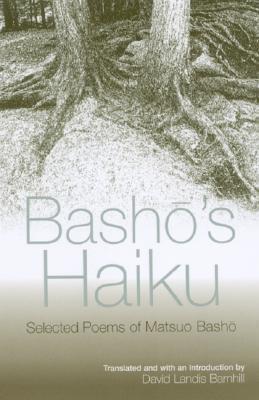
A wonderful new translation of the poetry of Basho Zen monk, poet of nature, and master of the haiku form.

Zen Buddhism distinguishes itself by brilliant flashes of insight and its terseness of expression. The haiku verse form is a superb means of studying Zen modes of thought and expression, for its seventeen syllables impose a rigorous limitation that confines the poet to vital experience. Here haiku by Bashõ are translated by Robert Aitken, with commentary that provides a new and far deeper understanding of Bashõ’s work than ever before.In presenting themes from the haiku and from Zen literature that open the doors both to the poems and to Zen itself, Aitken has produced the first book about the relationship between Zen and haiku. His readers are certain to find it invaluable for the remarkable revelations it offers.
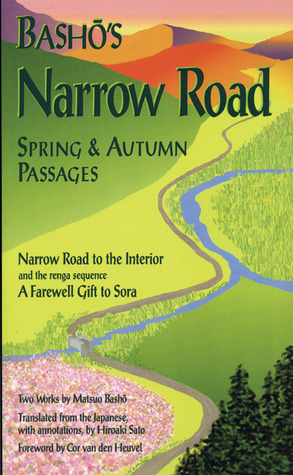
Matsuo Basho (1644-94) is considered Japan's greatest haiku poet. Narrow Road to the Interior (Oku no Hosomichi) is his masterpiece. Ostensibly a chronological account of the poet's five-month journey in 1689 into the deep country north and west of the old capital, Edo, the work is in fact artful and carefully sculpted, rich in literary and Zen allusion and filled with great insights and vital rhythms. In Basho's Narrow Spring and Autumn Passages , poet and translator Hiroaki Sato presents the complete work in English and examines the threads of history, geography, philosophy, and literature that are woven into Basho's exposition. He details in particular the extent to which Basho relied on the community of writers with whom he traveled and joined in linked verse (renga) poetry sessions, an example of which, A Farewell Gift to Sora , is included in this volume. In explaining how and why Basho made the literary choices he did, Sato shows how the poet was able to transform his passing observations into words that resonate across time and culture.

Step into a series of dazzling, funny, melancholy, and joyous moments with this collection of haiku masterworks. Beloved translator Peter Beilenson’s goal was twofold: to craft a book of haiku accessible to anyone, and to render his best guess at what the poets would have written in English. His translations preserve the sublime spirit of each verse, conjuring vivid visual and emotional impressions in spare words.Haiku icon Basho is represented amply here, as are imagery-virtuoso Buson and wry, warm, painfully human Issa. The verses of Shiki, Joso, Kyorai, Kikaku, Chora, Gyodai, Kakei, Izen, and others also appear, all illuminated by lovely woodblock prints. Ranging from exquisite (In the sea surf edge/Mingling with the bright small shells…/Bush-clover petals –Basho) to bittersweet (Dead my fine hopes/And dry my dreaming, but still…/Iris, blue each spring –Shushiki) to silly (Dim the grey cow comes/Mooing, mooing, and mooing/Out of the morning mist –Issa), this collection will stir your senses and your heart.

Also known as The Story of the Aged Mother, this Japanese folktale tells the story of an unkind ruler who issues cruel orders, including one demand that all old folks are to be abandoned and left to die. Basho tells a poignant story about a mother and her son and their love for one another.

Offers the most comprehensive collection of Basho's prose available, beautifully translated into English.In Basho's Journey, David Landis Barnhill provides the definitive translation of Matsuo Basho's literary prose, as well as a companion piece to his previous translation, Basho's Haiku . One of the world's greatest nature writers, Basho (1644–1694) is well known for his subtle sensitivity to the natural world, and his writings have influenced contemporary American environmental writers such as Gretel Ehrlich, John Elder, and Gary Snyder. This volume concentrates on Basho's travel journal, literary diary (Saga Diary), and haibun. The premiere form of literary prose in medieval Japan, the travel journal described the uncertainty and occasional humor of traveling, appreciations of nature, and encounters with areas rich in cultural history. Haiku poetry often accompanied the prose. The literary diary also had a long history, with a format similar to the travel journal but with a focus on the place where the poet was living. Basho was the first master of haibun, short poetic prose sketches that usually included haiku.As he did in Basho's Haiku, Barnhill arranges the work chronologically in order to show Basho's development as a writer. These accessible translations capture the spirit of the original Japanese prose, permitting the nature images to hint at the deeper meaning in the work. Barnhill's introduction presents an overview of Basho's prose and discusses the significance of nature in this literary form, while also noting Basho's significance to contemporary American literature and environmental thought. Excellent notes clearly annotate the translations.“Barnhill’s approach to translation is straightforward and unfussy, aiming to be as accurate as possible, making his two volumes a highly serviceable compilation. They will be of great value to readers.” — The Japan Times"Read cover to cover, the volume presents the breadth of Basho’s prose. If you open it randomly, on almost every page you encounter haunting images of the landscape, village life, and literary culture of Japan. This book inspires us to stop and pay attention to the poetry of the world around us." — Buddhadharma“…Barnhill reveals the importance of narrative and social contexts in reading Basho. Barnhill’s careful translations and notes reveal a poet both independent and pious … Above all, Basho’s experience of ‘cultured nature’ emerges unforgettably.” — The Providence Sunday Journal on Basho ’s Journey and Basho ’s Haiku"Barnhill's translations maintain the Japanese originals' direct sparseness, and retain their dramatic sequence, which all too many translations unfortunately and unnecessarily sacrifice." — Taigen Dan Leighton, cotranslator of Dogen's Pure Standards for the Zen A Translation of Eihei Shingi


Bashō est l'une des figures majeures de la poésie classique japonaise. Par la force de son œuvre, il a imposé dans sa forme l'art du haiku, mais il en a surtout défini la manière, l'esprit : légèreté, recherche de la simplicité et du détachement vont de pair avec une extrême attention à la nature. Le haiku naît donc au bord du vide, de cette intuition soudaine, qui illumine le poème, c'est l'instant révélé dans sa pureté.La vie de ce fils de samourai, né près de Kyoto en 1644, fut exclusivement vouée à la poésie. Âgé de treize ans, il apprend auprès d'un maître du haikai les premiers rudiements de ce genre. Plus tard, après avoir lui-même fondé une école et connu le succès à Edo (l'actuelle Tokyo), il renonce à la vie mondaine, prend l'habit de moine, et s'installe dans son premier ermitage. Devant sa retraire il plante un bananier, un bashō, offert par l'un de ses disciples - ce qui lui vaudra son pseudonyme. Sa vie est dès lors faite de pauvreté, d'amitiés littéraires et de voyages. Osaka sera le dernier. Après avoir dicté un ultime haiku à ses disciples éplorés, il cesse de s'alimenter, brûle de l'encens, dicte son testament, demande à ses élèves d'écrire des vers pour lui et de le laisser seul. Il meurt le 28 novembre 1694. Sur sa tombe on plante un bashō.

Výbor z díla čtyř proslulých představitelů japonského haiku. Zastoupen je „zenový filosof – estét“ Bašó (1644–1694), „boží člověk“ Issa (1763–1827), „malíř a intelektuál“ Buson (1716–1783) a „piják a poutník“ Santóka (1882–1940).Bašó se ve svém stylu zaměřil zejména na neosobní přírodní lyriku, kladl důraz na přirozenost a prostotu výrazu, uváděl do poezie novou, svěží symboliku všedního života i přírody. Usiloval v poezii o vtipnost a neotřelost.Issova poezie vyjadřovala vedle básní s tradičními přírodními náměty i lidské city, především chápavé soucítění se všemi slabými a trpícími živými tvory, ale i upřímné rozhořčení nad každou křivdou a nespravedlností. Charakteristickými rysy jeho stylu jsou i humor a satira.Buson vycházel z principů Bašóova stylu, tj. z objektivního bedlivého pozorování detailů a vyústění trojverší do nečekaných konfrontací s hlubším filozofickým nábojem, ale připojil k němu svůj malířský smysl pro impresionistickou črtu, zachycující náladu okamžiku v takřka vizuálně působivém podání.Santóka se nestaral o formální náležitosti haiku ani o mluvnická pravidla. Macuo Bašó a Taneda Santóka studovali pod vedením zenových mistrů a Santóka sám se stal zenovým mnichem. V jejich poezii je proto patrný vliv učení zenového buddhismu.„Duchovní zdroje haiku je třeba hledat v pevně zakotveném šintoistickém bytí ve světě, v hlubokém souzvuku přírodního člověka s bližními tvory. Stará japonština nerozlišuje mezi ‚věcí‘ a živou bytostí; všechno je mono, ať je to skála, vodopád, brouk či člověk. Nic není ničemu nadřazeno či podřízeno a celá osnova života je posvátná.Dalším významným duchovním zdrojem haiku je zenový buddhismus. Zen se zcela vymknul složitým logickým doktrinám indického buddhismu a položil důraz na bezprostřední prožitek skutečnosti, na meditaci a na mystickou zkušenost jako zdroj poznání. Epistemologie zenu byla ovlivněna učením buddhistické školy Kegon, která klade důraz na jednotu člověka a vesmíru, na posvátnost skutečnosti, a má za to, že pravda nedlí ani v subjektu ani v objektu, ale někde mezi nimi. Pravda se tedy může realizovat jen jako výsledek vzájemné souhry či střetu lidského subjektu a světa.“ – Antonín Líman (z úvodu)Úvodem opatřil Antonín Líman.Kaligrafie Petr Geisler.Obálku s použitím obrazu Josy Busona Venkovská chata v bambusovém háji a grafickou úpravu navrhl David Pohribný.

Japanese poetry is well-known for its clarity and concision, and The Narrow Road to the Interior and H?j?ki are two of the best-loved, and most intensely Japanese, works of their kind; famous for their beautiful, delicate verse and subtle insight into the human condition. It has been said of The Narrow Road that it was as if the very soul of Japan had itself written it. It takes the form of a travel diary, and traces the poets journey from Edo (modern-day Tokyo) to the northern interior. H?j?ki, a much earlier work written by Ch?mei, a Buddhist hermit, is essentially a meditation on the transience of the world. Read by the famous classical Japanese actor Togo Igawa, the full beauty of its ancient cadences and rhythms is drawn out.
![O Eremita Viajante [haikus – obra completa]](https://m.media-amazon.com/images/S/compressed.photo.goodreads.com/books/1474369088i/32141432.jpg)
O poema haiku não inferioriza nem zomba, não se serve do intelecto, valoriza as coisas pequenas, valendo-se da surpresa e de um reduzido vocabulário, começa ainda antes da primeira letra da primeira estrofe e acaba muito depois da última sílaba da terceira estrofe. É poesia despersonalizada, já quase fora da linguagem comum, nasce no silêncio, atravessa, como um relâmpago, o olhar do contemplador e regressa ao silêncio; e enquanto existiu pareceu durar o tempo de um movimento respiratório. Resultante em grande parte da contemplação da beleza e comportamentos da natureza, este estilo poético assume-se como fenómeno que transcende o pessoal, é puro presente, é um momento suspenso, eterno em si mas que não volta a acontecer. Nele, desaparece a separação observador/observado, para dar lugar à ausência de ego, à manifestação do sublime. No final da breve leitura do poema, o leitor arrisca-se a ser percorrido por um calafrio que não poupará nenhuma célula do seu corpo; talvez o seu olhar se semicerre e se suspenda no seio de um horizonte para além do horizonte visível; talvez assome ao canto dos seus lábios o movimento de um sorriso somenteperceptível pelo olhar puro das crianças e dos animais. imóvel contemplo a lua e os outros pensam que sou cego

Quintessential classical Japanese haiku--selected and translated by one of America's premier poet-translators--now available in a pocket edition.In this collection of haiku, translator Sam Hamill has compiled the best from the tradition, spanning the sixteenth through nineteenth centuries, with particular focus on the three great Bashō, Buson, and Issa. Based on images from nature, the poems address the themes of joy, temporality, beauty, wonder, loneliness, and loss.Haiku may be the most popular and widely recognizable poetic form in the world. In just three lines a great haiku presents a crystalline moment of image, emotion, and awareness. Elements of compassion, silence, and a sense of temporality often combine to reveal a quality of mystery. Just as often, haiku may bring a startling insight into the ordinary, or a flash of humor. Collected here are over two hundred of the best haiku of Japanese literature--written by the great masters of the genre.The featured poets are Bashō, Buson, Issa, Moritake, Sōin, Sanpū, Kikaku, Ransetsu, Kyorai, Raizan, Kakei, Onitsura, Taigi, Chiyo, Sogetsuni, Sogi, Fuhaku, Teiga, Kikusha-ni, Tayo-jo, Sōchō, Shōha, and Shiki. This is a pocket-size reissue of The Sound of Water (Shambhala, 1995).

Step into a series of dazzling, funny, melancholy, and joyous moments with this collection of haiku masterworks. Beloved translator Peter Beilenson’s goals were twofold: to craft a book of haiku accessible to anyone, and to render his best guess at what the poets would have written in English. His translations preserve the sublime spirit of each verse, conjuring vivid visual and emotional impressions in spare words.Haiku icon Basho is represented amply here, as are imagery-virtuoso Buson and wry, warm, painfully human Issa. The verses of Shiki, Joso, Kyorai, Kikaku, Chora, Gyodai, Kakei, Izen, and others also appear, all illuminated by lovely woodblock prints. From the peaceful (Moonlight nightingale/Casts a whistling line of sound/Over the millpond–Basho) to the lively (Sudden radiance…/After October rainstorm/Re-reddened peppers–Buson) to the downright absurd (Ah sacred swallow…/Twittering from your nest in/Great Buddha’s nostril–Issa), this collection will stir your senses and your heart.
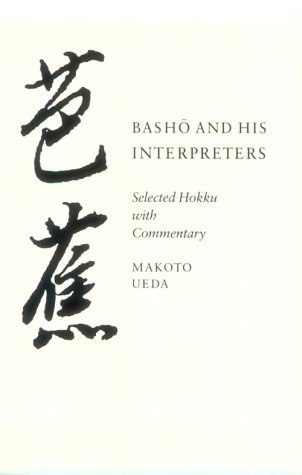
This book has a dual purpose. The first is to present in a new English translation 255 representative hokku (or haiku) poems of Matsuo Basho (1644-94), the Japanese poet who is generally considered the most influential figure in the history of the genre. The second is to make available in English a wide spectrum of Japanese critical commentary on the poems over the last three hundred years.

Nueva antología de haikus del maestro japonés Matsuo Bashô. Edición bilingüe castellano-japonés."Tras de la lluviase yergue el crisantemo:leve presencia"

" ამ წიგნის მიზანია, ქართველ მკითხველს გააცნოს მხოლოდ უმცირესი ნაწილი მეჩვიდმეტე საუკუნის გენიალური იაპონელი პოეტის შემოქმედებისა, შესდავაზოს მას საკუთრივ ქართულისაგან სრულიად განსხვავებული ხედვა სამყაროსი, სრულიად სხვაგვარი მსოფლხედველობა, როგორც სახეობრივი, ისე ენობრივი, გამომსახველობითი თვალსაზრისით."


El autor narra lo que experimenta a cada paso. Esa capacidad suya de transmitir experiencia lo sitúa de cuajo en nuestra actualidad de lectores deseosos, como él, de vivir a fondo lo que nos toca y, en lo posible, certificarlo, exteriorizarlo, de alguna manera enunciarlo, con palabras y en actos.

Basho es un maestro del haiku, y es también el máximo representante de la poesía japonesa, su influencia en la poesía europea es totalmente decisiva; sin embargo ni quiso ser un maestro ni le interesaba el protagonismo o cualquier tipo de renombreFue simplemente un poeta que caminó mucho, que amó mucho y sufrió mucho. Se le ha llamado poeta de la naturaleza, pero lo cierto es que todo verdadero poeta es un poeta del hombre pues sus poemas nos engrandecen y nos hacen mejores.La primera edición completa de los haikus de Basho en castellano Una nueva traducción de toda su poesía Detalladas notas a pie de cada poema Introducción, exégesis poética y cronología

Basho is een van de sleutelfiguren in de geschiedenis van de haiku – de vermaarde Japanse dichtvorm. De haiku is een vingerhoed vol emotie, waarin de natuur een centrale plaats inneemt. In drie regels wordt een ‘ogenblikervaring’ uitgedrukt.Internationaal is Basho een van de geliefdste Japanse dichters. Zijn schijnbaar eenvoudige poëzie is doordrongen van natuurbesef en vergankelijkheid, maar ook van het tragische verloop van de Japanse geschiedenis. Daarnaast zijn het aangrijpende getuigenissen van een reiziger zonder thuis.