
Peter Matthiessen
Peter Matthiessen is the author of more than thirty books and the only writer to win the National Book Award for both non-fiction (The Snow Leopard, in two categories, in 1979 and 1980) and fiction (Shadow Country, in 2008). A co-founder of The Paris Review and a world-renowned naturalist, explorer and activist, he died in April 2014.
30 Books Written

In a malarial outpost in the South American rain forest, two misplaced gringos converge and clash. Martin Quarrier has come to convert the fearful and elusive Niaruna Indians to his brand of Christianity. Lewis Moon, a stateless mercenary who is himself part Indian, has come to kill them on behalf of the local commandant. Out of their struggle Peter Matthiessen has created an electrifying moral thriller, a novel of Conradian richness that explores both the varieties of spiritual experience and the politics of cultural genocide.

In 1973, Peter Matthiessen and field biologist George Schaller traveled high into the remote mountains of Nepal to study the Himalayan blue sheep and possibly glimpse the rare and beautiful snow leopard. Matthiessen, a student of Zen Buddhism, was also on a spiritual quest to find the Lama of Shey at the ancient shrine on Crystal Mountain. As the climb proceeds, Matthiessen charts his inner path as well as his outer one, with a deepening Buddhist understanding of reality, suffering, impermanence, and beauty. This Penguin Classics edition features an introduction by acclaimed travel writer and novelist Pico Iyer.For more than seventy years, Penguin has been the leading publisher of classic literature in the English-speaking world. With more than 1,700 titles, Penguin Classics represents a global bookshelf of the best works throughout history and across genres and disciplines. Readers trust the series to provide authoritative texts enhanced by introductions and notes by distinguished scholars and contemporary authors, as well as up-to-date translations by award-winning translators.

Peter Matthiessen’s great American epic–Killing Mister Watson, Lost Man’s River, and Bone by Bone–was conceived as one vast mysterious novel, but because of its length it was originally broken up into three books. In this bold new rendering, Matthiessen has cut nearly a third of the overall text and collapsed the time frame while deepening the insights and motivations of his characters with brilliant rewriting throughout. In Shadow Country, he has marvelously distilled a monumental work, realizing his original vision. Inspired by a near-mythic event of the wild Florida frontier at the turn of the twentieth century, Shadow Country reimagines the legend of the inspired Everglades sugar planter and notorious outlaw E. J. Watson, who drives himself relentlessly toward his own violent end at the hands of neighbors who mostly admired him, in a killing that obsessed his favorite son.Shadow Country traverses strange landscapes and frontier hinterlands inhabited by Americans of every provenance and color, including the black and Indian inheritors of the archaic racism that, as Watson’s wife observed, "still casts its shadow over the nation."

In the Spirit of Crazy Horse: The Story of Leonard Peltier and the FBI's War on the American Indian Movement
by Peter Matthiessen
Rating: 4.2 ⭐
An “indescribably touching, extraordinarily intelligent" ( Los Angeles Times Book Review ) chronicle of a fatal gun-battle between FBI agents and American Indian Movement activists by renowned writer Peter Matthiessen (1927-2014), author of the National Book Award-winning The Snow Leopard and the novel In Paradise On a hot June morning in 1975, a desperate shoot-out between FBI agents and Native Americans near Wounded Knee, South Dakota, left an Indian and two federal agents dead. Four members of the American Indian Movement were indicted on murder charges, and one, Leonard Peltier, was convicted and is now serving consecutive life sentences in a federal penitentiary. Behind this violent chain of events lie issues of great complexity and profound historical resonance, brilliantly explicated by Peter Matthiessen in this controversial book. Kept off the shelves for eight years because of one of the most protracted and bitterly fought legal cases in publishing history, In the Spirit of Crazy Horse reveals the Lakota tribe’s long struggle with the U.S. government, and makes clear why the traditional Indian concept of the earth is so important at a time when increasing populations are destroying the precious resources of our world.

The bestselling final novel by a writer of incomparable range, power, and achievement, a three-time winner of the National Book Award. Peter Matthiessen was a literary legend, the author of more than thirty acclaimed books. In this, his final novel, he confronts the legacy of evil, and our unquenchable desire to wrest good from it. One week in late autumn of 1996, a group gathers at the site of a former death camp. They offer prayer at the crematoria and meditate in all weathers on the selection platform. They eat and sleep in the sparse quarters of the Nazi officers who, half a century before, sent more than a million Jews in this camp to their deaths. Clements Olin has joined them, in order to complete his research on the strange suicide of a survivor. As the days pass, tensions both political and personal surface among the participants, stripping away any easy pretense to resolution or healing. Caught in the grip of emotions and impulses of bewildering intensity, Olin is forced to abandon his observer’s role and to bear witness, not only to his family’s ambiguous history but to his own. Profoundly thought-provoking, In Paradise is a fitting coda to the luminous career of a writer who was “for all readers. He was for the world” ( National Geographic ).

By the author of "The Snow Leopard", "The Tree Where Man Was Born" and "On the River Styx", this novel is based around the circumstances of the death of a man in Florida 1910, who had terrorized his community and who very possibly had a criminal past.

Nine men aboard an old Caribbean schooner drift in search of the fishing grounds of their forefathers, to find only a modern world in which they have no place. This powerful story of the sea is also a resonantly symbolic account of the relations between man and nature.An adventure story and a deeply considered meditation upon the sea itself.

In this classic volume, Matthiessen exquisitely combines both nature and travel writing to bring East Africa to vivid life. He skillfully portrays the daily lives of herdsmen and hunter-gatherers; the drama of the predator kills; the hundreds of exotic animals; the breathtaking landscapes; and the area's turbulent natural, political, and social histories.

Peter Matthiessen is one of the few American writers ever nominated for the National Book Award for both fiction and nonfiction.When his novel Killing Mister Watson was published in 1990, the reviews were extraordinary. It was heralded as "a marvel of invention . . . a virtuoso performance" ( The New York Times Book Review ) and a "novel [that] stands with the best that our nation has produced as literature" ( Los Angeles Times Book Review ). Now Peter Matthiessen brings us the second novel in his Watson trilogy, a project that has been nearly twenty years in the writing. A story of epic scope and ambition, Lost Man's River confronts the primal relationship between a dangerous father and his desperate sons and the ways in which his death has shaped their lives.Lucius Watson is obsessed with learning the truth about his father. Who was E. J. Watson? Was he a devoted family man, an inspired farmer, a man of progress and vision? Or was he a cold-blooded murderer and amoral opportunist? Were his neighbors driven to kill him out of fear? Or was it envy? And if Watson was a killer, should the neighbors fear the obsessed Lucius when he returns to live among them and ask questions?The characters in this tale are men and women molded by the harsh elements of the Florida Everglades--an isolated breed, descendants of renegades and pioneers, who have only their grit, instinct, and tradition to wield against the obliterating forces of twentieth-century Speck Daniels, moonshiner and alligator poacher turned gunrunner; Sally Brown, who struggles to escape the racism and shame of her local family; R. B. Collins, known as Chicken, crippled by drink and rage, who is the custodian of Watson secrets; Watson Dyer, the unacknowledged namesake with designs on the remote Watson homestead hidden in the wild rivers; and Henry Short, a black man and unwilling member of the group of armed island men who awaited E. J. Watson in the silent twilight. Only a storyteller of Peter Matthiessen's dazzling artistry could capture the beauty and strangeness of life on this lawless frontier while probing deeply into its underlying the brutal destruction of the land in the name of progress, and the racism that infects the heart of New World history.
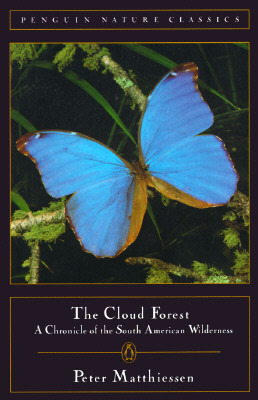
A classic work of nature and humanity, by renowned writer Peter Matthiessen (1927-2014), author of the National Book Award-winning The Snow Leopard and the new novel In Paradise Peter Matthiessen crisscrossed 20,000 miles of the South American wilderness, from the Amazon rain forests to Machu Picchu, high in the Andes, down to Tierra del Fuego and back. He followed the trails of old explorers, encountered river bandits, wild tribesmen, and the evidence of ancient ruins, and discovered fossils in the depths of the Peruvian jungle. Filled with observations and descriptions of the people and the fading wildlife of this vast world to the south, The Cloud Forest is his incisive, wry report of his expedition into some of the last and most exotic wild terrains in the world.For more than seventy years, Penguin has been the leading publisher of classic literature in the English-speaking world. With more than 1,700 titles, Penguin Classics represents a global bookshelf of the best works throughout history and across genres and disciplines. Readers trust the series to provide authoritative texts enhanced by introductions and notes by distinguished scholars and contemporary authors, as well as up-to-date translations by award-winning translators.

In August 1968, naturalist-explorer Peter Matthiessen returned from Africa to his home in Sagaponack, Long Island, to find three Zen masters in his driveway—guests of his wife, a new student of Zen. Thirteen years later, Matthiessen was ordained a Buddhist monk. Written in the same format as his best-selling The Snow Leopard, Nine-Headed Dragon River reveals Matthiessen's most daring adventure of all: the quest for his spiritual roots.

Peter Matthiessen is one of America's most respected writers and one of the very few National Book Award winners nominated for both fiction and nonfiction. Bone by Bone is arguably his finest novel. Although it stands alone, it is also the capstone of the Watson trilogy, which has been described by the San Francisco Chronicle Book Review as "one of the grand projects of contemporary literature." In the critically acclaimed Killing Mister Watson , Peter Matthiessen brilliantly re-created the life of the legendary E. J. Watson, who was gunned down by a posse of fearful neighbors before World War I. In his masterful sequel, Lost Man's River, Matthiessen returned us to the lawless frontier of the Florida Everglades, where Watson's son Lucius sought to untangle the knot of truth and lies surrounding his notorious father and his strange death. And now, in Bone by Bone, the story unfolds in its final form, in the voice of the enigmatic Mister Watson himself. From his early days as an impoverished child of the Reconstruction era, through the unjust loss of his inherited plantation, to his bloody death in front of his loving wife and children, E. J. Watson was capable of vision and ingenuity, mercy and courage, and sudden, astonishing violence. He was an entrepreneurial sugarcane farmer in the uncharted waterways of the Everglades, an exile in the Indian territories, a devoted father, and, allegedly, the killer of numerous men. He was forced to flee home and family time after time. In Bone by Bone , Peter Matthiessen has accomplished the writer's ultimate He has laid bare the humanity at the heart of a dangerous and controversial figure and, in doing so, has added to our understanding of the abiding mystery of human nature.

A classic work of nature and humanity, by renowned writer Peter Matthiessen (1927-2014), author of the National Book Award-winning The Snow Leopard and the new novel In Paradise National Book Award-winning author Peter Matthiessen takes readers on an expedition to find the most dangerous predator on Earth—the legendary great white shark. On a trek that lasts 17 months and takes him from the Caribbean to the whaling grounds off South Africa, and across the Indian Ocean to the South Australian coast, Matthiessen describes the awesome experience of swimming in open water among hundreds of sharks; the beauties of strange seas and landscapes; and the camaraderie, tension, humor, and frustrations that develop when people continually risking their lives dwell in close proximity day after day. Filled with acute observations of natural history in exotic areas around the world, Blue Meridian records a harrowing account of one of the great adventures of our time.

“You don’t have to be a ‘craniac’ . . . to appreciate [this book] . . . All you really need is a passion for prose as good as it gets.” — Chicago TribuneIn legend, cranes often figure as harbingers of heaven and omens of longevity and good fortune. And in nature, they are an “umbrella species” whose well-being assures that of the ecosystem at large. The Birds of Heaven chronicles Peter Matthiessen’s many journeys on five continents in search of the fifteen species of cranes. His telling captures the dilemmas of a planet in ecological crisis, and the deep loss to humankind if these beautiful and imposing creatures are allowed to disappear.

No more than a few thousand tigers survive in pockets of Asia, a continent they once roamed far and wide. The largest of them, the Siberian tiger, is today almost entirely confined to the little-populated Russian Far East, a region that may offer the species' best hope for survival. But the implosion of the Soviet Union intensified poaching and habitat depredation, prompting a group of Russian researchers and U.S. wildlife biologists led by Maurice Hornocker to join forces to stave off extinction.Peter Matthiessen brings to the Siberian tiger the deep knowledge of and feeling for the natural world that have made classics of his previous books. Accompanying researchers into the field, he allows the reader to participate vicariously in the battle for the tiger's future. Along the way, he tells how the species evolved and evokes its crucial, often totemic role in human cultures and mythologies. He has made of the tiger's dilemma a drama-underscored by Hornocker's one-of-a-kind photographs-that conveys powerfully what a loss to our collective imagination the disappearance of these great cats would be.
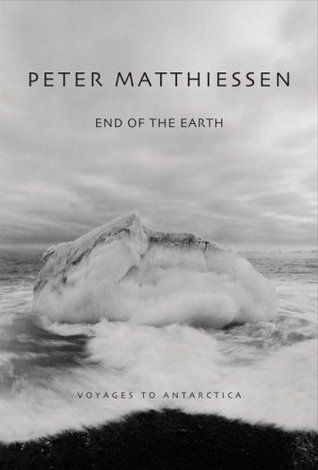
End of the Earth brings to life the waters of the richest whale feeding grounds in the world, the wandering albatross with its 11-foot wingspan arching through the sky, and the habits of every variety of seal, walrus, petrel, and penguin in the area, all with boundless and contagious inquisitiveness. Magnificently written, the book evokes an appreciation and sympathy for a region as harsh as it is beautiful."Luminous and haunting . . . the contemporary Thoreau."--The Wall Street Journal"[Matthiessen] doesn't waste words, and in End of the Earth: Voyages to Antarctica, his homage to the austere splendor of that frozen continent, he hasn't deployed a single one whose choice I would care to take issue with. . . . Matthiessen writes crusty, chiseled sentences that demand to be read slowly--the perfect prose equivalent of the landscapes he's describing."--The New York Times Book Review "Matthiessen and polar landscapes seem perfectly suited. . . . I found myself constantly re-reading sentences or paragraphs to savour all of their rich resonances. . . . Few if any authors on the region have so successfully compressed . . . Antarctic life . . . and I suspect it will become standard reading."--The Guardian

African Silences is a powerful and sobering account of the cataclysmic depredation of the African landscape and its wildlife. In this critically acclaimed work Peter Matthiessen explores new terrain on a continent he has written about in two previous books, A Tree Where Man Was Born -- nominated for the National Book Award -- and Sand Rivers.Through his eyes we see elephants, white rhinos, gorillas, and other endangered creatures of the wild. We share the drama of the journeys themselves, including a hazardous crossing of the continent in a light plane. And along the way, we learn of the human lives oppressed by bankrupt political regimes and economies, and threatened by the slow ecological catastrophe to which they have only begun to awaken.

An eloquent portrayal of a disappearing way of life of the Long Island fishermen whose voices--humorous, bitter and bewildered--are as clear as the threatened beauty of their once quiet shore.

An exploration of the encroachment of whites on the sacred grounds of the native Americans discusses such tribes as the Miccosukee, Hopi, Cherokee, Mohawk, Urok, Karuk, Lakota, Chumsah, Paiute, Shoshone, Ute, and Navajo. Reprint. NYT.

Under the Mountain Wall: A Chronicle of Two Seasons in Stone Age New Guinea
by Peter Matthiessen
Rating: 3.9 ⭐
A remarkable firsthand view of a lost culture in all its simplicity and violence by renowned writer Peter Matthiessen (1927 to 2014), author of the National Book Award–winning The Snow Leopard and the novel In Paradise. In the Baliem Valley in central New Guinea live the Kurelu, a Stone Age tribe that survived into the twentieth century. Peter Matthiessen visited the Kurelu with the Harvard-Peabody Expedition in 1961 and wrote Under the Mountain Wall as an account not of the expedition, but of the great warrior Weaklekek, the swineherd Tukum, U-mue and his family, and the boy Weake, killed in a surprise raid. Matthiessen observes these people in their timeless rhythm of work and play and war, of gardening and wood gathering, feasts and funerals, pig stealing and ambushes. Drawing on his great skills as a naturalist and novelist, Matthiessen offers an exceptional account of an ancient culture on the brink of incalculable change.

This classic history of the rare, threatened, and extinct animals of North America is a dramatic chronicle of man's role in the disappearance of great and small species of our land. "Should be the number one source volume for everyone who embraces the philosophy of conservation."--Roger Tory Peterson. Illustrations throughout.

Since the 1950s Peter Matthiessen has written fiction and nonfiction of elemental power and moral vision, including the acclaimed novels At Play in the Fields of the Lord and Far Tortuga and works of naturalism and exploration like the National Book Award-winning The Snow Leopard.This stunning collection of short stories, available for the first time in paperback, spans more than three decades of writing by one of the most acclaimed literary voices of our time.

Focusing on a 1979 safari into the Selous Game Reserve in southern Tanzania, the expert text and revealing photographs portray the people, the land, and the numerous wild animals of one of the world's last great wilderness areas

Sal Si Puedes (Escape If You Can): Cesar Chavez and the New American Revolution
by Peter Matthiessen
Rating: 4.0 ⭐
In the summer of 1968 Peter Matthiessen met Cesar Chavez for the first time. They were the same forty-one. Matthiessen lived in New York City while Chavez lived in Sal Si Puedes, the San Jose barrio where his career as a union organizer took off. This book is Matthiessen's panoramic yet finely detailed account of the three years he spent traveling and working with Chavez. In it, Matthiessen provides a candid look into the many sides of this enigmatic and charismatic leader who lived by the laws of nonviolence.More than thirty years later, Sal Si Puedes is less reportage than living history. A whole era comes alive in its the Chicano, Black Power, and antiwar movements; the browning of the labor movement; Chavez's series of hunger strikes; the nationwide boycott of California grapes. When Chavez died in 1993, thousands gathered at his funeral. It was a clear sign of how beloved he was, how important his life had been.A new postscript by the author brings the reader up to date as to the events that have unfolded since the writing of Sal Si Puedes. Ilan Stavans's insightful foreword considers the significance of Chavez's legacy for our time. As well as serving as an indispensable guide to the 1960s, this book rejuvenates the extraordinary vitality of Chavez's life and spirit, giving his message a renewed and much-needed urgency.

In this nature-writing classic, now available for the first time in paperback, National Book Award winner Petter Matthiessen captures the essence of the world's most fascinating group of birds. "The restlessness of shorebirds, their kinship with distance and swift seasons, the wistful signal of their voice down the long coastlines of the world make them, for me, the most affecting of wild creatures," writes Matthiessen. He conveys the biological and behavioral intricacies of shorebirds without dulling their romance and wonder.

". . . one of the finest novels to come along since the advent of John Updike . . . brilliantly realized and written with an economy and sureness of control that are magnificent."--San Francisco Examiner.

"Our greatest modern nature writer in the lyrical tradition." -- The New York Times Book Review"Matthiessen is a great travel companion. . . . His knowledge of plants, animals and people is breathtaking." -- The Boston GlobePerhaps no writer has better articulated our relationship to the environment than Peter Matthiessen. From Wildlife in America to Men's Lives , his work has captured the wonder of the natural world--and the horrors of resource exploitation, with its violent effects on traditional peoples and the poor.In The Peter Matthiessen Reader , editor McKay Jenkins presents a single-volume collection of this distinguished author's nonfiction. Here are essays and excerpts that highlight the spiritual, literary, and political daring so crucial to Matthiessen's vision. Matthiessen chronicles his 250-mile trek across the Himalaya to the Tibetan Plateau in a selection from the National Book Award winner The Snow Leopard . Wild peoples, wilderness, and wildlife--common themes throughout Matthiessen's oeuvre--are examined with grace and power in The Tree Where Man Was Born . Here too are excerpts from Indian Country and In the Spirit of Crazy Horse , Matthiessen's stunning exposé of the Leonard Peltier case and the ongoing conflict between the U.S. government and the American Indian Movement. Comprehensive and engrossing, The Peter Matthiessen Reader celebrates an American voice unequaled in its commitment to literature's noblest to challenge us to perceive our world--as well as ourselves--truthfully and clearly.

Courage for the Earth: Writers, Scientists, and Activists Celebrate the Life and Writing of Rachel Carson
by Peter Matthiessen
Rating: 3.8 ⭐
For environmentally critical times, Courage for the Earth is a centennial appreciation of Rachel Carson's brave life and transformative writingRachel Carson’s lyrical, popular books about the sea, including her best-selling The Sea Around Us, set a standard for nature writing. By the late 1950s, Carson was the most respected science writer in America.She completed Silent Spring (1962) against formidable personal odds, and with it shaped a powerful social movement that has altered the course of history. In Silent Spring, Carson asserted that “the right of the citizen to be secure in his own home against the intrusion of poisons applied by other persons” must surely be a basic human right. She was the first to challenge the moral vacuity of a government that refused to take responsibility for or to acknowledge evidence of environmental damage.In this volume, today’s foremost scientists and writers give compelling evidence that Carson’s transformative insights -- her courage for the earth -- are giving a new generation of activists the inspiration they need to move consumers, industry, and government to action.Contributors include John Elder, Al Gore, John Hay, Freeman House, Linda Lear, Robert Michael Pyle, Janisse Ray, Sandra Steingraber, Terry Tempest Williams, and E. O. Wilson

The 1990 journey of Matthiessen, Paul Winter and a group of Russian environmentalists who traveled around Siberia's Lake Baikal, the world's oldest and deepest lake, containing one-fifth of the planet's fresh water, is chronicled in diary form. Norton's 50 color photos enhance the text. A portion of the royalties go to Baikal Watch. Map.

First published in 1955, this "first-rate psychological thriller" tells of a young American journalist's dangerous pursuit of a deposed Communist leader down the back streets of Paris.