
William Dalrymple
Librarian Note: There is more than one author by this name in the Goodreads database. William Dalrymple was born in Scotland and brought up on the shores of the Firth of Forth. He wrote the highly acclaimed bestseller In Xanadu when he was twenty-two. The book won the 1990 Yorkshire Post Best First Work Award and a Scottish Arts Council Spring Book Award; it was also shortlisted for the John Llewellyn Rhys Memorial Prize. In 1989 Dalrymple moved to Delhi where he lived for six years researching his second book, City of Djinns, which won the 1994 Thomas Cook Travel Book Award and the Sunday Times Young British Writer of the Year Award. From the Holy Mountain, his acclaimed study of the demise of Christianity in its Middle Eastern homeland, was awarded the Scottish Arts Council Autumn Book Award for 1997; it was also shortlisted for the 1998 Thomas Cook Award, the John Llewellyn Rhys Prize and the Duff Cooper Prize. A collection of his writings about India, The Age of Kali, won the French Prix D’Astrolabe in 2005. White Mughals was published in 2003, the book won the Wolfson Prize for History 2003, the Scottish Book of the Year Prize, and was shortlisted for the PEN History Award, the Kiryama Prize and the James Tait Black Memorial Prize. William Dalrymple is a Fellow of the Royal Society of Literature and of the Royal Asiatic Society, and is the founder and co-director of the Jaipur Literature Festival. In 2002 he was awarded the Mungo Park Medal by the Royal Scottish Geographical Society for his ‘outstanding contribution to travel literature’. He wrote and presented the television series Stones of the Raj and Indian Journeys, which won the Grierson Award for Best Documentary Series at BAFTA in 2002. His Radio 4 series on the history of British spirituality and mysticism, The Long Search, won the 2002 Sandford St Martin Prize for Religious Broadcasting and was described by the judges as ‘thrilling in its brilliance... near perfect radio’. In December 2005 his article on the madrasas of Pakistan was awarded the prize for Best Print Article of the Year at the 2005 FPA Media Awards. In June 2006 he was awarded the degree of Doctor of Letters honoris causa by the University of St Andrews “for his services to literature and international relations, to broadcasting and understanding”. In 2007, The Last Moghal won the prestigous Duff Cooper Prize for History and Biography. In November 2007, William received an Honourary Doctorate of Letters, honoris causa, from the University of Lucknow University “for his outstanding contribution in literature and history”, and in March 2008 won the James Todd Memorial Prize from the Maharana of Udaipur. William is married to the artist Olivia Fraser, and they have three children. They now live on a farm outside Delhi.
29 Books Written

The Anarchy: The East India Company, Corporate Violence, and the Pillage of an Empire
by William Dalrymple
Rating: 4.2 ⭐
• 2 recommendations ❤️
The story of how the East India Company took over large swaths of Asia, and the devastating results of the corporation running a country.In August 1765, the East India Company defeated the young Mughal emperor and set up, in his place, a government run by English traders who collected taxes through means of a private army.The creation of this new government marked the moment that the East India Company ceased to be a conventional company and became something much more unusual: an international corporation transformed into an aggressive colonial power. Over the course of the next 47 years, the company's reach grew until almost all of India south of Delhi was effectively ruled from a boardroom in the city of London.

Sparkling with irrepressible wit, City of Djinns peels back the layers of Delhi's centuries-old history, revealing an extraordinary array of characters along the way—from eunuchs to descendants of great Moguls. With refreshingly open-minded curiosity, William Dalrymple explores the seven "dead" cities of Delhi as well as the eighth city—today's Delhi. Underlying his quest is the legend of the djinns, fire-formed spirits that are said to assure the city's Phoenix-like regeneration no matter how many times it is destroyed. Entertaining, fascinating, and informative, City of Djinns is an irresistible blend of research and adventure.

On a hazy November afternoon in Rangoon, 1862, a shrouded corpse was escorted by a small group of British soldiers to an anonymous grave in a prison enclosure. As the British Commissioner in charge insisted, “No vestige will remain to distinguish where the last of the Great Moghuls rests.”Bahadur Shah Zafar II, the last Mughal Emperor, was a mystic, an accomplished poet and a skilled calligrapher. But while his Mughal ancestors had controlled most of India, the aged Zafar was king in name only. Deprived of real political power by the East India Company, he nevertheless succeeded in creating a court of great brilliance, and presided over one of the great cultural renaissances of Indian history.Then, in 1857, Zafar gave his blessing to a rebellion among the Company’s own Indian troops, thereby transforming an army mutiny into the largest uprising any empire had to face in the entire course of the nineteenth century. The Siege of Delhi was the Raj’s one of the most horrific events in the history of Empire, in which thousands on both sides died. And when the British took the city—securing their hold on the subcontinent for the next ninety years—tens of thousands more Indians were executed, including all but two of Zafar’s sixteen sons. By the end of the four-month siege, Delhi was reduced to a battered, empty ruin, and Zafar was sentenced to exile in Burma. There he died, the last Mughal ruler in a line that stretched back to the sixteenth century.Award-winning historian and travel writer William Dalrymple shapes his powerful retelling of this fateful course of events from groundbreaking previously unexamined Urdu and Persian manuscripts that include Indian eyewitness accounts and records of the Delhi courts, police and administration during the siege. The Last Mughal is a revelatory work—the first to present the Indian perspective on the fall of Delhi—and has as its heart both the dazzling capital personified by Zafar and the stories of the individuals tragically caught up in one of the bloodiest upheavals in history.

From the author of The Last Mughal and In Xanadu, comes a mesmerizing book that explores how traditional religions are observed in today’s India, revealing ways of life that we might otherwise never have known.A middle-class woman from Calcutta finds unexpected fulfillment living as a Tantric in an isolated, skull-filled cremation ground . . . A prison warder from Kerala is worshipped as an incarnate deity for two months of every year . . . A Jain nun tests her powers of detachment watching her closest friend ritually starve herself to death . . . The twenty-third in a centuries-old line of idol makers struggles to reconcile with his son’s wish to study computer engineering . . . An illiterate goatherd keeps alive in his memory an ancient 200,000-stanza sacred epic . . . A temple prostitute, who resisted her own initiation into sex work, pushes her daughters into the trade she nonetheless regards as a sacred calling.William Dalrymple tells these stories, among others, with expansive insight and a spellbinding evocation of remarkable circumstance, giving us a dazzling travelogue of both place and spirit

In the spring of 1839 British forces invaded Afghanistan for the first time, re-establishing Shah Shuja on the throne, in reality as their puppet, and ushering in a period of conflict over the territory still unresolved today. In 1842, the Afghan people rose in answer to the call for jihad against the foreign occupiers, and the country exploded into violent rebellion. In what is arguably the greatest military humiliation ever suffered by the West in the East, more than eighteen thousand cold and hungry British troops, Indian sepoys and camp followers retreated through the icy mountain passes, and of the last survivors who made their final stand at the village of Gandamak, only one man, Dr Brydon, made it through to the British garrison at Jellalabad. An entire army of what was then the most powerful military nation in the world was utterly routed by poorly equipped tribesmen. The West's first disastrous entanglement in Afghanistan has clear and relevant parallels with the current deepening crisis today, with extraordinary similarities between what NATO faces in cities like Kabul and Kandahar, and that faced by the British in the very same cities, fighting the very same tribes, nearly two centuries ago. History at its most urgent, The Return of a King is the definitive analysis of the first Afghan war. With access to a whole range of previously undiscovered sources, including crucial new material in Russian, Urdu and Persian, and contemporary Afghan accounts including the autobiography of Shah Shuja himself, prize-winning and bestselling historian William Dalrymple's masterful retelling of Britain's greatest imperial disaster is a powerful and important parable of neo-colonial ambition and cultural collision, folly and hubris, for our times.

White Mughals is the romantic and ultimately tragic tale of a passionate love affair that crossed and transcended all the cultural, religious and political boundaries of its time. James Achilles Kirkpatrick was the British Resident at the court of the Nizam of Hyderabad when in 1798 he glimpsed Kahir un-Nissa—'Most excellent among Women'—the great-niece of the Nizam's Prime Minister and a descendant of the Prophet. Kirkpatrick had gone out to India as an ambitious soldier in the army of the East India Company, eager to make his name in the conquest and subjection of the subcontinent. Instead, he fell in love with Khair and overcame many obstacles to marry her—not least of which was the fact that she was locked away in purdah and engaged to a local nobleman. Eventually, while remaining Resident, Kirkpatrick converted to Islam, and according to Indian sources even became a double-agent working for the Hyderabadis against the East India Company.It is a remarkable story, involving secret assignations, court intrigue, harem politics, religious and family disputes. But such things were not unknown; from the early sixteenth century, when the Inquisition banned the Portuguese in Goa from wearing the dhoti, to the eve of the Indian mutiny, the 'white Mughals' who wore local dress and adopted Indian ways were a source of embarrassments to successive colonial administrations. William Dalrymple unearths such colourful figures as 'Hindoo Stuart', who travelled with his own team of Brahmins to maintain his temple of idols, and who spent many years trying to persuade the memsahibs of Calcutta to adopt the sari; and Sir David Ochterlony, Kirkpatrick's counterpart in Delhi, who took all thirteen of his wives out for evening promenades, each on the back of their own elephant.In White Mughals, William Dalrymple discovers a world almost entirely unexplored by history, and places at its centre a compelling tale of love, seduction and betrayal. It possesses all the sweep and resonance of a great nineteenth-century novel, set against a background of shifting alliances and the manoeuvring of the great powers, the mercantile ambitions of the British and the imperial dreams of Napoleon. White Mughals, the product of five years' writing and research, triumphantly confirms Dalrymple's reputation as one of the finest writers at work today.
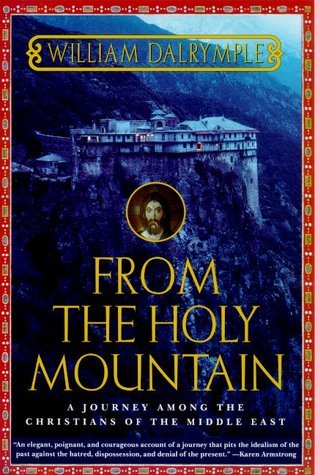
From the Holy Mountain: A Journey Among the Christians of the Middle East
by William Dalrymple
Rating: 4.3 ⭐
In 587 a.d., two monks set off on an extraordinary journey that would take them in an arc across the entire Byzantine world, from the shores of the Bosphorus to the sand dunes of Egypt. On the way John Moschos and his pupil Sophronius the Sophist stayed in caves, monasteries, and remote hermitages, collecting the wisdom of the stylites and the desert fathers before their fragile world finally shattered under the great eruption of Islam. More than a thousand years later, using Moschos's writings as his guide, William Dalrymple sets off to retrace their footsteps and composes "an evensong for a dying civilization" -- Kirkus Reviews, starred review
While waiting for the results of his college exams, William Dalrymple decides to fill in his summer break with a trip. But the vacation he plans is no light-hearted student jaunt—he decides to retrace the epic journey of Marco Polo from Jerusalem to Xanadu, the ruined palace of Kubla Khan, north of Peking. For the first half of the trip he is accompanied by Laura, whom he met at a dinner party two weeks before he left; for the second half he is accompanied by Louisa, his very recently ex-girlfriend. Intelligent and funny, In Xanadu is travel writing at its best.

William Dalrymple has proved himself to be one of the most perceptive and enjoyable travel writers of the 1990s. His first book, In Xanadu, became an instant backpacker's classic, winning a stream of literary prizes. City of Djinns and From the Holy Mountain soon followed, to universal critical praise. Yet it is India that Dalrymple continues to return to in his travels, and his fourth book, The Age of Kali, is his most reflective book to date. The result of 10 year's living and traveling throughout the Indian subcontinent, The Age of Kali emerges from Dalrymple's uneasy sense that the region is slipping into the most fearsome of all epochs in ancient Hindu cosmology: "the Kali Yug, the Age of Kali, the lowest possible throw, an epoch of strife, corruption, darkness, and disintegration." "The brilliance of this book lies in its refusal to reflect any cultural pessimism. Dalrymple's love for the subcontinent, and his feel for its diverse cultural identity, comes across in every page, which makes its chronicles of political corruption, ethnic violence, and social disintegration all the more poignant. The scope of the book is particularly impressive, from the vivid opening chapters portraying the lawless caste violence of Bihar, to interviews with the drug barons on the North-West Frontier, and Dalrymple's extraordinary encounter with the Tamil Tigers in Sri Lanka. Some of the most fascinating sections of the book are Dalrymple's interviews with Imran Khan and Benazir Bhutto in Pakistan, which read like nonfiction companion pieces to Salman Rushdie's bitterly satirical Shame. The Age of Kali is a dark, disturbing book that takes the pulse of a continent facing some tough questions. --Jerry Brotton, Amazon.co.uk

The first comprehensive and authoritative history of the Koh-i Noor, arguably the most celebrated and mythologised jewel in the world. On 29 March 1849, the ten-year-old Maharajah of the Punjab was ushered into the magnificent Mirrored Hall at the centre of the great Fort in Lahore. There, in a public ceremony, the frightened but dignified child handed over to the British East India Company in a formal Act of Submission to Queen Victoria not only swathes of the richest land in India, but also arguably the single most valuable object in the subcontinent: the celebrated Koh-i Noor diamond. The Mountain of Light. The history of the Koh-i-Noor that was then commissioned by the British may have been one woven together from gossip of Delhi Bazaars, but it was to be become the accepted version. Only now is it finally challenged, freeing the diamond from the fog of mythology which has clung to it for so long. The resulting history is one of greed, murder, torture, colonialism and appropriation through an impressive slice of south and central Asian history. It ends with the jewel in its current controversial setting: in the crown of Queen Elizabeth the Queen Mother. Masterly, powerful and erudite, this is history at its most compelling and invigorating.

For most of its modern history, India was fated to be on the receiving end of cultural influence from other civilisations. But this isn't the complete story. A full millennium earlier, India's major cultural exports – religion, art, technology, astronomy, mathematics, medicine, language and literature – were shaping civilisations, travelling as far as Afghanistan in the West and Japan in the East. Out of India came pioneering merchants, astronomers and astrologers, scientists and mathematicians, surgeons and sculptors, as well as holy men, monks and missionaries. In The Golden Road, legendary historian William Dalrymple highlights India's oft-forgotten position as a crucial economic and civilisational hub at the heart of the ancient and early medieval history of Eurasia. From Angkor to Ayutthaya, The Golden Road traces the cultural flow of Indian religions, languages, artistic and architectural forms and mathematics throughout the world. In this groundbreaking tome, Dalrymple draws from a lifetime of scholarship to reinstate India as the great intellectual and philosophical superpower of ancient Asia.
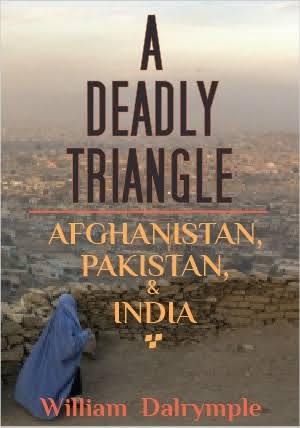
An eminent historian looks to the present and future of Afghanistan as the U.S. withdraws from the longest war in its history.THE BROOKINGS ESSAY: In the spirit of its commitment to high-quality, independent research, the Brookings Institution has commissioned works on major topics of public policy by distinguished authors, including Brookings scholars. The Brookings Essay is a multi-platform product aimed to engage readers in open dialogue and debate. The views expressed, however, are solely those of the author.

Think jewels are boring? You’ll change your mind when you read about the Kohinoor, history’s most famous diamond. Legend says it carries a curse that brings bad luck to all its owners. Some of India’s most powerful kings possessed it and lost it – from the great Mughals to Punjab’s Ranjit Singh – before it was grabbed by the British and sent as a gift to Queen Victoria. In this book you’ll About a throne that cost twice as much as the Taj Mahal Ranjit Singh’s crazy forty camels trick Why no ruler of England has worn the diamond since Queen VictoriaReading For 10 years and above

War and GraceMagnum photographer Steve McCurry's Afghanistan retrospectiveAfghanistan is a country overwhelmed by tribal rivalries, colonial wars, and geo-political conflict. The Afghans have always called their mountains "the land of rebellion." Yet born of such chaos, such entrenched conflict are these most breathtaking and beautiful of images. The distinguished American photographer Steve McCurry has traveled to Afghanistan regularly for more than 40 years: he is arguably the most accomplished photographer to work in the region. His famous 1984 portrait Afghan Girl--sad and haunting, but at the same time evoking remarkable grace and dignity--published on the covers of magazines around the world is perhaps his single most striking portrait. In common with so much of McCurry's work, it has a timeless, painterly quality--entirely at odds with the battle-torn backdrop of the region in which it was taken. Steve McCurry has always been subjected to the same dangers that are an inevitable part of life "on the road" for photographers. He has often ventured behind the lines, usually at great risk; his first assignment in Afghanistan in 1979 involved him dressing in Afghan robes in order to be smuggled across the border from Pakistan. That journey, into the treacherous, unpredictable landscape--territory controlled at various times by the Mujahideen, the Russians, and the Taliban--was one that McCurry would make many times. Many other photographers would follow in his footsteps. But none would return with such a flawless body of work.

Between the years 1707 and 1857, the cultural center of Delhi in North India was the locus of a dramatic shift of power with the decline of the Mughal Empire and the rise of the British Raj. This critical transitional period altered Indian culture, politics, and art, and brought unprecedented artistic innovation and experimentation. The artistic flowering of this time is evident in jewel-like portraits, miniature paintings, striking panoramas, and exquisite decorative arts crafted for Mughal emperors and European residents alike.Sumptuous color illustrations of such works illuminate the pages of this book, painting a vivid portrait of this important city and its art, artists, and patrons. Masterworks by major Mughal artists, such as Nidha Mal and Ghulam Ali Khan, and works by non-Mughal artists demonstrate the dynamic interplay of artistic production at this time. This largely overlooked period is explored in thought-provoking essays by a panel of distinguished scholars of Indian art, history, and literature to present an engaging look at this dynamic artistic culture in the midst of rapid change.

As the East India Company extended its sway across India in the late eighteenth century, many remarkable artworks were commissioned by Company officials from Indian painters who had previously worked for the Mughals. Published to coincide with the first UK exhibition of these masterworks at The Wallace Collection, this book celebrates the work of a series of extraordinary Indian artists, each with their own style and tastes and agency, all of whom worked for British patrons between the 1770s and the bloody end of the Mughal rule in 1857.Edited by writer and historian William Dalrymple, these hybrid paintings explore both the beauty of the Indian natural world and the social realities of the time in one hundred masterpieces, often of astonishing brilliance and originality. They shed light on a forgotten moment in Anglo-Indian history during which Indian artists responded to European influences while keeping intact their own artistic visions and styles. These artists represent the last phase of Indian artistic genius before the onset of the twin assaults - photography and the influence of western colonial art schools - ended an unbroken tradition of painting going back two thousand years. As these masterworks show, the greatest of these painters deserve to be remembered as among the most remarkable Indian artists of all time.

The Company Quartet: The Anarchy, White Mughals, Return of a King and The Last Mughal
by William Dalrymple
Rating: 4.3 ⭐
From multi-award-winning and bestselling historian William Dalrymple, a four-book collection chronicling the extraordinary story of the rise and fall of the East India Company.We still talk about the British conquering India, but that phrase disguises a much more sinister reality. For it was not the British government that began seizing chunks of India in the mid-eighteenth century, but a dangerously unregulated private company headquartered in one small office, five windows wide, in the city of London.Bringing together two decades of meticulous research and masterful narration, 'The Company Quartet' tells the remarkable story of how the Mughal empire, which then generated just under half the world's wealth, disintegrated and came to be replaced by the first global corporate the East India Company.William Dalrymple's epic, bestselling and multi-award-winning histories are now available in this magnificent paperback box set, presented in a stylish slipcase. Comprised of four individual books - The Anarchy , White Mughals , Return of a King and The Last Mughal - this essential collection spans over two hundred years of tumultuous colonial history, covert political machinations and bloody resistance.PRAISE FOR THE COMPANY 'Gorgeous, spellbinding and important' Sunday Times'Rampaging, brilliant, passionate history' Wall Street Journal'Magnificent . Dalrymple has uncovered sources never used before' Guardian'Vivid . unmatched . revolutionary . humane' Sunday Telegraph

William Dalrymple's striking and meditative photographs mark an accomplished leap of form for a hugely beloved writer. Shot over two years, and across geographies, they pay homage to the beauty and disquiet of landscape, form and time. A part of his debut exhibition, The Writer's Eye, they were curated by Siddharth Dhanvant Shanghvi, who lends an introduction to this edition.

While researching for his forthcoming book, The Anarchy, which tells the story of how a militarized multinational destroyed and replaced the mighty and supremely elegant empire of the Great Mughals, William Dalrymple visited all the places in the Indian subcontinent where this history took place -- the battlefields and ruins, the mosques, Sufi shrines and temples, the paradise gardens and pleasure grounds, the barrack blocks and townhouses, the crumbling Mughal havelis and the palaces and forts. This collection is a record of that journey. Shot on his Samsung Edge, the striking black-and-white images in this collection convey the immediacy and lack of pretension that a cellphone offers in recording the world around us. For, as Dalrymple himself says, 'Photography should always be about the eye, not the equipment.'


La vía dorada: Cómo la India antigua transformó el mundo (Historia Moderna)
by William Dalrymple
Rating: 5.0 ⭐
Desde el establecimiento de los sultanatos en la Baja Edad Media a la instauración del Raj británico, la India se vio impregnada de poderosas influencias culturales foráneas que transformaron religiosa, cultural y lingüísticamente el país y a sus gentes. Sin embargo, durante el milenio y medio anterior, las religiones, la tecnología, la astronomía, la música, la danza, la literatura, el arte, las matemáticas, la medicina y la filosofía del subcontinente se abrieron camino desde el océano Pacífico hasta el mar Rojo y más allá, un vasto caudal de ideas y conocimientos que tenía como origen la India, el corazón olvidado del mundo antiguo. El celebrado y multipremiado historiador William Dalrymple vuelca en este libro su extensa erudición y su incondicional amor por la India para reivindicar su relevancia, hasta ahora soslayada, como eje de la antigua Eurasia, situada en el centro de una formidable red de comunicaciones marítimas y fluviales que conectaba lugares tan distantes como China o el Mediterráneo, una "vía dorada" por la que circulaba algo mucho más valioso que mercancías. Desde el templo hindú más grande del mundo, en Angkor Wat, hasta la indeleble huella del budismo en toda Asia oriental, del dinámico comercio que enriqueció al mundo helenístico y romano también con sus saberes en astronomía, ciencia o matemáticas, a la implantación del sánscrito como lengua franca de Afganistán a Singapur, la India transformó la cultura y la tecnología del mundo antiguo. Y esto es tanto como decir que también ha modificado el mundo actual, que no sería tal y como lo conocemos sin la vía dorada.

Karan Kapoor: Time & Tide
by William Dalrymple
This publication accompanies Indo-British photographer, Karan Kapoor's first exhibition in India, Time & Tide, that brings together photographs from two bodies of work produced by Kapoor in the 1980s and 1990s. The first series, shot in the 1980s, presents a study of ageing Anglo-Indians primarily from Bombay (Mumbai) and Calcutta (Kolkata), and forms one of Kapoor’s earliest personal photography projects. The idea of a world no longer present or fast fading central to this work, also forms a primary thread in Kapoor’s second series of photographs taken during his frequent visits to Goa, where he vacationed with his family and friends at their house on Baga Beach. Taken in the 1990s, these photographs capture an older Goa, the last remnants of Portuguese Goa. Alongside reproductions of the 48 black and white photographs that comprise the exhibit, the publication features two original texts by William Dalrymple and Felicity Kendal.

William dalrymple collection 3 books set
by William Dalrymple

sacred india livro
by William Dalrymple
Libro usado en buenas condiciones, por su antiguedad podria contener señales normales de uso
Migration: Multiculturalism & its Metaphors by William Dalrymple
by William Dalrymple
William Dalrymple 5 Books Collection Set
by William Dalrymple
The AnarchyIn August 1765 the East India Company defeated the young Mughal emperor and forced him to establish a new administration in his richest provinces. Run by English merchants who collected taxes using a ruthless private army, this new regime saw the East India Company transform itself from an international trading corporation into something much more an aggressive colonial power in the guise of a multinational business. White MughalsFrom the author of the Samuel Johnson prize-shortlisted ‘Return of a King’, the romantic and ultimately tragic tale of a passionate love affair that transcended all the cultural, religious and political boundaries of its time. James Achilles Kirkpatrick was the British Resident at the court of Hyderabad when he met Khair un-Nissa – ‘Most Excellent among Women’ – the great-niece of the Prime Minister of Hyderabad. He fell in love with her and overcame many obstacles to marry her, converting to Islam and, according to Indian sources, becoming a double-agent working against the East India Company. Return of a KingIn the spring of 1839, Britain invaded Afghanistan for the first time. Nearly 20,000 British and East India Company troops poured through the high mountain passes and re-established on the throne Shah Shuja ul-Mulk.On the way in, the British faced little resistance. But after two years of occupation, the Afghan people rose in answer to the call for jihad and the country exploded into violent rebellion. The First Anglo-Afghan War ended in Britain's greatest military humiliation of the nineteenth an entire army of the then most powerful nation in the world ambushed in retreat and utterly routed by poorly equipped tribesmen. The Last MughalOn a dark evening in November 1862, a cheap coffin is buried in eerie silence. There are no lamentations or panegyrics, for the British Commissioner in charge has insisted, 'No vesting will remain to distinguish where the last of the Great Mughals rests.' This Mughal is Bahadur Shah Zafar II, one of the most tolerant and likeable of his remarkable dynasty who found himself leader of a violent and doomed uprising. The Siege of Delhi was the Raj's Stalingrad, the end of both Mughal power and a remarkable culture. The Golden Road [Hardcover]India is the forgotten heart of the ancient worldFor a millennium and a half, India was a confident exporter of its diverse civilisation, creating around it a vast empire of ideas. Indian art, religions, technology, astronomy, music, dance, literature, mathematics and mythology blazed a trail across the world, along a Golden Road that stretched from the Red Sea to the Pacific.
ieri india / ιερή ινδία
by William Dalrymple
TO ΣYΓKINHTIKO, ΔIAΦΩTIΣTIKO, AΛHΘINO BIBΛIO "IEPH INΔIA, ENNIA ZΩEΣ, ENNIA IΣTOPIEΣ" (NINE IN SEARCH OF THE SACRED INDIA), ΠOY EXEI XAPAKTHPIΣTEI ΩΣ TO TAΞIΔIΩTIKO BIBΛIO THΣ XPONIAΣ, TOY ΔIAΣHMOY, ΠOΛYBPABEYMENOY ΓOYIΛIAM NTAΛPIMΠΛ (WILLIAM DALRYMPLE), ΣYΓΓPAΦEA TOY ΣΠOYΔAIOY BIBΛIOY "TAΞIΔI ΣTH ΣKIA TOY BYZANTIOY". H MHXANH THΣ OIKONOMIKHΣ ANAΠTYΞHΣ THΣ INΔIAΣ ΦEPNEI PAΓΔAIEΣ AΛΛAΓEΣ ΣTHN KOINΩNIA KAI TIΣ ΘPHΣKEYTIKEΣ ΠPAKTIKEΣ THΣ ANAΔYOMENHΣ AYTHΣ ΔYNAMHΣ. O ΓOYIΛIAM NTAΛPIMΠΛ, O OΠOIOΣ EXEI EΓKATAΣTAΘEI ΣTO NEO ΔEΛXI AΠO TO 1989, ΦΩTIZEI AYTO TO ΘEMA MEΣA AΠO ENNEA ZΩEΣ: ENAΣ BOYΔIΣTHΣ MONAXOΣ ΠAIPNEI TA OΠΛA ΓIA NA ANTIΣTAΘEI ΣTHN KINEZIKH EIΣBOΛH ΣTO ΘIBET - KAI YΣTEPA AΠO AYTO ΠEPNA OΛH TOY TH ZΩH ΠPOΣΠAΘΩNTAΣ NA EΞIΛEΩΘEI. MIA MONAXH ΔOKIMAZEI TH ΔYNAMH THΣ AΠOΣTAΣIOΠOIHΣHΣ THΣ ΠAPAKOΛOYΘΩNTAΣ THN KAΛYTEPH THΣ ΦIΛH NA OΔHΓEITAI ΣTON ΘANATO MEΣΩ THΣ NHΣTEIAΣ.
White Mughals By Dalrymple William
by William Dalrymple
In 1798 James Achilles Kirkpatrick British resident at the court of the Nizam of Hyderabad fell in love with the great niece of the Nizam s prime minister and a direct descendant of Muhammed To marry her Kirkpatrick converted to Islam and even according to Indian sources became a double agent working for the Hyderabadis against the East India Company This remarkable story unearthed by William Dalrymple during five years of research casts light on the many British colonizers in India who went native taking on the dress customs and religions of the sub continent These white Mughals were a source of difficulty and embarrassment to colonial administrations from the sixteenth century until the 1850s when a new breed of Crown subjects took the reins With a colorful supporting cast of other white Mughals from the era including Hindoo Stuart who traveled with his own team of Brahmins and Alexander Gardner whose tartan turban sported egret plumes this exotic love story conjures all the sweep and resonance of a great nineteenth century novel Book jacket White Mughals is the romantic and ultimately tragic tale of a passionate love affair that crossed and transcended all the cultural religious and political boundaries of its time James Achilles Kirkpatrick was the British Resident at the court of the Nizam of Hyderabad when in 1798 he glimpsed Kahir un Nissa Most excellent among Women the great niece of the Nizam s Prime Minister and a descendant of the Prophet Kirkpatrick had gone out to India as an ambitious soldier in the army of the East India Company eager to make his name in the conquest and subjection of the subcontinent Instead he fell in love with Khair and overcame many obstacles to marry her not least of which was the fact that she was locked away in purdah and engaged to a local nobleman Eventually while remaining Resident Kirkpatrick converted to Islam and according to Indian sources even became a double agent working