
Nigel Barley
Born 1947. See http://en.wikipedia.org/wiki/Nigel_Ba...
27 Books Written

Note: This book was originally published as Not a Hazardous Sport. When British anthropologist Nigel Barley set up home among the Dowayo people in northern Cameroon, he knew how fieldwork should be conducted. Unfortunately, nobody had told the Dowayo. His compulsive, witty account of first fieldwork offers a wonderfully inspiring introduction to the real life of a cultural anthropologist doing research in a Third World area. Both touching and hilarious, Barley's unconventional story—in which he survived boredom, hostility, disaster, and illness—addresses many critical issues in anthropology and in fieldwork.

After Nigel Barley's insurance company determined that anthropology was not a hazardous sport, he was free to set off for Torajaland, a remote district of Indonesia. His visit sparked an enduring love afair which led his friends, the Torajans, to London. Their hilarious visit makes a fitting climax to Barley's book.

First edition hard cover with unclipped dust jacket, both in very good condition. Light shelf and handling wear, including minor wear to DJ. Coloured illustration to jacket remains vibrant and true. White cloth boards with red text to spine are in fine condition. Pages are tightly bound, content unmarked. CN

Sir James Brooke's curious career began in 1841, when he was caught up in a war in Brunei. He was an opportunist who, with the Sultan's backing, made war on the Dayaks tribespeople and as a result found himself ruling over Sarawak—a kingdom the size of England. How he achieved it is a romantic, sometimes horrifying story. This historical biography recalls the best and the worst of the British Imperial character.

本书诚实但又不失风趣地记录了作为人类学家的作者在非洲喀麦隆多瓦悠人村落两次进行田野工作的经历,将人类学家如何克服乏味、灾难、生病与敌意的真实田野生活拍案叫绝地呈现在读者面前。不同于一般的人类学研究报告,这是一部令人捧腹不止的人类学笔记,透过幽默的笔调,读者看到了人类学者如何与研究对象进行互动,在互动中如何调整他的学术成见,以及田野工作上的琐事如何影响后来研究结果、研究的盲点与反思。因此不管是严肃的读者、无聊地只想打发时间或者是向往非洲原始部落的异国情调而蠢蠢欲动的旅人,巴利这本书绝对是一个有趣的选择。

Seeking to merge the information of theologians and anthropologists, this book looks at the variety of ways in which cultures around the world deal with death and give it meaning. In some cultures, most famously Ancient Egypt, families would virtually financially ruin themselves in order to deal with the death of just one person. Other cultures such as the nomadic peoples of southern Africa, simply pull down the roof of their dwelling onto the body and move on, while the wrapped bodies in Torajan (Indonesian) houses are used as shelves. The reader is guided through such diverse areas as myths about death, belief about ways to mourn, joking at funerals, post-mortem videos, cannibalism, headhunting and royal mortuary ritual.

The author of The Innocent Anthropologist retraces the steps of the founder of Singapore, from Malacca to Java to Bali to Singapore, discussing Raffles's life and describing the characters he meets along the way. 25,000 first printing.


A London anthropologist chronicles the low moments and the high comedy of his time in Africa with the Dowayo tribe and the area they live in. 8 pages of black-and-white photographs.

Takes a light-hearted yet sympathetic look at death and death rituals in various societies as an example of the variety and inventiveness of human culture. Much of the material is based on the author's experiences in traditional African cultures. For general readers. Annotation c. by Book News, Inc., Portland, Or.

Everyone has heard of The Great Escape. In March 1944, seventy-six mainly British and Commonwealth airmen tunnelled out of the PoW camp, Stalag Luft III, in Poland and escaped, triggering a vast manhunt throughout occupied Europe. Of the seventy-three subsequently recaptured, forty-one were shot by the SS in cold blood. The incident became an icon of British decency in the face of Nazi barbarity. Yet only a year later, seventy German prisoners of war, including SS officers, returned the compliment by using a very similar tunnel to escape from Island Farm PoW camp in Wales. The two cases, superficially so similar, could not have been more different. The complex ingenuities of British prisoners in Germany have been heavily documented whereas historical attention to the Welsh breakout has focused almost entirely on the very British search for the escapees that followed this event, a sort of cross between Dad’s Army and an Ealing comedy, full of good intentions and pratfalls. This book tells both the before and after of the Welsh Great Escape, filling in the blanks of a strange and mostly forgotten story.

Offers a look at the history of African pottery, from excavation finds to more recent examples

Au coeur du dix-neuvième siècle, le révérend Emmanuel Truscot débarque à l'embouchure du Niger avec sa jeune épouse et un grand rêve dans ses bagages: faire de la cité d'Akwa, dont les habitants portent des chapeaux hauts de forme et offrent du thé au lait à leurs divinités, un modèle de société chrétienne après en avoir éradiqué corruption, polygamie, esclavage et cannibalisme. Pour cela il va lui falloir compter avec le baroque roi Jack, les fourberies des trafiquants occidentaux, les réactions imprévisibles de ses nouvelles ouailles, les malentendus engendrés par chacune de ses initiatives. Il n'y laissera pas sa foi, mais peut-être bien la vie.

Between the two World Wars, the most famous employee of the British Museum was a cat called Mike. For some twenty years, Mike made it his home and his friend was a most irregular Egyptologist, Wallis Budge, a freebooting fieldworker and smuggler of antiquities. It was a time when the wildest spiritualist ideas were in full resurgence, when ghosts, mummies and lethal curses were held to stalk the earth and many leading scientists, writers and thinkers saw no contradiction between science and belief in the supernatural. And through such tempestuous times, Budge and Mike remained friends and allies as unearthly forces flickered all about them and the objects of the museum collection refused to be mere exhibits but pursued their own dark purposes across the years.

Most people agree that the world should be just but that it simply isn't. Rogues flourish, the good die young and many feel they have not received their due. Unlike the rest of us, the anonymous hero of Even does not just complain about it, he embarks on a voyage of self-discovery, searching both for vengeance for the past and justice for the future in a personal attempt to bring balance to an unbalanced world. The result is a quest that ranges across contemporary London and is, by turn, humorous, heroic and horrific, involving Oedipus, fallen dictators and the iniquity of plumbers as it distils ancient wisdom into black humour.Sharply written and observed, this extraordinary novella of revenge and misfortune offers a lively key to the contemporary world and the curious moralities of other cultures.

It is 1953 in southern England, the time of the Coronation, and Jack is a small boy from the poor end of the village who is trying desperately to understand the strange people he has been born into. After the gritty, state-regulated austerity of the war, it is supposed to be a time for the celebration of cherished values and national renewal and the idea is to share the ultimate luxury food - a chicken - at a street party as a symbol of all that is eternal in the British identity. But things do not go as planned and begin to fall apart in the face of death, sex and changing reality. Coronation Chicken is a darkly comic novella that mixes personal recollection, anthropological insight and humour to give a portrait of a post-war Britain that has now vanished for ever. It is at once nostalgic and more than a little unnerving.

A study of the Torajan ricebarn, a traditional Indonesian structure where the rice crop is stored, and where the main social life of the village takes place. This paper was stimulated by the construction of a ricebarn for the Museum of Mankind at the British Museum in 1987.
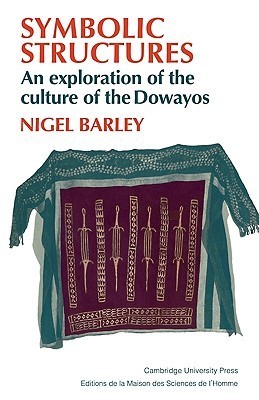
Many opposing theories have been elaborated by different anthropologists in an attempt to explain the nature of symbolism. In this work Nigel Barley uses a particular ethnographic case to examine the relevance and limitations of these existing theories and to develop a new alternative approach which draws on areas of linguistics and folkloristics at one time neglected by symbolic theorists. The book is a detailed study of the symbolic universe of the Dowayos of north Cameroon, as displayed in their ritual and beliefs. Considering matters as diverse as their oral literature, their material culture and their festivals, Dr Barley's analysis develops by unfolding sequentially a map of the symbolic structures that underlie Dowayo culture and shape their apperception of the world about them. This book will be particularly useful for students. It will also interest all anthropologists concerned with the study of symbolism and with the application to anthropology of models derived from linguistics and folklore.

For over a hundred years, a series of White Rajahs ruled over the land of forests and swamps that is Sarawak on the island of Borneo, inhabited by a volatile mix of Malays, Dyak tribesmen, Chinese and Westerners. Sylvia Brett, born into English high society in 1885, would become the consort of the last and least of these, Rajah Vyner Brooke, and lead a turbulent life across the world up till the country’s cession to Britain at the end of World War II. But as Ranee Sylvia, ‘Queen of the Headhunters’, and a published novelist, she ricocheted between celebrity and obscurity, wealth and relative poverty, and her ‘open’ marriage and the private lives of her tempestuous daughters fed gossip columns and scandal rags for decades as she intrigued and feuded, charmed and beguiled, in a way that would both decide the fate of her subjects and influence the shape of southeast Asia up to the present day. This is the novel of her own life.

Hatewave
by Nigel Barley
A man stands trial for a brutal murder, a crucial witness disappears, an MP's daughter confronts a dark family secret and an Asian assassin with a passion for Tom and Jerry cartoons inflicts hideous deaths on those who cannot answer his single question. Welcome to the world of Hatewave where the World Wide Web harnesses hate to bring death and destruction to its chosen targets.

The Glass Armonica
by Nigel Barley
18th century London is a small town that has exploded into a world city, suddenly capital of a vast empire but one run by a small number of rich and powerful people who all know each other. Theatres, coffee-houses, clubs and the political arena are the elegant face behind which hides a seamier world of corruption, intrigue and rumbustious sexuality. Samuel Johnson, Benjamin Franklin and the Chevalier d’Eon ricochet off each other in an entangled history that decides the independence of the American colonies. But even deeper forces are at play – ghosts, slaves and the very legitimacy of the British Crown.

Along the byways of African art studies is the history of preservation of a fascinating group of objects called duein fubara, or "foreheads of the dead."

Purple Passages: Sebastian Melmoth on Oscar Wilde
by Nigel Barley
Wit, raconteur, writer and the first modern ‘celebrity’, Oscar Wilde cut a dazzling figure in British society of the late 19th century. His fall was cataclysmic. Imprisoned for same-sex indecencies, he was reviled and hounded from England. Moving to France, he became Sebastian Melmoth and when he died a few short years later, his legend became a ghost. In Purple Passages, the legendary ghost looks back at the life without evasion and posturing and with the same jaundiced eye that Oscar brought to bear in his literary works so that tragedy becomes comedy and life becomes art.

Arts du Nigeria: Revisites (Catalogue Exposiiton)
by Nigel Barley
The Barbier-Mueller Museum invited the anthropologist Nigel Barley, a former curator at the British Museum, to take a look at the museum’s Nigerian collection, which came into being over more than a hundred years, thanks to the personal and informed “eye” of the collectors Josef Mueller and Jean Paul Barbier-Mueller. Without aspiring to cover exhaustively the cultural production of Nigeria across the two millennia of its history, the Barbier-Mueller collection is very rich in several respects. Faithful to chronological continuity, it provides a sample of the production of the major cultural centers of Nigeria, shedding light on archaeological pieces from Nok, Katsina, and Sokoto, works from Ife and the kingdom of Benin, and Yoruba, Ijo, and Igbo objects, as well as items from the Cross River and the Benue Valley. By virtue of their rarity, certain pieces in the collection constitute “monuments” of African art. Others, by their emblematic force, are among its great “classics.” The exhibition sets out to present these objects, including several displayed here for the first time, highlighting their aesthetic quality even while explaining, by means of the catalogue, the ethnographic context of their production and use. Nigel Barley provides new angles of approach for considering, understanding, and perhaps even better appreciating the art of Nigeria.

The Panther of the Veld: Fritz Joubert Duquesne
by Nigel Barley
Fritz Joubert Duquesne was a big-game hunter, soldier, saboteur, spy and confidence trickster with one fixed idea - the destruction of the British Empire that had laid waste his South African homeland. Her lived his life like an adventure novel and this is the novel of his life.

Catcalls and Orange Peel: Charlie Chaplin
by Nigel Barley

Scratching Fanny of Cock Lane and the Glass Armonica
by Nigel Barley
In the 1770s, London was transforming from a small town on the edge of Europe to a sprawling city at the centre of a world empire where new ideas of government, commerce and science were sweeping away old beliefs and creating a new kind of celebrity such as Samuel Johnson and the comedian Samuel Foote. The social elite all knew each other intimately through a complex network of gentlemen's clubs, learned bodies and social events as they feuded and jostled to make money and rise in society, so that politics and culture were as much a matter of personal relationships as abstract principles. To this metropolis, bristling with plots and spies, flocked figures such as Benjamin Franklin, the Chevalier d'Έon and exotic "natives" from around the newly-discovered world. And into this ferment there came a new rumour that could fatally undermine the legitimacy of the king and the entire ruling house and decide the fate of the unruly American colonies.