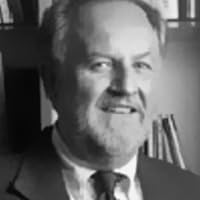
Allan Janik
11 Books Written

This is a remarkable book about a man (perhaps the most important and original philosopher of our age), a society (the corrupt Austro-Hungarian Empire on the eve of dissolution), and a city (Vienna, with its fin-de siecle gaiety and corrosive melancholy). The central figure in this study of a crumbling society that gave birth to the modern world is Wittgenstein, the brilliant and gifted young thinker. With others, including Freud, Viktor Adler, and Arnold Schoenberg, he forged his ideas in a classical revolt against the stuffy, doomed, and moralistic lives of the old regime. As a portrait of Wittgenstein, the book is superbly realized; it is even better as a portrait of the age, with dazzling and unusual parallels to our own confused society. Allan Janik and Stephen Toulmin have acted on a striking premise: an understanding of prewar Vienna, Wittgenstein s native city, will make it easier to comprehend both his work and our own problems .This is an independent work containing much that is challenging, new, and useful. New York Times Book Review."

Fin de siecle Vienna was once memorably described by Karl Kraus as a "proving ground for the destruction of the world." In the decades leading to the World War that brought down the Austro-Hungarian empire, the city was at once an operetta dream world masking social and political problems and tension, as well as a center for the far-reaching explorations and innovations in music, art, science, and philosophy that would help to define modernity. One of the most powerful critiques of the retreat into fantasy was that of the philosopher Ludwig Wittgenstein, whose early career in Vienna has helped frame debates about ethical and aesthetic values in culture. In Wittgenstein's Vienna Revisited Allan Janik expands upon his work Wittgenstein's Vienna (co-authored with Stephen Toulmin) to amplify a number of significant points concerning the genesis of Wittgenstein's thought, the nature of Viennese culture, and criticism of contemporary culture. Although Wittgenstein is the central figure in this volume, Janik places considerable emphasis on other influential figures, both Viennese and non-Viennese, in order to break down some of the persistent stereotypes about the philosopher and his surrounding culture, especially the myths of "carefree" Vienna and Wittgenstein the positivist. The persistence of these myths, in Janik's view, stems in part from the inability of many historians to differentiate past from present in the evaluation of intellectual currents. Janik reviews a number of figures overlooked in assessing Wittgenstein: Otto Weininger, Kraus, Schoenberg, Nietzsche, Wagner, Ibsen, Offenbach, and Georg Trakl. All of these, Janik demonstrates, are absolutely necessary to understand what was at stake in the debates on aestheticism and the critique of a modern culture. Wittgenstein's efforts to recognize the limits of thought and language and thus to be fair to science, religion, and art account for his place of honor among critical modernists. These essays elucidate Wittgenstein's perspective on our culture.

Wittgenstein in Vienna: A Biographical Excursion Through the City and its History
by Allan Janik
Rating: 3.6 ⭐
A documentation of Wittgenstein's life in Vienna: the places where he, his family and those with whom he was in contact lived, worked and entertained themselves. The book will enrich the Viennese experience for cultural tourists, providing as it does walks in the city and its environs. The authors are equally authorities on Wittgenstein's philosophy, especially in relation to Viennese culture, especially the coffee house in the cabaret scene. XXXXXXX Neuer Text Written by authorities on the philosopher Ludwig Wittgenstein, this book brings together eighty cultural points of interest and places of biographical significance in relation to Wittgenstein. The book can be read at several levels: as a guide to his life and times; as a companion to Viennas architectural landscape and social spaces; or as a guide that presents facts about Viennas history and its atmosphere during Wittgensteins time. This biographical excursion will shed light on the citys remarkable cultural landscape and its influences on Wittgensteins philosophy.

Otto Weininger (1880-1903) is the most controversial figure to emerge from fin de siècle Vienna. The son of a Jewish goldsmith, he studied philosophy and psychology at the University of Vienna and spoke six languages by the time he was 21. After receiving his Ph.D. in 1902, he converted to Christianity and, in 1903, he published his book Sex and Character—a groundbreaking and highly provocative study that would come to influence Adolf Hitler, Ludwig Wittgenstein, and James Joyce, among others. As troubled as he was brilliant, Weininger took his own life on October 3, 1903, leaving behind a small number of works, an array of challenging ideas, and many unanswered questions.In Hitler’s Favorite Jew, Professor Allan Janik draws upon a half-century of research to explore the life and legacy of Otto Weininger, and to illuminate his outsized impact on some of the greatest thinkers and the greatest monster of the twentieth century. Janik explains how Weininger came to write his bizarre book featuring outrageous claims about women and Jews, and argues that, contrary to the received wisdom, Weininger’s true goal was progressive and humanistic.With its deep insights into both Weininger the man and Viennese intellectual life at the turn of the century, Hitler’s Favorite Jew offers a rich and multifaceted portrait that challenges our ideas about sexuality, the nature of anti-Semitism, and the puzzle of human identity.“Essential reading for all those interested in the philosophy, the culture and the arts of fin de siècle Vienna. Finally a comprehensive volume on Otto Weininger that dissolves the enigma and sheds light on why, despite his infamous reputation and deeply disturbing views, he made sense to people as diverse as Ludwig Wittgenstein, Charlotte Perkins Gilman, Elias Canetti, and Hermann Broch.” — Carla Carmona Escalera, Assistant Professor of Philosophy, Universidad de Sevilla

please enter product description

Die Praxis der Physik: Lernen und Lehren im Labor
by Allan Janik
Diese Studie analysiert das praktische Wissen, welches PhysikerInnen im Labor benötigen, sowie dessen Aneignung und Vermittlung. Die erkenntnistheoretische Grundlage dazu bilden Michael Polanyis Konzept des impliziten Wissens und Ludwig Wittgensteins pragmatische Sprachauffassung. Die Untersuchung steht im Umfeld der sogenannten "Laborstudien" und zeichnet sich vor allem durch ihren problemorientierten Ansatz aus. Sie zeigt die Praxis der Physik, wie sie PhysikerInnen in ihren eigenen Worten Probleme im Umgang mit Apparaturen, Fehlersuche, Problemerkennen, Messen und Interpretieren … Die Rolle von Frauen in der physikalischen Forschung bildet einen besonderen Schwerpunkt. Als Grundlage für eine moderne Wissenschaftsdidaktik, Know-how-Vermittlung sowie für die Evaluation und Kompetenzentwicklung von Forschungseinrichtungen wendet sich das Buch an eine breite In Forschung und Lehre tätige PhysikerInnen oder PhysiklehrerInnen an höheren Schulen, Philosophen, Wissenschaftsforscher und -soziologen, Bildungs- und Berufsforscher.

Astonishingly, Wittgenstein insisted that he was not an original thinker but one who passionately seized upon the thoughts of truly original thinkers with a view to developing a method of conceptual clarification. He compared his mind to fertile ground in which the seeds of the truly original: Ludwig Boltzmann, Heinrich Hertz, Arthur Schopenhauer, Gottlob Frege, Bertrand Russell, Karl Kraus, Adolf Loos, Otto Weininger, Oswald Spengler and Piero Sraffa, could blossom. Assembling Reminders is the first full length study to explore how these figures influenced Wittgenstein - but also how he could claim to have understood them better than they did themselves. It illuminates Wittgenstein's uniqueness in the history of 20th century thought at the same time that it clarifies his relationship to both analytical and Continental philosophy as well as to Viennese critical modernism. Allan Janik, (1941) is currently Research Fellow at the University of Innsbruck's Brenner Archives Reseach Institute. He is also Adjunct Professor for the Philosophy of Culture at the University of Vienna and at the Skill and technology Ph D. program at Stockholm's Royal Institute of Technology.

Style, Politics and the Future of Philosophy
by Allan Janik
Why did the two most influential philosophers in the twentieth century, Ludwig Wittgenstein and Martin Heidegger, write in such a curious fashion that they confused a whole generation of disciples and created a cottage industry for a second generation in the interpretation of their works? Do those curious writing strategies have a philosophical signif icance? How does philosophical style reflect attitudes to society and politics or bear significance for the social sciences? Is politics one type of human activity among many other independent ones as the classical modem political theorists from Hobbes and Machiavelli onwards have thought, or is it part and parcel of all of the activities into which an animal that speaks enters? How could the latter be elucidated? If politics arises from legitimate disputes about meanings, what does this imply for current cultural debates? for the so-called social sciences? above all, for that cultural conversation which some consider to be the destiny of philosophy in the wake of the demise of foundationalism? These are a few of the most important questions which led me to the critical confrontation and reflections in the essays collected below.


VIENNA 1900 REVISITED: PARADIGMS AND PROBLEMS
by Allan Janik

Este libro es uno de los estudios clásicos sobre aquella «ciudad de genios» de hace un siglo, a la que han convertido en un espléndido paradigma de investigació la llamada «Viena fin-de-siglo» o «Viena 1900» como marchamo de la decadencia de toda una cultura y forma de vida y del resurgir genial de otras. Ha originado un acervo impresionante de bibliografía de altura digna de esa Viena ya eterna donde la clara conciencia de la extinción inmediata del imperio austro-húngaro y su mundo hizo más evidente que en ninguna parte la famosa «crisis» cuya conciencia había comenzado a reventar con Nietzsche; su paisaje un mar que se vacía, un horizonte que se borra, un sol que gira alocadamente en torno a sí; ser, verdad y bien desvanecidos, desquiciados. Ciudad de gentes hipersensibles también a los signos de los tiempos desde todos los campos de la ciencia, la cultura y el arte, que pusieron sobre nuevas vías una renovada autoconciencia cultural de crearon la impronta, marca, estilo de lo que hoy somos o al menos de lo que hasta ayer mismo éramos. Junto con Sigmund Freud máximo ejemplo en aquellas Ludwig Wittgenstein.