
Barry Lopez
Barry Holstun Lopez is an American author, essayist, and fiction writer whose work is known for its environmental and social concerns. Lopez has been described as "the nation's premier nature writer" by the San Francisco Chronicle. In his non-fiction, he frequently examines the relationship between human culture and physical landscape, while in his fiction he addresses issues of intimacy, ethics and identity.
27 Books Written

Originally published in 1978, this classic exploration of humanity’s complex relationship with and understanding of wolves returns with a new afterword by the author.Humankind's relationship with the wolf is the sum of a spectrum of responses ranging from fear to admiration and affection. Lopez’s classic, careful study has won praise from a wide range of reviewers and improved the way books on wild animals are written. Of Wolves and Men explores the uneasy interaction between wolves and civilization over the centuries, and the wolf's prominence in our thoughts about wild creatures. Drawing upon an impressive array of literature, history, science, and mythology as well as extensive personal experience with captive and free-ranging wolves, Lopez argues for the wolf's preservation and immerses the reader in its sensory world, creating a compelling portrait of the wolf both as a real animal and as imagined by different kinds of men. A scientist might perceive the wolf as defined by research data, while an Eskimo hunter sees a family provider much like himself. For many Native Americans the wolf is also a spiritual symbol, a respected animal that can strengthen the individual and the community. With irresistible charm and elegance, Of Wolves and Men celebrates careful scientific fieldwork, dispels folklore that has enabled the Western mind to demonize wolves, explains myths, and honors indigenous traditions, allowing us to understand how this remarkable animal has become so prominent for so long in the human heart.

Winner of the National Book AwardThis bestselling, groundbreaking exploration of the Far North is a classic of natural history, anthropology, and travel writing.The Arctic is a perilous place. Only a few species of wild animals can survive its harsh climate. In this modern classic, Barry Lopez explores the many-faceted wonders of the Far North: its strangely stunted forest, its mesmerizing aurora borealis, its frozen seas. Musk oxen, polar bears, narwhal, and other exotic beasts of the region come alive through Lopez’s passionate and nuanced observations. And, as he examines the history and culture of the indigenous people, along with parallel narratives of intrepid, often underprepared and subsequently doomed polar explorers, Lopez drives to the heart of why the austere and formidable Arctic is also a constant source of breathtaking beauty, beguilement, and wonder.Written in prose as memorably pure as the land it describes, Arctic Dreams is a timeless mediation on the ability of the landscape to shape our dreams and to haunt our imaginations.

A realist not of the New Realist school, nor really of any other school, for that matter, Alan Magee is an artist whose work is stark and innocent, technically astonishing, miraculously perceptive, and ever strange in its conjunctions. Witty, subtle, and informed, shaped by art history and prodded by Surrealism, his work pulls and pushes the mind beyond the mere acknowledgement of his dexterity and precision. This publication is the first to cover the complete range of Magee's oeuvre, including his paintings, sculptures and graphic works. Within are almost 200 color plates of the artist's realist paintings, monotypes, and sculptural assemblages, plus an insightful biographical essay by Pulitzer Prize-recipient Jonathan Weiner, and an in-depth conversation between Magee and American Book Award-recipient Barry Lopez. Lopez and Magee discuss a wide range of subjects pertinent to the culture at large, including the role of literature and art in politics, the nature of work, the education of an artist, and the human quest for spiritual understanding.

From the National Book Award-winning author of the now-classic Arctic Dreams, a vivid, poetic, capacious work that recollects the travels around the world and the encounters--human, animal, and natural--that have shaped an extraordinary life.Taking us nearly from pole to pole--from modern megacities to some of the most remote regions on the earth--and across decades of lived experience, Barry Lopez, hailed by the Los Angeles Times Book Review as "one of our finest writers," gives us his most far-ranging yet personal work to date, in a book that moves indelibly, immersively, through his travels to six regions of the world: from Western Oregon to the High Arctic; from the Galápagos to the Kenyan desert; from Botany Bay in Australia to finally, unforgettably, the ice shelves of Antarctica. As he takes us on these myriad travels, Lopez also probes the long history of humanity's quests and explorations, including the prehistoric peoples who trekked across Skraeling Island in northern Canada, the colonialists who plundered Central Africa, an enlightenment-era Englishman who sailed the Pacific, a Native American emissary who found his way into isolationist Japan, and today's ecotourists in the tropics. Throughout his journeys--to some of the hottest, coldest, and most desolate places on the globe--and via friendships he forges along the way with scientists, archaeologists, artists and local residents, Lopez searches for meaning and purpose in a broken world. Horizon is a revelatory, epic work that voices concern and frustration along with humanity and hope--a book that makes you see the world differently, and that is the crowning achievement by one of America's great thinkers and most humane voices.

The author travels through the American Southwest and Alaska, discussing endangered wildlife and forgotten cultures.In Crossing Open Ground, Barry Lopez weaves the same invigorating spell as in his National Book Award-winning classic Arctic Dreams. Here, he travels through the American Southwest and Alaska, discussing endangered wildlife and forgotten cultures. Through his crystalline vision, Lopez urges us toward a new attitude, a re-enchantment with the world that is vital to our sense of place, our well-being . . . our very survival.

An urgent, deeply moving final work of nonfiction from the National Book Award-winning author of Arctic Dreams and Horizon, a literary icon whose writing, fieldwork, and mentorship inspired generations of writers and activists.ONE OF THE MOST ANTICIPATED BOOKS OF 2022--Lit Hub, BookPageAn ardent steward of the land, fearless traveler, and unrivaled observer of nature and culture, Barry Lopez died after a long illness on Christmas Day 2020. The previous summer, a wildfire had consumed much of what was dear to him in his home place and the community around it--a tragic reminder of the climate change of which he'd long warned.At once a cri de coeur and a memoir of both pain and wonder, this remarkable collection of essays adds indelibly to Lopez's legacy, and includes previously unpublished works, some written in the months before his death. They unspool memories both personal and political, among them tender, sometimes painful stories of his childhood in New York City and California, reports from expeditions to study animals and sea life, recollections of travels to Antarctica and other extraordinary places on earth, and meditations on finding oneself amid vast, dramatic landscapes. He reflects on those who taught him, including Indigenous elders and scientific mentors who sharpened his eye for the natural world. We witness poignant returns from his travels to the sanctuary of his Oregon backyard, adjacent to the McKenzie River. And in prose of searing candor, he reckons with the cycle of life, including his own, and--as he has done throughout his career--with the dangers the earth and its people are facing.With an introduction by Rebecca Solnit that speaks to Lopez's keen attention to the world, including its spiritual dimensions, Embrace Fearlessly the Burning World opens our minds and souls to the importance of being wholly present for the beauty and complexity of life.

Brand New. Will be shipped from US.

"Animals and landscapes have not had this weight, this precision, in American fiction since Hemingway's young heroes were fishing the streams of upper Michigan and Spain." -- San Francisco ChronicleA flock of great blue herons descending through a snowstorm to the streets of New York. . . . A river in Nebraska disappearing mysteriously. . . . A ghostly herd of buffalo that sings a song of death. . . . A mystic who raises constellations of stones from the desert floor. . . . All these are to be found in Winter Count , the exquisite and rapturous collection by the National Book Award-winning author of Arctic Dreams .In these resonant and unpredictable stories Barry Lopez proves that he is one of the most important and original writers at work in America today. With breathtaking skill and a few deft strokes he produces painfully beautiful scenes. Combining the real with the wondrous, he offers us a pure vision of people alive to the immediacy and spiritual truth of nature.
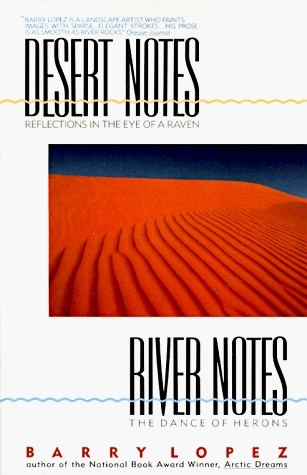
Desert Notes: Reflections in the Eye of a Raven / River Notes: The Dance of Herons
by Barry Lopez
Rating: 4.1 ⭐
Here, for the first time in one volume, are two of Lopez's masterpieces, River Notes and Desert Notes . From the thundering power of the river's swift current, to the stillness of clear freshwater pools; to desert springs, birds and wind, and rattlesnakes . . . and the terrible intrusion of man, Lopez allows us to share moments of intense personal experience as man tries to come to terms with the Earth's landscape, and with his own existence.
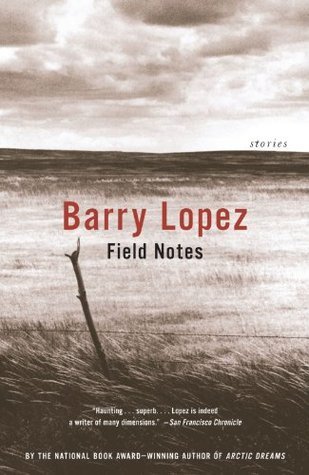
In this collection of twelve stories, Barry Lopez—the National Book Award–winning author of Arctic Dreams and one of our most admired writers—evokes the longing we feel for beauty in our relationships with one another, with the past, and with nature.An anthropologist traveling with an aboriginal people finds that, because of his aggressive desire to understand them, they remain always disturbingly unknowable. A successful financial consultant, failing to discover his roots in Africa, jogs from Connecticut to the Pacific Ocean in order to forge an indigenous connection to the American landscape. A paleontologist is haunted by visions of wildlife in a vacant lot in Manhattan. In simple, crystalline prose, Lopez evokes a sense of the magic and marvelous strangeness of the world, and a deep compassion for the human predicament.

Five hundred years ago an Italian whose name, translated into English, meant Christopher Dove, came to America and began a process not of discovery, but incursion -- "a ruthless, angry search for wealth" that continues to the present day.This provocative and superbly written book gives a true assessment of Columbus's legacy while taking the first steps toward its redemption. Even as he draws a direct line between the atrocities of Spanish conquistadors and the ongoing pillage of our lands and waters, Barry Lopez challenges us to adopt an ethic that will make further depredations impossible. The Rediscovery of North America is a ringingly persuasive call for us, at long last, to make this country our home.

"A brilliantly written and totally original New World adventure." - Jean Craighead GeorgeLong ago, when people and animals spoke the same language, two young men left their tribe to make an adventurous voyage through the wilderness, into the unknown northland. Set in the mythic past and inspired by the traditions of the North American Plains people, this fable of self-discovery follows Crow and Weasel as they face unfamiliar perils on a quest for knowledge and wisdom. Conquering their innermost fears, the two heroes come of age and learn more than they ever could have imagined--about humanity's relationship to the land, the importance of respecting other peoples and giving thanks, and even the ery nature of friendship itself.

From the National Book Award-winning author of Arctic Dreams, a highly charged, stunningly original work of fiction–a passionate response to the changes shaping our country today.In nine fictional testimonies, men and women who have resisted the mainstream and who are now suddenly “parties of interest” to the government tell their stories. A young woman in Buenos Aires watches bitterly as her family dissolves in betrayal and illness, but chooses to seek a new understanding of compassion rather than revenge. A carpenter traveling in India changes his life when he explodes in an act of violence out of proportion to its cause. The beginning of the end of a man’s lifelong search for coherence is sparked by a Montana grizzly. A man blinded in the war in Vietnam wrestles with the implications of his actions as a soldier–and with innocence, both lost and regained. Punctuated with haunting images by acclaimed artist Alan Magee, Resistance is powerful fiction with enormous significance for our times.

In this collection of narrative contemplations, reminiscent of Carlos Castaneda but without the drugs, Barry Hulstun Lopez invites us to walk with him in the desert, where "things are rigidly clear and elemental." Away from the world, we see it more clearly. Sweating from all our pores, we remember our body.Desert Notes is discovery and rediscovery. The desert, the spring, the birds, the rattlesnake, the wind. And man, who, according to an Indian tale, comes to the desert like "a boulder coming down the side of a mountain."Lopez gives us a fresh language. Desert Notes will lull you and shake you, and you will go back to it in the search for the clear and elemental.From the first-edition dust jacket.

Moving from fable and historical fiction to contemporary realism, this book of stories from Barry Lopez is erotic and wise, full of irresistible characters doing things they shouldn't do for reasons that are mysterious and irreducible.In "The Letters of Heaven," a packet of recently discovered 17th-century Peruvian love letters presents a 20th-century man with the paralyzing choice of either protecting or exposing their stunning secret. When some young boys on the lookout for easy money get caught with a truckload of stolen horses, thievery quickly turns into redemption. For a group of convicts, a gathering of birds in the prison yard may be the key to transcendence, both figurative and literal. And, with the title story, Lopez enters a territory of unmitigated evil reminiscent of Conrad. Here are saints who shouldn't touch, but do; sinners who insist on the life of the spirit; a postcard paradise that turns into nightmare.Light Action in the Caribbean has already been hailed by Russell Banks as "tough-minded, emotionally turbulent, and always intelligent." E. Annie Proulx describes these stories as "subtle and mysterious" and says that a reader "cannot leave Lopez's fictional territory unchanged." This is a book that breaks exciting new ground for Barry Lopez.

You will never again see a mountain river surging past an isolated home, cascading over ancient rocks and raising the gentle cries of birds, without being struck by its awesome influence, the turbulent life it encourages.In Barry Lopez’s critically acclaimed first work of fiction, Desert Notes, he brought alive for the reader a desert sprung from his imagination into a fresh reality of new peceptions. In its companion volume River Notes, Lopez takes us into a different country where a nameless river flows through an animated world of herons, bears, and human beings.There is violence here, in the conflict of natural forces, in the people touching the river. There are landscapes, physical and spiritual, that we have not sensed, rituals we have not understood. Like the earlier peoples of our land, and like few American writers who have reentered this world, Barry Lopez respects the river and its imperatives, understands the language of cottonwoods and the salmon, and brings us in an extraordinary dance with a heron to the oneness with nature which is our heritage. ... [i]n these haunting, passionate stories Lopez brings us home to a deeply comforting unity with the natural world.From the first-edition dustjacket.

Giving Birth to Thunder, Sleeping with His Daughter: Coyote Builds North America
by Barry Lopez
Rating: 4.0 ⭐
Prankster, warrior, seducer, fool -- Old Man Coyote is the most enduring legend in Native American culture. Crafty and cagey -- often the victim of his own magical intrigues and lusty appetites -- he created the earth and man, scrambled the stars and first brought fire . . . and death. Barry Lopez -- National Book Award-winning author of Arctic Dreams and recipient of the John Burroughs Medal for his bestselling masterwork Of Wolves and Men -- has collected sixty-eight tales from forty-two tribes, and brings to life a timeless myth that abounds with sly wit, erotic adventure, and rueful wisdom.

The six stories in Outside showcase Barry Lopez’s majestic talent as a fiction writer. Lopez writes in spare prose, but his narratives resonate with an uncanny power. With a reverence for our exterior and interior landscapes, these stories offer profound insight into the relationships between humans and animals, creativity and beauty, and, ultimately, life and death. Again and again, whether describing a Navajo rug possessing the essence of its maker, a boy who can change places with his half-coyote dog (named Leaves), or a teacher whose presence brings into question the meaning of friendship, Lopez portrays elemental and sacred places. His prose transcends its simplicity to enter spaces of wonder and mystery. As James Perrin Warren says in his compelling introduction, “Lopez’s narrators bear witness to extraordinary patterns and purposes . . . The storyteller is vital to the community and to a healthy landscape, but the vital relationship is also reciprocal. . . . We participate, along with Lopez, in the long history of storytelling. We become part of the atmosphere in which wisdom shows itself.”

Vintage Readers are a perfect introduction to some of the greatest modern writers presented in attractive, accessible paperback editions.“Lopez has such great narrative skill and uses his words so carefully the simple intensity is often nearly overwhelming.” — The OregonianBarry Lopez is an unparalleled explorer of the relationship between humanity and nature, one he limns in prose as beautiful as it is economical. His essays and short fiction have appeared everywhere from Outside to Harper’s and The Paris Review. He is the winner of a 1986 National Book Award for his bestselling Arctic Dreams .Vintage Lopez is divided into two parts, nonfiction and fiction. It includes “Landscape and Narrative” ; the prologue to Arctic Dreams ; and such classic short stories “The Entreaty of the Wiideema” and “The Mappist.”Also included, for the first time in book form, the essay “The Naturalist.”

Presents a moving exploration, featuring powerful woodcut illustrations, of the emotional turmoil, moral compassion, and human guilt that drives the author to habitually remove dead animals from the road in order to find honor and expiation in the face of the world's unconcern. UP.

In this story of a spiritual adventure from the author and illustrator of Crow and Weasel , a young man journeys through the arctic wilderness to find a family of wolverine and learn more about their mysterious power. At the time the story opens the narrator is working as an airplane mechanic in northeast Alaska. Long sensitive to wild animals, he feels drawn to wolverines through his dreams. One day his work takes him to the riverside village of Eedaqna, where he meets an older man who is impressed by his integrity and his desire to make a connection with wolverines. The villager guides him into the Ruby Mountains to Caribou Caught by the Head Creek, a place where wolverines have a spiritual stronghold. Here the young man enters the dream landscape of two wolverine, and receives from them the first lessons he will use to shape his adult life. Barry Lopez's story, infused with gentle magic, shows how one man comes to experience the wondrous power of animals and to understand his place in the natural world in a new way. Tom Pohrt's watercolor illustrations add vivid dimension to the story, bringing to life the land, people, and animals the young man encounters on his journey. Lessons from the Wolverine depicts with stunning detail the texture and nuance of discovery and suggests the importance of a wisdom other than our own.

Barry Lopez had no illusions about the seriousness of our global crisis, yet he also felt a deep conviction about the power of hope and the sources of renewal in the living world. Syntax of the River is an extended conversation spanning three days between Lopez and Julia Martin in which he explores what this juxtaposition means for him as a writer.On the first day Lopez reflects on years watching the McKenzie River near his home in Oregon. He describes the quality of attention he learned from intimacy with the place a very fine distinction between silence and stillness, the rich complexities of the present moment, and the syntax of interrelationships between living things.The second day is concerned with the work of making sentences and books. Lopez shares his practical strategies for writing and revising a manuscript and goes on to speak about vulnerability. He says he often experienced a deep sense of doubt about his capacity to achieve whatever he was trying to do in a particular project. Over time, though, this characteristic experience of not-knowing became a kind of fuel for his work, and even a weapon at times.On the final day, Lopez ponders the idea of writing as a praxis, a way of life, even a prayer for the earth, while concurrently being terrified by the portents of its destruction. Here, the experience of being an attentive participant emerges as his core teaching. Over the decades he developed a practice of attention that was endlessly curious and enthralled by the living world, what he calls its pattern or syntax. Despite acclaim as a celebrated writer, throughout his career Lopez humbly tasked himself with making a combination of wonder and horror work together to effectively communicate a life journey of contemplation, exploration, and discovery.

Native American Folktales"Coyote and Beaver Exchange Wives""Coyote Marries His Daughter""Coyote Visits the Women"

El Ministerio del Tañedor: Como desarrollar el corazón de un verdadero adorador
by Barry Lopez
Rating: 4.0 ⭐
“Alegraos, oh justos, en Jehová; En los íntegros es hermosa la alabanza. Aclamad a Jehová con arpa; Cantadle con salterio y decacordio. Cantadle cántico nuevo; Hacedlo bien, tañendo con júbilo.” Salmo 33: 1-3La adoración y la alabanza son, y han sido el tema más enfático, hablado en los últimos años por apóstoles, profetas, y ministros de adoración alrededor de todo el mundo. Mucho se ha hablado y escrito acerca de la restauración del tabernáculo caído de David y sus implicaciones. Entendemos con esto, que David fue la más alta representación del corazón de un verdadero Adorador. Cabe señalar que toda la Biblia habla de este asunto de la adoración, y de su importancia como tema central. La Palabra dice que Dios busca verdaderos adoradores que le adoren en espíritu y en verdad (Juan 4:23).

Traduzione e cura di D. Sapienza. Giulianova, 2014; br., pp. 172, cm 14x21. (Larix. 3). Il più grande scrittore americano di paesaggi racconta le sue indagini nei luoghi che predilige da un trentennio, ghiacci polari e tundre, deserti e boschi vergini. Imperdibile maestro, dispensatore di saggezza nata da un'intimità quasi mitica con il mondo naturale, Barry Lopez si mette in ascolto di questi meravigliosi regni attendendo che siano loro ad avviare dialoghi rigeneranti con un ospite in bilico tra geografia interiore ed esteriore, entrambe destinate a confluire in una sola esperienza d'intensità contemplativa. La verità appare a questo punto come "qualcosa di vivo e impronunciabile" e la lunga traccia di stupore, nutrendo un cesellato esercizio di scrittura, si traduce in narrazioni memorabili. Lupi, orsi, caribù, ghiottoni, venti, tempeste, spettacolari giostre di visioni captate a estreme l'opera di Lopez trasforma un fantastico universo di elementi in un gesto di rilevanza etica diretto al cuore di noi stessi, prezioso antidoto all'inaridimento di un'immaginazione che rinnega sempre più, con conseguenze biologicamente e spiritualmente catastrofiche, il suo terrestre grembo.

MIS EXPERIENCIAS SOBRENATURALES CON EL ESPÍRITU SANTO: "Te van a traer un muerto y lo vas a levantar"
by Barry Lopez
Rating: 4.3 ⭐
Muchos han sentido la Presencia del Espíritu Santo. Lo han experimentado en todas sus formas tipológicas. Tales como agua, pues sienten ríos de aguas vivas, también como vino porque han sido embriagados por Él. Otros como fuego, viento, electricidad, etc. Pero el Espíritu Santo es mucho más que un sentir. Posiblemente incluso, hemos caído al suelo por Su Poder cuando se nos ha ministrado, o hemos orado por algún enfermo y se ha sanado, o hablamos más lenguas que el Apóstol Pablo. Pero aun eso no es la evidencia de estar llenos del Espíritu Santo.Él es una de las tres personas coeternas que conforman a un Dios Trino. Él, por ser un Espíritu, usa a otras personas para manifestar Sus emociones, y Sus deseos. Él ama, abraza, ríe, llora, se siente triste, etc. Pero lo mejor de todo es que Él es lo más cercano que tenemos de Dios. Tan cerca así, que fue enviado a morar en nosotros mismos. El es una persona con sentimientos (Emociones), intelecto y voluntad, y Él quiere morar en nosotros, y sentirlo no necesariamente significa tenerlo. ¿Lo conoces?No se trata de muchos ayunos, oraciones o lectura de Su Palabra. Dios no usará más a alguien por tales motivos, porque de hecho, esto nos pondría en la posición de creer merecer tales dones. No intento con esto menoscabar nuestra obligación a buscarle con intensidad, a través de las formas antes mencionadas. Pero no es correcto buscar a Dios solo para que Él nos use, sino que debe ser un deleite buscarle con premura, y con gran devoción.Todo lo que tenemos y hemos recibido, lo hemos recibido por Gracia, no por méritos. Cuando vemos en las Escrituras a algunos de los escogidos de Dios, a juzgar por sus personalidades, podríamos concluir que Dios pudo haber hecho una mejor selección. Vemos por ejemplo que Pablo era un colérico, Pedro un sanguinario, Moisés era melancólico, Jeremías un llorón, y Gedeón un pesimista.Si analizamos esto desde nuestra perspectiva, y usando la lógica y la razón, llegaríamos a esa errada conclusión. Pero cuando le pedimos al Espíritu Santo, que nos permita ver a través de Sus propios ojos, entonces concluiremos que Dios es Soberano, y que Él usa la diversidad conforme a sus propósitos. Él escoge gente ordinaria para a través de ellos, hacer cosas Extraordinarias.Dios ha escogido a la gente despreciada y sin importancia de este mundo, es decir, a los que no son nada, para anular a los que son algo (1 Corintios 1:28).Hay quienes pasan horas delante de la Presencia de Dios en oración, y piensan que si terminan dos minutos antes de lo propuesto, Dios anularía la Gracia que iban a alcanzar a través de esas oraciones. En cambio, hay otros que solo oran minutos y alcanzan grandes bendiciones. Este segundo caso, porque sus intenciones nunca fueron alcanzar favores de Dios, sino en deleitarse en Su Presencia. Cuando hay deleite en Su Presencia, oraremos por horas y parecerán minutos, o bien oraremos por algunos minutos y nos parecerán horas.Estoy seguro de que esta recopilación de solo algunas de mis experiencias Sobrenaturales con el Espíritu Santo, que incluyen resurrecciones, sanidades portentosas, milagros de provisión, y los testimonios que aquí encontrará, le edificarán y le motivarán a fortalecer su relación, con este Ser Maravilloso llamado ESPÍRITU SANTO; a quien yo le “Mi Amigo”.