
Paul Theroux
Paul Edward Theroux is an American travel writer and novelist, whose best known work is The Great Railway Bazaar (1975), a travelogue about a trip he made by train from Great Britain through Western and Eastern Europe, the Middle East, through South Asia, then South-East Asia, up through East Asia, as far east as Japan, and then back across Russia to his point of origin. Although perhaps best known as a travelogue writer, Theroux has also published numerous works of fiction, some of which were made into feature films. He was awarded the 1981 James Tait Black Memorial Prize for his novel The Mosquito Coast. He is the father of Marcel and Louis Theroux, and the brother of Alexander and Peter. Justin Theroux is his nephew.
30 Books Written

The paranoid and brilliant inventor Allie Fox takes his family to live in the Honduran jungle, determined to build a civilization better than the one they've left. Fleeing from an America he sees as mired in materialism and conformity, he hopes to rediscover a purer life. But his utopian experiment takes a dark turn when his obsessions lead the family toward unimaginable danger.

First published in 1975, Paul Theroux's strange, unique, and hugely entertaining railway odyssey has become a modern classic of travel literature. Here Theroux recounts his early adventures on an unusual grand continental tour. Asia's fabled trains -- the Orient Express, the Khyber Pass Local, the Frontier Mail, the Golden Arrow to Kuala Lumpur, the Mandalay Express, the Trans-Siberian Express -- are the stars of a journey that takes him on a loop eastbound from London's Victoria Station to Tokyo Central, then back from Japan on the Trans-Siberian. Brimming with Theroux's signature humor and wry keen observations, this engrossing chronicle is essential reading for both the ardent adventurer and the armchair traveler.

In Dark Star Safari the wittily observant and endearingly irascible Paul Theroux takes readers the length of Africa by rattletrap bus, dugout canoe, cattle truck, armed convoy, ferry, and train. In the course of his epic and enlightening journey, he endures danger, delay, and dismaying circumstances.Gauging the state of affairs, he talks to Africans, aid workers, missionaries, and tourists. What results is an insightful mediation on the history, politics, and beauty of Africa and its people.In a new postscript, Theroux recounts the dramatic events of a return to Africa to visit Zimbabwe.

A witty sharply observed journey down the length of North and South America.Beginning his journey in Boston, where he boarded the subway commuter train, and catching trains of all kinds on the way, Paul Theroux tells of his voyage from ice-bound Massachusetts and Illinois to the arid plateau of Argentina's most southerly tip. Sweating and shivering by turns as the temperature and altitude shoot up and down, thrown in with the appalling Mr Thornberry in Limón and reading nightly to the blind writer, Borges, in Buenos Aires, Theroux vividly evokes the contrasts of a journey 'to the end of the line'.
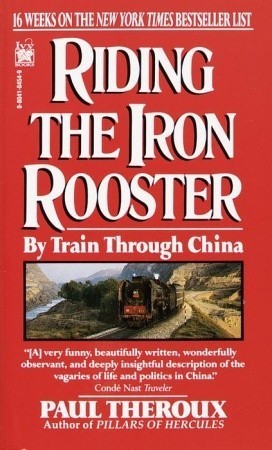
Paul Theroux invites you to join him on the journey of a lifetime, in the grand romantic tradition, by train across Europe, through the vast underbelly of Asia and in the heart of Russia, and then up to China. Here is China by rail, as seen and heard through the eyes and ears of one of the most intrepid and insightful travel writers of our time.

National BestsellerIn Ghost Train to the Eastern Star, Theroux recreates an epic journey he took thirty years ago, a giant loop by train (mostly) through Eastern Europe, Turkey, the Caucasus, Central Asia, the Indian Subcontinent, China, Japan, and Siberia. In short, he traverses all of Asia top to bottom, and end to end. In the three decades since he first travelled this route, Asia has undergone phenomenal change. The Soviet Union has collapsed, China has risen, India booms, Burma slowly smothers, and Vietnam prospers despite the havoc unleashed upon it the last time Theroux passed through. He witnesses all this and so much more in a 25,000 mile journey, travelling as the locals do, by train, car, bus, and foot.His odyssey takes him from Eastern Europe, still hungover from Communism, through tense but thriving Turkey, into the Caucasus, where Georgia limps back toward feudalism while its neighbour Azerbaijan revels in oil-driven capitalism. As he penetrates deeper into Asia’s heart, his encounters take on an otherworldly cast. The two chapters that follow show us Turkmenistan, a profoundly isolated society at the mercy of an almost comically egotistical dictator, and Uzbekistan, a ruthless authoritarian state. From there, he retraces his steps through India, Mayanmar, China, and Japan, providing his penetrating observations on the changes these countries have undergone.Brilliant, caustic, and totally addictive, Ghost Train to the Eastern Star is Theroux at his very best.

Renowned travel writer and novelist Paul Theroux has been many places in his life and tried almost everything. But this trip in and around the lands of the Pacific may be his boldest, most fascinating yet. From New Zealand's rain forests, to crocodile-infested New Guinea, over isolated atolls, through dirty harbors, daring weather and coastlines, he travels by Kayak wherever the winds take him--and what he discovers is the world to explore and try to understand.

One of the most acclaimed travel writers of our time turns his unflinching eye on an American South too often overlookedPaul Theroux has spent fifty years crossing the globe, adventuring in the exotic, seeking the rich history and folklore of the far away. Now, for the first time, in his tenth travel book, Theroux explores a piece of America — the Deep South. He finds there a paradoxical place, full of incomparable music, unparalleled cuisine, and yet also some of the nation’s worst schools, housing, and unemployment rates. It’s these parts of the South, so often ignored, that have caught Theroux’s keen traveler’s eye. On road trips spanning four seasons, wending along rural highways, Theroux visits gun shows and small-town churches, laborers in Arkansas, and parts of Mississippi where they still call the farm up the road “the plantation.” He talks to mayors and social workers, writers and reverends, the working poor and farming families — the unsung heroes of the south, the people who, despite it all, never left, and also those who returned home to rebuild a place they could never live without. From the writer whose “great mission has always been to transport us beyond that reading chair, to challenge himself — and thus, to challenge us” ( Boston Globe ), Deep South is an ode to a region, vivid and haunting, full of life and loss alike.

At the gateway to the Mediterranean lie the two Pillars of Hercules: Gibraltar and Ceuta, in Morocco. Paul Theroux decided to travel from one to the other – but taking the long way round. His grand tour of the Mediterranean begins in Gibraltar and takes him through Spain, the French Riviera, Italy, Greece, Istanbul and beyond. He travels by any means necessary - including dilapidated taxi, smoke-filled bus, bicycle and even a cruise-liner. And he encounters bullfights, bazaars and British tourists, discovers pockets of humanity in war-torn Slovenia and Croatia, is astounded by the urban developments on the Costa del Sol and marvels at the ancient wonders of Delphi. Told with Theroux's inimitable wit and style, this lively and eventful tour evokes the essence of Mediterranean life.

It was 1982, the summer of the Falkland Islands War, and the birth of the royal heir, Prince William - and the ideal time, Theroux found, to surprise the British into talking about themselves. The result is a candid, funny, perceptive, and opinionated travelogue of his journey and his findings.

Following the success of the acclaimed Ghost Train to the Eastern Star and The Great Railway Bazaar , The Last Train to Zona Verde is an ode to the last African journey of the world's most celebrated travel writer.“Happy again, back in the kingdom of light,” writes Paul Theroux as he sets out on a new journey through the continent he knows and loves best. Theroux first came to Africa as a twenty-two-year-old Peace Corps volunteer, and the pull of the vast land never left him. Now he returns, after fifty years on the road, to explore the little-traveled territory of western Africa and to take stock both of the place and of himself.His odyssey takes him northward from Cape Town, through South Africa and Namibia, then on into Angola, wishing to head farther still until he reaches the end of the line. Journeying alone through the greenest continent, Theroux encounters a world increasingly removed from both the itineraries of tourists and the hopes of postcolonial independence movements. Leaving the Cape Town townships, traversing the Namibian bush, passing the browsing cattle of the great sunbaked heartland of the savanna, Theroux crosses “the Red Line” into a different “the improvised, slapped-together Africa of tumbled fences and cooking fires, of mud and thatch,” of heat and poverty, and of roadblocks, mobs, and anarchy. After 2,500 arduous miles, he comes to the end of his journey in more ways than one, a decision he chronicles with typically unsparing honesty in a chapter called “What Am I Doing Here?”Vivid, witty, and beautifully evocative, The Last Train to Zona Verde is a fitting final African adventure from the writer whose gimlet eye and effortless prose have brought the world to generations of readers.

The legendary travel writer drives the entire length of the US–Mexico border, then takes the back roads of Chiapas and Oaxaca, to uncover the rich, layered world behind the everyday headlines . Paul Theroux has spent his life crisscrossing the globe in search of the histories and peoples that give life to the places they call home. Now, as immigration debates boil around the world, Theroux has set out to explore a country key to understanding our current Mexico. Just south of the Arizona border, in the desert region of Sonora, he finds a place brimming with vitality, yet visibly marked by both the US Border Patrol to the north and mounting discord from within. With the same humanizing sensibility that he employed in Deep South, Theroux stops to talk with residents, visits Zapotec mill workers in the highlands, and attends a Zapatista party meeting, communing with people of all stripes who remain south of the border even as family members brave the journey north. From the writer praised for his “curiosity and affection for humanity in all its forms” ( The New York Times Book Review ), On the Plain of Snakes is an exploration of a region in conflict.

“[Hock] knows he is ensorcelled by exoticism, but he can’t help himself. And, as things go from bad to worse and the pages start to turn faster, neither can we. A.”—Entertainment Weekly When he was a young man, Ellis Hock spent four of the best years of his life with the Peace Corps in Malawi. So when his wife of forty-two years leaves him, he decides to return to the village where he was stationed in search of the happiness he’d been missing since he left. But what he finds is not what he expected. The school he built is a ruin, the church and clinic are gone, and poverty and apathy have set in among the people. They remember Ellis and welcome him with open arms. Soon, however, their overtures turn menacing; they demand money and refuse to let him leave the village. Is his new life an escape or a trap? “Theroux’s bravely unsentimental novel about a region where he began his own grand career should become part of anybody’s education in the continent.”—Washington Post “The Lower River is riveting in its storytelling and provocative in its depiction of this African backwater, infusing both with undertones of slavery and cannibalism, savagery and disease.”—New York Times Book Review

Newly married and having recently taken over the management of a hotel in Honolulu, a former writer is drawn into the chaotic lives of his guests and into the distinctive customs and rhythms of the distant island. As witness to the many contrasting, and often ribald, chronicles of the hotel's characters, he ultimately finds personal salvation through returning to writing once again. The result is this novel in eighty distinct episodes, a Chaucerian sequence of strange pilgrims and just-as-strange islanders confronting each other, and their fate, in the rooms of the seedy hotel.

From the acclaimed author of The Mosquito Coast and The Bad Angel Brothers comes a riveting new novel exploring one of English literature's most beloved and controversial figures—George Orwell—and the early years as an officer in colonial Burma that transformed him from Eric Blair, the British Raj policeman, into Orwell the anticolonial writer. At age nineteen, young Eton graduate Eric Blair set sail for India, dreading the assignment ahead. Along with several other young conscripts, he would be trained for three years as a servant of the British Empire, overseeing the local policemen in Burma. Navigating the social, racial, and class politics of his fellow British at the same time as he learned the local languages and struggled to control his men would prove difficult enough. But doing all of this while grappling with his own self-worth, his sense that he was not cut out for this, is soon overwhelming for the young Blair. Eventually, his clashes with his superiors, and the drama that unfolds in this hot, beautiful land, will change him forever.

“Theroux’s work is like no one else’s.” –Francine Prose, New York Times Book ReviewFrom legendary writer Paul Theroux comes an atmospheric novel following a big-wave surfer as he confronts aging, privilege, mortality, and whose lives we choose to remember.Now in his sixties, big-wave surfer Joe Sharkey has passed his prime and is losing his “stoke.” The younger surfers around the breaks on the north shore of Oahu still idolize the Shark, but his sponsors are looking elsewhere. One night, while driving home from a bar after one too many, Joe accidentally kills a stranger near Waimea, a tragedy that sends his life out of control. As the repercussions of the accident spiral ever wider, Joe’s devoted girlfriend Olive throws herself into uncovering the dead man’s identity and helping Joe find vitality and refuge in the waves again.Set in the lush, gritty underside of an island paradise readers rarely see, Under the Wave at Waimea offers a dramatic, affecting commentary on privilege, mortality, and the lives we choose to remember. It is a masterstroke by one of the greatest writers of our time.

Paul Theroux celebrates fifty years of wandering the globe by collecting the best writing on travel from the books that shaped him, as a reader and a traveler. Part philosophical guide, part miscellany, part reminiscence, The Tao of Travel enumerates “The Contents of Some Travelers’ Bags” and exposes “Writers Who Wrote about Places They Never Visited”; tracks extreme journeys in “Travel as an Ordeal” and highlights some of “Travelers’ Favorite Places.” Excerpts from the best of Theroux’s own work are interspersed with selections from travelers both familiar and unexpected: Vladimir Nabokov J.R.R. Tolkien Samuel Johnson Eudora WeltyEvelyn Waugh Isak Dinesen Charles Dickens James Baldwin Henry David Thoreau Pico Iyer Mark Twain Anton Chekhov Bruce Chatwin John McPheeFreya Stark Peter Matthiessen Graham Greene Ernest Hemingway The Tao of Travel is a unique tribute to the pleasures and pains of travel in its golden age.

Brilliantly written, erotically charged, My Secret History is Paul Theroux's tour de force. It is the story of Andre Parent, a writer, a world traveller, a lover of every kind of woman he chances to meet in a life as varied as a man can lead.It begins with his days as a Massachusetts altar boy, when his first furtive sexual encounter introduces him to the thrills of leading a double life. As a teenaged lifeguard, Andre finds himself caught between the attentions of a beautiful young student and an amorous older woman. Soon he is in Africa, where the local women are numerous, easy, and free. And as the boy becomes a man he turns his attention to writing, which brings him fame, and a wife, who may finally cause him to know himself.But not before he sets up his most dangerous secret life, one that any man might envy, but that could cost Andre Parent the delicate balance that makes him who he is.

A master of the travel narrative weaves three intertwined novellas of Westerners transformed by their sojourns in India.This startling, far-reaching book captures the tumult, ambition, hardship, and serenity that mark today’s India. Theroux’s Westerners risk venturing far beyond the subcontinent’s well-worn paths to discover woe or truth or peace. A middle-aged couple on vacation veers heedlessly from idyll to chaos. A buttoned-up Boston lawyer finds succor in Mumbai’s reeking slums. And a young woman befriends an elephant in Bangalore.We also meet Indian characters as singular as they are reflective of the country’s subtle ironies: an executive who yearns to become a holy beggar, an earnest young striver whose personality is rewired by acquiring an American accent, a miracle-working guru, and others.As ever, Theroux’s portraits of people and places explode stereotypes to exhilarating effect. The Elephanta Suite urges us toward a fresh, compelling, and often inspiring notion of what India is, and what it can do to those who try to lose—or find—themselves there.

Paul Theroux's first collection of essays and articles devoted entirely to travel writing, FRESH AIR FIEND touches down on five continents and floats through most seas in between to deliver a literary adventure of the first order, with the incomparable Paul Theroux as a guide. From the crisp quiet of a solitary week spent in the snowbound Maine woods to the expectant chaos of Hong Kong on the eve of the Hand-over, Theroux demonstrates how the traveling life and the writing life are intimately connected. His journeys in remote hinterlands and crowded foreign capitals provide the necessary perspective to "become a stranger" in order to discover the self. A companion volume to SUNRISE WITH SEAMONSTERS, FRESH AIR FIEND is the ultimate good read for anyone fascinated by travel in the wider world or curious about the life of one of our most passionate travelers.

Ninety-nine years of colonial rule are ending as the British prepare to hand over Hong Kong to China. For Betty Mullard and her son, Bunt, it doesn't concern them - until the mysterious Mr. Hung from the mainland offers them a large sum for their family business. They refuse, yet fail to realize Mr. Hung is unlike the Chinese they've known: he will accept no refusals. When a young female employee whom Bunt has been dating vanishes, he is forced to make important decisions for the first time in his life - but his good intentions are pitted against the will of Mr. Hung and the threat of the ultimate betrayal.

In the Washington Post Book World, Sven Birkerts called this exuberant novel "a complex and gripping work of invention and confession . . . I understood again how the prose of a true writer can bring us to a world beyond." The book spans almost thirty years in the life of a fictional "Paul Theroux," who moves through young bachelorhood in Africa, in and out of marriage, affairs, and employment, and between continents. It's a wry, worldly, erotic, and deeply moving account of one man's first half century - "among the strongest things Theroux has ever written" (New York Times Book Review).

To those in her Cape Cod town, Mother is an exemplar of piety, frugality, and hard work. To her husband and seven children, she is the selfish, petty tyrant of Mother Land. She excels at playing her offspring against each other. Her favorite, Angela, died in childbirth; only Angela really understands her, she tells the others. The others include the officious lawyer, Fred; the uproarious professor, Floyd; a pair of inseparable sisters whose devotion to Mother has consumed their lives; and JP, the narrator, a successful writer whose work she disparages. As she lives well past the age of 100, her brood struggles with and among themselves to shed her viselike hold on them. Mother Land is a piercing portrait of how a parent’s narcissism impacts a family. While the particulars of this tale are unique, Theroux encapsulates with acute clarity and wisdom a circumstance that is familiar to legions of readers. And beyond offering the shock and comfort of recognition, Mother Land presents for everyone an engrossing, heartbreaking, and often funny saga of a vast family that bickers, colludes, connives, and ultimately overcomes the painful ties that bind them.

Drawing together a fascinating body of writing from over 14 years of work, Figures in a Landscape ranges from profiles of cultural icons (Oliver Sacks, Elizabeth Taylor, Robin Williams) to intimate personal remembrances; from thrilling adventures in Africa to literary writings from Theroux's rich and expansive personal reading. Collectively these pieces offer a fascinating portrait of the author himself, his extraordinary life, restless and ever-curious mind.

This heartfelt and revealing account of Paul Theroux's thirty-year friendship with the legendary V. S. Naipaul is an intimate record of a literary mentorship that traces the growth of both writers' careers and explores the unique effect each had on the other. Built around exotic landscapes, anecdotes that are revealing, humorous, and melancholy, and three decades of mutual history, this is a personal account of how one develops as a writer and how a friendship waxes and wanes between two men who have set themselves on the perilous journey of a writing life.

Jerry Delfont leads an aimless life in Calcutta, struggling in vain against his writer's block, or 'dead hand,' and flitting around the edges of a half-hearted romance. Then he receives a mysterious letter asking for his help. The story it tells is disturbing: A dead boy found on the floor of a cheap hotel, a seemingly innocent man in flight and fearing for reputation as well as his life. Before long, Delfont finds himself lured into the company of the letter's author, the wealthy and charming Merrill Unger, and is intrigued enough to pursue both the mystery and the woman. A devotee of the goddess Kali, Unger introduces Delfont to a strange underworld where tantric sex and religious fervor lead to obsession, philanthropy and exploitation walk hand in hand, and, unless he can act in time, violence against the most vulnerable in society goes unnoticed and unpunished. An atmospheric and masterful thriller from "the most gifted, the most prodigal writer of his generation"--Jonathan Raban.

At one time, expatriate Jack Flowers was the youngest drinker at Singapore's Bandung Club. Now, at 53, he is a fixture. But he is beginning to fear death, alone and vulnerable in the alien tropics. And Jack still dreams of success. How can he convert his "perfect dream of magic" into reality, away from the seamy waterfront that has become his home? A funny and sophisticated novel from an acclaimed and popular writer.

The journeys of Paul Theroux take place not only in exotic, unexpected places of the world but in the thoughts, reading, and emotions of the writer himself. A gathering of people, places, and ideas in fifty glittering pieces of gold.

An evocative novel about two brothers whose rivalry as youths in the Massachusetts town of Littleford reverberates throughout their lives, with striking consequences. As they grow into men, they develop into very different people on very different paths - Frank becomes a successful lawyer, and Cal becomes a geologist - but they are constantly drawn back to one other. As they grow into middle age, their relationship reaches crisis point after the death of their widowed mother. The Belanger Brothers is an intimate portrait of family, resentment, and the bonds that shape our lives.

It's New Year in paranoid, computer-rich New York, and a group of Owners has jet-rotored out to party in O-Zone.New York is a sealed city. Visits to the eerie, radioactive wasteland of O-Zone are now rarer than moon landings. The people dumped there, 'aliens', officially do not exist. For Hooper Allbright and Fizzy, Theroux's futuristic Robinson Crusoes, the trip sets in motion an adventure of undreamed-of desire and terror.