Loading genres...
Explore the best books about Philosophy genre.

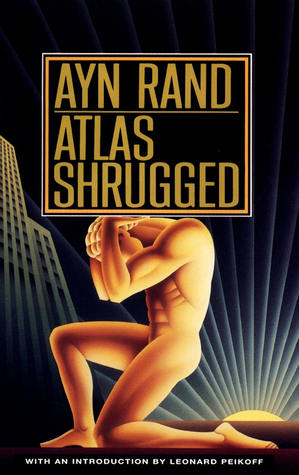
This is the story of a man who said that he would stop the motor of the world and did. Was he a destroyer or the greatest of liberators?Why did he have to fight his battle, not against his enemies, but against those who needed him most, and his hardest battle against the woman he loved? What is the world’s motor — and the motive power of every man? You will know the answer to these questions when you discover the reason behind the baffling events that play havoc with the lives of the characters in this story. Tremendous in its scope, this novel presents an astounding panorama of human life — from the productive genius who becomes a worthless playboy — to the great steel industrialist who does not know that he is working for his own destruction — to the philosopher who becomes a pirate — to the composer who gives up his career on the night of his triumph — to the woman who runs a transcontinental railroad — to the lowest track worker in her Terminal tunnels. You must be prepared, when you read this novel, to check every premise at the root of your convictions.This is a mystery story, not about the murder — and rebirth — of man’s spirit. It is a philosophical revolution, told in the form of an action thriller of violent events, a ruthlessly brilliant plot structure and an irresistible suspense. Do you say this is impossible? Well, that is the first of your premises to check.


EXPANDED THIRD EDITION includes Charlie's 2007 USC Law School Commencement address. Edited by Peter D. Kaufman. Brand New.

Combining magic, mysticism, wisdom, and wonder into an inspiring tale of self-discovery, The Alchemist has become a modern classic, selling millions of copies around the world and transforming the lives of countless readers across generations.Paulo Coelho's masterpiece tells the mystical story of Santiago, an Andalusian shepherd boy who yearns to travel in search of a worldly treasure. His quest will lead him to riches far different—and far more satisfying—than he ever imagined. Santiago's journey teaches us about the essential wisdom of listening to our hearts, recognizing opportunity and learning to read the omens strewn along life's path, and, most importantly, following our dreams.

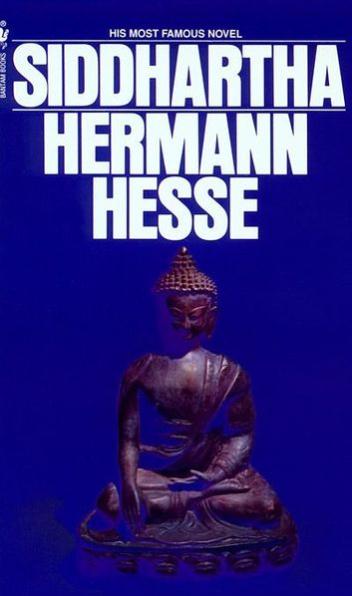
Herman Hesse's classic novel has delighted, inspired, and influenced generations of readers, writers, and thinkers. In this story of a wealthy Indian Brahmin who casts off a life of privilege to seek spiritual fulfillment. Hesse synthesizes disparate philosophies--Eastern religions, Jungian archetypes, Western individualism--into a unique vision of life as expressed through one man's search for true meaning.

The Tao Te Ching, the esoteric but infinitely practical book written most probably in the sixth century B.C. by Lao Tsu, has been translated more frequently than any work except the Bible. This translation of the Chinese classic, which was first published twenty-five years ago, has sold more copies than any of the others. It offers the essence of each word and makes Lao Tsu's teaching immediate and alive.The philosophy of Lao Tsu is simple: Accept what is in front of you without wanting the situation to be other than it is. Study the natural order of things and work with it rather than against it, for to try to change what is only sets up resistance. Nature provides everything without requiring payment or thanks, and also provides for all without discrimination—therefore let us present the same face to everyone and treat all men as equals, however they may behave. If we watch carefully, we will see that work proceeds more quickly and easily if we stop "trying," if we stop putting in so much extra effort, if we stop looking for results. In the clarity of a still and open mind, truth will be reflected. We will come to appreciate the original meaning of the word "understand," which means "to stand under." We serve whatever or whoever stands before us, without any thought for ourselves. Te—which may be translated as "virtue" or "strength"—lies always in Tao, or" natural law. In other words: Simply be.
The War of Break Through the Blocks and Win Your Inner Creative Battles.

Avec ce provocant paradoxe, Nassim Nicholas Taleb, l'auteur du best-seller Le Cygne Noir, nous offre un enseignement d'une portée révolutionnaire: comment non seulement surmonter les cataclysmes de notre temps – ces Cygnes Noirs qui fondent sur un homme, une culture, une civilisation, les bouleversent et les réduisent à néant –, mais en faire une source de bienfaits.De même que le corps humain se renforce à mesure qu'il est soumis au stress et à l'effort, de même que les mouvements populaires grandissent lorsqu'ils sont réprimés, de même le vivant en général se développe d'autant mieux qu’il est confronté à des facteurs de désordre, de volatilité ou à quoi que ce soit à même de le troubler. Cette faculté à non seulement tirer profit du chaos mais à en avoir besoin pour devenir meilleur est « l’antifragile », à l’image de l’antique Hydre de Lerne dont les têtes se multipliaient à mesure qu’elles étaient coupées.Riche, limpide et spirituel, promenant son lecteur dans les rues tonitruantes de Brooklyn, les chemins de la pensée antique, les dédales de l’affaire Kerviel, de la « gauche caviar » ou les méandres des neurosciences avec autant d’aisance et de légèreté profonde, ce livre, dont la science n’est jamais sans conscience, laisse une question en suspens: êtes-vous prêt à devenir antifragile ?

Selected by The New York Times Book Review as a Notable Book of the Year. The author of The New York Times bestseller The Stuff of Thought offers a controversial history of violence. Faced with the ceaseless stream of news about war, crime, and terrorism, one could easily think we live in the most violent age ever seen. Yet as New York Times bestselling author Steven Pinker shows in this startling and engaging new work, just the opposite is true: violence has been diminishing for millennia and we may be living in the most peaceful time in our species' existence. For most of history, war, slavery, infanticide, child abuse, assassinations, pogroms, gruesome punishments, deadly quarrels, and genocide were ordinary features of life. But today, Pinker shows (with the help of more than a hundred graphs and maps) all these forms of violence have dwindled and are widely condemned. How has this happened?This groundbreaking book continues Pinker's exploration of the essence of human nature, mixing psychology and history to provide a remarkable picture of an increasingly nonviolent world. The key, he explains, is to understand our intrinsic motives- the inner demons that incline us toward violence and the better angels that steer us away-and how changing circumstances have allowed our better angels to prevail. Exploding fatalist myths about humankind's inherent violence and the curse of modernity, this ambitious and provocative book is sure to be hotly debated in living rooms and the Pentagon alike, and will challenge and change the way we think about our society.

In The 7 Habits of Highly Effective People, author Stephen R. Covey presents a holistic, integrated, principle-centered approach for solving personal and professional problems. With penetrating insights and pointed anecdotes, Covey reveals a step-by-step pathway for living with fairness, integrity, service, and human dignity -- principles that give us the security to adapt to change and the wisdom and power to take advantage of the opportunities that change creates.

Twenty-Five Hundred years ago, Sun Tzu wrote this classic book of military strategy based on Chinese warfare and military thought. Since that time, all levels of military have used the teaching on Sun Tzu to warfare and civilization have adapted these teachings for use in politics, business and everyday life. The Art of War is a book which should be used to gain advantage of opponents in the boardroom and battlefield alike.

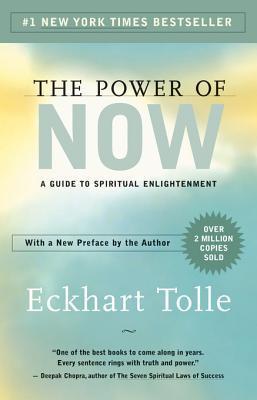
Alternate cover edition of ISBN 9781577314806.To make the journey into the Now we will need to leave our analytical mind and its false created self, the ego, behind. From the very first page of Eckhart Tolle's extraordinary book, we move rapidly into a significantly higher altitude where we breathe a lighter air. We become connected to the indestructible essence of our Being, “The eternal, ever present One Life beyond the myriad forms of life that are subject to birth and death.” Although the journey is challenging, Eckhart Tolle uses simple language and an easy question-and-answer format to guide us.A word-of-mouth phenomenon since its first publication, The Power of Now is one of those rare books with the power to create an experience in readers, one that can radically change their lives for the better.

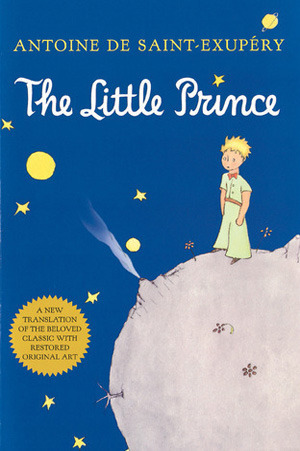
A pilot stranded in the desert awakes one morning to see, standing before him, the most extraordinary little fellow. "Please," asks the stranger, "draw me a sheep." And the pilot realizes that when life's events are too difficult to understand, there is no choice but to succumb to their mysteries. He pulls out pencil and paper... And thus begins this wise and enchanting fable that, in teaching the secret of what is really important in life, has changed forever the world for its readers.Few stories are as widely read and as universally cherished by children and adults alike as The Little Prince, presented here in a stunning new translation with carefully restored artwork. The definitive edition of a worldwide classic, it will capture the hearts of readers of all ages.

De Mello's spiritual classic remains at the top of the Fount bestsellers more than five years after its original publication.

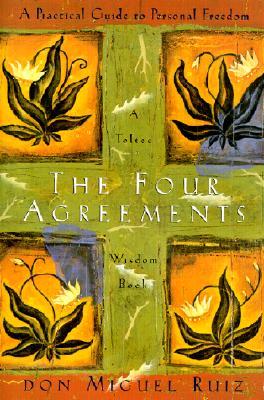
In The Four Agreements, don Miguel Ruiz reveals the source of self-limiting beliefs that rob us of joy and create needless suffering. Based on ancient Toltec wisdom, the Four Agreements offer a powerful code of conduct that can rapidly transform our lives to a new experience of freedom, true happiness, and love. The Four Agreements are: Be Impeccable With Your Word, Don't Take Anything Personally, Don't Make Assumptions, Always Do Your Best.

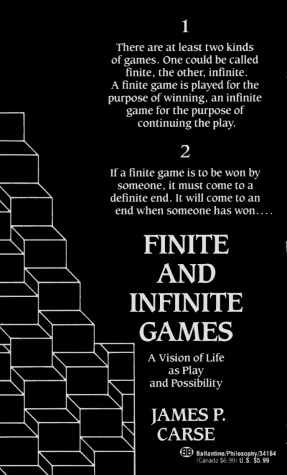
An extraordinary book that will dramatically change the way you experience life.Finite games are the familiar contests of everyday life, the games we play in business and politics, in the bedroom and on the battlefied -- games with winners and losers, a beginning and an end. Infinite games are more mysterious -- and ultimately more rewarding. They are unscripted and unpredictable; they are the source of true freedom.In this elegant and compelling work, James Carse explores what these games mean, and what they can mean to you. He offers stunning new insights into the nature of property and power, of culture and community, of sexuality and self-discovery, opening the door to a world of infinite delight and possibility."An extraordinary little book . . . a wise and intimate companion, an elegant reminder of the real."-- Brain/Mind Bulletin

"The Selfish Gene" caused a wave of excitement among biologists and the general public when it was first published in 1976. Its vivid rendering of a gene's eye view of life, in lucid prose, gathered together the strands of thought about the nature of natural selection into a conceptual framework with far-reaching implications for our understanding of evolution. Time has confirmed its significance. Intellectually rigorous, yet written in non-technical language, "The Selfish Gene" is widely regarded as a masterpiece of science writing, and its insights remain as relevant today as on the day it was published.Chapters:1. Why are people?2. The replicators3. Immortal coils4. The gene machine5. Aggression stability and the selfish machine6. Genesmanship7. Family planning8. Battle of the generations9. Battle of the sexes10. You scratch my back, I'll ride on yours11. Memes: the new replicators12. Nice guys finish first13. The long reach of the gene

A black swan is a highly improbable event with three principal characteristics: It is unpredictable; it carries a massive impact; and, after the fact, we concoct an explanation that makes it appear less random, and more predictable, than it was. The astonishing success of Google was a black swan; so was 9/11. For Nassim Nicholas Taleb, black swans underlie almost everything about our world, from the rise of religions to events in our own personal lives.Why do we not acknowledge the phenomenon of black swans until after they occur? Part of the answer, according to Taleb, is that humans are hardwired to learn specifics when they should be focused on generalities. We concentrate on things we already know and time and time again fail to take into consideration what we don’t know. We are, therefore, unable to truly estimate opportunities, too vulnerable to the impulse to simplify, narrate, and categorize, and not open enough to rewarding those who can imagine the “impossible.”For years, Taleb has studied how we fool ourselves into thinking we know more than we actually do. We restrict our thinking to the irrelevant and inconsequential, while large events continue to surprise us and shape our world. Now, in this revelatory book, Taleb explains everything we know about what we don’t know. He offers surprisingly simple tricks for dealing with black swans and benefiting from them.Elegant, startling, and universal in its applications 'The Black Swan' will change the way you look at the world. Taleb is a vastly entertaining writer, with wit, irreverence, and unusual stories to tell. He has a polymathic command of subjects ranging from cognitive science to business to probability theory. 'The Black Swan' is a landmark book – itself a black swan.

Brave New World is a dystopian novel by English author Aldous Huxley, written in 1931 and published in 1932. Largely set in a futuristic World State, inhabited by genetically modified citizens and an intelligence-based social hierarchy, the novel anticipates huge scientific advancements in reproductive technology, sleep-learning, psychological manipulation and classical conditioning that are combined to make a dystopian society which is challenged by only a single individual: the story's protagonist.Plongez dans la version originale et intégrale de la première grande dystopie du siècle. Avec la collection NOT SO CLASSIC, lire en anglais devient un vrai plaisir grâce à : des notes de vocabulaire en marge (en français et en anglais) un dossier complet pour comprendre l'oeuvre, ses personnages, ses grands thèmes et son contexte des quiz pour mémoriser l'essentiel, de façon ludique des activités pour progresser en anglais, grâce au texte d'un auteur d'exception + les vidéos "Previously on" La synthèse (en anglais) du roman pour ne pas perdre le fil de l'histoire.English with French in the margins.

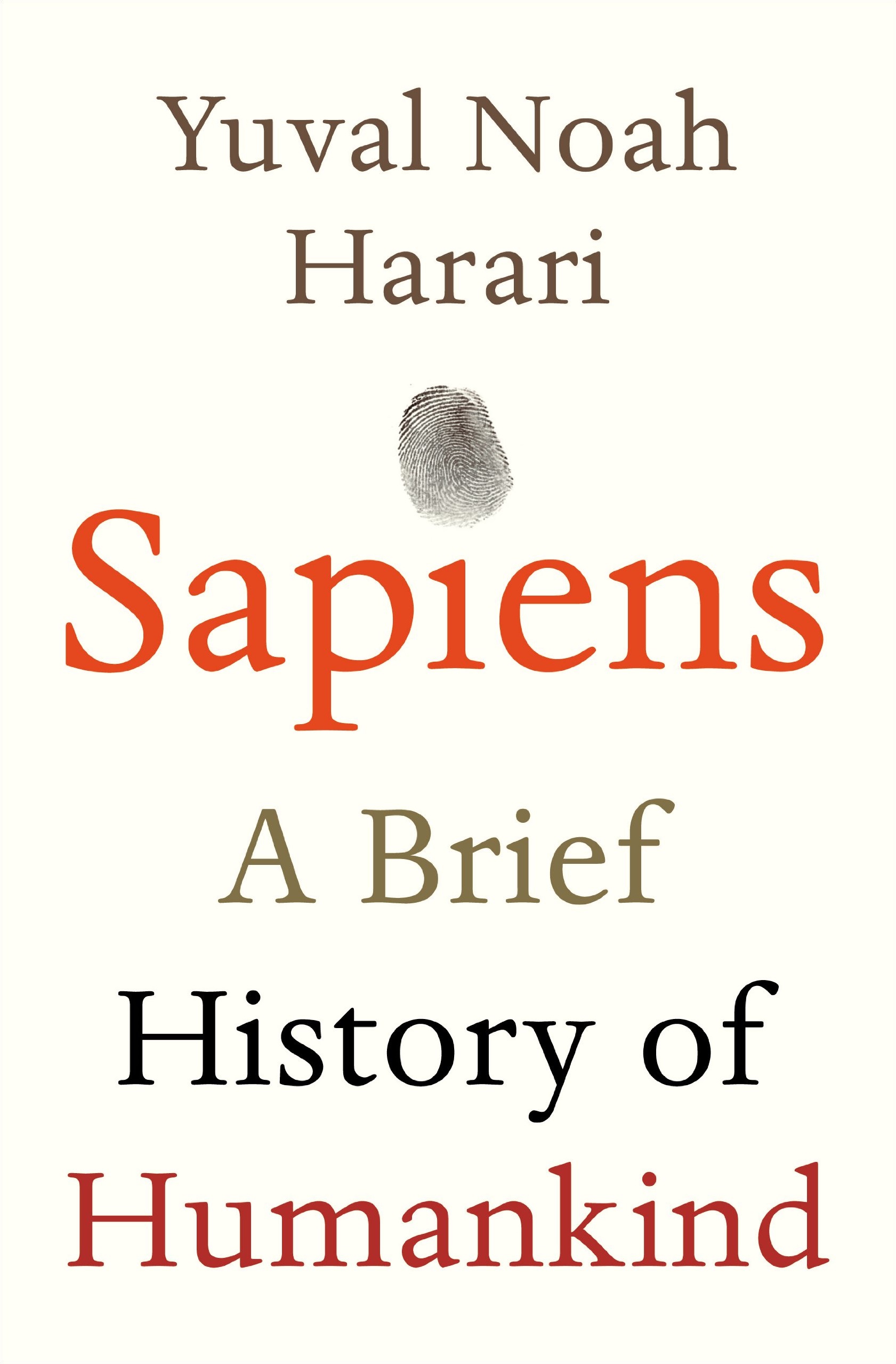
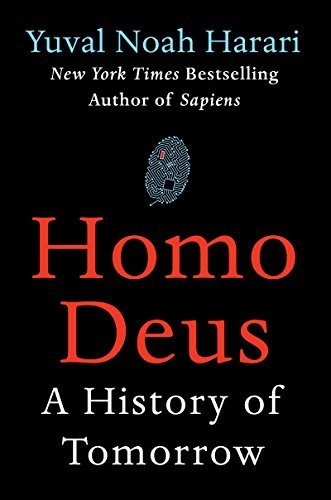
Yuval Noah Harari, author of the critically-acclaimed New York Times bestseller and international phenomenon Sapiens, returns with an equally original, compelling, and provocative book, turning his focus toward humanity’s future, and our quest to upgrade humans into gods.Over the past century humankind has managed to do the impossible and rein in famine, plague, and war. This may seem hard to accept, but, as Harari explains in his trademark style—thorough, yet riveting—famine, plague and war have been transformed from incomprehensible and uncontrollable forces of nature into manageable challenges. For the first time ever, more people die from eating too much than from eating too little; more people die from old age than from infectious diseases; and more people commit suicide than are killed by soldiers, terrorists and criminals put together. The average American is a thousand times more likely to die from binging at McDonalds than from being blown up by Al Qaeda.What then will replace famine, plague, and war at the top of the human agenda? As the self-made gods of planet earth, what destinies will we set ourselves, and which quests will we undertake? Homo Deus explores the projects, dreams and nightmares that will shape the twenty-first century—from overcoming death to creating artificial life. It asks the fundamental questions: Where do we go from here? And how will we protect this fragile world from our own destructive powers? This is the next stage of evolution. This is Homo Deus.With the same insight and clarity that made Sapiens an international hit and a New York Times bestseller, Harari maps out our future.

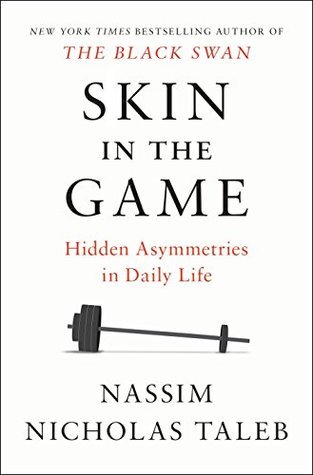
From the New York Times bestselling author of The Black Swan, a bold new work that challenges many of our long-held beliefs about risk and reward, politics and religion, finance and personal responsibility In his most provocative and practical book yet, one of the foremost thinkers of our time redefines what it means to understand the world, succeed in a profession, contribute to a fair and just society, detect nonsense, and influence others. Citing examples ranging from Hammurabi to Seneca, Antaeus the Giant to Donald Trump, Nassim Nicholas Taleb shows how the willingness to accept one’s own risks is an essential attribute of heroes, saints, and flourishing people in all walks of life. As always both accessible and iconoclastic, Taleb challenges long-held beliefs about the values of those who spearhead military interventions, make financial investments, and propagate religious faiths. Among his insights: • For social justice, focus on symmetry and risk sharing. You cannot make profits and transfer the risks to others, as bankers and large corporations do. You cannot get rich without owning your own risk and paying for your own losses. Forcing skin in the game corrects this asymmetry better than thousands of laws and regulations. • Ethical rules aren’t universal. You’re part of a group larger than you, but it’s still smaller than humanity in general. • Minorities, not majorities, run the world. The world is not run by consensus but by stubborn minorities imposing their tastes and ethics on others. • You can be an intellectual yet still be an idiot. “Educated philistines” have been wrong on everything from Stalinism to Iraq to low-carb diets. • Beware of complicated solutions (that someone was paid to find). A simple barbell can build muscle better than expensive new machines. • True religion is commitment, not just faith. How much you believe in something is manifested only by what you’re willing to risk for it.The phrase “skin in the game” is one we have often heard but rarely stopped to truly dissect. It is the backbone of risk management, but it’s also an astonishingly rich worldview that, as Taleb shows in this book, applies to all aspects of our lives. As Taleb says, “The symmetry of skin in the game is a simple rule that’s necessary for fairness and justice, and the ultimate BS-buster,” and “Never trust anyone who doesn’t have skin in the game. Without it, fools and crooks will benefit, and their mistakes will never come back to haunt them.”

Machiavelli needs to be looked at as he really was. Hence: Can Machiavelli, who makes the following observations, be Machiavellian as we understand the disparaging term?1. So it is that to know the nature of a people, one need be a Prince; to know the nature of a Prince, one need to be of the people.2. If a Prince is not given to vices that make him hated, it is unsusal for his subjects to show their affection for him.3. Opportunity made Moses, Cyrus, Romulus, Theseus, and others; their virtue domi-nated the opportunity, making their homelands noble and happy. Armed prophets win; the disarmed lose.4. Without faith and religion, man achieves power but not glory.5. Prominent citizens want to command and oppress; the populace only wants to be free of oppression.6. A Prince needs a friendly populace; otherwise in diversity there is no hope.7. A Prince, who rules as a man of valor, avoids disasters,8. Nations based on mercenary forces will never be solid or secure.9. Mercenaries are dangerous because of their cowardice10. There are two ways to fight: one with laws, the other with force. The first is rightly man’s way; the second, the way of beasts.

Raskolnikov, an impoverished student living in the St. Petersburg of the tsars, is determined to overreach his humanity and assert his untrammeled individual will. When he commits an act of murder and theft, he sets into motion a story that, for its excruciating suspense, its atmospheric vividness, and its depth of characterization and vision is almost unequaled in the literatures of the world. The best known of Dostoevsky’s masterpieces, Crime and Punishment can bear any amount of rereading without losing a drop of its power over our imaginations.Dostoevsky’s drama of sin, guilt, and redemption transforms the sordid story of an old woman’s murder into the nineteenth century’s profoundest and most compelling philosophical novel.
“Ridley writes with panache, wit, and humor and displays remarkable ingenuity in finding ways to present complicated materials for the lay reader.” — Los Angeles Times In a bold and provocative interpretation of economic history, Matt Ridley, the New York Times -bestselling author of Genome and The Red Queen , makes the case for an economics of hope, arguing that the benefits of commerce, technology, innovation, and change—what Ridley calls cultural evolution—will inevitably increase human prosperity. Fans of the works of Jared Diamond ( Guns, Germs, and Steel ), Niall Ferguson ( The Ascent of Money ), and Thomas Friedman ( The World Is Flat ) will find much to ponder and enjoy in The Rational Optimist.

'Science has never had an advocate quite like David Deutsch ... A computational physicist on a par with his touchstones Alan Turing and Richard Feynman, and a philosopher in the line of his greatest hero, Karl Popper. His arguments are so clear that to read him is to experience the thrill of the highest level of discourse available on this planet and to understand it' Peter Forbes, IndependentIn our search for truth, how far have we advanced? This uniquely human quest for good explanations has driven amazing improvements in everything from scientific understanding and technology to politics, moral values and human welfare. But will progress end, either in catastrophe or completion - or will it continue infinitely?In this profound and seminal book, David Deutsch explores the furthest reaches of our current understanding, taking in the Infinity Hotel, supernovae and the nature of optimism, to instill in all of us a wonder at what we have achieved - and the fact that this is only the beginning of humanity's infinite possibility.'This is Deutsch at his most ambitious, seeking to understand the implications of our scientific explanations of the world ... I enthusiastically recommend this rich, wide-ranging and elegantly written exposition of the unique insights of one of our most original intellectuals' Michael Berry, Times Higher Education Supplement'Bold ... profound ... provocative and persuasive' Economist'David Deutsch may well go down in history as one of the great scientists of our age' Scotsman

THE LIFE-CHANGING NEW YORK TIMES BESTSELLER • MORE THAN TWO MILLION COPIES SOLD • Now in a 10th anniversary edition featuring a new introduction and bonus 21-day challenge.“Essentialism holds the keys to solving one of the great puzzles of life: How can we do less but accomplish more?”—Adam Grant, bestselling author of Think AgainEssentialism isn’t about getting more done in less time. It’s about getting only the right things done.Have you ever found yourself stretched too thin?Are you often busy but not productive?Do you feel like your time is constantly being hijacked?If you answered yes to any of these, the way out is the Way of the Essentialist. Essentialism is more than a time-management technique. It is a systematic discipline for discerning what is absolutely essential, then eliminating everything that is not, so we can make the highest possible contribution toward the things that really matter. By forcing us to apply more selective criteria for where to spend our precious time and energy, the disciplined pursuit of less empowers us to reclaim control of our own choices, instead of giving others the implicit permission to choose for us. Essentialism is not one more thing to do. It’s a whole new way of doing less, but better, in every area of our lives. Join the millions of people who have used Essentialism to change their outlook on the world.

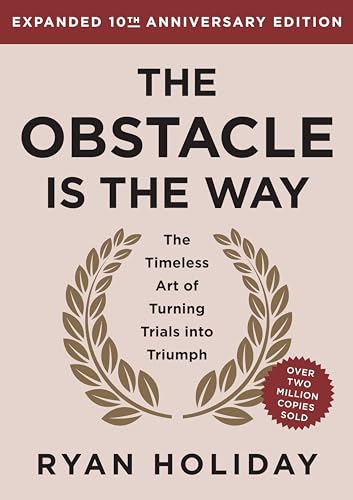
“The impediment to action advances action. What stands in the way becomes the way.” — Marcus AureliusWe are stuck, stymied, frustrated. But it needn’t be this way. There is a formula for success that’s been followed by the icons of history—from John D. Rockefeller to Amelia Earhart to Ulysses S. Grant to Steve Jobs—a formula that let them turn obstacles into opportunities. Faced with impossible situations, they found the astounding triumphs we all seek.These men and women were not exceptionally brilliant, lucky, or gifted. Their success came from timeless philosophical principles laid down by a Roman emperor who struggled to articulate a method for excellence in any and all situations.This book reveals that formula for the first time—and shows us how we can turn our own adversity into advantage.

Something is going wrong on many college campuses in the last few years. Rates of anxiety, depression, and suicide are rising. Speakers are shouted down. Students and professors say they are walking on eggshells and afraid to speak honestly. How did this happen? First Amendment expert Greg Lukianoff and social psychologist Jonathan Haidt show how the new problems on campus have their origins in three terrible ideas that have become increasingly woven into American childhood and what doesn’t kill you makes you weaker; always trust your feelings; and life is a battle between good people and evil people. These three Great Untruths are incompatible with basic psychological principles, as well as ancient wisdom from many cultures. They interfere with healthy development. Anyone who embraces these untruths—and the resulting culture of safetyism—is less likely to become an autonomous adult able to navigate the bumpy road of life. Lukianoff and Haidt investigate the many social trends that have intersected to produce these untruths. They situate the conflicts on campus in the context of America’s rapidly rising political polarization, including a rise in hate crimes and off-campus provocation. They explore changes in childhood including the rise of fearful parenting, the decline of unsupervised play, and the new world of social media that has engulfed teenagers in the last decade. This is a book for anyone who is confused by what is happening on college campuses today, or has children, or is concerned about the growing inability of Americans to live, work, and cooperate across party lines.

Could psychedelic drugs change our worldview? One of America's most admired writers takes us on a mind-altering journey to the frontiers of human consciousnessWhen LSD was first discovered in the 1940s, it seemed to researchers, scientists and doctors as if the world might be on the cusp of psychological revolution. It promised to shed light on the deep mysteries of consciousness, as well as offer relief to addicts and the mentally ill. But in the 1960s, with the vicious backlash against the counter-culture, all further research was banned. In recent years, however, work has quietly begun again on the amazing potential of LSD, psilocybin and DMT. Could these drugs in fact improve the lives of many people? Diving deep into this extraordinary world and putting himself forward as a guinea-pig, Michael Pollan has written a remarkable history of psychedelics and a compelling portrait of the new generation of scientists fascinated by the implications of these drugs. How to Change Your Mind is a report from what could very well be the future of human consciousness.

At its heart, the story is all too simple: a man and his son take a lengthy motorcycle trip through America. But this is not a simple trip at all, for around every corner, through mountain and desert, wind and rain, and searing heat and biting cold, their pilgrimage leads them to new vistas of self-discovery and renewal.Zen and the Art of Motorcycle Mantenance is an elemental work that has helped to shape and define the past twenty-five years of American culture. This special audio edition presents this adventure in a compelling way - for the millions who have already taken this journey and want to travel these roads again, and for the many more who will discover for the first time the wonders and challenges of a journey that will change the way they think and feel about their lives.

“In the beginner’s mind there are many possibilities, but in the expert’s there are few.” So begins this most beloved of all American Zen books. Seldom has such a small handful of words provided a teaching as rich as has this famous opening line. In a single stroke, the simple sentence cuts through the pervasive tendency students have of getting so close to Zen as to completely miss what it’s all about. An instant teaching on the first page. And that’s just the beginning.In the forty years since its original publication, Zen Mind, Beginner’s Mind has become one of the great modern Zen classics, much beloved, much reread, and much recommended as the best first book to read on Zen. Suzuki Roshi presents the basics—from the details of posture and breathing in zazen to the perception of nonduality—in a way that is not only remarkably clear, but that also resonates with the joy of insight from the first to the last page. It’s a book to come back to time and time again as an inspiration to practice, and it is now available to a new generation of seekers in this fortieth anniversary edition, with a new afterword by Shunryu Suzuki’s biographer, David Chadwick.

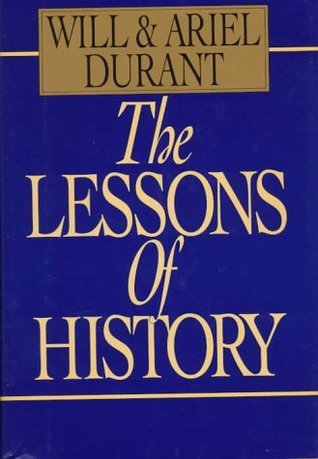
In this illuminating and thoughtful book, Will and Ariel Durant have succeeded in distilling for the reader the accumulated store of knowledge and experience from their four decades of work on the ten monumental volumes of "The Story of Civilization." The result is a survey of human history, full of dazzling insights into the nature of human experience, the evolution of civilization, the culture of man. With the completion of their life's work they look back and ask what history has to say about the nature, the conduct and the prospects of man, seeking in the great lives, the great ideas, the great events of the past for the meaning of man's long journey through war, conquest and creation - and for the great themes that can help us to understand our own era.To the Durants, history is "not merely a warning reminder of man's follies and crimes, but also an encouraging remembrance of generative souls ... a spacious country of the mind wherein a thousand saints, statesman, inventors, scientists, poets, artists, musicians, lovers, and philosophers still live and speak, teach and carve and sing..."Designed to accompany the ten-volume set of "The Story of Civilization, The Lessons of History" is, in its own right, a profound and original work of history and philosophy.

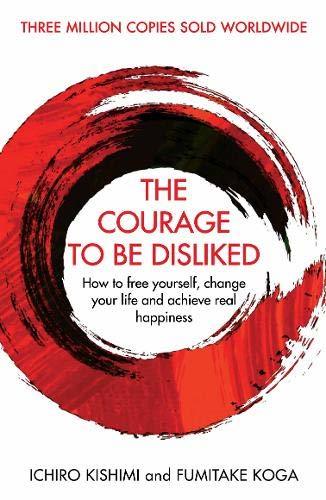
The Japanese phenomenon that teaches us the simple yet profound lessons required to liberate our real selves and find lasting happiness.The Courage to Be Disliked shows you how to unlock the power within yourself to become your best and truest self, change your future and find lasting happiness. Using the theories of Alfred Adler, one of the three giants of 19th-century psychology alongside Freud and Jung, the authors explain how we are all free to determine our own future free of the shackles of past experiences, doubts and the expectations of others. It’s a philosophy that’s profoundly liberating, allowing us to develop the courage to change, and to ignore the limitations that we and those around us can place on ourselves.The result is a book that is both highly accessible and profound in its importance. Millions have already read and benefited from its wisdom. Now that The Courage to Be Disliked has been published for the first time in English, so can you.

In these nine stunningly original, provocative, and poignant stories, Ted Chiang tackles some of humanity’s oldest questions along with new quandaries only he could imagine.In "The Merchant and the Alchemist's Gate," a portal through time forces a fabric seller in ancient Baghdad to grapple with past mistakes and second chances. In "Exhalation," an alien scientist makes a shocking discovery with ramifications that are literally universal. In "Anxiety Is the Dizziness of Freedom," the ability to glimpse into alternate universes necessitates a radically new examination of the concepts of choice and free will.Including stories being published for the first time as well as some of his rare and classic uncollected work, Exhalation is Ted Chiang at his best: profound, sympathetic—revelatory.

“Startling in scope and bravado.” —Janet Maslin, The New York Times“Artfully envisions a breathtakingly better world.” — Los Angeles Times“Elaborate, smart and persuasive.” — The Boston Globe“A pleasure to read.” — The Wall Street JournalOne of CBS News ’s Best Fall Books of 2005 • Among St Louis Post-Dispatch ’s Best Nonfiction Books of 2005 • One of Amazon.com’s Best Science Books of 2005A radical and optimistic view of the future course of human development from t he bestselling author of How to Create a Mind and The Singularity is Nearer who Bill Gates calls “the best person I know at predicting the future of artificial intelligence”For over three decades, Ray Kurzweil has been one of the most respected and provocative advocates of the role of technology in our future. In his classic The Age of Spiritual Machines , he argued that computers would soon rival the full range of human intelligence at its best. Now he examines the next step in this inexorable evolutionary the union of human and machine, in which the knowledge and skills embedded in our brains will be combined with the vastly greater capacity, speed, and knowledge-sharing ability of our creations.

"Do not act as if thou were going to live ten thousand years. Death hangs over thee. While thoug livest, while it is in thy power, be good."Meditations contains the private wisdom of Marcus Aurelius, Roman Emperor from AD 161 to 180, and a great philosopher.His Meditations were never intended for publication. They were his personal thoughts and spiritual reflections, which he wrote down and referred to in order to help him manage the challenges of governing the Roman Empire while maintaining a peaceful private life.His philosophy articulated the need for inner peace and moral certainty in a world filled with chaos and suffering. The insights found in Meditations are just as helpful today as when Marcus Aurelius first wrote them nearly two millennia ago.

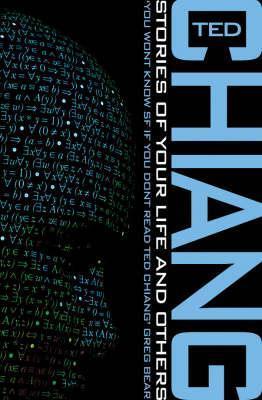
What if men built a tower from Earth to Heaven-and broke through to Heaven's other side? What if we discovered that the fundamentals of mathematics were arbitrary and inconsistent? What if there were a science of naming things that calls life into being from inanimate matter? What if exposure to an alien language forever changed our perception of time? What if all the beliefs of fundamentalist Christianity were literally true, and the sight of sinners being swallowed into fiery pits were a routine event on city streets? These are the kinds of outrageous questions posed by the stories of Ted Chiang. Stories of your life . . . and others.

The Magic of Thinking Big gives you useful methods, not empty promises. Dr. Schwartz presents a carefully designed program for getting the most out of your job, your marriage and family life, and your community. He proves that you don’t need to be an intellectual or have innate talent to attain great success and satisfaction—but you do need to learn and understand the habit of thinking and behaving in ways that will get you there. This CD set gives you those secrets! Believe you can succeed and you -Cure yourself of the fear of failure -Think and dream creatively -You are what you think you are -Make your attitudes your allies -Learn how to think positively -Turn defeat into victory -Use goals to help you grow -Think like a leader

Douglas Hofstadter's book is concerned directly with the nature of “maps” or links between formal systems. However, according to Hofstadter, the formal system that underlies all mental activity transcends the system that supports it. If life can grow out of the formal chemical substrate of the cell, if consciousness can emerge out of a formal system of firing neurons, then so too will computers attain human intelligence. Gödel, Escher, Bach is a wonderful exploration of fascinating ideas at the heart of cognitive science: meaning, reduction, recursion, and much more.

Adam Smith's masterpiece, first published in 1776, is the foundation of modern economic thought and remains the single most important account of the rise of, and the principles behind, modern capitalism. Written in clear and incisive prose, The Wealth of Nations articulates the concepts indispensable to an understanding of contemporary society; and Robert Reich's Introduction both clarifies Smith's analyses and illuminates his overall relevance to the world in which we live. As Reich writes, "Smith's mind ranged over issues as fresh and topical today as they were in the late eighteenth century--jobs, wages, politics, government, trade, education, business, and ethics."Introduction by Robert Reich - Commentary by R. H. Campbell and A. S. Skinner - Includes a Modern Library Reading Group Guide

This acclaimed autobiography presents a fascinating portrait of one of the great spiritual figures of our time. With engaging candor, eloquence, and wit, Paramahansa Yogananda narrates the inspiring chronicle of his life: the experiences of his remarkable childhood, encounters with many saints and sages during his youthful search throughout India for an illumined teacher, ten years of training in the hermitage of a revered yoga master, and the thirty years that he lived and taught in America. Also recorded here are his meetings with Mahatma Gandhi, Rabindranath Tagore, Luther Burbank, the Catholic stigmatist Therese Neumann, and other celebrated spiritual personalities of East and West. Autobiography of a Yogi is at once a beautifully written account of an exceptional life and a profound introduction to the ancient science of Yoga and its time-honored tradition of meditation. The author clearly explains the subtle but definite laws behind both the ordinary events of everyday life and the extraordinary events commonly termed miracles. His absorbing life story thus becomes the background for a penetrating and unforgettable look at the ultimate mysteries of human existence. Considered a modern spiritual classic, the book has been translated into more than twenty languages and is widely used as a text and reference work in colleges and universities. A perennial bestseller since it was first published sixty years ago, Autobiography of a Yogi has found its way into the hearts of millions of readers around the world.

One of the great fears many of us face is that despite all our effort and striving, we will discover at the end that we have wasted our life. In A Guide to the Good Life, William B. Irvine plumbs the wisdom of Stoic philosophy, one of the most popular and successful schools of thought in ancient Rome, and shows how its insight and advice are still remarkably applicable to modern lives. In A Guide to the Good Life, Irvine offers a refreshing presentation of Stoicism, showing how this ancient philosophy can still direct us toward a better life. Using the psychological insights and the practical techniques of the Stoics, Irvine offers a roadmap for anyone seeking to avoid the feelings of chronic dissatisfaction that plague so many of us. Irvine looks at various Stoic techniques for attaining tranquility and shows how to put these techniques to work in our own life. As he does so, he describes his own experiences practicing Stoicism and offers valuable first-hand advice for anyone wishing to live better by following in the footsteps of these ancient philosophers. Readers learn how to minimize worry, how to let go of the past and focus our efforts on the things we can control, and how to deal with insults, grief, old age, and the distracting temptations of fame and fortune. We learn from Marcus Aurelius the importance of prizing only things of true value, and from Epictetus we learn how to be more content with what we have. Finally, A Guide to the Good Life shows readers how to become thoughtful observers of their own life. If we watch ourselves as we go about our daily business and later reflect on what we saw, we can better identify the sources of distress and eventually avoid that pain in our life. By doing this, the Stoics thought, we can hope to attain a truly joyful life.

The last lecture on leadership by the NFL's greatest coach: Bill Walsh Bill Walsh is a towering figure in the history of the NFL. His advanced leadership transformed the San Francisco 49ers from the worst franchise in sports to a legendary dynasty. In the process, he changed the way football is played.Prior to his death, Walsh granted a series of exclusive interviews to bestselling author Steve Jamison. These became his ultimate lecture on leadership.Additional insights and perspective are provided by Hall of Fame quarterback Joe Montana and others.Bill Walsh taught that the requirements of successful leadership are the same whether you run an NFL franchise, a fortune 500 company, or a hardware store with 12 employees. These final words of 'wisdom by Walsh' will inspire, inform, and enlighten leaders in all professions.

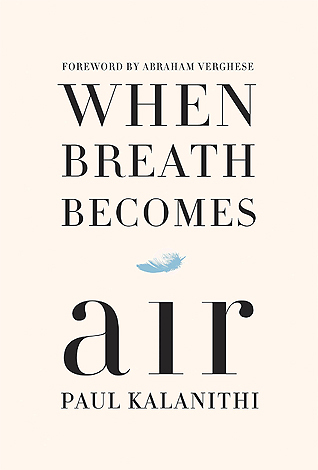
#1 NEW YORK TIMES BESTSELLER • PULITZER PRIZE FINALIST • OVER TWO MILLION COPIES SOLDThis inspiring, exquisitely observed memoir finds hope and beauty in the face of insurmountable odds as an idealistic young neurosurgeon attempts to answer the question, What makes a life worth living?“Unmissable . . . Finishing this book and then forgetting about it is simply not an option.”—Janet Maslin, The New York TimesONE OF THE BEST BOOKS OF THE YEAR: The New York Times Book Review, People, NPR, The Washington Post, Slate, Harper’s Bazaar, Time Out New York, Publishers Weekly, BookPageAn Oprah Daily Best Nonfiction Book of the Past Two Decades • A Kirkus Reviews Best Nonfiction Book of the CenturyAt the age of thirty-six, on the verge of completing a decade’s worth of training as a neurosurgeon, Paul Kalanithi was diagnosed with stage IV lung cancer. One day he was a doctor treating the dying, and the next he was a patient struggling to live. And just like that, the future he and his wife had imagined evaporated. When Breath Becomes Air chronicles Kalanithi’s transformation from a naïve medical student “possessed,” as he wrote, “by the question of what, given that all organisms die, makes a virtuous and meaningful life” into a neurosurgeon at Stanford working in the brain, the most critical place for human identity, and finally into a patient and new father confronting his own mortality.What makes life worth living in the face of death? What do you do when the future, no longer a ladder toward your goals in life, flattens out into a perpetual present? What does it mean to have a child, to nurture a new life as another fades away? These are some of the questions Kalanithi wrestles with in this profoundly moving, exquisitely observed memoir.Paul Kalanithi died in March 2015, while working on this book, yet his words live on as a guide and a gift to us all. “I began to realize that coming face to face with my own mortality, in a sense, had changed nothing and everything,” he wrote. “Seven words from Samuel Beckett began to repeat in my head: ‘I can’t go on. I’ll go on.’” When Breath Becomes Air is an unforgettable, life-affirming reflection on the challenge of facing death and on the relationship between doctor and patient, from a brilliant writer who became both.Finalist for the PEN Center USA Literary Award in Creative Nonfiction and the Books for a Better Life Award in Inspirational Memoir

INSTANT NEW YORK TIMES BESTSELLER A NEW YORK TIMES NOTABLE BOOK OF 2018ONE OF THE ECONOMIST'S BOOKS OF THE YEAR"My new favorite book of all time." --Bill Gates If you think the world is coming to an end, think again: people are living longer, healthier, freer, and happier lives, and while our problems are formidable, the solutions lie in the Enlightenment ideal of using reason and science.Is the world really falling apart? Is the ideal of progress obsolete? In this elegant assessment of the human condition in the third millennium, cognitive scientist and public intellectual Steven Pinker urges us to step back from the gory headlines and prophecies of doom, which play to our psychological biases. Instead, follow the data: In seventy-five jaw-dropping graphs, Pinker shows that life, health, prosperity, safety, peace, knowledge, and happiness are on the rise, not just in the West, but worldwide. This progress is not the result of some cosmic force. It is a gift of the Enlightenment: the conviction that reason and science can enhance human flourishing.Far from being a naive hope, the Enlightenment, we now know, has worked. But more than ever, it needs a vigorous defense. The Enlightenment project swims against currents of human nature--tribalism, authoritarianism, demonization, magical thinking--which demagogues are all too willing to exploit. Many commentators, committed to political, religious, or romantic ideologies, fight a rearguard action against it. The result is a corrosive fatalism and a willingness to wreck the precious institutions of liberal democracy and global cooperation.With intellectual depth and literary flair, Enlightenment Now makes the case for reason, science, and humanism: the ideals we need to confront our problems and continue our progress.

Detailed mental and physical exercises designed to help a player increase body awareness and improve concentration and rhythm demonstrate strategies for putting into practice the inner-game concept of tennis play.

A stevedore on the San Francisco docks in the 1940s, Eric Hoffer wrote philosophical treatises in his spare time while living in the railroad yards. The True Believer -- the first and most famous of his books -- was made into a bestseller when President Eisenhower cited it during one of the earliest television press conferences. Completely relevant and essential for understanding the world today, The True Believer is a visionary, highly provocative look into the mind of the fanatic and a penetrating study of how an individual becomes one.

Winner of the Pulitzer prize in 1974 and the culmination of a life's work, The Denial of Death is Ernest Becker's brilliant and impassioned answer to the "why" of human existence. In bold contrast to the predominant Freudian school of thought, Becker tackles the problem of the vital lie -- man's refusal to acknowledge his own mortality. In doing so, he sheds new light on the nature of humanity and issues a call to life and its living that still resonates more than twenty years after its writing.

Darwin's theory of natural selection issued a profound challenge to orthodox thought and belief: no being or species has been specifically created; all are locked into a pitiless struggle for existence, with extinction looming for those not fitted for the task. Yet The Origin of Species (1859) is also a humane and inspirational vision of ecological interrelatedness, revealing the complex mutual interdependencies between animal and plant life, climate and physical environment, and—by implication—within the human world. Written for the general reader, in a style which combines the rigour of science with the subtlety of literature, The Origin of Species remains one of the founding documents of the modern age.

Radical Acceptance, Self Compassion, The Compassionate Mind 3 Books Collection Set. Description:- Radical Acceptance: Awakening the Love that Heals Fear and Shame In the West, most of us have suffered the fear of not being 'good enough', feeling insecure about our appearance, our sexuality, our intelligence, our spiritual progress or - often most importantly - being worthy of love. When these feelings of insufficiency or self-aversion are strong, we fear abandonment and rejection. Many people have already found the Buddhist perspective on our emotional life to be extremely valuable - and this book will be a major practical contribution to the subject. Self Compassion Self Compassion offers a powerful solution for combating the current malaise of depression, anxiety and self criticism that comes with living in a pressured and competitive culture.Through tried and tested exercises and audio downloads, readers learn the 3 core components that will help replace negative and destructive measures of self worth and success with a kinder and non judgemental approach in order to bring about profound life change and deeper happiness. The Compassionate Mind Throughout history people have sought to cope with a life that is often stressful and hard. We have actually known for some time that developing compassion for oneself and others can help us face up to and win through the hardship and find a sense of inner peace. However in modern societies we rarely focus on this key process that underpins successful coping and happiness and can be quick to dismiss the impact of modern living on our minds and well-being. Instead we concentrate on 'doing, achieving' and having'.

What would it be like to free yourself from limitations and soar beyond your boundaries? What can you do each day to discover inner peace and serenity? The Untethered Soul offers simple yet profound answers to these questions.Whether this is your first exploration of inner space, or you’ve devoted your life to the inward journey, this book will transform your relationship with yourself and the world around you. You’ll discover what you can do to put an end to the habitual thoughts and emotions that limit your consciousness. By tapping into traditions of meditation and mindfulness, author and spiritual teacher Michael A. Singer shows how the development of consciousness can enable us all to dwell in the present moment and let go of painful thoughts and memories that keep us from achieving happiness and self-realization.Copublished with the Institute of Noetic Sciences (IONS) The Untethered Soul begins by walking you through your relationship with your thoughts and emotions, helping you uncover the source and fluctuations of your inner energy. It then delves into what you can do to free yourself from the habitual thoughts, emotions, and energy patterns that limit your consciousness. Finally, with perfect clarity, this book opens the door to a life lived in the freedom of your innermost being.

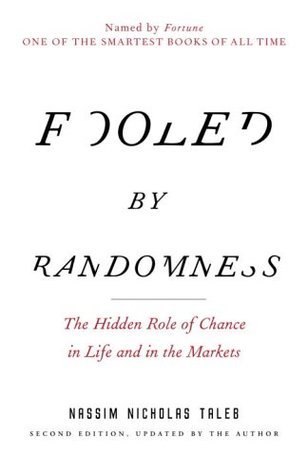
Fooled by Randomness is a standalone book in Nassim Nicholas Taleb’s landmark Incerto series, an investigation of opacity, luck, uncertainty, probability, human error, risk, and decision-making in a world we don’t understand. The other books in the series are The Black Swan, Antifragile,and The Bed of Procrustes.

Published in 1942 by French author Albert Camus, The Stranger has long been considered a classic of twentieth-century literature. Le Monde ranks it as number one on its "100 Books of the Century" list. Through this story of an ordinary man unwittingly drawn into a senseless murder on a sundrenched Algerian beach, Camus explores what he termed "the nakedness of man faced with the absurd."

As it was in Anna Karenina, Madame Bovary, and Othello, so it is in life. Most forms of private vice and public evil are kindled and sustained by lies. Acts of adultery and other personal betrayals, financial fraud, government corruption—even murder and genocide—generally require an additional moral defect: a willingness to lie.In Lying, best-selling author and neuroscientist Sam Harris argues that we can radically simplify our lives and improve society by merely telling the truth in situations where others often lie. He focuses on "white" lies—those lies we tell for the purpose of sparing people discomfort—for these are the lies that most often tempt us. And they tend to be the only lies that good people tell while imagining that they are being good in the process.

The #1 New York Times–bestselling sequel to The 48 Laws of PowerMastery synthesizes the years of research Robert Greene conducted while writing the international bestsellers The 48 Laws of Power, The 33 Strategies of War, and The Art of Seduction and demonstrates that the ultimate form of power is mastery itself. By analyzing the lives of such past masters as Charles Darwin, Benjamin Franklin, Albert Einstein, and Leonard da Vinci, as well as by interviewing nine contemporary masters, including tech guru Paul Graham and animal rights advocate Temple Grandin, Greene debunks our culture’s many myths about genius and distills the wisdom of the ages to reveal the secret to greatness. With this seminal text as a guide, readers will learn how to unlock the passion within and become masters.

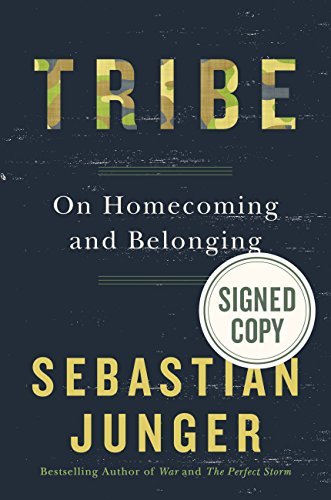
Sebastian Junger, the bestselling author of War and The Perfect Storm, takes a critical look at post-traumatic stress disorder and the many challenges today’s returning veterans face in modern society.There are ancient tribal human behaviors-loyalty, inter-reliance, cooperation-that flare up in communities during times of turmoil and suffering. These are the very same behaviors that typify good soldiering and foster a sense of belonging among troops, whether they’re fighting on the front lines or engaged in non-combat activities away from the action. Drawing from history, psychology, and anthropology, bestselling author Sebastian Junger shows us just how at odds the structure of modern society is with our tribal instincts, arguing that the difficulties many veterans face upon returning home from war do not stem entirely from the trauma they’ve suffered, but also from the individualist societies they must reintegrate into.A 2011 study by the Canadian Forces and Statistics Canada reveals that 78 percent of military suicides from 1972 to the end of 2006 involved veterans. Though these numbers present an implicit call to action, the government is only just taking steps now to address the problems veterans face when they return home. But can the government ever truly eliminate the challenges faced by returning veterans? Or is the problem deeper, woven into the very fabric of our modern existence? Perhaps our circumstances are not so bleak, and simply understanding that beneath our modern guises we all belong to one tribe or another would help us face not just the problems of our nation but of our individual lives as well.Well-researched and compellingly written, this timely look at how veterans react to coming home will reconceive our approach to veteran’s affairs and help us to repair our current social dynamic.

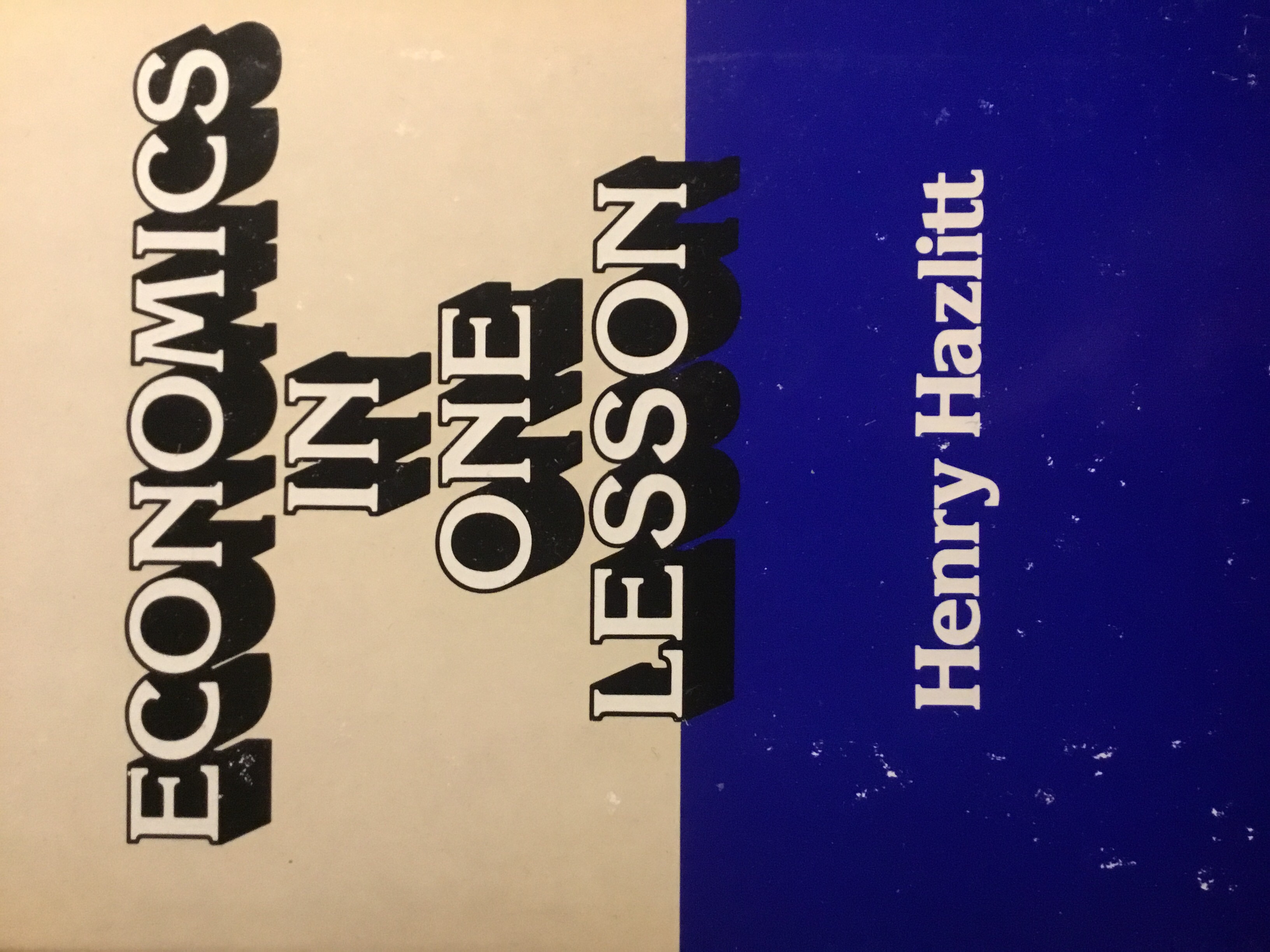
A million copy seller, Henry Hazlitt’s Economics in One Lesson is a classic economic primer. But it is also much more, having become a fundamental influence on modern “libertarian” economics of the type espoused by Ron Paul and others.Considered among the leading economic thinkers of the “Austrian School,” which includes Carl Menger, Ludwig von Mises, Friedrich (F.A.) Hayek, and others, Henry Hazlitt (1894-1993), was a libertarian philosopher, an economist, and a journalist. He was the founding vice-president of the Foundation for Economic Education and an early editor of The Freeman magazine, an influential libertarian publication. Hazlitt wrote Economics in One Lesson, his seminal work, in 1946. Concise and instructive, it is also deceptively prescient and far-reaching in its efforts to dissemble economic fallacies that are so prevalent they have almost become a new orthodoxy.Many current economic commentators across the political spectrum have credited Hazlitt with foreseeing the collapse of the global economy which occurred more than 50 years after the initial publication of Economics in One Lesson. Hazlitt’s focus on non-governmental solutions, strong — and strongly reasoned — anti-deficit position, and general emphasis on free markets, economic liberty of individuals, and the dangers of government intervention make Economics in One Lesson, every bit as relevant and valuable today as it has been since publication.

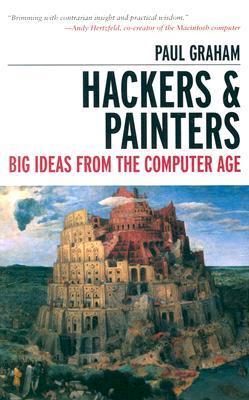
“The computer world is like an intellectual Wild West, in which you can shoot anyone you wish with your ideas, if you’re willing to risk the consequences.” —from Hackers & Painters: Big Ideas from the Computer Age, by Paul GrahamWe are living in the computer age, in a world increasingly designed and engineered by computer programmers and software designers, by people who call themselves hackers. Who are these people, what motivates them, and why should you care?Consider these facts: Everything around us is turning into computers. Your typewriter is gone, replaced by a computer. Your phone has turned into a computer. So has your camera. Soon your TV will. Your car was not only designed on computers, but has more processing power in it than a room-sized mainframe did in 1970. Letters, encyclopedias, newspapers, and even your local store are being replaced by the Internet.Hackers & Painters: Big Ideas from the Computer Age, by Paul Graham, explains this world and the motivations of the people who occupy it. In clear, thoughtful prose that draws on illuminating historical examples, Graham takes readers on an unflinching exploration into what he calls “an intellectual Wild West.”The ideas discussed in this book will have a powerful and lasting impact on how we think, how we work, how we develop technology, and how we live. Topics include the importance of beauty in software design, how to make wealth, heresy and free speech, the programming language renaissance, the open-source movement, digital design, internet startups, and more.

Two renowned investment advisors and authors of the best seller The Great Reckoning bring to light both currents of disaster and the potential for prosperity and renewal in the face of radical changes in human history as we move into the next century. The Sovereign Individual details strategies necessary for adapting financially to the next phase of Western civilization.Few observers of the late-20th century have their fingers so presciently on the pulse of the global political and economic realignment ushering in the new millennium as do James Dale Davidson and Lord William Rees-Mogg. Their bold prediction of disaster on Wall Street in Blood in the Streets was borne out by Black Tuesday. In their ensuing best sellar, The Great Reckoning, published just weeks before the coup attempt against Gorbachev, they analyzed the pending collapse of the Soviet Union and foretold the civil war in Yugoslavia and other events that have proved to be among the most searing developments of the past few years.In The Sovereign Individual, Davidson and Rees-Mogg explore the greatest economic and political transition in centuries - the shift from an industrial to an information-based society. This transition, which they have termed "the fourth stage of human society", will liberate individuals as never before, irrevocably altering the power of government. This outstanding book will replace false hopes and fictions with new understanding and clarified values.

One of the most influential books in the history of literature, recognized as the greatest literary masterpiece in Arabic, the Qur'an is the supreme authority and living source of all Islamic teaching, the sacred text that sets out the creed, rituals, ethics, and laws of Islam. Yet despite thegrowing interest in Islamic teachings and culture, there has never been a truly satisfactory English translation of the Qur'an , until now.This superb new translation of the Qur'an is written in contemporary language that remains faithful to the meaning and spirit of the original, making the text crystal clear while retaining all of this great work's eloquence. The translation is accurate and completely free from the archaisms,incoherence, and alien structures that mar existing translations. Thus, for the first time, English-speaking readers will have a text of the Qur'an which is easy to use and comprehensible. Furthermore, Haleem includes notes that explain geographical, historical, and personal allusions as well as anindex in which Qur'anic material is arranged into topics for easy reference. His introduction traces the history of the Qur'an, examines its structure and stylistic features, and considers issues related to militancy, intolerance, and the subjection of women.Clearly written and filled with helpful information and guidance, this brilliant translation of the Qur'an is the best available introduction to the faith of Moslems around the world.

Amoral, cunning, ruthless, and instructive, this multi-million-copy New York Times bestseller is the definitive manual for anyone interested in gaining, observing, or defending against ultimate control – from the author of The Laws of Human Nature.In the book that People magazine proclaimed “beguiling” and “fascinating,” Robert Greene and Joost Elffers have distilled three thousand years of the history of power into 48 essential laws by drawing from the philosophies of Machiavelli, Sun Tzu, and Carl Von Clausewitz and also from the lives of figures ranging from Henry Kissinger to P.T. Barnum. Some laws teach the need for prudence (“Law 1: Never Outshine the Master”), others teach the value of confidence (“Law 28: Enter Action with Boldness”), and many recommend absolute self-preservation (“Law 15: Crush Your Enemy Totally”). Every law, though, has one thing in common: an interest in total domination. In a bold and arresting two-color package, The 48 Laws of Power is ideal whether your aim is conquest, self-defense, or simply to understand the rules of the game.

Wear on edges of covers and spine. Bookstore stamp on first page.

A good book may have the power to change the way we see the world, but a great book actually becomes part of our daily consciousness, pervading our thinking to the point that we take it for granted, and we forget how provocative and challenging its ideas once were—and still are. The Structure of Scientific Revolutions is that kind of book. When it was first published in 1962, it was a landmark event in the history and philosophy of science. Fifty years later, it still has many lessons to teach. With The Structure of Scientific Revolutions, Kuhn challenged long-standing linear notions of scientific progress, arguing that transformative ideas don’t arise from the day-to-day, gradual process of experimentation and data accumulation but that the revolutions in science, those breakthrough moments that disrupt accepted thinking and offer unanticipated ideas, occur outside of “normal science,” as he called it. Though Kuhn was writing when physics ruled the sciences, his ideas on how scientific revolutions bring order to the anomalies that amass over time in research experiments are still instructive in our biotech age. This new edition of Kuhn’s essential work in the history of science includes an insightful introduction by Ian Hacking, which clarifies terms popularized by Kuhn, including paradigm and incommensurability, and applies Kuhn’s ideas to the science of today. Usefully keyed to the separate sections of the book, Hacking’s introduction provides important background information as well as a contemporary context. Newly designed, with an expanded index, this edition will be eagerly welcomed by the next generation of readers seeking to understand the history of our perspectives on science.

What does everyone in the modern world need to know? Renowned psychologist Jordan B. Peterson's answer to this most difficult of questions uniquely combines the hard-won truths of ancient tradition with the stunning revelations of cutting-edge scientific research.Humorous, surprising and informative, Dr. Peterson tells us why skateboarding boys and girls must be left alone, what terrible fate awaits those who criticize too easily, and why you should always pet a cat when you meet one on the street. What does the nervous system of the lowly lobster have to tell us about standing up straight (with our shoulders back) and about success in life? Why did ancient Egyptians worship the capacity to pay careful attention as the highest of gods? What dreadful paths do people tread when they become resentful, arrogant and vengeful? Dr. Peterson journeys broadly, discussing discipline, freedom, adventure and responsibility, distilling the world's wisdom into 12 practical and profound rules for life. 12 Rules for Life shatters the modern commonplaces of science, faith and human nature, while transforming and ennobling the mind and spirit of its readers.Length: 15 hrs and 40 mins

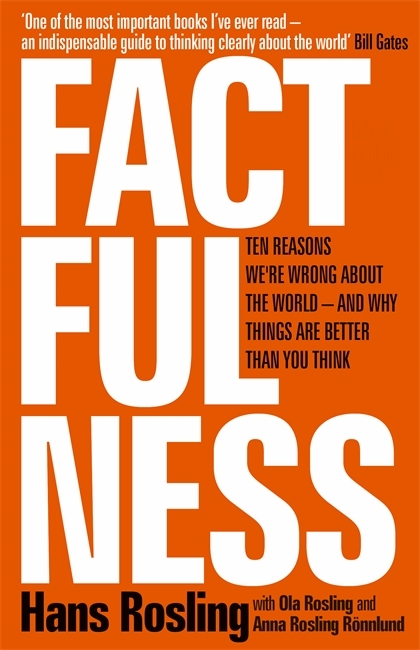
Factfulness: The stress-reducing habit of only carrying opinions for which you have strong supporting facts.When asked simple questions about global trends—what percentage of the world’s population live in poverty; why the world’s population is increasing; how many girls finish school—we systematically get the answers wrong. So wrong that a chimpanzee choosing answers at random will consistently outguess teachers, journalists, Nobel laureates, and investment bankers.In Factfulness, Professor of International Health and global TED phenomenon Hans Rosling, together with his two long-time collaborators, Anna and Ola, offers a radical new explanation of why this happens. They reveal the ten instincts that distort our perspective—from our tendency to divide the world into two camps (usually some version of us and them) to the way we consume media (where fear rules) to how we perceive progress (believing that most things are getting worse).Our problem is that we don’t know what we don’t know, and even our guesses are informed by unconscious and predictable biases.It turns out that the world, for all its imperfections, is in a much better state than we might think. That doesn’t mean there aren’t real concerns. But when we worry about everything all the time instead of embracing a worldview based on facts, we can lose our ability to focus on the things that threaten us most.Inspiring and revelatory, filled with lively anecdotes and moving stories, Factfulness is an urgent and essential book that will change the way you see the world and empower you to respond to the crises and opportunities of the future.

21 Lessons For The 21st Century [Hardcover], Headspace Guide To Meditation And Mindfulness, Meditation For Fidgety Skeptics, 10% Happier 4 Books Collection Set. Description:- 21 Lessons for the 21st Century Yuval Noah Harari takes us on a thrilling journey through today’s most urgent issues. The golden thread running through his exhilarating new book is the challenge of maintaining our collective and individual focus in the face of constant and disorienting change. Are we still capable of understanding the world we have created? The Headspace Guide to Mindfulness & Meditation: 10 minutes can make the difference Demystifying meditation for the modern world: an accessible and practical route to improved health, happiness and well being, in as little as 10 minutes. Andy Puddicombe, founder of the celebrated Headspace, is on a mission: to get people to take 10 minutes out of their day to sit in the now. Here he shares his simple to learn, but highly effective techniques of meditation. Meditation For Fidgety Skeptics: A 10% Happier How-To Book ABC News anchor Dan Harris used to think that meditation was for people who collect crystals, play the pan pipes, and use the word namaste without irony. After he had a panic attack on live television, he went on a strange journey that ultimately led him to become one of meditation's most vocal public proponents. 10% Happier: How I Tamed the Voice in My Head, Reduced Stress Without Losing My Edge, and Found Self-Help That Actually Works After having a nationally televised panic attack, Harris knew he had to make some changes. A lifelong non-believer, he found himself on a bizarre adventure and realised that the sources of his problems was the very thing he always thought was his greatest asset.

Psychologist Mihaly Csikszentmihalyi's investigations of "optimal experience" have revealed that what makes an experience genuinely satisfying is a state of consciousness called flow. During flow, people typically experience deep enjoyment, creativity, and a total involvement with life. Csikszentmihalyi demonstrates the ways this positive state can be controlled, not just left to chance. Flow: The Psychology of Optimal Experience teaches how, by ordering the information that enters our consciousness, we can discover true happiness, unlock our potential, and greatly improve the quality of our lives.

The Ultimate Spiritual Guide for MenWhat is your true purpose in life? What do women really want? What makes a good lover? If you're a man reading this, you've undoubtedly asked yourself these questions—but you may not have had much luck answering them. Until now.In The Way of the Superior Man, David Deida explores the most important issues in men's lives—from career and family to women and intimacy to love and spirituality and relationships—to offer a practical guidebook for living a masculine life of integrity, authenticity, and freedom. Join this bestselling author and internationally renowned expert on sexual spirituality for straightforward advice, empowering skills, body practices, and more to help you realize a life of fulfillment, immediately and without compromise."It is time to evolve beyond the macho jerk ideal, all spine and no heart," writes David Deida. "It is also time to evolve beyond the sensitive and caring wimp ideal, all heart and no spine." The Way of the Superior Man presents the ultimate challenge—and reward—for today's man: to discover the 'unity of heart and spine' through the full expression of consciousness and love in the infinite openness of the present moment.ContentsPart One: A Man's Way Part Two: Dealing With Women Part Three: Working With Polarity and Energy Part Four: What Women Really Want Part Five: Your Dark Side Part Six: Feminine Attractiveness Part Seven: Body Practices Part Eight: Men's and Women's Yoga of IntimacyExcerpt: This book is a guide for a specific kind of newly evolving man. This man is unabashedly masculine—he is purposeful, confident, and directed, living his chosen way of life with deep integrity and humor—and he is sensitive, spontaneous, and spiritually alive, with a heart-commitment to discovering and living his deepest truth.

• Why are lovers quicker to forgive their partners for infidelity than for leaving dirty dishes in the sink? • Why will sighted people pay more to avoid going blind than blind people will pay to regain their sight? • Why do dining companions insist on ordering different meals instead of getting what they really want? • Why do pigeons seem to have such excellent aim; why can’t we remember one song while listening to another; and why does the line at the grocery store always slow down the moment we join it? In this brilliant, witty, and accessible book, renowned Harvard psychologist Daniel Gilbert describes the foibles of imagination and illusions of foresight that cause each of us to mis-conceive our tomorrows and mis-estimate our satisfactions. Vividly bringing to life the latest scientific research in psychology, cognitive neuroscience, philosophy, and behavioral economics, Gilbert reveals what scientists have discovered about the uniquely human ability to imagine the future, and about our capacity to predict how much we will like it when we get there. With penetrating insight and sparkling prose, Gilbert explains why we seem to know so little about the hearts and minds of the people we are about to become.

In his monumental 1687 work Philosophiae Naturalis Principia Mathematica, known familiarly as the Principia, Isaac Newton laid out in mathematical terms the principles of time, force, and motion that have guided the development of modern physical science. Even after more than three centuries and the revolutions of Einsteinian relativity and quantum mechanics, Newtonian physics continues to account for many of the phenomena of the observed world, and Newtonian celestial dynamics is used to determine the orbits of our space vehicles.This completely new translation, the first in 270 years, is based on the third (1726) edition, the final revised version approved by Newton; it includes extracts from the earlier editions, corrects errors found in earlier versions, and replaces archaic English with contemporary prose and up-to-date mathematical forms. Newton's principles describe acceleration, deceleration, and inertial movement; fluid dynamics; and the motions of the earth, moon, planets, and comets. A great work in itself, the Principia also revolutionized the methods of scientific investigation. It set forth the fundamental three laws of motion and the law of universal gravity, the physical principles that account for the Copernican system of the world as emended by Kepler, thus effectively ending controversy concerning the Copernican planetary system.The illuminating Guide to the Principia by I. Bernard Cohen, along with his and Anne Whitman's translation, will make this preeminent work truly accessible for today's scientists, scholars, and students.

'Mesmerizing' TimeAn art expert instantly spots a fake. A cop decides whether to shoot. A psychologist accurately predicts a couple's future in minutes. This book is about those moments when we 'know' something without knowing why. It shows that honing your instincts could change the way you think about thinking forever. 'Trust my snap judgement, buy this book: you'll be delighted' David Brooks, The New York Times'Fiendishly clever' Evening Standard'Provocative, fascinating, radical' Fergal Byrne, Financial Times

The bestselling success book of all time—now revised and updated for the 21st century.Think and Grow Rich has been called the “Granddaddy of All Motivational Literature.” It was the first book to boldly ask, “What makes a winner?” The man who asked and listened for the answer, Napoleon Hill, is now counted in the top ranks of the world's winners himself. The most famous of all teachers of success spent “a fortune and the better part of a lifetime of effort” to produce the “Law of Success” philosophy that forms the basis of his books and that is so powerfully summarized in this one.In the original Think and Grow Rich, published in 1937, Hill draws on stories of Andrew Carnegie, Thomas Edison, Henry Ford, and other millionaires of his generation to illustrate his principles. In the updated version, Arthur R. Pell, Ph.D., a nationally known author, lecturer, and consultant in human resources management and an expert in applying Hill's thought, deftly interweaves anecdotes of how contemporary millionaires and billionaires, such as Bill Gates, Mary Kay Ash, Dave Thomas, and Sir John Templeton, achieved their wealth. Outmoded or arcane terminology and examples are faithfully refreshed to preclude any stumbling blocks to a new generation of readers.

'When you attain the Way of strategy, there will not be one thing you cannot see.'- Miyamoto Musashi, Book of Five RingsShortly before his death in 1645, the undefeated swordsman Miyamoto Musashi retreated to a cave to live as a hermit. There he wrote five scrolls describing the "true principles" required for victory in the martial arts and on the battlefield. Instead of relying on religion or theory, Musashi based his writings on his own experience, observation, and reason.

The Bhagavad Gita (Sanskrit , Bhagavad G t , "Song of God"), also more simply known as Gita, is a sacred Hindu scripture,considered among the most important texts in the history of literature and philosophy. The Bhagavad Gita comprises roughly 700 verses, and is a part of the Mahabharata. The teacher of the Bhagavad Gita is Lord Krishna, who is revered by Hindus as a manifestation of God (Parabrahman) himself,and is referred to within as Bhagavan, the Divine One. The content of the Gita is the conversation between Lord Krishna and Arjuna taking place on the battlefield before the start of the Kurukshetra war. Responding to Arjuna's confusion and moral dilemma about fighting his own cousins, Lord Krishna explains to Arjuna his duties as a warrior and prince and elaborates on different Yogic and Vedantic philosophies, with examples and analogies. This has led to the Gita often being described as a concise guide to Hindu theology and also as a practical, self-contained guide to life. During the discourse, Lord Krishna reveals His identity as the Supreme Being Himself (Svayam Bhagavan), blessing Arjuna with an awe-inspiring vision of His divine universal form. The Bhagavad Gita is also called G topanisad, implying its having the status of an Upanishad, i.e. a Vedantic scripture. Since the Gita is drawn from the Mahabharata, it is classified as a Smriti text. However, those branches of Hinduism that give it the status of an Upanishad also consider it a ruti or "revealed" text. As it is taken to represent a summary of the Upanishadic teachings, it is also called "the Upanishad of the Upanishads". Another title is mok a stra, or "Scripture of Liberation".

A stunning new translation of the classic book—and basis for the beloved Oscar-winning film—brings the clarity and beauty of Kazantzakis’s language and story alive.First published in 1946, Zorba the Greek , is, on one hand, the story of a Greek working man named Zorba, a passionate lover of life, the unnamed narrator who he accompanies to Crete to work in a lignite mine, and the men and women of the town where they settle. On the other hand it is the story of God and man, The Devil and the Saints; the struggle of men to find their souls and purpose in life and it is about love, courage and faith.Zorba has been acclaimed as one of the truly memorable creations of literature—a character created on a huge scale in the tradition of Falstaff and Sancho Panza. His years have not dimmed the gusto and amazement with which he responds to all life offers him, whether he is working in the mine, confronting mad monks in a mountain monastery, embellishing the tales of his life or making love to avoid sin. Zorba’s life is rich with all the joys and sorrows that living brings and his example awakens in the narrator an understanding of the true meaning of humanity. This is one of the greatest life-affirming novels of our time.Part of the modern literary canon, Zorba the Greek , has achieved widespread international acclaim and recognition. This new edition translated, directly from Kazantzakis’s Greek original, is a more faithful rendition of his original language, ideas, and story, and presents Zorba as the author meant him to be.

Presented in the form of a dialogue between Socrates and three different interlocutors, this classic text is an enquiry into the notion of a perfect community and the ideal individual within it. During the conversation, other questions are raised: what is goodness?; what is reality?; and what is knowledge? The Republic also addresses the purpose of education and the role of both women and men as guardians of the people. With remarkable lucidity and deft use of allegory, Plato arrives at a depiction of a state bound by harmony and ruled by philosopher kings.

Television has conditioned us to tolerate visually entertaining material measured out in spoonfuls of time, to the detriment of rational public discourse and reasoned public affairs. In this eloquent, persuasive book, Neil Postman alerts us to the real and present dangers of this state of affairs, and offers compelling suggestions as to how to withstand the media onslaught. Before we hand over politics, education, religion, and journalism to the show business demands of the television age, we must recognize the ways in which the media shape our lives and the ways we can, in turn, shape them to serve out highest goals.

By virtue of its casual, off-handedly brilliant wisdom and the easy splendor of its nature writing, Thoreau’s account of his adventure in self-reliance on the shores of a pond in Massachusetts is one of the signposts by which the modern mind has located itself in an increasingly bewildering world. Deeply sane, invigorating in its awareness of humanity’s place in the moral and natural order, Walden represents the progressive spirit of nineteenth-century America at its eloquent best.

Kahlil Gibran’s masterpiece, The Prophet, is one of the most beloved classics of our time. Published in 1923, it has been translated into more than twenty languages, and the American editions alone have sold more than nine million copies.The Prophet is a collection of poetic essays that are philosophical, spiritual, and, above all, inspirational. Gibran’s musings are divided into twenty-eight chapters covering such sprawling topics as love, marriage, children, giving, eating and drinking, work, joy and sorrow, housing, clothes, buying and selling, crime and punishment, laws, freedom, reason and passion, pain, self-knowledge, teaching, friendship, talking, time, good and evil, prayer, pleasure, beauty, religion, and death.

In this fascinating book, New Yorker business columnist James Surowiecki explores a deceptively simple idea: Large groups of people are smarter than an elite few, no matter how brilliant -- better at solving problems, fostering innovation, coming to wise decisions, even predicting the future.With boundless erudition and in delightfully clear prose, Surowiecki ranges across fields as diverse as popular culture, psychology, ant biology, behavioral economics, artificial intelligence, military history, and politics to show how this simple idea offers important lessons for how we live our lives, select our leaders, run our companies, and think about our world.

Una suggestiva indagine dei meccanismi profondi che regolano la nostra esistenza, le decisioni che prendiamo e i valori che condividiamo o che rifiutiamo. Da vent’anni, lo psicologo morale e filosofo Jonathan Haidt indaga i meccanismi profondi che regolano la nostra esistenza, le decisioni che prendiamo, i valori che crediamo universali, che condividiamo o che rifiutiamo. Secondo Haidt il giudizio morale è la bussola che, dalle piccole scelte quotidiane ai grandi temi della politica e della religione, orienta la tendenza naturale dell’uomo a riunirsi in tribù e a dividersi su ciò che si ritiene essere giusto o sbagliato. Arrivato ai vertici della classifica del “New York Times”, Menti tribali è un libro che propone una via alla convivenza e al dialogo, partendo dalla comprensione dei processi biologici ancestrali da cui nasce la nostra ricerca del bene.

In this eye-opening account, Cal Newport debunks the long-held belief that "follow your passion" is good advice. Not only is the cliché flawed—preexisting passions are rare and have little to do with how most people end up loving their work—but it can also be dangerous, leading to anxiety and chronic job hopping.After making his case against passion, Newport sets out on a quest to discover the reality of how people end up loving what they do. Spending time with organic farmers, venture capitalists, screenwriters, freelance computer programmers, and others who admitted to deriving great satisfaction from their work, Newport uncovers the strategies they used and the pitfalls they avoided in developing their compelling careers.Matching your job to a preexisting passion does not matter, he reveals. Passion comes after you put in the hard work to become excellent at something valuable, not before. In other words, what you do for a living is much less important than how you do it.With a title taken from the comedian Steve Martin, who once said his advice for aspiring entertainers was to "be so good they can't ignore you," Cal Newport's clearly written manifesto is mandatory reading for anyone fretting about what to do with their life, or frustrated by their current job situation and eager to find a fresh new way to take control of their livelihood. He provides an evidence-based blueprint for creating work you love.So Good They Can't Ignore You will change the way we think about our careers, happiness, and the crafting of a remarkable life.

In celebration of its 10th anniversary, a revised and updated edition of the award-winning #1 New York Times bestseller that changed the way we look at meditation, expanded with new material by Dan Harris. After having a nationally televised panic attack on Good Morning America , Dan Harris knew he had to make some changes. A lifelong nonbeliever, he found himself on a bizarre adventure involving a disgraced pastor, a mysterious self-help guru, and a gaggle of brain scientists. Eventually, Harris realized that the source of his problems was the very thing he always thought was his greatest the incessant, insatiable voice in his head. We all have an inner narrator. It’s what has us losing our temper unnecessarily, checking our email compulsively, eating when we’re not hungry, and fixating on the past and the future at the expense of the present. Most of us assume we’re stuck with this voice—that there’s nothing we can do to rein it in—but Harris stumbled upon an effective way to do just that. 10% Happier is now considered a classic text on the power of meditation, an introduction to the practice that can convert even the most hardened skeptic. With over a million copies sold, 10% Happier is the go-to guide, and with meditation now a widely accepted and encouraged practice, Dan Harris is a pivotal and approachable figure in the field who has built a thriving platform based on the ideas he first presented in this book. In this 10th Anniversary Edition, Harris offers a new preface reflecting on how much has changed—for him and for the public perceptions of meditation, plus a revised and expanded appendix, filled with guided meditations and practical advice for people looking to boot up a habit.

The former head of the Sante Fe Institute, visionary physicist Geoffrey West is a pioneer in the field of complexity science, the science of emergent systems and networks. The term “complexity” can be misleading, however, because what makes West’s discoveries so beautiful is that he has found an underlying simplicity that unites the seemingly complex and diverse phenomena of living systems, including our bodies, our cities and our businesses. Fascinated by issues of aging and mortality, West applied the rigor of a physicist to the biological question of why we live as long as we do and no longer. The result was astonishing, and changed science, creating a new understanding of energy use and metabolism: West found that despite the riotous diversity in the sizes of mammals, they are all, to a large degree, scaled versions of each other. If you know the size of a mammal, you can use scaling laws to learn everything from how much food it eats per day, what its heart-rate is, how long it will take to mature, its lifespan, and so on. Furthermore, the efficiency of the mammal’s circulatory systems scales up precisely based on weight: if you compare a mouse, a human and an elephant on a logarithmic graph, you find with every doubling of average weight, a species gets 25% more efficient—and lives 25% longer. This speaks to everything from how long we can expect to live to how many hours of sleep we need. Fundamentally, he has proven, the issue has to do with the fractal geometry of the networks that supply energy and remove waste from the organism's body. West's work has been game-changing for biologists, but then he made the even bolder move of exploring his work's applicability to cities. Cities, too, are constellations of networks and laws of scalability relate with eerie precision to them. For every doubling in a city's size, the city needs 15% less road, electrical wire, and gas stations to support the same population. More amazingly, for every doubling in size, cities produce 15% more patents and more wealth, as well as 15% more crime and disease. This broad pattern lays the groundwork for a new science of cities. Recently, West has applied his revolutionary work on cities and biological life to the business world. This investigation has led to powerful insights into why some companies thrive while others fail. The implications of these discoveries are far-reaching, and are just beginning to be explored. Scale is a thrilling scientific adventure story about the elemental natural laws that bind us together in simple but profound ways. Through the brilliant mind of Geoffrey West, we can envision how cities, companies and biological life alike are dancing to the same simple, powerful tune, however diverse and unrelated they are to each other.From the Hardcover edition.

How will Artificial Intelligence affect crime, war, justice, jobs, society and our very sense of being human? The rise of AI has the potential to transform our future more than any other technology--and there's nobody better qualified or situated to explore that future than Max Tegmark, an MIT professor who's helped mainstream research on how to keep AI beneficial.How can we grow our prosperity through automation without leaving people lacking income or purpose? What career advice should we give today's kids? How can we make future AI systems more robust, so that they do what we want without crashing, malfunctioning or getting hacked? Should we fear an arms race in lethal autonomous weapons? Will machines eventually outsmart us at all tasks, replacing humans on the job market and perhaps altogether? Will AI help life flourish like never before or give us more power than we can handle?What sort of future do you want? This book empowers you to join what may be the most important conversation of our time. It doesn't shy away from the full range of viewpoints or from the most controversial issues--from superintelligence to meaning, consciousness and the ultimate physical limits on life in the cosmos.

The average human lifespan is absurdly, insultingly brief. Assuming you live to be eighty, you have just about four thousand weeks.Nobody needs to be told there isn’t enough time. We’re obsessed with our lengthening to-do lists, our overfilled inboxes, work-life balance, and the ceaseless battle against distraction. We’re deluged with advice on becoming more productive and efficient, and with “life hacks” to optimize our days. But such techniques often end up making things worse. The sense of anxious hurry grows more intense, but the most meaningful parts of life seem just beyond the horizon. Still, we rarely make the connection between our daily struggles with time and the ultimate time management problem: the challenge of how best to use our four thousand weeks.Drawing on the insights of both ancient and contemporary philosophers, psychologists, and spiritual teachers, Oliver Burkeman delivers an entertaining, humorous, practical, and ultimately profound guide to time and time management. Rejecting the futile modern fixation on “getting everything done,” Four Thousand Weeks introduces readers to tools for constructing a meaningful life by embracing finitude, showing how many of the unhelpful ways we’ve come to think about time aren’t inescapable, unchanging truths but choices we’ve made as individuals and as a society―and that we could do things differently.

In his widely praised book, award-winning psychologist Jonathan Haidt examines the world’s philosophical wisdom through the lens of psychological science, showing how a deeper understanding of enduring maxims-like Do unto others as you would have others do unto you, or What doesn’t kill you makes you stronger-can enrich and even transform our lives.

International bestseller over 30 million copies sold worldwide learn how to break the worry habit now and forever! From the fundamental facts one must know about worry to the techniques in analyzing it, This book introduces ways to prevent apprehension and cultivate a mental attitude that will bring peace and happiness. Dealing with fundamental emotions and life-changing thoughts, how to stop worrying and Start living highlights positive points of life and Discourages stress and anxiety. Dale Carnegie time-tested techniques will help eliminate 50 percent of tension immediately avoid fatigue – and keep looking young find yourself and be yourself – remember there is no one else on Earth like you! With timeless practical advice, this classic holds the power to change your future Dale Carnegie was a lecturer of public speaking at ymca new York. He had also served in the US Army during World War 1. He was a sought-after self-help author and speaker. Some of his other works include how to stop worrying and Start living and the art of public speaking.

At the core of A Pattern Language is the philosophy that in designing their environments people always rely on certain ‘languages,’ which, like the languages we speak, allow them to articulate and communicate an infinite variety of designs within a formal system which gives them coherence.This book provides a language of this kind. It will enable making a design for almost any kind of building, or any part of the built environment. ‘Patterns,’ the units of this language, are answers to design problems: how high should a window sill be?; how many stories should a building have?; how much space in a neighborhood should be devoted to grass and trees?More than 250 of the patterns in this language are outlined, each consisting of a problem statement, a discussion of the problem with an illustration, and a solution. As the authors say in their introduction, many of the patterns are archetypal, so deeply rooted in the nature of things that it seems likely that they will be a part of human nature and human action as much in five hundred years as they are today.A Pattern Language is related to Alexander’s other works in the Center for Environmental Structure series: The Timeless Way of Building (introductory volume) and The Oregon Experiment.

Vagabonding is about taking time off from your normal life--from six weeks to four months to two years--to discover and experience the world on your own terms. Veteran shoestring traveler Rolf Potts shows how anyone with an independent spirit can achieve the dream of extended overseas travel. Visit the vagabonding community's hub at www dot vagabonding dot net.

Dans ce livre, l’auteur donne de sa propre expérience un récit qui nous éclaire sur cet exercice du tir à l’arc pour parvenir à la maîtrise zen de son mental.

***30th Anniversary Edition*** Cover note: Each copy of the anniversary edition of The Blind Watchmaker features a unique biomorph. No two covers are exactly alike.Acclaimed as the most influential work on evolution written in the last hundred years, The Blind Watchmaker offers an inspiring and accessible introduction to one of the most important scientific discoveries of all time. A brilliant and controversial book which demonstrates that evolution by natural selection - the unconscious, automatic, blind yet essentially non-random process discovered by Darwin - is the only answer to the biggest question of all: why do we exist?

For David Deutsch, a young physicist of unusual originality, quantum theory contains our most fundamental knowledge of the physical world. Taken literally, it implies that there are many universes “parallel” to the one we see around us. This multiplicity of universes, according to Deutsch, turns out to be the key to achieving a new worldview, one which synthesizes the theories of evolution, computation, and knowledge with quantum physics. Considered jointly, these four strands of explanation reveal a unified fabric of reality that is both objective and comprehensible, the subject of this daring, challenging book. The Fabric of Reality explains and connects many topics at the leading edge of current research and thinking, such as quantum computers (which work by effectively collaborating with their counterparts in other universes), the physics of time travel, the comprehensibility of nature and the physical limits of virtual reality, the significance of human life, and the ultimate fate of the universe. Here, for scientist and layperson alike, for philosopher, science-fiction reader, biologist, and computer expert, is a startlingly complete and rational synthesis of disciplines, and a new, optimistic message about existence.

An eight-time national chess champion and world champion martial artist shares the lessons he has learned from two very different competitive arenas, identifying key principles about learning and performance that readers can apply to their life goals. 50,000 first printing.

This revised and expanded edition of The Essential Rumi includes a new introduction by Coleman Barks and more than 80 never-before-published poems.Through his lyrical translations, Coleman Barks has been instrumental in bringing this exquisite literature to a remarkably wide range of readers, making the ecstatic, spiritual poetry of thirteenth-century Sufi Mystic Rumi more popular than ever.The Essential Rumi continues to be the bestselling of all Rumi books, and the definitive selection of his beautiful, mystical poetry.

The Power Of Myth launched an extraordinary resurgence of interest in Joseph Campbell and his work. A preeminent scholar, writer, and teacher, he has had a profound influence on millions of people. To him, mythology was the "song of the universe, the music of the spheres." With Bill Moyers, one of America's most prominent journalists, as his thoughtful and engaging interviewer, The Power Of Myth touches on subjects from modern marriage to virgin births, from Jesus to John Lennon, offering a brilliant combination of intelligence and wit.