
Lao Tzu
Lao Tzu (Chinese: 老子; pinyin: Lǎozǐ; Wade-Giles: Laosi; also Laozi, Lao Tse, Lao Tu, Lao-Tsu, Laotze, Laosi, Lao Zi, Laocius, Lao Ce, and other variations) was a mystic philosopher of ancient China, best known as the author of the Tao Te Ching (often simply referred to as Laozi). His association with the Tao Te Ching has led him to be traditionally considered the founder of Taoism (pronounced as "Daoism"). He is also revered as a deity in most religious forms of the Taoist religion, which often refers to Laozi as Taishang Laojun, or "One of the Three Pure Ones". Laozi translated literally from Chinese means "old master" or "old one", and is generally considered honorific. According to Chinese tradition, Laozi lived in the 6th century BCE. Historians variously contend that Laozi is a synthesis of multiple historical figures, that he is a mythical figure, or that he actually lived in the 5th-4th century BCE, concurrent with the Hundred Schools of Thought and Warring States Period. As a result of being a a central figure in Chinese culture, both nobility and common people claim Lao Tzu in their lineage.
29 Books Written

The bestselling, widely acclaimed translation from Stephen MitchellIn eighty-one brief chapters, Lao-tzu's Tao Te Ching, or Book of the Way, provides advice that imparts balance and perspective, a serene and generous spirit, and teaches us how to work for the good with the effortless skill that comes from being in accord with the Tao—the basic principle of the universe.
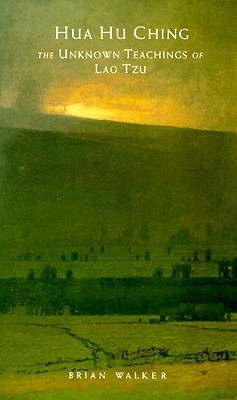
The perfect companion to Stephen Mitchell's version of the Tao Te Ching , this is the astonishing rendering of Lao Tzu's further writings. Each of the eighty-one teachings presented by Taoist scholar and poet Brian Walker are rich with wisdom, mystery, and startling enlightenment.

Written around 500 B.C., the Tao Teh Ching is one of the most frequently translated and most cherished works in the world. The Complete Works of Lao Tzu by Hua-Ching Ni is a remarkable elucidation of the famed Tao Teh Ching, the core of Taoist philosophy and a bridge to the subtle truth as well as a practical guideline for natural and harmonious living. Poetic and beautifully realized, this volume contains one of the only written translations of the Hua Hu Ching.

Paperback. Pub Date :2013-06-01 248 Chinese rolls 0.54

The two classics of Chinese philosophy.

The Tao Te Ching is a spiritual, inspirational work that guides us through life, helping us to live within each moment and find the beauty that is all around each of us. Simple, beautiful, and life changing. The Tao Te Ching is fundamental to the Taoist school of Chinese philosophy (Dojia) and strongly influenced other schools, such as Legalism and Neo-Confucianism. This ancient book is also central in Chinese Buddhism, which when first introduced into China was largely interpreted through the use of Taoist words and concepts. Many Chinese artists, including poets, painters, calligraphers, and even gardeners have used the Tao Te Ching as a source of inspiration.

From 25 centuries and many cultures, quotes from Cervantes, Tagore, Neruda, and others, on the art of living. Two authors and 29 languages of origin.

El Libro del Tao ha sido considerado la obra más bella de la antigua literatura china y el texto fundacional del taoísmo. Su autoría se atribuye a Lao-Tsé, que vivió probablemente entre los siglos VI y III a.C. Es un conjunto de proverbios y rimas que diseñan un comportamiento sabio para la vida: un camino (llamado Tao) que no está ya trazado, sino que se hace al andar; como el curso del agua que depende del cauce por el que transcurre, el camino del Tao es la verdad subyacente e invisible que nos guía. Como el agua, el hombre sabio es capaz de vivir según el Tao, acomodándose a su naturaleza y a la naturaleza.

El Dào Dé Jing (Chino: 道德經 Acerca de este sonido pronunciación (?·i), Wade-Giles: Tao Te Ching, también llamado Tao Te King), cuya autoría se atribuye a Laozi (WG Lao Tzu, también trasliterado como Lao Tse, "Viejo Maestro"), es un texto clásico chino. Su nombre procede de las palabras con las que empiezan cada una de sus dos partes: 道 dào "el camino", la primera del Capítulo 1, y 德 dé "virtud", o "poder", la primera del Capítulo 38, con el añadido 經 jīng, "libro clásico".

Lão Tử là người huyện Khổ, nước Sở, sống trong thời Xuân Thu Chiến Quốc. Tương truyền ông là người viết bộ sách Đạo Đức Kinh, chủ yếu bàn về Đạo học và cách sống để hòa hợp với Đạo.Ở Việt Nam, có rất nhiều nhà nghiên cứu đã dịch và bình chú về cuốn Đạo Đức Kinh của Lão Tử. Nhờ những cách hiểu và khám phá mới mẻ của mỗi nhà nghiên cứu mà nội dung quyển Đạo Đức Kinh ngày càng trở nên phong phú và nhiều màu sắc. Nhà xuất bản Trẻ xin giới thiệu đến quý độc giả hai cuốn sách Lão Tử Đạo Đức Kinh và Lão Tử tinh hoa. Lão Tử Đạo Đức Kinh được học giả Nguyễn Duy Cần dịch trực tiếp từ bản gốc tiếng Trung Quốc, có kèm theo phần chú giải để độc giả tiện theo dõi. Lão Tử tinh hoa là cuốn sách bàn rộng ra về những nội dung cốt lõi của Đạo Đức Kinh.

English (translation)Original Chinese

A new interpretation of the Tao Te Ching, this book is a celebration of the Way of Harmony and Balance.Ray Grigg transforms what has been traditionally called the Tao Te Ching, what he calls the Lao Tzu, from the mysterious to the meaningful. He accomplishes this by abandoning the historical convention of a literal reading of the Chinese texts. The result is a poetic expression of ancient wisdom in a language that readers can approach directly.The wisdom of the Lao Tzu rests in its ability to tease confusion into insight that is beyond the confinement of intellectual understanding. Beautifully illustrated with ink drawings by Bill Gaetz, The New Lao Tzu demonstrates that living the wisdom of the Lao Tzu requires more instinct than reason, more intuition than argument.

Tao - The Way - Special Edition: The Sayings of Lao Tzu, Chuang Tzu and Lieh Tzu
by Lao Tzu
Rating: 4.2 ⭐
Lao Tzu was the father of Taoism. In his Tao Te Ching, Lao Tzu outlined the basic concept of Tao. Chuang Tzu and Lieh Tzu were Lao Tzu's most important followers who expounded and expanded the basic principles set forth by Lao Tzu. Together, the sayings of these three sages, which make up this volume, are the foundations for the philosophy of Tao. The translations of the works of these ancient Chinese sages by Lionel Giles and Herbert Giles are very highly regarded and considered by many to be the definitive English translations. Lionel's translation of The Sayings of Lao Tzu (1905), taken from the Tao Te Ching and logically re-ordered, is remarkable for its clarity of expression, particularly given the complexity of the subject. Herbert's translation of The Sayings of Chuang Tzu, presented here, with an introduction by Lionel, was originally published as Musings of a Chinese Mystic (1906). Lionel's translation of The Sayings of Lieh Tzu was originally published as The Book of Lieh Tzu, or Teachings in Taoism (1912). Individually the works of these Chinese sages are classics. Together, they are a master resource of the history of Tao.


Do you want to have the core books that lay the very foundation of Taoism? What would you say if you found a collection of books the famous, modern gurus have themselves used? A collection that could take you from the beginners mind to the meditative one? You will get all the following books with a bargain Taoist Teachings From The Book of Lieh TzuTranslated from the Book of Lieh-Tzu with Introduction by LIONEL GILES (1912)2. The Canon of Reason and Virtue (Laozi's Tao Te Ching)Translated by Paul Carus (1913)3. THE CH‘IH WEN TUNGTranslated by FREDERIC HENRY BALFOUR (1884)4. THE CH‘ING CHING CHINGTranslated by FREDERIC HENRY BALFOUR (1884)5. THE CLASSIC OF PURITY AND STILLNESSTranslated by James Legge (1891)6. A CHAPTER FROM THE HUNG LIEH CHUAN,BY HUAI-NAN TSZE, PRINCE OF KUANG LING; Translated by FREDERIC HENRY BALFOUR (1884)7. TAO TE CHINGby LAO Translated by Lionel Giles (1905)8. T'ai-Shang Kan-Ying P' Treatise of the Exalted One on Response and RetributionTranslated by Daisetz Teitaro Suzuki and Dr. Paul Carus (1906)9. TAO THE GREAT ESSAYS FROM HUAI NAN TZUTRANSLATED WITH INTRODUCTORY ARTICLES by EVAN MORGAN (1933)10. MUSINGS OF A CHINESE SELECTIONS FROM THE PHILOSOPHY OF CHUANG TZUTranslated Lionel Giles (1906)11. THE T‘AI HSI CHINGTranslated by FREDERIC HENRY BALFOUR (1884)12. THE TA T‘UNG CHINGTranslated by FREDERIC HENRY BALFOUR (1884)13. ZHUANGZITranslated by James Legge (1891)14. THE YIN FU CHINGTranslated by FREDERIC HENRY BALFOUR (1884)15. YANG CHU'S GARDEN OF PLEASURETRANSLATED FROM THE CHINESE BY PROFESSOR ANTON FORKE, PH.D., ETC.(1912)16. Yin Chih The Tract of the Quiet WayTranslated by Daisetz Teitaro Suzuki and Paul Carus (1906)17. THE KAN YING PIENTranslated by FREDERIC HENRY BALFOUR (1884)18. Yu Shu King or The Classic of the Pivot of JadeTranslated by James Legge (1891)19. THE HSIN YIN CHINGTranslated by FREDERIC HENRY BALFOUR (1884)20. THE STONE TABLET IN THE TEMPLE OF LAO-DZEBY HSIEH TAO-HANG OF THE SUI DYNASTY; Translated by James Legge (1891)21. THE SU SHUTranslated by FREDERIC HENRY BALFOUR (1884)22. Zah Yung King or Classic of the Directory for a DayTranslated by James Legge (1891)23. Yin Fu King or Classic of the Harmony of the Seen and the UnseenTranslated by James Legge (1891)And all these works can be yours within minutes.

“Дао де цзін” – один із найдавніших й найбільш важливих текстів давньокитайської філософської думки, який є наріжним каменем традиційного китайського світогляду. Саме тому він вже в давні часи отримав статус канонічного тексту - цзін і вважається своєрідною “біблією” однієї з провідних світоглядних течій Китаю – даосизму. Українському читачеві пропонується не тільки новий переклад цього твору й детальний коментар до кожного фрагменту, але й сам оригінальний текст в редакції, яка базується на археологічних знахідках його досі невідомих списків. Переклад супроводжується післямовою, в який аналізується історичний контекст виникнення цього тексту, його спеціфічна термінологія й базові світоглядні ідеї.Книга «ДАО ДЕ ЦЗІН. Канон шляху і спроможності» супроводжується перекладом зі старокитайської, коментарями та післямовою Андрія Накорчевського.

The Guiding Light of Lao Tzu: A New Translation and Commentary on the Tao Teh Ching
by Lao Tzu
Rating: 4.0 ⭐
The Tao Teh Ching in terms of mysticism and meditation.

A new edition of this book with commentaries on each poem is now available.Lao Tzu’s slim book may be more than 2,000 years old, but it sings as clearly today as when first written. Equal parts spiritual guide and political manifesto, these words provide a blueprint for the evolution of our species. If humanity still exists 2,000 years from now, it will be because we followed the counterintuitive advice Lao Tzu laid out in his little book of poems. Unlike previous editions, this illustrated translation emphasizes Lao Tzu's radical social and political ideas, rooting them in a practical yet transcendent spirituality. Intricate circular graphics illuminate each of the poems to represent 81 different phases of the moon. This version is designed to appeal to artists, activists, political innovators, social movement strategists and anyone else engaged in cultivating a more just and peaceful world. Our species may not survive for another 2,000 years. There’s no sense in getting discouraged though. Lao Tzu has provided us with our survival guide. The world we dream of exists, and it’s a world that can benefit all of us. We just have to notice we’re already living in it.

古代中国の書『老子(老子道徳経)』は,熾烈な戦国時代を生き抜く処世の知恵であり一種の統治理論であるが,同時に,世の中と人間についての深い洞察力によって,人類の教科書ともいうべき普遍性を持っている.ここで説かれる平和的で,自足,素朴なあり方,謙虚さは,時代や地域を超えて,現代の人々の心に直接訴えかける.

The Practical Tao Te Ching of Lao-zi: Rational Meditations on Non-duality, Impermanence, Wu-wei (non-striving), Nature and Naturalness, and Virtue
by Lao Tzu
Rating: 4.7 ⭐
The Tao Te Ching 道德经 (or the more modern spelling: Dao de Jing), is said to be one of the most translated texts in the world, second to only the Bible. So, “Why is another translated version of the Tao Te Ching necessary?” you might ask. If you have ever before read a translation of the Tao Te Ching, you have inevitably come across one of three common variations: 1) a translation by a non-native English speaker whose writing style is not so familiar or easily comprehensible, 2) a translation by a Western academic who, focusing on historical and political context, includes a plethora of dry factual information, or 3) a translation that appears rather mystical, abstruse, spiritual and poetic, but written by someone who lacks understanding and familiarity of the Chinese language and, consequently, the actual source of the Tao Te Ching. Chen Zhi-qiang's new version, The Practical Tao Te Ching of Lao-zi, takes a fresh and original perspective by interpreting the Chinese language source while considering the fundamental Tao sensibilities of: Non-duality, impermanence, wu-wei (non-striving), nature and naturalness, and Virtue. Read the Tao Te Ching with these basic Tao concepts in mind and realize what truths Lao-zi recognizes about the nature of our humanity, our existential reality, and our shared human condition.

Özündə iki kitabı birləşdirən hazırkı nəşr Azərbaycan oxucusunu daosizm fəlsəfəsinin təməl mənbələri ilə ilk dəfə tanış edir. Qədim Çin filosofu Lao Tzı (e.ə.VI-V əsrlər) daosizmin banisi sayılır. Ömrünün sonuna yaxın Çini kəlin belində tərk etmək qərarına gələn filosofu sərhəddə saxlayırlar. Bu qərib qocanın şəxsində müdrik insanı görən məntəqə rəisi ondan ölkəni tərk etməzdən öncə bildiklərini qısa şəkildə yazmağı xahiş edir. Lao Tzı 5000 heroqlifdən ibarət "Dao De Çinq" adlı fəlsəfi traktatı bir gecəyə yazır, səhər isə Çini həmişəlik tərk edir. 81 şeirdən ibarət traktat "boşluqlardan istifadə etməyin" və "heç nə eləmədən iş görməyin" sirlərini açır.Daosizmin ikinci banisi sayılan Çjuan Tzının "İç bölümlər" ( e.ə.III əsr) əsəri daosizm fəlsəfəsini əlvan pritça və mifoloji materiallar əsasında, əyani şəkildə illüstrasiya etmiş olur. Kitabda həmçinin daosizmin konfutsiçiliklə diskussiyası da öz əksini tapır.


Very Good in wraps; Paperback; 8vo; 84 pages; B/W Illustrations; Asiapac; 1993; Reprint; Minor edgewear and shelf wear to wraps; Text clean and unmarked.

This book is a new translation (by Dr. Alan Peatfield) of the most important and most-read book on Eastern philosophy and spirituality, the Daodejing. For the first time, a Daoist lineage holder, Master Bruce Frantzis, shares the oral teachings of the Daoist Water tradition which accompany and underpin Laozi's multi-layered wisdom text written twenty-five hundred years ago. That tradition is not literary nor philosophical; it is fundamentally meditative and spiritual.The oral tradition of Daoism holds that the Daodejing was created by a single, powerful mind at work in its chapters, weaving together themes as one, unified vision, one Teaching. Soon you will read the story of Liu Hung Chieh, the modern Daoist sage whose teachings are the ultimate source of what is written in this book. You will learn how he came to pass on these unique oral teachings about Daoism to a Westerner, who became his disciple and inheritor, Bruce Kumar Frantzis.The meditative and spiritual nature of the Commentary presented is to be emphasized. The authors do not claim that it is definitive, the last word on the Daodejing. It is the spiritual and meditative teaching that was passed on to Bruce orally by the Sage Liu Hung Chieh, with the suggestion that he bring this tradition to the West. The material here comes from inside the Daoist spiritual tradition and, therefore, contains the distilled essence of Bruce’s learning, practice, and teaching since Liu’s death in 1986.Inside this book you will find some things which have never been revealed before in Western writings about Daoism, as the teachings would only be passed on from teacher to student, personally – spoken, not written, and often in secret. When Liu Hung Chieh taught Bruce, he said, “These are the words.” Liu then said the words in Chinese with vibrations, transmissions, behind them that penetrated Bruce to his core. He continued, “This is what they mean.” With all Daoist or ancient texts, trying to understand the meaning from the words alone is exceptionally difficult. Finally, Liu explained, demonstrated, and “This is how to do what is proposed.” This is the basis for qi arts, such as Taijiquan, qigong, and yoga and Dissolving meditation practices -- all of which serve to train a student in how to genuinely and unambiguously embody what is proposed in the Daodejing in body, mind, and spirit.Reading this Commentary is designed to give readers an experience of growth and maturity. This is a practical book about how to have a better experience of living on this Earth with explanations of profound universal principles from a true Daoist master to help the reader achieve this end. It is also a book on spirituality, which shows a path to enlightenment for those who have the commitment and resolve to seek and discover their essence (Seventh Energy Body of Individuality), and ultimately open to The Way.

All our books are bran new. We ship worldwide


The author's response to the Tao te ching offers business techniques that integrate the traditional Chinese philosophy with the business environment of the 1990s


Perhaps the most broadly influential spiritual text in human history, Lao Tzu's Tao Te Ching is the source of Taoist philosophy, which eventually developed into Ch'an (Zen) Buddhism. Equally influential in the social sphere, Confucious' Analects is the source of social wisdom in China. The Chuang Tzu is the wild and wacky prose complement to the Tao Te Ching. And with its philosophical story-telling, the Menicius adds depth and complexity to Confucius' vision.