
Matt Ridley
Matthew White Ridley, 5th Viscount Ridley, is a British science writer, journalist and businessman. He is known for his writings on science, the environment, and economics, and has been a regular contributor to The Times newspaper. Ridley was chairman of the UK bank Northern Rock from 2004 to 2007, during which period it experienced the first run on a British bank in 130 years. He resigned, and the bank was bailed out by the UK government; this led to its nationalisation. Ridley is a libertarian, and a staunch supporter of Brexit. He inherited the viscountcy in February 2012 and was a Conservative hereditary peer from February 2013, with an elected seat in the House of Lords, until his retirement in December 2021.
16 Books Written

“Ridley writes with panache, wit, and humor and displays remarkable ingenuity in finding ways to present complicated materials for the lay reader.” — Los Angeles TimesIn a bold and provocative interpretation of economic history, Matt Ridley, the New York Times-bestselling author of Genome and The Red Queen, makes the case for an economics of hope, arguing that the benefits of commerce, technology, innovation, and change—what Ridley calls cultural evolution—will inevitably increase human prosperity. Fans of the works of Jared Diamond (Guns, Germs, and Steel), Niall Ferguson (The Ascent of Money), and Thomas Friedman (The World Is Flat) will find much to ponder and enjoy in The Rational Optimist.

Genome: The Autobiography of a Species in 23 Chapters
by Matt Ridley
Rating: 4.0 ⭐
• 8 recommendations ❤️
“Ridley leaps from chromosome to chromosome in a handy summation of our ever increasing understanding of the roles that genes play in disease, behavior, sexual differences, and even intelligence. . . . . He addresses not only the ethical quandaries faced by contemporary scientists but the reductionist danger in equating inheritability with inevitability.” — The New Yorker The genome's been mapped. But what does it mean? Matt Ridley’s Genome is the book that explains it what it is, how it works, and what it portends for the future Arguably the most significant scientific discovery of the new century, the mapping of the twenty-three pairs of chromosomes that make up the human genome raises almost as many questions as it answers. Questions that will profoundly impact the way we think about disease, about longevity, and about free will. Questions that will affect the rest of your life. Genome offers extraordinary insight into the ramifications of this incredible breakthrough. By picking one newly discovered gene from each pair of chromosomes and telling its story, Matt Ridley recounts the history of our species and its ancestors from the dawn of life to the brink of future medicine. From Huntington's disease to cancer, from the applications of gene therapy to the horrors of eugenics, Ridley probes the scientific, philosophical, and moral issues arising as a result of the mapping of the genome. It will help you understand what this scientific milestone means for you, for your children, and for humankind.

The Red Queen: Sex and the Evolution of Human Nature
by Matt Ridley
Rating: 4.0 ⭐
• 8 recommendations ❤️
The Red Queen compels us to rethink everything from the persistence of sexism to the endurance of romantic love.Referring to Lewis Carroll's Red Queen from Through the Looking-Glass, a character who has to keep running to stay in the same place, Matt Ridley demonstrates why sex is humanity's best strategy for outwitting its constantly mutating internal predators. The Red Queen answers dozens of other riddles of human nature and culture—including why men propose marriage, the method behind our maddening notions of beauty, and the disquieting fact that a woman is more likely to conceive a child by an adulterous lover than by her husband. The Red Queen offers an extraordinary new way of interpreting the human condition and how it has evolved.

The Origins of Virtue: Human Instincts and the Evolution of Cooperation
by Matt Ridley
Rating: 4.0 ⭐
• 6 recommendations ❤️
If, as Darwin suggests, evolution relentlessly encourages the survival of the fittest, why are humans compelled to live in cooperative, complex societies? In this fascinating examination of the roots of human trust and virtue, a zoologist and former American editor of the Economist reveals the results of recent studies that suggest that self-interest and mutual aid are not at all incompatible. In fact, he points out, our cooperative instincts may have evolved as part of mankind's natural selfish behavior—by exchanging favors we can benefit ourselves as well as others.Brilliantly orchestrating the newest findings of geneticists, psychologists, and anthropologists, The Origins of Virtue re-examines the everyday assumptions upon which we base our actions towards others, whether in our roles as parents, siblings, or trade partners. With the wit and brilliance of The Red Queen , his acclaimed study of human and animal sexuality, Matt Ridley shows us how breakthroughs in computer programming, microbiology, and economics have given us a new perspective on how and why we relate to each other.

How Innovation Works: Serendipity, Energy and the Saving of Time
by Matt Ridley
Rating: 3.7 ⭐
• 6 recommendations ❤️
‘Ridley is spot-on when it comes to the vital ingredients for success’ Sir James DysonBuilding on his bestseller The Rational Optimist, Matt Ridley chronicles the history of innovation, and how we need to change our thinking on the subject.Innovation is the main event of the modern age, the reason we experience both dramatic improvements in our living standards and unsettling changes in our society. It is innovation that will shape the twenty-first century. Yet innovation remains a mysterious process, poorly understood by policy makers and businessmen alike.Matt Ridley argues that we need to see innovation as an incremental, bottom-up, fortuitous process that happens as a direct result of the human habit of exchange, rather than an orderly, top-down process developing according to a plan. Innovation is crucially different from invention, because it is the turning of inventions into things of practical and affordable use to people. It speeds up in some sectors and slows down in others. It is always a collective, collaborative phenomenon, involving trial and error, not a matter of lonely genius. It still cannot be modelled properly by economists, but it can easily be discouraged by politicians. Far from there being too much innovation, we may be on the brink of an innovation famine.Ridley derives these and other lessons from the lively stories of scores of innovations – from steam engines to search engines – how they started and why they succeeded or failed.

“Mr. Ridley’s best and most important work to date…there is something profoundly democratic and egalitarian—even anti-elitist—in this bottom-up Everyone can have a role in bringing about change.” — Wall Street Journal The New York Times bestselling author of The Rational Optimist and Genome returns with a fascinating argument for evolution that definitively dispels a dangerous, widespread that we can command and control our world Human society evolves. Change in technology, language, morality, and society is incremental, inexorable, gradual, and spontaneous. It follows a narrative, going from one stage to the next, and it largely happens by trial and error—a version of natural selection. Much of the human world is the result of human action but not of human it emerges from the interactions of millions, not from the plans of a few. Drawing on fascinating evidence from science, economics, history, politics, and philosophy, Matt Ridley demolishes conventional assumptions that the great events and trends of our day are dictated by those on high. On the contrary, our most important achievements develop from the bottom up. The Industrial Revolution, cell phones, the rise of Asia, and the Internet were never planned; they happened. Languages emerged and evolved by a form of natural selection, as did common law. Torture, racism, slavery, and pedophilia—all once widely regarded as acceptable—are now seen as immoral despite the decline of religion in recent decades. In this wide-ranging, erudite book, Ridley brilliantly makes the case for evolution, rather than design, as the force that has shaped much of our culture, our technology, our minds, and that even now is shaping our future.

Nature Via Nurture: Genes, Experience, and What Makes Us Human
by Matt Ridley
Rating: 3.9 ⭐
• 2 recommendations ❤️
Following his highly praised and bestselling book Genome: The Autobiography of a Species in 23 Chapters, Matt Ridley has written a brilliant and profound book about the roots of human behavior. Nature via Nurture explores the complex and endlessly intriguing question of what makes us who we are.In February 2001 it was announced that the human genome contains not 100,000 genes, as originally postulated, but only 30,000. This startling revision led some scientists to conclude that there are simply not enough human genes to account for all the different ways people behave: we must be made by nurture, not nature. Yet again biology was to be stretched on the Procrustean bed of the nature-nurture debate. Matt Ridley argues that the emerging truth is far more interesting than this myth. Nurture depends on genes, too, and genes need nurture. Genes not only predetermine the broad structure of the brain, they also absorb formative experiences, react to social cues, and even run memory. They are consequences as well as causes of the will.Published fifty years after the discovery of the double helix of DNA, Nature via Nurture chronicles a revolution in our understanding of genes. Ridley recounts the hundred years' war between the partisans of nature and nurture to explain how this paradoxical creature, the human being, can be simultaneously free-willed and motivated by instinct and culture. Nature via Nurture is an enthralling,up-to-the-minute account of how genes build brains to absorb experience.

Francis Crick, who died at the age of eighty-eight in 2004, will be bracketed with Galileo, Darwin, and Einstein as one of the great scientists of all time. Between 1953 and 1966 he made and led a revolution in biology by discovering, quite literally, the secret of life: the digital cipher at the heart of heredity that distinguishes living from non-living things -- the genetic code. His own discoveries -- though he always worked with one other partner and did much of his thinking in conversation -- include not only the double helix but the whole mechanism of protein synthesis, the three-letter nature of the code, and much of the code itself. Matt Ridley's biography traces Crick's life from middle-class mediocrity in the English Midlands, through a lackluster education and six years designing magnetic mines for the Royal Navy, to his leap into biology at the age of thirty-one. While at Cambridge, he suddenly began to display the unique visual imagination and intense tenacity of thought that would allow him to see the solutions to several great scientific conundrums -- and to see them long before most biologists had even conceived of the problems. Having set out to determine what makes living creatures alive and having succeeded, he immigrated at age sixty to California and turned his attention to the second question that had fascinated him since his youth: What makes conscious creatures conscious? Time ran out before he could find the answer.

Birds, Sex and Beauty: The Extraordinary Implications of Charles Darwin's Strangest Idea
by Matt Ridley
Rating: 4.0 ⭐
“Matt Ridley is one of our finest science writers. This book is a treat for bird lovers and evolutionary biologists alike.” —Richard Dawkins, author of The Genetic Book of The Dead and The God DelusionThe New York Times bestselling author of Genome and The Evolution of Everything revisits Darwin’s revelatory theory of mate choice through the close study of the peculiar rituals of birds, and considers how this mating process complicates our own view of human evolution.In all animals, mating is a deal. But few creatures behave as if sex is a simple, even mutually beneficial, transaction. Many more treat it with reverence, suspicion, angst, and violence. In the case of the Black Grouse, the bird at the center of Matt Ridley’s investigation, the males dance and sing for hours a day, for several exhausting months, in an arduous and even deadly ritual called a “lek.” To prepare for the ordeal, they grow, preen and display fancy, twisted, bold-colored feathers. When achieved, consummation with a female takes seconds. So why the months of practice and preparation that is elaborate, extravagant, exhausting and elegant?The full answer remains a mystery. Evolutionary biologists can explain why males are generally the eager sellers, females the discriminating buyers. But they struggle to explain why, in some species, this extravagance goes beyond the mere gaudy, taking on bizarre shapes, postures, and behavior. And further, why these bird displays seem beautiful to us humans, a species with seemingly no skin in the game.Using an early morning “lek" as his starting point, Ridley explores the scientific research into the evolution of bright colors, exotic ornaments, and elaborate displays in birds around the world. Charles Darwin thought the purpose of such displays was to "charm" females. Though Darwin’s theory was initially dismissed and buried for decades, recent scientific research has proven him newly right—there is a powerful evolutionary force quite distinct from natural selection: mate choice. In Birds, Sex and Beauty, Ridley reopens the history of Darwin’s vexed theory, laying bare a century of disagreement about an idea so powerful, so weird, and so wonderful, we may have yet to fully understand its implications.

A series of predictions about diseases in the years to come.
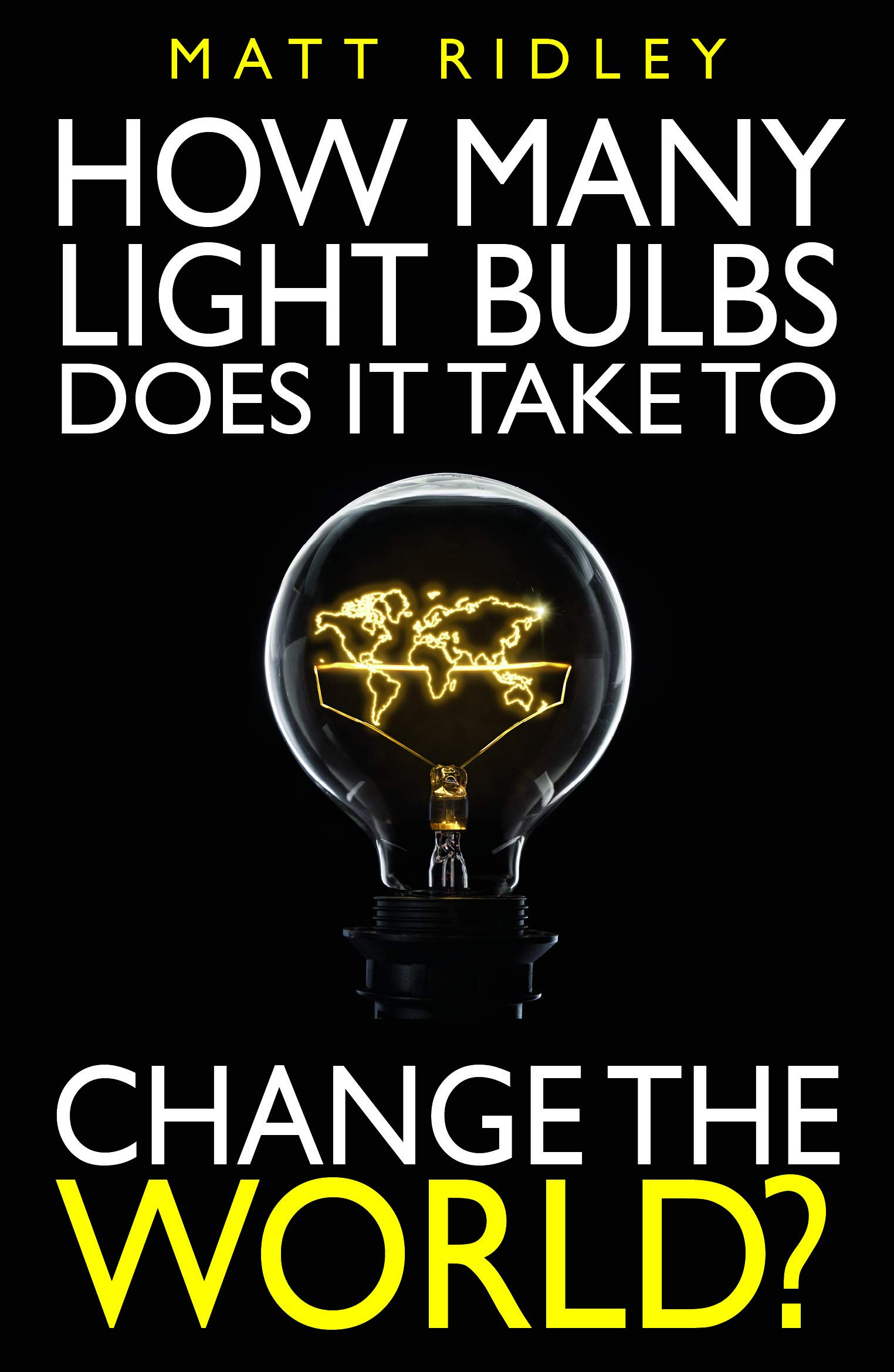
Almost every schoolchild learns that Thomas Edison invented the light bulb. But did he? And if he hadn’t invented it, would we be still living in the dark? Acclaimed author Matt Ridley (The Rational Optimist, The Evolution of Everything) explains that at least 20 other people can lay claim to this breakthrough moment. Ridley argues that the light bulb emerged from the combined technologies and accumulated knowledge of the day – it was bound to emerge sooner or later. Based on his 2018 Hayek Memorial Lecture, Ridley contends that innovation – from invention through to development and commercialisation – is the most important unsolved problem in all of human society. We rely on it – but we do not fully understand it, we cannot predict it and we cannot direct it. In How Many Light Bulbs Does It Take to Change the World? Ridley examines the nature of innovation – and how people often fear its consequences. He dispels the myth that automation destroys jobs – and demonstrates how innovation leads to economic growth. And he argues that intellectual property rights, originally intended to encourage innovation, are now being used by big business to defend their monopolies. Ridley concludes that innovation is a mysterious and under-appreciated process that we discuss too rarely, hamper too much and value too little.
A second collection of essays by Matt Ridley, this book represents the best of the author's columns in the Sunday Telegraph, Daily Telegraph and others. Ridley challenges the views of the vested interests of environmental lobbyists and politicians. Witty and often humorous, his essays comment on recurring environmental themes and problems.

Dr Ridley is one of a number of environmentalists who are seeking to counter the inaccurate and misleading opinions of 'mainstream environmentalism'. This volume brings together a selection of 30 of Dr Ridley's 'Down to Earth' columns which appeared in The Sunday Telegraph.

Chronicling America's 1988 Presidential election from the unique perspective of a British journalist, this biting account traces the remarkable transformation of George Bush's image from wimpish Vice President to electoral champion

2-book Set By Matt Ridley; Genome, the Agile Gene
by Matt Ridley

Birds, Sex and Beauty
by Matt Ridley