
Henry Hazlitt
Henry Stuart Hazlitt was an American journalist who wrote about business and economics for such publications as The Wall Street Journal, The Nation, The American Mercury, Newsweek, and The New York Times.
30 Books Written

This book covers the basic truths about economics in less than 200 pages.

Henry Hazlitt did the seemingly impossible, something that was and is a magnificent service to all people everywhere. He wrote a line-by-line commentary and refutation of one of the most destructive, fallacious, and convoluted books of the century. The target here is John Maynard Keynes's General Theory, the book that appeared in 1936 and swept all before it. In economic science, Keynes changed everything. He supposedly demonstrated that prices don't work, that private investment is unstable, that sound money is intolerable, and that government was needed to shore up the system and save it. It was simply astonishing how economists the world over put up with this, but it happened. He converted a whole generation in the late period of the Great Depression. By the 1950s, almost everyone was Keynesian. But Hazlitt, the nation's economics teacher, would have none of it. And he did the hard work of actually going through the book to evaluate its logic according to Austrian-

Thinking as a Science is a book written by Henry Hazlitt that explores the process of thinking and how it can be improved through scientific methods. The book is divided into three parts, each focusing on a different aspect of thinking. The first part discusses the basics of thinking, including the importance of observation, analysis, and deduction. The second part delves into the concept of reasoning, exploring logical fallacies and how to avoid them. The final part explores the practical applications of thinking, including problem-solving and decision-making. Throughout the book, Hazlitt emphasizes the importance of critical thinking and the scientific method in all areas of life. He also provides numerous examples and exercises to help readers develop their thinking skills. Overall, Thinking as a Science is a valuable resource for anyone looking to improve their ability to think critically and logically.1916. Mr. Hazlitt, journalist, literary critic, economist, philosopher, was one of the most brilliant public intellectuals of our century. At the age of 20, when he finally got a job at the Wall Street Journal as a stenographer, he had already finished his first book, Thinking as a Science. The Neglect of Thinking; Thinking with Method; A Few Cautions; Concentration; Prejudice and Uncertainty; Debate and Conversation; Thinking and Reading; Writing One�������s Thoughts; Things Worth Thinking About; Thinking as an Art; and Books on Thinking.This scarce antiquarian book is a facsimile reprint of the old original and may contain some imperfections such as library marks and notations. Because we believe this work is culturally important, we have made it available as part of our commitment for protecting, preserving, and promoting the world's literature in affordable, high quality, modern editions, that are true to their original work.

Henry Hazlitt (1894–1993) was a well-known journalist who wrote on economic affairs for the New York Times, the Wall Street Journal, and Newsweek, among many. He is perhaps best known as the author of the classic Economics in One Lesson (1946). But Hazlitt was well equipped to be a fiction writer. He was literary editor of The Nation for three years and H.L. Mencken's successor at the American Mercury.Time Will Run Back is an excellent introduction to the problems of economic systems, and can be a great benefit to young people who are curious about the meaning of economic analysis. It is, in fact, suitable for all ages. The Mises Institute is very pleased to sponsor this Kindle edition.The plot line of this splendid novel, first published in 1951 and revised in 1966, explores the economic theories of capitalism and socialism.It begins in a fully socialist society in which the new leader, who finds himself in that position only by accident, begins to rethink the economic basis of the system. He first begins to wonder whether the economy is doing well at all, and how one might know. This sets him on a path to thinking about prices and calculation, and about the very meaning of productivity.Commerce is introduced when the leader decides to allow the trading of rationing tickets; shortly, markets appear ? and everyone seems to be better off as a result.And on it continues. Slowly, piece by piece, he dismantles central planning and replaces it with a market system. All the while, the characters are engaged in a Socratic-style discussion about the implications of money, exchange, ownership, markets, entrepreneurship, and more.

What a thrilling little treasure this is, a completely rediscovered book by Henry Hazlitt from 1922This is Hazlitt before he became an advocate of the Austrian School, and here he is not writing on economics but personal ethics as informed by ancient principles. But the pre-Austrian in him shines through, because it is an application of the theory of time preference he picked up from his reading.The book has been nearly impossible to get until this new edition, completely reset by the Mises Institute.Why bring it back? Because it is Hazlitt, and because it is just splendid as a manual for the management of personal life Just look at some of these quotes:"Will-Power, then, may be defined as the ability to keep a remote desire so vividly in mind that immediate desires which interfere with it are not gratified.""As long as we keep in the backgrounds of our minds that the will is really an abstraction, there is no harm in speaking of it a good part of the time as if it were an entity; and insofar as it can be said to represent a definite and permanent entity, the will may be defined as our desire to be a certain kind of character. ""It is not the 'conscience' in itself, nor the 'evil' desires, that ultimately count; it is the relation of the one to the other. The stronger his conscience, or counter-desires, must be; the weaker his desires, the less need he has for a strong conscience.""A man who is good from docility, and not from stern self-control, has no character.""Not all of us have refused tempting commercial opportunities for certain poverty and struggle for a time, to gain an end in which the mathematical chances were ridiculously and overwhelmingly against us. Not all have kept desperately fanning the embers of dissatisfaction, fanning them into a constant white hot flame. With most of us the early fire dies; the embers fade and grow cool. We reach a high level as we ever seriously hope to reach. We have spasms of dissatisfaction with our position in the world, but not sufficient dissatisfaction to make us work our way out of the rut to a higher position. We have moments of longing for mountain tops, but not enough longing to make us willing to give up something for them. Strolling in the valleys is so much more pleasant than climbing.""Forming a new habit is like forging for yourself a new path in the woods, through stubborn underbrush and prickly thorns, while all the while it is possible for you to take the well-worn, hard-trodden, pleasant path that already exists. But you can reflect that every time you travel through the new path you are going to tramp down more shrubbery and clear more entanglements from the way."About Oscar Wilde's temptation epigram ("The only way to get rid of a temptation is to yield to it."): "Like all good epigrams, it is at least true in a special sense. And the sense in which the epigram is true is that if you yield to a temptation, you will get rid of it for the moment. ... For the very fact that you have yielded to the temptation will make it return at a later time with increased power and urgency. Every time you yield to it, you do two things: you increase the intensity of the desire and lessen the power of resistance.""The problem, then, in all creative work, is to seek to sustain the interest at the highest pitch, never allowing it to flag. ... Eight times out of nine it is flagging interest, rather than real fatigue, which makes us quit.""We honestly intend to do certain things, and for some strange reason we keep ont intending to do them. There is nothing especially difficult about them. They demand no gritting of teeth, no heroic sacrifice. They are simply not as pleasant as certain other things.""Interest, excitement, absorption in the pursuit of a subject, make you forget yourself and your discomforts. ... This principle in the mental field applies quite as strongly in the physical. A man who would be completely tired out if he beat a rug for his wife, will play five sets of tennis of an afternoon... . The first is 'work' the second 'play'.""You want your friends to know of your will-power, but the best way for them to discover it will be through your actions, not your words."

In this 1969 work, Henry Hazlitt explains why politicians who promise salvation through government are dangerous. Among the Instant Utopia | Salvation Through Government Spending | "We Owe It to Ourselves" | Consequences of Dollar Debasement | The High Cost of Wage Hikes | Price Controls | More on Price Controls | Who Protects the Consumer? | Famines Are Government-Made | Runaway Relief and Social Insecurity | Income Without Work | Fallacies of the Negative Income Tax | Can We Guarantee Jobs? | Soaking the Rich | Soaking the Corporations | Government Planning vs. Economic Growth | Government as Prosperity-Maker | Welfare State Gone Wild | Inflation Is Worldwide | The Case for the Gold Standard | The Fallacy of Foreign Aid | Government Unlimited | From Spencer's 1884 to Orwell's 1984 | The Task Confronting Libertarians | What We Can Do About ItTo search for Mises Institute titles, enter a keyword and LvMI (short for Ludwig von Mises Institute); e.g., Depression LvMI

What You Should Know About Inflation by Henry Hazlitt (Paperback - 1968) Rare and out of print collector's item. First paperbound edition published in 1968. Limited availability. Never sold or read, but with very light shelf wear. Almost no tanning of pages. Bookstore address is stamped inside. The image, that is shown, is this actual copy.

Capitalist production, not government programs, has been the real conqueror of poverty.
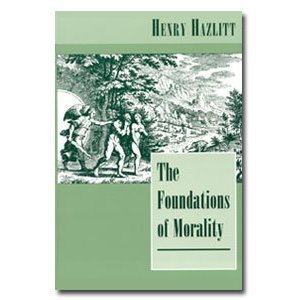
Henry Hazlitt was a libertarian philosopher, an economist, and a journalist for various publications including The Wall Street Journal and The New York Times, and Newsweek. He was the founding vice-president of the Foundation for Economic Education and an early editor of The Freeman magazine, an important libertarian publication. In 1946 Hazlitt wrote Economics in One Lesson, his seminal text on free market economics, which Ayn Rand referred to as doing a "...magnificent job of theoretical exposition." Hazlitt is credited with bringing his ideas and those of the so-called Austrian School to the American economics scene and his work has influenced the likes of economist Ludwig von Mises, novelist and essayist Ayn Rand. In Foundations of Morality Hazlitt presents a consistent moral philosophy based on the principles required for voluntary social interaction.

An excellent volume by an eminent journalist and author which presents a history of inflation, an explanation of its causes, an analysis of the misconceptions and fallacies that prevail about it, the outlook for more of it, and advice regarding what the reader can and cannot do to protect himself or herself against it. The author recognizes the strength of the political forces that continue it, and the urgent need of the re-establishment of an international gold standard. A first-rate analysis for everyone seeking protection against the consequences of inflation. Originally published by Arlington House in 1978.

From Bretton Woods to World Inflation: A Study of the Causes and Consequences
by Henry Hazlitt
Rating: 4.2 ⭐
Book by Hazlitt, Henry

This volume, originally published in 1960 by Arlington House, contains the most impressive collection of essays criticizing Lord Keynes's "General Theory" ever assembled in book form. The editor has added a new introduction and preface to this volume. An outstanding anthology which includes a number of important essays otherwise hard or impossible to find in English.

The Free Man's A Descriptive And Critical Bibliography is a book written by Henry Hazlitt in 1956. The book is a comprehensive guide to the best books on economics, politics, philosophy, history, and literature. Hazlitt provides a detailed description of each book and offers his own critical analysis of their content. The book is aimed at readers who are interested in building a personal library of books that will help them to understand the world and develop their own ideas. Hazlitt's selection of books reflects his belief in the importance of individual freedom and free markets. The Free Man's Library is a valuable resource for anyone who wants to deepen their knowledge of the humanities and social sciences.This scarce antiquarian book is a facsimile reprint of the old original and may contain some imperfections such as library marks and notations. Because we believe this work is culturally important, we have made it available as part of our commitment for protecting, preserving, and promoting the world's literature in affordable, high quality, modern editions, that are true to their original work.

This work has been selected by scholars as being culturally important and is part of the knowledge base of civilization as we know it. This work is in the public domain in the United States of America, and possibly other nations. Within the United States, you may freely copy and distribute this work, as no entity (individual or corporate) has a copyright on the body of the work. Scholars believe, and we concur, that this work is important enough to be preserved, reproduced, and made generally available to the public. To ensure a quality reading experience, this work has been proofread and republished using a format that seamlessly blends the original graphical elements with text in an easy-to-read typeface. We appreciate your support of the preservation process, and thank you for being an important part of keeping this knowledge alive and relevant.

When Henry Hazlitt published this exceedingly rare book, he was finishing up a three-year position at The Nation as literary critic, and preparing to accept the position as H.L. Mencken's successor at American Mercury. He was struggling with integrating his two main literary criticism and economics. In economics, value is subjective, whereas the key goal in literary criticism is the discovery of something approximating objective value. The text of this book reflects that struggle in the form of a trialogue. Hazlitt has his characters debate the question of literary value, and pushes forward the proposition that the value of literature is discerned and revealed through the operation of the "social mind." So he ends up rejecting relativism while avoiding mistakes in economic theory. A fascinating study, brilliantly conceived and rendered by a master. As an extra bonus here, Hazlitt offers a postscript on the rise of Marxism in literary criticism. He shows how preposterous it is for Marxism to reject the main corpus of Western literature as hopelessly bourgeois, even while Marx himself read all the great works in his leisure. This is a highly significant essay because it was probably the first attack on Marxist literary deconstructionism ever written!

A esta novena edición de uno de los grandes clásicos publicados en español por Unión Editorial, a los prólogos del economista Juan Ramón Rallo y del presidente argentino Javier Milei, se suma el del imprescindible economista y filósofo, periodista y profesor universitario mexicano Arturo Damm Arnal.Además, se suman al libro existente dos capítulos una revisión, por parte del propio Hazlitt, de su obra magna, y un breve tratado sobre los alquileres.Para quienes aún no se hayan adentrado en La economía en una lección, presentamos un brillante análisis de los sofismas económicos que en los últimos tiempos se han convertido en una nueva ortodoxia, a pesar de sus internas contradicciones. Actualmente, no existe en el mundo un solo gobierno importante cuya política económica no se halle influida, cuando no totalmente determinada, por alguno de estos sofismas.El camino más corto y seguro para comprender la economía y la política económica actuales es una previa disección de los sofismas y falacias de que adolecen, singularmente de la falacia radical de la que todas parten y que, como ya puso brillantemente de relieve Frédéric Bastiat, consiste en la tendencia a considerar exclusivamente las consecuencias inmediatas de una política y sus efectos sobre un sector particular, sin reparar en las que produciría a largo plazo y sobre el conjunto de la comunidad.

Esta novela del autor del clásico La economía en una lección, publicada en 1951 y revisada en 1966, supone una de las aportaciones más interesantes a la ciencia ficción distópica de corte abiertamente liberal —cuyo influjo probablemente llega hasta La rebelión de Atlas, de Ayn Rand—. Cimentada sobre diálogos tan profundos como fluidos, El tiempo volverá atrás desglosa los principios fundamentales de socialismo y liberalismo en un período en el que el colectivismo efectuaba avances importantes a lo largo y ancho del planeta.En un país que ha alcanzado el ideal socialista, el moribundo líder decide dejar el gobierno de la nación en manos de su hijo. Sin embargo, este ha crecido exiliado en el mundo libre, por lo que sus ideas no tienen nada que ver con las de su progenitor. Cuando el joven se esfuerce crear un marco de libertades individuales y económicas, los antiguos colaboradores de su padre harán lo posible con tal de pararle los pies. Un thriller político de alto voltaje.


Business Tides: The Newsweek Era of Henry Hazlitt
by Henry Hazlitt
A lone voice of economic sanity in the United States after World War II was Henry Hazlitt, who had moved in 1946 from the New York Times editorial page to Newsweek magazine, where he wrote until the late 1960s. He wrote a column every week on the most important economic topic being discussed in politics and the media. Each column was about 800 words, and each taught a lesson using logic and evidence. His column was always a wonderful annoyance to the political class and a ray of bright light for freedom lovers everywhere.None of these columns has appeared in print since. Business Tides brings them all back to light in a gorgeous and easy-to-read ebook, arranged from the first column to the last. The topics are the same ones that are in the news deficits, spending, tariffs and trade, inflation and the gold standard, wage and price controls, regulations, presidential intervention, stimulus and laissez-faire, and government spending on research.Of course you can turn to any page and enjoy his commentary. But it is especially interesting to read the articles in sequence, because quite often Hazlitt elaborates on particular points as a debate develops, and then he further refines these points in light of critics. Reading the articles in this way, the reader gains a through understanding of the topic in question.The real beauty of this volume is that it rescues from history some of the most powerful and important economic commentary ever. It came about during the great transition out of the war and into peacetime economic planning of the sort inspired by Keynes. Hazlitt fought it every step of the way, valiantly and with the cool light of reason and wisdom. We will never know for certain how many bad policies were stopped by his writing, but he sure did leave a wonderful legacy for future generations.To search for Mises Institute titles, enter a keyword and LvMI (short for Ludwig von Mises Institute); e.g., Depression LvMI

Henry Hazlitt, a conservative journalist, , wrote "A new Constitution Now" in 1942. His main point was that the time of the War was a perfect time to contemplate changing the Constitution, and that the War was pointing out several of the Constitution's weaknesses. Like many before him, he advocated the parliamentary/cabinet model and changes in the powers of the President. The Senate would become more like the House of Lords, Senators and the President would be appointed, and Congress would have the vote of no confidence. He noted, however, that his ideal was probably too sweeping, and proposed several less severe reforms, such as elimination of the Electoral College, the line item veto, and setting a retirement age for Supreme Court justices. Above all, though, he felt the amendment process needed particular attention, recommending majority ratification over super-majorities.
This work has been selected by scholars as being culturally important and is part of the knowledge base of civilization as we know it.This work is in the public domain in the United States of America, and possibly other nations. Within the United States, you may freely copy and distribute this work, as no entity (individual or corporate) has a copyright on the body of the work.Scholars believe, and we concur, that this work is important enough to be preserved, reproduced, and made generally available to the public. To ensure a quality reading experience, this work has been proofread and republished using a format that seamlessly blends the original graphical elements with text in an easy-to-read typeface.We appreciate your support of the preservation process, and thank you for being an important part of keeping this knowledge alive and relevant.

Los errores de la nueva economía: Crítica a la teoría general de Keynes
by Henry Hazlitt
Rating: 3.0 ⭐
El presente trabajo de Hazlitt constituye una de las críticas más detalladas que existen de la obra magna de Keynes, La Teoría General. Hazlitt derriba teóricamente y, apalancado en datos empíricos, todas y cada una de las propuestas principales de Keynes, como la propensión marginal a consumir, el efecto multiplicador del gasto, y la utilidad de las políticas monetarias y fiscales expansivas para reactivar la economía. Este libro sea disfrutado más aún por aquellos que hayan leído previamente la obra de quien aquí se critica, e incluso mas por quienes crean y sostengan la necesidad de continuar recomendando políticas denominadas keynesianas. A estos últimos, Hazlitt les impondrá un desafío intelectual y, por qué no, tal vez hasta los haga cambiar de opinión.

Thinking As A Science; Volume 20
by Henry Hazlitt
This work has been selected by scholars as being culturally important and is part of the knowledge base of civilization as we know it. This work is in the public domain in the United States of America, and possibly other nations. Within the United States, you may freely copy and distribute this work, as no entity (individual or corporate) has a copyright on the body of the work. Scholars believe, and we concur, that this work is important enough to be preserved, reproduced, and made generally available to the public. To ensure a quality reading experience, this work has been proofread and republished using a format that seamlessly blends the original graphical elements with text in an easy-to-read typeface. We appreciate your support of the preservation process, and thank you for being an important part of keeping this knowledge alive and relevant.

Los fundamentos de la moral
by Henry Hazlitt

Sekaiichi shinpuruna keizaigaku
by Henry Hazlitt

Los fundamentos de las normas morales: Instituto Mises
by Henry Hazlitt
Este es el gran libro filosófico de Hazlitt, en el que apunta una política de propiedad privada y mercados libres dentro de una ética del utilitarismo clásico entendido de la misma manera en que Mises entendía este término. Al escribir este libro, Hazlitt revive una tradición de los siglos XVIII y XIX en la que los economistas no solo escriben sobre temas estrictamente económicos, sino también sobre la relación entre la economía y el bien de la sociedad en general. Adam Smith escribió un tratado moral porque sabía que muchas objeciones contra los mercados se basan en estas preocupaciones. Hazlitt asume también esta causa, y con resultados espectaculares.Hazlitt está a favor de una ética que busca la felicidad general a largo plazo y la prosperidad para todos. Acción, instituciones, normas, principios, costumbres, ideales y todo lo demás se sostienen o caen de acuerdo con la prueba de si permiten a la gente vivir unida y en paz para su muto beneficio. Aquí resulta crítica una comprensión de la afirmación del núcleo liberal clásico de que los intereses del individuo y los de la sociedad en general no son antagónicos, sino completamente compatibles y codeterminantes.Al impulsar el «utilitarismo de las normas», Hazlitt es consciente de que está adoptando una ética que es muy rechazada en nuestros tiempos, incluso por la mayoría de la tradición liberal. Pero hace la mejor defensa posible y el lector sin duda se verá desafiado a cada paso.Además, el estilo de escritura es en este caso inmejorable. Se escribió en 1964 después de toda una vida de escritura y pensamiento. Puso una enorme cantidad de esfuerzo en el libro, con el objetivo de completar y reivindicar la visión ética de Mises, que no había sido aceptada por ningún misesiano, salvo Leland Yeager. De hecho, es Leland Yeager el que escribe el prólogo.No es necesario que el lector se muestre totalmente de acuerdo con la opinión de Hazlitt para apreciar su defensa de la libertad y la economía de mercado, que explica con gran detalle cómo la sociedad voluntaria beneficia a todos sus miembros y cómo la economía de mercado merece considerarse como un componente crítico para una civilización floreciente. Sus ataques contra el positivismo, el socialismo, el ascetismo y el igualitarismo son deslumbrantes. Este libro inspira, provoca y educa.Hazlitt consideraba personalmente a este libro como la contribución más importante de su vida.
Life and death of the welfare state
by Henry Hazlitt
THE NATION - WEDNESDAY, JANUARY 7, 1931 - VOL. CXXXII, NO. 3418 - THE LIBERATOR 1831-1931
by Henry Hazlitt

The Abridged Version of "Thinking as a Science"
by Henry Hazlitt
