
Yuval Noah Harari
Yuval Noah Harari is an Israeli historian and philosopher. He is considered one of the world’s most influential public intellectuals working today. Born in Israel in 1976, Harari received his Ph.D. from the University of Oxford in 2002. He is currently a lecturer at the Department of History at the Hebrew University of Jerusalem, and a Distinguished Research Fellow at the University of Cambridge’s Centre for the Study of Existential Risk. Harari co-founded the social impact company Sapienship, focused on education and storytelling, with his husband, Itzik Yahav.
29 Books Written

A Summer Reading Pick for President Barack Obama, Bill Gates, and Mark Zuckerberg From a renowned historian comes a groundbreaking narrative of humanity’s creation and evolution—a #1 international bestseller—that explores the ways in which biology and history have defined us and enhanced our understanding of what it means to be “human.”One hundred thousand years ago, at least six different species of humans inhabited Earth. Yet today there is only one—homo sapiens. What happened to the others? And what may happen to us?Most books about the history of humanity pursue either a historical or a biological approach, but Dr. Yuval Noah Harari breaks the mold with this highly original book that begins about 70,000 years ago with the appearance of modern cognition. From examining the role evolving humans have played in the global ecosystem to charting the rise of empires, Sapiens integrates history and science to reconsider accepted narratives, connect past developments with contemporary concerns, and examine specific events within the context of larger ideas.Dr. Harari also compels us to look ahead, because over the last few decades humans have begun to bend laws of natural selection that have governed life for the past four billion years. We are acquiring the ability to design not only the world around us, but also ourselves. Where is this leading us, and what do we want to become?Featuring 27 photographs, 6 maps, and 25 illustrations/diagrams.

Official U.S. edition with full color illustrations throughout. NEW YORK TIMES BESTSELLER Yuval Noah Harari, author of the critically-acclaimed New York Times bestseller and international phenomenon Sapiens , returns with an equally original, compelling, and provocative book, turning his focus toward humanity’s future, and our quest to upgrade humans into gods. Over the past century humankind has managed to do the impossible and rein in famine, plague, and war. This may seem hard to accept, but, as Harari explains in his trademark style—thorough, yet riveting—famine, plague and war have been transformed from incomprehensible and uncontrollable forces of nature into manageable challenges. For the first time ever, more people die from eating too much than from eating too little; more people die from old age than from infectious diseases; and more people commit suicide than are killed by soldiers, terrorists and criminals put together. The average American is a thousand times more likely to die from binging at McDonalds than from being blown up by Al Qaeda. What then will replace famine, plague, and war at the top of the human agenda? As the self-made gods of planet earth, what destinies will we set ourselves, and which quests will we undertake? Homo Deus explores the projects, dreams and nightmares that will shape the twenty-first century—from overcoming death to creating artificial life. It asks the fundamental Where do we go from here? And how will we protect this fragile world from our own destructive powers? This is the next stage of evolution. This is Homo Deus. With the same insight and clarity that made Sapiens an international hit and a New York Times bestseller, Harari maps out our future.

In Sapiens, he explored our past. In Homo Deus, he looked to our future. Now, one of the most innovative thinkers on the planet turns to the present to make sense of today's most pressing issues.How do computers and robots change the meaning of being human? How do we deal with the epidemic of fake news? Are nations and religions still relevant? What should we teach our children?Yuval Noah Harari's 21 Lessons for the 21st Century is a probing and visionary investigation into today's most urgent issues as we move into the uncharted territory of the future. As technology advances faster than our understanding of it, hacking becomes a tactic of war, and the world feels more polarized than ever, Harari addresses the challenge of navigating life in the face of constant and disorienting change and raises the important questions we need to ask ourselves in order to survive.In twenty-one accessible chapters that are both provocative and profound, Harari builds on the ideas explored in his previous books, untangling political, technological, social, and existential issues and offering advice on how to prepare for a very different future from the world we now live in: How can we retain freedom of choice when Big Data is watching us? What will the future workforce look like, and how should we ready ourselves for it? How should we deal with the threat of terrorism? Why is liberal democracy in crisis?Harari's unique ability to make sense of where we have come from and where we are going has captured the imaginations of millions of readers. Here he invites us to consider values, meaning, and personal engagement in a world full of noise and uncertainty. When we are deluged with irrelevant information, clarity is power. Presenting complex contemporary challenges clearly and accessibly, 21 Lessons for the 21st Century is essential reading.
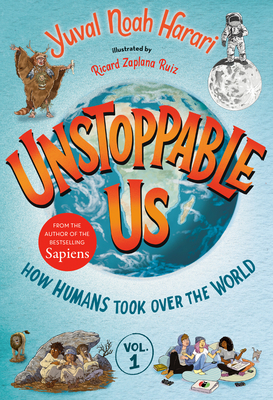
From world-renowned historian and philosopher Yuval Noah Harari, the New York Times bestselling author of Sapiens, comes an exciting, brand-new illustrated book for middle-grade readers that looks at the early history of humankind. Even though we'll never outrun a hungry lion or outswim an angry shark, humans are pretty impressive--and we're the most dominant species on the planet. So how exactly did we become "unstoppable"?The answer to that is one of the strangest tales you'll ever hear. And it's a true story.From learning to make fire and using the stars as guides to cooking meals in microwaves and landing on the moon, prepare to uncover the secrets and superpowers of how we evolved from our first appearances millions of years ago.Acclaimed author Yuval Noah Harari has expertly crafted an extraordinary story of how humans learned to not only survive but also thrive on Earth, complete with maps, a timeline, and full-color illustrations that bring his dynamic, unputdownable writing to life.

Nexus: A Brief History of Information Networks from the Stone Age to AI
by Yuval Noah Harari
Rating: 4.1 ⭐
From the author of Sapiens comes the groundbreaking story of how information networks have made, and unmade, our world.For the last 100,000 years, we Sapiens have accumulated enormous power. But despite all our discoveries, inventions, and conquests, we now find ourselves in an existential crisis. The world is on the verge of ecological collapse. Misinformation abounds. And we are rushing headlong into the age of AI—a new information network that threatens to annihilate us. For all that we have accomplished, why are we so self-destructive?Nexus looks through the long lens of human history to consider how the flow of information has shaped us, and our world. Taking us from the Stone Age, through the canonization of the Bible, early modern witch-hunts, Stalinism, Nazism, and the resurgence of populism today, Yuval Noah Harari asks us to consider the complex relationship between information and truth, bureaucracy and mythology, wisdom and power. He explores how different societies and political systems throughout history have wielded information to achieve their goals, for good and ill. And he addresses the urgent choices we face as non-human intelligence threatens our very existence. Information is not the raw material of truth; neither is it a mere weapon. Nexus explores the hopeful middle ground between these extremes, and in doing so, rediscovers our shared humanity.

Selected from the books Sapiens and Homo Deus by Yuval Noah HarariHow did money come to be invented? Why does it now have such significance in our lives? Does it make us happier or unhappier? And what does the future hold for it? With brilliant clarity and insight, Yuval Noah Harari takes the reader on a journey from the very first coins through to 21st century economics and shows us how we are all on the brink of a revolution, whether we like it or not.VINTAGE MINIS: GREAT MINDS. BIG IDEAS. LITTLE BOOKS.A series of short books by the world’s greatest writers on the experiences that make us humanAlso in the Vintage Minis series:Home by Salman RushdieBabies by Anne EnrightEating by Nigella LawsonDrinking by John Cheever

Sapiens and Homo Deus: The E-book Collection: A Brief History of Humankind and A Brief History of Tomorrow
by Yuval Noah Harari
Rating: 4.3 ⭐
Discover humanity’s past and its future in this in this special e-book collection featuring Sapiens—a reading pick of President Barack Obama, Bill Gates, and Mark Zuckerberg—and its acclaimed companion Homo Deus.
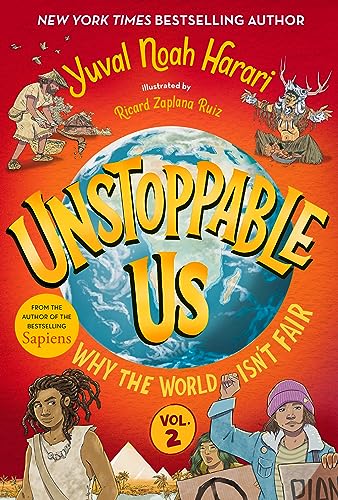
From world-renowned historian and philosopher Yuval Noah Harari, the bestselling author of Sapiens, comes the second volume in the bestselling Unstoppable Us series that traces human development from the Agricultural Revolution to Prehistoric Egypt.Humans may have taken over the world, but what happened next? How did our hunter-gatherer ancestors become village farmers? Why were kingdoms and laws established? How did we go from being the rulers of Earth to the rulers of each other?And why isn’t the world fair?The answer to all of that is one of the strangest tales you’ll ever hear. And it’s a true story!From cultivating land and sharing resources to building pyramids and paying taxes, prepare to discover how humans established civilization, endured the consequences for it, and created history-changing inventions along the way.In Unstoppable Us, Volume 1: How Humans Took Over the World , acclaimed author Yuval Noah Harari explored the early history of humankind. In Volume 2 , he is back with another expertly crafted story of how human society evolved and flourished. His dynamic writing is accompanied by maps, a timeline, and full-color illustrations, making the incredible story of our past fun, engaging, and impossible to put down.

O historiador israelense Yuval Noah Harari argumenta neste artigo que muitas pessoas culpam a globalização pela epidemia do coronavírus e afirmam que o único jeito de evitar novos surtos dessa natureza seria desglobalizar o mundo. Contudo, embora uma quarentena temporária seja essencial para deter esses surtos de doença, o isolacionismo prolongado entre as nações conduzirá ao colapso econômico sem oferecer qualquer proteção real contra doenças infecciosas. Muito pelo contrário. O verdadeiro antídoto para epidemias não é a segregação, mas a cooperação

Please Note That The Following Individual Books As Per Original ISBN Supplied Individually by Publisher and As Per Cover Image In this Listing shall be Dispatched Collectively : Yuval Noah Harari Collection 3 Books Set: Sapiens- Fire gave us power. Farming made us hungry for more. Money gave us purpose. Science made us deadly. This is the thrilling account of our extraordinary history – from insignificant apes to rulers of the world. Homo Deus- Yuval Noah Harari envisions a near future in which we face a new set of challenges. Homo Deus explores the projects, dreams and nightmares that will shape the twenty-first century and beyond – from overcoming death to creating artificial life. 21 Lessons for the 21st Century- Yuval Noah Harari takes us on a thrilling journey through today’s most urgent issues. The golden thread running through his exhilarating new book is the challenge of maintaining our collective and individual focus in the face of constant and disorienting change. Are we still capable of understanding the world we have created?

The author of the international bestseller A Brief History of Humankind looks at covert operations and assassination plots in the medieval period, matching anything to be found in our own era.Alongside the familiar pitched battles, regular sieges, and large-scale manoeuvres, medieval and early modern wars also involved assassination, abduction, treason and sabotage. These undercover operations were aimed chiefly against key individuals, mostly royalty or the leaders of the opposing army, and against key fortified places, including bridges, mills and dams. However, because of their clandestine nature, these deeds of "derring-do" have not been studied in any detail, a major gap which this book fills. It surveys a wide variety of special operations, from the eleventh to the sixteenth century. It then analyzes in greater depth six select and exciting the betrayal of Antioch in 1098; the attempt to rescue King Baldwin II from the dungeon of Khartpert in 1123; the assassination of Conrad of Montferrat in 1192; the attempt to storm Calais in 1350; the "dirty war" waged by the rulers of France and Burgundy in the 1460s and 1470s; and the demolition of the flour mill of Auriol in 1536."A portrait of espionage, covert operations, assassination squads, and the deep penetration of seemingly invulnerable fortresses or security systems matching anything to be found in the war stories of the modern era." MATTHEW BENNETT, SANDHURST.Professor YUVAL NOAH HARARI teaches at the Hebrew University of Jerusalem, and is the author of the international bestseller A Brief History of Humankind.


Waarom maken mensen ruzie met elkaar, of nog waarom voeren ze oorlog? Willen mensen niet liever in vrede samenleven…?In dit boek lees je hoe ruzie en oorlog ontstaan doordat mensen jaloers, bang of hebzuchtig zijn. Het begint allemaal met de verhalen die we elkaar vertellen, verhalen die vaak helemaal niet waar zijn. Bijvoorbeeld over mensen die anders zijn dan wijzelf.In dit boek ontdek je ook hoe iedereen mee kan helpen om ervoor te zorgen dat vijanden vrienden worden en blijven. Ook jij!Yuval Noah Harari werd wereldwijd bekend met zijn boek Sapiens. Volgens veel mensen het belangrijkste boek dat ze ooit lazen. Met kleurenillustraties van Ricard Zaplana Ruiz.

The Ultimate Experience: Battlefield Revelations and the Making of Modern War Culture, 1450-2000
by Yuval Noah Harari
Rating: 3.8 ⭐
For millennia, war was viewed as a supreme test. In the period 1750-1850 war became much more than a test: it became a secular revelation. This new understanding of war as revelation completely transformed Western war culture, revolutionizing politics, the personal experience of war, the status of common soldiers, and the tenets of military theory.

Sapiens: A Graphic History Volume 1 and Volume 2 by Yuval Noah Harari
by Yuval Noah Harari
Rating: 4.3 ⭐
a Graphic History (2 book series) 1. A Graphic History Volume 1 - The Birth of Humankind 2. A Graphic History Volume 2 - The Pillars of Civilization

Renaissance military memoirs studied for what they reveal of contemporary attitudes towards war, selfhood and identity.This is a study of autobiographical writings of Renaissance soldiers. It outlines the ways in which they reflect Renaissance cultural, political and historical consciousness, with a particular focus on conceptions of war, history,selfhood and identity. A vivid picture of Renaissance military life and military mentality emerges, which sheds light on the attitude of Renaissance soldiers both towards contemporary historical developments such as the rise of the modern state, and towards such issues as comradeship, women, honor, violence, and death. Comparison with similar medieval and twentieth-century material highlights the differences in the Renaissance soldier's understanding of war and of human experience.



الإنسان الإله: من الهومو سابينس إلى الهومو ديوس تاريخ مختصر عن المستقبل
by Yuval Noah Harari
Rating: 3.8 ⭐
حصريا من كتب العالم ، شاهد متجرنا لمزيد من الكتب العربية وأحدث الإصدارات في مختلف المجالات ، تصفح الصور لمعرفة المزيد عن الكتاب ، نوفر الكتب الأصلية للحفاظ على حق المؤلف والناشر والقارئ ، هدايا مجانية مع كل كتاب ، ابحث عن كتابتك باللغة العربية ، الرابط المباشر للمتجر


اگر خشنودی به سطح انتظارات بستگی دارد پس دو رُکنِ قدرتمند جوامع مدرن- یعنی رسانههای جمعی و صنعت تبلیغات- ممکن است ناخواسته تاثیر منفی عظیمی بر میزان خشنودیمان داشته باشند. اگر شما 5 هزار سال پیش، یک جوان هجدهساله در یک روستای کوچک بودید احتمالاً خود را فرد خوشتیپی میدانستید چون فقط 50 مرد دیگر در روستای شما بودند که اغلبشان یا پیر و نزار و چروکیده بودند، یا هنوز در مرحلهی کودکی قرار داشتند. اما اگر یک نوجوان امروزی باشید به احتمال زیاد از این نظر احساس کمبود میکنید. حتی اگر دوستانتان در مدرسه چندان خوشتیپ و خوشقیافه نباشند، شما خودتان را با آنها نمیسنجید بلکه خودتان را با ستارگان موسیقی، مدلها و بازیگران سینما که تمام روز در فیسبوک، تلویزیون، و تابلوهای تبلیغاتی میبینید مقایسه میکنید. احساس ناخشنودیِ مردم جهان سوم نیز ممکن است تنها ناشی از فقر، بیماری، فساد و نابسامانی سیاسی نباشد، بلکه از قرارگرفتنِ مستقیم در معرضِ جلوههای پرزرقوبرقِ جوامع غربی نیز مایه بگیرد.


לפני מאה אלף שנים חיו בכדור הארץ לפחות שישה מינים שונים של אדם. לאף אחד מהם לא היתה חשיבות מיוחדת. תפקידם בטבע לא היה גדול מזה של גורילות, גחליליות או סוסוני ים. לפני כשבעים אלף שנה התחולל שינוי מסתורי כלשהו בתודעתו של אחד ממיני האדם הללו — הומו סאפיינס — ודחף אותו להשתלט על העולם כולו. ההיסטוריה של הומו סאפיינס מאז ועד היום היא לעתים מזעזעת, לעתים משעשעת ותמיד מרתקת. מה בדיוק קרה להומו סאפיינס לפני שבעים אלף שנה שדחף אותו להשתלט על העולם? איך ולמה נעלמו כל יתר מיני האדם?קריאה ב"קיצור תולדות האנושות" היא כמו טיול ביער ההיסטוריה האנושית. וחשוב להראות את היער לפני שמכירים כל עץ בנפרד. הספר המרתק והמחכים, מתרכז בעיקר בשלוש נקודות מפנה, שהבדילו את המין האנושי מיתר ברואי העולם: "המהפכה הלשונית, שהחלה לפני כ-70 אלף שנה ויצרה את ההיסטוריה; המהפכה החקלאית, שהחלה לפני כ-10,000 שנה והאיצה את ההיסטוריה; והמהפכה המדעית, שהחלה לפני כ-500 שנה ואולי תביא את ההיסטוריה לקצה".בספר, תוך מתן תשובה לשאלות טריוויאליות לכאורה, כמו: מתי הפך הכלב לידידו הטוב של האדם? מתי המציאו את הכסף ואת האלים הגדולים, ומדוע? ולשאלות טריוויאליות פחות כמו: מדוע סברו כמעט כל החברות האנושיות בהיסטוריה שנשים נחותות מגברים? האם אפשר לקיים חברה אנושית ללא אפליה וללא דעות קדומות? האם אפשר לשלוט ביעילות ולאורך זמן בעמים כבושים? כיצד כבשו המדע, הקפיטליזם ואירופה את העולם? האם יש להיסטוריה כיוון? האם יש צדק בהיסטוריה? האם בני אדם נהיו מאושרים יותר לאורך ההיסטוריה? ומה הסיכוי שיהיו בני אדם בכדור הארץ בעוד מאה שנה? נפרשת בפני הקורא יריעה רחבה הסוקרת את התרבות האנושית למן המפץ הגדול ועד לימינו אנו."קיצור תולדות האנושות", מנסה להציע תשובות על שאלות אלו ואחרות, ולתת סקירת בזק על תהליכי המפתח ונקודות המפנה העיקריות של ההיסטוריה מאז הופעת האדם על בימת העולם ועד ימינו. הספר מזמין אותנו אל מאחורי הקלעים של ההיסטוריה, ומדגיש בפנינו עד כמה משונה היא העלילה, כמה בלתי צפויים הם השחקנים, וכמה מעט אנו יודעים על העבר שלנו."קיצור תולדות האנושות", הוא ארוחת שחיתות (אינטלקטואלית כמובן, במלוא מובן המילה) של היסטוריה, ביולוגיה, פסיכולוגיה, כלכלה, חקלאות ומדע, המצטרפים יחדיו לדיוקן עצמי של החיה האנושית. סגולתו העיקרית של הררי כמספר היסטורי, היא יכולתו הנהדרת לפשט, לתמצת, אך יחד עם זאת להעמיק ולהסביר כל אירוע ורעיון, והתוצאה היא ספר היסטוריה עם סקס אפיל שלא פוגם כהוא זה איכויותיו המחקריות ומפריך את הסברה, הטוענת, כי מחקר אקדמי אינו יכול לענג גם הדיוטות.Please This audiobook is in Hebrew

In this listing, the books vary in Sapiens, Homo Deus, 21 Lessons for 21st Century each measure 7.9 x 5 x 4.5 inches, Nexus A Brief History of Information Networks from the Stone Age to AI) 9.2 x 6 x 1.2 inches.Yuval Noah Harari Collection Set Sapiens, Homo Deus, 21 Lessons for the 21st Century, and A Brief History of Information Networks from the Stone Age to AIEmbark on an intellectual journey through human history, the future of mankind, and the complexities of our modern world with this exclusive Yuval Noah Harari collection. Comprising four of Harari’s most influential works, this set offers a deep exploration of humanity's past, present, and future, with insights into our technological evolution, the global challenges we face, and the possibilities of our existence. Perfect for readers interested in history, philosophy, science, and the future of humanity.Books 1. A Brief History of Humankind2. Homo A Brief History of Tomorrow3. 21 Lessons for the 21st Century4. A Brief History of Information Networks from the Stone Age to AI
„Mi nezaustavljivi 2 – Zasto je svet nepravedan“ je druga knjiga za osnovce iz popularnog ilustrovanog serijala o istoriji covecanstva koji potpisuje Juval Noa Harari. Istorija vrvi od silnih kraljeva, kraljica i vojskovodja. Odakle su se svi oni stvorili? Zasto i neki ljudi zive u palatama i naredjuju svima oko sebe, dok drugi moraju da ciste palate i pokoravaju se naredjenjima? Otkricete kako je naizgled bezazlena promena u nacinu na koji je uzgajana psenica dovela do gladi, kuge i rata. Uvidecete da je uspostavljanje kontrole nad biljkama i zivotinjama navelo ljude na razmisljanje o tome kako da zavladaju drugim ljudima. Saznacete kako je nastalo pismo i zbog cega svi moramo placati porez.

בהשראת רב-המכר של יובל נח הררי קיצור תולדות האנושות, הציג מוזיאון ישראל ב-2015 תערוכה שלקחה את המבקר למסע על פני כמה תחנות מכוננות בהיסטוריה של האנושות באמצעות חפצים מן האוסף האנציקלופדי של המוזיאון. החפצים – ובהם ממצאים ארכאולוגיים מערש הציוויליזציה – הועמדו מול עבודות עכשוויות ויצרו שיח מעורר מחשבה כמו התערוכה, גם כל אחד מפרקי הקטלוג המלווה אותה מייצג נקודת מפנה בתולדות האנושות. כל פרק נפתח בחפץ ואחריו יצירות אמנות המתייחסות אל הנושא בדרך זו או אחרת. ציטוט שסיפק הררי שופך אור על התמורות המהפכניות הללו מהיבט היסטורי, אנתרופולוגי וחברתי. החפצים ויצירות האמנות המוצגים כאן מזמינים פרשנויות חדשות, נותנים ביטוי למחשבות של הררי ומעלים שאלות בדבר המשמעות הסמלית של תרבות חומרית.
