
24 Books Written
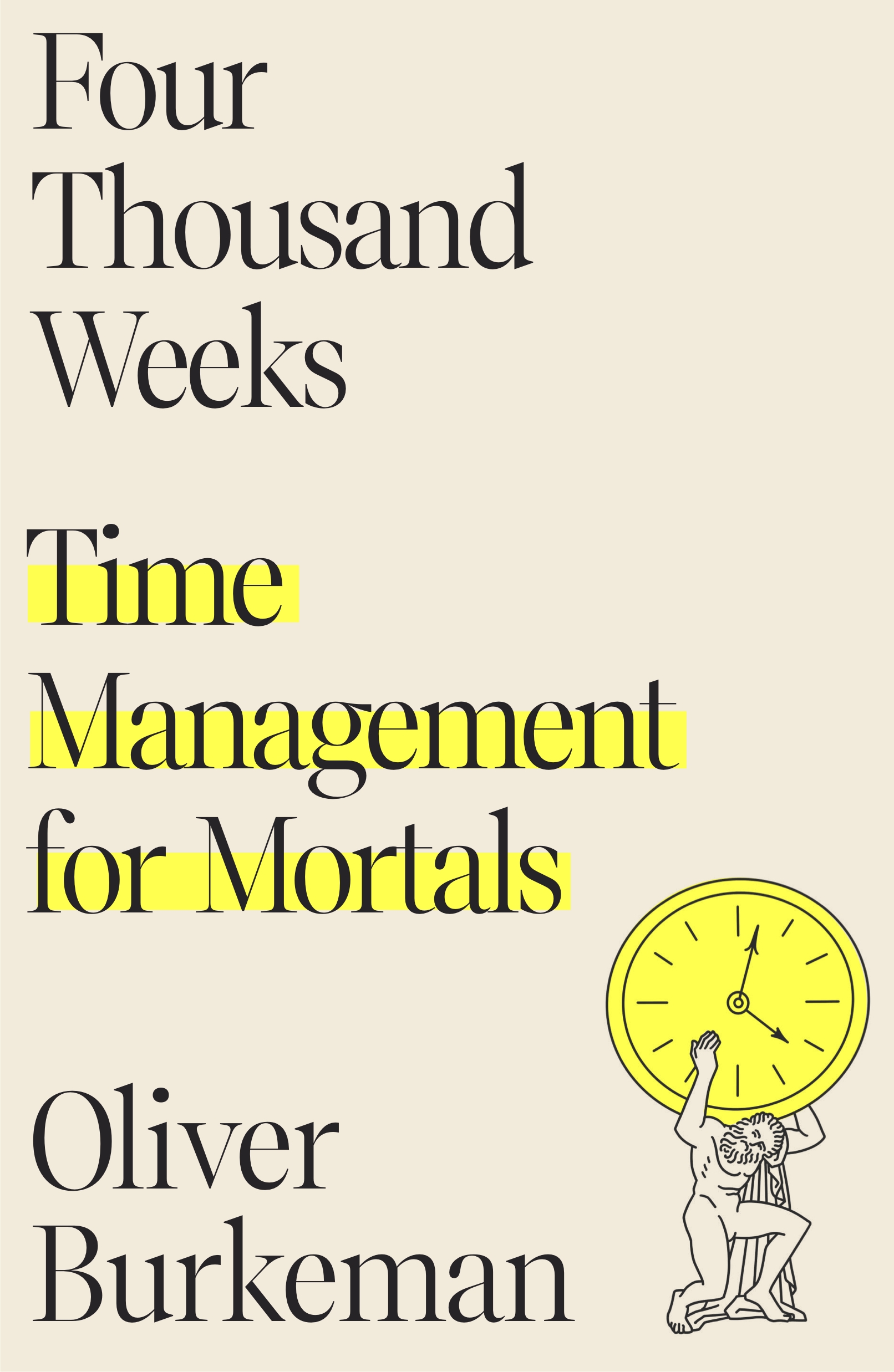
Four Thousand Weeks: Time Management for Mortals
by Oliver Burkeman
Rating: 4.2 ⭐
• 7 recommendations ❤️
The average human lifespan is absurdly, insultingly brief. Assuming you live to be eighty, you have just over four thousand weeks. Nobody needs to be told there isn’t enough time. We’re obsessed with our lengthening to-do lists, overfilled inboxes, work-life balance, and ceaseless battle against distraction; we’re deluged with advice on becoming more productive and efficient and life hacks to optimize our days. But such techniques often end up making things worse. The sense of anxious hurry grows more intense, and still the most meaningful parts of life seem to lie just beyond the horizon. Still, we rarely make the connection between our daily struggles with time and the ultimate time management problem: the challenge of how best to use our four thousand weeks. Drawing on the insights of both ancient and contemporary philosophers, psychologists, and spiritual teachers, Oliver Burkeman delivers an entertaining, humorous, practical, and ultimately profound guide to time and time management. Rejecting the futile modern obsession with “getting everything done,” Four Thousand Weeks introduces readers to tools for constructing a meaningful life by embracing finitude, showing that many of the unhelpful ways we’ve come to think about time aren’t inescapable, unchanging truths, but choices we’ve made as individuals and as a society—and that we could do things differently.

The Antidote: Happiness for People Who Can't Stand Positive Thinking
by Oliver Burkeman
Rating: 4.1 ⭐
• 4 recommendations ❤️
From the author of the New York Times -bestselling Four Thousand Weeks , a totally original approach to success through failure, calm through embracing anxietySelf-help books don't seem to work. Few of the many advantages of modern life seem capable of lifting our collective mood. Wealth―even if you can get it―doesn't necessarily lead to happiness. Romance, family life, and work often bring as much stress as joy. We can't even agree on what "happiness" means. So are we engaged in a futile pursuit? Or are we just going about it the wrong way?Looking both east and west, in bulletins from the past and from far afield, Oliver Burkeman introduces us to an unusual group of people who share a single, surprising way of thinking about life. Whether experimental psychologists, terrorism experts, Buddhists, hardheaded business consultants, Greek philosophers, or modern-day gurus, they argue that in our personal lives, and in society at large, it's our constant effort to be happy that is making us miserable. And that there is an alternative path to happiness and success that involves embracing failure, pessimism, insecurity, and uncertainty―the very things we spend our lives trying to avoid. Thought-provoking, counterintuitive, and ultimately uplifting, The Antidote is the intelligent person's guide to understanding the much-misunderstood idea of happiness.

Meditations for Mortals: Four Weeks to Embrace Your Limitations and Make Time for What Counts
by Oliver Burkeman
Rating: 4.3 ⭐
Meditations for Mortals takes us on a liberating journey towards a more meaningful life – one that begins not with fantasies of the ideal existence, but with the reality in which we actually find ourselves.Addressing the fundamental questions about how to live, it offers a powerful new way to take action on what counts: a guiding philosophy of life Oliver Burkeman calls ‘imperfectionism’. How can we embrace our non-negotiable limitations? Or make good decisions when there’s always too much to do? What if purposeful productivity were often about letting things happen, not making them happen?Reflecting on ideas drawn from philosophy, religion, literature, psychology, and self-help, Burkeman explores practical tools and shifts in perspective. The result is a bracing challenge to much familiar advice, and a profound yet entertaining crash course in living more fully.To be read either as a four-week ‘retreat of the mind’ or devoured in one or two sittings, Meditations for Mortals will be a source of solace and inspiration, and an aid to a saner, freer, and more enchantment-filled life. In anxiety-inducing times, it is rich in truths we have never needed more.

Help!: How to Be Slightly Happier, Slightly More Successful and Get a Bit More Done
by Oliver Burkeman
Rating: 3.9 ⭐
How do you solve the problem of human happiness? It's a subject that has occupied some of the greatest philosophers of all time, from Aristotle to Paul McKenna - but how do we sort the good ideas from the terrible ones? Over the past five years, Oliver Burkeman has travelled to some of the strangest outposts of the 'happiness industry' in an attempt to find out. In Help!, the first collection of his popular Guardian columns, Burkeman presents his findings. It's a witty and thought-provoking exploration that punctures many of self-help's most popular myths, while also offering clear-headed, practical and often counterintuitive advice on a range of subjects, from stress, procrastination and insomnia to wealth, laughter, time management and creativity. It doesn't claim to have solved the problem of human happiness. But it might just bring us one step closer.

To achieve any major life goal, conventional wisdom tells us we must think positively. Picture yourself delivering the perfect presentation and it shall be so; envisage the ideal job interview and it will go well; imagine yourself sprinting first across the finish line and you will romp home as champion. While these strategies sound compelling, they have been shown to backfire. Oliver Burkeman explores why people are often more successful - as are organisations, armies and governments - when they focus on reasons they are likely to fail; asks where happiness comes from, and whether we look for it in the wrong places; explores a phenomenon that has come to be called 'fungineering' – attempts to boost happiness in the workplace; and confronts what many of us see as the most negative of all experiences: death.Oliver Burkeman explores why so many of us spend our working lives feeling like impostors on the brink of being found out. Where do these feelings come from and are we alone? Oliver talks to individuals who've reached the top of their field whether in the arts, business or medicine about how they all feel like impostors from time to time. He'll also examine the latest research that suggests its more prevalent than ever. What's changed about how we live and work today that leaves so many of us with these feelings. And what can be done about them? Is just admitting to one another that we all feel same way enough?

There's a ritual of the modern workplace - one you've heard and most likely indulged in yourself. It's the call and response we go through when you ask a workmate how they're doing: 'Busy!' 'So busy.' It is pretty obviously a boast disguised as a complaint. And our simultaneously grim and half chuckled reply comes as a kind of congratulation: 'Ha, better than the opposite.' When did we start doing that? As if he didn't have enough to do, Oliver Burkeman explores this epidemic of busyness to reveal that it may not be what it at first seems. He asks if we are talking ourselves into feeling overwhelmed with busyness and if our problem with busyness is not that we do not have the time but rather we literally do not have the head space. He questions whether people have become addicted to busy, either because it makes them feel like heroes fighting the odds or because problems can be avoided by never sitting still. Finally, he examines whether the solution to busyness is perhaps not to work harder and organise ourselves but to indulge in a little idleness.Oliver Burkeman is an award-winning feature writer for the Guardian. He writes a popular weekly column on psychology, ‘This Column Will Change Your Life’, and has reported from London, Washington and New York.

Why is everyone so angry nowadays, and what is it doing to the world?In the developed world we live in a blessed epoch, a time and a place where life has never been better. Infant mortality has been all but abolished, we have greater personal choice than ever before, we have access to technology that would have been seen as the stuff of science fiction little more than a decade ago. We are safer and wealthier than at any time in human history. So why are we so damn angry about everything?Online, in the street, in the ballot box, anger is the most dominant public emotion of our age. So what are we so angry about, and how is our anger shaping our world? We know the issues that people seem to be angry about - the iniquities of globalisation, diversity, democratic disconnect - but why has anger become our default emotion when responding to the state of the world - and what is anger doing to the world we live in?Oliver Burkeman is an award-winning feature writer for the Guardian. He writes a popular weekly column on psychology, ‘This Column Will Change Your Life’, and has reported from London, Washington and New York.

Leider nicht unsterblich: Hilfreiche Gedanken für weniger Stress und mehr vom Leben
by Oliver Burkeman
Rating: 4.1 ⭐
Endlich Zeit nehmen für das, was zähltWie können wir die Realität unserer Endlichkeit annehmen? Wie treffen wir Entscheidungen und handeln voller Entschlossenheit, wenn es immer zu viel zu tun gibt und Scheitern unvermeidlich ist? Wie finden wir zu einem tieferen Sinn, wenn wir erkennen, dass das Leben kein Problem ist, das es zu lösen gilt? Mithilfe von inspirierenden Erkenntnissen aus Philosophie, Religion, Literatur, Psychologie und Selbsthilfe hat Oliver Burkeman den perfekten Begleiter in einer Zeit der Turbulenzen und allgegenwärtigen Ängste ein überraschender und unterhaltsamer Crashkurs für ein erfülltes Leben.

Set: Four Thousand Weeks / How to Break Up with Your Phone / Hyperfocus / One Thing
by Oliver Burkeman
Rating: 3.5 ⭐
Please Note That The Following Individual Books As Per Original ISBN and Cover Image In this Listing shall be Dispatched Four Thousand Weeks, How to Break Up with Your Phone, Hyperfocus, One Thing 4 Books Collection Four Thousand Nobody needs telling there isn’t enough time. We’re obsessed with our lengthening to-do lists, our overfilled inboxes, work-life balance, and the ceaseless battle against distraction; and we’re deluged with advice on becoming more productive and efficient, and “life hacks” to optimize our days. But such techniques often end up making things worse. The sense of anxious hurry grows more intense. How to Break Up with Your Is your phone the first thing you reach for in the morning and the last thing you touch before bed? Do you frequently pick it up “just to check,” only to look up forty-five minutes later wondering where the time has gone? Do you say you want to spend less time on your phone—but have no idea how to do so without giving it up completely? In Hyperfocus, Chris Bailey provides profound insights into how we can best manage our attention. He reveals how the brain switches between two mental modes – hyperfocus, our deep concentration mode, and scatterfocus, our creative, reflective mode – and how the surest path to being our most creative and efficient selves at work is to combine them both. One You want fewer distractions and less on your plate. The daily barrage of e-mails, texts, tweets, messages, and meetings distract you and stress you out. The simultaneous demands of work and family are taking a toll. And what's the cost? Second-rate work, missed deadlines, smaller pay cheques, fewer promotions-and lots of stress..

Set: Four Thousand Weeks / Key Person of Influence / 24 Assets / Scale Up Millionaire
by Oliver Burkeman
Rating: 4.5 ⭐
Please Note That The Following Individual Books As Per Original ISBN and Cover Image In this Listing shall be Dispatched Four Thousand Weeks, Key Person of Influence, 24 Assets, Scale Up Millionaire 4 Books Collection Four Thousand Nobody needs telling there isn’t enough time. We’re obsessed with our lengthening to-do lists, our overfilled inboxes, work-life balance, and the ceaseless battle against distraction; and we’re deluged with advice on becoming more productive and efficient, and “life hacks” to optimize our days. But such techniques often end up making things worse. Key Person of FULLY REVISED EDITION with over 10,000 words of new content. Every industry revolves around Key People of Influence Their names come up in conversation. They attract opportunity. They earn more money. Many people think it takes decades of hard work, academic qualifications and a generous measure of good luck to become a Key Person of Influence. 24 In every industry, there are companies that take off. They effortlessly hire talented people, attract loyal customers, create cool products and make lots of money. These companies seem to stand out and scale up quickly with support from investors, partners and the media. Sadly, most companies don’t perform this way. Most entrepreneurs aren’t building anything of value. Scale Up How Would It Feel To Master Selling, Take Control Of Your Business Growth And Become A Scale Up Millionaire? Gordon McAlpine is a self-made, successful entrepreneur who has been there and done it. By starting up, growing and exiting a highly successful global technology company without any funding from investors or the bank, he has personally proved that the organic.

Diciamo le cose come stanno: la durata media della vita umana è scandalosamente breve. Chi tra noi raggiungerà gli 80 anni avrà vissuto poco più di 4000 settimane.Com’è possibile formulare piani ambiziosi in un lasso di tempo così effimero?Lo spettro delle caselle di posta elettronica stracolme, della pila di abiti da stirare e delle vacanze da prenotare aleggia sopra di noi, spingendoci a compilare liste, piani, cartelle per ottimizzare il nostro tempo. Ma così finiamo per dimenticare il nocciolo della questione: come spendere al meglio le nostre giornate.Oliver Burkeman, columnist del Guardian e scrittore bestseller, ripercorre il pensiero di filosofi, monaci, artisti e studiosi in un manuale che mira a liberarci dall’ossessione di «dover far tutto». Un invito pratico e insieme profondo ad abbracciare i nostri limiti e a lasciare andare l’illusione di controllare tutto, riconoscendo la gioia e l’importanza nascosta in ogni piccola scelta intrapresa.

Oliver Burkeman's guides to leading a better life in an age of confusionJournalist and author Oliver Burkeman is well-known for his long-running Guardian column, 'How to Change Your Life', and has written three bestselling books on happiness, productivity and time management. In this radio collection, he looks at four central ills of modernity - busyness, anger, the insistence on positivity and the decline of nuance. Talking to a range of experts, he discovers how these problems became so widespread, and how we can go about tackling them.In Addicted to Busy (first broadcast as Oliver Burkeman is Busy), Oliver explores why we all feel so busy nowadays, asking whether we've talked ourselves into feeling overwhelmed, and if our problem might not be lack of time, but lack of bandwidth. Could the solution lie not in working harder, but in indulging in a little idleness?The Power of Negative Thinking sees Oliver examining the virtues of negativity. Asking why 'thinking yourself happy' can so often have the opposite effect, he probes the ways in which negative visualisation can achieve positive results; considers the phenomenon of hedonic adaptation; ponders whether workplace fun is ever a good idea; and wonders whether confronting our own mortality could make us happier. And in a special one-off episode, The Impostor's Survival Guide, he inquires why so many of us spend our working lives feeling like a fraud. Where do these feelings come from, and what can be done about them?In Why Are We So Angry?, Oliver attempts to understand why we are frequently so full of fury. Explaining how anger gave humans an evolutionary edge, he divulges how companies today profit from our outrage; investigates how anger can be essential for social change; learns how to manage rage in a healthy way; and asks if the future will become ever more angry, or if there's a point where our anger will finally break.Finally, in The Death of Nuance, he looks at how nuance is vanishing from public discourse. He discovers that our brains are wired for snap decisions, and that language can limit our capacity for nuanced thought - depending on how we choose to use it. He also considers how to open minds through moderation; explores how society has become polarised across political divides and reveals how to restore nuance and evolve our thinking in a changing world.Production creditsPresented by Oliver BurkemanProduced by Peter McManusAddicted to Busy: Why Life Has Got So Hectic first broadcast as Oliver Burkeman is Busy, BBC Radio 4, 12-16 September 2016With Maria Popova, Tony Crabbe, Jonathan Gershuny, Brigid Schulte, Stephanie Brown, Dan Ariely, David Drever and his team, Eldar Shafir, Mark Cropley, Andrew Smart, Tom HodgkinsonThe Power of Negative Thinking first broadcast BBC Radio 4, 21-25 November 2016With Gabriele Oettingen, Russ Harris, Jim Trodden, Derrick Jensen, Peter Congdon, Carol Barraclough, Kelsang Zamling, Kiera Lawlor, Ian Bogost, Marcus Coates, Josefine Speyer, Rebecca GreenWhy Are We So Angry? first broadcast BBC Radio 4, 17 October-14 November 2018With Ryan Martin, Aaron Sell, Maya Tamir, Mark Vernon, Charlie Beckett, Molly Crockett, Tobias Rose-Stockwell, Martin Boyce, Brett Ford, Martha C. NussbaumThe Death of Nuance first broadcast BBC Radio 4, 28 December 2020-1 January 2021With Kevin Dutton, Susan Neiman, Tim Lomas, Naomi Baron, Damon Linker, Daniel Ravner, Robert B. Talisse, Poppy Noor, Richard Holloway
Oliver Burkeman's 2-Book Four Thousand Time Management for Mortals Drawing on the insights of both ancient and contemporary philosophers, psychologists, and spiritual teachers, Oliver Burkeman delivers an entertaining, humorous, practical, and ultimately profound guide to time and time management. Rejecting the futile modern fixation on “getting everything done,” Four Thousand Weeks introduces readers to tools for constructing a meaningful life by embracing finitude, showing how many of the unhelpful ways we’ve come to think about time aren’t inescapable, unchanging truths, but choices we’ve made as individuals and as a society―and that we could do things differently. The Happiness for People Who Can't Stand Positive Thinking The Antidote is a series of journeys among people who share a single, surprising way of thinking about life. What they have in common is a hunch about human that it’s our constant effort to eliminate the negative that causes us to feel so anxious, insecure, and unhappy. And that there is an alternative “negative path” to happiness and success that involves embracing the things we spend our lives trying to avoid. It is a subversive, galvanizing message, which turns out to have a long and distinguished philosophical lineage ranging from ancient Roman Stoic philosophers to Buddhists. Oliver Burkeman talks to life coaches paid to make their clients’ lives a living hell, and to maverick security experts such as Bruce Schneier, who contends that the changes we’ve made to airport and aircraft security since the 9/11 attacks have actually made us less safe. And then there are the “backwards” business gurus, who suggest not having any goals at all and not planning for a company’s future.


Set: Four Thousand Weeks / Meditations for Mortals


Set: The Antidote / Four Thousand Weeks / Help!
by Oliver Burkeman
Set: The Antidote / Four Thousand Weeks / Help!
Set: Four Thousand Weeks / Scale Up Millionaire / Secrets of the Millionaire Mind / How Emotions Are Made
by Oliver Burkeman
Please Note That The Following Individual Books As Per Original ISBN and Cover Image In this Listing shall be Dispatched Titles In This Four Thousand Weeks [Hardcover] Scale Up Millionaire Secrets of the Millionaire Mind How Emotions Are Made Four Thousand Weeks [Hardcover], Scale Up Millionaire, Secrets of the Millionaire Mind, How Emotions Are Made 4 Books Collection Four Thousand Weeks [Hardcover]: Nobody needs telling there isn’t enough time. We’re obsessed with our lengthening to-do lists, our overfilled inboxes, work-life balance, and the ceaseless battle against distraction; and we’re deluged with advice on becoming more productive and efficient, and “life hacks” to optimize our days. But such techniques often end up making things worse. The sense of anxious hurry grows more intense. Scale Up How Would It Feel To Master Selling, Take Control Of Your Business Growth And Become A Scale Up Millionaire? Gordon McAlpine is a self-made, successful entrepreneur who has been there and done it. By starting up, growing and exiting a highly successful global technology company without any funding from investors or the bank, he has personally proved that the organic Scale Up of a business really is an achievable dream. Secrets of the Millionaire How Emotions Are The science of emotion is in the midst of a revolution on par with the discovery of relativity in physics and natural selection in biology. Leading the charge is psychologist and neuroscientist Lisa Feldman Barrett, whose research overturns the long-standing belief that emotions are automatic, universal, and hardwired in different brain regions.
Set: Four Thousand Weeks / Business Adventures / The Art of the Good Life / The Little Book of Management Bollocks
by Oliver Burkeman
Please Note That The Following Individual Books As Per Original ISBN and Cover Image In this Listing shall be Dispatched Titles In This Four Thousand Weeks [Hardcover] Business Adventures The Art of the Good Life The Little Book of Management Bollocks Four Thousand Weeks [Hardcover], Business Adventures, The Art of the Good Life, The Little Book of Management Bollocks 4 Books Collection Four Thousand Weeks [Hardcover]: Nobody needs telling there isn’t enough time. We’re obsessed with our lengthening to-do lists, our overfilled inboxes, work-life balance, and the ceaseless battle against distraction; and we’re deluged with advice on becoming more productive and efficient, and “life hacks” to optimize our days. But such techniques often end up making things worse. Business Stories about Wall Street are infused with drama and adventure and reveal the machinations and volatile nature of the world of finance. Longtime New Yorker contributor John Brooks’s insightful reportage is so full of personality and critical detail that whether he is looking at the astounding market. The Art of the Good Since antiquity, people have been asking themselves what it means to live a good life. How should I live? What constitutes a good life? What's the role of fate? What's the role of money? Is leading a good life a question of mindset, or is it more about reaching your goals? The Little Book of Management Showing the same incisive and outrageous wit as in his previous books, where he first took on the self-help craze then New Labour's addiction to spin, Alistair Beaton now tackles the management gurus. Read this book and you will be transformed overnight into a successful modern manager.

Oliver Burkeman: Epidemics of Modern Life: A BBC Radio 4 Collection
by Oliver Burkeman
Oliver Burkeman's guides to leading a better life in an age of confusion.Journalist and author Oliver Burkeman is well-known for his long-running Guardian column, 'How to Change Your Life', and has written three best-selling books on happiness, productivity and time management. In this radio collection, he looks at four central ills of modernity—busyness, anger, the insistence on positivity and the decline of nuance. Talking to a range of experts, he discovers how these problems became so widespread, and how we can go about tackling them.In Addicted to Busy (first broadcast as Oliver Burkeman Is Busy), Oliver explores why we all feel so busy nowadays, asking whether we've talked ourselves into feeling overwhelmed, and if our problem might not be lack of time, but lack of bandwidth. Could the solution lie not in working harder, but in indulging in a little idleness? The Power of Negative Thinking sees Oliver examining the virtues of negativity. Asking why 'thinking yourself happy' can so often have the opposite effect, he probes the ways in which negative visualisation can achieve positive results, considers the phenomenon of hedonic adaptation; ponders whether workplace fun is ever a good idea and wonders whether confronting our own mortality could make us happier. And in a special one-off episode, The Impostor's Survival Guide, he inquires why so many of us spend our working lives feeling like a fraud. Where do these feelings come from, and what can be done about them?In Why Are We So Angry? , Oliver attempts to understand why we are frequently so full of fury. Explaining how anger gave humans an evolutionary edge, he divulges how companies today profit from our outrage, investigates how anger can be essential for social change, learns how to manage rage in a healthy way and asks if the future will become ever more angry, or if there's a point where our anger will finally break.Finally, in The Death of Nuance , he looks at how nuance is vanishing from public discourse. He discovers that our brains are wired for snap decisions, and that language can limit our capacity for nuanced thought—depending on how we choose to use it. He also considers how to open minds through moderation, explores how society has become polarised across political divides and reveals how to restore nuance and evolve our thinking in a changing world.Production Presented by Oliver Burkeman.Produced by Peter McManus. Addicted to Why Life Has Got So Hectic first broadcast as Oliver Burkeman Is Busy , BBC Radio 4, 12th - 16th September 2016.With Maria Popova, Tony Crabbe, Jonathan Gershuny, Brigid Schulte, Stephanie Brown, Dan Ariely, David Drever and his team, Eldar Shafir, Mark Cropley, Andrew Smart, Tom Hodgkinson. The Power of Negative Thinking first broadcast BBC Radio 4, 21st - 25th November 2016.With Gabriele Oettingen, Russ Harris, Jim Trodden, Derrick Jensen, Peter Congdon, Carol Barraclough, Kelsang Zamling, Kiera Lawlor, Ian Bogost, Marcus Coates, Josefine Speyer, Rebecca Green. Why Are We So Angry? first broadcast BBC Radio 4, 17th October - 14th November 2018.With Ryan Martin, Aaron Sell, Maya Tamir, Mark Vernon, Charlie Beckett, Molly Crockett, Tobias Rose-Stockwell, Martin Boyce, Brett Ford, Martha C. Nussbaum. The Death of Nuance first broadcast BBC Radio 4, 28th December 2020 - 1st January 2021.With Kevin Dutton, Susan Neiman, Tim Lomas, Naomi Baron, Damon Linker, Daniel Ravner, Robert B. Talisse, Poppy Noor, Richard Holloway.

Four Thousand Weeks
by Oliver Burkeman
क्या हो अगर आप हर काम करने की कोशिश करना छोड़ दें? हम अपनी लंबी होती जा रही कार्य-सूची, भरे हुए इनबॉक्स और कम होती जा रही ध्यान अवधि के साथ पूरी तरह से व्यस्त हो चुके हैं। लेकिन मानसिक शांति पाने के लिए हमें समय प्रबंधन की बड़ी समस्या से निपटना होगा : यह सवाल कि पृथ्वी पर हमें मिले सीमित समय, औसतन लगभग चार हजार सप्ताह, का सबसे अच्छा उपयोग कैसे किया जाए। ऑलिवर बर्कमैन की यह किताब एक उत्साहजनक, मनमोहक और गहरी यथार्थवादी खोज है कि हम अपनी सीमाओं को नकारने के बजाय उन्हें अपनाकर, अपने सीमित जीवन को कैसे अधिक अर्थपूर्ण बना सकते हैं। 'यह किताब अद्भुत है।' द टाइम्स

28 JOURS pour lâcher prise et retrouver l'essentiel
by Oliver Burkeman

Meditações para mortais
by Oliver Burkeman
Um mapa para uma viagem libertadora, rumo a uma vida mais plena - uma caminhada que começa não num lugar de fantasia, ou onde achamos que deveríamos estar, mas onde nos encontramos, de facto.Do autor de 4000 semanas - Gestão do tempo para mortaisTentando responder à pergunta fundamental sobre como deve a vida ser vivida, Meditações para mortais oferece-nos uma nova e poderosa via para recuperarmos a capacidade de agir sobre o que realmente uma filosofia a que Oliver Burkeman chama "imperfeccionismo". Um guia para enfrentar os desafios que habitam o nosso quotidiano, como a finitude do tempo de que dispomos, a tentação da distração, a armadilha do perfeccionismo.Como podemos, então, abraçar as nossas limitações não negociáveis? Como nos despimos da ilusão de que só podemos desfrutar quando temos tudo sob controlo?Bebendo da filosofia, religião, literatura, psicologia e desenvolvimento pessoal, Burkeman explora uma combinação de ferramentas práticas e pequenas mudanças que desafiam muito do que se ouve e lê hoje em dia, e que resultam num curso intensivo para aprender a viver melhor a vida que temos.Para ser lido como um retiro da mente em 4 semanas ou devorado de uma assentada, Meditações para mortais é uma fonte de consolo e inspiração, uma ajuda para uma vida mais sã, mais livre e mais encantatória.Best-Seller do Sunday TimesNomeado para o Goodreads Choice Awards 2025«Meditações para mortais responde de forma útil a quando se deve deve fazê-lo quando os modelos de produtividade começam a revelar-se restritivos, sufocantes e irrealistas. Só assim conseguiremos realmente aproveitar esta tão curta existência.» Joshua Rothman, The New Yorker«Pare de negar a realidade do apuro em que se encontra e aprenda a brincar nas ruínas da sua vida.» Elaine Moore, Financial Times«Libertador e humano.» Kirkus Reviews «Oliver Burkeman consegue dar-nos os conselhos de produtividade mais inesperados exatamente quando mais precisamos dele.» Mark Manson, autor do bestseller A arte subtil de saber dizer que se f*da e Está tudo f*dido «Ponderado, lúcido e útil. Burkeman não oferece atalhos para a vida. Antes, oferece reflexões que têm o poder de nos orientar para uma mudança de atitude.» James McConnachie, The Times
