
James P. Carse
James P. Carse taught at New York University for thirty years as the Professor of the History and Literature of Religion, and Director of the Religious Studies Program. He retired from the University in 1996. He is a writer and an artist, and lives in New York City and Massachusetts. James Carse was the Director of Religious Studies at New York University for thirty years. He was a member of the Department of Middle Eastern Studies, and the recipient of numerous teaching awards. He is retired and living in New York City.
11 Books Written
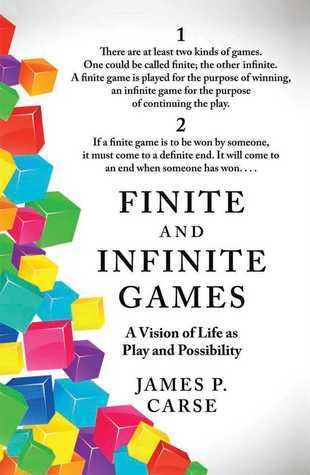
“There are at least two kinds of games,” states James P. Carse as he begins this extraordinary book. “One could be called finite; the other infinite. A finite game is played for the purpose of winning, an infinite game for the purpose of continuing the play.”Finite games are the familiar contests of everyday life; they are played in order to be won, which is when they end. But infinite games are more mysterious. Their object is not winning, but ensuring the continuation of play. The rules may change, the boundaries may change, even the participants may change—as long as the game is never allowed to come to an end.What are infinite games? How do they affect the ways we play our finite games? What are we doing when we play—finitely or infinitely? And how can infinite games affect the ways in which we live our lives?Carse explores these questions with stunning elegance, teasing out of his distinctions a universe of observation and insight, noting where and why and how we play, finitely and infinitely. He surveys our world—from the finite games of the playing field and playing board to the infinite games found in culture and religion—leaving all we think we know illuminated and transformed. Along the way, Carse finds new ways of understanding everything, from how an actress portrays a role to how we engage in sex, from the nature of evil to the nature of science. Finite games, he shows, may offer wealth and status, power and glory, but infinite games offer something far more subtle and far grander.Carse has written a book rich in insight and aphorism. Already an international literary event, Finite and Infinite Games is certain to be argued about and celebrated for years to come. Reading it is the first step in learning to play the infinite game.

Breakfast at the Victory: The Mysticism of Ordinary Experience
by James P. Carse
Rating: 4.0 ⭐
• 2 recommendations ❤️
"This was true mystical vision. This I could never have anticipated. But I knew that we were both on the same galactic journey into the great void that contains us all. I was standing before a boundlessness that could swallow the stars in a heartbeat."--from Breakfast at the Victory

A provocative, insightful explanation for why it is that belief—not religion—keeps us in a perilous state of willful ignoranceIn The Religious Case Against Belief, James Carse identifies the twenty-first century’s most forbidding villain: belief. In distinguishing religions from belief systems, Carse works to reveal how belief—with its restriction on thought and encouragement of hostility—has corrupted religion and spawned violence the world over. Galileo, Martin Luther, Abraham Lincoln, and Jesus Christ—using their stories Carse creates his own brand of parable and establishes a new vocabulary with which to study conflict in the modern world. The Religious Case Against Belief introduces three kinds of ignorance: ordinary ignorance (a mundane lack of knowledge, such as ignorance of tomorrow’s weather or the reason why your stove is malfunctioning), willful ignorance (an intentional avoidance of accessible knowledge), and finally higher ignorance (a learned understanding that no matter how many truths we may accumulate, our knowledge falls infinitely short of the truth). While ordinary ignorance is common to all people, Carse associates the strongest manifestation of willful ignorance with the most fervent (and dangerous) of believers. He points to the historic conflict between Martin Luther and Holy Roman Emperor Charles V both to reveal this seemingly religious collision as a clash of belief and to identify belief ’s inherently destructive characteristics. From Luther to the contemporary Christian right, we learn that believers construct identity by erecting boundaries and by fostering aggression between the believer and the other. This is why belief systems choose—at great cost—to remain locked in bloody conflict rather than to engage in dialogue, recognizing the great deal they have in common. This is willful ignorance. In fierce contrast to willful ignorance, higher ignorance is an acquired state enhanced by religion. Those traveling the path to higher ignorance recognize faith teachings (such as the Bible) as poetry intended to promote contemplation, interpretation, and a sense of wonder. For evidence of religion’s deeply embedded rejection of singular truth and its acceptance of diverse dialogue, Carse looks to the many faces of Jesus presented in the books of the Bible and elsewhere. Uncontaminated by belief systems, religion rejects the imagined boundaries that falsely divide people and ideas, working to expand horizons. The Religious Case Against Belief exposes a world in which religion and belief have become erroneously (and terrifyingly) conflated. In strengthening their association with powerful belief systems, religions have departed from their essential purpose as agencies of higher ignorance. Carse uses his wideranging understanding of religion to find a viable and vital path away from what he calls the Age of Faith II and toward open-ended global dialogue. Far from abstract philosophical musing, The Religious Case Against Belief is required reading for our age.

Written from the perspective of a woman disciple, a thought-provoking, evocative Gospel offers a vivid portrait of a very human Jesus Christ, one with a sense of humor, who rejects conventional pieties and relates stories imbued with the profound mystery and relevancy of his teachings. $50,000 ad/promo. Tour.

Essays discuss the presence of God, the meaning of prayer, the relationship between God and man, and the nature of gifts

الموت والوجود: دراسة لتصورات الفناء الإنسانى فى التراث الدينى والفلسفى العالمى
by James P. Carse
Rating: 3.8 ⭐
دراسة لتصورات الفناء الإنسانى فى التراث الدينى والفلسفى العالمىيدور الكتاب حول حقيقة لا خلاف عليها في اى تراث أو فكر وهى حقيقة مايسببه الموت من حزن لمن يعايش تجربة موت الاخرين: إذ ليس لأحد منا ان يعايش تجربة موته. إننا قد نمتلئ انشغالاً بحتمية فنائنا البشري، وقد يؤثر هذا على سلوكنا في الحاضر وعلى نظرتنا للمستقبل، وقد يجردنا من الاحساس بجدوى الحياة ومشروعاتها الفكرية والعلمية، ولكن حزننا على فنائنا البشري هو غير حزننا على موت من نحب ونعرف من أحبائنا وأقربائنا ومعارفنا ومن نعز من أفراد إخواننا في البشرية.

Death and A Book of Readings and Sources (View amazon detail page) 0155172115

The Wicked Blade
by James P. Carse

The Finite and the Infinite
by James P. Carse