
Christopher W. Alexander
Christopher Wolfgang John Alexander was an Austrian-born British-American architect and design theorist. He was an emeritus professor at the University of California, Berkeley. His theories about the nature of human-centered design have affected fields beyond architecture, including urban design, software, and sociology. Alexander designed and personally built over 100 buildings, both as an architect and a general contractor. In software, Alexander is regarded as the father of the pattern language movement. The first wiki—the technology behind Wikipedia—led directly from Alexander's work, according to its creator, Ward Cunningham. Alexander's work has also influenced the development of agile software development. In architecture, Alexander's work is used by a number of different contemporary architectural communities of practice, including the New Urbanist movement, to help people to reclaim control over their own built environment. However, Alexander was controversial among some mainstream architects and critics, in part because his work was often harshly critical of much of contemporary architectural theory and practice.
23 Books Written
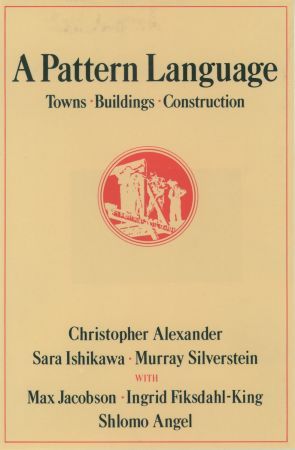
A Pattern Language: Towns, Buildings, Construction
by Christopher W. Alexander
Rating: 4.4 ⭐
• 11 recommendations ❤️
At the core of A Pattern Language is the philosophy that in designing their environments people always rely on certain ‘languages,’ which, like the languages we speak, allow them to articulate and communicate an infinite variety of designs within a formal system which gives them coherence.This book provides a language of this kind. It will enable making a design for almost any kind of building, or any part of the built environment. ‘Patterns,’ the units of this language, are answers to design problems: how high should a window sill be?; how many stories should a building have?; how much space in a neighborhood should be devoted to grass and trees?More than 250 of the patterns in this language are outlined, each consisting of a problem statement, a discussion of the problem with an illustration, and a solution. As the authors say in their introduction, many of the patterns are archetypal, so deeply rooted in the nature of things that it seems likely that they will be a part of human nature and human action as much in five hundred years as they are today.A Pattern Language is related to Alexander’s other works in the Center for Environmental Structure series: The Timeless Way of Building (introductory volume) and The Oregon Experiment.

In The Timeless Way of Building Christopher Alexander presents a new theory of architecture, building, and planning which has at its core that age-old process by which the people of a society have always pulled the order of their world from their own being.He writes, “There is one timeless way of building. It is thousands of years old, and the same today as it has always been. The great traditional buildings of the past, the villages and tents and temples in which man feels at home, have always been made by people who were very close to the center of this way. It is not possible to make great buildings, or great towns, beautiful places, places where you feel yourself, places where you feel alive, except by following this way. And, as you will see, this way will lead anyone who looks for it to buildings which are themselves as ancient in their form as the trees and hills, and as our faces are.”The Timeless Way of Building is the introductory volume to Alexander’s other works, A Pattern Language and The Oregon Experiment, in the Center for Environmental Structure series.
“These notes are about the process of the process of inventing things which display new physical order, organization, form, in response to function.” This book, opening with these words, presents an entirely new theory of the process of design.In the first part of the book, Christopher Alexander discusses the process by which a form is adapted to the context of human needs and demands that has called it into being. He shows that such an adaptive process will be successful only if it proceeds piecemeal instead of all at once. It is for this reason that forms from traditional un-self-conscious cultures, molded not by designers but by the slow pattern of changes within tradition, are so beautifully organized and adapted. When the designer, in our own self-conscious culture, is called on to create a form that is adapted to its context he is unsuccessful, because the preconceived categories out of which he builds his picture of the problem do not correspond to the inherent components of the problem, and therefore lead only to the arbitrariness, willfulness, and lack of understanding which plague the design of modern buildings and modern cities.In the second part, Mr. Alexander presents a method by which the designer may bring his full creative imagination into play, and yet avoid the traps of irrelevant preconception. He shows that, whenever a problem is stated, it is possible to ignore existing concepts and to create new concepts, out of the structure of the problem itself, which do correspond correctly to what he calls the subsystems of the adaptive process. By treating each of these subsystems as a separate subproblem, the designer can translate the new concepts into form. The form, because of the process, will be well-adapted to its context, non-arbitrary, and correct.The mathematics underlying this method, based mainly on set theory, is fully developed in a long appendix. Another appendix demonstrates the application of the method to the design of an Indian village.

In Book One of this four-volume work, Alexander describes a scientific view of the world in which all space-matter has perceptible degrees of life, and establishes this understanding of living structures as an intellectual basis for a new architecture.He identifies fifteen geometric properties which tend to accompany the presence of life in nature, and also in the buildings and cities we make. These properties are seen over and over in nature and in the cities and streets of the past, but they have almost disappeared in the impersonal developments and buildings of the last hundred years.This book shows that living structures depend on features which make a close connection with the human self, and that only living structure has the capacity to support human well-being.

The venerable cities of the past, such as Venice or Amsterdam, convey a feeling of wholeness, an organic unity that surfaces in every detail, large and small, in restaurants, shops, public gardens, even in balconies and ornaments. But this sense of wholeness is lacking in modern urban design, with architects absorbed in problems of individual structures, and city planners preoccupied with local ordinances, it is almost impossible to achieve. In this groundbreaking volume, architect and planner Christopher Alexander presents a new theory of urban design which attempts to recapture the process by which cities develop organically. To discover the kinds of laws needed to create a growing whole in a city, Alexander proposes here a preliminary set of seven rules which embody the process at a practical level and which are consistent with the day-to-day demands of urban development. He then puts these rules to the test, setting out with a number of his graduate students to simulate the urban redesign of a high-density part of San Francisco, initiating a project that encompassed some ninety different design problems, including warehouses, hotels, fishing piers, a music hall, and a public square. This extensive experiment is documented project by project, with detailed discussion of how each project satisfied the seven rules, accompanied by floorplans, elevations, street grids, axonometric diagrams and photographs of the scaled-down model which clearly illustrate the discussion. A New Theory of Urban Design provides an entirely new theoretical framework for the discussion of urban problems, one that goes far to remedy the defects which cities have today.
Christopher Alexander's masterwork, the result of 27 years of research, considers three vital perspectives: a scientific perspective; a perspective based on beauty and grace; a commonsense perspective based on our intuitions and everyday life.

After a ten-year silence, Christopher Alexander and his colleagues at the Center for Environmental Structure are not publishing a major statement in the form of three works which will, in their words, "lay the basis for an entirely new approach to architecture, building, and planning, which will, we hope, replace existing ideas and practices entirely." The three books are The Timeless Way of Building, A Pattern Language, and The Oregon Experiment. At the core of these books is the idea that people should design for themselves their own houses, streets, and communities. This idea may be radical (it implies a radical transformation fo the architectural profession) but it comes simply from the observation that most of the wonderful places of the world were not made by architects but by the people. This book is the master plan for the University of Oregon, and is now being implemented at that university; but it shows at the same time how any community the size of a university or small town might go about designing its own future environment-with all members of the community participating personally. It is a concrete example at the Center's theories in practice, showing in simple detail, with numerous illustrations, how to implement six guiding principles: organic order, participation, piecemeal growth, patterns, diagnosis, and coordination.

Book Four presents a new cosmology that arises from the careful study of architecture and art, and above all from the practice of the arts. It is a cosmology which places the I, our experience of self, as the linking stem that unites each individual with the whole, connecting consciousness and matter.

In Book 3 of this four-volume work, Alexander presents hundreds of his own buildings and those of other contemporaries who have used methods consistent with the theory of living process.Nearly seven hundred pages of projects, built and planned in many countries over a thirty-year period, illustrate the impact of living process on the world. The book provides the reader with an intuitive feel for the kind of world, its style and geometry, which is needed to generate living structure in the world and its communities, together with its ecological and natural character.The projects include public buildings, neighborhoods, housing built by people for themselves, public urban space, rooms, gardens, ornament, colors, details of construction and construction innovation. The many buildings shown, and the methods needed to design and build these buildings, define living structure in a practical way that can be understood and copied.". . . Alexander's approach presents a fundamental challenge to us and our style-obsessed age. It suggests that a beautiful form can come about only through a process that is meaningful to people. It also implies that certain types of processes, regardless of when they occur or who does them, can lead to certain types of forms."-Thomas Fisher, former editor of Progressive Architecture.Christopher Alexander is a fellow of the American Academy of Arts and Sciences, architect, builder, and author of many books and technical papers. He is the winner of the first medal for research ever awarded by the American Institute of Architects, and Emeritus Professor of Architecture at the University of California, Berkeley, where he taught for 40 years.

The Battle for the Life and Beauty of the Earth: A Struggle Between Two World-Systems
by Christopher W. Alexander
Rating: 4.3 ⭐
The purpose of all architecture, writes Christopher Alexander, is to encourage and support life-giving activity, dreams, and playfulness. But in recent decades, while our buildings are technically better--more sturdy, more waterproof, more energy efficient-- they have also became progressively more sterile, rarely providing the kind of environment in which people are emotionally nourished, genuinely happy, and deeply contented. Using the example of his building of the Eishin Campus in Japan, Christopher Alexander and his collaborators reveal an ongoing dispute between two fundamentally different ways of shaping our world. One system places emphasis on subtleties, on finesse, on the structure of adaptation that makes each tiny part fit into the larger context. The other system is concerned with efficiency, with money, power and control, stressing the more gross aspects of size, speed, and profit. This second, "business-as-usual" system, Alexander argues, is incapable of creating the kind of environment that is able to genuinely support the emotional, whole-making side of human life. To confront this sterile system, the book presents a new architecture that we--both as a world-wide civilization, and as individual people and cultures--can create, using new processes that allow us to build places of human energy and beauty. The book outlines nine ways of working, each one fully dedicated to wholeness, and able to support day-to-day activities that will make planning, design and construction possible in an entirely new way, and in more humane ways. An innovative thinker about building techniques and planning, Christopher Alexander has attracted a devoted following. Here he introduces a way of building that includes the best current practices, enriched by a range of new processes that support the houses, communities, and health of all who inhabit the Earth.

As an innovative thinker about building and planning, Christopher Alexander has attracted a devoted following. His seminal books--The Timeless Way of Building, A Pattern Language, and The Oregon Experiment--defined a radical and fundamently new process of environmental design. Alexander now gives us the latest book in his series--a book that puts his theories to the test and shows what sort of production system can create the kind of environment he has envisioned. The Production of Houses centers around a group of buildings which Alexander and his associates built in 1976 in northern Mexico. Each house is different and the book explains how each family helped to lay out and construct its own home according to the family's own needs and in the framework of the pattern language. Numerous diagrams and tables as well as a variety of anecdotes make the day-today process clear. The Mexican project, however, is only the starting point for a comprehensive theory of housing production. The Production of Houses describes seven principles which apply to any system of production in any part of the world for housing of any cost in any climate or culture or at any density. In the last part of the book, "The Shift of Paradigm," Alexander describes, in detail, the devastating nature of the revolution in world view which is contained in his proposal for housing construction, and its overall implications for deep-seated cultural change.

In 1965, the architect and design theorist Christopher Alexander published a landmark theoretical critique of modern urban design, and by extension, modern design in general. His critique was different from others of the day in that it was not based on a social or political argument, but on a structural analysis, rooted in then-emerging insights from the fields of mathematics and cognition. Here, published again on its fiftieth anniversary, is Alexander’s classic text, together with new interpretive commentaries and discussions by leading theorists and practitioners. This volume is destined to become an invaluable resource for a new generation of students and practitioners. “One of the classic references in the literature of the built environment and associated fields.” — Resource for Urban Design Information (rudi.net) “At a time of increasing concern over the adequacy of design methods, A City is not a Tree broke open and reoriented the debate.” — Charles Jencks and Karl Kropf

The Nature of Order: An Essay on the Art of Building and the Nature of the Universe
by Christopher W. Alexander
Rating: 4.5 ⭐
Christopher Alexander has been a legendary figure in architecture for nearly 40 years. World-renowned for his revolutionary theories on the art of building, Alexander now caps his lifetime of profoundly original thinking about the meaning and purpose of architecture with this magnum opus, The Nature of Order . In these four books, Alexander constructs an entirely new cosmology, grounded in the latest scientific knowledge, and integrating the perennial wisdom of the centrality of human experience and values. In this way, Alexander reunifies for the field of architecture the 400-year old split of Body (structure) and Soul (feeling).Alexander explores the properties of life itself, highlighting a set of well-defined structures present in all order and in all life from micro-organisms and mountain ranges to good houses and vibrant communities.Taken as a whole, the four books create a sweeping new conception of the nature of things which is both objective and structural (hence part of science) and also personal (in that it shows how and why things have the power to touch the human heart). A step has been taken, through which these two domains the domain of geometrical structure and the feeling it creates kept separate during four centuries of scientific though from 1600 to 2000, have finally been united.The Nature of Order constitutes the backbone of Building Ecologic Design Construction Process , an initiative aimed at radically reforming architecture education, with the emphasis of making as a way to access a transformative vision of the world. The 15 fundamental properties of life guide our work and have given us much more than a set of solutions. The Nature of Order has given us the framework in which we can search and build up our own solutions.In order to be authentically sustainable, buildings and places have to be cared for and loved over generations. Beautiful buildings and places are more likely to be loved, and they become more beautiful, and loved, through the attention given to them over time. Beauty is therefore, not a luxury, or an option, it includes and transcends technological innovation, and is a necessary requirement for a truly sustainable culture.

A Foreshadowing of 21st Century Art: The Color and Geometry of Very Early Turkish Carpets
by Christopher W. Alexander
Rating: 4.4 ⭐
Christopher Alexander owns what many now believe to be the finest collection of early Turkish carpets in the western world, with perhaps half being the only specimens of their kind anywhere. In this richly illustrated, oversized volume--featuring four hundred illustrations, eighty in full color--Alexander takes readers on an engaging tour of his fabulous collection. Readers will see a 13th-century Seljuk Carpet with Dragons, a 15th-century Animal Carpet, a scarlet-niched Transylvanian Prayer Rug, a turquoise Lattice Carpet from Alcaraz, a 16th-century blue Medallion Keyhole Design from Bergama, a rare 16th-century White Field Bird Carpet, the dazzling color and brilliant geometry of a 15th-century Karapinar with Three Gulls, and perhaps Alexander's favorite, a 15th-century Star Karapinar with Flowers (whose designs he describes as "the high point of all Sufi art, the state of liberation, in which the artist is so free, that he is able to be completely natural"). In addition, Alexander elaborates on his theory that these carpets teach structure to artists and architects through the beauty of their form. This lavishly produced volume makes an important contribution to the world of rug scholarship. Equally important, Alexander's thoughtful meditations on these pieces will fascinate the many architects, artists, and planners who follow his work.
The Linz Cafe / Das Linz Cafe (Center for Environmental Structure Series)
by Christopher W. Alexander
Rating: 4.1 ⭐
English, German

In 1982, more than four hundred years after she mysteriously sank off the English coastline, Henry VIII's great warship the Mary Rose was raised to the surface. The extraordinarily intact ship was towed to a dry dock in the beautiful and historic harbor at Portsmouth, where she lies today, an enduring symbol of Britain's seafaring past. In January 1991, the internationally acclaimed architect Christopher Alexander was commissioned by the Mary Rose Trust to design a museum to house this national treasure. Grounded in his techniques and principles for a new way of building that have earned Alexander a worldwide following over the last two decades, this book explains Alexander's vision of a permanent home for the Mary Rose. Spanning from the first inception of its design to finished models and drawings, it includes detailed, step by step explanations of the way this vision could be realized in structure and construction. Emphasizing the unification of design and construction, with hands on construction management by the architect, it provides a model for the way a large and highly technical building can be designed with proper importance given to human comfort and human feeling, while using the most advanced and sophisticated technology. Published here for the first time are the revolutionary construction management contracts for construction developed by Alexander and his associate Gary Black and their colleagues at the Center for Environmental Structure. Also of keen interest to professionals are the more than 100 drawings and photographs of the distinctive lattice arches that were first introduced by Alexander and Black in a smaller building in San Jose, California, and are a central part of Alexander's vision for the finished museum. To the half a million visitors who flock to see the Mary Rose each year, she is an opportunity to touch the past. To Alexander, the great ship is a touchstone for the architecture of the future. His vision of a new age in which respect for nature and the integrity of the past go hand in hand with advances in technology will inspire architects, engineers, builders, museum professionals, and anyone who cares about the design and construction of the great public buildings of the next century. Richly illustrated, and offering a wealth of conceptual, technical, and practical information, this volume is a most remarkable reference and guide.

The Nature of Order, Book 1: The Phenomenon of Life: An Essay on the Art of Building and The Nature of the Universe
by Christopher W. Alexander
Rating: 4.2 ⭐
Christopher Alexander's series of ground-breaking books – including A Pattern Language and The Timeless Way of Building – have pointed to fundamental truths of the way we build, revealing what gives life and beauty and true functionality to our buildings and towns. Now, in The Nature of Order, Alexander explores the properties of life itself, highlighting a set of well-defined structures present in all order – and in all life – from micro-organisms and mountain ranges to good houses and vibrant communities.In The Phenomenon of Life, the first volume in this four volume masterwork, Alexander proposes a scientific view of the world in which all space-matter has perceptible degrees of life and sets this understanding of order as an intellectual basis for a new architecture. With this view as a foundation, we can ask precise questions about what must be done to create more life in our world – whether in a room...a humble doorknob...a neighbourhood...or even in a vast region.He introduces the concept of living structure, basing it upon his theories of centers and of wholeness, and defines the fifteen properties from which, according t his observations, all wholeness is built. Alexander argues that living structure is at once both personal and structural.Taken as a whole, the four books create a sweeping new conception of the nature of things which is both objective and structural (hence part of science) – and also personal (in that it shows how and why things have the power to touch the human heart). A step has been taken, through which these two domains – the domain of geometrical structure and the feeling it creates – kept separate during four centuries of scientific though from 1600 to 2000, have finally been united.


The Master Plan and Process for Harbor Peak: A Model Creation Process for 21st Century Cities
by Christopher W. Alexander

The Phenomenon of Life: The Nature of Order, Book 1 by Christopher Alexander
by Christopher W. Alexander
Excellent Book
A Vision of a Living World: The Nature of Order, Book 3: An Essay of the Art of Building and the Nature of the Universe: Bk. 3 by Christopher Alexander
by Christopher W. Alexander
![[(The Process of Creating Life: Bk. 2 )] [Author: Christopher Alexander] [Jul-2004]](https://m.media-amazon.com/images/S/compressed.photo.goodreads.com/books/1697667756i/166102769.jpg)
[(The Process of Creating Life: Bk. 2 )] [Author: Christopher Alexander] [Jul-2004]
by Christopher W. Alexander
The Nature of Order Book Three A Vision of a Living World
by Christopher W. Alexander