
Marcus Aurelius
Marcus Aurelius Antoninus Augustus (often referred to as "the wise") was Emperor of the Roman Empire from 161 to his death in 180. He was the last of the "Five Good Emperors", and is also considered one of the more important Stoic philosophers. His two decades as emperor were marked by near continual warfare. He was faced with a series of invasions from German tribes, and by conflicts with the Parthian Empire in the east. His reign also had to deal with an internal revolt in the east, led by Avidius Cassius. Marcus Aurelius' work Meditations, written in Greek while on campaign between 170 and 180, is still revered as a literary monument to a government of service and duty and has been praised for its "exquisite accent and its infinite tenderness."
30 Books Written

Written in Greek by the only Roman emperor who was also a philosopher, without any intention of publication, the Meditations of Marcus Aurelius offer a remarkable series of challenging spiritual reflections and exercises developed as the emperor struggled to understand himself and make sense of the universe. While the Meditations were composed to provide personal consolation and encouragement, Marcus Aurelius also created one of the greatest of all works of philosophy: a timeless collection that has been consulted and admired by statesmen, thinkers and readers throughout the centuries.

The late antique world possessed no voice like that of Roman emperor Marcus Aurelius (AD 121-180). His meditations on what constitutes a good life have withstood the centuries and reach us today with a force that has not diminished. In this remarkable new translation, philosopher Jacob Needleman and classics scholar John P. Piazza reveal Marcus Aurelius not only in light of his philosophical ideas, but as a great practitioner who struggled to live according to those ideas. The voice that emerges from their translation is a universal one that stands within the stream of the wisdom traditions of every historic faith. While rooted in the Stoic philosophy of Greece and Rome, it is recognizable to students of early Christianity and Buddhism, of the Vedas and the Talmud, and to all who seriously search for meaning in contemporary life. The translators' selection process has also been guided by the intention of making Marcus's thought vividly accessible to the general reader. They frame the translation with concise, relevant introductions that tell who Marcus was and provide a fresh, while historically grounded, way of entering this deeply powerful work. Also included are a glossary of terms; spare yet helpful notes that do not cloud the text; and recommendations for further reading.

Meditations is a series of personal writings by Marcus Aurelius, Roman Emperor from AD 161 to 180, recording his private notes to himself and ideas on Stoic philosophy.Marcus Aurelius wrote the 12 books of the Meditations in Koine Greek as a source for his own guidance and self-improvement. It is possible that large portions of the work were written at Sirmium, where he spent much time planning military campaigns from 170 to 180. Some of it was written while he was positioned at Aquincum on campaign in Pannonia, because internal notes reveal that the first book was written when he was campaigning against the Quadi on the river Granova and the second book was written at Carnuntum.

« On sent en soi-même un plaisir secret lorsqu'on parle de cet empereur ; on ne peut lire sa vie sans une espèce d'attendrissement ; tel est l'effet qu'elle produit qu'on a meilleure opinion de soi-même, parce qu'on a meilleure opinion des hommes. » Montesquieu

The Meditations of Marcus Aurelius is one of the best-known and most popular works of ancient philosophy, offering spiritual reflections on how best to understand the universe and one's place within it. In short, highly charged comments, Marcus draws on Stoic philosophy to confront challenges that he felt acutely, but which are also shared by all human beings--facing the constant presence of death, making sense of one's social role, grasping the moral significance of the universe. They bring us closer to the personality of the emperor, who is often disillusioned with his own status and with human activities in general; they are both an historical document and a remarkable spiritual diary. This translation by Robin Hard brings out the eloquence and universality of Marcus' thoughts. The introduction and notes by Christopher Gill take account of the most recent work on Marcus and place the Meditations firmly in the ancient philosophical context. A newly translated selection of Marcus' correspondence with his tutor Fronto broadens the picture of the emperor as a person and thinker.

Stoic Six Pack (Illustrated): Meditations of Marcus Aurelius, Golden Sayings, Fragments and Discourses of Epictetus, Letters from a Stoic and The Enchiridion
by Marcus Aurelius
Rating: 4.4 ⭐
“You have power over your mind - not outside events. Realize this, and you will find strength. The happiness of your life depends upon the quality of your thoughts.” - Marcus Aurelius, Meditations. Stoic Six Pack brings together the six essential texts of Stoic Meditations by Marcus Aurelius The Golden Sayings of Epictetus Fragments of Epictetus Selected Discourses of Epictetus Seneca’s Letters from a Stoic: Epistulae Morales AD Lucilium The Enchiridion of Epictetus In addition to these six master texts, there is *Biography of Marcus Aurelius. *Link to free audio recording of Seneca’s Letters. *Seneca Image gallery. *Epictetus Image gallery. For students of Stoicism, there is the convenience of having all six texts in one searchable volume. People new to the ideas of Zeno, Seneca, Aurelius et al could ask for no better introduction than this awesome anthology. “In the last three years, I’ve begun to explore one philosophical system in Stoicism. I’ve found it to be a simple and immensely practical set of rules for better results with less effort.” (Timothy Ferriss, author of Four Hour Workweek.)

Marcus Aurelius (121 - 180 CE), philosopher-emperor, wrote the Meditations (his title was The matters addressed to himself) in periods of solitude during military campaigns. His ethical, religious, and existential reflections have endured as an expression of Stoicism, a text for students of that philosophy, and a guide to the moral life.ContentMeditations Book I -XIISpeechesSayingsNote on Christians

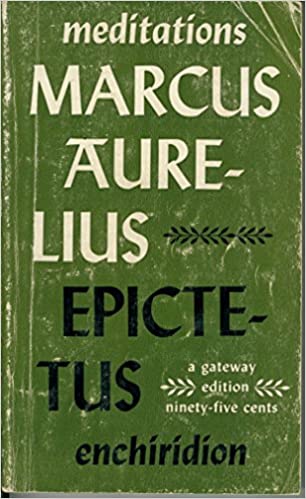

Door de stoïcijnse leer geïnspireerde wijsgerige bespiegelingen van de Romeinse keizer (121-180 na Chr.).

The Ancient Roman Philosophy of Serenity is a collection of three texts of Stoic Philosophy. It includes the Enchiridion of Epictetus, the Meditations of Marcus Aurelius, and On the Shortness of Life by Seneca.

How to think clearly, act purposefully, overcome obstacles, and find peace & happiness along the way. Marcus Aurelius (121-180 CE) was one of the few true philosopher-kings in history.His father died when Marcus was three. At age fifteen, he was adopted by his aunt's husband, the future Emperor Antoninus Pius, putting him in the line of succession. At forty, he became a reluctant emperor of the Roman Empire.Marcus was conflicted because the demands of being emperor--on top of the temptations of wealth and power--seemed incompatible with his true to be a humble student of philosophy.Over time, though, he worked out a practical philosophy that kept him grounded amidst the stresses and excesses of palace life. That's why his philosophy is so relevant to us today, in the modern world. How did he fare as emperor? During his twenty years of service, Marcus earned the love of the people and the loyalty of the senate. Later historians called him "the last of the five good emperors."In spare moments, Marcus wrote the journal entries collected in The Meditations . They were not intended for publication, but to remind Marcus himself of his principles and priorities. As a result, they are intimate, direct, and extremely useful.This new edition of The Meditations is an interpretive paraphrase in contemporary English, with a foreword, by bestselling author Sam Torode. (It’s based on the 1862 translation by George Long.) A companion volume, The Manual of Epictetus, is also available from Ancient Renewal.

"The happiness of your life depends upon the quality of your thoughts."Imagine holding in your hands not just a book, but an open window into the soul of one of history's wisest and most reflective emperors."Meditations" by Marcus Aurelius is not simply a collection of thoughts; it is a treasure trove of introspections, a timeless guide that transcends centuries to bring light and wisdom into the lives of its readers.What is "Meditations"?"Meditations" is a personal diary written by Marcus Aurelius, the last of the so-called "Five Good Emperors" of Rome, during the most turbulent moments of his life.Composed in ancient Greek, the language of philosophy, this book was never intended for publication. It was rather a means through which Marcus sought to discipline his mind and spirit, confronting the challenges of power and human existence.The work is divided into twelve books, each containing reflections on themes such as morality, mortality, human nature, and the art of living a virtuous life.The Themes ExploredThe pages of "Meditations" delve into the depths of the human soul, offering a clear and penetrating vision of Stoic philosophy. Stoic philosophy, rooted in the idea that the control of emotions and adherence to reason are essential for a virtuous life, permeates every reflection of Marcus.The reader is guided through concepts such as the impermanence of life, the importance of accepting fate, and the necessity of living in harmony with nature.Marcus Aurelius constantly reminds us that inner serenity does not come from external circumstances but from our response to them.He invites the reader to consider every obstacle as an opportunity for personal growth and to see the world with eyes of understanding and compassion."You have power over your mind - not outside events. Realize this, and you will find strength."Depth and WisdomEvery page of "Meditations" is imbued with profound, almost mystical wisdom.Marcus's reflections are filled with a sense of urgency and truth that resonates through the centuries. Despite being written over two thousand years ago, Marcus's words remain incredibly relevant.They challenge us to examine our lives with brutal honesty and to seek beauty in simplicity, courage in darkness, and peace in acceptance.Why It Is So Important"Meditations" is not just a book of philosophy; it is a lifelong companion. Its importance lies in its ability to speak directly to the reader's heart, offering not only answers but also questions that stimulate deeper reflection.Stoic philosophy, with its emphasis on self-discipline, virtue, and rationality, provides a powerful antidote to modern anxieties.In a fast-paced and often chaotic world, "Meditations" offers a moral and spiritual compass. It is a call to live with intention, to seek virtue in every action, and to find inner peace regardless of external circumstances.Ultimately, reading "Meditations" is like embarking on an intimate and transformative journey through the mind of one of history's greatest thinkers. It is an opportunity to explore the heights and depths of the human condition, guided by the wise and compassionate hand of Marcus Aurelius. Let yourself be enveloped by the mystery and wisdom of this timeless masterpiece, and discover how it can illuminate your path towards a fuller and more meaningful life."Everything we hear is an opinion, not a fact. Everything we see is a perspective, not the truth.


"Hemen hemen hiçbir şey insana yabancı değildir."Yıldızların Örtüsü Yoktur, Marcus Aurelius’un Şadan Karadeniz tarafından Türkçeye çevrilen “Düşünceler” eserinden Filiz Özdem’in yayına hazırladığı bir “seçmeler” kitabı.İS 121-180 yılları arasında yaşayan ve “filozof imparator” olarak anılan Roma imparatoru Aurelius, devleti her şeyin üzerinde tutan Yunan anlayışının yerine aklı, ahlakı ve hukuku koyarak yönetim anlayışında kökten bir tavır farklılığı yaratmıştır. Aurelius’a göre Tanrı, öz, yasa, hakikat tektir, ortak us tektir, bu nedenle de bütün insanlar eşittir. Evrende her şey birbirine bağlıdır. Aurelius, İlkçağ filozofu Herakleitos’un “her şey akar, değişir” sözünün etkisiyle, “Tek sözcükle, bedenimize ait olan her şey akan bir ırmaktır, ruhumuza ait olan her şey de salt düş ve yanılsamadır; yaşamımız yabancı bir ülkede savaş zamanı ve yolculuktur, ölümden sonraki ünümüz ise unutuluştur. Bize koruyacak ne kalıyor geriye? Tek, biricik şey, felsefe” diyerek zamanın geçip gittiğine, insan ömrünün kısalığına ve gelgeçliğine sık sık vurgu yapmıştır.Ünler, namlar, sahip olunan her şey de gelip geçicidir; bu sebeple insanın erdemli yaşaması, hayatını anlamlı kılan en önemli ölçüttür. Bu yanıyla Aurelius’un genelgeçer, zamanlarüstü bir özü olan düşünceleri yüzyıllar boyunca büyük ilgi görmüştür. Ne de olsa vurguladığı, insanın kendisini tanıma sanatıdır. İnsanın olduğu ve olmak istediği üzerine, felsefe ve doğal güdüler, teori ve pratik üzerine bir bilgelik denemesidir. Madalyonun iki yüzüne birden bakma arzusudur.Yıldızların Örtüsü Yoktur, her kişinin kendisini seçerken, kurarken yaşadığı gelgitlere tutulmuş bir aynadır da… Bir melankoli başyapıtıdır da aynı zamanda.“Başkalarının ruhunda olup bitenlerin ayrımına varamadığı için mutsuz olan bir insana rastlamak zordur; ama kendi ruhunun devinimlerinin ayrımına varmayan bir insanın mutsuz olması kaçınılmazdır.”Kaderinden kaçmayan bir imparatorun, onu cesaret ve güçlülükle takip etmesi, insan olma yolculuğu için önemli bir örnektir.

The timeless wisdom of an ancient Stoic can become a companion for your own spiritual journey. Stoicism is often portrayed as a cheerless, stiff-upper-lip philosophy of suffering and doom. Yet as experienced through the thoughtful and penetrating writings of Roman emperor Marcus Aurelius (121-180 CE), the Stoic approach to life is surprisingly rich, nuanced, clear-eyed and friendly.With facing-page commentary that explains the texts for you, Russell McNeil, PhD, guides you through key passages from Aurelius's Meditations, comprised of the emperor's collected personal journal entries, to uncover the startlingly modern relevance his words have today. From devotion to family and duty to country, to a near-prophetic view of the natural world that aligns with modern physics, Aurelius's words speak as potently today as they did two millennia ago.Now you can discover the tenderness, intelligence and honesty of Aurelius's writings with no previous background in philosophy or the classics. This SkyLight Illuminations edition offers insightful and engaging commentary that explains the historical background of Stoicism, as well as the ways this ancient philosophical system can offer psychological and spiritual insight into your contemporary life. You will be encouraged to explore and challenge Aurelius's ideas of what makes a fulfilling life--and in so doing you may discover new ways of perceiving happiness.

"Hayat Kısa, Mutlu Olmayı İhmal Etme", C. Cengiz Çevik'in Yunanca aslından çevirisi ve editörlüğünde Marcus Aurelius'un sözlerinden derlenmiştir. "Klasik Hümanizm Serisi" adı altında toplancak eserlerin de ilk kitabıdır."Hiçbir yer yoktur ki, bir insan orada kendi zihninden daha huzurlu ve sorundan uzak olabilsin...Dolayısıyla daima kendine çekil ve kendini yenile."(Tanıtım Bülteninden)

Christopher Gill provides a new translation and commentary on the first half of Marcus Aurelius' Meditations, and a full introduction to the Meditations as a whole. The Meditations constitute a unique and remarkable work, a reflective diary or notebook by a Roman emperor, that is based on Stoic philosophy but presented in a highly distinctive way. Gill focuses on the philosophical content of the work, especially the question of how far it is consistent with Stoic theory as we know this from other sources. He argues that the Meditations are largely consistent with Stoic theory--more than has been often supposed. The work draws closely on core themes in Stoic ethics and also reflects Stoic thinking on the links between ethics and psychology or the study of nature. To make sense of the Meditations, it is crucial to take into account its overall aim, which seems to be to help Marcus himself take forward his own ethical development by creating occasions for reflection on key Stoic themes that can help to guide his life.This new edition will help students and scholars of ancient philosophy make sense of a work whose intellectual content and status have often been found puzzling. Along with volumes in the Clarendon Later Ancient Philosophers series on Epictetus and Seneca, it will help to chart the history of Stoic philosophy in the first and second century AD. The translation is designed to be accessible to modern readers and all Greek and Latin are translated in the introduction and commentary.

BEAR IN MIND THAT THE MEASURE OF A MAN IS THE WORTH OF THE THINGS HE CARES ABOUT. IF IT IS GOOD TO SAY OR DO SOMETHING, THEN IT IS EVEN BETTER TO BE CRITICIZED FOR HAVING SAID OR DONE IT. ARE MY GUIDING PRINCIPLES HEALTHY AND ROBUST? ON THIS HANGS EVERYTHING. Essayist Matthew Arnold described the man who wrote these words as "the most beautiful figure in history." Possibly so, but he was certainly more than that. Marcus Aurelius ruled the Roman Empire at its height, yet he remained untainted by the incalculable wealth and absolute power that had corrupted many of his predecessors. Marcus knew the secret of how to live the good life amid trying and often catastrophic circumstances, of how to find happiness and peace when surrounded by misery and turmoil, and of how to choose the harder right over the easier wrong without apparent regard for self-interest. The historian Michael Grant praises Marcus's book as "the best ever written by a major ruler," and Josiah Bunting, superintendent of the Virginia Military Institute, calls it "the essential book on character, leadership, duty." Never intended for publication, the Meditations contains the practical and inspiring wisdom by which this remarkable emperor lived the life not of a saintly recluse, but of a general, administrator, legislator, spouse, parent, and judge besieged on all sides. The Emperor's Handbookoffers a vivid and fresh translation of this important piece of ancient literature. It brings Marcus's words to life and shows his wisdom to be as relevant today as it was in the second century. This book belongs on the desk and in the briefcase of every business executive, political leader, and military officer. It speaks to the soul of anyone who has ever exercised authority or faced adversity or believed in a better day.

In 1815 a manuscript containing one of the long-lost treasures of antiquity was discovered—the letters of Marcus Cornelius Fronto, reputed to have been one of the greatest Roman orators. But this find disappointed many nineteenth-century readers, who had hoped for the letters to convey all of the political drama of Cicero’s. That the collection included passionate love letters between Fronto and the future emperor Marcus Aurelius was politely ignored—or concealed. And for almost two hundred years these letters have lain hidden in plain sight.Marcus Aurelius in Love rescues these letters from obscurity and returns them to the public eye. The story of Marcus and Fronto began in 139 CE, when Fronto was selected to instruct Marcus in rhetoric. Marcus was eighteen then and by all appearances the pupil and teacher fell in love. Spanning the years in which the relationship flowered and died, these are the only love letters to survive from antiquity—homoerotic or otherwise. With a translation that reproduces the effusive, slangy style of the young prince and the rhetorical flourishes of his master, the letters between Marcus and Fronto will rightfully be reconsidered as key documents in the study of the history of sexuality and classics.

Stoic Classics Collection: Marcus Aurelius's Meditations, Epictetus's Enchiridion, Seneca's On The Happy Life
by Marcus Aurelius
Rating: 4.4 ⭐
Three Books In One!In one, beautifully laid-out volume, three of the timeless classics of stoic wisdom and self-improvement. Included in this

Marcus Aurelius Antoninus Augustus was the Roman emperor from 161 until his death in 180. He was the last of the "Five Good Emperors", and is also considered one of the most important Stoic philosophers. His Meditations, written in Greek while on campaign between 170 and 180, is still revered as a literary monument to a government of service and duty. It serves as an example of how Aurelius approached the Platonic ideal of a philosopher-king and how he symbolized much of what was best about Roman civilization.

Penned by the 16th century Roman emperor Marcus Aurelius, Meditations ; enumerates how to live wisely and meaningfully in an unpredictable world. Brimming with timeless wisdom, this book has found its way into the the bookshelves of many notable statesmen, thinkers, and intellectuals.WHEN LIFE BRINGS YOU PAIN AND SUFFERING, WHAT SHOULD YOU DO? TURN INWARDS.Through Meditations ;, Aurelius urges the reader to embrace the principles of stoic philosophy-the key to living a happy and fulfilling life.Learn how 1. Cultivate inner strength, resilience, and peace2. Overcome self-doubt and fear3. Develop self-discipline... and much more.Cerebral, contemplative, and profound, Meditations ; is among the greatest works of popular philosophy, and is truly life-changing.

This edition has been rewritten to be easier to read than the original translation. You will enjoy this version if you tried to read the original and found it too much like reading a King James Bible. Great effort was put into making this version pleasing to read while maintaining the essence of the original.As an added bonus we included a link at the end of the book where you can find the audiobook for FREE.Discover Timeless Wisdom with Marcus Aurelius' "Meditations"Unlock the profound insights of one of history's greatest philosophers with Marcus Aurelius' Meditations. Written by the Roman Emperor during the height of his reign, this remarkable book offers a unique window into the mind of a leader grappling with the complexities of life, duty, and personal growth.Meditations is not just a philosophical treatise; it's a deeply personal journal where Aurelius reflects on his principles, struggles, and aspirations. His thoughts on resilience, mindfulness, and the pursuit of virtue resonate as powerfully today as they did nearly two millennia ago.Whether you seek guidance on how to navigate challenges with grace, cultivate inner peace, or lead with integrity, Meditations provides timeless advice that transcends cultural and historical boundaries. It’s a must-read for anyone striving to live a more thoughtful and meaningful life.Join the ranks of millions who have found inspiration in Aurelius' wisdom. Let his reflections guide you towards a life of greater purpose and tranquility. Invest in Meditations today and embark on a journey of self-discovery and personal excellence. Experience the enduring legacy of Marcus Aurelius, and let his wisdom transform your perspective.

Stunning artworks bring more than sixty reflections from the iconic Stoic work Meditations by Marcus Aurelius to vivid life.“What is not good for the hive is not good for the bee either.” —Marcus AureliusRoman Emperor and philosopher Marcus Aurelius wrote the twelve books of Meditations over two thousand years ago as a personal diary of notes, nudges, and mental exercises to help him live a good life. His work has since become one of the greatest works of spiritual reflection ever written—required reading for statespersons and philosophers and inspiration to generations of readers who have responded to the intimacy of his writing. With their gentle instructions on living stoically, in harmony with nature, and in pursuit of the common good, Aurelius’s lessons still resonate today, helping us manage the modern malaise.This beautifully designed book features a curated selection from modern philosopher James Romm of the most significant life lessons, arranged in chapters that touch on the mind, living well, nature, community, compassion, time, death, and more. Woodcut-style art adds texture and color to the pages, illustrating the concepts of each lesson in the book. Chapter introductions explain each lesson’s history and philosophy, and throughout, modern philosophical commentary expands on each lesson, making this a perfect Stoic starting point and gift for anyone who loves ancient philosophy.

Stoic Six Pack 2 (Illustrated): Consolations From A Stoic, On The Shortness of Life and More
by Marcus Aurelius
Rating: 4.1 ⭐
"To relax the mind is to lose it."Stoic Six Pack 2 brings together six more essential texts for students of Consolations From A Stoic by SenecaOn The Shortness of Life by SenecaLectures and Fragments of Musonius RufusEthical Fragments by HieroclesMeditations In Verse by Marcus Aurelius and James BlakeThe Stoics by Diogenes LaërtiusIn addition to these six books there is *Two image galleries.*Seneca the Stoic – a biographical essay.Each work has been newly revised, edited and curated for the digital age. There is a complete Musonius Rufus and the rarely published Stoic Hierocles . Consolations From A Stoic contains all three of Seneca’s consolations – To Marcia, To Helvia and To Polybius . On The Shortness of Life also by Seneca is presented in a brand new translation by author Damian Stevenson. The Stoics by Diogenes Laërtius is a fascinating 3rd century biography of the first Greek Stoics – Zeno of Citium, Dinoysius the Renegade, Chrysippus of Soli et al and there is also Meditations In Verse , an interesting Victorian poetic homage to Aurelius.Stoic Six Pack 2 is an amazing collection of masterworks and rarities, a must-read for fans of Meditations, Letters From A Stoic and Stoic philosophy in general.

An essential guide to the core texts of Stoic philosophy, featuring a new introduction from Massimo Pigliucci, author of How To Be A StoicStoicism is a philosophy, a worldview, and a transformational practice. Throughout the centuries everyone from kings and presidents to Silicone Valley entrepreneurs have drawn inspiration and wisdom from Stoicism. The best way to learn about Stoic philosophy is always to go back to the foundation—the original texts, written by the great Stoic philosophers. Three writers form the bedrock of Stoic Marcus Aurelius, a Roman Emperor; Seneca, a playwright and advisor; and Epictetus, a former slave turned philosopher and teacher. Stoic Foundations combines the work of these three pillars of Stoic thought into one essential volume, including Marcus Aurelius’s Meditations, selections from Seneca’s Letters from a Stoic , and Epictetus’s Enchiridion. Though they were written millennia ago, these texts have resonated with readers across the centuries, offering powerful, clear guidance that remains relevant and transformative in the modern day. Featuring an insightful introduction from Massimo Pigliucci, author of How to Be A Stoic, Stoic Foundations is essential reading for anyone interested in exploring modern Stoicism and in reading the luminaries of Stoic philosophy in their own words.

The philosophy of stoicism advocated living a virtuous life in harmony with nature, with the goal of achieving happiness. Although stoicism flourished in the third century bce, the core values of its philosophy—to live and behave ethically in accordance with rules of the natural order—are still relevant today. This omnibus anthology includes a selection of works by three of the greatest Stoic The complete Meditations of the Roman emperor Marcus Aurelius, his classic text on enlightenment through self-judgment Selected dialogues and essays of Seneca, including “Of Providence” and “On Clemency” Selected discourses of the Greek philosopher Epictetus, including the text of his Enchiridion This special edition features an elegantly designed cover and a durable flexible binding. It is an indispensable addition to any home history library.

Tida como uma obra única na história da Filosofia, Meditações contém as mais profundas e reveladoras reflexões espirituais e éticas já registradas. Apresentados de maneira direta, os insights reúnem os fundamentos do Estoicismo que guiaram os pensamentos do imperador filósofo Marco Aurélio, um dos líderes mais inteligentes e bem-sucedidos de sua época. Uma obra-prima essencial para gestores, curiosos e qualquer pessoa que já tenha enfrentado momentos difíceis, porém, sem deixar de cultivar a esperança em dias melhores.
