
William B. Irvine
William B Irvine is professor of philosophy at Wright State University. The author of seven books, including A Guide to the Good Life, he has also written for the Huffington Post, Salon, Time, and the BBC. He lives in Dayton, Ohio.
19 Books Written

A Guide to the Good Life: The Ancient Art of Stoic Joy
by William B. Irvine
Rating: 4.2 ⭐
• 18 recommendations ❤️
One of the great fears many of us face is that despite all our effort and striving, we will discover at the end that we have wasted our life. In A Guide to the Good Life, William B. Irvine plumbs the wisdom of Stoic philosophy, one of the most popular and successful schools of thought in ancient Rome, and shows how its insight and advice are still remarkably applicable to modern lives. In A Guide to the Good Life, Irvine offers a refreshing presentation of Stoicism, showing how this ancient philosophy can still direct us toward a better life. Using the psychological insights and the practical techniques of the Stoics, Irvine offers a roadmap for anyone seeking to avoid the feelings of chronic dissatisfaction that plague so many of us. Irvine looks at various Stoic techniques for attaining tranquility and shows how to put these techniques to work in our own life. As he does so, he describes his own experiences practicing Stoicism and offers valuable first-hand advice for anyone wishing to live better by following in the footsteps of these ancient philosophers. Readers learn how to minimize worry, how to let go of the past and focus our efforts on the things we can control, and how to deal with insults, grief, old age, and the distracting temptations of fame and fortune. We learn from Marcus Aurelius the importance of prizing only things of true value, and from Epictetus we learn how to be more content with what we have. Finally, A Guide to the Good Life shows readers how to become thoughtful observers of their own life. If we watch ourselves as we go about our daily business and later reflect on what we saw, we can better identify the sources of distress and eventually avoid that pain in our life. By doing this, the Stoics thought, we can hope to attain a truly joyful life.

The Stoic Challenge: A Philosopher's Guide to Becoming Tougher, Calmer, and More Resilient
by William B. Irvine
Rating: 3.7 ⭐
Ancient Stoic insights combined with modern psychological research help us overcome—and even benefit from—everyday obstacles.Some people bounce back in response to setbacks; others break. We often think that these responses are hardwired, but fortunately this is not the case. Philosopher William B. Irvine combines key lessons from the ancient Stoics— thinkers including Marcus Aurelius and Seneca—with modern psychological techniques such as anchoring and framing to develop a surprisingly simple strategy for dealing with life’s unpleasant surprises. These include minor setbacks like being caught in a traffic jam or having a flight cancelled, as well as major setbacks, like those experienced by physicist Stephen Hawking, who slowly lost the ability to move, and surfer Bethany Hamilton, who lost an arm to a shark.By using the updated Stoic strategy, we can transform life’s setbacks into opportunities for becoming calmer, tougher, and more resilient. The Stoic Challenge is a practical guide to using centuries- old wisdom to help us better cope with the stresses of modern living.

A married person falls deeply in love with someone else. A man of average income feels he cannot be truly happy unless he owns an expensive luxury car. A dieter has an irresistible craving for ice cream. Desires often come to us unbidden and unwanted, and they can have a dramatic impact,sometimes changing the course of our lives.In On Desire , William B. Irvine takes us on a wide-ranging tour of our impulses, wants, and needs, showing us where these feelings come from and how we can try to rein them in. Spicing his account with engaging observations by writers like Seneca, Tolstoy, and Freud, Irvine considers the teachingsof Buddhists, Hindus, the Amish, Shakers, and Catholic saints, as well as those of ancient Greek and Roman and modern European philosophers. Irvine also looks at what modern science can tell us about desire--what happens in the brain when we desire something and how animals evolved particulardesires--and he advances a new theory about how desire itself evolved. Irvine also suggests that at the same time that we gained the ability to desire, we were "programmed" to find some things more desirable than others. Irvine concludes that the best way to attain lasting happiness is not tochange the world around us or our place in it, but to change ourselves. If we can convince ourselves to want what we already have, we can dramatically enhance our happiness.Brimming with wisdom and practical advice, On Desire offers a thoughtful approach to controlling unwanted passions and attaining a more meaningful life.

Insults are part of the fabric of daily life. But why do we insult each other? Why do insults cause us such pain? Can we do anything to prevent or lessen this pain? Most importantly, how can we overcome our inclination to insult others?In A Slap in the Face, William Irvine undertakes a wide-ranging investigation of insults, their history, the role they play in social relationships, and the science behind them. He examines not just memorable zingers, such as Elizabeth Bowen's description of Aldous Huxley as "The stupid person's idea of a clever person," but subtle insults as well, such as when someone insults us by reporting the insulting things others have said about us: "I never read bad reviews about myself," wrote entertainer Oscar Levant, "because my best friends invariably tell me about them." Irvine also considers the role insults play in our society: they can be used to cement relations, as when a woman playfully teases her husband, or to enforce a social hierarchy, as when a boss publicly berates an employee. He goes on to investigate the many ways society has tried to deal with insults-by adopting codes of politeness, for example, and outlawing hate speech-but concludes that the best way to deal with insults is to immunize ourselves against them: We need to transform ourselves in the manner recommended by Stoic philosophers. We should, more precisely, become insult pacifists, trying hard not to insult others and laughing off their attempts to insult us.A rousing follow-up to The Good Life, A Slap in the Face will interest anyone who's ever delivered an insult or felt the sting of one--in other words, everyone.

Great ideas often develop gradually after studying a problem at length--but not always. Sometimes, an insight hits like a bolt from the blue. For Archimedes, clarity struck while he was taking a bath. For Gustav Mahler, it came as the blades of his oars touched the water. And for Albert Einstein, it emerged while he was talking to a friend. Why do these moments of insight strike so suddenly? Why do they so often come to us when we are focused on something completely unrelated? And when great ideas "come to" us, where do they come from?In Aha!: The Moments of Insight that Shape Our World , philosopher William B. Irvine, author of A Guide to the Good Life and On Desire , explores these epiphanies, from the minor insights that strike us all daily, to the major realizations that alter the course of history. Focusing on aha moments as they take place in five different domains--religion, morality, science, math, and art--Irvine provides case studies that shed light on the different ways epiphanies happen in the different domains, and on their differing social impact. Along the way, he describes some of the great aha moments in history, from ancient times to the present day.We like to think that our greatest thoughts are the product of our conscious mind. Irvine demonstrates, though, that it is our unconscious mind that is the source of our most significant insights, and that the role the conscious mind plays in eliciting these insights is to try, unsuccessfully, to solve certain problems. Only if the conscious mind is willing to do this--and thereby experience considerable frustration--is the unconscious mind likely to reward it with a breakthrough insight-that the conscious mind will then take credit for.Irvine explores not only the neuroscience of aha moments but also their personal and social ramifications. How does a person respond to having a breakthrough insight that goes against a dominant paradigm? And how does the world respond when she shares that insight? Irvine shows that in many cases, what is most remarkable about those who have had the great insights of human history is not their but their courage and perseverance in fighting for the world to accept those insights.Aha! is a must-read for cognitive scientists, intellectual historians, philosophers, and anyone who has ever been blown away by the ideas that enlighten us when we least expect it.

What are you? Obviously, you are a person with human ancestors that can be plotted on a family tree, but you have other identities as well. According to evolutionary biologists, you are a member of the species Homo sapiens and as such have ancestral species that can be plotted on the tree of life. According to microbiologists, you are a collection of cells, each of which has a cellular ancestry that goes back billions of years. A geneticist, though, will think of you primarily as a gene-replication machine and might produce a tree that reveals the history of any given gene. And finally, a physicist will give a rather different answer to the identity you can best be understood as a collection of atoms, each of which has a very long history. Some have been around since the Big Bang, and others are the result of nuclear fusion that took place within a star. Not only that, but most of your atoms belonged to other living things before joining you. From your atoms' point ofview, then, you are just a way station on a multibillion-year-long journey. A Natural History offers a multidisciplinary investigation of your hyperextended family tree, going all the way back to the Big Bang. And while your family tree may contain surprises, your hyperextended history contains some truly amazing stories. As the result of learning more about who and what you are, and about how you came to be here, you will likely see the world around you with fresh eyes. You will also become aware of all the one-off events that had to take place for your existence to be stars had to explode, the earth had to be hit 4.5 billion years ago by a planetesimal and 65 million years ago by an asteroid, microbes had to engulf microbes, the African savanna had to undergo climate change, and of course, any number of your direct ancestors had to meet and mate. It is difficult, on becoming aware of just how contingent your own existence is, not to feel very lucky to be part of our universe.

William Braxton Irvine: A Guide to the Good Life : The Ancient Art of Stoic Joy (Hardcover); 2008 Edition
by William B. Irvine
Rating: 4.5 ⭐

Estoicismo para tu día a día: Una guía filosófica para ser más tenaz, tranquilo y resiliente
by William B. Irvine
Rating: 4.3 ⭐
En esta guía práctica, refrescante y optimista, el filósofo William B. Irvine nos explica cómo la filosofía milenaria del estoicismo puede ayudarnos a afrontar muchas cuestiones cotidianas, desde las tensiones del día a día hasta crisis más importantes."Estoicismo para tu día a día" combina de manera única las ideas de los estoicos clásicos como Marco Aurelio, Séneca y Epicteto con técnicas descubiertas por la investigación psicológica contemporánea. El resultado es la «estrategia estoica» de Irvine, sorprendentemente simple y actualizada, que nos enseña cómo gestionar nuestra respuesta emocional ante los obstáculos de la vida. No solo podemos superar estos obstáculos, también podemos beneficiarnos de ellos.«Este libro trata de lo que podría considerarse el estoicismo del siglo XXI. He fusionado los consejos de los filósofos estoicos del siglo I con las investigaciones de los psicólogos actuales. Algunos expertos del mundo académico no verán con buenos ojos que me sumerja en el estoicismo clásico de esta manera. Abordan esta corriente de la filosofía como si se tratara de una reliquia antigua de valor como algo que debe guardarse en una caja cerrada, que debe verse, pero no tocarse. Por el contrario, yo abordo el estoicismo como una herramienta que no solo sigue siendo útil, sino que puede tener un impacto profundamente beneficioso en la vida moderna.»William B. Irvine
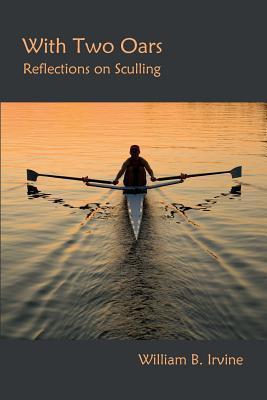
WITH TWO OARS explores the art and science of sculling. Written with intermediate and advanced-intermediate rowers in mind, it addresses questions any thoughtful rower will want answered, including What is boat set, and why is it important? Who is smarter, rowers or their oars? How can you avoid splashing at the catch? How can you row "with your ears"? Where should your foot stretchers be set? What role does hydrodynamic lift play in sculling? Should your hands be symmetrical at the catch? Why should strong rowers care about form?

Doing Right by Children: Reflections on the Nature of Childhood and the Obligations of Parenthood
by William B. Irvine
Rating: 4.6 ⭐
Doing Right by Children begins with an examination of the concept of childhood and how this concept has changed over the centuries. Once treated as a form of property were created out of a family's need for labor, by 1950, American parents had come to think of themselves as stewards looking out for the best interests of their children. In the 1960s, though, the status of children began to decline, as parents grew increasingly reluctant to put the interests of their children ahead of their own desires. Doing Right by Children investigates various ethical issues regarding the parent/child relationship. Among the questions it attempts to answer are these: What kind of upbringing do parents owe their children? What are the proper goals of parenting? How would we structure families if our primary interest were the well-being of children? Doing Right by Children offers a spirited defense of the stewardship model of parenting. It challenges the now-commonplace view that the freedom of parents-to pursue, for example career or sexual fulfillment-should not be sacrificed to the interests of their children.

Von der Herausforderung, ein Stoiker zu sein: Ein philosophisches Handbuch für mehr Stärke, Seelenruhe und Resilienz
by William B. Irvine
Rating: 3.8 ⭐
Manche Menschen erholen sich scheinbar mühelos von Rückschlägen, andere zerbrechen daran. Wir denken oft, dass diese Reaktionen unvermeidlich sind, aber das ist zum Glück nicht der Fall. Der Stoizismus, eine der erfolgreichsten Denkschulen aus dem alten Rom, bietet einen alternativen Er lehrt uns, jede Herausforderung als Charaktertest zu betrachten und unsere emotionale Reaktion darauf bewusst zu steuern.Der renommierte Philosoph William B. Irvine kombiniert auf einzigartige Weise antike stoische Erkenntnisse zur Verbesserung der Lebensqualität mit Techniken, die von der zeitgenössischen psychologischen Forschung entdeckt wurden, wie z. B. Ankern und Framing. Das Ergebnis ist eine überraschend einfache Strategie für den Umgang mit unangenehmen und unerwarteten Herausforderungen im Leben – von kleinen Ärgernissen wie einem Stau auf der Autobahn bis hin zu großen Rückschlägen wie denen des Physikers Stephen Hawking, der langsam seine Bewegungsfähigkeit verlor, und des Schriftstellers Jean-Dominique Bauby, der unter dem Locked-in-Syndrom litt.Irvine zeigt, wie wir die Stolpersteine des Lebens in Gelegenheiten verwandeln können, um ruhiger, zäher und widerstandsfähiger zu werden. Wir können nicht nur alltägliche Hindernisse überwinden, wir können sogar von ihnen profitieren.

Should the state license parents? This book is challenging: the Brave New World of eugenics and State regulation of procreation, parenting and the family. This is a highly reasoned and provocative book about a huge taboo in modern society. It will raise the ire of both the traditionalists and the "politically correct." It will be attacked in the press. But, ultimately the book is in defense of children and addresses the role of government in ensuring that parents practice a "stewardship" model, rather than an "ownership" model, of childrearing. It should be required reading by any student of populations studies and sociology of the family.

Stoicism with a life filled with negative sadness, anger jealousy, fear ... not a good life . How to get out of that life ? The author helps us how to get out of that life and how to most effectively deal with the stresses of everyday life.

How to Think More and Better: Being Reasonable in Unreasonable Times
by William B. Irvine
Rating: 5.0 ⭐
Even the most reasonable of us can be selective about when we think reasonably—we might take pride in our rationality about professional matters but follow our gut when it comes to social issues, for example. In a world of rabbit holes, echo chambers, and disinformation, how can we keep our heads on straight more consistently? How to Think More and Better offers a philosopher's advice on becoming a more rational and critical thinker. It trains the listener in open-minded critical thinking. Irvine makes the case for his approach, explaining the prevalence of emotion-driven thinking at the expense of engagement with evidence, and then lays out strategies listeners can use to train themselves to think more critically.William B. Irvine, author of the popular book "A Guide to the Good Life," offers much needed philosophical advice on how to become a more rational and critical thinker in today's emotionally-driven and complex world.Even the most reasonable of us can be selective about when we think reasonably. We may realize that the best thing to do is to take the advice of our doctor when facing a medical issue. When shopping for a new car or appliance we might carefully assess online reviews and weigh our options calmly before making an informed decision. But when it comes to things that feel more fraught—voting, navigating a challenge in our family, figuring out what to do in a difficult professional situation—we might throw this approach out the window, dismissing facts and patterns that form a body of evidence, and trust our gut. (Of course, there is a time and place for this, but not every big decision is purely a matter of the heart.) Likewise, when we think about big ideas, about right and wrong, or about concepts so complex they make anyone's head spin, we can freeze, jumping to conclusions rather than wading into the details, or considering the existing arguments that others offer as a trail through challenging terrain. How can we do better? How can we train our minds to be more consistent? How can we practice using the best of our rational abilities when it matters most?How to Think More and Better offers a philosopher's advice on becoming a more rational and critical thinker, rather than relying on emotions or hearsay to reach important decisions. It trains the listener in open-minded critical thinking. This thinking is crucial in a time of political polarization, social media, politicized news media, and echo chambers, to help us pursue truth and understanding in a world of rabbit holes, echo chambers, and disinformation. Irvine explains the prevalence of emotion-driven thinking is often at the expense of engagement with evidence, and then lays out strategies listeners can use to train themselves to think more critically, drawn from what worked for him in the classroom. He also covers important areas to aid intellectual self-transformation, such as Mindcare and Mindcleaning.With practice, most people can become evidence-based thinkers. Seemingly intractable contemporary problems might be solved if we all start engaging more in this kind of slow and careful thinking, considering arguments and evidence even from those on opposite sides of key debates.

Simplicité, sobriété, sérénité: Les clés du stoïcisme pour une vie libre et heureuse
by William B. Irvine
Rating: 3.0 ⭐
Qu’attendez-vous vraiment de la vie ?Parmi toutes les choses que vous pourriez rechercher, quelle est celle que vous considérez comme la plus précieuse ? S’inspirant, avec un regard contemporain, de la sagesse des stoïciens, William B. Irvine nous invite à déterminer notre grand objectif de vie afin de nous recentrer sur nos priorités.Vouloir notre vie plutôt que la subir comme un devoir, considérer les contrariétés comme un entraînement qui nous fortifie, observer notre propre vie pour identifier les sources de stress et mieux les éviter... Autant de clés éprouvées par les Anciens pour atteindre la paix, cultiver la joie, mener une vie bonne.Une feuille de route concrète et accessible pour adopter un esprit d’optimisme, de courage, de tempérance et d’ouverture aux autres, tout en jouissant pleinement des plaisirs qu’offre l’existence.William B. Irvine est professeur de philosophie à l’université Wright State de Dayton (Ohio, USA). Il est l’auteur de On Why We Want What We Want (non traduit en français). Simplicité, sobriété, sérénité s’est vendu à plus de 250 000 exemplaires dans sa version originale.

Pack El arte de los estoicos: Incluye El arte de vivir como un estoico y El arte de la buena vida
by William B. Irvine
En El arte de vivir como un estoico , el filósofo David Fideler extrae las obras clásicas de Séneca en una serie de capítulos y explica claramente sus ideas en un flujo constante de consejos sobre la condición humana. En El arte de la buena vida , aprenderemos de Marco Aurelio la importancia de valorar solo aquello que lo merece, y de Epicteto a estar más contentos con lo que tenemos.


Simplicité, sobriété, sérénité: Les clés du stoïcisme pour une vie libre et heureuse
by William B. Irvine

Simplicité sobriété sérénité: Les clés du stoïcisme pour une vie libre et heureuse (Albin Michel Pratique)
by William B. Irvine
Qu'attendez-vous vraiment de la vie ?Parmi toutes les choses que vous pourriez rechercher, quelle est celle que vous considérez comme la plus précieuse ? S'inspirant, avec un regard contemporain, de la sagesse des stoïciens, William B. Irvine nous invite à déterminer notre grand objectif de vie afin de nous recentrer sur nos priorités.Vouloir notre vie plutôt que la subir comme un devoir, considérer les contrariétés comme un entraînement qui nous fortifie, observer notre propre vie pour identifier les sources de stress et mieux les éviter... Autant de clés éprouvées par les Anciens pour atteindre la paix, cultiver la joie, mener une vie bonne.Une feuille de route concrète et accessible pour adopter un esprit d'optimisme, de courage, de tempérance et d'ouverture aux autres, tout en jouissant pleinement des plaisirs qu'offre l'existence.William B. Irvine est professeur de philosophie à l'université Wright State de Dayton (Ohio, USA). Il est l'auteur de On Why We Want What We Want (non traduit en français). Simplicité, sobriété, sérénité s'est vendu à plus de 250 000 exemplaires dans sa version originale.