
28 Books Written

The million copy international bestseller, critically acclaimed and translated into over 25 languages. As influential today as when it was first published, The Selfish Gene has become a classic exposition of evolutionary thought. Professor Dawkins articulates a gene's eye view of evolution - a view giving centre stage to these persistent units of information, and in which organisms can be seen as vehicles for their replication. This imaginative, powerful, and stylistically brilliant work not only brought the insights of Neo-Darwinism to a wide audience, but galvanized the biology community, generating much debate and stimulating whole new areas of research. Forty years later, its insights remain as relevant today as on the day it was published. This 40th anniversary edition includes a new epilogue from the author discussing the continuing relevance of these ideas in evolutionary biology today, as well as the original prefaces and foreword, and extracts from early reviews. Oxford Landmark Science books are 'must-read' classics of modern science writing which have crystallized big ideas, and shaped the way we think.

The Blind Watchmaker: Why the Evidence of Evolution Reveals a Universe without Design
by Richard Dawkins
Rating: 4.2 ⭐
• 9 recommendations ❤️
Richard Dawkins’s classic remains the definitive argument for our modern understanding of evolution.The Blind Watchmaker is the seminal text for understanding evolution today. In the eighteenth century, theologian William Paley developed a famous metaphor for creationism: that of the skilled watchmaker. In The Blind Watchmaker, Richard Dawkins crafts an elegant riposte to show that the complex process of Darwinian natural selection is unconscious and automatic. If natural selection can be said to play the role of a watchmaker in nature, it is a blind one—working without foresight or purpose.In an eloquent, uniquely persuasive account of the theory of natural selection, Dawkins illustrates how simple organisms slowly change over time to create a world of enormous complexity, diversity, and beauty.

A preeminent scientist - and the world's most prominent atheist - asserts the irrationality of belief in God, and the grievous harm religion has inflicted on society, from the Crusades to 9/11.With rigor and wit, Dawkins examines God in all his forms, from the sex-obsessed tyrant of the Old Testament, to the more benign (but still illogical) Celestial Watchmaker favored by some Enlightenment thinkers. He eviscerates the major arguments for religion, and demonstrates the supreme improbability of a supreme being. He shows how religion fuels war, foments bigotry, and abuses children, buttressing his points with historical and contemporary evidence.The God Delusion makes a compelling case that belief in God is not just wrong, but potentially deadly. It also offers exhilarating insight into the advantages of atheism to the individual and society, not the least of which is a clearer, truer appreciation of the universe's wonders than any faith could ever muster.

How did the replication bomb we call ”life” begin and where in the world, or rather, in the universe, is it heading? Writing with characteristic wit and an ability to clarify complex phenomena (the New York Times described his style as ”the sort of science writing that makes the reader feel like a genius”), Richard Dawkins confronts this ancient mystery.

The Magic of Reality: How We Know What's Really True
by Richard Dawkins
Rating: 4.1 ⭐
• 2 recommendations ❤️
An elegant, text-only paperback edition of the New York Times bestseller that’s been hailed as the definitive authority on…everything.

The Extended Phenotype: The Long Reach of the Gene
by Richard Dawkins
Rating: 4.1 ⭐
• 2 recommendations ❤️
In The Selfish Gene, Richard Dawkins crystallized the gene's eye view of evolution developed by W.D. Hamilton and others. The book provoked widespread and heated debate. Written in part as a response, The Extended Phenotype gave a deeper clarification of the central concept of the gene as the unit of selection; but it did much more besides. In it, Dawkins extended the gene's eye view to argue that the genes that sit within an organism have an influence that reaches out beyond the visible traits in that body - the phenotype - to the wider environment, which can include other individuals. So, for instance, the genes of the beaver drive it to gather twigs to produce the substantial physical structure of a dam; and the genes of the cuckoo chick produce effects that manipulate the behaviour of the host bird, making it nurture the intruder as one of its own. This notion of the extended phenotype has proved to be highly influential in the way we understand evolution and the natural world. It represents a key scientific contribution to evolutionary biology, and it continues to play an important role in research in the life sciences. The Extended Phenotype is a conceptually deep book that forms important reading for biologists and students. But Dawkins' clear exposition is accessible to all who are prepared to put in a little effort.

Charles Darwin, whose 1859 masterpiece "On the Origin of Species" shook society to its core, would surely have raised an incredulous eyebrow at the controversy over evolution still raging 150 years later."The Greatest Show on Earth" is a stunning counter-attack on creationists, followers of "Intelligent Design" and all those who still question evolution as scientific fact. In this brilliant tour de force, Richard Dawkins pulls together the incontrovertible evidence that underpins it: from living examples of natural selection to clues in the fossil record; from plate tectonics to molecular genetics."The Greatest Show on Earth" comes at a critical time as systematic opposition to the fact of evolution flourishes as never before in many schools worldwide. Dawkins wields a devastating argument against this ignorance whilst sharing with us his palpable love of science and the natural world. Written with elegance, wit and passion, it is hard-hitting, absorbing and totally convincing.

Come nei Racconti di Canterbury un eterogeneo gruppo di pellegrini diretti a un santuario narra, su invito dell’oste di una locanda, alcune storie, ognuna delle quali è espressione di un codice culturale e di un itinerario spirituale, così nel Racconto dell’Antenato altri “pellegrini” – non solo esseri umani ma anche animali, funghi, piante, batteri – compiono oggi, su invito di Richard Dawkins, un viaggio ugualmente rivelatore nel nostro passato.In ciascuno dei trentanove “rendez-vous” del percorso a ritroso che ci conduce fino a quattro miliardi di anni fa, i viandanti incontrano nuovi gruppi con cui hanno un antenato in comune, e la folla diventa sempre più imponente a mano a mano che ci si avvicina alla meta. Alla fine il pellegrinaggio giunge alla sua Canterbury, ossia all’evento cruciale della vita sulla terra: l’unione di un organismo unicellulare – il futuro protozoo – con un batterio per formare la cellula nucleata. Da quel momento, tutti gli esseri viventi percorrono insieme l’ultimo tratto verso la comune origine biologica.La cronaca del viaggio, però, è solo il contenitore dei singoli racconti. Se i pellegrini di Geoffrey Chaucer narravano le vicende del loro ambiente sociale, i protagonisti di questa straordinaria avventura illustrano i processi biologici legati allo sviluppo della vita sulla terra. Uniche per ricchezza e varietà, tali storie non solo tracciano l’autoritratto filogenetico del narratore, ma descrivono anche le più recenti acquisizioni della biologia molecolare, che hanno consentito di gettare nuova luce sul processo evolutivo e di riformulare stimolanti interrogativi. In che modo i nostri progenitori si sono propagati dall’Africa negli altri continenti? La stazione eretta venne adottata per liberare le mani e trasportare il cibo? A indurre l’aumento delle dimensioni del cervello fu forse l’acquisita abilità manuale? Quanto differiscono geneticamente le razze umane? E poi, esiste davvero la “razza”? A queste e molte altre domande Dawkins risponde con sapienza scientifica e finezza letteraria, invitandoci a riflettere sull’intima relazione esistente fra tutti gli esseri viventi e sullo stretto legame fra le varie e mirabili espressioni della realtà biologica, unificate da un solo “eroe”, quel “tema musicale ricorrente, quasi un leitmotiv wagneriano” che ha nome dna.
Keats accused Newton of destroying the poetry of the rainbow by explaining the origin of its colours. In this illuminating and provocative book, Richard Dawkins argues that Keats could not have been more mistaken, and shows how an understanding of science enhances our wonder of the world. He argues that mysteries do not lose their poetry because they are solved: the solution is often more beautiful than the puzzle, uncovering even deeper mysteries. Dawkins takes up the most important and compelling topics in modern science, from astronomy and genetics to language and virtual reality, combining them in a landmark statement on the human appetite for wonder.
In Climbing Mount Improbable, Richard Dawkins, author of The God Delusion, builds a powerful and carefully reasoned argument for evolutionary adaptation as the force behind all life on earth. What drives species to evolve? How can intricate structures such as the human eye, the spider's web or the wings of birds develop, seemingly by chance? Regarding evolution's most complex achievements as peaks on a metaphorical mountain, Climbing Mount Improbable reveals the ways in which the theory of natural selection can precisely explain the beautiful, bizarre and seemingly 'designed' complexity of living things.And through it all runs the thread of DNA, the molecule of life, responsible for its own destiny on an unending pilgrimage through time. Accompanied by evocative illustrations, Dawkins's eloquent descriptions of the living world's astonishing adaptations throw back the curtain on the mysteries of 'Mount Improbable'.An alternative cover edition for this ISBN can be found here.
The first collection of essays from renowned scientist and best-selling author Richard Dawkins.Richard Dawkins's essays are an enthusiastic testament to the power of rigorous, scientific examination, and they span many different corners of his personal and professional life. He revisits the meme, the unit of cultural information that he named and wrote about in his groundbreaking work The Selfish Gene. He makes moving tributes to friends and colleagues, including a eulogy for novelist Douglas Adams; he shares correspondence with the evolutionary biologist Stephen Jay Gould; and he visits with the famed paleoanthropologists Richard and Maeve Leakey at their African wildlife preserve. He concludes the essays with a vivid note to his ten-year-old daughter, reminding her to remain curious, to ask questions, and to live the examined life.

Should we believe in God? In this new book, written for a new generation, the brilliant science writer and author of The God Delusion, explains why we shouldn't.Should we believe in God? Do we need God in order to explain the existence of the universe? Do we need God in order to be good? In twelve chapters that address some of the most profound questions human beings confront, Dawkins marshals science, philosophy and comparative religion to interrogate the hypocrisies of all the religious systems and explain to readers of all ages how life emerged without a Creator, how evolution works and how our world came into being.For anyone hoping to grapple with the meaning of life and what to believe, Outgrowing God is a challenging, thrilling and revelatory read.

Born to parents who were enthusiastic naturalists, and linked through his wider family to a clutch of accomplished scientists, Richard Dawkins was bound to have biology in his genes. But what were the influences that shaped his life and intellectual development? And who inspired him to become the pioneering scientist and public thinker now famous (infamous to some) around the world?In "An Appetite for Wonder" we join him on a personal journey back to an enchanting childhood in colonial Africa, where the exotic natural world was his constant companion. Boarding school in England at the age of eight and public school at Oundle introduce Dawkins, and the reader, to strange rules and eccentric schoolmasters, vividly described with both humorous affection and some reservation. An initial fervent attachment to Church of England religion soon gives way to disaffection and, later, teenage rebellion. Early signs of a preference for music, poetry and reading over practical matters become apparent as he recalls the opportunities that entered his small world.Oxford, however, is the catalyst to his life. Vigorous debate in the dynamic Zoology Department unleashes his innate intellectual curiosity, and inspirational mentors together with his own creative thinking ignite the spark that results in his radical new vision of Darwinism, "The Selfish Gene".From innocent child to charismatic world-famous scientist, Richard Dawkins paints a colourful, richly textured canvas of his early life. Honest self-reflection and witty anecdotes are interspersed with touching reminiscences of his family and friends, literature, poetry and songs. We are finally able to understand the private influences that shaped the public man who, more than anyone else in his generation, explained our own origins.

NEW YORK TIMES BESTSELLER - The legendary biologist and bestselling author mounts a timely and passionate defense of science and clear thinking with this career-spanning collection of essays, including twenty pieces published in the United States for the first time.For decades, Richard Dawkins has been a brilliant scientific communicator, consistently illuminating the wonders of nature and attacking faulty logic. Science in the Soul brings together forty-two essays, polemics, and paeans--all written with Dawkins's characteristic erudition, remorseless wit, and unjaded awe of the natural world.Though it spans three decades, this book couldn't be more timely or more urgent. Elected officials have opened the floodgates to prejudices that have for half a century been unacceptable or at least undercover. In a passionate introduction, Dawkins calls on us to insist that reason take center stage and that gut feelings, even when they don't represent the stirred dark waters of xenophobia, misogyny, or other blind prejudice, should stay out of the voting booth. And in the essays themselves, newly annotated by the author, he investigates a number of issues, including the importance of empirical evidence, and decries bad science, religion in the schools, and climate-change deniers.Dawkins has equal ardor for "the sacred truth of nature" and renders here with typical virtuosity the glories and complexities of the natural world. Woven into an exploration of the vastness of geological time, for instance, is the peculiar history of the giant tortoises and the sea turtles--whose journeys between water and land tell us a deeper story about evolution. At this moment, when so many highly placed people still question the fact of evolution, Dawkins asks what Darwin would make of his own legacy--"a mixture of exhilaration and exasperation"--and celebrates science as possessing many of religion's virtues--"explanation, consolation, and uplift"--without its detriments of superstition and prejudice.In a world grown irrational and hostile to facts, Science in the Soul is an essential collection by an indispensable author.Praise for Science in the Soul"Compelling . . . rendered in gloriously spiky and opinionated prose . . . [Dawkins is] one of the great science popularizers of the last half-century."--The Christian Science Monitor "Dawkins is a ferocious polemicist, a defender of reason and enemy of superstition."--John Horgan, Scientific American

In this hugely entertaining sequel to the New York Times bestselling memoir An Appetite for Wonder, Richard Dawkins delves deeply into his intellectual life spent kick-starting new conversations about science, culture, and religion and writing yet another of the most audacious and widely read books of the twentieth century—The God Delusion.Called “one of the best nonfiction writers alive today” (Stephen Pinker) and a “prize-fighter” (Nature), Richard Dawkins cheerfully, mischievously, looks back on a lifetime of tireless intellectual adventure and engagement. Exploring the halls of intellectual inquiry and stardom he encountered after the publication of his seminal work, The Selfish Gene; affectionately lampooning the world of academia, publishing, and television; and studding the pages with funny stories about the great men and women he’s known, Dawkins offers a candid look at the events and ideas that encouraged him to shift his attention to the intersection of culture, religion, and science. He also invites the reader to look more closely at the brilliant succession of ten influential books that grew naturally out of his busy life, highlighting the ideas that connect them and excavating their origins. On the publication of his tenth book, the smash hit, The God Delusion, a “resounding trumpet blast for truth” (Matt Ridley), Richard Dawkins was catapulted from mere intellectual stardom into a circle of celebrity thinkers dubbed, “The New Atheists”—including Christopher Hitchens, Sam Harris, and Daniel Dennett.Throughout A Brief Candle in the Dark, Dawkins shares with us his infectious sense of wonder at the natural world, his enjoyment of the absurdities of human interaction, and his bracing awareness of life’s brevity: all of which have made a deep imprint on our culture.
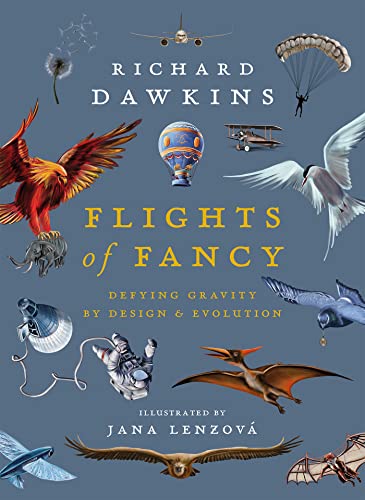
Richard Dawkins on how nature and humans have learned to overcome the pull of gravity and take to the skies. 'A masterly investigation of all aspects of flight, human and animal... A beautifully produced book that will appeal across age groups' Alexander McCall Smith 'Dawkins has always been an extraordinarily muscular, persuasive thinker. What feels new here is that he writes with such charm and warmth' The TimesHave you ever dreamt you could fly? Or imagined what it would be like to glide and swoop through the sky like a bird? Do you let your mind soar to unknown, magical spaces? Richard Dawkins explores the wonder of from the mythical Icarus, to the sadly extinct but spectacular bird Argentavis magnificens, from the Wright flyer and the 747, to the Tinkerbella fairyfly and the Peregrine falcon. But he also explores flights of the mind and escaping the everyday – through science, ideas and imagination. Fascinating and beautifully illustrated, this is a unique collaboration between one of the world's leading scientists and a talented artist.

One of the world's great science writers and a book that reflects on the vast arc of evolutionary history and what it tells us about life on earth. How much do we really know about our past? For centuries, we have yearned to learn more about our ancestors and piece together the story of how we came to be. But language can only record so much. And fossils can be even harder to decipher. We are left groping in the dark, forced to speculate and reconstruct ways of life based on fragments of information. But what if there was a better way? In The Genetic Book of the Dead , Richard Dawkins explores the untapped potential of DNA to transform and transcend our understanding of evolution. In the future, a zoologist presented with a hitherto unknown animal will be able to read its body and its genes as detailed descriptions of the world its ancestors inhibited. This 'book of the dead' would uncover the remarkable ways in which animals have overcome obstacles, adapted to their environments and, again and again, developed remarkably similar ways of finding solutions to life's problems. From the bestselling author of The Selfish Gene comes a revolutionary, vividly illustrated book that unlocks the door to a past more vivid, nuanced and fascinating than anything we have ever seen.

At a time when science can seem complex and remote, it has a greater impact on our lives, and to the future of our planet, than ever before. It really matters that its discoveries and truths should be clearly and widely communicated. That its enemies, from the malicious to the muddled, the self-deluding to the self-interested, be challenged and exposed. That science should be brought out of the laboratory, taken into the corridors of power and defended in the maelstrom of popular culture. No one does this better than Richard Dawkins. In bringing together his forewords, afterwords and introductions to works by some of the leading thinkers of our age—Carl Sagan, Lawrence Krauss, Jacob Bronowski, Lewis Wolpert—and a selection of his reviews, both admiring and critical, of a wide range of scientific and other works, Books do Furnish a Life celebrates the writers who communicate the ideas of science and the natural world in both fiction and non-fiction. It celebrates the courage of those who write about their experiences of escaping religion and embracing rationality, of protecting the truths of science and analytical rigour against charlatanry and obfuscation.

The Selfish Gene is a classic exposition of evolutionary thought. In it Professor Dawkins articulates a gene's eye view of evolution - a view giving centre stage to these persistent units of information, and in which organisms can be seen as vehicles for the replication of genes. The book provoked widespread and heated debate, which in part led Dawkins to write The Extended Phenotype, in which he gave a deeper clarification of the central concept of the gene as the unit of selection, as well as contributing his own development of this insight. For the first time, The Extended Selfish Gene brings these two books together, by including two key chapters from The Extended Phenotype. These chapters provide Dawkins's detailed and powerful response to two issues raised by critics of The Selfish Gene the accusations of genetic determinism (the idea that our behaviour is entirely determined by our genes), and of "adaptationism" (that all traits are indiscriminately perceived to be adaptations resulting from natural selection). While written in particular for the biology community, Dawkins's clarity of expression allows these chapters to be accessible to all who are seriously engaged with the gene's eye view and its implications. The imaginative, powerful, and stylistically brilliant Selfish Gene not only brought the insights of Neo-Darwinism to a wide audience, but galvanized the biology community, generating much debate and stimulating whole new areas of research. Forty years later, its insights remain as significant as on the day it was published. Along with the two extra chapters, The Extended Selfish Gene includes a new epilogue to The Selfish Gene from the author which highlights the relevance of the gene's eye view to evolutionary biology today.

This new annual publication is intended to stimulate discussion and review progress in evolutionary studies, with particular emphasis on new theoretical ideas and frameworks. In addition to papers by distinguished contributors, the series will also contain special features, such as major group reviews of books, essays on topical issues, and responses to previously published articles. Contributors to Volume 1 include John Tyler Bonner, Lynn Margulis, Dorion Sagan, James E. Lloyd, Daniel H. Janzen, Otto T. Solbrig, Dorothy J. Solbrig, Michael T. Clegg, Niles Eldredge, Stanley N. Salthe, and Michael T. Ghiselin. Biologists, zoologists, botanists, and paleontologists will find this new series thought-provoking and valuable reading.

هذا الكتاب، يحوي حوارات، ومقابلات صحافية، ومقالات للعالم البايولوجي التطوّري البريطاني د.ريتشارد دوكنز.أقوى أشكال الإحتجاج العلمي والمنطقي في مواجهة الخرافة، والتعجيز المتعمد للعقل، وفي مواجهة فجوات التسلسل التاريخ الفاضحة التي تهملها الأساطير المكونة للعقائد الموروثة بعيداً عن حقائق وبراهين العلم الذي ملأ حياتنا وصار جزءاً من الوجود الإنساني. ومنذ سبعينيات القرن الماضي، شغل دوكنز الرأي العام العالمي بآراءه الجريئة، والمبنيّة على منطلقات علمية بائنة، ابتداءً من كتابه المثير للجدل"الجين الأناني- 1976".و استمر في الترويج لأفكاره(التي هي خلاصات لأفكار علمية تجريبية متراكمة لعلماء آخرين)، عبر أكثر من وسيلة. فاستخدم اسلوب المحاضرات المفتوحة، أو المناظرات التي ينقلها التلفزيون. كما أجرى بنفسه حوارات صحافية مع علماء وكتّاب ومختصين في علوم الأديان وقساوسة ودعاة دينيين، أراد منها أن يوفر للمتلقي بوابة منطقية كي يحتكم في مفاهيمه الى العِلم بدلاً من أي شيء آخر.ثم خطى دوكنز خطوته الأهم في كتابه الأشهر"وهم الإله- 2006"، وهو الكتاب الأكثر جدلية في ملامسة قرارات الأفراد فيما يتعلّق بالدين والإختيار. ما يهمّنا في هذه المجموعة من المواد الفكرية المتنوعة، هي أن تصل الى القارئ العربي بجدلها، وبكل حصيلتها، وأن يكون على دراية بنمط الحِراك الفكري الذي تثيره في الأوساط العالمية المختلفة، لأننا لم نعد نعيش في معزل عمّا يحدث في العالم.

Inspired by the intricate wonders of the natural world, leading science writer Richard Dawkins argues that evolution is the only known possible theory that could solve the mystery of our existence. In this extract from Climbing Mount Improbable, published by Penguin in 1997, Dawkins considers the human eye, revealing how the slow but remorseless process of natural selection has led to incredible complexity and diversity.
This chapter from "River Out of Eden" argues that the only purpose of life is the survival of DNA; understand this, and all the inefficiency, unfairness and cruelty in the world makes sense.

In this volume, excerpted from Charles A Celebration of His Life and Legacy (NewSouth Books, 2013), public educator, author, and evolutionary biologist Richard Dawkins, with characteristic clarity and wit, discusses the basic principles of evolution and responds to creationists' standard arguments against evolutionary theory. Dawkins's essay is a transcript of a lecture he delivered at Auburn University in 1996. While en route to Auburn, Professor Dawkins heard about the "Alabama Insert," a disclaimer of evolution by the Alabama State Board of Education pasted inside the cover of biology textbooks. Dawkins set aside his prepared lecture and extemporaneously critiqued the "Insert." Later he gave permission for a transcript of his talk to be used to further the public understanding of evolution.

يدور هذا الكتاب حول تطور الكائنات الحية, وقد كتبه ريتشارد دوكنز, أحد كبار علماء البيولوجيا في إنجلترا. وبالإضافة إلى أنه عالم حيوان مرموق, فإنه أيضا قد اشتهر بكتاباته في الثقافة العلمية الموجهة لغير المتخصصين, حتى أنه خُصص له كرسي أستاذية في جامعة أوكسفورد للفهم الجماهيري للعلم, ظل يشغله حتى وصل إلى سن التقاعد في 2008. يركز دوكنز في كتاباته على أن التطور لم يعد بعد مجرد فرض أو نظرية, بل قد أصبح الآن حقيقة علمية ثبتت نهائيا بالدراسات البيولوجية والجيولوجية والإحصائية, ثم أخيرا بأبحاث البيولوجيا الجزيئية التي تدرس الكائنات الحية على مستوى الجزيئات الكيميائية المكونة لها, وأثبتت هذه الأبحاث كلها حقيقة التطور, وصحة الانتخاب الطبيعي "ميكانزم" للتطور

Growing Up in the Universe was a series of lectures given by Richard Dawkins as part of the Royal Institution Christmas Lectures, in which he discussed the evolution of life in the universe.The lectures were first broadcast in 1991, in the form of five one-hour episodes, on the BBC in the UK. The Richard Dawkins Foundation for Reason and Science was granted the rights to the televised lectures, and a DVD version was released by the foundation on April 20, 2007.* 1.1 Part 1: Waking Up in the Universe* 1.2 Part 2: Designed and Designoid Objects* 1.3 Part 3: Climbing Mount Improbable* 1.4 Part 4: The Ultraviolet Garden* 1.5 Part 5: The Genesis of PurposeHope you enjoy it.