Loading genres...
Explore the best books about Anthropology genre.

Darwin's theory of natural selection issued a profound challenge to orthodox thought and belief: no being or species has been specifically created; all are locked into a pitiless struggle for existence, with extinction looming for those not fitted for the task. Yet The Origin of Species (1859) is also a humane and inspirational vision of ecological interrelatedness, revealing the complex mutual interdependencies between animal and plant life, climate and physical environment, and—by implication—within the human world. Written for the general reader, in a style which combines the rigour of science with the subtlety of literature, The Origin of Species remains one of the founding documents of the modern age.
Sebastian Junger, the bestselling author of War and The Perfect Storm, takes a critical look at post-traumatic stress disorder and the many challenges today’s returning veterans face in modern society.There are ancient tribal human behaviors-loyalty, inter-reliance, cooperation-that flare up in communities during times of turmoil and suffering. These are the very same behaviors that typify good soldiering and foster a sense of belonging among troops, whether they’re fighting on the front lines or engaged in non-combat activities away from the action. Drawing from history, psychology, and anthropology, bestselling author Sebastian Junger shows us just how at odds the structure of modern society is with our tribal instincts, arguing that the difficulties many veterans face upon returning home from war do not stem entirely from the trauma they’ve suffered, but also from the individualist societies they must reintegrate into.A 2011 study by the Canadian Forces and Statistics Canada reveals that 78 percent of military suicides from 1972 to the end of 2006 involved veterans. Though these numbers present an implicit call to action, the government is only just taking steps now to address the problems veterans face when they return home. But can the government ever truly eliminate the challenges faced by returning veterans? Or is the problem deeper, woven into the very fabric of our modern existence? Perhaps our circumstances are not so bleak, and simply understanding that beneath our modern guises we all belong to one tribe or another would help us face not just the problems of our nation but of our individual lives as well.Well-researched and compellingly written, this timely look at how veterans react to coming home will reconceive our approach to veteran’s affairs and help us to repair our current social dynamic.

The Power Of Myth launched an extraordinary resurgence of interest in Joseph Campbell and his work. A preeminent scholar, writer, and teacher, he has had a profound influence on millions of people. To him, mythology was the "song of the universe, the music of the spheres." With Bill Moyers, one of America's most prominent journalists, as his thoughtful and engaging interviewer, The Power Of Myth touches on subjects from modern marriage to virgin births, from Jesus to John Lennon, offering a brilliant combination of intelligence and wit.

The first popular work to combine the spiritual and psychological insights of modern psychoanalysis with the archetypes of world mythology, the book creates a roadmap for navigating the frustrating path of contemporary life. Examining heroic myths in the light of modern psychology, it considers not only the patterns and stages of mythology but also its relevance to our lives today—and to the life of any person seeking a fully realized existence. Myth, according to Campbell, is the projection of a culture's dreams onto a large screen; Campbell's book, like Star Wars, the film it helped inspire, is an exploration of the big-picture moments from the stage that is our world. It is a must-have resource for both experienced students of mythology and the explorer just beginning to approach myth as a source of knowledge.

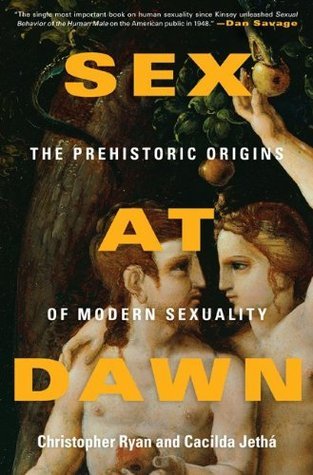
Since Darwin's day, we've been told that sexual monogamy comes naturally to our species. Mainstream science--as well as religious and cultural institutions--has maintained that men and women evolved in families in which a man's possessions and protection were exchanged for a woman's fertility and fidelity. But this narrative is collapsing. Fewer and fewer couples are getting married, and divorce rates keep climbing as adultery and flagging libido drag down even seemingly solid marriages.How can reality be reconciled with the accepted narrative? It can't be, according to renegade thinkers Christopher Ryan and Cacilda Jethá. While debunking almost everything we "know" about sex, they offer a bold alternative explanation in this provocative and brilliant book.Ryan and Jethá's central contention is that human beings evolved in egalitarian groups that shared food, child care, and, often, sexual partners. Weaving together convergent, frequently overlooked evidence from anthropology, archaeology, primatology, anatomy, and psychosexuality, the authors show how far from human nature monogamy really is. Human beings everywhere and in every era have confronted the same familiar, intimate situations in surprisingly different ways. The authors expose the ancient roots of human sexuality while pointing toward a more optimistic future illuminated by our innate capacities for love, cooperation, and generosity.With intelligence, humor, and wonder, Ryan and Jethá show how our promiscuous past haunts our struggles over monogamy, sexual orientation, and family dynamics. They explore why long-term fidelity can be so difficult for so many; why sexual passion tends to fade even as love deepens; why many middle-aged men risk everything for transient affairs with younger women; why homosexuality persists in the face of standard evolutionary logic; and what the human body reveals about the prehistoric origins of modern sexuality.In the tradition of the best historical and scientific writing, Sex at Dawn unapologetically upends unwarranted assumptions and unfounded conclusions while offering a revolutionary understanding of why we live and love as we do.

World-renowned anthropologist and ethnopharmacologist Christian Ratsch provides the latest scientific updates to this classic work on psychoactive flora by two eminent researchers.• Numerous new and rare color photographs complement the completely revised and updated text.• Explores the uses of hallucinogenic plants in shamanic rituals throughout the world.• Cross-referenced by plant, illness, preparation, season of collection, and chemical constituents.Three scientific titans join forces to completely revise the classic text on the ritual uses of psychoactive plants. They provide a fascinating testimony of these "plants of the gods," tracing their uses throughout the world and their significance in shaping culture and history. In the traditions of every culture, plants have been highly valued for their nourishing, healing, and transformative properties. The most powerful of those plants, which are known to transport the human mind into other dimensions of consciousness, have always been regarded as sacred. The authors detail the uses of hallucinogens in sacred shamanic rites while providing lucid explanations of the biochemistry of these plants and the cultural prayers, songs, and dances associated with them. The text is lavishly illustrated with 400 rare photographs of plants, people, ceremonies, and art related to the ritual use of the world's sacred psychoactive flora.

The Red Queen compels us to rethink everything from the persistence of sexism to the endurance of romantic love.Referring to Lewis Carroll's Red Queen from Through the Looking-Glass, a character who has to keep running to stay in the same place, Matt Ridley demonstrates why sex is humanity's best strategy for outwitting its constantly mutating internal predators. The Red Queen answers dozens of other riddles of human nature and culture—including why men propose marriage, the method behind our maddening notions of beauty, and the disquieting fact that a woman is more likely to conceive a child by an adulterous lover than by her husband. The Red Queen offers an extraordinary new way of interpreting the human condition and how it has evolved.

At the heart of this classic, seminal book is Julian Jaynes's still-controversial thesis that human consciousness did not begin far back in animal evolution but instead is a learned process that came about only three thousand years ago and is still developing. The implications of this revolutionary scientific paradigm extend into virtually every aspect of our psychology, our history and culture, our religion -- and indeed our future.

A groundbreaking, controversial dive into the role psychedelics have played in the human experience of the Divine throughout Western history, and the answer to a 2,000 year old mystery that could shake the Church to its foundations.The Immortality Key connects the lost, psychedelic sacrament of Greek religion to early Christianity—exposing the true origins of Western Civilization. In the tradition of unsolved historical mysteries like David Grann's Killers of the Flower Moon and Douglas Preston's The Lost City of the Monkey God, Brian Muraresku’s 10-year investigation takes the reader through Greece, Germany, Spain, France and Italy, offering unprecedented access to the hidden archives of the Louvre and the Vatican along the way.In The Immortality Key, Muraresku explores a little-known connection between the best-kept secret in Ancient Greece and Christianity. This is the real story of the most famous human being who ever lived (Jesus) and the biggest religion the world has ever known. Today, 2.4 billion people are Christian. That's one third of the planet. But do any of them really know how it all started?Before Jerusalem, before Rome, before Mecca—there was Eleusis: the spiritual capital of the ancient world. It promised immortality to Plato and the rest of Athens's greatest minds with a very simple formula: drink this potion, see God. Shrouded in secrecy for millennia, the Ancient Greek sacrament was buried when the newly Christianized Roman Empire obliterated Eleusis in the fourth century AD.Renegade scholars in the 1970s claimed the Greek potion was psychedelic, just like the original Christian Eucharist that replaced it. In recent years, vindication for the disgraced theory has been quietly mounting in the laboratory. The rapidly growing field of archaeological chemistry has proven the ancient use of visionary drugs. And with a single dose of psilocybin, the psycho-pharmacologists at Johns Hopkins and NYU are now turning self-proclaimed atheists into instant believers. No one has ever found hard, scientific evidence of drugs connected to Eleusis, let alone early Christianity. Until now.Armed with key documents never before translated into English, convincing analysis, and a captivating spirit of quest, Muraresku mines science, classical literature, biblical scholarship and art to deliver the hidden key to eternal life, bringing us to what clinical psychologist William Richards calls "the edge of an awesomely vast frontier."Featuring a Foreword by Graham Hancock, the New York Times bestselling author of America Before: The Key to Earth's Lost Civilization.

Harvard University’s Joseph Henrich, Chair of the Department of Human Evolutionary Biology, delivers a bold, epic investigation into the development of the Western mind, global psychological diversity, and its impact on the worldPerhaps you are raised in a society that is Western, Educated, Industrialized, Rich, and Democratic. If so, you’re rather psychologically peculiar.Unlike much of the world today, and most people who have ever lived, WEIRD people are highly individualistic, self-obsessed, control-oriented, nonconformist, and analytical. They focus on themselves—their attributes, accomplishments, and aspirations—over their relationships and social roles. How did WEIRD populations become so psychologically distinct? What role did these psychological differences play in the industrial revolution and the global expansion of Europe during the last few centuries? Did these differences have an impact on the development of the laws, economic systems, and governments that now dominate the world?In W.E.I.R.D. Minds, Joseph Henrich draws on cutting-edge research in anthropology, psychology, economics, and evolutionary biology to explore these questions and more. He illuminates the origins and evolution of family structures, marriage, and religion, and the profound impact these cultural transformations had on human psychology. Mapping these shifts through ancient history and late antiquity, Henrich reveals that the most fundamental institutions of kinship and marriage changed dramatically under pressure from the Roman Catholic Church. It was these changes that gave rise to the WEIRD psychology that would coevolve with impersonal markets, occupational specialization, and free competition—laying the foundation for the modern world.Provocative and engaging in both its broad scope and its surprising details, W.E.I.R.D. Minds explores how culture, institutions, and psychology shape one another, and explains what this means for both our most personal sense of who we are as individuals and also the large-scale social, political, and economic forces that drive human history.

“A manifesto of sorts for anyone who makes art [and] cares for it.” —Zadie Smith“The best book I know of for talented but unacknowledged creators. . . . A masterpiece.” —Margaret Atwood“No one who is invested in any kind of art . . . can read The Gift and remain unchanged.” —David Foster WallaceBy now a modern classic, The Gift is a brilliantly orchestrated defense of the value of creativity and of its importance in a culture increasingly governed by money and overrun with commodities. This book is even more necessary today than when it first appeared.An illuminating and transformative book, and completely original in its view of the world, The Gift is cherished by artists, writers, musicians, and thinkers. It is in itself a gift to all who discover the classic wisdom found in its pages.

The fascinating account of a pioneering ethnobotanist’s travels in the Amazon—at once a gripping adventure story, a passionate argument for conservationism, and an investigation into the healing power of plants, by the author of The What Everyone Needs to KnowFor thousands of years, healers have used plants to cure illness. Aspirin, the world's most widely used drug, is based on compounds originally extracted from the bark of a willow tree, and more than a quarter of medicines found on pharmacy shelves contain plant compounds. Now Western medicine, faced with health crises such as AIDS, Alzheimer's disease, and cancer, has begun to look to the healing plants used by indigenous peoples to develop powerful new medicines. Nowhere is the search more promising than in the Amazon, the world's largest tropical forest, home to a quarter of all botanical species on this planet—as well as hundreds of Indian tribes whose medicinal plants have never been studied by Western scientists. In Tales of a Shaman's Apprentice, ethnobotanist Mark J. Plotkin recounts his travels and studies with some of the most powerful Amazonian shamans, who taught him the plant lore their tribes have spent thousands of years gleaning from the rain forest.For more than a decade, Dr. Plotkin raced against time to harvest and record new plants before the rain forests' fragile ecosystems succumb to overdevelopment—and before the Indians abandon their own culture and learning for the seductive appeal of Western material culture. Tales of a Shaman's Apprentice relates nine of the author's quests, taking the reader along on a wild odyssey as he participates in healing rituals; discovers the secret of curare, the lethal arrow poison that kills in minutes; tries the hallucinogenic snuff epena that enables the Indians to speak with their spirit world; and earns the respect and fellowship of the mysterious shamans as he proves that he shares both their endurance and their reverence for the rain forest.

Jean Liedloff, an American writer, spent two and a half years in the South American jungle living with Stone Age Indians. The experience demolished her Western preconceptions of how we should live and led her to a radically different view of what human nature really is. She offers a new understanding of how we have lost much of our natural well-being and shows us practical ways to regain it for our children and for ourselves.

In his bestselling The Moral Animal, Robert Wright applied the principles of evolutionary biology to the study of the human mind. Now Wright attempts something even more explaining the direction of evolution and human history–and discerning where history will lead us next.In The Logic of Human Destiny, Wright asserts that, ever since the primordial ooze, life has followed a basic pattern. Organisms and human societies alike have grown more complex by mastering the challenges of internal cooperation. Wright's narrative ranges from fossilized bacteria to vampire bats, from stone-age villages to the World Trade Organization, uncovering such surprises as the benefits of barbarian hordes and the useful stability of feudalism. Here is history endowed with moral significance–a way of looking at our biological and cultural evolution that suggests, refreshingly, that human morality has improved over time, and that our instinct to discover meaning may itself serve a higher purpose. Insightful, witty, profound, Nonzero offers breathtaking implications for what we believe and how we adapt to technology's ongoing transformation of the world.

Anthropologist Johannes Wilbert here presents a comprehensive ethnography of magico-religious, medicinal, and recreational tobacco use among native South American societies. Surveying nearly three hundred societies, Wilbert has found that South American Indians employ numerous means of nicotine application and that a close functional relationship exists between tobacco and shamanism. His book is "a superb reference and a pleasure to read."—Robert Byck, M.D., Yale University School of Medicine

In this classic work of economic history and social theory, Karl Polanyi analyzes the economic and social changes brought about by the "great transformation" of the Industrial Revolution. His analysis explains not only the deficiencies of the self-regulating market, but the potentially dire social consequences of untempered market capitalism. New introductory material reveals the renewed importance of Polanyi's seminal analysis in an era of globalization and free trade.

A scientific investigation and personal adventure story about zombis and the voudoun culture of Haiti by a Harvard scientist.In April 1982, ethnobotanist Wade Davis arrived in Haiti to investigate two documented cases of zombis—people who had reappeared in Haitian society years after they had been officially declared dead and had been buried. Drawn into a netherworld of rituals and celebrations, Davis penetrated the vodoun mystique deeply enough to place zombification in its proper context within vodoun culture. In the course of his investigation, Davis came to realize that the story of vodoun is the history of Haiti—from the African origins of its people to the successful Haitian independence movement, down to the present day, where vodoun culture is, in effect, the government of Haiti’s countryside.The Serpent and the Rainbow combines anthropological investigation with a remarkable personal adventure to illuminate and finally explain a phenomenon that has long fascinated Americans.

One of our most influential anthropologists reevaluates her long and illustrious career by returning to her roots--and the roots of life as we know it.When Elizabeth Marshall Thomas first arrived in Africa to live among the Kalahari San, or bushmen, it was 1950, she was nineteen years old, and these last surviving hunter-gatherers were living as humans had lived for 15,000 centuries. Thomas wound up writing about their world in a seminal work, The Harmless People (1959). It has never gone out of print.Back then, this was uncharted territory and little was known about our human origins. Today, our beginnings are better understood. And after a lifetime of interest in the bushmen, Thomas has come to see that their lifestyle reveals great, hidden truths about human evolution.As she displayed in her bestseller, The Hidden Life of Dogs, Thomas has a rare gift for giving voice to the voices we don't usually listen to, and helps us see the path that we have taken in our human journey. In The Old Way, she shows how the skills and customs of the hunter-gatherer share much in common with the survival tactics of our animal predecessors. And since it is "knowledge, not objects, that endure" over time, Thomas vividly brings us to see how linked we are to our origins in the animal kingdom.The history of mankind that most of us know is only the tip of the iceberg, a brief stint compared to fifteen thousand centuries of life as roving clans that seldom settled down adapted every day to changes in environment and food supply, and lived for the most part like the animal ancestors from which they evolved. Those origins are not so easily abandoned, Thomas suggests, and our wired, documented, and market-driven society has plenty to learn from the Bushmen of the Kalahari about human evolution. As she displayed in The Hidden Life of Dogs, Thomas helps us see the path that we have taken in our human journey. In The Old Way, she shows how the skills and customs of the hunter-gatherer share much in common with the survival tactics of our animal predecessors. And since it is "knowledge, not objects, that endure" over time, Thomas brings us to see how linked we are to our origins in the animal kingdom.

Can we trust our senses to tell us the truth? Challenging leading scientific theories that claim that our senses report back objective reality, cognitive scientist Donald Hoffman argues that while we should take our perceptions seriously, we should not take them literally. How can it be possible that the world we see is not objective reality? And how can our senses be useful if they are not communicating the truth? Hoffman grapples with these questions and more over the course of this eye-opening work. Ever since Homo sapiens has walked the earth, natural selection has favored perception that hides the truth and guides us toward useful action, shaping our senses to keep us alive and reproducing. We observe a speeding car and do not walk in front of it; we see mold growing on bread and do not eat it. These impressions, though, are not objective reality. Just like a file icon on a desktop screen is a useful symbol rather than a genuine representation of what a computer file looks like, the objects we see every day are merely icons, allowing us to navigate the world safely and with ease. The real-world implications for this discovery are huge. From examining why fashion designers create clothes that give the illusion of a more “attractive” body shape to studying how companies use color to elicit specific emotions in consumers, and even dismantling the very notion that spacetime is objective reality, The Case Against Reality dares us to question everything we thought we knew about the world we see. 40 illustrations; 8 pages of color illustrations

From Neanderthal string to 3D knitting, an “expansive” global history that highlights “how textiles truly changed the world” (Wall Street Journal)The story of humanity is the story of textiles—as old as civilization itself. Since the first thread was spun, the need for textiles has driven technology, business, politics, and culture.In The Fabric of Civilization, Virginia Postrel synthesizes groundbreaking research from archaeology, economics, and science to reveal a surprising history. From Minoans exporting wool colored with precious purple dye to Egypt, to Romans arrayed in costly Chinese silk, the cloth trade paved the crossroads of the ancient world. Textiles funded the Renaissance and the Mughal Empire; they gave us banks and bookkeeping, Michelangelo’s David and the Taj Mahal. The cloth business spread the alphabet and arithmetic, propelled chemical research, and taught people to think in binary code. Assiduously researched and deftly narrated, The Fabric of Civilization tells the story of the world’s most influential commodity.“We are taken on a journey as epic, and varying, as the Silk Road itself.… [The Fabric of Civilization is] like a swatch of a Florentine Renaissance brocade: carefully woven, the technique precise, the colors a mix of shade and shine and an accurate representation of the whole cloth."—New York Times“Textile-making hasn’t gotten enough credit for its own sophistication, and for all the ways it undergirds human technological innovation—an error Virginia Postrel’s erudite and complete book goes a long way toward correcting at last.”—Wired
"One of the most profound and illuminating studies of this century to have been published in recent decades." —John Gray, New York Times Book ReviewHailed as "a magisterial critique of top-down social planning" by the New York Times, this essential work analyzes disasters from Russia to Tanzania to uncover why states so often fail—sometimes catastrophically—in grand efforts to engineer their society or their environment, and uncovers the conditions common to all such planning disasters."Beautifully written, this book calls into sharp relief the nature of the world we now inhabit." —New Yorker"A tour de force." —Charles Tilly, Columbia University

Ambitiously tackling the nature of economic life and how to study it comparatively, Stone Age Economics includes six studies that reflect the author's ideas on revising traditional views of hunter-gatherer and so-called primitive societies, revealing them to be the original affluent society. When it was originally published in 1974, E. Evans-Pritchard of the Times Literary Supplement noted that this classic study of anthropological economics "is rich in factual evidence and in ideas, so rich that a brief review cannot do it justice; only another book could do that."

In this groundbreaking work of science, history, and archaeology, Charles C. Mann radically alters our understanding of the Americas before the arrival of Columbus in 1492.Contrary to what so many Americans learn in school, the pre-Columbian Indians were not sparsely settled in a pristine wilderness; rather, there were huge numbers of Indians who actively molded and influenced the land around them. The astonishing Aztec capital of Tenochtitlan had running water and immaculately clean streets, and was larger than any contemporary European city. Mexican cultures created corn in a specialized breeding process that it has been called man’s first feat of genetic engineering. Indeed, Indians were not living lightly on the land but were landscaping and manipulating their world in ways that we are only now beginning to understand. Challenging and surprising, this a transformative new look at a rich and fascinating world we only thought we knew.

A Radical History of Plants, Drugs & Human EvolutionFor the first time in paperback, the counterculture manifesto on mind-altering drugs & hallucinogens. Illustrated.

Trickster Makes This World solidifies Lewis Hyde's reputation as, in Robert Bly's words, "the most subtle, thorough, and brilliant mythologist we now have." In it, Hyde now brings to life the playful and disruptive side of human imagination as it is embodied in trickster mythology. He first revisits the old stories--Hermes in Greece, Eshu in West Africa, Krishna in India, Coyote in North America, among others--and then holds them up against the life and work of more recent Picasso, Duchamp, Ginsberg, John Cage, and Frederick Douglass. Authoritative in its scholarship, loose-limbed in its style, Trickster Makes This World ranks among the great works of modern cultural criticism.

Forse non tutti sanno che:- il 10% dei bambini sono allevati da un uomo che non è il loro padre genetico, anche se crede di esserlo;- meno dell'1% degli spermatozoi eiaculati da un uomo è in grado di fecondare l'ovulo; il rimanente 99% serve solo a ingaggiare guerre sessuali con spermatozoi di altri uomini;- un uomo e una donna, che si trovino nel deserto o in una modernissima città, avranno da due a tremila rapporti sessuali in tutta la loro vita;- raramente le scappatelle vengono scoperte e anche i tradimenti di lunga durata hanno solo il 50% di probabilità di essere smascherati.Guerre sessuali è il risultato di anni di rigorose ricerche e ci aiuta a comprendere il nostro comportamento sessuale nella sua complesità e, a volte, apparente perversità.

The volume itself is a onsummatje example of the art of bookmaking. Campbell's scholarly and readable text is integrated throughout with a profusion of color plates, specially-commissioned full-color maps, outstanidng black and white photographs, unique drawings, and numerous illuminating charts. Drawing on cultural and art history, as well as on anthropology,ethnology,archaeology,paleontology, and linguistics, THE WAY OF THE ANIMAL POWERS will be indispensable to all those interested in mythology, comparative religion, history , and the study of man.

An astonishing work of cultural criticism, this book is widely recognized as a brilliant and devastating challenge to conventional views of literature, anthropology, religion, and psychoanalysis. In its scope and interest it can be compared with Freud's Totem and Taboo, the subtext Girard refutes with polemic daring, vast erudition, and a persuasiveness that leaves the reader compelled to respond, one way or another.This is the single fullest summation of Girard's ideas to date, the book by which they will stand or fall. In a dialogue with two psychiatrists (Jean-Michel Oughourlian and Guy Lefort), Girard probes an encyclopedic array of topics, ranging across the entire spectrum of anthropology, psychoanalysis, and cultural production.Girard's point o departure is what he calls 'mimesis,' the conflict that arises when human rivals compete to differentiate themselves from each other, yet succeed only in becoming more and more alike. At certain points in the life of a society, according to Girard, this mimetic conflict erupts into a crisis in which all difference dissolves in indiscriminate violence. In primitive societies, such crises were resolved by the 'scapegoating mechanism,' in which the community, en masse, turned on an unpremeditated victim. The repression of this collective murder and its repetition in ritual sacrifice then formed the foundations of both religion and the restored social order.How does Christianity, at once the most 'sacrificial' of religions and a faith with a non-violent ideology, fit into this scheme? Girard grants Freud's point, in Totem and Taboo, that Christianity is similar to primitive religion, but only to refute Freud—if Christ is sacrificed, Girard argues, it is not because God willed it, but because human beings wanted it.The book is not merely, or perhaps not mainly, biblical exegesis, for within its scope fall some of the most vexing problems of social history—the paradox that violence has social efficacy, the function of the scapegoat, the mechanism of anti-semitism.

Are men literally born to cheat? Does monogamy actually serve women's interests? These are among the questions that have made The Moral Animal one of the most provocative science books in recent years. Wright unveils the genetic strategies behind everything from our sexual preferences to our office politics--as well as their implications for our moral codes and public policies. Illustrations.

The story of two generations of scientific explorers in South America—Richard Evans Schultes and his protégé Wade Davis—an epic tale of adventure and a compelling work of natural history.In 1941, Professor Richard Evan Schultes took a leave from Harvard and disappeared into the Amazon, where he spent the next twelve years mapping uncharted rivers and living among dozens of Indian tribes. In the 1970s, he sent two prize students, Tim Plowman and Wade Davis, to follow in his footsteps and unveil the botanical secrets of coca, the notorious source of cocaine, a sacred plant known to the Inca as the Divine Leaf of Immortality.A stunning account of adventure and discovery, betrayal and destruction, One River is a story of two generations of explorers drawn together by the transcendent knowledge of Indian peoples, the visionary realms of the shaman, and the extraordinary plants that sustain all life in a forest that once stood immense and inviolable.

This adventure in science and imagination, which the Medical Tribune said might herald "a Copernican revolution for the life sciences," leads the reader through unexplored jungles and uncharted aspects of mind to the heart of knowledge.In a first-person narrative of scientific discovery that opens new perspectives on biology, anthropology, and the limits of rationalism, The Cosmic Serpent reveals how startlingly different the world around us appears when we open our minds to it.

Note: This book was originally published as Not a Hazardous Sport. When British anthropologist Nigel Barley set up home among the Dowayo people in northern Cameroon, he knew how fieldwork should be conducted. Unfortunately, nobody had told the Dowayo. His compulsive, witty account of first fieldwork offers a wonderfully inspiring introduction to the real life of a cultural anthropologist doing research in a Third World area. Both touching and hilarious, Barley's unconventional story—in which he survived boredom, hostility, disaster, and illness—addresses many critical issues in anthropology and in fieldwork.

"A display of scientific courage and imagination." ―William Saletan, New York Times Book Review Why do people―even identical twins reared in the same home―differ so much in personality? Armed with an inquiring mind and insights from evolutionary psychology, Judith Rich Harris sets out to solve the mystery of human individuality. 12 illustrations

If, as Darwin suggests, evolution relentlessly encourages the survival of the fittest, why are humans compelled to live in cooperative, complex societies? In this fascinating examination of the roots of human trust and virtue, a zoologist and former American editor of the Economist reveals the results of recent studies that suggest that self-interest and mutual aid are not at all incompatible. In fact, he points out, our cooperative instincts may have evolved as part of mankind's natural selfish behavior—by exchanging favors we can benefit ourselves as well as others.Brilliantly orchestrating the newest findings of geneticists, psychologists, and anthropologists, The Origins of Virtue re-examines the everyday assumptions upon which we base our actions towards others, whether in our roles as parents, siblings, or trade partners. With the wit and brilliance of The Red Queen , his acclaimed study of human and animal sexuality, Matt Ridley shows us how breakthroughs in computer programming, microbiology, and economics have given us a new perspective on how and why we relate to each other.

Could the story of mankind be far older than we have previously believed? Using tools as varied as archaeo-astronomy, geology, and computer analysis of ancient myths, Graham Hancock presents a compelling case to suggest that it is.In Fingerprints of the Gods, Hancock embarks on a worldwide quest to put together all the pieces of the vast and fascinating jigsaw of mankind’s hidden past. In ancient monuments as far apart as Egypt’s Great Sphinx, the strange Andean ruins of Tihuanaco, and Mexico’s awe-inspiring Temples of the Sun and Moon, he reveals not only the clear fingerprints of an as-yet-unidentified civilization of remote antiquity, but also startling evidence of its vast sophistication, technological advancement, and evolved scientific knowledge. A record-breaking number one bestseller in Britain, Fingerprints of the Gods contains the makings of an intellectual revolution, a dramatic and irreversible change in the way that we understand our past—and so our future.And Fingerprints of the Gods tells us something more. As we recover the truth about prehistory, and discover the real meaning of ancient myths and monuments, it becomes apparent that a warning has been handed down to us, a warning of terrible cataclysm that afflicts the Earth in great cycles at irregular intervals of time—a cataclysm that may be about to recur.

The story of a remarkable spiritual journey, the first awesome steps on the road to becoming "a man of knowledge," the road that continues with A Separate Reality and Journey to Ixtlan. Includes the teachings and a structural analysis.

Lauded by critics and devoured by countless readers as a companion to the acclaimed PBS series, this work traces the development of science as an expression of the special gifts that characterize man and make him preeminent among animals. Bronowski's exciting, splendidly illustrated investigation offers a new perspective not just on science, but on civilization itself. Photographs.

More than three decades after its first publication, Edward Said's groundbreaking critique of the West's historical, cultural, and political perceptions of the East has become a modern classic.In this wide-ranging, intellectually vigorous study, Said traces the origins of "orientalism" to the centuries-long period during which Europe dominated the Middle and Near East and, from its position of power, defined "the orient" simply as "other than" the occident. This entrenched view continues to dominate western ideas and, because it does not allow the East to represent itself, prevents true understanding. Essential, and still eye-opening, Orientalism remains one of the most important books written about our divided world.

The secretive Mysteries conducted at Eleusis in Greece for nearly two millennia have long puzzled scholars with strange accounts of initiates experiencing otherworldly journeys. In this groundbreaking work, three experts—a mycologist, a chemist and a historian—argue persuasively that the sacred potion given to participants in the course of the ritual contained a psychoactive entheogen. The authors then expand the discussion to show that natural psychedelic agents have been used in spiritual rituals across history and cultures. Although controversial when first published in 1978, the book’s hypothesis has become more widely accepted in recent years, as knowledge of ethnobotany has deepened. The authors have played critical roles in the modern rediscovery of entheogens, and The Road to Eleusis presents an authoritative exposition of their views. The book’s themes of the universality of experiential religion, the suppression of that knowledge by exploitative forces, and the use of psychedelics to reconcile the human and natural worlds make it a fascinating and timely read. This 30th anniversary edition includes an appreciative preface by religious scholar Huston Smith and an updated exploration of the chemical evidence by Peter Webster.

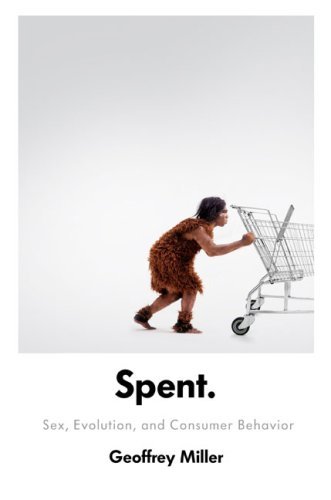
A leading evolutionary psychologist probes the hidden instincts behind our working, shopping, and spendingEvolutionary psychology-the compelling science of human nature-has clarified the prehistoric origins of human behavior and influenced many fields ranging from economics to personal relationships. In Spent Geoffrey Miller applies this revolutionary science's principles to a new the sensual wonderland of marketing and status seeking that we call American consumer culture. Starting with the basic notion that the goods and services we buy unconsciously advertise our biological potential as mates and friends, Miller examines the hidden factors that dictate our choices in everything from lipstick to cars, from the magazines we read to the music we listen to. With humor and insight, Miller analyzes an array of product choices and deciphers what our decisions say about ourselves, giving us access to a new way of understanding-and improving-our behaviors. Like Freakonomics or The Tipping Point, Spent is a bold and revelatory book that illuminates the unseen logic behind the chaos of consumerism and suggests new ways we can become happier consumers and more responsible citizens.

Before there was money, there was debt.Every economics textbook says the same thing: Money was invented to replace onerous and complicated barter systems—to relieve ancient people from having to haul their goods to market. The problem with this version of history? There’s not a shred of evidence to support it.Here anthropologist David Graeber presents a stunning reversal of conventional wisdom. He shows that for more than 5,000 years, since the beginnings of the first agrarian empires, humans have used elaborate credit systems to buy and sell goods—that is, long before the invention of coins or cash. It is in this era, Graeber argues, that we also first encounter a society divided into debtors and creditors. Graeber shows that arguments about debt and debt forgiveness have been at the center of political debates from Italy to China, as well as sparking innumerable insurrections. He also brilliantly demonstrates that the language of the ancient works of law and religion (words like “guilt,” “sin,” and “redemption”) derive in large part from ancient debates about debt, and shape even our most basic ideas of right and wrong. We are still fighting these battles today without knowing it.Debt: The First 5,000 Years is a fascinating chronicle of this little known history—as well as how it has defined human history, and what it means for the credit crisis of the present day and the future of our economy.

Virtually all human societies were once organized tribally, yet over time most developed new political institutions which included a central state that could keep the peace and uniform laws that applied to all citizens. Some went on to create governments that were accountable to their constituents. We take these institutions for granted, but they are absent or are unable to perform in many of today’s developing countries—with often disastrous consequences for the rest of the world.Francis Fukuyama, author of the bestselling The End of History and the Last Man and one of our most important political thinkers, provides a sweeping account of how today’s basic political institutions developed. The first of a major two-volume work, The Origins of Political Order begins with politics among our primate ancestors and follows the story through the emergence of tribal societies, the growth of the first modern state in China, the beginning of the rule of law in India and the Middle East, and the development of political accountability in Europe up until the eve of the French Revolution.Drawing on a vast body of knowledge—history, evolutionary biology, archaeology, and economics—Fukuyama has produced a brilliant, provocative work that offers fresh insights on the origins of democratic societies and raises essential questions about the nature of politics and its discontents.

Humans live in landscapes of make-believe. We spin fantasies. We devour novels, films, and plays. Even sporting events and criminal trials unfold as narratives. Yet the world of story has long remained an undiscovered and unmapped country. It’s easy to say that humans are “wired” for story, but why?In this delightful and original book, Jonathan Gottschall offers the first unified theory of storytelling. He argues that stories help us navigate life’s complex social problems—just as flight simulators prepare pilots for difficult situations. Storytelling has evolved, like other behaviors, to ensure our survival.Drawing on the latest research in neuroscience, psychology, and evolutionary biology, Gottschall tells us what it means to be a storytelling animal. Did you know that the more absorbed you are in a story, the more it changes your behavior? That all children act out the same kinds of stories, whether they grow up in a slum or a suburb? That people who read more fiction are more empathetic?Of course, our story instinct has a darker side. It makes us vulnerable to conspiracy theories, advertisements, and narratives about ourselves that are more “truthy” than true. National myths can also be terribly dangerous: Hitler’s ambitions were partly fueled by a story.But as Gottschall shows in this remarkable book, stories can also change the world for the better. Most successful stories are moral—they teach us how to live, whether explicitly or implicitly, and bind us together around common values. We know we are master shapers of story. The Storytelling Animal finally reveals how stories shape us.

Jon Ronson meets David Grann in this fascinating, wildly entertaining adventure and travel story about how culture can make us go totally insaneThe Geography of Madness is an investigation of "culture-bound" syndromes, which are far stranger than they sound. Why is it, for example, that some men believe, against all reason, that vandals stole their penises, even though they're in good physical shape? In The Geography of Madness, acclaimed magazine writer Frank Bures travels around the world to trace culture-bound syndromes to their sources—and in the process, tells a remarkable story about the strange things all of us believe.Book Club Discussion Questions: For the paperback edition, a list of book club discussion questions is also being issued. If you’d like to add the The Geography of Madness to your group’s reading list, here are several conversation starters:1) One main themes of The Geography of Madness is that stories (about the world, about our lives, about our bodies) are contagious. Can you think of a story, or an experience, that changed what you believed was possible?2) Do you believe the brain and the mind are the same thing? If not, what is the difference? 3) The stories in The Geography of Madness raise the question of free will: How much do you choose the life you live? How much do you learn (or catch) you life choices from those around you? 4) Have you ever found yourself immersed in a situation where you did not know the rules? What was that like?5) In The Geography of Madness, the author argues that our mindset and our expectations have biological consequences. Does that resemble your experience? If so, how?6) Try to imagine living in a world where it was possible to have your genitals stolen, either by magic or by ghosts. How would you protect yourself?7) In The Geography of Madness, the author argues that a strong sense of self—of your story— can help to activate your endogenous (internal) healing systems and vice versa. Do you remember a time when a stressful or difficult period seemed to be followed by a health problem or sickness? 8) In The Geography of Madness, did anyone’s genital actually disappear? If not, what happened? Does it matter?9) Is there a belief that everyone around you holds, but that you don’t share? How did you come to doubt this?10) The Handbook of Depression points to a genetic marker associated with greater vulnerability to depression. Yet this link only holds true in Western cultures. Why would that be?11) Have you ever had a health problem you were afraid to talk about, or that others didn’t believe in?12) In The Geography of Madness, the author argues that cultural syndromes are “real” syndromes, but that their causes might not lie where we think they do. Do you think they are “real” or “imaginary”? 13) Over the last few years, gluten intolerance has been rising. This rise occurs at a time of increasing anxiety about the relationship between food, health and identity. What’s changed: our bodies or our culture?14) After reading The Geography of Madness, how would you describe what culture is?15) How much does a your culture create you? How much do you create your culture?16) Have you ever had a cultural syndrome?

A few million years ago, our ancestors came down from the trees and began to stand upright, freeing our hands to create tools and our minds to grapple with the world around us. Leonard Mlodinow takes us on a passionate and inspiring tour through the exciting history of human progress and the key events in the development of science. In the process, he presents a fascinating new look at the unique characteristics of our species and our society that helped propel us from stone tools to written language and through the birth of chemistry, biology, and modern physics to today’s technological world. Along the way he explores the cultural conditions that influenced scientific thought through the ages and the colorful personalities of some of the great philosophers, scientists, and thinkers: Galileo, who preferred painting and poetry to medicine and dropped out of university; Isaac Newton, who stuck needlelike bodkins into his eyes to better understand changes in light and color; and Antoine Lavoisier, who drank nothing but milk for two weeks to examine its effects on his body. Charles Darwin, Albert Einstein, Werner Heisenberg, and many lesser-known but equally brilliant minds also populate these pages, each of their stories showing how much of human achievement can be attributed to the stubborn pursuit of simple questions (why? how?), bravely asked. The Upright Thinkers is a book for science lovers and for anyone interested in creative thinking and in our ongoing quest to understand our world. At once deeply informed, accessible, and infused with the author’s trademark wit, this insightful work is a stunning tribute to humanity’s intellectual curiosity. (With black-and-white illustrations throughout.)

Western medicine has not been particularly successful at getting people relief from conditions like depression, chronic pain, migraine headaches, addiction, and PTSD. Dr. Tafur helps us to understand why.I have watched people spend years in frustration and thousands of dollars consulting an army of specialists, without getting real relief from their problem. Because these and others are diseases deeply connected with the state of our emotional bodies. Too often, the Western medical approach fails to address the emotional dimension of illness. This is where traditional plant medicines, with their ability to alter consciousness and open channels of communication to our emotions, offer so much promise.The stories shared here demonstrate the astonishing-mystical, colorful, metaphysical-effects of ayahuasca and Traditional Amazonian Plant Medicine. Follow Dr. Tafur through the Amazon jungle as he develops a breakthrough understanding of how psychoactive plants interact with the complex network that connects our minds and hearts to our physical anatomy. What Dr. Tafur presents here is nothing short of a paradigm shift for modern medicine, where sacred plants, used properly in ceremony, take their place as important tools in the doctor's medicine chest, offering the missing elements of emotional and spiritual healing that have eluded us for so long.For more information about The Fellowship of The River, please visit https: //drjoetafur.com/the-fellowship-of-the-...

Animal insignifiant parmi les animaux et humain parmi d'autres humains, Sapiens a acquis il y a 70 000 ans des capacités extraordinaires qui l'ont transformé en maître du monde. Harari, Vandermeulen et Casanave racontent avec humour la naissance de l'humanité de l'apparition de Homo sapiens à la Révolution agricole. Une bande dessinée pour repenser tout ce que nous croyions savoir sur l'histoire de l'Humanité.

Political disintegration is a persistent feature of world history. The Collapse of Complex Societies, though written by an archaeologist, will therefore strike a chord throughout the social sciences. Any explanation of societal collapse carries lessons not just for the study of ancient societies, but for the members of all such societies in both the present and future. Dr. Tainter describes nearly two dozen cases of collapse and reviews more than 2000 years of explanations. He then develops a new and far reaching theory that accounts for collapse among diverse kinds of societies, evaluating his model and clarifying the processes of disintegration by detailed studies of the Roman, Mayan and Chacoan collapses.

The distinguished explorer and writer recounts his rediscovery of the Bushmen, outcast survivors from Stone Age Africa. Faced with constant attack from all the peoples who followed them, the last of the Bushmen have retreated to the scorching depths of the Kalahari Desert in southern Africa. After a gruelling trek, van der Post finds the Bushmen, thriving in one of the world’s most inhospitable landscapes, with their physical peculiarities, their cave art and their joyful music-making intact.

Mumford explains the forces that have shaped technology since prehistoric times and shaped the modern world. He shows how tools developed because of significant parallel inventions in ritual, language, and social organization. “It is a stimulating volume, informed both with an enormous range of knowledge and empathetic spirit” (Eliot Fremont-Smith, New York Times). Index; photographs.

The Lonely Crowd is considered by many to be the most influential book of the twentieth century. Its now-classic analysis of the “new middle class” in terms of inner-directed and other-directed social character opened exciting new dimensions in our understanding of the psychological, political, and economic problems that confront the individual in contemporary American society. The 1969 abridged and revised edition of the book is now reissued with a new foreword by Todd Gitlin that explains why the book is still relevant to our own era.

An Adventure of the Mind and SpiritFather Jared Osborne has received an extraordinary assignment from his superiors: Investigate an itinerant preacher stirring up deep trouble in central Europe. His followers all him B, but his enemies say he’s something else: the Antichrist. However, the man Osborne tracks across a landscape of bars, cabarets, and seedy meeting halls is no blasphemous monster—though an earlier era would undoubtedly have rushed him to the burning stake. For B claims to be enunciating a gospel written not on any stone or parchment but in our very genes, opening up a spiritual direction for humanity that would have been unimaginable to any of the prophets or saviors of traditional religion. Pressed by his superiors for a judgment, Osborne is driven to penetrate B’s inner circle, where he soon finds himself an anguished collaborator in the dismantling of his own religious foundations. More than a masterful novel of adventure and suspense, The Story of B is a rich source of compelling ideas from an author who challenges us to rethink our most cherished beliefs.

In his most widely appealing book yet, one of today's leading authors of popular anthropology looks at the intriguing history and peculiar nature of money, tracing our relationship with it from the time when primitive men exchanged cowrie shells to the imminent arrival of the all-purpose electronic cash card.

The remarkable story of a "talking" chimp, a leading scientist, and the profound insights they have uncovered about our speciesHe has been featured in cover stories in Time, Newsweek, and National Geographic, and has been the subject of a "NOVA" documentary. He is directly responsible for discoveries that have forced the scientific community to recast its thinking about the nature of the mind and the origins of language. He is Kanzi, an extraordinary bonobo chimpanzee who has overturned the idea that symbolic language is unique to our species. This is the moving story of how Kanzi learned to converse with humans and the profound lessons he has taught us about our animal cousins, and ourselves.". . . The underlying thesis is informative and well argued . . . Savage-Rumbaugh's results are impressive." — The Washington Post"This popular, absorbing, and controversial account is recommended." — Library Journal

Primitive man's discovery of the ability to change matter from one state to another brought about a profound change in spiritual behavior. In The Forge and the Crucible, Mircea Eliade follows the ritualistic adventures of these ancient societies, adventures rooted in the people's awareness of an awesome new power.The new edition of The Forge and the Crucible contains an updated appendix, in which Eliade lists works on Chinese alchemy published in the past few years. He also discusses the importance of alchemy in Newton's scientific evolution.

From the Pulitzer Prize-winning author of The Denial of Death, a penetrating and insightful perspective on the source of evil in our world."A profound, nourishing book…absolutely essential to the understanding of our troubled times." —Anais Nin"An urgent essay that bears all the marks of a final philosophical raging against the dying of the light." —Newsweek

"Refreshingly broad-brush in its approach...this history provides the big picture."—The Christian Science Monitor. Written from a consciously anti-enthnocentric approach, this fascinating work is a survey of the civilizations of the modern world in terms of the broad sweep and continuities of history, rather than the "event-based" technique of most other texts.ContentsList of mapsTranslator´s introductionBy way of prefaceIntroduction: History and the present dayI. A HISTORY OF CIVILIZATIONS1. Changing vocabulary2. The study of civilization involves all social sciences3. The continuity of civilizationsII. CIVILIZATIONS OUTSIDE EUROPEPart I. Islam and the Muslim World4. History5. Geography6. The greatness and decline of Islam7. The revival of Islam todayPart II: Africa8. The past9. Black Africa: Today and tomorrowPart III: The Far East10. An introduction to the Far East11. The China of the past12. China yesterday and today13. India yesterday and today14. The maritime Far East15. JapanIII. EUROPEAN CIVILIZATIONSPart I: Europe16. Geography and freedom17. Christianity, humanism and scientific thought18. The industrialization of Europe19. Unity in EuropePart II: America20. Latin America, the other New World21. America par excellence: the United States22. Failures and difficulties: From yesterday to the present23. An English-speaking UniversePart III: The other Europe: Muscovy, Russia, the USSR and the CIS24. From the beginning to the October Revolution of 191725. The USSR after 1917Index

The definitive edition of one of the more extraordinary and influential books of our timeThis labyrinthine and extraordinary book, first published more than sixty years ago, was the outcome of Robert Graves's vast reading and curious research into strange territories of folklore, mythology, religion, and magic. Erudite and impassioned, it is a scholar-poet's quest for the meaning of European myths, a polemic about the relations between man and woman, and also an intensely personal document in which Graves explores the sources of his own inspiration and, as he believed, all true poetry.Incorporating all of Graves's final revisions, his replies to two of the original reviewers, and an essay describing the months of illumination in which The White Goddess was written, this is the definitive edition of one of the most influential books of our time.

William Miller embarks on an alluring journey into the world of disgust, showing how it brings order and meaning to our lives even as it horrifies and revolts us. Our notion of the self, intimately dependent as it is on our response to the excretions and secretions of our bodies, depends on it. Cultural identities have frequent recourse to its boundary-policing powers. Love depends on overcoming it, while the pleasure of sex comes in large measure from the titillating violation of disgust prohibitions. Imagine aesthetics without disgust for tastelessness and vulgarity; imagine morality without disgust for evil, hypocrisy, stupidity, and cruelty.Miller details our anxious relation to basic life eating, excreting, fornicating, decaying, and dying. But disgust pushes beyond the flesh to vivify the larger social order with the idiom it commandeers from the sights, smells, tastes, feels, and sounds of fleshly physicality. Disgust and contempt, Miller argues, play crucial political roles in creating and maintaining social hierarchy. Democracy depends less on respect for persons than on an equal distribution of contempt. Disgust, however, signals dangerous division. The high's belief that the low actually smell bad, or are sources of pollution, seriously threatens democracy.Miller argues that disgust is deeply grounded in our ambivalence to it distresses us that the fair is so fragile, so easily reduced to foulness, and that the foul may seem more than passing fair in certain slants of light. When we are disgusted, we are attempting to set bounds, to keep chaos at bay. Of course we fail. But, as Miller points out, our failure is hardly an occasion for despair, for disgust also helps to animate the world, and to make it a dangerous, magical, and exciting place.

This text presents a critical survey of the burgeoning field of political ecology, an interdisciplinary area of research which connects politics and economy to problems of environmental control and ecological change.

For 30 years Roger Fouts has pioneered communication with chimpanzees through sign language--beginning with a mischievous baby chimp named Washoe. This remarkable book describes Fout's odyssey from novice researcher to celebrity scientist to impassioned crusader for the rights of animals. Living and conversing with these sensitive creatures has given him a profound appreciation of what they can teach us about ourselves. It has also made Fouts an outspoken opponent of biomedical experimentation on chimpanzees. A voyage of scientific discovery and interspecies communication, this is a stirring tale of friendship, courage, and compassion that will change forever the way we view our biological--and spritual--next of kin. Fouts is a professor of Psychology.

Shortly before he died, Plenty Coups, the last great Chief of the Crow Nation, told his story up to a certain point. “When the buffalo went away the hearts of my people fell to the ground,” he said, “and they could not lift them up again. After this nothing happened.” It is precisely this point that of a people faced with the end of their way of life that prompts the philosophical and ethical inquiry pursued in Radical Hope. In Jonathan Lear’s view, Plenty Coups’ story raises a profound ethical question that transcends his time and challenges us all: how should one face the possibility that one’s culture might collapse? This is a vulnerability that affects us all insofar as we are all inhabitants of a civilization, and civilizations are themselves vulnerable to historical forces. How should we live with this vulnerability? Can we make any sense of facing up to such a challenge courageously? Using the available anthropology and history of the Indian tribes during their confinement to reservations, and drawing on philosophy and psychoanalytic theory, Lear explores the story of the Crow Nation at an impasse as it bears upon these questions and these questions as they bear upon our own place in the world. His book is a deeply revealing, and deeply moving, philosophical inquiry into a peculiar vulnerability that goes to the heart of the human condition.

From the New York Times bestselling author of Mama's Last Hug and Are We Smart Enough to Know How Smart Animals Are? , a provocative argument that apes have created their own distinctive culturesIn The Ape and the Sushi Master , eminent primatologist Frans de Waal corrects our arrogant assumption that humans are the only creatures to have made the leap from the natural to the cultural domain. The book's title derives from an analogy de Waal draws between the way behavior is transmitted in ape society and the way sushi-making skills are passed down from sushi master to apprentice. Like the apprentice, young apes watch their group mates at close range, absorbing the methods and lessons of each of their elders' actions. Responses long thought to be instinctive are actually learned behavior, de Waal argues, and constitute ape culture. A delightful mix of intriguing anecdote, rigorous clinical study, adventurous field work, and fascinating speculation, The Ape and the Sushi Master shows that apes are not human caricatures but members of our extended family with their own resourcefulness and dignity.

Edwin Hutchins combines his background as an anthropologist and an open ocean racing sailor and navigator in this account of how anthropological methods can be combined with cognitive theory to produce a new reading of cognitive science. His theoretical insights are grounded in an extended analysis of ship navigation -- its computational basis, its historical roots, its social organization, and the details of its implementation in actual practice aboard large ships. The result is an unusual interdisciplinary approach to cognition in culturally constituted activities outside the laboratory -- "in the wild."Hutchins examines a set of phenomena that have fallen in the cracks between the established disciplines of psychology and anthropology, bringing to light a new set of relationships between culture and cognition. The standard view is that culture affects the cognition of individuals. Hutchins argues instead that cultural activity systems have cognitive properties of their own that are different from the cognitive properties of the individuals who participate in them. Each action for bringing a large naval vessel into port, for example, is informed by culture: the navigation team can be seen as a cognitive and computational system.Introducing Navy life and work on the bridge, Hutchins makes a clear distinction between the cognitive properties of an individual and the cognitive properties of a system. In striking contrast to the usual laboratory tasks of research in cognitive science, he applies the principal metaphor of cognitive science -- cognition as computation (adopting David Marr's paradigm) -- to the navigation task. After comparing modern Western navigation with the method practiced in Micronesia, Hutchins explores the computational and cognitive properties of systems that are larger than an individual. He then turns to an analysis of learning or change in the organization of cognitive systems at several scales. Hutchins's conclusion illustrates the costs of ignoring the cultural nature of cognition, pointing to the ways in which contemporary cognitive science can be transformed by new meanings and interpretations. A Bradford Book

This classic work explores the vast differences between oral and literate cultures offering a very clear account of the intellectual, literary and social effects of writing, print and electronic technology. In the course of his study, Walter J. Ong offers fascinating insights into oral genres across the globe and through time, and examines the rise of abstract philosophical and scientific thinking. He considers the impact of orality-literacy studies not only on literary criticism and theory but on our very understanding of what it is to be a human being, conscious of self and other. This is a book no reader, writer or speaker should be without.

What is a meme? First coined by Richard Dawkins in 'The Selfish Gene', a meme is any idea, behavior, or skill that can be transferred from one person to another by imitation: stories, fashions, inventions, recipes, songs, ways of plowing a field or throwing a baseball or making a sculpture. The meme is also one of the most important--and controversial--concepts to emerge since 'The Origin of the Species' appeared nearly 150 years ago.In 'The Meme Machine' Susan Blackmore boldly asserts: "Just as the design of our bodies can be understood only in terms of natural selection, so the design of our minds can be understood only in terms of memetic selection." Indeed, Blackmore shows that once our distant ancestors acquired the crucial ability to imitate, a second kind of natural selection began, a survival of the fittest amongst competing ideas and behaviors. Ideas and behaviors that proved most adaptive - making tools, for example, or using language--survived and flourished, replicating themselves in as many minds as possible. These memes then passed themselves on from generation to generation by helping to ensure that the genes of those who acquired them also survived and reproduced. Applying this theory to many aspects of human life, Blackmore offers brilliant explanations for why we live in cities, why we talk so much, why we can't stop thinking, why we behave altruistically, how we choose our mates, and much more.With controversial implications for our religious beliefs, our free will, our very sense of "self," 'The Meme Machine' offers a provocative theory everyone will soon be talking about.

Acclaimed author Matt Ridley's thrilling follow-up to his bestseller Genome. Armed with the extraordinary new discoveries about our genes, Ridley turns his attention to the nature versus nurture debate to bring the first popular account of the roots of human behaviour. What makes us who we are? In February 2001 it was announced that the genome contains not 100,000 genes as originally expected but only 30,000. This startling revision led some scientists to conclude that there are simply not enough human genes to account for all the different ways people behave: we must be made by nurture, not nature. Matt Ridley argues that the emerging truth is far more interesting than this myth. Nurture depends on genes, too, and genes need nurture. Genes not only predetermine the broad structure of the brain; they also absorb formative experiences, react to social cues and even run memory. They are consequences as well as causes of the will. Published fifty years after the discovery of the double helix of DNA, Nature via Nurture chronicles a new revolution in our understanding of genes. Ridley recounts the hundred years' war between the partisans of nature and nurture to explain how this paradoxical creature, the human being, can be simultaneously free-willed and motivated by instinct and culture. Nature via Nurture is an enthralling, up-to-the-minute account of how genes build brains to absorb experience.

In 1970 James Baldwin & Margaret Mead met for an extraordinary seven-&-a-half-hour discussion about race & society. Mead brought her knowledge of racism as practiced in remote societies around the world. Baldwin brought his personal experience with the legacy of black American history. They talked with candor, passion, rage & brilliance, & their discussion became this unique volume. Here is Baldwin's creativity & fire. Here is Mead's scholarship & reason. Here, for all to see, are their prejudices, their pain, & finally, their shared desire to find the thread that binds us all. "This book...traces a curve beginning in formal statements, moving thru wary affection & intellectual intimacy, ending with a raw confrontation."--�Newsweek. "Margaret Mead and James Baldwin are no ordinary people...their conversation...takes us along to places to which we could not otherwise go."--�Times Literary Supplement (London)

Nature versus nurture - nowhere is the debate more heated than in the areas of sex and sex differences. The Evolution of Human Sexuality adds fuel to the fire. Symons's thesis is that some of the typical differences between men and women in sexual behaviors, attitudes and feelings are innate: identical rearing of males and females will not result in identical sexualities.Anthropology, Sexual Studies, Psychology, Sociology, Gender and Cultural Studies

The essays in this volume represent an approach to human knowledge that has had a profound influence on many recent thinkers. Popper breaks with a traditional commonsense theory of knowledge that can be traced back to Aristotle. A realist and fallibilist, he argues closely and in simple language that scientific knowledge, once stated in human language, is no longer part of ourselves but a separate entity that grows through critical selection.

“A study of primitive people which, for beauty of . . . style and concept, would be hard to match.” — The New York Times Book ReviewIn the 1950s Elizabeth Marshall Thomas became one of the first Westerners to live with the Bushmen of the Kalahari desert in Botswana and South-West Africa. Her account of these nomadic hunter-gatherers, whose way of life had remained unchanged for thousands of years, is a ground-breaking work of anthropology, remarkable not only for its scholarship but for its novelistic grasp of character. On the basis of field trips in the 1980s, Thomas has now updated her book to show what happened to the Bushmen as the tide of industrial civilization—with its flotsam of property rights, wage labor, and alcohol—swept over them. The result is a powerful, elegiac look at an endangered culture as well as a provocative critique of our own."The charm of this book is that the author can so truly convey the strangeness of the desert life in which we perceive human traits as familiar as our own. . . . The Harmless People is a model of the style very simple and precise, perfectly suited to the neat, even fastidious activities of a people who must make their world out of next to nothing." — The Atlantic

Neumann examines how the Feminine has been experienced and expressed in many cultures from prehistory to our own time. Appearing as goddess and demon, gate and pillar, garden and tree, hovering sky and containing vessel, the Feminine is seen as an essential factor in the dialectical relation of individual consciousness, symbolized by the child, to the ungraspable matrix, symbolized by the Great Mother.

Hallucinogens and culture Peter t. Furst

What are the links between environment and world view? Topophilia, the affective bond between people and place, is the primary theme of this book that examines environmental perceptions and values at different levels: the species, the group, and the individual.Yi-Fu Tuan holds culture and environment and topophilia and environment as distinct in order to show how they mutually contribute to the formation of values. Topophilia examines the search for environment in the city, suburb, countryside, and wilderness from a dialectical perspective, distinguishes different types of environmental experience, and describes their character.

The Ghost Dance: The Origins of Religion by Weston La Barre (1915-1996) is a classic search for the origins of religion, employing psychology and anthropology to explain elements of Greek, Egyptian, Jewish, Christian, shamanic and Native American religion.The Ghost Dance offers a fascinating exploration of the history and origins of religious belief from earliest times to the present day. The Ghost Dance takes its place beside other great studies of religion, such as those by Sigmund Freud, Geza Roheim or Mircea Eliade. It draws together his explorations of shamanism, world religion, Native American culture, altered states of consciousness and the use of drugs in belief systems.

Birth, puberty, marriage, and death are, in all cultures, marked by ceremonies which may differ but are universal in function. Arnold van Gennep (1873-1957) was the first anthropologist to note the regularity and significance of the rituals attached to the transitional stages in man's life, and his phrase for these, "the rites of passage," has become a part of the language of anthropology and sociology.

In the rural areas of south-central Mexico, there are believed to be witches who transform themselves into animals in order to suck the blood from the necks of sleeping infants. This book analyzes beliefs held by the great majority of the population of rural Tlaxcala a generation ago and chronicles its drastic transformation since then."The most comprehensive statement on this centrally important ethnographic phenomenon in the last forty years. It bears ready comparison with the two great classics, Evans-Pritchard's Witchcraft Among the Azande and Clyde Kluckhohn's Navaho Witchcraft. "—Henry H. Selby

People can be interested in language, writing and scripts. They may wonder how, when and where did writing evolve? Do alphabets function better than hieroglyphs? And are we today, in the computer age, moving towards a universal language of signs and symbols?

This is a history of the machine and a critical study of its effects on civilization. Mumford has drawn on every aspect of life to explain the machine and to trace its social results. "An extraordinarily wide-ranging, sensitive, and provocative book about a subject upon whichphilosophers have so far shed but little light" (Journal of Philosophy).

For more than a century we've known that much of human evolution occurred in an Ice Age. Starting about 15,000 years ago, temperatures began to rise, the glaciers receded, and sea levels rose. The rise of human civilization and all of recorded history occurred in this warm period, known as the Holocene. Until very recently we had no detailed record of climate changes during the Holocene. Now we do. In this engrossing and captivating look at the human effects of climate variability, Brian Fagan shows how climate functioned as what the historian Paul Kennedy described as one of the "deeper transformations" of history -- a more important historical factor than we understand.

In this classic work, now updated, the author of Culture and Imperialism reveals the hidden agendas and distortions of fact that underlie even the most "objective" coverage of the Islamic world.From the Iranian hostage crisis through the Gulf War and the bombing of the World Trade Center, the American news media have portrayed "Islam" as a monolithic entity, synonymous with terrorism and religious hysteria. At the same time, Islamic countries use "Islam" to justify unrepresentative and often repressive regimes. Combining political commentary with literary criticism, Covering Islam continues Edward Said's lifelong investigation of the ways in which language not only describes but also defines political reality.

From mountain shrines to lowland oases, ethnobiologist Gary Nabhan takes us on a series of journeys with contemporary Papago Indians, the Tohono O'odham, or "Desert People." From these journeys we discover how much the Desert People know about the dynamics of their arid homeland in Arizona and Sonora, Mexico. The Desert Smells Like Rain offers insights into the natural history of desert plants and animals as it documents a dying agricultural tradition that has enriched the biological diversity of the Papago's seemingly harsh environment. Drawing on his extensive scientific research and study of Papago folklore, as well as his years of work among the Desert People in village gardening and nutrition programs, Nabhan portrays a desert-adapted way of life that has persisted despite the pressures of modern civilization.

Analysis of the Encounter between Contemporary Faiths and Archaic Realities

First published in 1951, "Shamanism" soon became the standard work in the study of this mysterious & fascinating phenomenon. Writing as the founder of the modern study of the history of religion, Romanian emigre--scholar Mircea Eliade (1907-86) surveys the practice of Shamanism over two & a half millennia of human history, moving from the Shamanic traditions of Siberia & Central Asia--where Shamanism was first observed--to North & South America, Indonesia, Tibet, China & beyond. In this authoritative survey, Eliade illuminates the magico-religious life of societies that give primacy of place to the figure of the Shaman--at once magician & medicine man, healer & miracle-doer, priest, mystic & poet. Synthesizing the approaches of psychology, sociology & ethnology, "Shamanism" will remain for years to come the reference book of choice for those intrigued by this practice.

Brilliant, illuminating, and immensely absorbing, Collapse is destined to take its place as one of the essential books of our time, raising the urgent question: How can our world best avoid committing ecological suicide?In his million-copy bestseller Guns, Germs, and Steel, Jared Diamond examined how and why Western civilizations developed the technologies and immunities that allowed them to dominate much of the world. Now in this brilliant companion volume, Diamond probes the other side of the equation: What caused some of the great civilizations of the past to collapse into ruin, and what can we learn from their fates?As in Guns, Germs, and Steel, Diamond weaves an all-encompassing global thesis through a series of fascinating historical-cultural narratives. Moving from the Polynesian cultures on Easter Island to the flourishing American civilizations of the Anasazi and the Maya and finally to the doomed Viking colony on Greenland, Diamond traces the fundamental pattern of catastrophe. Environmental damage, climate change, rapid population growth, and unwise political choices were all factors in the demise of these societies, but other societies found solutions and persisted. Similar problems face us today and have already brought disaster to Rwanda and Haiti, even as China and Australia are trying to cope in innovative ways. Despite our own society's apparently inexhaustible wealth and unrivaled political power, ominous warning signs have begun to emerge even in ecologically robust areas like Montana.Brilliant, illuminating, and immensely absorbing, Collapse is destined to take its place as one of the essential books of our time, raising the urgent question: How can our world best avoid committing ecological suicide?

Winner, 2008 Book of the Year, End Malaria Awards, Malaria Foundation International Malaria sickens hundreds of millions of people―and kills one to three million―each year. Despite massive efforts to eradicate the disease, it remains a major public health problem in poorer tropical regions. But malaria has not always been concentrated in tropical areas. How did other regions control malaria and why does the disease still flourish in some parts of the globe? From Russia to Bengal to Palm Beach, Randall Packard’s far-ranging narrative traces the natural and social forces that help malaria spread and make it deadly. He finds that war, land development, crumbling health systems, and globalization―coupled with climate change and changes in the distribution and flow of water―create conditions in which malaria's carrier mosquitoes thrive. The combination of these forces, Packard contends, makes the tropical regions today a perfect home for the disease. Authoritative, fascinating, and eye-opening, this short history of malaria concludes with policy recommendations for improving control strategies and saving lives.

Why are humans one of the few species to have sex in private? Why are human females the only mammals to go through menopause? Why is the human penis so unnecessarily large? There is no more knowledgeable authority than the award-winning author of The Third Chimpanzee to answer these intriguing questions. Here is a delightfully entertaining and enlightening look at the unique sex lives of humans.

The glaciers creepLike snakes that watch their prey, from their far fountains,Slow rolling on.- Percy Shelley, "Mont Blanc," 1816Glaciers in America's far northwest figure prominently in indigenous oral traditions, early travelers' journals, and the work of geophysical scientists. By following such stories across three centuries, this book explores local knowledge, colonial encounters, and environmental change.Do Glaciers Listen? examines conflicting depictions of glaciers to show how natural and social histories are entangled. During late stages of the Little Ice Age, significant geophysical changes coincided with dramatic social upheaval in the Saint Elias Mountains. European visitors brought conceptions of Nature as sublime, as spiritual, or as a resource for human progress. They saw glaciers as inanimate, subject to empirical investigation and measurement. Aboriginal responses were strikingly different. From their perspectives, glaciers were sentient, animate, and quick to respond to human behaviour. In each case, experiences and ideas surrounding glaciers were incorporated into interpretations of social relations.Focusing on these contrasting views, Julie Cruikshank demonstrates how local knowledge is produced, rather than "discovered," through such encounters, and how oral histories conjoin social and biophysical processes. She traces how divergent views continue to weave through contemporary debates about protected areas, parks and the new World Heritage site that encompasses the area where Alaska, British Columbia, and the Yukon Territory now meet. Students and scholars of Native studies and anthropology as well as readers interested in northern studies and colonial encounters will find Do Glaciers Listen? a fascinating read and a rich addition to circumpolar literature.Winner of the Victor Turner Prize for Ethnographic Writing, 2006

The Uses of Haiti tells the truth about uncomfortable matters—uncomfortable, that is, for the structures of power and the doctrinal framework that protects them from scrutiny. It tells the truth about what has been happening in Haiti, and the US role in its bitter fate .—Noam Chomsky, from the introduction In this third edition of the classic The Uses of Haiti , Paul Farmer looks at what has happened to the health of the poor in Haiti since the coup. Winner of a McArthur Genius Award, Paul Farmer is a physician and anthropologist who has worked for 25 years in Haiti, where he serves as medical director of a hospital serving the rural poor. He is the subject of the Tracy Kidder biography, Mountains Beyond Mountains .

The first edition of Frans de Waal's Chimpanzee Politics was acclaimed not only by primatologists for its scientific achievement but also by a much broader audience of politicians, business leaders, and social psychologists for its remarkable insights into very basic human needs and behaviors. In this revised edition―featuring a new gallery of color photographs along with a new introduction and epilogue―de Waal expands and updates his story of the Arnhem colony and its continuing political upheavals. We learn the fate of many memorable chimpanzees and meet the colony's current leaders and their allies. The new edition remains a detailed and thoroughly engrossing account―of sexual rivalries and coalitions, of actions governed by intelligence rather than instinct―and it reaffirms the complex bond between humans and their closest living relatives. As we watch the chimpanzees of Arnhem behave in ways we recognize from Machiavelli (and from the nightly news), de Waal reminds us again that the roots of politics are older than humanity.

From the bestselling social commentator and cultural historian, a fascinating exploration of one of humanity's oldest the celebration of communal joyIn the acclaimed Blood Rites , Barbara Ehrenreich delved into the origins of our species' attraction to war. Here, she explores the opposite impulse, one that has been so effectively suppressed that we lack even a term for the desire for collective joy, historically expressed in ecstatic revels of feasting, costuming, and dancing.Ehrenreich uncovers the origins of communal celebration in human biology and culture. Although sixteenth-century Europeans viewed mass festivities as foreign and "savage," Ehrenreich shows that they were indigenous to the West, from the ancient Greeks' worship of Dionysus to the medieval practice of Christianity as a "danced religion." Ultimately, church officials drove the festivities into the streets, the prelude to widespread Protestants criminalized carnival, Wahhabist Muslims battled ecstatic Sufism, European colonizers wiped out native dance rites. The elites' fear that such gatherings would undermine social hierarchies was the festive tradition inspired French revolutionary crowds and uprisings from the Caribbean to the American plains. Yet outbreaks of group revelry persist, as Ehrenreich shows, pointing to the 1960s rock-and-roll rebellion and the more recent "carnivalization" of sports.Original, exhilarating, and deeply optimistic, Dancing in the Streets concludes that we are innately social beings, impelled to share our joy and therefore able to envision, even create, a more peaceable future.

In Homo Ludens, the classic evaluation of play that has become a "must-read" for those in game design, Dutch philosopher Johan Huizinga defines play as the central activity in flourishing societies. Like civilization, play requires structure and participants willing to create within limits. Starting with Plato, Huizinga traces the contribution of Homo Ludens, or "Man the player" through Medieval Times, the Renaissance, and into our modern civilization. Huizinga defines play against a rich theoretical background, using cross-cultural examples from the humanities, business, and politics. Homo Ludens defines play for generations to come."A happier age than ours once made bold to call our species by the name of Homo Sapiens. In the course of time we have come to realize that we are not so reasonable after all as the Eighteenth Century with its worship of reason and naive optimism, though us; "hence moder fashion inclines to designate our species asHomo Faber Man the Maker. But though faber may not be quite so dubious as sapiens it is, as a name specific of the human being, even less appropriate, seeing that many animals too are makers. There is a third function, howver, applicable to both human and animal life, and just as important as reasoning and making--namely, playing. it seems to me that next to Homo Faber, and perhaps on the same level as Homo Sapiens, Homo Ludens, Man the Player, deserves a place in our nomenclature. "--from the Foreward, by Johan Huizinga

Since its first publication in 1979, this book, together with its companion volume, The Palm and the Pleiades by Stephen Hugh-Jones, has become established as 'the most competent and sophisticated ethnography to date of any South American tropical forest people' (The Times Higher Education Supplement). Both are now available for the first time in paperback. The book is an integrated account of a Northwest Amazonian society, which elucidates the structural models that underlie and unify the domains of kinship, religion, politics and economics. These dynamic models are built from a rich corpus of ethnographic data drawn from extensive field research, and are developed in such a way that, as far as possible, they reproduce an Indian theory of society. Besides enhancing anthropological understanding of a fascinating culture area, the book's highly original approach makes it an important contribution to the general theory of social and cultural structures.

Dr. Carl Sagan takes us on a great reading adventure, offering his vivid and startling insight into the brain of man and beast, the origin of human intelligence, the function of our most haunting legends—and their amazing links to recent discoveries.

Why do we want-and do-so many things that are bad for us? In Mean Genes Terry Burnham and Jay Phelan argue that we need to stop looking to Sigmund Freud for answers and start looking to Charles Darwin. Mean Genes reveals that our struggles for self-improvement are, in fact, battles against our own genes - genes that helped our distant ancestors flourish, but are selfish and out of place in the modern world. Using this evolutionary lens, Mean Genes brilliantly examines the issues that most affect our lives-body image, money, addiction, violence, and relationships, friendship, love, and fidelity-and offers steps to help us lead more satisfying lives.