
Jeremy Narby
Jeremy Narby is an anthropologist and writer. Narby grew up in Canada and Switzerland, studied history at the University of Canterbury, and received a doctorate in anthropology from Stanford University. Narby spent several years living with the Ashaninca in the Peruvian Amazon cataloging indigenous uses of rainforest resources to help combat ecological destruction. Narby has written multiple books, as well as sponsored an expedition to the rainforest for biologists and other scientists to examine indigenous knowledge systems and the utility of Ayahuasca in gaining knowledge. Since 1989, Narby has been working as the Amazonian projects director for the Swiss NGO, Nouvelle Planète.- wiki
10 Books Written
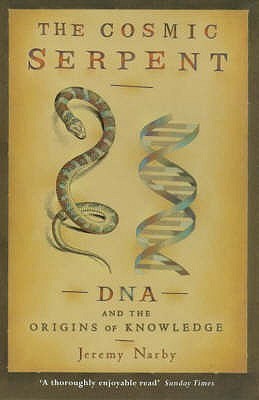
The Cosmic Serpent, DNA and the Origins of Knowledge
by Jeremy Narby
Rating: 4.2 ⭐
• 4 recommendations ❤️
Whilst living amongst Peruvian Indians, anthropologist Jeremy Narby learned of their phenomenal knowledge of plants and biochemical interactions, gained under the influence of the hallucinogen ayahuasca. Despite his initial scepticism, Narby found himself engaged in an increasingly obsessive quest. He researched cutting-edge scholarship in subjects as diverse as molecular biology, shamanism, neurology and mythology, which led him inexorably to the conclusion that the Indians' claims were literally to a consciousness prepared with drugs, biochemical knowledge could indeed be transmitted, through DNA itself.
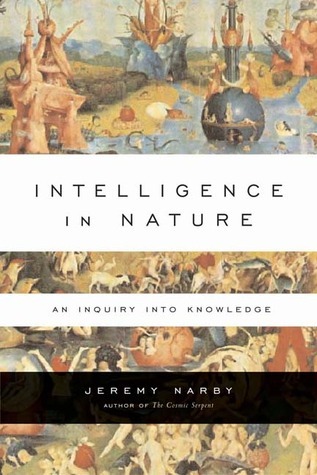
Continuing the journey begun in his acclaimed book The Cosmic Serpent , the noted anthropologist ventures firsthand into both traditional cultures and the most up-todate discoveries of contemporary science to determine nature's secret ways of knowing.Anthropologist Jeremy Narby has altered how we understand the Shamanic cultures and traditions that have undergone a worldwide revival in recent years. Now, in one of his most extraordinary journeys, Narby travels the globe-from the Amazon Basin to the Far East-to probe what traditional healers and pioneering researchers understand about the intelligence present in all forms of life.Intelligence in Nature presents overwhelming illustrative evidence that independent intelligence is not unique to humanity alone. Indeed, bacteria, plants, animals, and other forms of nonhuman life display an uncanny penchant for self-deterministic decisions, patterns, and actions.Narby presents the first in-depth anthropological study of this concept in the West. He not only uncovers a mysterious thread of intelligent behavior within the natural world but also probes the question of what humanity can learn from nature's economy and knowingness in its own search for a saner and more sustainable way of life.

A trailblazing anthropologist and an indigenous Amazonian healer explore the convergence of science and shamanism“The dose makes the poison,” says an old adage, reminding us that substances have the potential to heal or to harm, depending on their use. Although Western medicine treats tobacco as a harmful addictive drug, it is considered medicinal by indigenous people of the Amazon rainforest. In its unadulterated form, it holds a central place in their repertoire of traditional medicines. Along with ayahuasca, tobacco forms a part of treatments designed to heal the body, stimulate the mind, and inspire the soul with visions. In Plant Teachers , anthropologist Jeremy Narby and traditional healer Rafael Chanchari Pizuri hold a cross-cultural dialogue that explores the similarities between ayahuasca and tobacco, the role of these plants in indigenous cultures, and the hidden truths they reveal about nature. Juxtaposing and synthesizing two worldviews, Plant Teachers invites readers on a wide-ranging journey through anthropology, botany, and biochemistry, while raising tantalizing questions about the relationship between science and other ways of knowing.

Conversations on shamanism and mind-altering plants by filmmaker Jan Kounen, anthropologist Jeremy Narby, and writer/filmmaker Vincent Ravalec • Explores how ayahuasca and iboga are tools for communicating with other life-forms • Offers insights into the role this indigenous knowledge can play in solving the current problems facing the world In the Amazon, shamans do not talk in terms of hallucinogens but of tools for communicating with other life-forms. Ayahuasca, for example, is first and foremost a means of breaking down the barrier that separates humans from other species, allowing us to communicate with them. The introduction of plant-centered shamanism into the Western world in the 1970s was literally the meeting of two entirely different paradigms. In The Psychotropic Mind, three of the individuals who have been at the forefront of embracing other ways of knowing look at the ramifications of the introduction into our Western culture of these shamanic practices and the psychotropic substances that support them. With rare sincerity and depth, noted anthropologist Jeremy Narby, filmmaker Jan Kounen, and writer/filmmaker Vincent Ravalec explore the questions of sacred plants, initiations, hallucinogens, and altered states of consciousness, looking at both the benefits and dangers that await those who seek to travel this path. Focusing specifically on ayahuasca and iboga, psychotropic substances with which the authors are intimately familiar, they examine how we can best learn the other ways of perceiving the world found in indigenous cultures, and how this knowledge offers immense benefits and likely solutions to some of the modern world’s most pressing problems.


La Vision Des Autres
by Jeremy Narby
Amazonie, l'espoir est indien
by Jeremy Narby

Cet ouvrage est double : il est écrit par deux auteurs, l'anthropologue Jeremy Narby et le chamane amazonien Rafael Chanchari Pizuri, sur deux plantes, le tabac et l'ayahuasca, sous deux angles différents, le savoir indigène et la science. Deux éclairages visionnaires et complémentaires sur les « plantes maîtresses ». PrésentationPour le monde occidental, le tabac est une plante dangereuse et mortifère. Or les peuples indigènes, qui l'utilisent dans sa forme la plus pure, la voient comme une plante enseignante et guérisseuse.Quant à l'ayahuasca, elle suscite à la fois l'intérêt de ceux qui la considèrent comme un remède puissant contre nombre de maux mais aussi la méfiance de ceux qui l'associent à un hallucinogène dangereux. Mais qu'en est t-il vraiment ?Ce livre réunit, à propos de ces deux plantes puissantes sud-américaines, deux systèmes de savoirs : l'expertise d'un chamane amazonien et les connaissances scientifiques d'un anthropologue.Avec une écriture claire et accessible, cet ouvrage permet au lecteur d'accéder à des savoirs complémentaires et de tirer ses propres conclusions. Jeremy Narby est anthropologue et spécialiste du chamanisme. Il a notamment écrit Le Serpent cosmique, L'ADN et les origines du savoir (publié dans une quinzaine de langues), Chamanes au fil du temps, Anthologie du chamanisme (coécrit avec Francis Huxley) et Intelligence dans la nature, En quête du savoir.Rafael Chanchari Pizuri est né en Amazonie péruvienne. Il vit à Iquitos au Pérou et travaille comme formateur d'enseignants indigènes. Il s'occupe d'un grand jardin de plantes médicinales et soigne avec la médecine indigène.Enseignant, guérisseur, jardinier et penseur amazonien, il sait naviguer entre les mondes et relier différentes cultures. « Une exploration croisée, dense et d'une rare richesse, entre science et chamanisme. » Stéphane Allix « (Re)découverte de ce chamanisme fascinant, du monde des plantes enseignantes, de l'ayahuasca, mais aussi de l'importance capitale de la plante de tabac au coeur de ces pratiques. Pour une reconnexion au corps, mais également au monde environnant. » Inrees TV « Une exploration croisée qui bouscule les idées reçues. » Radio Dunes
LE SERPENT COSMIQUE,L'ADN ET LES ORIGINES DU SAVOIR
by Jeremy Narby