
Carl Sagan
In 1934, scientist Carl Sagan was born in Brooklyn, N.Y. After earning bachelor and master's degrees at Cornell, Sagan earned a double doctorate at the University of Chicago in 1960. He became professor of astronomy and space science and director of the Laboratory for Planetary Studies at Cornell University, and co-founder of the Planetary Society. A great popularizer of science, Sagan produced the PBS series, "Cosmos," which was Emmy and Peabody award-winning, and was watched by 500 million people in 60 countries. A book of the same title came out in 1980, and was on The New York Times bestseller list for 7 weeks. Sagan was author, co-author or editor of 20 books, including The Dragons of Eden (1977), which won a Pulitzer, Pale Blue Dot (1995) and The Demon-Haunted World: Science As a Candle in the Dark (1996), his hardest-hitting on religion. With his wife, Ann Druyan, he was co-producer of the popular motion picture, "Contact," which featured a feminist, atheist protagonist played by Jodie Foster (1997). The film came out after Sagan's death, following a 2-year struggle with a bone marrow disease. Sagan played a leading role in NASA's Mariner, Viking, Voyager, and Galileo expeditions to other planets. Ann Druyan, in the epilogue to Sagan's last book, Billions and Billions: Thoughts on Life and Death at the Brink of the Millennium (published posthumously in 1997), gives a moving account of Carl's last days: "Contrary to the fantasies of the fundamentalists, there was no deathbed conversion, no last minute refuge taken in a comforting vision of a heaven or an afterlife. For Carl, what mattered most was what was true, not merely what would make us feel better. Even at this moment when anyone would be forgiven for turning away from the reality of our situation, Carl was unflinching. As we looked deeply into each other's eyes, it was with a shared conviction that our wondrous life together was ending forever." For his work, Dr. Sagan received the NASA medals for Exceptional Scientific Achievement and (twice) for Distinguished Public Service, as well as the NASA Apollo Achievement Award. Asteroid 2709 Sagan is named after him. He was also awarded the John F. Kennedy Astronautics Award of the American Astronautical Society, the Explorers Club 75th Anniversary Award, the Konstantin Tsiolkovsky Medal of the Soviet Cosmonauts Federation, and the Masursky Award of the American Astronomical Society, ("for his extraordinary contributions to the development of planetary science…As a scientist trained in both astronomy and biology, Dr. Sagan has made seminal contributions to the study of planetary atmospheres, planetary surfaces, the history of the Earth, and exobiology. Many of the most productive planetary scientists working today are his present and former students and associates"). He was also a recipient of the Public Welfare Medal, the highest award of the National Academy of Sciences. Dr. Sagan was elected Chairman of the Division of Planetary Sciences of the American Astronomical Society, President of the Planetology Section of the American Geophysical Union, and Chairman of the Astronomy Section of the American Association for the Advancement of Science. For twelve years he was the editor-in-chief of Icarus, the leading professional journal devoted to planetary research. He was cofounder and President of the Planetary Society, a 100,000-member organization that is the largest space-interest group in the world; and Distinguished Visiting Scientist, Jet Propulsion Laboratory, California Institute of Technology. In their posthumous award to Dr. Sagan of their highest honor, the National Science Foundation declared that his "research transformed planetary science… his gifts to mankind were infinite." D. 1996. More: https://ffrf.org/news/day/dayitems/it...
30 Books Written

The Dragons of Eden: Speculations on the Evolution of Human Intelligence
by Carl Sagan
Rating: 4.1 ⭐
• 2 recommendations ❤️
قدم كارل ساجان في كتابه تأملات عن تطور ذكاء الإنسان ( تنينات عدن)، دراسة رائعة عن نظرية التطور، موضحاً الدور المهم الذي لعبته هذه النظرية في تقدم علوم البيولوجيا التي نعيش اليوم ازدهارها، وقدم دراسة عن قوانين الوراثة وعن الكروموسومات والجينات وشرائط الوراثة، بل قدم مفهوماً مبسطاً عن البعد الرابع لأينشتاين، وعن إمكانية وجود أبعاد خامسة وسادسة، وقدم مثالا بديعا عن المعيشة في بعدين فقط، وتحدث عن «انحناء الفراغ»، وقدم تبسيطا لمكونات الذرة وللعناصر المختلفة، وقدم كذلك دراسة وافية ورائعة عن المخ البشري وطريقة عمله واختزانه للمعلومات، كما قدم تصوره لصور الحياة - إن وجدت - على الكواكب الأخرى.

The Pulitzer Prize-winning author of Cosmos and renowned astronomer Carl Sagan’s international bestseller about the discovery of an advanced civilization in the depths of space remains the “greatest adventure of all time” (Associated Press).The future is here…in an adventure of cosmic dimension. When a signal is discovered that seems to come from far beyond our solar system, a multinational team of scientists decides to find the source. What follows is an eye-opening journey out to the stars to the most awesome encounter in human history. Who—or what—is out there? Why are they watching us? And what do they want with us?One of the best science fiction novels about communication with extraterrestrial intelligent beings, Contact is a “stunning and satisfying” ( Los Angeles Times ) classic.

How can we make intelligent decisions about our increasingly technology-driven lives if we don’t understand the difference between the myths of pseudoscience and the testable hypotheses of science? Pulitzer Prize-winning author and distinguished astronomer Carl Sagan argues that scientific thinking is critical not only to the pursuit of truth but to the very well-being of our democratic institutions.Casting a wide net through history and culture, Sagan examines and authoritatively debunks such celebrated fallacies of the past as witchcraft, faith healing, demons, and UFOs. And yet, disturbingly, in today's so-called information age, pseudoscience is burgeoning with stories of alien abduction, channeling past lives, and communal hallucinations commanding growing attention and respect. As Sagan demonstrates with lucid eloquence, the siren song of unreason is not just a cultural wrong turn but a dangerous plunge into darkness that threatens our most basic freedoms.
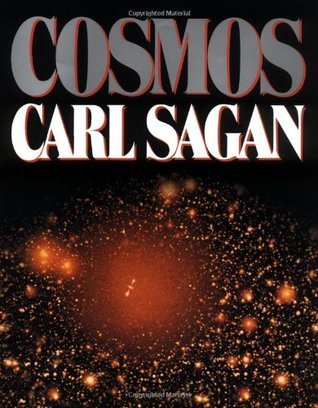
This visually stunning book with over 250 full-color illustrations, many of them never before published, is based on Carl Sagan’s thirteen-part television series. Told with Sagan’s remarkable ability to make scientific ideas both comprehensible and exciting, Cosmos is about science in its broadest human context, how science and civilization grew up together.The book also explores spacecraft missions of discovery of the nearby planets, the research in the Library of ancient Alexandria, the human brain, Egyptian hieroglyphics, the origin of life, the death of the Sun, the evolution of galaxies and the origins of matter, suns and worlds.Sagan retraces the fifteen billion years of cos-mic evolution that have transformed matter into life and consciousness, enabling the Cosmos to wonder about itself. He considers the latest findings on life elsewhere and how we might communicate with the beings of other worlds.Cosmos is the story of our long journey of discovery and the forces and individuals who helped to shape modern science, including Democritus, Hypatia, Kepler, Newton, Huy-gens, Champollion, Lowell and Humason. Sagan looks at our planet from an extra-terrestrial vantage point and sees a blue jewel-like world, inhabited by a lifeform that is just beginning to discover its own unity and to ven-ture into the vast ocean of space.
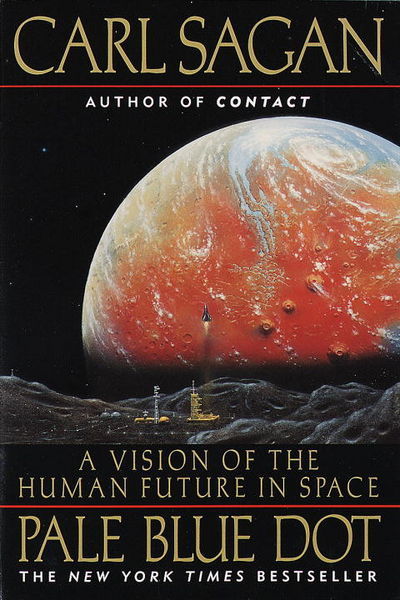
In Cosmos, the late astronomer Carl Sagan cast his gaze over the magnificent mystery of the Universe and made it accessible to millions of people around the world. Now in this stunning sequel, Carl Sagan completes his revolutionary journey through space and time.Future generations will look back on our epoch as the time when the human race finally broke into a radically new frontier—space. In Pale Blue Dot, Sagan traces the spellbinding history of our launch into the cosmos and assesses the future that looms before us as we move out into our own solar system and on to distant galaxies beyond. The exploration and eventual settlement of other worlds is neither a fantasy nor luxury, insists Sagan, but rather a necessary condition for the survival of the human race.

Billions & Billions: Thoughts on Life and Death at the Brink of the Millennium
by Carl Sagan
Rating: 4.3 ⭐
In the final book of his astonishing career, Carl Sagan brilliantly examines the burning questions of our lives, our world, and the universe around us. These luminous, entertaining essays travel both the vastness of the cosmos and the intimacy of the human mind, posing such fascinating questions as how did the universe originate and how will it end, and how can we meld science and compassion to meet the challenges of the coming century? Here, too, is a rare, private glimpse of Sagan's thoughts about love, death, and God as he struggled with fatal disease. Ever forward-looking and vibrant with the sparkle of his unquenchable curiosity, Billions & Billions is a testament to one of the great scientific minds of our day.

The Varieties of Scientific Experience: A Personal View of the Search for God
by Carl Sagan
Rating: 4.3 ⭐
On the 10th anniversary of his death, brilliant astrophysicist and Pulitzer Prize winner Carl Sagan's prescient exploration of the relationship between religion and science and his personal search for God. Carl Sagan is considered one of the greatest scientific minds of our time. His remarkable ability to explain science in terms easily understandable to the layman in bestselling books such as Cosmos, The Dragons of Eden, and The Demon-Haunted World won him a Pulitzer Prize and placed him firmly next to Isaac Asimov, Stephen Jay Gould, and Oliver Sachs as one of the most important and enduring communicators of science. In December 2006 it will be the tenth anniversary of Sagan's death, and Ann Druyan, his widow and longtime collaborator, will mark the occasion by releasing Sagan's famous "Gifford Lectures in Natural Theology," The Varieties of Scientific Experience: A Personal View of the Search for God. The chance to give the Gifford Lectures is an honor reserved for the most distinguished scientists and philosophers of our civilization. In 1985, on the grand occasion of the centennial of the lectureship, Carl Sagan was invited to give them. He took the opportunity to set down in detail his thoughts on the relationship between religion and science as well as to describe his own personal search to understand the nature of the sacred in the vastness of the cosmos. The Varieties of Scientific Experience, edited, updated and with an introduction by Ann Druyan, is a bit like eavesdropping on a delightfully intimate conversation with the late great astronomer and astrophysicist. In his charmingly down-to-earth voice, Sagan easily discusses his views on topics ranging from manic depression and the possibly chemical nature of transcendance to creationism and so-called intelligent design to the likelihood of intelligent life on other planets to the likelihood of nuclear annihilation of our own to a new concept of science as "informed worship." Exhibiting a breadth of intellect nothing short of astounding, he illuminates his explanations with examples from cosmology, physics, philosophy, literature, psychology, cultural anthropology, mythology, theology, and more. Sagan's humorous, wise, and at times stunningly prophetic observations on some of the greatest mysteries of the cosmos have the invigorating effect of stimulating the intellect, exciting the imagination, and reawakening us to the grandeur of life in the cosmos.
Carl Sagan, writer & scientist, returns from the frontier to tell us about how the world works. In his delightfully down-to-earth style, he explores & explains a mind-boggling future of intelligent robots, extraterrestrial life & its consquences, & other provocative, fascinating quandries of the future we want to see today.

NATIONAL BESTSELLER • “Exciting and provocative . . . A tour de force of a book that begs to be seen as well as to be read.”— The Washington Post Book WorldWorld renowned scientist Carl Sagan and acclaimed author Ann Druyan have written a Roots for the human species, a lucid and riveting account of how humans got to be the way we are. Shadows of Forgotten Ancestors is a thrilling saga that starts with the origin of the Earth. It shows with humor and drama that many of our key traits—self-awareness, technology, family ties, submission to authority, hatred for those a little different from ourselves, reason, and ethics—are rooted in the deep past, and illuminated by our kinship with other animals.Sagan and Druyan conduct a breathtaking journey through space and time, zeroing in on critical turning points in evolutionary history, and tracing the origins of sex, altruism, violence, rape, and dominance. Their book culminates in a stunningly original examination of the connection between primate and human traits. Astonishing in its scope, brilliant in its insights, and an absolutely compelling read, Shadows of Forgotten Ancestors is a triumph of popular science.

In 1973, Carl Sagan published The Cosmic Connection, a daring view of the universe, which rapidly became a classic work of popular science and inspired a generation of scientists and enthusiasts. This seminal work is reproduced here for a whole new generation to enjoy. In Sagan's typically lucid and lyrical style, he discusses many topics from astrophysics and solar system science, to colonization, terraforming and the search for extraterrestrials. Sagan conveys his own excitement and wonder, and relates the revelations of astronomy to the most profound human problems and concerns: issues that are just as valid today as they were thirty years ago. New to this edition are Freeman Dyson's comments on Sagan's vision and the importance of the work, Ann Druyan's assessment of Sagan's cultural significance as a champion of science, and David Morrison's discussion of the advances made since 1973 and what became of Sagan's predictions. Who knows what wonders this third millennium will reveal, but one thing is certain: Carl Sagan played a unique role in preparing us for them.

WHAT ARE THESE GRACEFUL VISITORS TO OUR SKIES? WE NOW KNOW THAT THEY BRING BOTH LIFE AND DEATH AND TEACH US ABOUT OUR ORIGINS.Comet begins with a breathtaking journey through space astride a comet. Pulitzer Prize-winning astronomer Carl Sagan, author of Cosmos and Contact, and writer Ann Druyan explore the origin, nature, and future of comets, and the exotic myths and portents attached to them. The authors show how comets have spurred some of the great discoveries in the history of science and raise intriguing questions about these brilliant visitors from the interstellar dark.Were the fates of the dinosaurs and the origins of humans tied to the wanderings of a comet? Are comets the building blocks from which worlds are formed?Lavishly illustrated with photographs and specially commissioned full-color paintings, Comet is an enthralling adventure, indispensable for anyone who has ever gazed up at the heavens and wondered why."SIMPLY THE BEST." *The Times of London"FASCINATING, EVOCATIVE, INSPIRING." *The Washington Post"COMET HUMANIZES SCIENCE. A BEAUTIFUL, INTERESTING BOOK." *United Press International"MASTERFUL . . . SCIENCE, POETRY, AND IMAGINATION." *The Atlanta Journal & Constitution

In 1977, two extraodinary spacecraft called Voyager were launched to the stars. Affixed to each Voyager craft was a gold-coated copped phonograph record as a message to possible extra-terrestrial civilizations that might encounter the spacecraft in some distant space and time. Each record contained 118 photographs of our planet; almost 90 minutes of the world's greatest music; an evolutionary audio essay on "The Sounds of Earth"; and greetings in almost sixty human languages (and one whale language). This book is an account, written by those chiefly responsible for the contents of the Voyager Record, of why they did it, how they selected the repertoire, and precisely what the record contains.

Though a well-regarded physicist, Carl Sagan (1934-1996) is best-known as a writer of popular nonfiction and science fiction and as the host of the PBS series Cosmos. Through his writings and spoken commentary, he worked to popularize interests in astronomy, the universe, and the possibility of extraterrestrial life. From the beginning of his public career, when he co-wrote Intelligent Life in the Universe to the very end as he worked on the 1997 film adaptation of his novel Contact, these subjects absorbed him. This interest in space was rooted in his understanding of the smallness and vulnerability of humanity measured against the immense size and power of the universe. This profound philosophical humility, mixed with personal exuberance, comes through in Conversations with Carl Sagan. In interviews and profiles, Sagan discusses with verve a wide variety of topicsthe environment, nuclear disarmament, religion, politics, extraterrestrial life, astronomy, physics, robotics. Whether he is discussing his science fiction or his well-researched nonfiction works, his voice embraces reason and skepticism. This volume shows how Sagan, a lifelong skeptic, refined his views and expressed amazement that Earth, for all his belief in extraterrestrial life, encompasses everything about which he cared. Tom Head of Jackson, Mississippi, is a writer and poet whose work includes Women and Families (Voices from the Civil War), Possessions and Exorcisms (Fact or Fiction?), and 1966 (The Turbulent 60s).
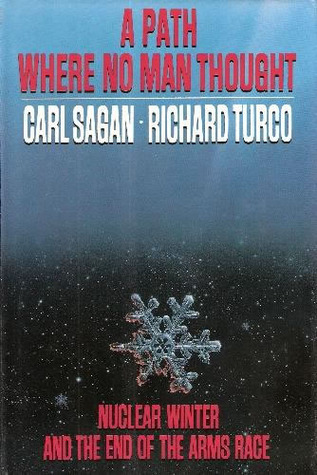
An analysis of the potentially devastating consequences of nuclear war discusses the environmental impact of nuclear winter and proposes changes in international nuclear policies

Carl Sagan fans and science book buyers can now listen to the essays of this popular scientist. These unabridged essays by Carl Sagan were originally published in either popular science magazines or academic journals. This is the first time his essays have become available on audio.

Recorded at the celebration of the 50th anniversary of the United Nations, this audio work features the Pulitzer Prize-wining author, Dr. Carl Sagan. His presentation evoked the sane tenets and mysteries offered in his immensely popular PBS series, "Cosmos", and his bestselling book, "The Dragons of Eden". These cassettes also include many of the world's leading religious and political leaders. Posthumously, Dr. Sagan's novel, "Contact", is now a major motion picture starring Jodie Foster and Matthew McConnaugh.


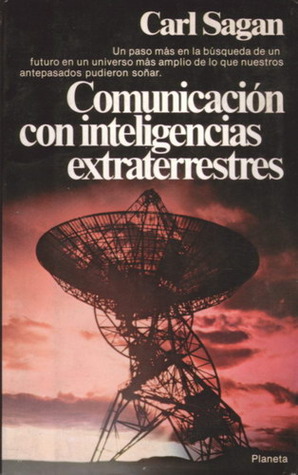
The first international conference on the problem of extraterrestrial civilizations, and contact with them, was held in September 1971 in Soviet Armenia. The conference was a gathering of specialists working in a wide variety of fields—astronomy, physics, radiophysics, computer science and technology, chemistry, biology, linguistics, archaeology, anthropology, sociology, and history—and included many scientists whose reputations are worldwide. For example, Freeman Dyson, Philip Morrison, and Charles Townes were among the American participants; their Russian counterparts were of comparable distinction. The conference was jointly organized by the U.S. National Academy of Sciences (with assistance from the U.S. National Science Foundation) and the U.S.S.R. Academy of Sciences. Scientists from several other countries also participated.Many aspects of the problem of extraterrestrial civilizations were discussed in detail, and these discussions are fully presented in this book. Particular attention is devoted to the following the plurality of planetary systems in the universe, the origin of life on Earth, the possibility of life arising on cosmic bodies, the origin and evolution of intelligence, the origin and development of technological civilizations, problems in searching for intelligent signals or for evidence of astroengineering activities, and the problems and possible consequences of establishing contact with extraterrestrial civilizations.

Carl Sagan discusses the origin of life on earth, the importance comets in our evolutionary history, and how we know what we know.


Essay, Smithsonian Magazine, 1978.

Bilimsel düşünce insana hakikat ile refah vaat etti ve bu vaadini yerine getirdiği için insanlığın büyük kısmı tarafından kılavuz olarak kabul edildi. Fakat bilimin ışığı, çevresini saran karanlığın büyüklüğü karşısında bir mum alevi kadar cılız ve savunmasız. Bu alevin sönmemesi için bilim insanlarının bu karanlıkla ve ondan çıkar sağlayanlarla mücadeleyi sürdürmesi gerek.Carl Sagan, sahte bilim, Yeni Çağ inançları ve köktendinci fanatizm gibi düşünme biçimlerinin ürettiği mitleri sınanabilir bilimsel varsayımlardan ayırt edemezsek, hakikat ve refah yolunda ilerlemeye nasıl devam edebileceğimizi soruyor.Sagan’a göre, bilimi kendimize kılavuz edinmezsek kendi adımıza düşünemeyiz, otoriteyi sorgulayamayız ve sonuçta devletleri yönetenlerin ellerinde oyun hamuruna döneriz; ancak yurttaşlar bilimsel bir eğitim aldıklarında ve kendi fikirlerini üretebildiklerinde, devletleri yönetenler kendileri için değil halk için çalışacaktır.“Bilimin ne olduğunu ve neden fark yarattığını açıkça ifade ediyor... Bilimin gücüne bir övgü ve aşırı saflığın tehlikeleri karşısında bir uyarı...”- The Sciences -

Carl Sagan was a product of the Space Age. He would live a life as a science teacher, mentor, visionary, futurist, and participant in some of the grandest science acts of history. He would make TV shows of science destined to be some of the greatest ever made. His life and legend are immense as his legacy in science is among the great of history. In this book, we will explore his amazing life, the life of Carl Sagan.

Como a ciência e as suas descobertas alteraram a nossa compreensão sobre quem somos, e o lugar que ocupamos no universo«AQUILO É AQUI. É A NOSSA CASA. SOMOS NÓS.Toda a gente que alguma vez amou, alguma vez conheceu ou acerca de quem ouviu falar, todo o ser humano que alguma vez existiu viveu a sua vida neste ponto.»A 14 de fevereiro de 1990 a nave espacial Voyager 1 tirou uma fotografia da Terra a 5,9 mil milhões de quilómetros de distância. Esta fotografia icónica, onde a terra é apenas um ponto de luz, um pixel solitário, inspirou o título desta obra, que conquistou milhões de leitores em todo o mundo.Carl Sagan, um dos grandes astrónomos e divulgadores científicos do século XX, traz-nos neste livro uma visão extraordinária do universo, revelando como a ciência e as suas descobertas alteraram a nossa compreensão sobre quem somos, e o lugar que ocupamos no universo.Nesta obra atual aos dias de hoje, Carl Sagan continua a sua revolucionária investigação sobre o tempo e o espaço e traça a fascinante história de como o Homem se lançou no cosmos e avança que a exploração e eventual colonização de outros mundos não é uma fantasia, nem um luxo, mas sim uma condição necessária para a sobrevivência da raça humana. UM CLÁSSICO DA ASTRONOMIA COM MAIS DE X MILHÕESDE EXEMPLARES VENDIDOS EM TODO O MUNDO.


The Condon Lectureship was establish in 1944 by the Oregon State Board of Higher Education upon the recommendation of the late Dr. John C. Merriam who, at that time, was a member of the faculty of the University of Oregon. The Lectureship was named in honor of Dr. Thomas Condon, the first professor of Geology at the University.The 1968 Condon Lectures by Dr, Sagan were delivered at the University of Oregon, Oregon State University, and Portland State University.

বাংলাভাষী পাঠকের কাছে কার্ল সাগান নামটি একেবারে অপরিচিত নয়। তাঁর কয়েকটি বই Cosmos, Broca’s Brain, Dragon of Eden ইত্যাদি দীর্ঘদিন ধরেই এদেশের পাঠকের কাছে প্রিয় কিন্তু সাগানের সৃষ্টি ও কর্মের বিশালতার পরিধি ও গুরুত্ব আমাদের অনেকের কাছেই হয়তো অজানা। তাঁর রচনা থেকে নির্বাচিত অংশ এবং তাঁকে নিয়ে বিদগ্ধজনের আলোচনা-সমালোচনা মিলিয়েই এ রচনা সংকলনের প্রয়াস।
