
Paul Farmer
Paul Farmer was an American medical anthropologist and physician. He was Professor of Medical Anthropology at Harvard Medical School and Founding Director of Partners In Health. Among his books are Infections and Inequalities: The Modern Plagues (1999), The Uses of Haiti (1994), and AIDS and Accusation: Haiti and the Geography of Blame (1992). Farmer was the recipient of numerous awards, including a MacArthur Foundation "genius" award and the Margaret Mead Award for his contributions to public anthropology. Farmer was born in the U.S.A. in 1959. He married Didi Bertrand Farmer in 1996 and they had three children. He died in Rwanda in 2022, at the age of 62.
25 Books Written
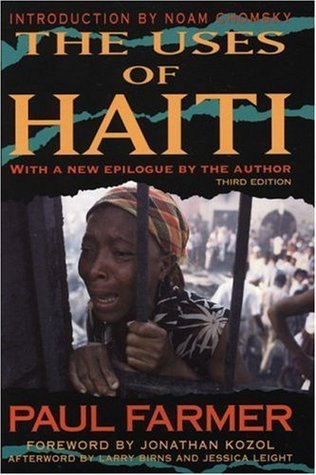
The Uses of Haiti tells the truth about uncomfortable matters—uncomfortable, that is, for the structures of power and the doctrinal framework that protects them from scrutiny. It tells the truth about what has been happening in Haiti, and the US role in its bitter fate .—Noam Chomsky, from the introduction In this third edition of the classic The Uses of Haiti , Paul Farmer looks at what has happened to the health of the poor in Haiti since the coup. Winner of a McArthur Genius Award, Paul Farmer is a physician and anthropologist who has worked for 25 years in Haiti, where he serves as medical director of a hospital serving the rural poor. He is the subject of the Tracy Kidder biography, Mountains Beyond Mountains .

For nearly thirty years, anthropologist and physician Paul Farmer has traveled to some of the most impoverished places on earth to bring comfort and the best possible medical care to the poorest of the poor. Driven by his stated intent to "make human rights substantial," Farmer has treated patients―and worked to address the root causes of their disease―in Haiti, Boston, Peru, Rwanda, and elsewhere in the developing world. In 1987, with several colleagues, he founded Partners In Health to provide a preferential option for the poor in health care. Throughout his career, Farmer has written eloquently and extensively on these efforts. Partner to the Poor collects his writings from 1988 to 2009 on anthropology, epidemiology, health care for the global poor, and international public health policy, providing a broad overview of his work. It illuminates the depth and impact of Farmer’s contributions and demonstrates how, over time, this unassuming and dedicated doctor has fundamentally changed the way we think about health, international aid, and social justice.A portion of the proceeds from the sale of this book will be donated to Partners In Health.
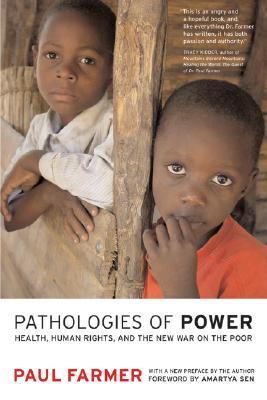
Pathologies of Power uses harrowing stories of life—and death—in extreme situations to interrogate our understanding of human rights. Paul Farmer, a physician and anthropologist with twenty years of experience working in Haiti, Peru, and Russia, argues that promoting the social and economic rights of the world’s poor is the most important human rights struggle of our times. With passionate eyewitness accounts from the prisons of Russia and the beleaguered villages of Haiti and Chiapas, this book links the lived experiences of individual victims to a broader analysis of structural violence. Farmer challenges conventional thinking within human rights circles and exposes the relationships between political and economic injustice, on one hand, and the suffering and illness of the powerless, on the other.Farmer shows that the same social forces that give rise to epidemic diseases such as HIV and tuberculosis also sculpt risk for human rights violations. He illustrates the ways that racism and gender inequality in the United States are embodied as disease and death. Yet this book is far from a hopeless inventory of abuse. Farmer’s disturbing examples are linked to a guarded optimism that new medical and social technologies will develop in tandem with a more informed sense of social justice. Otherwise, he concludes, we will be guilty of managing social inequality rather than addressing structural violence. Farmer’s urgent plea to think about human rights in the context of global public health and to consider critical issues of quality and access for the world’s poor should be of fundamental concern to a world characterized by the bizarre proximity of surfeit and suffering.

Paul Farmer has battled AIDS in rural Haiti and deadly strains of drug-resistant tuberculosis in the slums of Peru. A physician-anthropologist with more than fifteen years in the field, Farmer writes from the front lines of the war against these modern plagues and shows why, even more than those of history, they target the poor. This "peculiarly modern inequality" that permeates AIDS, TB, malaria, and typhoid in the modern world, and that feeds emerging (or re-emerging) infectious diseases such as Ebola and cholera, is laid bare in Farmer's harrowing stories of sickness and suffering.Challenging the accepted methodologies of epidemiology and international health, he points out that most current explanatory strategies, from "cost-effectiveness" to patient "noncompliance," inevitably lead to blaming the victims. In reality, larger forces, global as well as local, determine why some people are sick and others are shielded from risk. Yet this moving account is far from a hopeless inventory of insoluble problems. Farmer writes of what can be done in the face of seemingly overwhelming odds, by physicians determined to treat those in need. Infections and Inequalities weds meticulous scholarship with a passion for solutions—remedies for the plagues of the poor and the social maladies that have sustained them.

A true life medical thriller . . . If what we want in this moment is insight from this brilliant doctor about pandemics, he wants us to see that they do not occur in isolation. --Carolyn Kellogg, The Boston GlobeIn 2014, Sierra Leone, Liberia, and Guinea suffered the worst epidemic of Ebola in history. The brutal virus spread rapidly through a clinical desert where basic health-care facilities were few and far between. Causing severe loss of life and economic disruption, the Ebola crisis was a major tragedy of modern medicine. But why did it happen, and what can we learn from it?Paul Farmer, the internationally renowned doctor and anthropologist, experienced the Ebola outbreak firsthand--Partners in Health, the organization he founded, was among the international responders. In Fevers, Feuds, and Diamonds, he offers the first substantive account of this frightening, fast-moving episode and its implications. In vibrant prose, Farmer tells the harrowing stories of Ebola victims while showing why the medical response was slow and insufficient. Rebutting misleading claims about the origins of Ebola and why it spread so rapidly, he traces West Africa's chronic health failures back to centuries of exploitation and injustice. Under formal colonial rule, disease containment was a priority but care was not - and the region's health care woes worsened, with devastating consequences that Farmer traces up to the present.This thorough and hopeful narrative is a definitive work of reportage, history, and advocacy, and a crucial intervention in public-health discussions around the world.

On January 12, 2010 a massive earthquake laid waste to Port-au-Prince, Haiti, killing hundreds of thousands of people. Within three days, Dr. Paul Farmer arrived in the Haitian capital, along with a team of volunteers, to lend his services to the injured. In this vivid narrative, Farmer describes the incredible suffering--and resilience--that he encountered in Haiti. Having worked in the country for nearly thirty years, he skillfully explores the social issues that made Haiti so vulnerable to the earthquake--the very issues that make it an "unnatural disaster." Complementing his account are stories from other doctors, volunteers, and earthquake survivors. Haiti After the Earthquake will both inform and inspire readers to stand with the Haitian people against the profound economic and social injustices that formed the fault line for this disaster.

Here, for the first time, is a collection of short speeches by the charismatic doctor and social activist Paul Farmer. One of the most passionate and influential voices for global health equity and social justice, Farmer encourages young people to tackle the greatest challenges of our times. Engaging, often humorous, and always inspiring, these speeches bring to light the brilliance and force of Farmer’s vision in a single, accessible volume.A must-read for graduates, students, and everyone seeking to help bend the arc of history toward justice, To Repair the World:-Challenges readers to counter failures of imagination that keep billions of people without access to health care, safe drinking water, decent schools, and other basic human rights;-Champions the power of partnership against global poverty, climate change, and other pressing problems today;-Overturns common assumptions about health disparities around the globe by considering the large-scale social forces that determine who gets sick and who has access to health care;-Discusses how hope, solidarity, faith, and hardbitten analysis have animated Farmer’s service to the poor in Haiti, Peru, Rwanda, Russia, and elsewhere;-Leaves the reader with an uplifting vision: that with creativity, passion, teamwork, and determination, the next generations can make the world a safer and more humane place.

Does the scientific "theory" that HIV came to North America from Haiti stem from underlying attitudes of racism and ethnocentrism in the United States rather than from hard evidence? Anthropologist-physician Paul Farmer answers in the affirmative with this, the first full-length ethnographic study of AIDS in a poor society.

“Moving beyond a simple biomedical model, this book compels us to view AIDS in women in a wholly new way, as an inescapable even in lives devalued by the forces of poverty, racism and sexism. This extraordinary multidisciplinary effort should serve as the guidebook for those who want to understand how AIDS has become a leading killer of young women in a mere decade.”—Deborah Cotton, M.D. This second edition of the groundbreaking Women, Poverty and AIDS reviews the massive epidemic sweeping Sub-Saharan Africa and many other parts of the Third World. As Dr. Joia Mukherjee reveals, the unfolding tragedy is a double drugs could be saving lives but are made unavailable while millions die.

"If you have come here to help me, you are wasting your time. But if you have come because your liberation is bound up with mine, then let us work together."—Lilla Watson, Aboriginal activist and artistWorld-renowned physician and public health pioneer Dr. Paul Farmer has long been devoted to caring and advocating for the world's poorest people, and challenging wealthy Western countries to address the underlying causes of poverty and disease in the developing world. He and the organization he cofounded, Partners In Health, have built medical centers and health systems first in Haiti and then around the world—in Rwanda, Mexico, Nepal, Sierra Leone, Russia, the U.S. and more—that also address patients' social, nutritional, financial, and long-term care needs.But as he and his colleagues have learned in assessing their own efforts, and indeed all efforts, to turn goodwill into a robust and enduring response to the profound problems of structural poverty, they have learned that success requires more than good intentions, expertise, and material resources. It requires replacing time-limited, contractual, and almost invariably inegalitarian arrangements between aid workers and aid recipients with an approach based on genuine partnership and solidarity. Farmer calls this new model for assisting the poor accompaniment. Accompaniment, he explains, is about sticking with a task until it's deemed completed, not by the accompagnateur but by the person being accompanied.Through stories about his experiences and the evolution of his thinking,and incisive analysis of both existing data and the lessons of history, Farmer explains in this book what accompaniment means and how it works. In Part II of the book, a group of colleagues draw on their own experiences and studies to showcase accompaniment in action, illuminating both its enormous potential for transforming the lives of the poor, and the challenges and dilemmas they face.Many people in the world of foreign aid and charitable giving have long championed the principles of accompaniment, but there remains a huge gap between rhetoric and implementation. Part of the reason for that gap has been an absence of data about the effectiveness of accompaniment-based initiatives. This book provides compelling, concrete data that accompaniment works—and that it works better than other approaches.Inspiring, thought-provoking, and likely controversial, this is important reading for anyone who, like Farmer, seeks to create a better world.


Earthworms are used in the vermiculture process to turn organic waste into the most nutrient-dense fertilizer (from the Latin vermis, meaning "worm"). The microbes and minerals found in worm manure, also known as vermicompost or worm castings, are crucial for healthy plant growth, root development, and disease prevention. Farmers and gardeners refer to worm manure as "Black Gold" because just one tablespoon can support a small plant for three months.
![Infections and Inequalities : The Modern Plagues, Updated with a New Preface (Paperback)--by Paul Farmer [1997 Edition]](/placeholder.svg?height=400&width=300)
Infections and Inequalities : The Modern Plagues, Updated with a New Preface (Paperback)--by Paul Farmer [1997 Edition]
by Paul Farmer
Rating: 5.0 ⭐
Vichy: political dilemma.
by Paul Farmer
The pop business
by Paul Farmer

Paul Farmer with Claudia Dreifus
by Paul Farmer
Will hunger, disease and poverty ever disappear? Can you, as an individual, really do anything to help ease suffering around the world? Paul Farmer says “Yes.”And he should know. He’s a charismatic doctor and social activist who chairs the Department of Global Health and Social Medicine at Harvard. He has shown through his own work how hope, solidarity and faith can really have an impact in places like Haiti, Rwanda, Peru and Russia. And he has challenged students, audiences and readers to challenge their assumptions and doubt about healing the world. Now you can hear for yourself what this inspiring activist has to say about global health equity and social justice as he speaks with The New York Times reporter Claudia Dreifus.

In questo volume sono raccolti i principali interventi di Paul Farmer, antropologo di fama mondiale, recentemente scomparso dopo una vita spesa a tentare di “aggiustare il mondo”, battendosi per la sanità pubblica e per la giustizia medica.Farmer si rivolge in particolar modo ai giovani e alle giovani che stanno per intraprendere gli studi universitari, in medicina come anche in altre discipline, ma il testo è dedicato a tutti coloro che desiderano un mondo in cui l’umanità – e non gli interessi di parte – sia l’unico principio fondante dei tempi a venire.Il libro ritrae il mondo attuale dei drammatici disastri ecologici e sanitari, delle disuguaglianze e delle ingiustizie economiche, sociali e politiche, che spesso sembrano inaffrontabili e irrisolvibili. Attraverso i suoi discorsi, ricchi di aneddoti e di riflessioni immediate e profonde, Farmer restituisce al lettore la visione di un futuro possibile, condiviso, dove non tutto è ancora perduto, perché insieme possiamo fare realmente qualcosa per “aggiustare” il nostro mondo.
3 Days to save a Legend
by Paul Farmer

The Prepper's Medical HandbookThe Essential Guide for Any Emergency, Disaster, War, Pandemic, Black Out or Situation Off-Grid and IsolationPrepare for the unexpected and the unpredictable with this comprehensive medical handbook.Whether you're facing a natural disaster, a pandemic, or a war zone, this book will give you the essential knowledge and skills you need to stay alive and healthy.In-depth coverage of the following Medical Preparedness : Learn how to stock up on essential supplies, assess your family's medical needs, and develop a plan for emergencies. Medical Care in Specific Scenarios : Find out how to handle common medical problems in a variety of situations, including natural disasters, war zones, pandemics, and off-grid living. Advanced Medical Skills : Learn how to perform more advanced medical procedures, such as wound care, emergency dentistry, and field combat care.Written by Dr. Paul Farmer, a Professor at Harvard Medical School with a team of experienced medical professionals, “The Prepper's Medical Handbook” is the essential resource for anyone who wants to be prepared for anything.Don't wait until it's too late. Get your copy of “The Prepper's Medical Handbook” today!Order your copy of “The Prepper's Medical Handbook” today and be prepared for anything!You will no longer be able to do without this essential guide based on chemical but also natural remedies for the most demanding people.Hurry because reality is increasingly complex and emergency cases can reach everyone in the blink of an eye. Don't be caught unprepared!


Sida en Haïti
by Paul Farmer