
Francis Fukuyama
Yoshihiro Francis Fukuyama (born 27 October 1952) is an American philosopher, political economist, and author. Francis Fukuyama was born in the Hyde Park neighborhood of Chicago. His father, Yoshio Fukuyama, a second-generation Japanese-American, was trained as a minister in the Congregational Church and received a doctorate in sociology from the University of Chicago. His mother, Toshiko Kawata Fukuyama, was born in Kyoto, Japan, and was the daughter of Shiro Kawata, founder of the Economics Department of Kyoto University and first president of Osaka Municipal University in Osaka. Fukuyama's childhood years were spent in New York City. In 1967 his family moved to State College, Pennsylvania, where he attended high school. Fukuyama received his Bachelor of Arts degree in classics from Cornell University, where he studied political philosophy under Allan Bloom. He earned his Ph.D. in government from Harvard University, studying with Samuel P. Huntington and Harvey C. Mansfield, among others. Fukuyama has been affiliated with the Telluride Association since his undergraduate years at Cornell, an educational enterprise that was home to other significant leaders and intellectuals, including Steven Weinberg and Paul Wolfowitz. Fukuyama is currently the Bernard L. Schwartz Professor of International Political Economy and Director of the International Development Program at the Paul H. Nitze School of Advanced International Studies of Johns Hopkins University, located in Washington, DC. Fukuyama is best known as the author of The End of History and the Last Man, in which he argued that the progression of human history as a struggle between ideologies is largely at an end, with the world settling on liberal democracy after the end of the Cold War and the fall of the Berlin Wall in 1989. Fukuyama predicted the eventual global triumph of political and economic liberalism. What we may be witnessing is not just the end of the Cold War, or the passing of a particular period of post-war history, but the end of history as such... That is, the end point of mankind's ideological evolution and the universalization of Western liberal democracy as the final form of human government. He has written a number of other books, among them Trust: The Social Virtues and the Creation of Prosperity and Our Posthuman Future: Consequences of the Biotechnology Revolution. In the latter, he qualified his original 'end of history' thesis, arguing that since biotechnology increasingly allows humans to control their own evolution, it may allow humans to alter human nature, thereby putting liberal democracy at risk. One possible outcome could be that an altered human nature could end in radical inequality. He is a fierce enemy of transhumanism, an intellectual movement asserting that posthumanity is a highly desirable goal. The current revolution in biological sciences leads him to theorize that in an environment where science and technology are by no means at an end, but rather opening new horizons, history itself cannot therefore be said to be, as he once thought, at an end. In another work The Great Disruption: Human Nature and the Reconstruction of Social Order, he explores the origins of social norms, and analyses the current disruptions in the fabric of our moral traditions, which he considers as arising from a shift from the manufacturing to the information age. This shift is, he thinks, normal and will prove self-correcting, given the intrinsic human need for social norms and rules.
27 Books Written

Political Order and Political Decay: From the Industrial Revolution to the Globalization of Democracy
by Francis Fukuyama
Rating: 4.4 ⭐
• 6 recommendations ❤️
The second volume of the bestselling landmark work on the history of the modern stateWriting in The Wall Street Journal , David Gress called Francis Fukuyama's Origins of Political Order "magisterial in its learning and admirably immodest in its ambition." In The New York Times Book Review , Michael Lind described the book as "a major achievement by one of the leading public intellectuals of our time." And in The Washington Post , Gerard DeGrott exclaimed "this is a book that will be remembered. Bring on volume two."Volume two is finally here, completing the most important work of political thought in at least a generation. Taking up the essential question of how societies develop strong, impersonal, and accountable political institutions, Fukuyama follows the story from the French Revolution to the so-called Arab Spring and the deep dysfunctions of contemporary American politics. He examines the effects of corruption on governance, and why some societies have been successful at rooting it out. He explores the different legacies of colonialism in Latin America, Africa, and Asia, and offers a clear-eyed account of why some regions have thrived and developed more quickly than others. And he boldly reckons with the future of democracy in the face of a rising global middle class and entrenched political paralysis in the West.A sweeping, masterful account of the struggle to create a well-functioning modern state, Political Order and Political Decay is destined to be a classic.

The Origins of Political Order: From Prehuman Times to the French Revolution
by Francis Fukuyama
Rating: 4.3 ⭐
• 4 recommendations ❤️
A New York Times Notable Book for 2011 A Globe and Mail Best Books of the Year 2011 TitleA Kirkus Reviews Best Nonfiction of 2011 titleVirtually all human societies were once organized tribally, yet over time most developed new political institutions which included a central state that could keep the peace and uniform laws that applied to all citizens. Some went on to create governments that were accountable to their constituents. We take these institutions for granted, but they are absent or are unable to perform in many of today's developing countries—with often disastrous consequences for the rest of the world.Francis Fukuyama, author of the bestselling The End of History and the Last Man and one of our most important political thinkers, provides a sweeping account of how today's basic political institutions developed. The first of a major two-volume work, The Origins of Political Order begins with politics among our primate ancestors and follows the story through the emergence of tribal societies, the growth of the first modern state in China, the beginning of the rule of law in India and the Middle East, and the development of political accountability in Europe up until the eve of the French Revolution.Drawing on a vast body of knowledge—history, evolutionary biology, archaeology, and economics—Fukuyama has produced a brilliant, provocative work that offers fresh insights on the origins of democratic societies and raises essential questions about the nature of politics and its discontents.
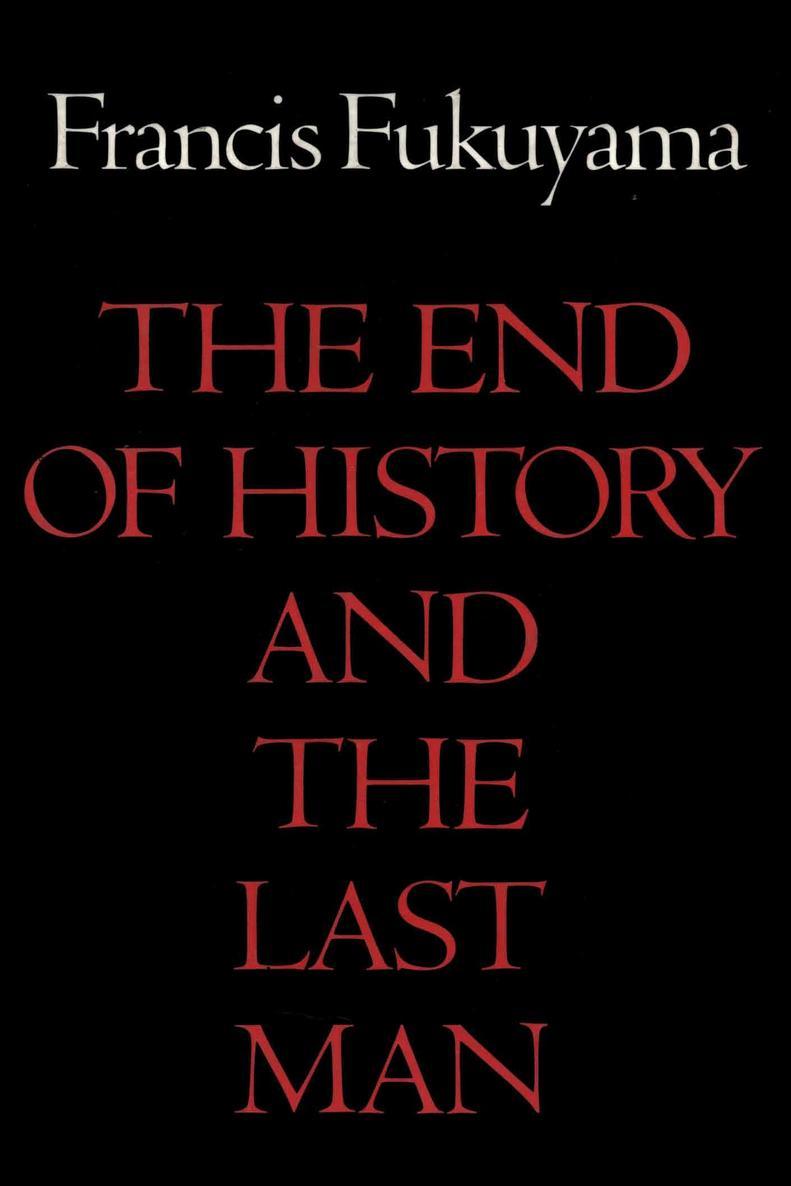
Ever since its first publication in 1992, The End of History and the Last Man has provoked controversy and debate. Francis Fukuyama's prescient analysis of religious fundamentalism, politics, scientific progress, ethical codes, and war is as essential for a world fighting fundamentalist terrorists as it was for the end of the Cold War. Now updated with a new afterword, The End of History and the Last Man is a modern classic.
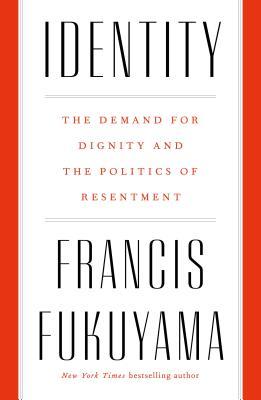
Identity: The Demand for Dignity and the Politics of Resentment
by Francis Fukuyama
Rating: 3.8 ⭐
• 2 recommendations ❤️
The New York Times bestselling author of The Origins of Political Order offers a provocative examination of modern identity politics: its origins, its effects, and what it means for domestic and international affairs of stateIn 2014, Francis Fukuyama wrote that American institutions were in decay, as the state was progressively captured by powerful interest groups. Two years later, his predictions were borne out by the rise to power of a series of political outsiders whose economic nationalism and authoritarian tendencies threatened to destabilize the entire international order. These populist nationalists seek direct charismatic connection to "the people," who are usually defined in narrow identity terms that offer an irresistible call to an in-group and exclude large parts of the population as a whole.Demand for recognition of one's identity is a master concept that unifies much of what is going on in world politics today. The universal recognition on which liberal democracy is based has been increasingly challenged by narrower forms of recognition based on nation, religion, sect, race, ethnicity, or gender, which have resulted in anti-immigrant populism, the upsurge of politicized Islam, the fractious "identity liberalism" of college campuses, and the emergence of white nationalism. Populist nationalism, said to be rooted in economic motivation, actually springs from the demand for recognition and therefore cannot simply be satisfied by economic means. The demand for identity cannot be transcended; we must begin to shape identity in a way that supports rather than undermines democracy.Identity is an urgent and necessary book--a sharp warning that unless we forge a universal understanding of human dignity, we will doom ourselves to continuing conflict.

America and the World: Debating the New Shape of International Politics
by Francis Fukuyama
A comprehensive survey of the key debates that shape U.S. foreign policy today. The end of the Cold War and the collapse of the Soviet Union ushered in a new era of international politics, one that people have been trying to get a handle on ever since. This collection is a record of the best attempts at that task over the last dozen years. It brings together many powerful and well-stocked mindsfrom Francis Fukuyama and Samuel P. Huntington to Fouad Ajami, Fareed Zakaria, and Robert Kaplan all trying to figure out what forces are driving world events and how Americans should respond. What is more important, ideology, culture, or power? What lies ahead, order or chaos? What is democracy? How strong is the United States, and for what purposes should it use its strength? How vulnerable is it, and what must it do for protection? The authors gathered here address these and many other questions, often directly engaging each others' arguments and educating the rest of us in the process. Originally published in Foreign Affairs and eight other leading journals and magazines, the articles constitute an essential reading list for anyone interested in contemporary international relations. Contributors include Fouad Ajami, Richard K. Betts, Ladan Boroumand & Roya Boroumand, Stephen G. Brooks & William C. Wohlforth, George W. Bush, David Dollar & Aart Kraay, Michael Scott Doran, Francis Fukuyama, Samuel P. Huntington, G. John Ikenberry, Kim Dae Jung, Robert D. Kaplan, Charles A. Kupchan, Dani Rodrik, Stephen M. Walt, Fareed Zakaria

A short book about the challenges to liberalism from the right and the left by the bestselling author of The Origins of Political Order. Classical liberalism is in a state of crisis. Developed in the wake of Europe's wars over religion and nationalism, liberalism is a system for governing diverse societies, which is grounded in fundamental principles of equality and the rule of law. It emphasizes the rights of individuals to pursue their own forms of happiness free from encroachment by government.It's no secret that liberalism didn't always live up to its own ideals. In America, many people were denied equality before the law. Who counted as full human beings worthy of universal rights was contested for centuries, and only recently has this circle expanded to include women, African Americans, LGBTQ+ people, and others. Conservatives complain that liberalism empties the common life of meaning. As the renowned political philosopher Francis Fukuyama shows in Liberalism and Its Discontents, the principles of liberalism have also, in recent decades, been pushed to new extremes by both the right and the left: neoliberals made a cult of economic freedom, and progressives focused on identity over human universality as central to their political vision. The result, Fukuyama argues, has been a fracturing of our civil society and an increasing peril to our democracy.In this short, clear account of our current political discontents, Fukuyama offers an essential defense of a revitalized liberalism for the twenty-first century.

A decade after his now-famous pronouncement of "the end of history," Francis Fukuyama argues that as a result of biomedical advances, we are facing the possibility of a future in which our humanity itself will be altered beyond recognition. Fukuyama sketches a brief history of man's changing understanding of human from Plato and Aristotle to the modernity's utopians and dictators who sought to remake mankind for ideological ends. Fukuyama argues that the ability to manipulate the DNA of all of one person's descendants will have profound, and potentially terrible, consequences for our political order, even if undertaken with the best of intentions. In Our Posthuman Future , one of our greatest social philosophers begins to describe the potential effects of genetic exploration on the foundation of liberal the belief that human beings are equal by nature.

In his bestselling The End of History and the Last Man, Francis Fukuyama argued that the end of the Cold War would also mean the beginning of a struggle for position in the rapidly emerging order of 21st-century capitalism. In Trust, a penetrating assessment of the emerging global economic order "after History," he explains the social principles of economic life and tells us what we need to know to win the coming struggle for world dominance.Challenging orthodoxies of both the left and right, Fukuyama examines a wide range of national cultures in order to divine the underlying principles that foster social and economic prosperity. Insisting that we cannot divorce economic life from cultural life, he contends that in an era when social capital may be as important as physical capital, only those societies with a high degree of social trust will be able to create the flexible, large-scale business organizations that are needed to compete in the new global economy.A brilliant study of the interconnectedness of economic life with cultural life, Trust is also an essential antidote to the increasing drift of American culture into extreme forms of individualism, which, if unchecked, will have dire consequences for the nation's economic health.

Francis Fukuyama famously predicted "the end of history" with the ascendancy of liberal democracy and global capitalism. The topic of his latest book is, therefore, surprising: the building of new nation-states. The end of history was never an automatic procedure, Fukuyama argues, and the well-governed polity was always its necessary precondition. "Weak or failed states are the source of many of the world's most serious problems," he believes. He traces what we know―and more often don't know―about how to transfer functioning public institutions to developing countries in ways that will leave something of permanent benefit to the citizens of the countries concerned. These are important lessons, especially as the United States wrestles with its responsibilities in Afghanistan, Iraq, and beyond. Fukuyama begins State-Building with an account of the broad importance of "stateness." He rejects the notion that there can be a science of public administration, and discusses the causes of contemporary state weakness. He ends the book with a discussion of the consequences of weak states for international order, and the grounds on which the international community may legitimately intervene to prop them up.

America at the Crossroads: Democracy, Power, and the Neoconservative Legacy
by Francis Fukuyama
Rating: 3.6 ⭐
Francis Fukuyama’s criticism of the Iraq war put him at odds with neoconservative friends both within and outside the Bush administration. Here he explains how, in its decision to invade Iraq, the Bush administration failed in its stewardship of American foreign policy. First, the administration wrongly made preventive war the central tenet of its foreign policy. In addition, it badly misjudged the global reaction to its exercise of “benevolent hegemony.” And finally, it failed to appreciate the difficulties involved in large-scale social engineering, grossly underestimating the difficulties involved in establishing a successful democratic government in Iraq.Fukuyama explores the contention by the Bush administration’s critics that it had a neoconservative agenda that dictated its foreign policy during the president’s first term. Providing a fascinating history of the varied strands of neoconservative thought since the 1930s, Fukuyama argues that the movement’s legacy is a complex one that can be interpreted quite differently than it was after the end of the Cold War. Analyzing the Bush administration’s miscalculations in responding to the post–September 11 challenge, Fukuyama proposes a new approach to American foreign policy through which such mistakes might be turned around—one in which the positive aspects of the neoconservative legacy are joined with a more realistic view of the way American power can be used around the world.

The Great Disruption: Human Nature and the Reconstitution of Social Order
by Francis Fukuyama
Rating: 3.6 ⭐
In the past thirty years, the United States has undergone a profound transformation in its social Crime has increased, trust has declined, families have broken down, and individualism has triumphed over community. Has the Great Disruption of recent decades rent the fabric of American society irreparably? In this brilliant and sweeping work of social, economic, and moral analysis, Francis Fukuyama shows that even as the old order has broken apart, a new social order is already taking its place. The Great Disruption forges a new model for understanding the Great Reconstruction that is under way.
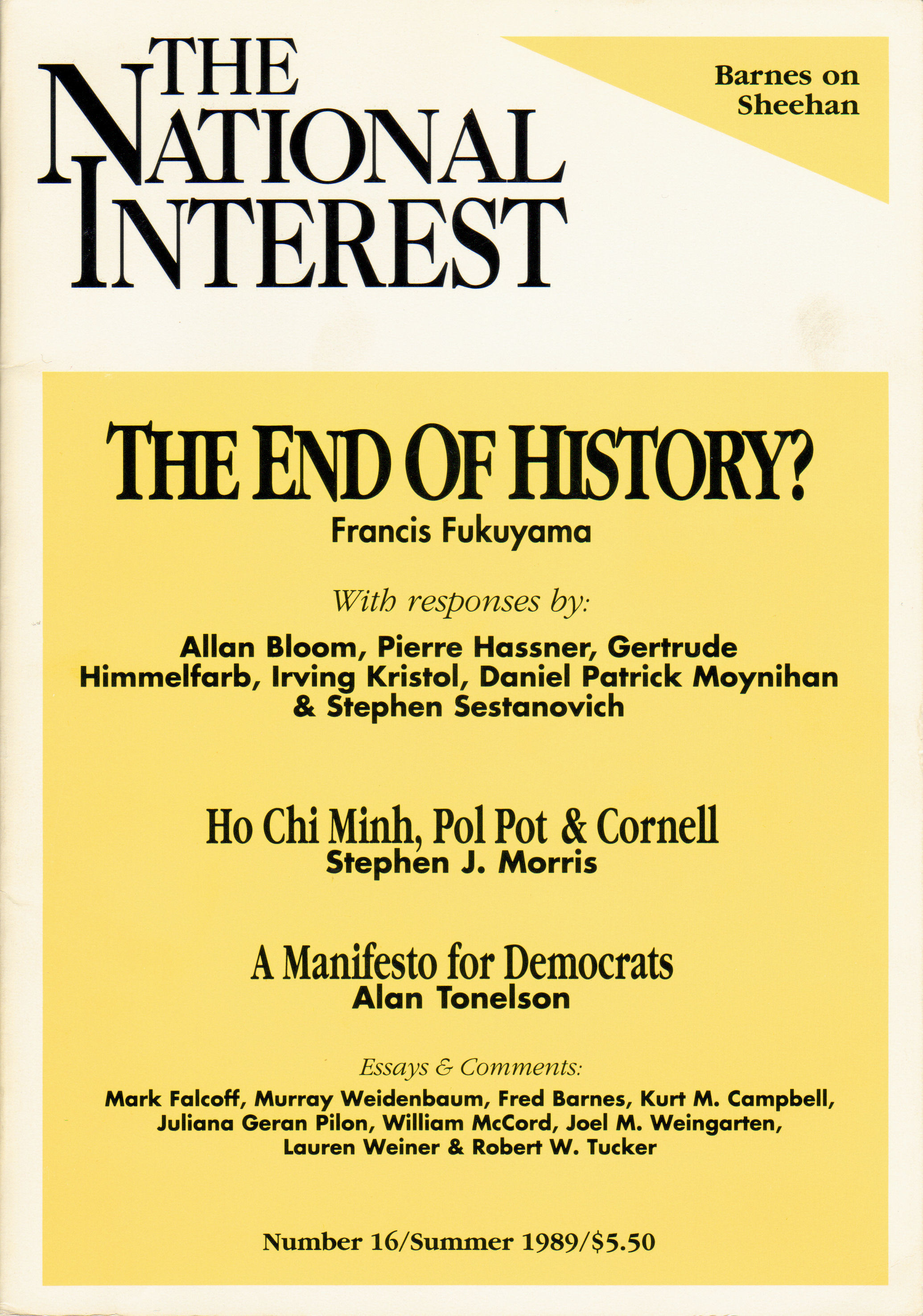
Fukuyama argues that the advent of Western liberal democracy may signal the end point of humanity's sociocultural evolution and the final form of human government: "What we may be witnessing is not just the end of the Cold War, or the passing of a particular period of post-war history, but the end of history as such: that is, the end point of mankind's ideological evolution and the universalization of Western liberal democracy as the final form of human government." Some see his thesis conflicting with Karl Marx's version of the "end of prehistory." Some scholars identify the German philosopher Georg Wilhelm Friedrich Hegel as the source of Fukuyama's language, by way of Alexandre Kojève. Kojeve argued that the progress of history must lead toward the establishment of a "universal and homogenous" state, most likely incorporating elements of liberal or social democracy; but Kojeve's emphasis on the necessarily "post-political" character of such a state (and its citizens) makes such comparisons inadequate, and is irreducible to any mere "triumph" of capitalism.

Francis Fukuyama Collection Political Order 2 Books Bundle includes titles in this collection :- The Origins of Political From Prehuman Times to the French Revolution, Political Order and Political From the Industrial Revolution to the Globalisation of Democracy. The Origins of Political From Prehuman Times to the French Revolution Nations are not trapped by their pasts, but events that happened hundreds or even thousands of years ago continue to exert huge influence on present-day politics. If we are to understand the politics that we now take for granted, we need to understand its origins. Francis Fukuyama examines the paths that different societies have taken to reach their current forms of political order. This book starts with the very beginning of mankind and comes right up to the eve of the French and American revolutions, spanning such diverse disciplines as economics, anthropology and geography. The Origins of Political Order is a magisterial study on the emergence of mankind as a political animal, by one of the most eminent political thinkers writing today. Political Order and Political From the Industrial Revolution to the Globalisation of Democracy In The Origins of Political Order, Francis Fukuyama took us from the dawn of mankind to the French and American Revolutions. Here, he picks up the thread again in the second instalment of his definitive account of mankind's emergence as a political animal. This is the story of how state, law and democracy developed after these cataclysmic events, how the modern landscape - with its uneasy tension between dictatorships and liberal democracies - evolved and how in the United States and in other developed democracies, unmistakable signs of decay have emerged. If we want to understand the political systems that dominate and order our lives, we must first address their origins - in our own recent past as well as in the earliest systems of human government.


Francis Fukuyama Collection 3 Books Set Includes Titles In This Set:- Identity [Hardcover], Political Order and Political Decay, The Origins of Political Order. Description:- Identity: Contemporary Identity Politics and the Struggle for Recognition In 2014, Francis Fukuyama wrote that American and global institutions were in a state of decay, as the state was captured by powerful interest groups. Two years later, his predictions were borne out by the rise to power of a series of political outsiders whose economic nationalism and authoritarian tendencies threatens to destabilise the entire international order. These populist nationalists seek direct charismatic connection to 'the people', who are usually defined in narrow identity terms that offer an irresistible call to an in-group and exclude large parts of the population as a whole. Political Order and Political Decay This is the story of how state, law and democracy developed after these cataclysmic events, how the modern landscape - with its uneasy tension between dictatorships and liberal democracies - evolved and how in the United States and in other developed democracies, unmistakable signs of decay have emerged. The Origins of Political Order: From Prehuman Times to the French Revolution Francis Fukuyama examines the paths that different societies have taken to reach their current forms of political order. This book starts with the very beginning of mankind and comes right up to the eve of the French and American revolutions, spanning such diverse disciplines as economics, anthropology and geography. The Origins of Political Order is a magisterial study on the emergence of mankind as a political animal, by one of the most eminent political thinkers writing today.


Het eerste deel van De oorsprong van onze politiek werd drie jaar geleden met groot enthousiasme ‘gezaghebbend, getuigend van een indrukwekkende visie, een levenswerk – “laat deel twee maar komen”’, schreven de kranten, van de Volkskrant tot en met The Washington Post.Inmiddels is het zo ver. Het tweede deel, Orde en verval, gaat verder waar het eerste bij de Franse Revolutie. Fukuyama laat zien hoe sterke, onafhankelijke politieke instituties ontstonden – en hoe belangrijk het is dat die ter verantwoording geroepen worden. Hij schrijft over de gevolgen van corruptie en over de manieren waarop die te bestrijden valt; over de erfenis van koloniale politiek in Latijns-Amerika, Afrika en Azië, en hij probeert uit te leggen waarom staten mislukken. Van de zo noodlottig afgelopen Arabische lente tot de gridlock in de Amerikaanse de democratie heeft het moeilijk. Een goed functionerende staat komt niet zonder moeite tot De oorsprong van onze politiek 2 laat op overtuigende wijze zien, met oog voor detail maar zonder de grote lijn ooit uit het oog te verliezen, wat de sleutels voor succes zijn. Een standaardwerk voor iedereen die iets van de wereld wil begrijpen.


Social capital is important to the efficient functioning of modern economies and is the sine qua non of stable liberal democracy. It constitutes the cultural component of modern societies, which in other respects have been organized since the Enlightenment on the basis of formal institutions, the rule of law, and rationality. Building social capital has typically been seen as a task for "second generation" economic reform; but unlike economic policies or even economic institutions, social capital cannot be so easily created or shaped by public policy. This paper will define social capital, explore its economic and political functions, as well as its origins, and make some suggestions for how it can be cultivated.

「全世界民主國家開始有這個趨勢,民主的政治系統沒辦法去做出重大決定,因為體制上的阻礙造成了行政阻礙,也引發了「強人政治」的需求,你需要一個強人來克服這些困難與阻礙……。」──法蘭西斯‧福山談川普上任 1989年,一篇名為〈歷史的終結?〉的文章在知識界引起軒然大波,激起熱烈的辯論,而就在幾個月後,東歐共產國家分崩離析、蘇聯解體,正如同這篇文章所論:民主體制將成為人類的最終選擇。 這個準確預言了未來發展的文章作者,就是法蘭西斯‧福山。他對東西方政治制度的瞭解、對趨勢的掌握,讓他得以指出歷史的走向,也對政治局勢的發展知之甚詳。 2017年,福山教授受邀來台進行長風講座,其演講主題是「從歷史的終結到民主的崩壞」。這個主題又包括兩個子題:「自由主義國際秩序的崩解?」和「中美爭鋒及其影響」。 在第一個子題中,福山教授論及二戰後美國「自由主義國際秩序」促進了經濟方面人員、物資與資金等流動,催生了世界貿易組織及歐盟等組織或協定,但目前的美國卻因國力的衰退與他國崛起,以及民粹風潮對憲政民主構成威脅等因素,動搖了其世界秩序維護者的地位。這些發展不只影響了美國大選的結果,也關乎未來世界局勢的變化。 在第二個子題中,福山教授與朱雲漢院士對談,聚焦討論中美的競爭與合作關係。他認為中國不太可能扮演美國在二戰後的國際角色,也無法成為與美國地位相等的世界強權,主要是因為中國本身就是國際體系長期的受益者,加上內部存在政權正當性的問題。他認為中國的危機在於:當中國的經濟成長率下降,中共政權可能採取民族主義來對抗國際社會,從而轉移國內民眾的不滿。在國際政治與經濟的角力上,中國的崛起還有許多值得我們深思之處。 這兩場講座,讓我們有機會了解福山對中美關係的看法,以及民粹主義如何衝擊民主政治。當民主體制受到民粹的挑戰時,如何在民主與民粹當中取得平衡,是當代社會的重要議題。

Kritische beschouwing over het Amerikaanse buitenlands beleid onder president Bush, uitmondend in een duidelijke afwijzing van de militaire interventie in Irak.

2020年讓全球措手不及。新型冠狀病毒(COVID-19)導致的肺炎疫情意外爆發,不僅考驗各國政府如何保護國民健康、維繫經濟活動,更加速國際政治情勢的變化,疫情能否獲得控制仍在未定之天,世界秩序已然大洗牌。如今重讀政治思想家法蘭西斯.福山於2014年寫就的《政治秩序的起源》,彷彿置身於政治預言之中。★《克科斯書評》非文學類最佳書籍★「這是一部主題龐大的作品,也是具有勇氣的著作。這部上下卷的巨作絕對令人銘記在心,其地位不亞於史學家馮.蘭克。」──《華盛頓郵報》(The Washington Post)【內容說明】法蘭西斯.福山師承杭亭頓(Samual P. Huntington),希望能藉由這套《政治秩序的起源》,補足其政治思想因時代衍生的落差。但他的做法並非接續杭亭頓的著作從1970年代開始分析,而選擇從人類史前開始,自人類的靈長目祖先黑猩猩談起。法蘭西斯.福山認為現代國家要實施民主並不難,真正困難的是建立有能力為人民服務,並且保障人民安全的合法現代國家。《政治秩序的起源》分成上下兩卷,其理論基礎在於,現代成功的自由民主,來自三大政治體制:國家、政治、可問責的政府。第一、國家必須能合法、有效地使用權力。第二、法治是用來限制國家、統治者的權力。第三、一個可問責的政府,會藉由公平自由的多黨選舉等民主程序,迫使統治者以全民利益為優先,而非謀一己之私。在《政治秩序的起源(上卷):從史前到法國大革命》中,福山旁徵博引、縱貫古今,展開一場探討政治建制的起源、演變與衰敗的歷史之旅。上卷共分五部,前半以國家建造為主題,闡述從黑猩猩的生活習性乃至人類部落社會的出現;他視中國為世界上第一個擁有現代政治體系的國家,並比較同樣位於東方的印度,宗教如何讓兩者的政治發展截然不同;一路延伸至中東如何藉由奇特的奴隸制度建立短暫的強勢國家。後半則立論於法治,談宗教如何在西方發展出法治獨立的運作模式;以及直到法國大革命前夕,可問責政府在歐洲的發展。對照2014年書中提到的質疑與推測,如中國能否在專制制度下維持經濟成長,如今讀來分外值得深思。縱然自由市場、有活力的公民社會、自發性的群眾智慧,都是民主重要的成分,但都無法取代一個強健、階層分明的政府。民主建制的存在,並不是評斷某國治理好壞的有力依據,未能兌現承諾,才是政治制度面臨的最嚴峻挑戰。如何「向丹麥看齊」,建立民主、安全、繁榮又不腐敗的國家,是本書追求的理想國度。【獲獎記錄】美國亞馬遜網路書店選書《紐約時報》最受注目好書《環球郵報》最佳好書《克科斯書評》非文學類最佳書籍【各界好評】「福山這本書是給一般大眾最好的政治通識閱讀材料,看完之後,馬上可對國際上各國家民族的政治發展基本上進入狀況,對人類數百年來摸索民主的真實情況,了然於心。」 ──陳思賢(臺大政治學系教授)「福山於本書點出重要議題:當今眾多社會已經穩定進入民主政治,但為何還有許多國家堅持採用集權政體?」── 《衛報》(The Guardian)「《政治秩序的起源》展現高度的抱負與可讀性。」── 《紐約客》(The New Yorker)雜誌「本書是我們這個時代的重大成就,福山更是領先群倫的公共知識分子。」── 《紐約時報》(The New York Times) 「本書全面審視人類的行為,及產生的政治現象。是一本具有權威性的作品,呈現作者的博學與非常自信的意圖。」── 《華爾街日報》(The Wall Street Journal)「福山具有大視野的格局,但對於細節也能精準掌握。鮮少談政治理論的書能讓人愛不釋卷,但《政治秩序的起源》做到了。」── 《經濟學人》(The Economist) 「福山這本新作的重要成就,等同於盧梭、洛克等極具影響力思想家的作品,在道德哲學與經濟學的地位,與羅爾斯的《正義論》、諾貝爾經濟學獎得主沈恩的作品相較,亦不遑多讓。」── 《克里夫蘭誠報》(Cleveland Plain Dealer) 「福山是一位有魅力的作者!透過讀者熟知的歷史、哲學與社會理論,再以通俗的語言講述複雜、專業的政治制度。」── 《舊金山紀事報》(San Francisco Chronicle) 「福山的敏銳本能,讓他無可避免地觸及世界各地的地緣政治戰略,也證明自己是當代最暢銷的政治學家作者。」── 《新聞週刊》(Newsweek) 「這是一部主題龐大的作品,也是具有勇氣的著作。這部上下卷的巨作絕對令人銘記在心,其地位不亞於史學家馮.蘭克。」── 《華盛頓郵報》(The Washington Post) 「在人類歷史上,國家的權威與私人領域之間,一直處於不斷變化與緊張的關係,福山的散文式作品對此關係做出精闢的專業分析。」── 《出版人週刊》(Publishers Weekly)【作者簡介】法蘭西斯.福山 Francis Fukuyama史丹佛大學國際研究所教授,兼民主、發展與法治中心主任。曾任教於約翰.霍普金斯大學、喬治.梅森大學,擔任蘭德公司(RAND Corporation)研究員及國務院政策規劃幕僚副主任,亦曾出任美國總統生物倫理委員會委員。著有《歷史之終結與最後一人》(The End of History and the Last Man)、《跨越斷層:人性與社會秩序重建》(The Great Disruption)、《後人類未來:基因工程的人性浩劫》(Our Posthuman Future)、《強國論》(State Building)、《政治秩序的起源(上卷):從史前到法國大革命》(The Origins of Political Order),及《政治秩序的起源(下卷):從工業革命到民主全球化的政治秩序與政治衰敗》(Political Order and Political Decay)、《身分政治:民粹崛起、民主倒退,認同與尊嚴的鬥爭為何席捲當代世界?》( The Demand For Dignity and the Politics of Resentment)等書。

Information and Biological Revolutions: Global Governance Challenges--Summary of a Study Group
by Francis Fukuyama
The technologies emerging from the information technology and bitechnology revolutions present unprecedented goverance challenges to national and international political systems. It is clear that technological innovations are not always benign, and regulations can be an effective way to serve societal objectives. But regulating new technologies can be challenging and can have unintended consequences, which may be as troublesome to society as the problems the regulations were intended to prevent. Accommodating both perspectives raises difficult and complex issues for those who would offer governance approaches.


კლასიკური ლიბერალიზმი კრიტიკულ მდგომარეობაშია. ევროპაში ნაციონალიზმის აღზევებისა და რელიგიური ომების პერიოდში ჩამოყალიბებული ლიბერალიზმი მრავალფეროვანი საზოგადოებების მართვის სისტემაა. ის თანასწორობისა და კანონის უზენაესობის ფუნდამენტურ პრინციპებს ეყრდნობა და განსაკუთრებულ მნიშვნელობას ანიჭებს ინდივიდთა უფლებას ეძიონ ბედნიერება სახელმწიფოს ჩარევისგან თავისუფლად. დასამალი არაფერია: ლიბერალიზმი ყოველთვის საკუთარი იდეალების სიმაღლეზე არ ყოფილა. საუკუნეების განმავლობაში იცვლებოდა იმის გაგება, თუ ვინ უნდა ჩათვლილიყო სრულფასოვან მოქალაქედ. დასავლეთში ეს სტატუსი საყოველთაო მხოლოდ რამდენიმე ათეული წლის წინ გახდა. მის ახალ წიგნში პროფესორი ფუკუიამა აჩვენებს, რომ ცვლილებები ლიბერალიზმის პრინციპებსაც შეეხო: მემარჯვენეები და მემარცხენეები მათ საკუთარი შეხედულებისამებრ ცვლიან. ნეოლიბერალებმა ეკონომიკური თავისუფლება აქციეს კერპად, მემარცხენების პოლიტიკურ ხედვაში კი მთავარი ადგილი იდენტობის პოლიტიკას დაეთმო. ავტორი მიიჩნევს, რომ ასეთი განვითარების შედეგი სამოქალაქო საზოგადოების გახლეჩა და დემოკრატიის უკუსვლაა. თანამედროვე მსოფლიოში მიმდინარე პოლიტიკური პროცესების ამ სიღრმისეულ მიმოხილვაში ფრენსის ფუკუიამა ოცდამეერთე საუკუნისთვის განახლებული ლიბერალიზმის აღწერას გვთავაზობს.

Global Corruption Report 2005: Special Focus: Corruption in Construction and Post
by Francis Fukuyama
Rating: 3.5 ⭐
Worldwide, the construction sector is regularly rated as the most corrupt industry. Even so, the scale and effects of this corruption are frequently underestimated. The 2005 edition of Transparency International’s Global Corruption Report shows that corruption in the construction industry has the power to shape and devastate economies. It has the power to ruin livelihoods and, under certain circumstances, to take lives.This book outlines the particular characteristics of the construction industry that enable the corrupt to plunder the vast amounts of international funds that pour into large-scale infrastructure projects. Whether through international bribes paid to secure contracts for the Lesotho Dam, or the politicians implicated in the purchase of a waste incinerator in Cologne, the report reveals how corruption steers money away from essential services and development projects. In a special section dedicated to post-conflict reconstruction, the report shows how, from Angola to Iraq, the corrupt prey on the most vulnerable.The Global Corruption Report 2005 also shows that no matter how entrenched corruption seems, it can be beaten. Along with presenting measures specifically tailored to curbing bribery in construction, the report uncovers major trends in anti-corruption legislation and reforms in more than 40 countries. The book also offers the latest corruption research, including studies on the links between corruption and, in turn, issues such as pollution, gender and foreign investment.
