
Brian M. Fagan
Brian Murray Fagan was a British author of popular archaeology books and a professor emeritus of Anthropology at the University of California, Santa Barbara.
28 Books Written

The Long Summer: How Climate Changed Civilization
by Brian M. Fagan
Rating: 3.7 ⭐
• 2 recommendations ❤️
For more than a century we've known that much of human evolution occurred in an Ice Age. Starting about 15,000 years ago, temperatures began to rise, the glaciers receded, and sea levels rose. The rise of human civilization and all of recorded history occurred in this warm period, known as the Holocene.Until very recently we had no detailed record of climate changes during the Holocene. Now we do. In this engrossing and captivating look at the human effects of climate variability, Brian Fagan shows how climate functioned as what the historian Paul Kennedy described as one of the "deeper transformations" of history--a more important historical factor than we understand.

The Little Ice Age tells the story of the turbulent, unpredictable, and often very cold years of modern European history, how this altered climate affected historical events, and what it means for today's global warming. Building on research that has only recently confirmed that the world endured a 500year cold snap, renowned archaeologist Brian Fagan shows how the increasing cold influenced familiar events from Norse exploration to the settlement of North America to the Industrial Revolution. This is a fascinating book for anyone interested in history, climate, and how they interact.

Cro-Magnons were the first fully modern Europeans?not only the creators of the stunning cave paintings at Lascaux and elsewhere, but the most adaptable and technologically inventive people that had yet lived on earth. The prolonged encounter between the Cro-Magnons and the archaic Neanderthals and between 45,000 and 30,000 years ago was one of the defining moments of history. The Neanderthals survived for some 15,000 years in the face of the newcomers, but were finally pushed aside by the Cro-Magnons' vastly superior intellectual abilities and cutting-edge technologies, which allowed them to thrive in the intensely challenging climate of the Ice Age.What do we know about this remarkable takeover? Who were the first modern Europeans and what were they like? How did they manage to thrive in such an extreme environment? And what legacy did they leave behind them after the cold millennia? The age of the Cro-Magnons lasted some 30,000 years?longer than all of recorded history. Cro-Magnon is the story of a little known, yet seminal, chapter of human experience.

The thrilling history of archaeological adventure, with tales of danger, debate, audacious explorers, and astonishing discoveries around the globeWhat is archaeology? The word may bring to mind images of golden pharaohs and lost civilizations, or Neanderthal skulls and Ice Age cave art. Archaeology is all of these, but also far more: the only science to encompass the entire span of human history—more than three million years! This Little History tells the riveting stories of some of the great archaeologists and their amazing discoveries around the globe: ancient Egyptian tombs, Mayan ruins, the first colonial settlements at Jamestown, mysterious Stonehenge, the incredibly preserved Pompeii, and many, many more. In forty brief, exciting chapters, the book recounts archaeology’s development from its eighteenth-century origins to its twenty-first-century technological advances, including remote sensing capabilities and satellite imagery techniques that have revolutionized the field. Shining light on the most intriguing events in the history of the field, this absolutely up-to-date book illuminates archaeology’s controversies, discoveries, heroes and scoundrels, global sites, and newest methods for curious readers of every age.

The Great Warming: Climate Change and the Rise and Fall of Civilizations
by Brian M. Fagan
Rating: 3.7 ⭐
How the earth's previous global warming phase, from the tenth to the fifteenth centuries, reshaped human societies from the Arctic to the Sahara―a wide-ranging history with sobering lessons for our own time.From the tenth to the fifteenth centuries the earth experienced a rise in surface temperature that changed climate worldwide―a preview of today's global warming. In some areas, including Western Europe, longer summers brought bountiful harvests and population growth that led to cultural flowering. In the Arctic, Inuit and Norse sailors made cultural connections across thousands of miles as they traded precious iron goods. Polynesian sailors, riding new wind patterns, were able to settle the remotest islands on earth. But in many parts of the world, the warm centuries brought drought and famine. Elaborate societies in western and central America collapsed, and the vast building complexes of Chaco Canyon and the Mayan Yucatan were left empty.As he did in his bestselling The Little Ice Age , anthropologist and historian Brian Fagan reveals how subtle changes in the environment had far-reaching effects on human life, in a narrative that sweeps from the Arctic ice cap to the Sahara to the Indian Ocean. The history of the Great Warming of a half millennium ago suggests that we may yet be underestimating the power of climate change to disrupt our lives today―and our vulnerability to drought, writes Fagan, is the "silent elephant in the room."Learn more at www.brianfagan.com.Brian Fagan discusses The Great Warming on The Daily Show with John Stewart.PRAISE for The Great Warming :"This is not only World History at its best, sweeping across all of humankind with a coherent vision, but also a feat of imagination and massive research. If Fagan has given the medieval period throughout the globe a new dimension, he has at the same time issued an irrefutable warning about climate change that is deeply troubling."―Theodore Rabb, author of The Last Days of the Renaissance"Climate has been making history for a very long time, though historians have rarely paid much attention to it. But as it turns out, a few less inches of rain, a change in temperature of just a degree or two can make all the difference in how human events unfold. The Great Warming demonstrates that although human beings make history, they very definitely do not make it under circumstances of their own choosing.”―Ted Steinberg, author of Down to Nature’s Role in American History and American The Obsessive Quest for the Perfect Lawn

Where do we come from? How did our ancestors settle this planet? How did the great historic civilizations of the world develop? How does a past so shadowy that it has to be painstakingly reconstructed from fragmentary, largely unwritten records nonetheless make us who and what we are?This course brings you the answers that the latest scientific and archaeological research and theorizing suggest about human origins, how populations developed, and the ways in which civilizations spread throughout the globe.It is a narrative of the story of human origins and the many ties that still bind us deeply to the world before writing.What Is "Prehistory"?Prehistory—meaning human societies without writing or widespread written records—survived until Western culture and industrial society completed their globalization in the 20th century, making the topic of a course that begins with some very old fossils seem more current than you may think.You learn about dozens of archaeological sites all over the world and learn about stone-tool making, mammoth hunting, and temple building as you explore man's earliest origins and the earliest civilizations.Themes to Remember: Human AchievementWoven through this narrative is a set of pervasive themes: * Emerging human biological and cultural diversity (as well as our remarkable similarities across surprising expanses of time and space) * The impact of human adaptations to climatic and environmental change * The importance of seeing prehistory not merely as a chronicle of archaeological sites and artifacts, but of people behaving with the extraordinary intellectual, spiritual, and emotional dynamism that distinguish the human. This is a world tour of prehistory with profound links to who we are and how we live today.2.5 Million Years of HistoryThis 36-lecture narrative covers human prehistory from our beginnings more than 2.5 million years ago up to and beyond the advent of the world's first preindustrial civilizations.Due to the large spans of time and geography covered in this series, these lectures are divided into six sections:Section I: BeginningsThis section surveys the archaic world of the first humans, you travel into the remote past, learning why the late Harvard biologist Stephen Jay Gould was probably right to observe that we all come from the same African twig on the bushy tree of human evolution.You examine prehistory from Australopithecus africanus through Homo habilis (the first tool-making hominid), and Homo erectus (whose remains were first found on Java but whose origins lie in Africa) through the hardy Neanderthals who lived and hunted successfully in Europe despite the bitter grip of the last Ice Age 100,000 and more years ago. You focus on the first human settlement of Africa as early as 800,000 years ago.Section II: Modern HumansThis section tells the story of the great diaspora of anatomically modern humans in the late Ice Age. Whether and how these modern humans spread from the African tropics into southwestern Asia and beyond remains one of the great controversies among scholars of prehistory.You follow Homo sapiens sapiens north into Europe some 45,000 years ago. You meet the Cro-Magnons, among the first known artists as well as hunter-gatherers, who exhibited degrees of spiritual awareness, social interaction, and fluid intelligence.You venture into the frigid open plains of the Ukraine and Eurasia, where big-game hunters flourished in spite of nine-month winters. Moving to the Americas, debate over the origins of the first human settlement continues.Section III: Farmers and HerdersThis section describes perhaps the most important development in all human prehistory: the beginnings of agriculture and animal domestication.This defining chapter began about 12,000 years ago, when hunter-gatherers in the Near East broke from the long human tradition of intensely mobile foraging and turned to more settled ways of life built around cultivating cereal grains or tending animals.Section IV: Eastern Mediterranean CivilizationsProfessor Fagan describes early civilizations in an increasingly complex eastern Mediterranean world, discussing many theories accounting for the appearance of urban civilization and overall attributes of preindustrial civilizations.You examine Sumerian civilization in Mesopotamia and the intricate patchwork of city-states between the Tigris and Euphrates Rivers. You explore ancient Egypt, the Minoan civilization of Crete, the Mycenaeans, and the Hittites.You learn about the Uluburun shipwreck of southern Turkey, a sealed capsule of international trade from 3,000 years ago.Section V: Africans and AsiansYou analyze the beginnings of South Asian civilization and the mysterious Harappan civilization of the Indus, which traded with Mesopotamia. Professor Fagan resumes the story of South Asian civilization after the collapse of the Harappa...

The Rape of the Nile: Tomb Robbers, Tourists, and Archaeologists in Egypt
by Brian M. Fagan
Rating: 4.0 ⭐
The scandalous rape of Ancient Egypt is a historical vignette of greed, vanity, and dedicated archaeological research. It is a tale vividly told by renowned archaeology author, Brian Fagan, with characters that include the ancient historian Herodotus; Theban tomb robbers; obelisk-stealing Romans; Coptic Christians determined to erase the heretical past; mummy traders; leisured antiquarians; major European museums; Giovanni Belzoni, a circus strongman who removed more antiquities than Napoleon's armies; shrewd consuls and ruthless pashas; and archaeologists such Sir Flinders Petrie who changed the course of Egyptology. This is the first thoroughly revised edition of The Rape of the Nile - Fagan's classic account of the cavalcade of archaeologists, thieves, and sightseers who have flocked to the Nile Valley since ancient times. Featured in this edition are new accounts of stunning recent discoveries, including the Royal Tombs of Tanis, the Valley of Golden Mummies at Bahariya, the Tomb of the Sons of Ramses, and the sunken city of Alexandria (whose lighthouse was one of the Seven Wonders of the Ancient World). Fagan concludes with a clear-eyed assessment of the impact of modern mass tourism on archaeological sites and artifacts.

Pulling back the covers on the fascinating, yet often forgotten, history of the bed Louis XIV ruled France from his bedchamber. Winston Churchill governed Britain from his during World War II. Travelers routinely used to bed down with complete strangers, and whole families shared beds in many preindustrial households. Beds were expensive items—and often for show. Tutankhamun was buried on a golden bed, wealthy Greeks were sent to the afterlife on dining beds, and deceased middle-class Victorians were propped up on a bed in the parlor. In this sweeping social history that covers the past seventy thousand years, Brian Fagan and Nadia Durrani look at the endlessly varied role of the bed through time. This was a place for sex, death, childbirth, storytelling, and sociability as well as sleeping. But who did what with whom, why, and how could vary incredibly depending on the time and place. It is only in the modern era that the bed has transformed into a private, hidden zone, and its rich social history has largely been forgotten.

Beyond the Blue Horizon: How the Earliest Mariners Unlocked the Secrets of the Oceans
by Brian M. Fagan
Rating: 3.4 ⭐
In Beyond the Blue Horizon, archaeologist and historian Brian Fagan tackles his richest topic yet: the enduring quest to master the oceans, the planet’s most mysterious terrain. We know the tales of Columbus and Captain Cook, yet much earlier mariners made equally bold and world-changing voyages. From the moment when ancient Polynesians first dared to sail beyond the horizon, Fagan vividly explains how our mastery of the oceans changed the course of human history. What drove humans to risk their lives on open water? How did early sailors unlock the secrets of winds, tides, and the stars they steered by? What were the earliest ocean crossings like? With compelling detail, Fagan reveals how seafaring evolved so that the forbidding realms of the sea gods were transformed from barriers into a nexus of commerce and cultural exchange. From bamboo rafts in the Java Sea to triremes in the Aegean, from Norse longboats to sealskin kayaks in Alaska, Fagan crafts a captivating narrative of humanity’s urge to challenge the unknown and seek out distant shores. Beyond the Blue Horizon will enthrall readers who enjoyed Dava Sobel’s Longitude, Simon Winchester’s Atlantic, and Jared Diamond’s Guns, Germs, and Steel.

Animals, and our ever-changing relationship with them, have left an indelible mark on human history. From the dawn of our existence, animals and humans have been constantly redefining their relationship with one another, and entire civilizations have risen and fallen upon this curious bond we share with our fellow fauna. Brian Fagan unfolds this fascinating story from the first wolf who wandered into our prehistoric ancestors' camp and found companionship, to empires built on the backs of horses, donkeys, and camels, to the industrial age when some animals became commodities, often brutally exploited, and others became pets, nurtured and pampered, sometimes to absurd extremes.Through an in-depth analysis of six truly transformative human-animal relationships, Fagan shows how our habits and our very way of life were considerably and irreversibly altered by our intimate bond with animals. Among other stories, Fagan explores how herding changed human behavior; how the humble donkey helped launch the process of globalization; and how the horse carried a hearty band of nomads across the world and toppled the emperor of China.With characteristic care and penetrating insight, Fagan reveals the profound influence that animals have exercised on human history and how, in fact, they often drove it.
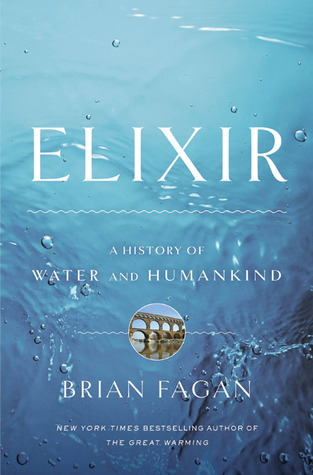
Elixir spans five millennia, from ancient Mesopotamia to the parched present of the Sun Belt. As Brian Fagan shows, every human society has been shaped by its relationship toour most essential resource. Fagan's sweeping narrative moves across the world, from ancient Greece and Rome, whose mighty aqueducts still supply modern cities, to China, where emperors marshaled armies of laborers in a centuries-long struggle to tame powerful rivers. He sets out three ages of In the first age, lasting thousands of years, water was scarce or at best unpredictable-so precious that it became sacred in almost every culture.By the time of the Industrial Revolution, human ingenuity had made water flow even in the most arid landscapes.This was the second water was no longer a mystical force to be worshipped and husbanded, but a commodity to be exploited. The American desert glittered with swimming pools- with little regard for sustainability. Today, we are entering a third age of As the earth's population approaches nine billion and ancient aquifers run dry,we will have to learn once again to show humility, even reverence, for this vital liquid. To solve the water crises of the future, we may need to adapt the water ethos of our ancestors.

A clearly written, authoritative synthesis of North American archaeology--the standard textbook on the subject, adopted at hundreds of colleges and universities. Brian Fagan, one of the foremost living archaeological writers and an authority on world prehistory, has completely revised and updated his definitive synthesis of North America's ancient past. The book offers a balanced summary of every major culture area in North America, and places the continent in its wider context in human prehistory. Lavish illustrations, many new to the fourth edition, draw on North America's rich ethnographic record to illustrate key sites and artifacts. The chapter on first settlement has been heavily revised in light of new discoveries in Siberia and the Americas, and current controversies are surveyed. Chapters on archaeological theory, the Great Basin, the Northeast, the Northwest, and the Archaeology of European Contact reflect major advances, and important new discoveries and scientific methodologies receive full coverage. 400 illustrations

In 1997 and early 1998, one of the most powerful El Niños ever recorded disrupted weather patterns all over the world. Europe suffered through a record freeze as the American West was hit with massive floods and snowstorms; in the western Pacific, meanwhile, some island nations literally went bone dry and had to have water flown in on transport planes.Such effects are not new: climatologists now know the El Niño and other climate anomalies have been disrupting weather patterns throughout history. But until recently, no one had asked how this new understanding of the global weather system related to archaeology and history. Droughts, floods, heat and cold put stress on cultures and force them to adapt. What determines whether they adapt successfully? How do these climate stresses affect a people's faith in the foundations of their society and the legitimacy of their rulers? How vulnerable is our own society to climate change?In this dazzlingly original new book, archaeologist Brian Fagan shows that short-term climate shifts have been a major—and hitherto unrecognized—force in history. El Niño-driven droughts have brought on the collapse of dynasties in Egypt; El Niño monsoon failures have caused historic famines in India; and El Niño floods have destroyed whole civilizations in Peru. Other short-term climate changes may have caused the mysterious abandonment of the Anasazi dwellings in the American Southwest and the collapse of the ancient Maya empire, as well as changed the course of European history.This beautifully written, groundbreaking book opens a new door on our understanding of historical events.
Brief and highly engaging, this introduction to the fundamental principles of method and theory in archaeology begins with the goals of archaeology, then goes on to consider the basic concepts of culture, time, and space, and the finding and excavation of archaeological sites.

Understand major developments of human prehistory People of the An Introduction to World Prehistory 14/e, provides an exciting journey though the 7-million-year-old panorama of humankind’s past. Giving equal treatment to both well-trodden and more obscure parts of the world, People of the Earth shows how today's diverse humanity developed biologically and culturally over millions of years against a background of constant climatic change. MySearchLab is a part of the Fagan/Durrani program. Research and writing tools help students master basic writing skills. With MySearchLab, students can access academic journals and census data and receive aid throughout the writing process. This title is available in a variety of formats — digital and print. Pearson offers its titles on the devices students love through Pearson’s MyLab products, CourseSmart, Amazon, and more. To learn more about our programs, pricing options and customization, click the Choices tab. 0205968023 / 9780205968022 People of the An Introduction to World Prehistory Plus MySearchLab with Pearson eText -- Access Card Package Package consists 0205239927 / 9780205239924 MySearchLab with Pearson eText -- Valuepack Access Card 0205966551 / 9780205966554 People of the An Introduction to World Prehistory

Humanity’s last major source of food from the wild, and how it enabled and shaped the growth of civilizationIn this history of fishing—not as sport but as sustenance—archaeologist and best-selling author Brian Fagan argues that fishing was an indispensable and often overlooked element in the growth of civilization. It sustainably provided enough food to allow cities, nations, and empires to grow, but it did so with a different emphasis. Where agriculture encouraged stability, fishing demanded movement. It frequently required a search for new and better fishing grounds; its technologies, centered on boats, facilitated movement and discovery; and fish themselves, when dried and salted, were the ideal food—lightweight, nutritious, and long-lasting—for traders, travelers, and conquering armies. This history of the long interaction of humans and seafood tours archaeological sites worldwide to show readers how fishing fed human settlement, rising social complexity, the development of cities, and ultimately the modern world.
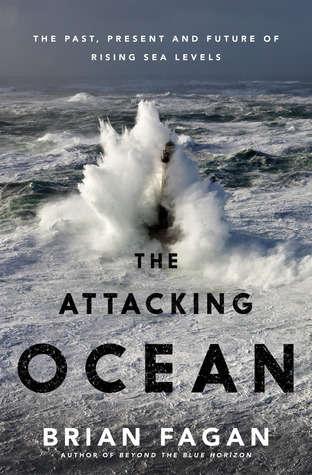
The Attacking Ocean: The Past, Present, and Future of Rising Sea Levels
by Brian M. Fagan
Rating: 3.6 ⭐
The past fifteen thousand years--the entire span of human civilization--have witnessed dramatic sea level changes, which began with rapid global warming at the end of the Ice Age, when sea levels were more than 700 feet below modern levels. Over the next eleven millennia, the oceans climbed in fits and starts. These rapid changes had little effect on those humans who experienced them, partly because there were so few people on earth, and also because they were able to adjust readily to new coastlines.Global sea levels stabilized about six thousand years ago except for local adjustments that caused often quite significant changes to places like the Nile Delta. So the curve of inexorably rising seas flattened out as urban civilizations developed in Egypt, Mesopotamia, and South Asia. The earth's population boomed, quintupling from the time of Christ to the Industrial Revolution. The threat from the oceans increased with our crowding along shores to live, fish, and trade.Since 1860, the world has warmed significantly and the ocean's climb has speeded. The sea level changes are cumulative and gradual; no one knows when they will end. The Attacking Ocean , from celebrated author Brian Fagan, tells a tale of the rising complexity of the relationship between humans and the sea at their doorsteps, a complexity created not by the oceans, which have changed but little. What has changed is us, and the number of us on earth.

Time Detectives: How Archaeologists Use Technology to Recapture the Past
by Brian M. Fagan
Rating: 3.7 ⭐
Revealing the work of modern archaeologists, who use technology and scientific methods more than shovels, this survey of recent findings includes the earliest Bronze Age shipwreck, ancient Incan farming systems that are superior to current methods, and a newly discovered Mayan city. 20,000 first printing.

What gave Christopher Columbus the confidence in 1492 to set out across the Atlantic Ocean? Fish on Friday tells the story of the discovery of America as a product of the long sweep of history: the spread of Christianity and the radical cultural changes it brought to Europe, the interaction of economic necessity with a changing climate, and generations of unknown fishermen who explored the North Atlantic in the centuries before Columbus. A fascinating and multifaceted book, Fish on Friday will intrigue everyone who wonders how the vast forces of climate, culture, and technology conspire to create the history we know.

A thirty-thousand-year history of the relationship between climate and civilization that teaches powerful lessons about how humankind can survive. Human-made climate change may have begun in the last two hundred years, but our species has witnessed many eras of climate instability. The results have not always been pretty. From Ancient Egypt to Rome to the Maya, some of history’s mightiest civilizations have been felled by pestilence and glacial melt and drought.The challenges are no less great today. We face hurricanes and megafires and food shortages and more. But we have one powerful advantage as we face our current the past. Our knowledge of ancient climates has advanced tremendously in the last decade, to the point where we can now reconstruct seasonal weather going back thousands of years and see just how people and nature interacted. The lesson is the societies that survive are those that plan ahead.Climate Chaos is a book about saving ourselves. Brian Fagan and Nadia Durrani show in remarkable detail what it was like to battle our climate over centuries and offer us a path to a safer and healthier future.

This new history of North America is based mainly on archaeology, but also on cutting-edge research in many scientific disciplines, from biology and climatology to ethnohistory and high-tech chemistry and physics. Brian Fagan describes the controversies over first settlement, which likely occurred via Siberia at the end of the Ice Age, and the debates over the routes used as humans moved southward into the heart of the continent. A remarkable diversity of hunter-gatherer societies evolved in the rapidly changing North American environments, and the book explores the ingenious ways in which people adapted to every kind of landscape imaginable, from arctic tundra to open plains and thick woodland.Professor Fagan recounts the increasingly sophisticated acclimation by Native Americans to arctic, arid and semiarid lands, culminating in the spectacular Ancestral Pueblo societies of the Southwest and the elaborate coastal settlements of California and the Pacific Northwest. He then traces the origins of the Moundbuilder societies of the Eastern Woodlands, which reached their apogee in the flamboyant Mississippian culture of the South and Southeast and the mounds of the ancient city of Cahokia. The book ends with a description of the Algonquian and Iroquoian peoples of the Northeast and St. Lawrence Valley, and an epilogue that enumerates the devastating consequences of European contact for Native Americans.
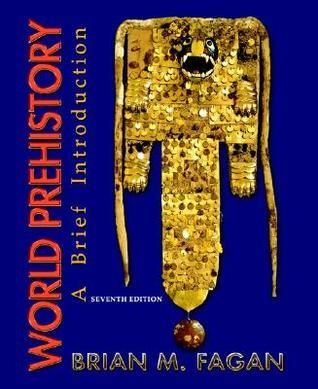
Written by one of the leading archaeological writers in the world--in a simple, jargon-free narrative style--this brief, well-illustrated account of the major developments in the human past (from the origins of humanity to the origins of literate civilization) is ideal for those with no previous knowledge of the subject. Up to date and state of the art in content and perspective, it covers the entire world (not just the Americas or Europe), placing major emphasis on both theories and the latest archaeological and multidisciplinary approaches. The main focus is on four major developments--the origins of humanity; the appearance and spread of modern humans before and during the late Ice Age, including the first settlement of the Americas; the beginnings of food production; and the rise of the first civilizations. Features special boxes on Science (e.g., key dating methods and other scientific approaches), Sites (e.g., sites of unusual importance or interest, and Voices (e.g., quotes from writings of ancient times). Human Origins. African Exodus. Diaspora. The Origins of Food Production. The First Farmers. Chiefs and Chiefdoms. State-Organized Societies. Mesopotamia and the Eastern Mediterranean World. Egypt and Africa. South, Southeast, And East Asia. Lowland Mesoamerica. Highland Mesamerica. Andean Civilizations. For anyone interested in Archaeology, World Prehistory, Human Antiquity.

Until recently, archaeology was concerned mainly with piecing together the material lives of our ancestors. In this groundbreaking book, master storyteller and respected archaeologist Brian Fagan explains how cutting-edge science can now take us beyond the artifacts—into the mystical realm of shamans and spirit mediums, ancestor worship, and ritual sacrifice. From the Nile’s black land to the Aztec’s world of the Fifth Sun, from Stonehenge to Jericho, Fagan describes how Accelerator Mass Spectrometry, Geographic Information Systems, Computer Automated Design-mapping and other sophisticated scientific methods are helping us to decode the religious and spiritual beliefs of our forebears. This new “archaeology of the mind” blends a wealth of scientific disciplines—from botany, zoology, and geology to neuropsychology, palynology, and nuclear physics. With vivid imagery and a transporting voice, Fagan revolutionizes our understanding of the inner lives of ancient people.

Chaco Canyon, New Mexico, has been called the Stonehenge of North America. Its spectacular pueblos, or great houses, are world famous and have attracted the attention of archaeologists for more than a century. Beautifully illustrated with color and black-and-white photographs, Chaco Canyon draws on the very latest research on Chaco and its environs to tell the remarkable story of the people of the canyon, from foraging bands and humble farmers to the elaborate society that flourished between the tenth and twelfth centuries A.D. Brian Fagan is a master story teller, and he weaves the latest discoveries into a compelling narrative of people living in a harsh, unpredictable environment. Indeed, this is not a story about artifacts and dusty digs, but a riveting narrative of people in the distant past, going about their daily business, living and dying, loving, raising children, living in plenty and in hunger, pondering the cosmos, and facing the unpredictable challenges of the environment. Drawing on rare access to the records of the Chaco Synthesis Project, Fagan reveals a society where agriculture and religion went hand-in-hand, where the ritual power of Chaco's leaders drew pilgrims from distant communities bearing gifts. He describes the lavish burials in the heart of Pueblo Bonito, which offer clues about the identity of Chaco's shadowy leaders. And he explores the enduring mystery of Chaco's sudden decline in the face of savage drought and shows how its legacy survives into modern times. Here then is the first authoritative account of the Chaco people written for a general audience, lending a fascinating human face to one of America's most famous archaeological sites.

Written for complete beginners in a narrative style, Ancient Lives is aimed at introductory courses in archaeology and prehistory that cover archaeological methods and theory, as well as world prehistory. The first half of Ancient Lives covers the basic principles, methods, and theoretical approaches of archaeology. The second half is devoted to a summary of the major developments of human the origins of humankind and the archaic world, the origins and spread of modern humans, the emergence of food production, and the beginnings of civilization.

This text explains how historical archaeologists use historical texts, maps, oral testimonies, and other materials in conjunction with excavated artifacts, old buildings and relict landscapes to decipher the recent past. Further, it discusses how archaeological detectives find sites, excavate them, analyze and classify the artifacts, and how they develop explanations from all the information they have collected. Addrssing some of today's most important issues from a historical archaeological perspective, the text explores topics such as the identification and symbolization of ethnicity, the development and maintenance of class differences, changes in gender roles and the recognition of women in history, and the material manifestations of race. These issues are supported by an abundance of global examples from sites where archaeologists have tackled these complex issues.

Why Archaeology Matters TodayAn exciting and much anticipated new archaeology title written by titan Brian Fagan and journalist Nadia Durrani, Bigger than History introduces students to archaeology’s contributions to many of today’s important debates of interest to students. Each chapter focuses on one of today’s important topics, such as gender equality, ethnicity and racism, climate change, and nationality and nationalism, showing how archaeology contributes to our understanding of the issues related to those topics. Bigger than History is affordable and concise enough to be used alongside a textbook, or on its own to engage and draw students into learning about archaeology.

Stone choppers, eyed needles, camel saddles, chariots, and contraceptives: the past is paved with remarkable inventions. The latest book in this popular series takes us on an eye-opening and unusual journey through early human innovationsusome fundamental and others intriguing or bizarre. An international team of scientists, archaeologists, and historians reveals seventy of the most extraordinary inventions, from two-and-a-half million years ago up to the early medieval period.The book begins with the basic technologies of stone, fire, woodworking, ceramics, metallurgy, glass, and weaving. We watch Stone Age flint-knappers at work and look over the shoulders of early metalworkers as they fabricate glittering ornaments in copper and gold. Some of the most fundamental questions of the past are addressed. How and where did agriculture evolve? How did Romans and others heat and plumb their dwellings? What roles did cooking, food preservation, and fermentation play in the development of ancient cuisine? How did the wheel and cart change human life? When did the first roads appear, and when did long-distance seafaring begin?Later sections look at the origins of hunting, war and sport, art and science, and personal adornment. Weapons of war evolved from spears, bows, and arrows to swords, shields, catapults, and crossbows. The book examines the earliest human art traditions - body painting and tattooing - and traces the beginning of writing, the early use of codes and ciphers, and the origins of calendars and astronomy.