Loading themes...
Explore the best books about Asia theme.

How Asia Works( Success and Failure in the World's Most Dynamic Region) Hardcover JoeStudwell GrovePress

In the early 1900s, teenaged Sunja, the adored daughter of a crippled fisherman, falls for a wealthy stranger at the seashore near her home in Korea. He promises her the world, but when she discovers she is pregnant—and that her lover is married—she refuses to be bought. Instead, she accepts an offer of marriage from a gentle, sickly minister passing through on his way to Japan. But her decision to abandon her home, and to reject her son's powerful father, sets off a dramatic saga that will echo down through the generations. Richly told and profoundly moving, Pachinko is a story of love, sacrifice, ambition, and loyalty. From bustling street markets to the halls of Japan's finest universities to the pachinko parlors of the criminal underworld, Lee's complex and passionate characters—strong, stubborn women, devoted sisters and sons, fathers shaken by moral crisis—survive and thrive against the indifferent arc of history.

In December 1937, the Japanese army invaded the ancient city of Nanking, systematically raping, torturing, and murdering more than 300,000 Chinese civilians. This book tells the story from three perspectives: of the Japanese soldiers who performed it, of the Chinese civilians who endured it, and of a group of Europeans and Americans who refused to abandon the city and were able to create a safety zone that saved many.

Robert Timberg weaves together the lives of Annapolis graduates John McCain, James Webb, Oliver North, Robert McFarlane, and John Poindexter to reveal how the Vietnam War continues to haunt America. Casting all five men as metaphors for a legion of well-meaning if ill-starred warriors, Timberg probes the fault line between those who fought the war and those who used money, wit, and connections to avoid battle. A riveting tale that illuminates the flip side of the fabled Vietnam generation -- those who went.

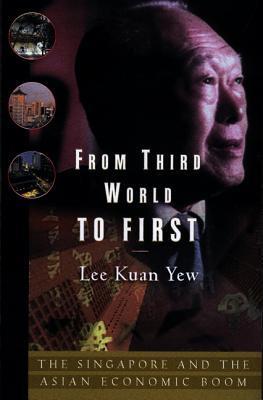
Few gave tiny Singapore much chance of survival when it was granted independence in 1965. How is it, then, that today the former British colonial trading post is a thriving Asian metropolis with not only the world's number one airline, best airport, and busiest port of trade, but also the world's fourth–highest per capita real income?The story of that transformation is told here by Singapore's charismatic, controversial founding father, Lee Kuan Yew. Rising from a legacy of divisive colonialism, the devastation of the Second World War, and general poverty and disorder following the withdrawal of foreign forces, Singapore now is hailed as a city of the future. This miraculous history is dramatically recounted by the man who not only lived through it all but who fearlessly forged ahead and brought about most of these changes.Delving deep into his own meticulous notes, as well as previously unpublished government papers and official records, Lee details the extraordinary efforts it took for an island city–state in Southeast Asia to survive at that time.Lee explains how he and his cabinet colleagues finished off the communist threat to the fledgling state's security and began the arduous process of nation building: forging basic infrastructural roads through a land that still consisted primarily of swamps, creating an army from a hitherto racially and ideologically divided population, stamping out the last vestiges of colonial–era corruption, providing mass public housing, and establishing a national airline and airport.In this illuminating account, Lee writes frankly about his trenchant approach to political opponents and his often unorthodox views on human rights, democracy, and inherited intelligence, aiming always "to be correct, not politically correct." Nothing in Singapore escaped his watchful eye: whether choosing shrubs for the greening of the country, restoring the romance of the historic Raffles Hotel, or openly, unabashedly persuading young men to marry women as well educated as themselves. Today's safe, tidy Singapore bears Lee's unmistakable stamp, for which he is unapologetic: "If this is a nanny state, I am proud to have fostered one."Though Lee's domestic canvas in Singapore was small, his vigor and talent assured him a larger place in world affairs. With inimitable style, he brings history to life with cogent analyses of some of the greatest strategic issues of recent times and reveals how, over the years, he navigated the shifting tides of relations among America, China, and Taiwan, acting as confidant, sounding board, and messenger for them. He also includes candid, sometimes acerbic pen portraits of his political peers, including the indomitable Margaret Thatcher and Ronald Reagan, the poetry–spouting Jiang Zemin, and ideologues George Bush and Deng Xiaoping.Lee also lifts the veil on his family life and writes tenderly of his wife and stalwart partner, Kwa Geok Choo, and of their pride in their three children –– particularly the eldest son, Hsien Loong, who is now Singapore's deputy prime minister.For more than three decades, Lee Kuan Yew has been praised and vilified in equal measure, and he has established himself as a force impossible to ignore in Asian and international politics. From Third World to First offers readers a compelling glimpse into this visionary's heart, soul, and mind.

Hagakure ("In the Shadow of Leaves") is a manual for the samurai classes consisting of a series of short anecdotes and reflections that give both insight and instruction-in the philosophy and code of behavior that foster the true spirit of Bushido-the Way of the Warrior. It is not a book ofphilosophy as most would understand the it is a collection of thoughts and sayings recorded over a period of seven years, and as such covers a wide variety of subjects, often in no particular sequence.The work represents an attitude far removed from our modern pragmatism and materialism, and possesses an intuitive rather than rational appeal in its assertion that Bushido is a Way of Dying, and that only a samurai retainer prepared and willing to die at any moment can be totally true to his lord.While Hagakure was for many years a secret text known only to the warrior vassals of the Hizen fief to which the author belonged, it later came to be recognized as a classic exposition of samurai thought and came to influence many subsequent generations, including Yukio Mishima.This translation offers 300 selections that constitute the core texts of the 1,300 present in the original.Hagakure was featured prominently in the film Ghost Dog , by Jim Jarmusch.

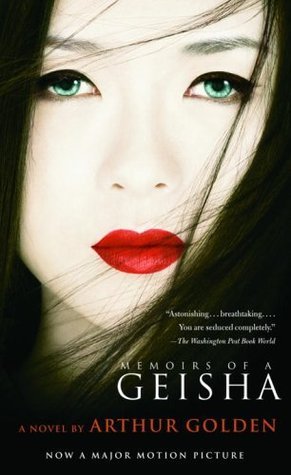
A literary sensation and runaway bestseller, this brilliant novel presents with seamless authenticity and exquisite lyricism the true confessions of one of Japan's most celebrated geisha.In "Memoirs of a Geisha," we enter a world where appearances are paramount; where a girl's virginity is auctioned to the highest bidder; where women are trained to beguile the most powerful men; and where love is scorned as illusion. It is a unique and triumphant work of fiction - at once romantic, erotic, suspenseful - and completely unforgettable.

A big, powerful saga of men in combat, written over the course of thirty-five years by a highly decorated Vietnam veteran.Intense, powerful, and compelling, Matterhorn is an epic war novel in the tradition of Norman Mailer's The Naked and the Dead and James Jones's The Thin Red Line. It is the timeless story of a young Marine lieutenant, Waino Mellas, and his comrades in Bravo Company, who are dropped into the mountain jungle of Vietnam as boys and forced to fight their way into manhood. Standing in their way are not merely the North Vietnamese but also monsoon rain and mud, leeches and tigers, disease and malnutrition. Almost as daunting, it turns out, are the obstacles they discover between each other: racial tension, competing ambitions, and duplicitous superior officers. But when the company finds itself surrounded and outnumbered by a massive enemy regiment, the Marines are thrust into the raw and all-consuming terror of combat. The experience will change them forever.Written over the course of thirty years by a highly decorated Vietnam veteran, Matterhorn is a visceral and spellbinding novel about what it is like to be a young man at war. It is an unforgettable novel that transforms the tragedy of Vietnam into a powerful and universal story of courage, camaraderie, and sacrifice: a parable not only of the war in Vietnam but of all war, and a testament to the redemptive power of literature.A graduate of Yale University and a Rhodes Scholar at Oxford University, Karl Marlantes served as a Marine in Vietnam, where he was awarded the Navy Cross, the Bronze Star, two Navy Commendation Medals for valor, two Purple Hearts, and ten air medals. This is his first novel. He lives in rural Washington State.

The year is 1799, the place Dejima in Nagasaki Harbor, the “high-walled, fan-shaped artificial island” that is the Japanese Empire’s single port and sole window onto the world, designed to keep the West at bay; the farthest outpost of the war-ravaged Dutch East Indies Company; and a de facto prison for the dozen foreigners permitted to live and work there. To this place of devious merchants, deceitful interpreters, costly courtesans, earthquakes, and typhoons comes Jacob de Zoet, a devout and resourceful young clerk who has five years in the East to earn a fortune of sufficient size to win the hand of his wealthy fiancée back in Holland.But Jacob’s original intentions are eclipsed after a chance encounter with Orito Aibagawa, the disfigured daughter of a samurai doctor and midwife to the city’s powerful magistrate. The borders between propriety, profit, and pleasure blur until Jacob finds his vision clouded, one rash promise made and then fatefully broken. The consequences will extend beyond Jacob’s worst imaginings. As one cynical colleague asks, “Who ain’t a gambler in the glorious Orient, with his very life?”A magnificent mix of luminous writing, prodigious research, and heedless imagination, The Thousand Autumns of Jacob de Zoet is the most impressive achievement of its eminent author.

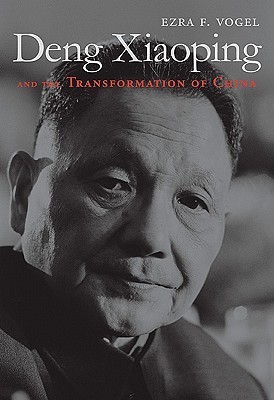
Perhaps no one in the twentieth century had a greater long-term impact on world history than Deng Xiaoping. And no scholar of contemporary East Asian history and culture is better qualified than Ezra Vogel to disentangle the many contradictions embodied in the life and legacy of China’s boldest strategist.Once described by Mao Zedong as a “needle inside a ball of cotton,” Deng was the pragmatic yet disciplined driving force behind China’s radical transformation in the late twentieth century. He confronted the damage wrought by the Cultural Revolution, dissolved Mao’s cult of personality, and loosened the economic and social policies that had stunted China’s growth. Obsessed with modernization and technology, Deng opened trade relations with the West, which lifted hundreds of millions of his countrymen out of poverty. Yet at the same time he answered to his authoritarian roots, most notably when he ordered the crackdown in June 1989 at Tiananmen Square.Deng’s youthful commitment to the Communist Party was cemented in Paris in the early 1920s, among a group of Chinese student-workers that also included Zhou Enlai. Deng returned home in 1927 to join the Chinese Revolution on the ground floor. In the fifty years of his tumultuous rise to power, he endured accusations, purges, and even exile before becoming China’s preeminent leader from 1978 to 1989 and again in 1992. When he reached the top, Deng saw an opportunity to creatively destroy much of the economic system he had helped build for five decades as a loyal follower of Mao—and he did not hesitate.

A magnificent work of history, biography and adventure.If the quest for Mount Everest began as a grand imperial gesture, as redemption for an empire of explorers that had lost the race to the Poles, it ended as a mission of regeneration for a country and a people bled white by war. Of the twenty-six British climbers who, on three expedtions (1921-24), walked 400 miles off the map to find and assault the highest mountain on Earth, twenty had seen the worst of the fighting. Six had been severely wounded, two others nearly died of disease at the Front, one was hospitalized twice with shell shock. Three as army surgeons dealt for the duration with the agonies of the dying. Two lost brothers, killed in action. All had endured the slaughter, the coughing of the guns, the bones and barbed wire, the white faces of the dead.In a monumental work of history and adventure, ten years in the writing, Wade Davis asks not whether George Mallory was the first to reach the summit of Everest, but rather why he kept on climbing on that fateful day. His answer lies in a single phrase uttered by one of the survivors as they retreated from the "The price of life is death." Mallory walked on because for him, as for all of his generation, death was but "a frail barrier that men crossed, smiling and gallant, every day." As climbers they accepted a degree of risk unimaginable before the war. They were not cavalier, but death was no stranger. They had seen so much of it that it had no hold on them. What mattered was how one lived, the moments of being alive.For all of them Everest had become an exalted radiance, a sentinel in the sky, a symbol of hope in a world gone mad.

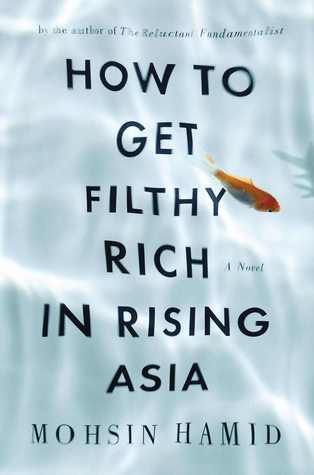
From the internationally bestselling author of The Reluctant Fundamentalist, the boldly imagined tale of a poor boy's quest for wealth and love. His first two novels established Mohsin Hamid as a radically inventive storyteller with his finger on the world's pulse. How to Get Filthy Rich in Rising Asia meets that reputation, and exceeds it. the astonishing and riveting tale of a man's journey from impoverished rural boy to corporate tycoon, it steals its shape from the business self-help books devoured by ambitious youths all over "rising Asia." It follows its nameless hero to the sprawling metropolis where he begins to amass an empire built on that most fluid, and increasingly scarce, of goods: water. Yet his heart remains set on something else, on the pretty girl whose star rises along with his, their paths crossing and recrossing, a lifelong affair sparked and snuffed and sparked again by the forces that careen their fates along. How to Get Filthy Rich in Rising Asia is a striking slice of contemporary life at a time of crushing upheaval. Romantic without being sentimental, political without being didactic, and spiritual without being religious, it brings an unflinching gaze to the violence and hopes it depicts. And it creates two unforgettable characters who find moments of transcendent intimacy in the midst of shattering change.

DEALING WITH CHINA takes the reader behind closed doors to witness the creation and evolution of China's state-controlled capitalism. Written in the same anecdote-rich, page-turning style as Paulson's bestselling memoir, On the Brink , DEALING WITH CHINA is certain to become the classic and definitive examination of engaging an economic superpower. Hank Paulson has dealt with China unlike any other foreigner. As head of Goldman Sachs, Paulson had a pivotal role in opening up China to private enterprise. Then, as Treasury secretary, he created the Strategic Economic Dialogue with what is now the world's second-largest economy. While negotiating with China on economic reforms, he safeguarded the teetering U.S. financial system. Paulson has worked with scores of top Chinese leaders, including Xi Jinping, China's most powerful man in decades. Now, in DEALING WITH CHINA, he takes readers behind closed doors to witness the future of China's state-controlled capitalism.

Grand strategist and founder of modern Singapore offers key insights and controversial opinions on globalization, geopolitics, economic growth, and democracy.When Lee Kuan Yew speaks, presidents, prime ministers, diplomats, and CEOs listen. Lee, the founding father of modern Singapore and its prime minister from 1959 to 1990, has honed his wisdom during more than fifty years on the world stage. Almost single-handedly responsible for transforming Singapore into a Western-style economic success, he offers a unique perspective on the geopolitics of East and West. American presidents from Richard Nixon to Barack Obama have welcomed him to the White House; British prime ministers from Margaret Thatcher to Tony Blair have recognized his wisdom; and business leaders from Rupert Murdoch to Rex Tillerson, CEO of Exxon Mobil, have praised his accomplishments. This book gathers key insights from interviews, speeches, and Lee's voluminous published writings and presents them in an engaging question and answer format.Lee offers his assessment of China's future, asserting, among other things, that "China will want to share this century as co-equals with the U.S." He affirms the United States' position as the world's sole superpower but expresses dismay at the vagaries of its political system. He offers strategic advice for dealing with China and goes on to discuss India's future, Islamic terrorism, economic growth, geopolitics and globalization, and democracy. Lee does not pull his punches, offering his unvarnished opinions on multiculturalism, the welfare state, education, and the free market. This little book belongs on the reading list of every world leader--including the one who takes the oath of office on January 20, 2013.

Epic in its canvas and intimate in its portrayal of lives undone and forged anew, The Lowland is a deeply felt novel of family ties that entangle and fray in ways unforeseen and unrevealed, of ties that ineluctably define who we areFrom Subhash's earliest memories, at every point, his brother was there. In the suburban streets of Calcutta where they wandered before dusk and in the hyacinth-strewn ponds where they played for hours on end, Udayan was always in his older brother's sight. So close in age, they were inseparable in childhood and yet, as the years pass - as U.S tanks roll into Vietnam and riots sweep across India - their brotherly bond can do nothing to forestall the tragedy that will upend their lives. Udayan - charismatic and impulsive - finds himself drawn to the Naxalite movement, a rebellion waged to eradicate inequity and poverty. He will give everything, risk all, for what he believes, and in doing so will transform the futures of those dearest to him: his newly married, pregnant wife, his brother and their parents. For all of them, the repercussions of his actions will reverberate across continents and seep through the generations that follow. Epic in its canvas and intimate in its portrayal of lives undone and forged anew, The Lowland is a deeply felt novel of family ties that entangle and fray in ways unforeseen and unrevealed, of ties that ineluctably define who we are. With all the hallmarks of Jhumpa Lahiri's achingly poignant, exquisitely empathetic story-telling, this is her most devastating work of fiction to date.

A haunting memoir of teaching English to the sons of North Korea's ruling class during the last six months of Kim Jong-il's reignEvery day, three times a day, the students march in two straight lines, singing praises to Kim Jong-il and North Korea: Without you, there is no motherland. Without you, there is no us. It is a chilling scene, but gradually Suki Kim, too, learns the tune and, without noticing, begins to hum it. It is 2011, and all universities in North Korea have been shut down for an entire year, the students sent to construction fields - except for the 270 students at Pyongyang University of Science and Technology (PUST), a walled compound where portraits of Kim Il-sung and Kim Jong-il look on impassively from the walls of every room, and where Suki has accepted a job teaching English. Over the next six months, she will eat three meals a day with her young charges and struggle to teach them to write, all under the watchful eye of the regime. Life at PUST is lonely and claustrophobic, especially for Suki, whose letters are read by censors and who must hide her notes and photographs not only from her minders but from her colleagues - evangelical Christian missionaries who don't know or choose to ignore that Suki doesn't share their faith. She is mystified by how easily her students lie, unnerved by their obedience to the regime. To them, everything in North Korea is the best, the tallest, the most delicious, the envy of all nations. Still, she cannot help but love them - their boyish enthusiasm, their eagerness to please, the flashes of curiosity that have not yet been extinguished. As the weeks pass, she begins to hint at the existence of a world beyond their own - at such exotic activities as surfing the Internet or traveling freely and, more dangerously, at electoral democracy and other ideas forbidden in a country where defectors risk torture and execution. The students in turn offer Suki tantalizing glimpses into their lives, from their thoughts on how to impress girls to their disappointment that soccer games are only televised when the North Korean team wins. Then Kim Jong-il dies, leaving the students devastated, and leading Suki to question whether the gulf between her world and theirs can ever be bridged.Without You, There Is No Us offers a moving and incalculably rare glimpse of life in the world's most unknowable country, and at the privileged young men she calls "soldiers and slaves."

One of the U.S. government's leading China experts reveals the hidden strategy fueling that country's rise – and how Americans have been seduced into helping China overtake us as the world's leading superpower.For more than forty years, the United States has played an indispensable role helping the Chinese government build a booming economy, develop its scientific and military capabilities, and take its place on the world stage, in the belief that China's rise will bring us cooperation, diplomacy, and free trade. But what if the "China Dream" is to replace us, just as America replaced the British Empire, without firing a shot?Based on interviews with Chinese defectors and newly declassified, previously undisclosed national security documents, The Hundred-Year Marathon reveals China's secret strategy to supplant the United States as the world's dominant power, and to do so by 2049, the one-hundredth anniversary of the founding of the People's Republic. Michael Pillsbury, a fluent Mandarin speaker who has served in senior national security positions in the U.S. government since the days of Richard Nixon and Henry Kissinger, draws on his decades of contact with the "hawks" in China's military and intelligence agencies and translates their documents, speeches, and books to show how the teachings of traditional Chinese statecraft underpin their actions. He offers an inside look at how the Chinese really view America and its leaders – as barbarians who will be the architects of their own demise.Pillsbury also explains how the U.S. government has helped – sometimes unwittingly and sometimes deliberately – to make this "China Dream" come true, and he calls for the United States to implement a new, more competitive strategy toward China as it really is, and not as we might wish it to be. The Hundred-Year Marathon is a wake-up call as we face the greatest national security challenge of the twenty-first century.

It is April 1975, and Saigon is in chaos. At his villa, a general of the South Vietnamese army is drinking whiskey and, with the help of his trusted captain, drawing up a list of those who will be given passage aboard the last flights out of the country. The general and his compatriots start a new life in Los Angeles, unaware that one among their number, the captain, is secretly observing and reporting on the group to a higher-up in the Viet Cong. The Sympathizer is the story of this captain: a man brought up by an absent French father and a poor Vietnamese mother, a man who went to university in America, but returned to Vietnam to fight for the Communist cause. A gripping spy novel, an astute exploration of extreme politics, and a moving love story, The Sympathizer explores a life between two worlds and examines the legacy of the Vietnam War in literature, film, and the wars we fight today.

Ocean Vuong's first full-length collection aims straight for the perennial "big"—and very human—subjects of romance, family, memory, grief, war, and melancholia. None of these he allows to overwhelm his spirit or his poems, which demonstrate, through breath and cadence and unrepentant enthrallment, that a gentle palm on a chest can calm the fiercest hungers.

CHINA AND THE UNITED STATES ARE HEADING TOWARD A WAR NEITHER WANTS. The reason is Thucydides’s Trap, a deadly pattern of structural stress that results when a rising power challenges a ruling one. This phenomenon is as old as history itself. About the Peloponnesian War that devastated ancient Greece, the historian Thucydides explained: “It was the rise of Athens and the fear that this instilled in Sparta that made war inevitable.” Over the past 500 years, these conditions have occurred sixteen times. War broke out in twelve of them. Today, as an unstoppable China approaches an immovable America and both Xi Jinping and Donald Trump promise to make their countries “great again,” the seventeenth case looks grim. Unless China is willing to scale back its ambitions or Washington can accept becoming number two in the Pacific, a trade conflict, cyberattack, or accident at sea could soon escalate into all-out war. In Destined for War, the eminent Harvard scholar Graham Allison explains why Thucydides’s Trap is the best lens for understanding U.S.-China relations in the twenty-first century. Through uncanny historical parallels and war scenarios, he shows how close we are to the unthinkable. Yet, stressing that war is not inevitable, Allison also reveals how clashing powers have kept the peace in the past — and what painful steps the United States and China must take to avoid disaster today.

The defining geopolitical contest of the twenty-first century is between China and the US. But is it avoidable? And if it happens, is the outcome already inevitable?China and America are world powers without serious rivals. They eye each other warily across the Pacific; they communicate poorly; there seems little natural empathy. A massive geopolitical contest has begun.America prizes freedom; China values freedom from chaos.America values strategic decisiveness; China values patience.America is becoming society of lasting inequality; China a meritocracy.America has abandoned multilateralism; China welcomes it.Kishore Mahbubani, a diplomat and scholar with unrivalled access to policymakers in Beijing and Washington, has written the definitive guide to the deep fault lines in the relationship, a clear-eyed assessment of the risk of any confrontation, and a bracingly honest appraisal of the strengths and weaknesses, and superpower eccentricities, of the US and China.

A fascinating political travelogue that traces the life and work of George Orwell, author of 1984 and ANIMAL FARM, in Southeast AsiaOver the years the American writer Emma Larkin has spent traveling in Burma, also known as Myanmar, she's come to know all too well the many ways this brutal police state can be described as "Orwellian." The life of the mind exists in a state of siege in Burma, and it long has. But Burma's connection to George Orwell is not merely metaphorical; it is much deeper and more real. Orwell's mother was born in Burma, at the height of the British raj, and Orwell was fundamentally shaped by his experiences in Burma as a young man working for the British Imperial Police. When Orwell died, the novel-in-progress on his desk was set in Burma. It is the place George Orwell's work holds in Burma today, however, that most struck Emma Larkin. She was frequently told by Burmese acquaintances that Orwell did not write one book about their country - his first novel, Burmese Days - but in fact he wrote three, the "trilogy" that included Animal Farm and Nineteen Eighty-Four . When Larkin quietly asked one Burmese intellectual if he knew the work of George Orwell, he stared blankly for a moment and then said, "Ah, you mean the prophet!"In one of the most intrepid political travelogues in recent memory, Emma Larkin tells of the year she spent traveling through Burma using the life and work of George Orwell as her compass. Going from Mandalay and Rangoon to poor delta backwaters and up to the old hill-station towns in the mountains of Burma's far north, Larkin visits the places where Orwell worked and lived, and the places his books live still. She brings to vivid life a country and a people cut off from the rest of the world, and from one another, by the ruling military junta and its vast network of spies and informers. Using Orwell enables her to show, effortlessly, the weight of the colonial experience on Burma today, the ghosts of which are invisible and everywhere. More important, she finds that the path she charts leads her to the people who have found ways to somehow resist the soul-crushing effects of life in this most cruel police state. And George Orwell's moral clarity, hatred of injustice, and keen powers of observation serve as the author's compass in another sense they are qualities she shares and they suffuse her book - the keenest and finest reckoning with life in this police state that has yet been written.

This is the first systematic critique of Edward Said's influential work, Orientalism, a book that for almost three decades has received wide acclaim, voluminous commentary, and translation into more than fifteen languages. Said's main thesis was that the Western image of the East was heavily biased by colonialist attitudes, racism, and more than two centuries of political exploitation. Although Said's critique was controversial, the impact of his ideas has been a pervasive rethinking of Western perceptions of Eastern cultures, plus a tendency to view all scholarship in Oriental Studies as tainted by considerations of power and prejudice. In this thorough reconsideration of Said's famous work, Ibn Warraq argues that Said's case against the West is seriously flawed. Warraq accuses Said of not only willfully misinterpreting the work of many scholars, but also of systematically misrepresenting Western civilization as a whole. With example after example, he shows that ever since the Greeks Western civilization has always had a strand in its very makeup that has accepted non-Westerners with open arms and has ever been open to foreign ideas. The author also criticizes Said for inadequate methodology, incoherent arguments, and a faulty historical understanding. He points out, not only Said's tendentious interpretations, but historical howlers that would make a sophomore blush. Warraq further looks at the destructive influence of Said's study on the history of Western painting, especially of the 19th century, and shows how, once again, the epigones of Said have succeeded in relegating thousands of first-class paintings to the lofts and storage rooms of major museums. An extended appendix reconsiders the value of 18th- and 19th-century Orientalist scholars and artists, whose work fell into disrepute as a result of Said's work.

8-page b/w photo section 6 x 9 "Last Reflections on a War stands as a fine representative sample of Fall's work as a whole; as such, it is nearly as personal as an autobiography. . . . That the collection includes an excellent outline of Vietnamese history, a discussion of the basic issues of the war, and an emotive picture of Vietnam, 1967, speaks to the depth of Fall's knowledge and the scope of his concerns."-Frances FitzGerald, from a 1968 review Bernard B. Fall was 40 years old when he was killed by a booby trap in northern South Vietnam on February 21, 1967. By the time of his death he had already authored seven books on Vietnam, most notably Street Without Joy (0-8117-1700-3), an indictment of French intrusion into Indochina and a warning to American forces just beginning their involvement. Last Reflections on a War, first published shortly after Dr. Fall's death, is a tribute to his life's It contains the only known autobiographical account of his life, several previously unpublished articles, notes for "Street Without Joy Revisited," and transcripts of Dr. Fall's tape recordings, including his last recorded words. Bernard Fall was born in France and fought with the French Resistance during World War II. Later, as professor of International Relations and accomplished author, he was one of the most influential academic critics of U.S. policy in Vietnam.

The Woman in the Dunes, by celebrated writer and thinker Kobo Abe, combines the essence of myth, suspense and the existential novel. After missing the last bus home following a day trip to the seashore, an amateur entomologist is offered lodging for the night at the bottom of a vast sand pit. But when he attempts to leave the next morning, he quickly discovers that the locals have other plans. Held captive with seemingly no chance of escape, he is tasked with shoveling back the ever-advancing sand dunes that threaten to destroy the village. His only companion is an odd young woman, and together their fates become intertwined as they work side by side through this Sisyphean of tasks.

In this fascinating document, one of Japan's best known-and controversial-writers created what might be termed a new literary form. It is new because it combines elements of many existing types of writing, yet in the end fits into none of them.At one level, it may be read as an account of how a puny, bookish boy discovered the importance of his own physical being; the "sun and steel" of the title are themselves symbols respectively of the cult of the open air and the weights used in bodybuilding. At another level, it is a discussion by a major novelist of the relation between action and art, and his own highly polished art in particular. More personally, it is an account of one individual's search for identity and self-integration. Or again, the work could be seen as a demonstration of how an intensely individual preoccupation can be developed into a profound philosophy of life.All these elements are woven together by Mishima's complex yet polished and supple style. The confession and the self-analysis, the philosophy and the poetry combine in the end to create something that is in itself perfect and self-sufficient. It is a piece of literature that is as carefully fashioned as Mishima's novels, and at the same time provides an indispensable key to the understanding of them as art.The road Mishima took to salvation is a highly personal one. Yet here, ultimately, one detects the unmistakable tones of a self transcending the particular and attaining to a poetic vision of the universal. The book is therefore a moving document, and is highly significant as a pointer to the future development of one of the most interesting novelists of modern times.

"Written with precise skill and beautifully controlled power. The translation by Ivan Morris is outstanding." -- The New York Times**Winner of the 1952 Yomiuri Prize**This haunting novel explores the complete degradation and isolation of a man by war. Fires on the Plain is set on the island of Leyte in the Philippines during World War II, where the Japanese army is disintegrating under the hammer blows of the American landings. Within this broader disintegration is another, that of a single human being, Private Tamura. The war destroys each of his ties to society, one by one, until Tamura, a sensitive and intelligent man, becomes an outcast.Nearly losing the will to survive, he hears of a port still in Japanese hands and struggles to walk through the American lines. Unfazed by danger, he welcomes the prospect of dying, but first, he loses his hope, and then his sanity. Lost among his hallucinations, Tamura comes to fancy himself an angel enjoined by God to eat no living thing--but even angels fall.Tamura is never less than human, even when driven to the ultimate sin against humanity. Shocking as the outward events are, the greatness of the novel lies in its uplifting vision during a time of crushing horror. As relevant today as when it was originally published, Fires on the Plain will strike a chord with anyone who has lived through the horrors of war.

Winner of the E.M. Forster Award and shortlisted for the Booker Prize, this brutal and beautiful narration of the guerrilla war against the Indonesians in Timor, praised by Fretilin Foreign Minister and Nobel prize-winner Jose Ramos-Hortafor its 'perfect authenticity', reappears now in this handsome edition at a topical moment in history as Timor fully joins the UN at last.

Mr. China tells the rollicking story of a young man who goes to China with the misguided notion that he will help bring the Chinese into the modern world, only to be schooled by the most resourceful and creative operators he would ever meet. Part memoir, part parable, Mr. China is one man's coming-of-age story where he learns to respect and admire the nation he sought to conquer.

Sparkling with irrepressible wit, City of Djinns peels back the layers of Delhi's centuries-old history, revealing an extraordinary array of characters along the way—from eunuchs to descendants of great Moguls. With refreshingly open-minded curiosity, William Dalrymple explores the seven "dead" cities of Delhi as well as the eighth city—today's Delhi. Underlying his quest is the legend of the djinns, fire-formed spirits that are said to assure the city's Phoenix-like regeneration no matter how many times it is destroyed. Entertaining, fascinating, and informative, City of Djinns is an irresistible blend of research and adventure.

Set in a remote fishing village in Japan, The Sound of Waves is a timeless story of first love. It tells of Shinji, a young fisherman and Hatsue, the beautiful daughter of the wealthiest man in the village. Shinji is entranced at the sight of Hatsue in the twilight on the beach and they fall in love. When the villagers' gossip threatens to divide them, Shinji must risk his life to prove his worth.

Asserts that Japan has overtaken the United States economically, technologically, and politically

Salzman captures post-cultural revolution China through his adventures as a young American English teacher in China and his shifu-tudi (master-student) relationship with China's foremost martial arts teacher.In 1982, Salzman flew off to teach English in Changsha, China. He writes of bureaucrats, students and Cultural Revolution survivors, stripping none of their complexity and humanity. He's gentle with their idiocies, saving his sharpest barbs for himself (it's his pants that split from zipper to waist whilst demonstrating martial arts in Canton). Though dribs of history and drabs of classical lore seep through, this is mostly a personal tale, noted by the Los Angeles Times for "the charmingly unpretentious manner in which it penetrates a China inaccessible to other foreigners."

A stunning exposé of official hypocrisy, The Politics of Heroin probes the failure of the U.S. “war on drugs” and meticulously documents CIA complicity in international drug trafficking both during and after the Cold War – in Afghanistan, Southeast Asia, Central America, and Latin America. The consequences of this complicity are evident today in an eruption of heroin trafficking worldwide, just as the legacy of the CIA’s covert wars is manifest in vast regions that have become black holes of global instability.After five U.S. drug wars at a cost of over $150 billion, production and consumption of narcotics are currently at record levels. Drug prosecutions in America have packed our prisons without curtailing drug use. This book confronts the utter failure of U.S. drug policy at home and abroad, and raises disturbing questions about the future role of the Central Intelligence Agency in U.S. foreign policy.

In conjunction with the Jawaharlal Nehru Memorial Fund in New Delhi, Oxford proudly announces the reissue of Glimpses of World History and The Discovery of India, two famous works by Jawaharlal Nehru. One of modern day's most articulate statesmen, Jawaharlal Nehru wrote a on a wide variety of subjects. Describing himself as "a dabbler in many things," he committed his life not only to politics but also to nature and wild life, drama, poetry, history, and science, as well as many other fields. These two volumes help to illuminate the depth of his interests and knowledge and the skill and elegance with which he treated the written word!!

Japon haiku şairlerinin en büyüğü olarak kabul edilen Matsuo Başô’nun (1644-1694) beş yolculuğunda tuttuğu notlar ve onlarla birlikte yazılan haikulardan oluşuyor Kuzeye Giden İnce Yol. Büyük usta Başô’nun yazdıklarının yanında Nobuyuki Yuasa’nın Başô ve dönemini anlatan derinlikli “sunuş”u kitabı eksiksiz hale getiriyor. Coşkun Yerli’nin ustalıklı çevirisiyle. “Bir Nisan’da tapınakların en kutsalını ziyaret etmek için Nikko Dağı’na çıktım.Bu dağa eskiden Niko denirmiş. Başrahip Kukai tapınağı bu dağda yaptırdığında, dağın adını Nikko, yani ‘güneşin parlak ışıkları’ olarak değiştirmiş. Kukai bin yıl sonrasını görme gücüne sahipti herhalde, bu dağ şimdi tüm tapınakların en kutsalına konak olmuş, iyiliksever kudretiyle ülkeye egemen, halkı kucaklıyor, güneşin parlak ışıkları gibi. Bu tapınak üzerine daha fazla söz etmek onun kutsallığına gölge düşürmek olur. İçimi bir korku sarıyor, güneşte parlayan körpe yapraklara bakarken.”

For eight years, far beyond the battlefields of Vietnam and the glare of media distortions, American Green Berets fought a deadly secret war in Laos and Cambodia under the aegis of the top secret Military Assistance Command Vietnam – Studies and Observations Group, or SOG. Go deep into the jungle with five SOG warriors surrounded by 10,000 enemy troops as they stack up the dead to build a human buttress for protection. Witness a Green Beret, shot in the back four times and left for dead, who survives to fight savagely against incredible odds to complete his missions. Shudder as an enemy soldier touches a Green Beret’s boot in the dark of night. Cringe as a Sergeant on SOG Spike Team Louisiana calls in an air strike on his team to break an enemy’s wave attack. A team member dies instantly, and a Green Beret has an out-of-body experience as he watches his leg get blown off. “As the commander of SOG, I can say that “Across the Fence” accurately reflects why the secret war was hazardous for our troops and so deadly for the enemy. – Major General John K. Singlaub (U. S. Army Ret.) Black Ops told with the terrifying clarity that only one who was there can tell it. – W.E.B. Griffin & William E. Butterworth IV

A landmark assessment of Turkish culpability in the Armenian genocide, the first history of its kind by a Turkish historian In 1915, under the cover of a world war, some one million Armenians were killed through starvation, forced marches, forced exile, and mass acts of slaughter. Although Armenians and world opinion have held the Ottoman powers responsible, Turkey has consistently rejected any claim of intentional genocide. Now, in a pioneering work of excavation, Turkish historian Taner Akçam has made extensive and unprecedented use of Ottoman and other sources to produce a scrupulous charge sheet against the Turkish authorities. The first scholar of any nationality to have mined the significant evidence--in Turkish military and court records, parliamentary minutes, letters, and eyewitness accounts--Akçam follows the chain of events leading up to the killing and then reconstructs its systematic orchestration by coordinated departments of the Ottoman state, the ruling political parties, and the military. He also probes the crucial question of how Turkey succeeded in evading responsibility, pointing to competing international interests in the region, the priorities of Turkish nationalists, and the international community's inadequate attempts to bring the perpetrators to justice. As Turkey lobbies to enter the European Union, Akçam's work becomes ever more important and relevant. Beyond its timeliness, A Shameful Act is sure to take its lasting place as a classic and necessary work on the subject.

The first Westerner to meet Mao Tse-tung and the Chinese Communist leaders in 1936, Edgar Snow came away with the first authorized account of Mao’s life, as well as a history of the famous Long March and the men and women who were responsible for the Chinese revolution. Out of that experience came Red Star Over China, a classic work that remains one of the most important books ever written about the birth of the Communist movement in China. This edition includes extensive notes on military and political developments in China, further interviews with Mao Tse-tung, a chronology covering 125 years of Chinese revolution, and nearly a hundred detailed biographies of the men and women who were instrumental in making China what it is today.

Cambodia 1975-1982 presents a unique and carefully researched analysis of the Democratic Kampuchea regime of Pol Pot and the Khmer Rouge (1975-79) and the early years of the People's Republic of Kampuchea (1979-89). When it was first published in 1984, the book provided one of the few balanced and reasoned voices in a world shocked by media reports of incredible brutality. Now, 15 years later, the book remains unsurpassed as an original historical document bringing a new interpretation based on the earliest primary sources - interviews with the Khmer people themselves.

Examines the work of international relief organizations, such as UNICEF, CARE, the Red Cross, OXFAM, and the World Council of Churches, in Cambodia

An exemplary travelogue of danger and achievement by the Frenchwoman Madame Alexandra David–Neel of her 1923 expedition to Tibet, the fifth in her series of Asian travels, and her personal recounting of her journey to Lhasa, Tibet's forbidden city. In order to penetrate Tibet and reach Lhasa, she used her fluency of Tibetan dialects and culture, disguised herself as a beggar with yak hair extensions and inked skin and tackled some of the roughest terrain and climate in the World. With the help of her young companion, Yongden, she willingly suffered the primitive travel conditions, frequent outbreaks of disease, the ever–present danger of border control and the military to reach her goal.The determination and sheer physical fortitude it took for this woman, delicately reared in Paris and Brussels, is inspiration for men and women alike.David–Neel is famous for being the first Western woman to have been received by any Dalai Lama and as a passionate scholar and explorer of Asia, hers is one of the most remarkable of all travellers tales.

Uncovering the secrets behind the 1968 My Lai massacre in Vietnam, this is “a brutal, cautionary tale that serves as a painful reminder of the worst that can happen in war.”—Chicago Tribune.

James Brady's The Coldest War is a powerful and moving memoir of the Korean War.America's "forgotten war" lasted just thirty-seven months, yet 54,246 Americans died in that time -- nearly as many as died in ten years in Vietnam. On the fiftieth anniversary of this devastating conflict, James Brady tells the story of his life as a young marine lieutenant in Korea.In 1947, seeking to avoid the draft, nineteen-year-old Jim Brady volunteered for a Marine Corps program that made him a lieutenant in the reserves on the day he graduated college. He didn't plan to find himself in command of a rifle platoon three years later facing a real enemy, but that is exactly what happened after the Chinese turned a so-called police action into a war.The Coldest War vividly describes Brady's rapid education in the realities of war and the pressures of command. Opportunities for bold offensives sink in the miasma of trench warfare; death comes in fits and starts as too-accurate artillery on both sides seeks out men in their bunkers; constant alertness is crucial for survival, while brutal cold and a seductive silence conspire to lull soldiers into an often fatal stupor.The Korean War affected the lives of all Americans, yet is little known beyond the antics of "M*A*S*H." Here is the inside story that deserves to be told, and James Brady is a powerful witness to a vital chapter of our history.

Born Red is an artistically wrought personal account, written very much from inside the experience, of the years 1966-1969, when the author was a young teenager at middle school. It was in the middle schools that much of the fury of the Cultural Revolution and Red Guard movement was spent, and Gao was caught up in very dramatic events, which he recounts as he understood them at the time. Gao's father was a county political official who was in and out of trouble during those years, and the intense interplay between father and son and the differing perceptions and impact of the Cultural Revolution for the two generations provide both an unusual perspective and some extraordinary moving moments. He also makes deft use of traditional mythology and proverbial wisdom to link, sometimes ironically, past and present. Gao relates in vivid fashion how students-turned-Red Guards held mass rallies against 'capitalist roader' teachers and administrators, marching them through the streets to the accompaniment of chants and jeers and driving some of them to suicide. Eventually the students divided into two factions, and school and town became armed camps. Gao tells of the exhilaration that he and his comrades experienced at their initial victories, of their deepening disillusionment as they utter defeat as the tumultuous first phase of the Cultural Revolution came to a close. The portraits of the persons to whom Gao introduces us - classmates, teachers, family members - gain weight and density as the story unfolds, so that in the end we see how they all became victims of the dynamics of a mass movement out of control.

The author of the acclaimed Sour Sweet presents a sweeping historical novel about corruption and greed, class, race, love and treachery set in Macao and Canton before and during the Opium Wars of the 19th century. Nominated for England's prestigious Booker Prize.

The Raj Quartet, Paul Scott's epic study of British India in its final years, has no equal. Tolstoyan in scope and Proustian in detail but completely individual in effect, it records the encounter between East and West through the experiences of a dozen people caught up in the upheavals of the Second World War and the growing campaign for Indian independence from Britain.The first novel, The Jewel in the Crown, describes the doomed love between an English girl and an Indian boy, Daphne Manners and Hari Kumar. This affair touches the lives of other characters in three subsequent volumes, most of them unknown to Hari and Daphne but involved in the larger social and political conflicts which destroy the lovers. In The Day of the Scorpion, Ronald Merrick, a sadistic policeman who arrested and prosecuted Hari, insinuates himself into an aristocratic British family as World War II escalates.On occasions unsparing in its study of personal dramas and racial differences, the Raj Quartet is at all times profoundly humane, not least in the author’s capacity to identify with a huge range of characters. It is also illuminated by delicate social comedy and wonderful evocations of the Indian scene, all narrated in luminous prose.The other two novels in the Raj Quartet, The Towers of Silence and A Division of the Spoils, are also available from Everyman’s Library. With a new introduction by Hilary Spurling(Book Jacket Status: Jacketed)

The focus of this book is on the Japanese economic bureaucracy, particularly on the famous Ministry of International Trade and Industry (MITI), as the leading state actor in the economy. Although MITI was not the only important agent affecting the economy, nor was the state as a whole always predominant, I do not want to be overly modest about the importance of this subject. The particular speed, form, and consequences of Japanese economic growth are not intelligible without reference to the contributions of MITI. Collaboration between the state and big business has long been acknowledged as the defining characteristic of the Japanese economic system, but for too long the state's role in this collaboration has been either condemned as overweening or dismissed as merely supportive, without anyone's ever analyzing the matter. The history of MITI is central to the economic and political history of modern Japan. Equally important, however, the methods and achievements of the Japanese economic bureaucracy are central to the continuing debate between advocates of the communist-type command economies and advocates of the Western-type mixed market economies. The fully bureaucratized command economies misallocate resources and stifle initiative; in order to function at all, they must lock up their populations behind iron curtains or other more or less impermeable barriers. The mixed market economies struggle to find ways to intrude politically determined priorities into their market systems without catching a bad case of the "English disease" or being frustrated by the American-type legal sprawl. The Japanese, of course, do not have all the answers. But given the fact that virtually all solutions to any of the critical problems of the late twentieth century―energy supply, environmental protection, technological innovation, and so forth―involve an expansion of official bureaucracy, the particular Japanese priorities and procedures are instructive. At the very least they should forewarn a foreign observer that the Japanese achievements were not won without a price being paid.

An alternate cover edition of this ISBN can be found here.With his first novel since the internationally acclaimed The English Patient, Booker Prize-winning author Michael Ondaatje gives us a work displaying all the richness of imagery and language and the piercing emotional truth that we have come to know as the hallmarks of his writing.Anil’s Ghost transports us to Sri Lanka, a country steeped in centuries of tradition, now forced into the late twentieth century by the ravages of civil war. Into this maelstrom steps Anil Tissera, a young woman born in Sri Lanka, educated in England and America, who returns to her homeland as a forensic anthropologist sent by an international human rights group to discover the source of the organized campaigns of murder engulfing the island. What follows is a story about love, about family, about identity, about the unknown enemy, about the quest to unlock the hidden past–a story propelled by a riveting mystery. Unfolding against the deeply evocative background of Sri Lanka’s landscape and ancient civilization, Anil’s Ghost is a literary spellbinder–Michael Ondaatje’s most powerful novel yet.

Shortlisted for the 1982 Booker Prize, this novel explores the clans and conflicts of Soho's Chinatown, where the Chen family arrive and want to succeed as restaurateurs in the 1960s. No family can survive for long without encountering the Triads. By the author of "The Redundancy of Courage".

This is an alternate cover edition of ISBN 9780679750154The Sailor Who Fell from Grace with the Sea tells the tale of a band of savage thirteen-year-old boys who reject the adult world as illusory, hypocritical and sentimental, and train themselves in a brutal callousness they call "objectivity." When the mother of one of them begins an affair with a ship's officer, he and his friends idealize the man at first; but it is not long before they conclude that he is in fact soft and romantic. They regard their disappointment in him as an act of betrayal on his part, and react violently.

In The Temple of the Golden Pavilion, celebrated Japanese novelist Yukio Mishima creates a haunting and vivid portrait of a young man’s obsession with idealized beauty and his destructive quest to possess it fully.Mizoguchi, an ostracized stutterer, develops a childhood fascination with Kyoto’s famous Golden Temple. While an acolyte at the temple, he fixates on the structure’s aesthetic perfection and it becomes the one and only object of his desire. But as Mizoguchi begins to perceive flaws in the temple, he determines that the only true path to beauty lies in an act of horrendous violence. Based on a real incident that occurred in 1950, The Temple of the Golden Pavilion brilliantly portrays the passions and agonies of a young man in postwar Japan, bringing to the subject the erotic imagination and instinct for the dramatic moment that marked Mishima as one of the towering makers of modern fiction. With an introduction by Donald Keene; Translated from the Japanese by Ivan Morris.(Book Jacket Status: Jacketed)

John Wood discovered his passion, his greatest success, and his life's work—not at business school or leading Microsoft's charge into Asia in the 1990s—but on a soul-searching trip to the Himalayas. Wood felt trapped between an all-consuming career and a desire to do something lasting and significant. Stressed from the demands of his job, he took a vacation trekking in Nepal because a friend had told him, "If you get high enough in the mountains, you can't hear Steve Ballmer yelling at you anymore."Instead of being the antidote to the rat race, that trip convinced John Wood to divert the boundless energy he was devoting to Microsoft into a cause that desperately needed to be addressed. While visiting a remote Nepalese school, Wood learned that the students had few books in their library. When he offered to run a book drive to provide the school with books, his idea was met with polite skepticism. After all, no matter how well-intentioned, why would a successful software executive take valuable time out of his life and gather books for an impoverished school?But John Wood did return to that school and with thousands of books bundled on the back of a yak. And at that moment, Wood made the decision to walk away from Microsoft and create Room to Read—an organization that has donated more than 1.2 million books, established more than 2,600 libraries and 200 schools, and sent 1,700 girls to school on scholarship—ultimately touching the lives of 875,000 children with the lifelong gift of education.Leaving Microsoft to Change the World chronicles John Wood's struggle to find a meaningful outlet for his managerial talents and entrepreneurial zeal. For every high-achiever who has ever wondered what life might be like giving back, Wood offers a vivid, emotional, and absorbing tale of how to take the lessons learned at a hard-charging company like Microsoft and apply them to one of the world's most pressing problems: the lack of basic literacy.

Off the easternmost corner of India, in the Bay of Bengal, lies the immense labyrinth of tiny islands known as the Sundarbans, where settlers live in fear of drowning tides and man-eating tigers. Piya Roy, a young American marine biologist of Indian descent, arrives in this lush, treacherous landscape in search of a rare species of river dolphin and enlists the aid of a local fisherman and a translator. Together the three of them launch into the elaborate backwaters, drawn unawares into the powerful political undercurrents of this isolated corner of the world that exact a personal toll as fierce as the tides.

Alternate cover for this ISBN can be found hereMoraes 'Moor' Zogoiby is a 'high-born crossbreed', the last surviving scion of a dynasty of Cochinise spice merchants and crime lords. He is also a compulsive storyteller and an exile. As he travels a route that takes him from India to Spain, he leaves behind a labyrinthine tale of mad passions and volcanic family hatreds, of titanic matriarchs and their mesmerised offspring, of premature deaths and curses that strike beyond the grave. The Moor's Last Sigh is a spectacularly ambitious, funny, satirical and compassionate novel. It is a love song to a vanishing world, but also its last hurrah.~from the back cover

This collection includes: How Wang-fo was Saved, Marko's Smile, The Milk of Death, The Last Love of Princess Genji, The Man Who Loved the Nereids, Our Lady of the Swallows, Aphrodissia; the Widow, Kali Beheaded, The End of Marko Kraljevic, The Sadness of Cornelius Berg, and a Postscript by the Author.

On August 6, 1945, Hiroshima was destroyed by the first atom bomb ever dropped on a city. This book, John Hersey's journalistic masterpiece, tells what happened on that day. Told through the memories of survivors, this timeless, powerful and compassionate document has become a classic "that stirs the conscience of humanity" (The New York Times).

A remarkable memoir of small-unit leadership and the coming of age of a young soldier in combat in Vietnam.'"Using a lean style and a sense of pacing drawn from the tautest of novels, McDonough has produced a gripping account of his first command, a U.S. platoon taking part in the 'strategic hamlet' program. . . . Rather than present a potpourri of combat yarns. . . McDonough has focused a seasoned storyteller’s eye on the details, people, and incidents that best communicate a visceral feel of command under fire. . . . For the author’s honesty and literary craftsmanship, Platoon Leader seems destined to be read for a long time by second lieutenants trying to prepare for the future, veterans trying to remember the past, and civilians trying to understand what the profession of arms is all about.”– Army Times

The leading textbook by the leading scholar.This text, the classic introduction to modern China for students and general readers, emerged from Spence’s highly successful introductory course at Yale, in which he traced the beginnings of modern China to internal developments beginning in the early 17th century. Strong on social and political history, as well as Chinese culture and its intersections with politics, this paperback is a longstanding leader in the survey course on modern China.

In the heart of China's Sichuan province lies the small city of Fuling. Surrounded by the terraced hills of the Yangtze River valley, Fuling has long been a place of continuity, far from the bustling political centers of Beijing and Shanghai. But now Fuling is heading down a new path, and gradually, along with scores of other towns in this vast and ever-evolving country, it is becoming a place of change and vitality, tension and reform, disruption and growth. As the people of Fuling hold on to the China they know, they are also opening up and struggling to adapt to a world in which their fate is uncertain.Fuling's position at the crossroads came into remarkably sharp focus when Peter Hessler arrived as a Peace Corps volunteer in 1996, marking the first time in more than half a century that the city had an American resident. He found himself teaching English and American literature at the local college, discovering how Shakespeare and other classics look when seen through the eyes of students who have been raised in the Sichuan countryside and educated in Communist Party doctrine. His students, though, are the ones who taught him about the ways of Fuling — and about the complex process of understanding that takes place when one is immersed in a radically different society.As he learns the language and comes to know the people, Hessler begins to see that it is indeed a unique moment for Fuling. In its past is Communist China's troubled history — the struggles of land reform, the decades of misguided economic policies, and the unthinkable damage of the Cultural Revolution — and in the future is the Three Gorges Dam, which upon completion will partly flood thecity and force the resettlement of more than a million people. Making his way in the city and traveling by boat and train throughout Sichuan province and beyond, Hessler offers vivid descriptions of the people he meets, from priests to prostitutes and peasants to professors, and gives voice to their views. This is both an intimate personal story of his life in Fuling and a colorful, beautifully written account of the surrounding landscape and its history. Imaginative, poignant, funny, and utterly compelling, River Town is an unforgettable portrait of a city that, much like China itself, is seeking to understand both what it was and what it someday will be.

Set after the Second Afghan War which ended in 1881, but before the Third fought in 1919, probably in the period 1893 to 1898. The novel is notable for its detailed portrait of the people, culture, and varied religions of India. The book presents a vivid picture of India, its teeming populations, religions, and superstitions, and the life of the bazaars and the road.Two men - a boy who grows into early manhood and an old ascetic priest, the lama - are at the center of the novel. A quest faces them both. Born in India, Kim is nevertheless white, a sahib. While he wants to play the Great Game of Imperialism, he is also spiritually bound to the lama. His aim, as he moves chameleon-like through the two cultures, is to reconcile these opposing strands, while the lama searches for redemption from the Wheel of Life. A celebration of their friendship in a beautiful but often hostile environment, 'Kim' captures the opulence of India's exotic landscape, overlaid by the uneasy presence of the British Raj.

In this novel and intriguing book, Michael Schaller traces the origins of the Cold War in Asia to the postwar occupation of Japan by U.S. troops. Determined to secure Japan as a bulwark against both Soviet expansion and Asian revolution, the U.S. instituted ambitious social and economic reforms under the direction of the flamboyant Occupation Commander, General Douglas MacArthur. MacArthur was later denounced by the Truman Administration as a "bunko artist" who had wrecked Japan's economy and opened it to Communist influence, and power was shifted to Japan's old elite. Cut off from its former trading partners, which were now all Communist-controlled, Japan, with U.S. backing, turned its attention to the rich but unstable Southeast Asian states. The stage was thus set for U.S. intervention in China, Korea, and Vietnam.

Isao is a young, engaging patriot, and a fanatical believer in the ancient samurai ethos. He turns terrorist, organising a violent plot against the new industrialists, who he believes are threatening the integrity of Japan and usurping the Emperor’s rightful power. As the conspiracy unfolds and unravels, Mishima brilliantly chronicles the conflicts of a decade that saw the fabric of Japanese life torn apart.

Vikram Seth's novel is, at its core, a love story: Lata and her mother, Mrs. Rupa Mehra, are both trying to find—through love or through exacting maternal appraisal—a suitable boy for Lata to marry. Set in the early 1950s, in an India newly independent and struggling through a time of crisis, A Suitable Boy takes us into the richly imagined world of four large extended families and spins a compulsively readable tale of their lives and loves. A sweeping panoramic portrait of a complex, multiethnic society in flux, A Suitable Boy remains the story of ordinary people caught up in a web of love and ambition, humor and sadness, prejudice and reconciliation, the most delicate social etiquette and the most appalling violence.

An essay on aesthetics by the Japanese novelist, this book explores architecture, jade, food, and even toilets, combining an acute sense of the use of space in buildings. The book also includes descriptions of laquerware under candlelight, and women in the darkness of the house of pleasure.

On 3/8/1421, the largest fleet the world had ever seen set sail from China. Its mission was "to proceed all the way to the ends of the earth to collect tribute from the barbarians beyond the seas" & unite the whole world in Confucian harmony. When it returned in 10/1423, the emperor had fallen, leaving China in political & economic chaos. The great ships were left to rot at their moorings. Most records of their journeys were destroyed. Lost in China's long, self-imposed isolation that followed was the knowledge that Chinese ships had reached America 70 years before Columbus & had circumnavigated the globe a century before Magellan. Also concealed was how the Chinese colonized America before the Europeans & transplanted in America & other countries the principal economic crops that have fed & clothed the world.Unveiling incontrovertible evidence of these astonishing voyages, "1421" rewrites our understanding of history. Our knowledge of world exploration as it's been commonly accepted for centuries must now be reconceived due to this landmark work of historical investigation.

This is the account of a journey to the dazzling Tibetan plateau of Dolpo in the high Himalayas. In 1973 Matthiessen made the 250-mile trek to Dolpo, as part of an expedition to study wild blue sheep. It was an arduous, sometimes dangerous, physical endeavour: exertion, blisters, blizzards, endless negotiations with sherpas, quaking cold. But it was also a 'journey of the heart' - among the beauty and indifference of the mountains Matthiessen was searching for solace. He was also searching for a glimpse of a snow leopard, a creature so rarely spotted as to be almost mythical.

On June 8, 1972, nine-year-old Kim Phuc, severely burned by napalm, ran from her blazing village in South Vietnam and into the eye of history. Her photograph - one of the most unforgettable images of the twentieth century - was seen around the world and helped turn public opinion against the Vietnam War.This book is the story of how that photograph came to be - and the story of what happened to that girl after the camera shutter closed. Award-winning biographer Denise Chong's portrait of Kim Phuc - who eventually defected to Canada and is now a UNESCO spokesperson - is a rare look at the Vietnam War from the Vietnamese point-of-view and one of the only books to describe everyday life in the wake of this war and to probe its lingering effects on all its participants.

Originally published in 1978, Webb's classic novel of the Vietnam War follows three soldiers from different worlds who are plunged into a white-hot murderous realm of jungle warfare as it was fought by one Marine platoon in the An Hoa Basin in 1969.'They each had their reasons for being a soldier. They each had their illusions. Goodrich came from Harvard. Snake got the tattoo — Death Before Dishonor — before he got the uniform. And Hodges was haunted by the ghosts of family heroes.They had no way of knowing what awaited them. Nothing could have prepared them for the madness to come. And in the heat and horror of battle they took on new identities, took on each other, and were each reborn in fields of fire....Fields of Fire is James Webb’s classic, searing novel of the Vietnam War, a novel of poetic power, razor-sharp observation, and agonizing human truths seen through the prism of nonstop combat. Weaving together a cast of vivid characters, Fields of Fire captures the journey of unformed men through a man-made hell — until each man finds his fate.'

With an introduction read by Max Hastings. A companion volume to his best-selling Armageddon, Max Hastings' account of the battle for Japan is a masterful military history.Featuring the most remarkable cast of commanders the world has ever seen, the dramatic battle for Japan of 1944-45 was acted out across the vast stage of Asia: Imphal and Kohima, Leyte Gulf and Iwo Jima, Okinawa, and the Soviet assault on Manchuria.In this gripping narrative, Max Hastings weaves together the complex strands of an epic war, exploring the military tactics behind some of the most triumphant and most horrific scenes of the 20th century. The result is a masterpiece that balances the story of command decisions, rivalries, and follies with the experiences of soldiers, sailors, and airmen of all sides as only Max Hastings can.

His life was like a recurring nightmare: a train to nowhere. But an ordinary life has a way of taking an extraordinary turn. Add a girl whose ears are so exquisite that, when uncovered, they improve sex a thousand-fold, a runaway friend, a right-wing politico, an ovine-obsessed professor and a manic-depressive in a sheep outfit, implicate them in a hunt for a sheep, that may or may not be running the world, and the upshot is another singular masterpiece from Japan's finest novelist.

"In a grand gesture of reclamation & remembrance, Mr Halberstam has brought the war back home."--NY Times Halberstam's magisterial & thrilling The Best & the Brightest was a defining book about the Vietnam conflict. More than three decades later, he used his research & journalistic skills to shed light on another pivotal moment in our history: the Korean War. He considered The Coldest Winter his most accomplished work, the culmination of 45 years of writing about America's postwar foreign policy. He gives a masterful narrative of the political decisions & miscalculations on both sides. He charts the disastrous path that led to the massive entry of Chinese forces near the Yalu River & that caught Douglas MacArthur & his soldiers by surprise. He provides vivid & nuanced portraits of all the major figures-Eisenhower, Truman, Acheson, Kim, & Mao, & Generals MacArthur, Almond & Ridgway. At the same time, he provides us with his trademark highly evocative narrative journalism, chronicling the crucial battles with reportage of the highest order. As ever, he was concerned with the extraordinary courage & resolve of people asked to bear an extraordinary burden. The Coldest Winter is contemporary history in its most literary & luminescent form, providing crucial perspective on every war America has been involved in since. It's a book that Halberstam first decided to write over 30 years ago that took him nearly a decade to complete. It stands as a lasting testament to one of the greatest journalists & historians of our time, & to the fighting men whose heroism it chronicles.

An account of the Russian occupation of Afghanistan in the 1980s, the Afghan resistance and the plight of the refugees.

Bushido. The Way of the Warrior presents a remarkably faithful mirror of many of the characteristics and habits of modern Japanese civilization, as it represents a tradition that enjoyed great power and prestige for centuries. This work was written to provide practical and moral instruction for warriors, and to outline the parameters of personal, social, and professional conduct characteristic of Bushido, or Way of the Warrior, the Japanese chivalric tradition.Personal responsibilities, family relationships, public duties, education, finances and ethics are treated in this text from the perspective of the spirit of Japanese gentlemen. Even the forms of political incompetence and corruption that Japan currently struggles with are accurately described in this more than 400-year-old book; So deep did the feudal and military modes of government that generated them take their roots in Japanese society. This manual is therefore an essential resource for anyone who wishes to understand Japan and the Japanese people in a realistic way.

Alternate cover edition of ISBN 9780099282990Tokyo, 1912. The closed world of the ancient aristocracy is being breached for the first time by outsiders - rich provincial familes, a new and powerful political and social elite. Kiyoaki has been raised among the elegant Ayakura family - members of the waning aristocracy - but he is not one of them. Coming of age, he is caught up in the tensions between old and new, and his feelings for the exquisite, spirited Satoko, observed from the sidelines by his devoted friend Honda. When Satoko is engaged to a royal prince, Kiyoaki realises the magnitude of his passion.

An inside analysis of modern cultural and political upheavals in China by a fluent Beijing correspondent describes the power struggles currently taking place between the party elite and supporters of democracy, the outcome of which the author predicts will significantly affect China's rise to a world super-power. 125,000 first printing.

In 1886 a shy, middle-aged piano tuner named Edgar Drake receives an unusual commission from the British War Office to travel to the remote jungles of northeast Burma and there repair a rare piano belonging to an eccentric army surgeon who has proven mysteriously indispensable to the imperial design. From this irresistible beginning, The Piano Tuner launches readers into a world of seductive, vibrantly rendered characters, and enmeshes them in an unbreakable spell of storytelling.

An IRA-CBC Children's Choice.An American Bookseller "Pick of the Lists."When Ping admits that he is the only child in China unable to grow a flower from the seeds distributed by the Emperor, he is rewarded for his honesty.

A riveting and beautiful memoir of tragedy and hope–by a woman named to Time magazine’s list of the 100 most influential people in the worldBorn in a village deep in the Cambodian forest, Somaly Mam was sold into sexual slavery by her grandfather when she was twelve years old. For the next decade she was shuttled through the brothels that make up the sprawling sex trade of Southeast Asia. She suffered unspeakable acts of brutality and witnessed horrors that would haunt her for the rest of her life–until, in her early twenties, she managed to escape. Unable to forget the girls she left behind, Mam became a tenacious and brave leader in the fight against human trafficking, rescuing sex workers–some as young as five and six–offering them shelter, rehabilitation, healing, and love and leading them into new life.Written in exquisite, spare, unflinching prose, The Road of Lost Innocence is a memoir that will leave you awestruck by the courage and strength of this extraordinary woman and will renew your faith in the power of an individual to bring about change.

Drawing on local Chinese histories, the memoirs of scholars, and other contemporary writings, Chinese historian Jonathan Spence reconstructs an extraordinary tale of rural tragedy in a remote corner of Shantung province in 17th-century China. Life in the county of T'an-ch'eng emerges as an endless cycle of floods, plagues, crop failures, banditry, and heavy taxation. Against this turbulent background a tenacious tax collector, an irascible farmer, and an unhappy wife act out a poignant drama at whose climax the wife, having run away from her husband, returns to him, only to die at his hands.

If Gabriel García Márquez had chosen to write about Pakistani immigrants in England, he might have produced a novel as beautiful and devastating as Maps for Lost Lovers. Jugnu and Chanda have disappeared. Like thousands of people all over England, they were lovers and living together out of wedlock. To Chanda’s family, however, the disgrace was unforgivable. Perhaps enough so as to warrant murder. As he explores the disappearance and its aftermath through the eyes of Jugnu’s worldly older brother, Shamas, and his devout wife, Kaukab, Nadeem Aslam creates a closely observed and affecting portrait of people whose traditions threaten to bury them alive. The result is a tour de force, intimate, affecting, tragic and suspenseful.

Librarian's note: An alternate cover edition can be found hereNavigating between the Indian traditions they've inherited and the baffling new world, the characters in Jhumpa Lahiri's elegant, touching stories seek love beyond the barriers of culture and generations. In "A Temporary Matter," published in The New Yorker, a young Indian-American couple faces the heartbreak of a stillborn birth while their Boston neighborhood copes with a nightly blackout. In the title story, an interpreter guides an American family through the India of their ancestors and hears an astonishing confession. Lahiri writes with deft cultural insight reminiscent of Anita Desai and a nuanced depth that recalls Mavis Gallant.

‘The Master said, “If a man sets his heart on benevolence, he will be free from evil”’The Analects are a collection of Confucius’s sayings brought together by his pupils shortly after his death in 497 BC. Together they express a philosophy, or a moral code, by which Confucius, one of the most humane thinkers of all time, believed everyone should live. Upholding the ideals of wisdom, self-knowledge, courage and love of one’s fellow man, he argued that the pursuit of virtue should be every individual’s supreme goal. And, while following the Way, or the truth, might not result in immediate or material gain, Confucius showed that it could nevertheless bring its own powerful and lasting spiritual rewards.This edition contains a detailed introduction exploring the concepts of the original work, a bibliography and glossary and appendices on Confucius himself, The Analects and the disciples who compiled them. For more than seventy years, Penguin has been the leading publisher of classic literature in the English-speaking world. With more than 1,700 titles, Penguin Classics represents a global bookshelf of the best works throughout history and across genres and disciplines. Readers trust the series to provide authoritative texts enhanced by introductions and notes by distinguished scholars and contemporary authors, as well as up-to-date translations by award-winning translators.

To American observers, the Arab world often seems little more than a distant battleground characterized by religious zealotry and political chaos. Years of tone-deaf US policies have left the region powerless to control its own destiny—playing into a longstanding sense of shame and impotence for a once-mighty people. In this definitive account, preeminent historian Eugene Rogan traces five centuries of Arab history, from the Ottoman conquests through the British and French colonial periods and up to the present age of unipolar American hegemony. The Arab world is now more acutely aware than ever of its own vulnerability, and this sense of subjection carries with it vast geopolitical consequences.Drawing from Arab sources little known to Western readers, Rogan's The Arabs will transform our understanding of the past, present, and future of one of the world's most tumultuous regions.

“Americans need not be hostile toward China's rise, but they should be wary about its eventual effects. The United States is the only nation with the scale and power to try to set the terms of its interaction with China rather than just succumb. So starting now, Americans need to consider the economic, environmental, political, and social goals they care about defending as Chinese influence grows.” —from “China Makes, the World Takes”Since December 2006, The Atlantic Magazine's James Fallows has been writing some of the most discerning accounts of the economic and political transformation occurring in China. The ten essays collected here cover a wide-range of topics: from visionary tycoons and TV-battling entrepreneurs, to environmental pollution and how China subsidizes our economy. Fallows expertly and lucidly explains the economic, political, social, and cultural forces at work turning China into a world superpower at breakneck speed. This eye-opening and cautionary account is essential reading for all concerned not only with China's but America's future role in the world.

Nothing to Envy follows the lives of six North Koreans over fifteen years—a chaotic period that saw the death of Kim Il-sung, the unchallenged rise to power of his son Kim Jong-il, and the devastation of a far-ranging famine that killed one-fifth of the population.Taking us into a landscape most of us have never before seen, award-winning journalist Barbara Demick brings to life what it means to be living under the most repressive totalitarian regime today—an Orwellian world that is by choice not connected to the Internet, in which radio and television dials are welded to the one government station, and where displays of affection are punished; a police state where informants are rewarded and where an offhand remark can send a person to the gulag for life.Demick takes us deep inside the country, beyond the reach of government censors. Through meticulous and sensitive reporting, we see her six subjects—average North Korean citizens—fall in love, raise families, nurture ambitions, and struggle for survival. One by one, we experience the moments when they realize that their government has betrayed them. Nothing to Envy is a groundbreaking addition to the literature of totalitarianism and an eye-opening look at a closed world that is of increasing global importance.

In his philosophical reflections on the art of lingering, acclaimed cultural theorist Byung-Chul Han argues that the value we attach today to the vita activa is producing a crisis in our sense of time. Our attachment to the vita activa creates an imperative to work which degrades the human being into a labouring animal, an animal laborans. At the same time, the hyperactivity which characterizes our daily routines robs human beings of the capacity to linger and the faculty of contemplation. It therefore becomes impossible to experience time as fulfilling.Drawing on a range of thinkers including Heidegger, Nietzsche and Arendt, Han argues that we can overcome this temporal crisis only by revitalizing the vita contemplativa and relearning the art of lingering. For what distinguishes humans from other animals is the capacity for reflection and contemplation, and when life regains this capacity, this art of lingering, it gains in time and space, in duration and vastness.

On the world maps common in America, the Indian Ocean all but disappears. The Western Hemisphere lies front and center, while the Indian Ocean region is relegated to the edges, split up along the maps’ outer reaches. This convention reveals the geopolitical focus of the now-departed twentieth century, for it was in the Atlantic and Pacific theaters that the great wars of that era were lost and won. Thus, many Americans are barely aware of the Indian Ocean at all.But in the twenty-first century this will fundamentally change. In Monsoon, a pivotal examination of the Indian Ocean region and the countries known as “Monsoon Asia,” bestselling author Robert D. Kaplan deftly shows how crucial this dynamic area has become to American power in the twenty-first century. Like the monsoon itself, a cyclical weather system that is both destructive and essential for growth and prosperity, the rise of these countries (including India, Pakistan, China, Indonesia, Burma, Oman, Sri Lanka, Bangladesh, and Tanzania) represents a shift in the global balance that cannot be ignored. The Indian Ocean area will be the true nexus of world power and conflict in the coming years. It is here that the fight for democracy, energy independence, and religious freedom will be lost or won, and it is here that American foreign policy must concentrate if America is to remain dominant in an ever-changing world. From the Horn of Africa to the Indonesian archipelago and beyond, Monsoon explores the multilayered world behind the headlines. Kaplan offers riveting insights into the economic and naval strategies of China and India and how they will affect U.S. interests. He provides an on-the-ground perspective on the more volatile countries in the region, plagued by weak infrastructures and young populations tempted by extremism. This, in one of the most nuclearized areas of the world, is a dangerous mix.The map of this fascinating region contains Here lies the entire arc of Islam, from the Sahara Desert to the Indonesian archipelago, and it is here that the political future of Islam will most likely be determined. Here is where the five-hundred-year reign of Western power is slowly being replaced by the influence of indigenous nations, especially India and China, and where a tense dialogue is taking place between Islam and the United States. With Kaplan’s incisive mix of policy analysis, travel reportage, sharp historical perspective, and fluid writing, Monsoon offers a thought-provoking exploration of the Indian Ocean as a strategic and demographic hub and an in-depth look at the issues that are most pressing for American interests both at home and abroad. Exposing the effects of explosive population growth, climate change, and extremist politics on this unstable region—and how they will affect our own interests—Monsoon is a brilliant, important work about an area of the world Americans can no longer afford to ignore.
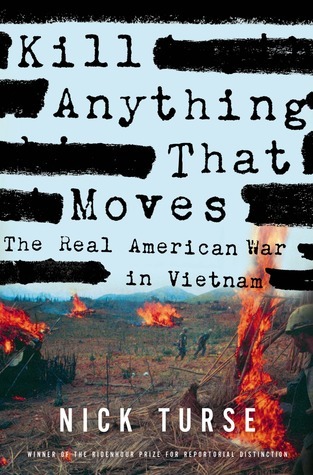
Combining a close knowledge of Asia and an ability to tap Chinese-language sources with naval combat experience and expertise in sea-power theory, the authors assess how the rise of Chinese sea power will affect U.S. maritime strategy in Asia. They argue that China is laying the groundwork for a sustained challenge to American primacy in maritime Asia, and to defend this hypothesis they look back to Alfred Thayer Mahan s sea-power theories, now popular with the Chinese. The book considers how strategic thought about the sea shapes Beijing s deliberations and compares China s geostrategic predicament to that of the Kaiser s Germany a century ago. It examines the Chinese navy s operational concepts, tactics, and capabilities and appraises China s ballistic-missile submarine fleet. The authors conclude that unless Washington adapts, China will present a challenge to America s strategic position.

In this sweeping and insightful history, Henry Kissinger turns for the first time at book-length to a country he has known intimately for decades, and whose modern relations with the West he helped shape. Drawing on historical records as well as his conversations with Chinese leaders over the past forty years, Kissinger examines how China has approached diplomacy, strategy, and negotiation throughout its history, and reflects on the consequences for the global balance of power in the 21st century. Since no other country can claim a more powerful link to its ancient past and classical principles, any attempt to understand China's future world role must begin with an appreciation of its long history. For centuries, China rarely encountered other societies of comparable size and sophistication; it was the "Middle Kingdom," treating the peoples on its periphery as vassal states. At the same time, Chinese statesmen-facing threats of invasion from without, and the contests of competing factions within-developed a canon of strategic thought that prized the virtues of subtlety, patience, and indirection over feats of martial prowess. In On China, Kissinger examines key episodes in Chinese foreign policy from the classical era to the present day, with a particular emphasis on the decades since the rise of Mao Zedong. He illuminates the inner workings of Chinese diplomacy during such pivotal events as the initial encounters between China and modern European powers, the formation and breakdown of the Sino-Soviet alliance, the Korean War, Richard Nixon's historic trip to Beijing, and three crises in the Taiwan Straits. Drawing on his extensive personal experience with four generation of Chinese leaders, he brings to life towering figures such as Mao, Zhou Enlai, and Deng Xiaoping, revealing how their different visions have shaped China's modern destiny. With his singular vantage on U.S.-China relations, Kissinger traces the evolution of this fraught but crucial relationship over the past 60 years, following its dramatic course from estrangement to strategic partnership to economic interdependence, and toward an uncertain future. With a final chapter on the emerging superpower's 21st-century world role, On China provides an intimate historical perspective on Chinese foreign affairs from one of the premier statesmen of the 20th century.

In 1961 South Korea was mired in poverty. By 1979 it had a powerful industrial economy and a vibrant civil society in the making, which would lead to a democratic breakthrough eight years later. The transformation took place during the years of Park Chung Hee's presidency. Park seized power in a coup in 1961 and ruled as a virtual dictator until his assassination in October 1979. He is credited with modernizing South Korea, but at a huge political and social cost. South Korea's political landscape under Park defies easy categorization. The state was predatory yet technocratic, reform-minded yet quick to crack down on dissidents in the name of political order. The nation was balanced uneasily between opposition forces calling for democratic reforms and the Park government's obsession with economic growth. The chaebol (a powerful conglomerate of multinationals based in South Korea) received massive government support to pioneer new growth industries, even as a nationwide campaign of economic shock therapy-interest hikes, devaluation, and wage cuts-met strong public resistance and caused considerable hardship. This landmark volume examines South Korea's era of development as a study in the complex politics of modernization. Drawing on an extraordinary range of sources in both English and Korean, these essays recover and contextualize many of the ambiguities in South Korea's trajectory from poverty to a sustainable high rate of economic growth.

For every fan of manga, anime, J-pop, or Zen, A Geek in Japan is a hip, smart and concise guide to the land that is their source.Comprehensive and well informed, it covers a wide array of topics in short articles accompanied by sidebars and numerous photographs, providing a lively digest of the society and culture of Japan. Designed to appeal to the generations of Westerners who grew up on Pokemon, manga and video games, A Geek in Japan reinvents the culture guide for readers in the Internet age.Spotlighting the originality and creativity of the Japanese, debunking myths about them, and answering nagging questions like why they're so fond of robots, author Hector Garcia has created the perfect book for the growing ranks of Japanophiles in this inspired, insightful and highly informative guide.

Pak Jun Do is the haunted son of a lost mother - a singer "stolen" to Pyongyang - and an influential father who runs Long Tomorrows, a work camp for orphans. There the boy is given his first taste of power, picking which orphans eat first and which will be lent out for manual labor. Recognized for his loyalty and keen instincts, Jun Do comes to the attention of superiors in the state, rises in the ranks, and starts on a road from which there will be no return.Considering himself "a humble citizen of the greatest nation in the world," Jun Do becomes a professional kidnapper who must navigate the shifting rules, arbitrary violence, and baffling demands of his Korean overlords in order to stay alive. Driven to the absolute limit of what any human being could endure, he boldly takes on the treacherous role of rival to Kim Jong Il in an attempt to save the woman he loves, Sun Moon, a legendary actress "so pure, she didn't know what starving people looked like." Part breathless thriller, part story of innocence lost, part story of romantic love, The Orphan Master's Son is also a riveting portrait of a world heretofore hidden from view: a North Korea rife with hunger, corruption, and casual cruelty but also camaraderie, stolen moments of beauty, and love. A towering literary achievement, The Orphan Master's Son ushers Adam Johnson into the small group of today's greatest writers.An epic novel and a thrilling literary discovery, The Orphan Master's Son follows a young man's journey through the icy waters, dark tunnels, and eerie spy chambers of the world's most mysterious dictatorship, North Korea.

Based on classified documents and first-person interviews, a startling history of the American war on Vietnamese civiliansAmericans have long been taught that events such as the notorious My Lai massacre were isolated incidents in the Vietnam War, carried out by “a few bad apples.” But as award-winning journalist and historian Nick Turse demonstrates in this groundbreaking investigation, violence against Vietnamese noncombatants was not at all exceptional during the conflict. Rather, it was pervasive and systematic, the predictable consequence of orders to “kill anything that moves.”Drawing on more than a decade of research in secret Pentagon files and extensive interviews with American veterans and Vietnamese survivors, Turse reveals for the first time how official policies resulted in millions of innocent civilians killed and wounded. In shocking detail, he lays out the workings of a military machine that made crimes in almost every major American unit all but inevitable. Kill Anything That Moves takes us from archives filled with Washington’s long-suppressed war crimes investigations to the rural Vietnamese hamlets that bore the brunt of the war; from boot camps where young American soldiers learned to hate all Vietnamese to bloodthirsty campaigns like Operation Speedy Express, in which a general obsessed with body counts led soldiers to commit what one participant called “a My Lai a month.”Thousands of Vietnam books later, Kill Anything That Moves, devastating and definitive, finally brings us face-to-face with the truth of a war that haunts Americans to this day.

More than two-thirds of the new airports under construction today are being built in China. Chinese airlines expect to triple their fleet size over the next decade and will account for the fastest-growing market for Boeing and Airbus. But the Chinese are determined to be more than customers. In 2011, China announced its Twelfth Five-Year Plan, which included the commitment to spend a quarter of a trillion dollars to jump-start its aerospace industry. Its goal is to produce the Boeings and Airbuses of the future. Toward that end, it acquired two American companies: Cirrus Aviation, maker of the world’s most popular small propeller plane, and Teledyne Continental, which produces the engines for Cirrus and other small aircraft. In China Airborne, James Fallows documents, for the first time, the extraordinary scale of this project and explains why it is a crucial test case for China’s hopes for modernization and innovation in other industries. He makes clear how it stands to catalyze the nation’s hyper-growth and hyper- urbanization, revolutionizing China in ways analogous to the building of America’s transcontinental railroad in the nineteenth century. Fallows chronicles life in the city of Xi’an, home to more than 250,000 aerospace engineers and assembly workers, and introduces us to some of the hucksters, visionaries, entrepreneurs, and dreamers who seek to benefit from China’s pursuit of aerospace supremacy. He concludes by examining what this latest demonstration of Chinese ambition means for the United States and the rest of the world—and the right ways to understand it.