
Jhumpa Lahiri
Nilanjana Sudeshna "Jhumpa" Lahiri is a British-American author known for her short stories, novels, and essays in English and, more recently, in Italian. Her debut collection of short-stories, Interpreter of Maladies (1999), won the Pulitzer Prize for Fiction and the PEN/Hemingway Award, and her first novel, The Namesake (2003), was adapted into the popular film of the same name. The Namesake was a New York Times Notable Book, a Los Angeles Times Book Prize finalist and was made into a major motion picture. Unaccustomed Earth (2008) won the Frank O'Connor International Short Story Award, while her second novel, The Lowland (2013) was a finalist for both the Man Booker Prize and the National Book Award for Fiction. On January 22, 2015, Lahiri won the US$50,000 DSC Prize for Literature for The Lowland. In these works, Lahiri explored the Indian-immigrant experience in America. In 2012, Lahiri moved to Rome, Italy and has since then published two books of essays, and began writing in Italian, first with the 2018 novel Dove mi trovo, then with her 2023 collection Roman Stories. She also compiled, edited, and translated the Penguin Book of Italian Short Stories which consists of 40 Italian short stories written by 40 different Italian writers. She has also translated some of her own writings and those of other authors from Italian into English. In 2014, Lahiri was awarded the National Humanities Medal. She was a professor of creative writing at Princeton University from 2015 to 2022. In 2022, she became the Millicent C. McIntosh Professor of English and Director of Creative Writing at her alma mater, Barnard College of Columbia University.
29 Books Written

The Lowland is an engrossing family saga steeped in history: the story of two very different brothers bound by tragedy, a fiercely brilliant woman haunted by her past, a country torn apart by revolution, and a love that endures long past death. Moving from the 1960s to the present, and from India to America and across generations, this dazzling novel is Jhumpa Lahiri at the height of her considerable powers.
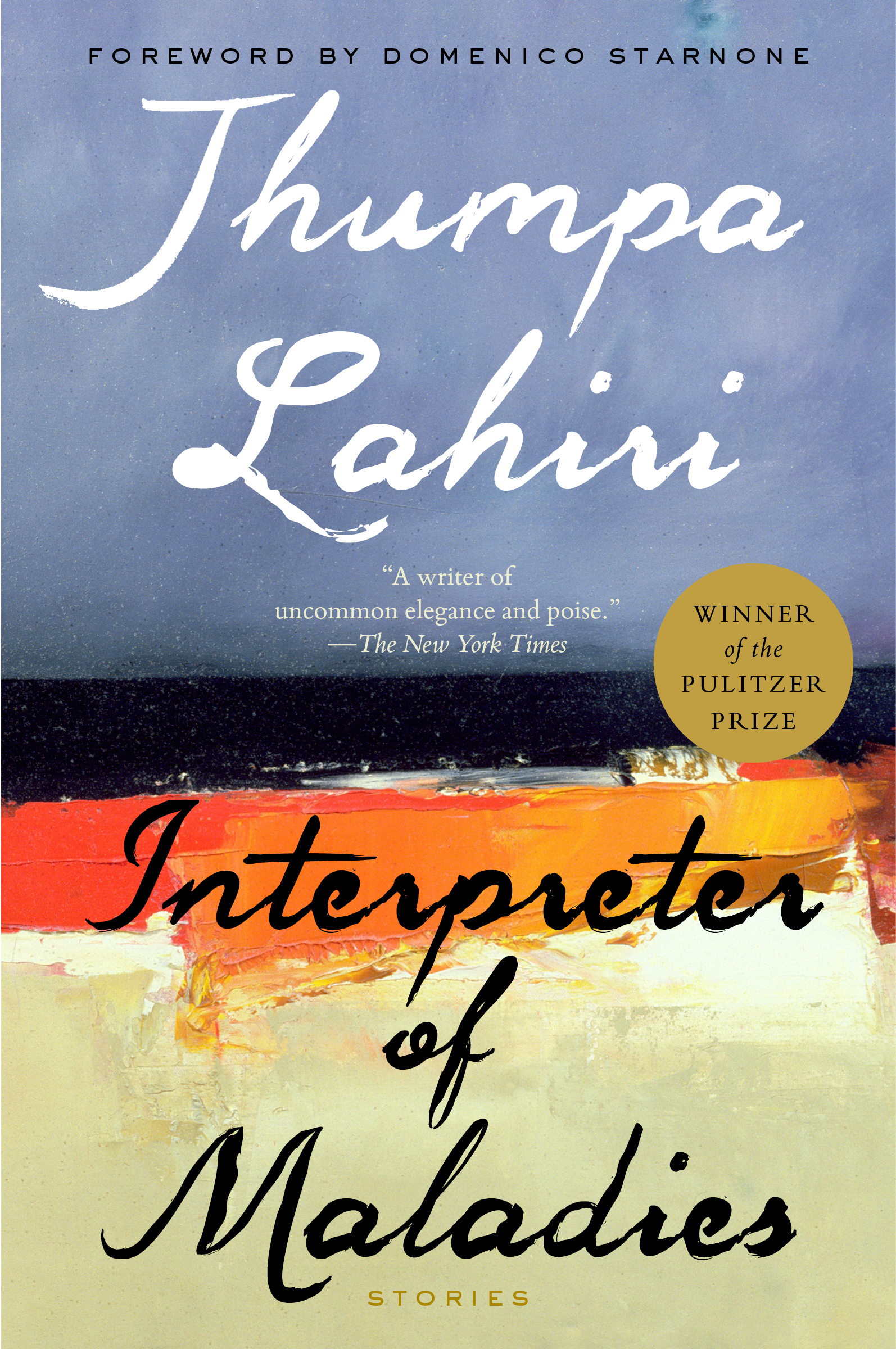
Navigating between the Indian traditions they've inherited and the baffling new world, the characters in Jhumpa Lahiri's elegant, touching stories seek love beyond the barriers of culture and generations. In "A Temporary Matter," published in The New Yorker, a young Indian-American couple faces the heartbreak of a stillborn birth while their Boston neighborhood copes with a nightly blackout. In the title story, an interpreter guides an American family through the India of their ancestors and hears an astonishing confession. Lahiri writes with deft cultural insight reminiscent of Anita Desai and a nuanced depth that recalls Mavis Gallant. She is an important and powerful new voice.--publisher's description

Jhumpa Lahiri's Interpreter of Maladies established this young writer as one the most brilliant of her generation. Her stories are one of the very few debut works -- and only a handful of collections -- to have won the Pulitzer Prize for fiction. Among the many other awards and honors it received were the New Yorker Debut of the Year award, the PEN/Hemingway Award, and the highest critical praise for its grace, acuity, and compassion in detailing lives transported from India to America.In The Namesake, Lahiri enriches the themes that made her collection an international bestseller: the immigrant experience, the clash of cultures, the conflicts of assimilation, and, most poignantly, the tangled ties between generations. Here again Lahiri displays her deft touch for the perfect detail — the fleeting moment, the turn of phrase — that opens whole worlds of emotion.The Namesake takes the Ganguli family from their tradition-bound life in Calcutta through their fraught transformation into Americans. On the heels of their arranged wedding, Ashoke and Ashima Ganguli settle together in Cambridge, Massachusetts. An engineer by training, Ashoke adapts far less warily than his wife, who resists all things American and pines for her family. When their son is born, the task of naming him betrays the vexed results of bringing old ways to the new world. Named for a Russian writer by his Indian parents in memory of a catastrophe years before, Gogol Ganguli knows only that he suffers the burden of his heritage as well as his odd, antic name. Lahiri brings great empathy to Gogol as he stumbles along the first-generation path, strewn with conflicting loyalties, comic detours, and wrenching love affairs. With penetrating insight, she reveals not only the defining power of the names and expectations bestowed upon us by our parents, but also the means by which we slowly, sometimes painfully, come to define ourselves.

From the internationally best-selling, Pulitzer Prize–winning author, a superbly crafted new work of fiction: eight stories—longer and more emotionally complex than any she has yet written—that take us from Cambridge and Seattle to India and Thailand as they enter the lives of sisters and brothers, fathers and mothers, daughters and sons, friends and lovers.In the stunning title story, Ruma, a young mother in a new city, is visited by her father, who carefully tends the earth of her garden, where he and his grandson form a special bond. But he’s harboring a secret from his daughter, a love affair he’s keeping all to himself. In “A Choice of Accommodations,” a husband’s attempt to turn an old friend’s wedding into a romantic getaway weekend with his wife takes a dark, revealing turn as the party lasts deep into the night. In “Only Goodness,” a sister eager to give her younger brother the perfect childhood she never had is overwhelmed by guilt, anguish, and anger when his alcoholism threatens her family. And in “Hema and Kaushik,” a trio of linked stories—a luminous, intensely compelling elegy of life, death, love, and fate—we follow the lives of a girl and boy who, one winter, share a house in Massachusetts. They travel from innocence to experience on separate, sometimes painful paths, until destiny brings them together again years later in Rome. Unaccustomed Earth is rich with Jhumpa Lahiri’s signature gifts: exquisite prose, emotional wisdom, and subtle renderings of the most intricate workings of the heart and mind. It is a masterful, dazzling work of a writer at the peak of her powers.

Exuberance and dread, attachment and estrangement: in this novel, Jhumpa Lahiri stretches her themes to the limit. The woman at the center wavers between stasis and movement, between the need to belong and the refusal to form lasting ties. The city she calls home, an engaging backdrop to her days, acts as a confidant: the sidewalks around her house, parks, bridges, piazzas, streets, stores, coffee bars. We follow her to the pool she frequents and to the train station that sometimes leads her to her mother, mired in a desperate solitude after her father's untimely death. In addition to colleagues at work, where she never quite feels at ease, she has girl friends, guy friends, and "him," a shadow who both consoles and unsettles her. But in the arc of a year, as one season gives way to the next, transformation awaits. One day at the sea, both overwhelmed and replenished by the sun's vital heat, her perspective will change. This is the first novel she has written in Italian and translated into English. It brims with the impulse to cross barriers. By grafting herself onto a new literary language, Lahiri has pushed herself to a new level of artistic achievement.

From the Pulitzer Prize winner, a surprising, powerful, and eloquent nonfiction debutIn Other Words is at heart a love story—of a long and sometimes difficult courtship, and a passion that verges on obsession: that of a writer for another language. For Jhumpa Lahiri, that love was for Italian, which first captivated and capsized her during a trip to Florence after college. And although Lahiri studied Italian for many years afterward, true mastery had always eluded her. So in 2012, seeking full immersion, she decided to move to Rome with her family, for “a trial by fire, a sort of baptism” into a new language and world. In Rome, Lahiri began to read, and to write—initially in her journal—solely in Italian. In Other Words, an autobiographical work written in Italian, investigates the process of learning to express oneself in another language, and describes the journey of a writer seeking a new voice. Presented in a dual-language format, it is a book about exile, linguistic and otherwise, written with an intensity and clarity not seen since Nabokov. A startling act of self-reflection and a provocative exploration of belonging and reinvention.

Rome—metropolis and monument, suspended between past and future, multi-faceted and metaphysical—is the protagonist, not the setting, of these nine the first short story collection by the Pulitzer Prize–winning master of the form since her number one New York Times best seller Unaccustomed Earth, and a major literary event.In “The Boundary,” one family vacations in the Roman countryside, though we see their lives through the eyes of the caretaker’s daughter, who nurses a wound from her family’s immigrant past. In “P’s Parties,” a Roman couple, now empty nesters, finds comfort and community with foreigners at their friend’s yearly birthday gathering—until the husband crosses a line. And in “The Steps,” on a public staircase that connects two neighborhoods and the residents who climb up and down it, we see Italy’s capital in all of its social and cultural variegations, filled with the tensions of a changing visibility and invisibility, random acts of aggression, the challenge of straddling worlds and cultures, and the meaning of home.These are splendid, searching stories, written in Jhumpa Lahiri’s adopted language of Italian and seamlessly translated by the author and by Knopf editor Todd Portnowitz. Stories steeped in the moods of Italian master Alberto Moravia and guided, in the concluding tale, by the ineluctable ghost of Dante Alighieri, whose words lead the protagonist toward a new way of life.
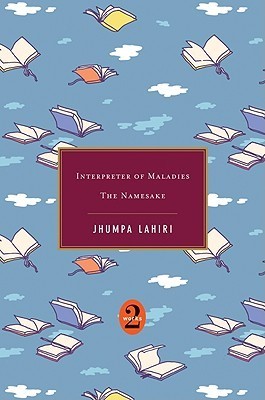
Jhumpa Lahiri took the literary world by storm when her debut collection, Interpreter of Maladies, won the Pulitzer Prize in 2000. The collection was followed by her best-selling and critically acclaimed novel The Namesake—a finely wrought, deeply moving family drama. Presenting these works together here, this edition displays Lahiri’s enormous talent as a storyteller.

How do you clothe a book? In this deeply personal reflection, Pulitzer Prize–winning author Jhumpa Lahiri explores the art of the book jacket from the perspectives of both reader and writer. Probing the complex relationships between text and image, author and designer, and art and commerce, Lahiri delves into the role of the uniform; explains what book jackets and design have come to mean to her; and how, sometimes, “the covers become a part of me.”

A Vintage Shorts “Short Story Month” SelectionPranab Chakraborty was a fellow Bengali from Calcutta who had washed up on the shores of Central Square. Soon he was one of the family. From the winner of the Pulitzer Prize and the Frank O’Connor International Short Story Award, a staggeringly beautiful and precise story about a Bengali family in Cambridge, Massachusetts, the impossibilities of love, and the unanticipated pleasures and complications of life in America. “Hell-Heaven” is Jhumpa Lahiri’s ode to the intimate secrets of closest kin, from the acclaimed collection Unaccustomed Earth. An eBook short.
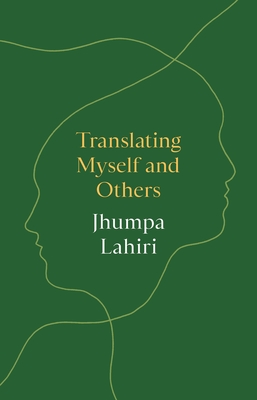
Luminous essays on translation and self-translation by an award-winning writer and literary translatorTranslating Myself and Others is a collection of candid and disarmingly personal essays by Pulitzer Prize–winning author Jhumpa Lahiri, who reflects on her emerging identity as a translator as well as a writer in two languages.With subtlety and emotional immediacy, Lahiri draws on Ovid’s myth of Echo and Narcissus to explore the distinction between writing and translating, and provides a close reading of passages from Aristotle’s Poetics to talk more broadly about writing, desire, and freedom. She traces the theme of translation in Antonio Gramsci’s Prison Notebooks and takes up the question of Italo Calvino’s popularity as a translated author. Lahiri considers the unique challenge of translating her own work from Italian to English, the question “Why Italian?,” and the singular pleasures of translating contemporary and ancient writers.Featuring essays originally written in Italian and published in English for the first time, as well as essays written in English, Translating Myself and Others brings together Lahiri’s most lyrical and eloquently observed meditations on the translator’s art as a sublime act of both linguistic and personal metamorphosis.

Navigating between the Indian traditions they've inherited and the baffling new world, the characters in Jhumpa Lahiri's elegant, touching stories seek love beyond the barriers of culture and generations. In "A Temporary Matter," published in The New Yorker, a young Indian-American couple faces the heartbreak of a stillborn birth while their Boston neighborhood copes with a nightly blackout.

"I left India in 1964 with a certificate in commerce and the equivalent, in those days, of ten dollars to my name..." The Third and Final Continent was one of nine stories that were collected in Jhumpa Lahiri's 'The Interpreter of Maladies', which was published in 1999. The story collection won the Pulitzer Prize for fiction. Jhumpa Lahiri (1967-) was born in London but brought up in South Kingstown, Rhode Island. Brought up in America by a mother who wanted to raise her children to be Indian, she learned about her Bengali heritage from an early age. She is most celebrated for her works 'The Namesake' (2003, 'The Interpreter of Maladies' (1999), and 'Unaccustomed Earth' (2008).

Rahul e Sudha, due ragazzi bengalesi, fratello e sorella, diventano adulti in America. Lui è una delusione: espulso dall'università fugge di casa, perseguitato dall'alcolismo. Lei è la figlia che ogni genitore vorrebbe: ottimi studi, un lavoro di cui vantarsi con gli amici, sposa un inglese e mette al mondo un bel bambino. Una famiglia di immigrati indiani "tipica e terribile quanto qualsiasi altra".In una storia di integrazione e di conflitti domestici tra il Massachussets e Londra, il mito del successo e il demone del fallimento fanno da bussola a vite segnate da sradicamento ed egoismi, nella vana ricerca della felicità.

Free online fiction, from the New Yorker. Novelette.Since childhood, Subhash had been cautious. His mother never had to run after him. He kept her company, watching as she cooked or sewed. While Subhash stayed in clear view, his brother, Udayan, was disappearing: even in their two-room house, when he was a boy, he hid compulsively. Subhash wondered if his placid nature was regarded as a lack of inventiveness, perhaps even a failing, in his parents’ eyes. It became his mission to obey them, given that it wasn’t possible to surprise or impress them. That was what Udayan did.

Year's End is a short story by Jhumpa Lahiri. It was published in the December 24, 2007 edition of The New Yorker.

Every Saturday, a new family comes to stay. Some arrive early in the morning, from afar, ready to begin their vacation. Others don’t turn up until sunset, in bad moods, maybe having lost their way. It’s easy to get lost in these hills; the roads are poorly signposted.

Also available as a free podcast audiobook. Search for Jhumpa Lahiri Reads “Casting Shadows”Length 44:37



A short non-fictional essay, published in The New Yorker. http://www.newyorker.com/reporting/20...

Dal fondo del cassetto disordinato di una scrivania scoperta in casa, a Roma, riemergono alcuni oggetti dimenticati dai vecchi proprietari: francobolli, un dizionario greco-italiano, qualche bottone, cartoline mai spedite, la foto di tre donne in piedi davanti a una finestra. C'è anche un quaderno fucsia, con il nome «Nerina» scritto a mano sulla copertina. Chi è Nerina? Senza cognome, come un poeta classico o medievale, come un artista del Rinascimento, la donna che, ci assicura Jhumpa Lahiri, ha scritto i versi raccolti in questo libro, sfugge alla storia e alla geografia. Apolide, poliglotta, colta, scrive della propria esistenza tra Roma, Londra, Calcutta, Boston, del legame con il mare, del rapporto con la famiglia, con le parole. Jhumpa Lahiri squaderna, in questo quaderno di poesie eccezionali e quotidiane, un'identità. Tra lei e Nerina, la cui intera esistenza è affidata ai versi e a pochissimi altri indizi, c'è la stessa relazione che lega certi poeti moderni ai loro doppi, che a volte fingono di essere altri poeti, a volte commentano poesie che fingono di non aver scritto, più spesso si fingono semplici lettori. La scrittrice si fa lettrice e invoca addirittura l'intervento di una terza misteriosa persona: una studiosa che l'aiuta a mettere ordine in un gomitolo di strofe e di vite che non sono le sue – ma potrebbero essere le nostre. I suoi commenti nelle note intessono un secondo libro che, come Narciso nel mito, non riconosce se stesso nel proprio riflesso.
بُرشی کوتاه از دیدار دو خانواده مهاجر هندی


A short non-fictional essay, first published in The New Yorker in 2011.

Da quando Jhumpa Lahiri si è trasferita a Roma per imparare meglio l'italiano, nel 2012, la domanda «perché l'italiano?» le è stata rivolta con insistenza, e ancor di piú dopo che in questa lingua ha cominciato anche a scrivere. «Per amore» è la prima risposta, la piú istintiva ma non meno vera. E come ogni amore, questo ha finito per trasformarla. Da autrice è diventata anche traduttrice, dei propri testi e di quelli altrui. Una metamorfosi personale che infonde grande lucidità e sentimento alle sue riflessioni sulle lingue e su quella preziosa attività del pensiero che consente di passare dall'una all'altra, creando nuovi innesti e prospettive. «Perché l'italiano? riguarda le conseguenze dell'atto apparentemente semplice di scegliere le proprie parole. Questo libro contiene un messaggio di speranza nel loro potere liberatorio». «The New York Times» Fin da bambina, da quando le è venuto il dubbio su quale lingua usare in un biglietto per la Festa della mamma - l'inglese imparato a scuola o il materno bengali? -, Jhumpa Lahiri si è posta problemi di traduzione. Cosí, quando ha affrontato il rischio di tradurre le proprie parole e quelle degli altri, ha sperimentato quella particolare forma di riconoscimento di sé che spesso chiamiamo destino. Ma il destino ha i suoi snodi, è un percorso fatto di incontri fortuiti, scelte e occasioni. In questo caso, è un avvincente percorso intellettuale, una ricerca senza fine il cui racconto conferisce un andamento narrativo a questa intensa raccolta di saggi sulla traduzione e l'autotraduzione. Nei tredici testi che compongono il libro, di cui quattro nati in italiano e nove in inglese, gli incontri sono fecondi e in primis, quello con la lingua italiana, per amore della quale Jhumpa Lahiri ha scelto di vivere metà della sua vita a Roma, e da cui tutto ha avuto inizio; poi quello con i romanzi di Domenico Starnone che l'autrice ha tradotto in inglese (Lacci, Scherzetto, Confidenza), un'esperienza nuova ed emozionante; quello con le Lettere dal carcere di Antonio Gramsci, un potente antidoto al confinamento della pandemia; e infine l'incontro di una vita, in un'altra lingua ancora, quello con il grande poema ovidiano, il cui argomento diventa la metafora principale per interpretare il processo traduttivo. Su tutti questi temi Jhumpa Lahiri posa il suo sguardo acuto e appassionato, uno sguardo bifronte che a ogni pagina trasmette l'urgenza di coltivare il dialogo tra lingue per creare una letteratura e una società piú aperte.