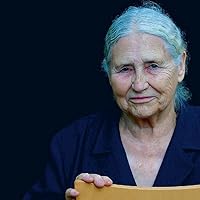
Doris Lessing
Doris Lessing was born into a colonial family. both of her parents were British: her father, who had been crippled in World War I, was a clerk in the Imperial Bank of Persia; her mother had been a nurse. In 1925, lured by the promise of getting rich through maize farming, the family moved to the British colony in Southern Rhodesia (now Zimbabwe). Like other women writers from southern African who did not graduate from high school (such as Olive Schreiner and Nadine Gordimer), Lessing made herself into a self-educated intellectual. In 1937 she moved to Salisbury, where she worked as a telephone operator for a year. At nineteen, she married Frank Wisdom, and later had two children. A few years later, feeling trapped in a persona that she feared would destroy her, she left her family, remaining in Salisbury. Soon she was drawn to the like-minded members of the Left Book Club, a group of Communists "who read everything, and who did not think it remarkable to read." Gottfried Lessing was a central member of the group; shortly after she joined, they married and had a son. During the postwar years, Lessing became increasingly disillusioned with the Communist movement, which she left altogether in 1954. By 1949, Lessing had moved to London with her young son. That year, she also published her first novel, The Grass Is Singing, and began her career as a professional writer. In June 1995 she received an Honorary Degree from Harvard University. Also in 1995, she visited South Africa to see her daughter and grandchildren, and to promote her autobiography. It was her first visit since being forcibly removed in 1956 for her political views. Ironically, she is welcomed now as a writer acclaimed for the very topics for which she was banished 40 years ago. In 2001 she was awarded the Prince of Asturias Prize in Literature, one of Spain's most important distinctions, for her brilliant literary works in defense of freedom and Third World causes. She also received the David Cohen British Literature Prize. She was on the shortlist for the first Man Booker International Prize in 2005. In 2007 she was awarded the Nobel Prize for Literature. (Extracted from the pamphlet: A Reader's Guide to The Golden Notebook & Under My Skin, HarperPerennial, 1995. Full text available on www.dorislessing.org).
34 Books Written

Set in Southern Rhodesia under white rule, Doris Lessing's first novel is at once a riveting chronicle of human disintegration, a beautifully understated social critique, and a brilliant depiction of the quiet horror of one woman's struggleagainst a ruthless fate.Mary Turner is a self-confident, independent young woman who becomes the depressed, frustrated wife of an ineffectual, unsuccessful farmer. Little by little the ennui of years on the farm works its slow poison. Mary's despair progresses until the fateful arrival of Moses, an enigmatic, virile black servant. Locked in anguish, Mary and Moses—master and slave—are trapped in a web of mounting attraction and repulsion, until their psychic tension explodes with devastating consequences.

Hardback re-issue of this classic collection of stories This is the first volume of Doris Lessing's Collected African Stories. A classic work of twentieth-century literature. 'In story after story, Doris Lessing portrays the helpless collisions and alienations of the races. One brings away a sense of the sheer human impossibility of South Africa, as a place fit only for habitation by the imagination of exiles and of children. All else seems lost, betrayed and spoiled, except the glare of the sun, the dust, the boulders. An impressive collection.' Daily Telegraph

From the winner of the Nobel Prize for Literature, Doris Lessing, a short story about a young woman’s attempts to juggle her political beliefs with everyday life. On the day that the newspapers report that Stalin is dying, a young woman, with communist sympathies, attempts to look after her aunt and cousin on a disastrous trip to a photographer. Lightly satirical about the absurd ways people can behave, no matter what their political views, ‘The Day Stalin Died’ shows Doris Lessing at her most wry. This story also appears in the collection To Room Nineteen.

1974 Papperback published by Bantam Books, 309 pages in Acceptable Condition. Cover shows wear along the edges with a rear on the lower right-hand corner and some scuffing (PLEASE SEE THE PHOTO OF THIS BOOK THAT I POSTED ON THE PRODUCT PAGE) there is a creased corner on the back cover. Spine is creased. There appears to be a phone number on the Title page and some notes on the back End Sheet. Text is clean and unmarked but tanned. Doris Lessing's novellas are first-rate literature that deal with the hazards of sex and politics, the terrors of poverty, the imminence of science-fiction apocalypse, religious temptation, radical truths. They are all powerful, intelligent imbued with passion and courage that has made her name and her work synonymous with the exploration of consciousness in our time. We ship within 24 hours of your purchase with a Delivery Confirmation.

The Wind Blows Away Our Words and Other Documents Relating to the Afghan Resistance
by Doris Lessing
Rating: 3.2 ⭐
• 2 recommendations ❤️
An account of the Russian occupation of Afghanistan in the 1980s, the Afghan resistance and the plight of the refugees.

This is the first volume in the series of novels Doris Lessing calls collectively Canopus in Argos: Archives. Presented as a compilation of documents, reports, letters, speeches and journal entries, this purports to be a general study of the planet Shikasta, clearly the planet Earth, to be used by history students of the higher planet Canopus and to be stored in the Canopian archives. For eons, galactic empires have struggled against one another, and Shikasta is one of the main battlegrounds. Johar, an emissary from Canopus and the primary contributor to the archives, visits Shikasta over the millennia from the time of the giants and the biblical great flood up to the present. With every visit he tries to distract Shikastans from the evil influences of the planet Shammat but notes with dismay the ever-growing chaos and destruction of Shikasta as its people hurl themselves towards World War III and annihilation.

Anna is a writer, author of one very successful novel, who now keeps four notebooks. In one, with a black cover, she reviews the African experience of her earlier year. In a red one she records her political life, her disillusionment with communism. In a yellow one she writes a novel in which the heroine relives part of her own experience. And in the blue one she keeps a personal diary. Finally, in love with an American writer and threatened with insanity, Anna tries to bring the threads of all four books together in a golden notebook.

Doris Lessing's contemporary gothic horror story—centered on the birth of a baby who seems less than human—probes society's unwillingness to recognize its own brutality. Harriet and David Lovatt, parents of four children, have created an idyll of domestic bliss in defiance of the social trends of late 1960s England. While around them crime and unrest surge, the Lovatts are certain that their old-fashioned contentment can protect them from the world outside—until the birth of their fifth baby. Gruesomely goblin-like in appearance, insatiably hungry, abnormally strong and violent, Ben has nothing innocent or infant-like about him. As he grows older and more terrifying, Harriet finds she cannot love him, David cannot bring himself to touch him, and their four older children are afraid of him. Understanding that he will never be accepted anywhere, Harriet and David are torn between their instincts as parents and their shocked reaction to this fierce and unlovable child whose existence shatters their belief in a benign world.

The Good Terrorist follows Alice Mellings, a woman who transforms her home into a headquarters for a group of radicals who plan to join the IRA. As Alice struggles to bridge her ideology and her bourgeois upbringing, her companions encounter unexpected challenges in their quest to incite social change against complacency and capitalism. With a nuanced sense of the intersections between the personal and the political, Nobel Laureate Doris Lessing creates in The Good Terrorist a compelling portrait of domesticity and rebellion.

In the title novel, two friends fall in love with each other's teenage sons, and these passions last for years, until the women end them, vowing a respectable old age. In Victoria and the Staveneys, a young woman gives birth to a child of mixed race and struggles with feelings of estrangement as her daughter gets drawn into a world of white privilege. The Reason for It traces the birth, faltering, and decline of an ancient culture, with enlightening modern resonances. A Love Child features a World War II soldier who believes he has fathered a love child during a fleeting wartime romance and cannot be convinced otherwise.

In a beleaguered city where rats and roving gangs terrorize the streets, where government has broken down and meaningless violence holds sway, a woman -- middle-aged and middle-class -- is brought a twelve-year-old girl and told that it is her responsibility to raise the child. This book, which the author has called "an attempt at autobiography," is that woman's journal -- a glimpse of a future only slightly more horrendous than our present, and of the forces that alone can save us from total destruction.

The celebrated author explores new ways to view ourselves and the society we live in, and gives us fresh answers to such enduring questions as how to think for ourselves and understand what we know.

Doris Lessing invites us to imagine a mythical society free from sexual intrigue, free from jealousy, free from petty rivalries: a society free from men. An old Roman senator, contemplative at his late stage of life, embarks on what will likely be his last endeavour: the retelling of the story of human creation. He recounts the history of the Clefts, an ancient community of women living in an Edenic, coastal wilderness, confined within the valley of an overshadowing mountain. The Clefts have no need nor knowledge of men -- childbirth is controlled, like the tides that lap around their feet, through the cycles of the moon, and their children are always female. But with the unheralded birth of a strange, new child -- a boy -- the harmony of their community is suddenly thrown into jeopardy. At first, in their ignorance, the Clefts are awestruck by this seemingly malformed child, but as more and more of these threateningly unfamiliar males appear, now unfavourably nicknamed Squirts, they are rejected, and are exposed on the nearby mountainside; sacrificed to the patrolling eagles overhead, the sentinels of their female haven. Unbeknownst to the Clefts, however, these baby males survive, aided by the very eagles sent to kill them, and thrive on their own on the other side of the mountain. It is not until an unusually curious young Cleft named Maire goes beyond the geographical, and emotional, divide of the mountain that this disquieting fact is uncovered -- a discovery that forces the Clefts to accept and realign themselves to the prospect of a now shared world, and the possible vengeance of the wronged males. In this fascinating and beguiling novel, Lessing confronts head-on the themes that inspired much of her early writing: how men and women, two similar and yet thoroughly distinct creatures, manage to live side by side in the world, and how the specifics of gender affect every aspect of our existence.

The story of a middle-aged woman's search for freedom, from Doris Lessing, winner of the Nobel Prize for Literature. Her four children have flown, her husband is otherwise occupied, and after twenty years of being a good wife and mother, Kate Brown is free for a summer of adventure. She plunges into an affair with a younger man, travelling abroad with him, and, on her return to England, meets an extraordinary young woman whose charm and freedom of spirit encourages Kate in her own liberation. Kate's new life has brought her a strange unhappiness, but as the summer months unfold, a darker, disquieting journey begins, devastating in its consequences. A novel of self-discovery that bears the hallmarks of Lessing's brilliance, honesty and power to move the reader, 'The Summer Before the Dark' has been hailed by some as Lessing's best book.

"I read the Children of Violence novels and began to understand how a person could write about the problems of the world in a compelling and beautiful way. And it seemed to me that was the most important thing I could ever do." — Barbara Kingsolver Intelligent, sensitive, and fiercely passionate, Martha Quest is a young woman living on a farm in Africa, feeling her way through the torments of adolescence and early womanhood. She is a romantic idealistic in revolt against the puritan snobbery of her parents, trying to live to the full with every nerve, emotion, and instinct laid bare to experience. For her, this is a time of solitary reading daydreams, dancing — and the first disturbing encounters with sex. The first of Doris Lessing's timeless Children of Violence novels, Martha Quest is an endearing masterpiece.
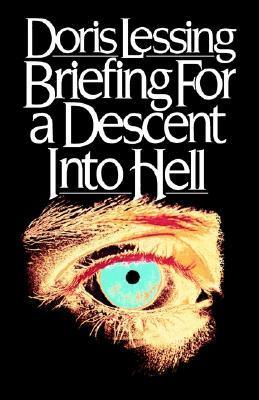
A fascinating look inside the mind of a man who is supposedly “mad.” Professor Charles Watkins of Cambridge University is a patient at a mental hospital where the doctors try with increasing drugs to bring his mind under control. But Watkins has embarked on a tremendous psychological adventure where, after spinning endlessly on a raft in the Atlantic, he lands on a tropical island inhabited by strange creatures with strange customs. Later, he is carried off on a cosmic journey into space…

Far from resting on her laurels, Lessing goes from strength to strength. Ben's half-human ignorance, paranoia, and rage are magnificently imagined and vividly present on every page. The condition of the outsider has hardly ever before in fiction been portrayed with such raw power and righteous anger. Few, if any, living writers can have explored so many forbidding fictional worlds with such passion and conviction. — Kirkus Reviews The poignant and tragic sequel to Doris Lessing's bestselling novel, THE FIFTH CHILD. At eighteen, Ben is in the world, but not of it. He is too large, too awkward, too inhumanly made. Now estranged from his family, he must find his own path in life. From London and the south of France to Brazil and the mountains of the Andes. Ben is tossed about in a tumultuous search for his people, a reason for his being. How the world receives him, and, he fares in it will horrify and captivate until the novel's dramatic finale.

Thousands of years in the future, all the northern hemisphere is buried under the ice and snow of a new Ice Age. At the southern end of a large landmass called Ifrik, two children of the Mahondi people, seven-year old Mara and her younger brother, Dann, are abducted from their home in the middle of the night. Raised as outsiders in a poor rural village, Mara and Dann learn to survive the hardships and dangers of a life threatened as much by an unforgiving climate and menacing animals as by a hostile community of Rock People. Eventually they join the great human migration North, away from the drought that is turning the southern land to dust, and in search of a place with enough water and food to support human life. Traveling across the continent, the siblings enter cities rife with crime, power struggles, and corruption, learning as much about human nature as about how societies function. With a clear-eyed vision of the human condition, Mara and Dann is imaginative fiction at its best.

Doris Lessing's love affair with cats began at a young age, when she became intrigued with the semiferal creatures on the African farm where she grew up. Her fascination with the handsome, domesticated creatures that have shared her flats and her life in London remained undiminished, and grew into real love with the awkwardly lovable El Magnifico, the last cat to share her home.On Cats is a celebrated classic, a memoir in which we meet the cats that have slunk and bullied and charmed their way into Doris Lessing's life. She tells their stories—their exploits, rivalries, terrors, affections, ancient gestures, and learned behaviors—with vivid simplicity. And she tells the story of herself in relation to cats: the way animals affect her and she them, and the communication that grows possible between them—a language of gesture and mood and desire as eloquent as the spoken word. No other writer conveys so truthfully the real interdependence of humans and cats or convinces us with such stunning recognition of the reasons why cats really matter.

Set against the backdrop of the decade that changed the world forever, The Sweetest Dream is a riveting look at a group of people who dared to dream-and faced the inevitable cleanup afterward -- from one of the greatest writers of our time.

For more than four decades, Doris Lessing's work has wittily and wryly observed the muddle and passion of human relations, unflinchingly dissected its truths and shown us the unique quality of her understanding. From the magnificent 'To Room Nineteen', a study of a dry, controlled middle class marriage 'grounded in intelligence', to the shocking and sharp 'A Woman on a Roof, where a workman becomes obsessed with a pretty sunbather, this superb collection of stories from the 1950s through to the 1990s bears witness to Doris Lessing's extraordinary perspective on the human condition.

The second novel in the Classic series "Canopus in Argos: Archives". A tale of love and the anicent battle between men and woman.

One of Doris Lessing's most important novels -- here beautifully repackaged This is the second volume in Doris Lessing's renowned quartet of novels tracing the life of Martha Quest from her childhood in Africa to an imagined post-nuclear Britain. A Proper Marriage sees twenty-something Martha beginning to realise that her marriage has been a terrible mistake. Already the first passionate flush of matrimony has begun to fade; sensuality has become dulled by habit, blissful motherhood now seems no more than a tiresome chore. Caught up in a maelstrom of a world war she can no longer ignore, Martha's political consciousness begins to dawn, and, seizing independence for the first time, she chooses to make her life her own.

"She has revealed that brilliant kernel at the heart of it all that we recognize as the truth." — Francine Prose, Washington Post Book World Love, Again tells the story of a 65-year-old woman who falls in love and struggles to maintain her life as she knows it. Widowed for many years, with grown children, Sarah is a writer who works in the theater in London. During the production of a play, she falls in love with a seductive young actor, the beautiful and androgynous 28-year-old Bill, and then with the more mature 35-year-old director Henry. Finding herself in a state of longing and desire that she had thought was the province of younger women, Sarah is compelled to explore and examine her own personal history of love, from her earliest childhood desires to her most recent obsessions. The result is a brilliant anatomy of love from a master of human psychology who remains one of the most daring writers of fiction at work today.

Jane Somers, a widowed, middle-aged journalist, describes the development of a chance friendship with an elderly woman and an improbable romance with a man Jane meets on the street

The first book after Doris' Nobel Prize takes her back to her childhood in Southern Africa and the lives, both fictional and factual, that her parents lead. 'I think my father's rage at the trenches took me over, when I was very young, and has never left me. Do children feel their parents' emotions? Yes, we do, and it is a legacy I could have done without. What is the use of it? It is as if that old war is in my own memory, my own consciousness.' In this extraordinary book, the new Nobel Laureate Doris Lessing explores the lives of her parents, both of them irrevocably damaged by the Great War. Her father wanted the simple life of an English farmer, but shrapnel almost killed him in the trenches, and thereafter he had to wear a wooden leg. Her mother Emily's great love was a doctor, who drowned in the Channel, and she spent the war nursing the wounded in the Royal Free Hospital. In the first half of this book, Doris Lessing imagines the lives her parents might have made for themselves had there been no war at all, a story that has them meeting at a village cricket match outside Colchester as children but leading separate lives. This is followed by a piercing examination of their lives as they actually came to be in the shadow of that war, their move to Rhodesia, a damaged couple squatting over Doris's childhood in a strange land. 'Here I still am,' says Doris Lessing, 'trying to get out from under that monstrous legacy, trying to get free.' With the publication of Alfred and Emily she has done just that.

Janna, bella ed elegante, con alle spalle un solido successo professionale, conosce una piccola e vecchia signora, Maudie, e da questo incontro casuale nasce una stretta amicizia, un legame quasi simbiotico. La prima comincia a condividere le manie e le abitudini della seconda, i suoi malanni senili, e viene così a contatto con un mondo disordinato e dolente ma anche affascinante, che le permette di scoprire dimensioni esistenziali da lei ignorate fino a quel momento. Il diario di Jane Somers si configura, nel panorama contemporaneo della letteratura in lingua inglese, come uno dei più impietosi esperimenti di autoanalisi mai compiuti da uno scrittore.

Doris Lessing recounts the cats that have moved and amused her, from the kittens that overran her childhood home to the wrenching decline of El Magnifico, whose story unfolds in a new essay, appearing here for the first time. Particularly Cats also evokes Lessing's own story in relation to cats, how they affect her and she them, communicating in a language of mood and gesture that all cat-owners will recognize.

The 1993 edition of this ISBN can be found hereDorris Lessing's classic series of autobiographical novels is the fictional counterpart to Under My Skin. In these five novels, first published in the 1950's and 60s, Doris Lessing transformed her fascinating life into fiction, creating her most complex and compelling character, Martha Quest.

"I was born with skins too few. Or they were scrubbed off me by...robust and efficient hands."The experiences absorbed through these "skins too few" are evoked in this memoir of Doris Lessing's childhood and youth as the daughter of a British colonial family in Persia and Southern Rhodesia Honestly and with overwhelming immediacy, Lessing maps the growth of her consciousness, her sexuality, and her politics, offering a rare opportunity to get under her skin and discover the forces that made her one of the most distinguished writers of our time.

The third volume of Lessing's visionary series is the first-person account of Ambien II, a female ruler of the Sirian empire who slowly realizes how sophisticated the Canopus empire is and attempts to effect a similar society
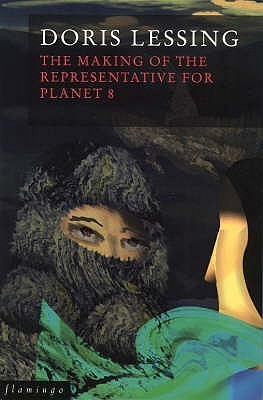
The Making of the Representative for Planet 8 is the fourth volume in Doris Lessing's celebrated space fiction series, 'Canopus in Archives'.

This book includes every story written by Doris Lessing about Africa: all of her first collection, This Was the Old Chief's Country (unavailable in America); the four tales about Africa from Five (also unavailable); the African stories from The Habit of Loving and A Man and Two Women and four stories never before collected.This, then, is Doris Lessing's Africa - where she lived for twenty-five years and where so much of her interest and concern still resides. Here, as she sees them, are the complexities, the agonies and joys, the textures of African life and society.The collection, bridging as it does Mrs. Lessing's entire writing career, contains much of her most extraordinary work. Beyond that, it is a brilliant portrait of a world that is vital to all of us, shadowy to most of us - perceived by an artist of the first rank writing with passion and honesty about her native land.It is a central book in the work of one of the most important of today's writers.

Martha Quest, the embodied heroine of the Children of Violence series, has been acclaimed as one of the greatest fictional creations in the English language. In a Ripple from the Storm, Doris Lessing charts Martha Quest's personal and political adventures in race-torn British Africa, following Martha through World War II, a grotesque second marriage, and an excursion into Communism. This wise and starling novel perceptively reveals the paradoxes, passions, and ironies rooted in the life of twentieth-century Anglo-Africa.A Ripple from the Storm is the third novel in Doris Lessing's classic Children of Violence sequence of novels, each a masterpiece in its own right, and, taken together, an incisive and all-encompassing vision of our world in the twentieth century.