
Jun'ichirō Tanizaki
Jun'ichirō Tanizaki (谷崎 潤一郎) was a Japanese author, and one of the major writers of modern Japanese literature, perhaps the most popular Japanese novelist after Natsume Sōseki. Some of his works present a rather shocking world of sexuality and destructive erotic obsessions; others, less sensational, subtly portray the dynamics of family life in the context of the rapid changes in 20th-century Japanese society. Frequently his stories are narrated in the context of a search for cultural identity in which constructions of "the West" and "Japanese tradition" are juxtaposed. The results are complex, ironic, demure, and provocative.
30 Books Written

An essay on aesthetics by the Japanese novelist, this book explores architecture, jade, food, and even toilets, combining an acute sense of the use of space in buildings. The book also includes descriptions of lacquerware under candlelight and women in the darkness of the house of pleasure.

In Osaka in the years immediately before World War II, four aristocratic women try to preserve a way of life that is vanishing. As told by Junichiro Tanizaki, the story of the Makioka sisters forms what is arguably the greatest Japanese novel of the twentieth century, a poignant yet unsparing portrait of a family–and an entire society–sliding into the abyss of modernity.Tsuruko, the eldest sister, clings obstinately to the prestige of her family name even as her husband prepares to move their household to Tokyo, where that name means nothing. Sachiko compromises valiantly to secure the future of her younger sisters. The unmarried Yukiko is a hostage to her family’s exacting standards, while the spirited Taeko rebels by flinging herself into scandalous romantic alliances. Filled with vignettes of upper-class Japanese life and capturing both the decorum and the heartache of its protagonist, The Makioka Sisters is a classic of international literature.

A hilarious story of one man’s obsession and a brilliant reckoning of a nation’s cultural confusion—from a master Japanese novelist. When twenty-eight-year-old Joji first lays eyes upon the teenage waitress Naomi, he is instantly smitten by her exotic, almost Western appearance. Determined to transform her into the perfect wife and to whisk her away from the seamy underbelly of post-World War I Tokyo, Joji adopts and ultimately marries Naomi, paying for English and music lessons that promise to mold her into his ideal companion. But as she grows older, Joji discovers that Naomi is far from the naïve girl of his fantasies. And, in Tanizaki’s masterpiece of lurid obsession, passion quickly descends into comically helpless masochism.

'This year I intend to begin writing freely about a topic which, in the past, I have hesitated to mention even here. I have always avoided commenting on my sexual relations with Ikuko, for fear that she might surreptitiously read my diary and be offended...' So begins The Key - a forthright and moving tale of a middle-aged man deeply in love with his younger wife. In spite of that love, they have grown physically apart, each unsure of the other's thoughts and desires-until the day Ikuko discovers the key to her husband's diary with its desperate hints of jealousy and voyeurism. The key, she realises, to his very soul...

“Considering all I’ve sacrificed, is it too much to ask for one little cat in return?”Shinako has been ousted from her marriage by her husband Shozo and his younger lover Fukuko. She’s lost everything: her home, status, and respectability. Yet the only thing she longs for is Lily, the elegant tortoiseshell cat she shared with her husband. As Shinako pleads for Lily’s return, Shozo’s reluctance to part with the cat reveals his true affections, and the lengths he’ll go to hold onto the one he loves most.A small masterpiece, A Cat, a Man, and Two Women is a novel about loneliness, love, and companionship of the most unexpected kind. In this story of Japanese society and manners, Tanizaki gives us a perfectly-formed oddball comedy, and a love triangle in which the only real rival is feline.Also includes the stories "The Little Kingdom" and "Professor Rado."A Cat, a Man, and Two Women was first published in the magazine Kaizo in 1936 as Neko to Shozo to futari no onna; “The Little Kingdom” in the magazine Chugai in 1918 as Chiisana okoku; Part I of “Professor Rado” in Kaizo in 1925 as Rado sensei; and Part II in Shincho in 1928 as Zoku Rado sensei. - from Copyright Page

The marriage of Kaname and Misako is disintegrating: whilst seeking passion and fulfilment in the arms of others, they contemplate the humiliation of divorce. Misako's father believes their relationship has been damaged by the influence of a new and alien culture, and so attempts to heal the breach by educating his son-in-law in the time-honoured Japanese traditions of aesthetic and sensual pleasure. The result is an absorbing, chilling conflict between ancient and modern, young and old.

Quicksand is a silkily nuanced novel of erotic gamesmanship and obsession. Sonoko Kakiuchi, an Osaka lady of a good family, married to a dully respected lawyer, tells a story of temptation and betrayal. Sonoko is infatuated with the beautiful art student and femme fatale Mitsuko, a woman so seductive and heartless she can even turn Sonoko's husband into her own accomplice. Filled with intrigue and treacherous romance, readers will be entranced by Tanizaki’s seminal novel. At once savagely funny and timorously exact in its portrayal of sexual enthrallment, Quicksand is “beautifully and mysteriously contrived.”— Newsday

Diary of a Mad Old Man is the journal of Utsugi, a seventy-seven-year-old man of refined tastes who is recovering from a stroke. He discovers that, while his body is decaying, his libido still rages on -- unwittingly sparked by the gentle, kindly attentions of his daughter-in-law Satsuko, a chic, flashy dancer with a shady past. Pitiful and ridiculous as he is, Utsugi is without a trace of self-pity, and his diary shines with self-effacing good humor. At once hilarious and of a sadness, Diary of a Mad Old Man is a brilliant depiction of the relationship between eros and the will to live -- a novel of the tragicomedy of human existence.Translated from the Japanese by Howard Hibbett

In these seven stories, the author of The Makioka Sisters explores the territory where love becomes self-annihilation, where the contemplation of beauty gives way to fetishism, and where tradition becomes an instrument of refined cruelty.
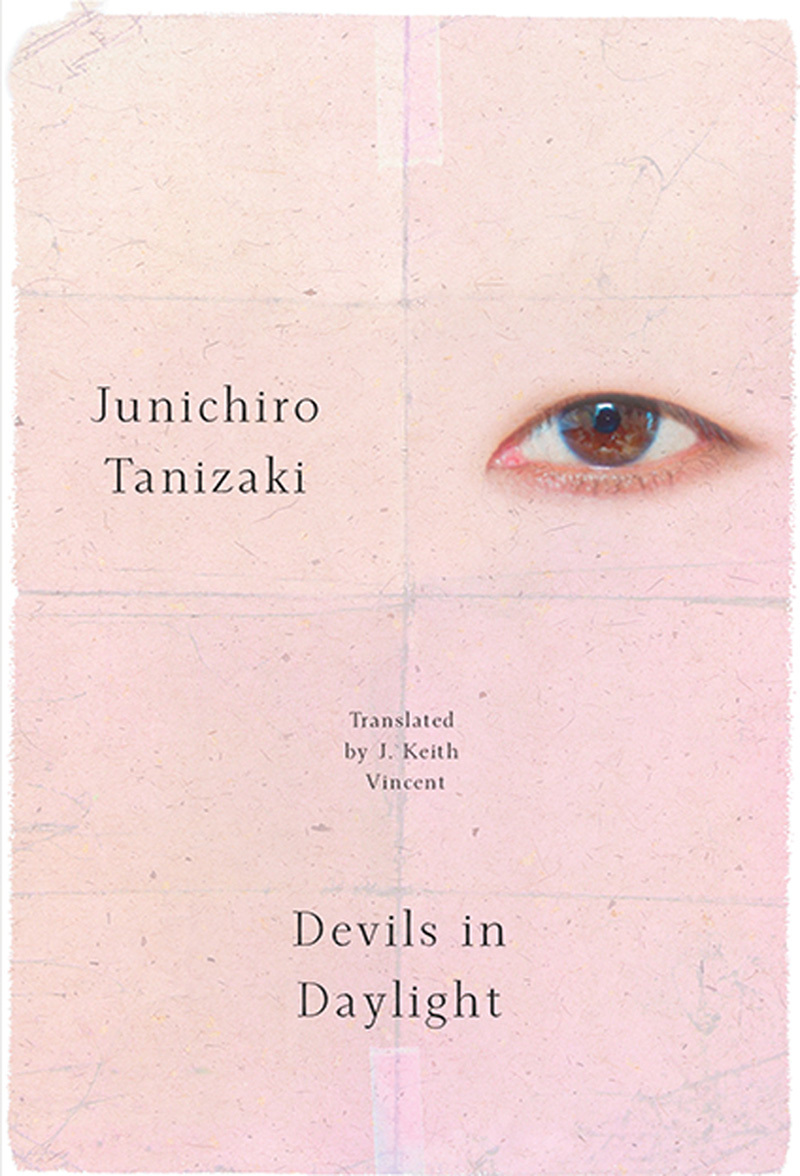
A suspenseful early novella about obsession, voyeurism, and Tokyo’s seedy criminal underworldOne morning, Takahashi, a writer who has just stayed up all night working, is interrupted by a phone call from his old friend Sonomura: barely able to contain his excitement, Sonomura claims that he has cracked a secret cryptographic code based on Edgar Allan Poe’s The Gold-Bug and now knows exactly when and where a murder will take place―and they must hurry if they want to witness the murder, because it’s later that very night! Sonomura has a history of lunacy and playing the amateur detective, so Takahashi is of course reluctant to believe him. Nevertheless, they stake out the secret location, and through tiny peepholes in the knotted wood, become voyeurs at the scene of a shocking crime…Atmospheric, erotic, and tense, Devils in Daylight is an early work by the master storyteller who “created a lifelong series of ingenious variations on a dominant theme: the power of love to energize and destroy” (Chicago Tribune).

Historia de Mozuya Koto, también llamada Shunkin, una bella y culta mujer perteneciente a una acomodada familia de Osaka, durante la era Meiji (último tercio del siglo XIX). Queda ciega de niña y tendrá que abandonar su vocación artística, la danza, pero resultará ser igualmente virtuosa en la interpretación de instrumentos de cuerda. Shunkin será atendida amorosamente por Sasuke, un joven «discípulo», cuyo único objetivo en la vida se convertirá en atender el más mínimo de los deseos de Sasuke.

From a Japanese master of romantic and sexual obsession come two novels that treat traditional themes with sly wit and startling psychological sophistication. In The Secret History of the Lord of Musashi, Junichir Tanizaki reimagines the exploits of a legendary samurai as a sadomasochistic dance between the hero and the wife of his enemy. Arrowroot, though set in the twentieth century, views an adult orphan’s search for his mother’s past through the translucent shoji screen of ancient literature and myth. Both works are replete with shocking juxtapositions. Severed heads become objects of erotic fixation. Foxes take on human shape. An aristocratic lady loves and pities the man she is conspiring to destroy. This supple translation reveals the full scope of Tanizaki’s his confident storytelling, luminous detail, and astonishingly vital female characters.

Lors d'une promenade autour d'un ancien palais impérial, le sanctuaire de Minase, le narrateur rencontre un homme étrange. Est-ce un fantôme, un esprit qui hante les lieux ? Celui-ci lui offre du saké et lui raconte l'histoire de la belle O-Yû, perverse et inaccessible...

Estas once historias de perversidad inquietante, cuidadosamente escogidas entre la inmensa producción de uno de los grandes autores de la Modernidad japonesa, abarcan veintiséis años del mejor Tanizaki: desde el clásico «Tatuaje» hasta el divertido «La gata, el amo y sus mujeres», pasando por el turbador «Los pies de Fumiko» o el magistral «El segador de cañas».Algunos inéditos en español, todos traducidos del original japonés, los cuentos seleccionados por el especialista de la literatura japonesa Carlos Rubio nos conducen con ironía, sensualidad y sabiduría a todas las facetas del amor y sus ramificaciones más transgresoras: sadomasoquismo, voyerismo, travestismo o fetichismo.Once caminos para adentrarnos en un gozoso imperio de los sentidos: un viaje del que el lector sale transformado.

The decadent tales in this dazzling collection span forty-five years in the extraordinary career of Japan's master storyteller, Jun'ichiro Tanizaki (1886-1965).Tanizaki's major novels-Naomi, The Makioka Sisters, A Cat, a Man, and Two Women, and The Key, for example-have already appeared in English, but some of his finest works are short stories, only a handful of which have been translated.The stories presented here, all of them translated into English for the first time, vividly explore an array of human passions. In "The Children," three mischievous friends play sado-masochistic games in a mysterious Western-style mansion. The sybaritic narrator of "The Secret" experiments with cross-dressing as he savors the delights of duplicity. "The Two Acolytes" evokes the conflicting attractions of spiritual fulfillment and worldly pleasure in medieval Kyoto. In the title story, the seductive tastes, aromas, and textures of outlandish Chinese dishes blend with those of the seductive hands that proffer them to blindfolded gourmets. In "Mr. Bluemound," Tanizaki, who wrote for a film studio in the early 1920s, considers the relationship between a flesh-and-blood actress and her image fixed on celluloid, which one memorably degenerate admirer is obsessed with. And, finally, "Manganese Dioxide Dreams" offers a tantalizing insight into the author's mind as he blends-in the musings of an old man very like Tanizaki himself-Chinese and Japanese cuisine, a French murder movie, Chinese history, and the contents of a toilet bowl.These beautifully translated stories will intrigue and entertain readers who are new to Tanizaki, as well as those who have already explored the bizarre world of his imagination.

These two modern classics by the great Japanese novelist Junichiro Tanizaki, both utilize the diary form to explore the authority that love and sex have over all.In The Key, a middle-aged professor plies his wife of thirty years with any number of stimulants, from brandy to a handsome young lover, in order to reach new heights of pleasure. Their alternating diaries record their separate adventures, but whether for themselvess or each other becomes the question. Diary of a Mad Old Man records, with alternating humor and sadness, seventy-seven-year-old Utsugi’s discovery that even his stroke-ravaged body still contains a raging libido, especially in the unwitting presence of his chic, mysterious daughter-in-law.

The Tattooer is the first published work by Junichiro Tanizaki, one of the major authors in the modern Japanese tradition. In the story, a tattoo artist inscribes a giant spider on the body of a beautiful young woman. Afterwards, the woman's beauty takes on a demonic, compelling power, in which eroticism is combined with sado-masochism. The story foreshadows many of the archetypes which reappear in many of Tanizaki's later works.

Jun'ichirō Tanizaki's In Black and White is a literary murder mystery in which the lines between fiction and reality are blurred. The writer Mizuno has penned a story about the perfect murder. His fictional victim is modeled on an acquaintance, a fellow writer. When Mizuno notices just before the story is about to be published that this man's real name has crept into his manuscript, he attempts to correct the mistake, but it is too late. He then becomes terrified that an actual murder will take place--and that he will be the main suspect. Mizuno goes to great lengths to establish an alibi, venturing into the city's underworld. But he finds himself only more entangled as his paranoid fantasies, including a mysterious "Shadow Man" out to entrap him, intrude into real life. A sophisticated psychological and metafictional mystery, In Black and White is a masterful yet little-known novel from a great writer at the height of his powers.The year 1928 was a remarkable one for Tanizaki. He wrote three exquisite novels, but while two of them--Some Prefer Nettles and Quicksand--became famous, In Black and White disappeared from view. All three were serialized in Osaka and Tokyo newspapers and magazines, but In Black and White was never published as an independent volume. This translation restores it to its rightful place among Tanizaki's works and offers a window into the author's life at a crucial point in his career. A critical afterword explains the novel's context and importance for Tanizaki and Japan's literary and cultural scene in the 1920s, connecting autobiographical elements with the novel's key concerns, including Tanizaki's critique of Japanese literary culture and fiction itself.

Femme-enfant ingénue, la belle O-Tsuya apprend vite à user de ses charmes et devient une courtisane accomplie qui excelle à corrompre et manipuler les hommes. Jeune et naïf, Shinsuke est une proie facile. Mais qui sait jusqu'à quelles folies peut conduire la passion ?Avec un talent incomparable, Tanizaki met en scène une dramatique histoire d'amour dans le Japon du XIXᵉ siècle.

The Maids is a jewel: an astonishing complement to The Makioka Sisters, set in the same house, in the same turbulent decades, but among the servants as much as the masters. The Maids concerns all the young women who work—before, during, and after WWII—in the pampered, elegant household of the famous author Chikura Raikichi, his wife Sanko, and her younger sister. Though quite well-to-do, Raikichi has a small house: the family and the maids (usually a few, sharing a little room next to the kitchen) are on top of one another. This proximity helps to explain Raikichi’s extremely close observation of the maids and their daily lives, although his interest carries with it more than a dash of the erotic, calling to mind Tanizaki’s raciest books such as Diary of a Mad Old Man and The Key.In the sensualist, semi-innocent, sexist patrician Raikichi, Tanizaki offers a richly ironic self-portrait, but he presents as well a moving, nuanced chronicle of change and loss: centuries-old values and manners are vanishing, and here—in the evanescent beauty of the small gestures and intricacies of private life—we find a whole world to be mourned. And yet, there is such vivacity and such beauty of writing that Tanizaki creates an intensely compelling epic in a kitchen full of lively girls.Ethereally suggestive, sensational yet serious, witty but psychologically complex, The Maids is in many ways The Makioka Sisters revisited in a lighter, more comic mode.

"Πολύ σύντομα μου γεννήθηκε η υποψία ότι το "βλέμμα" του έκρυβε κάποιο μυστικό και ότι αυτή η πόζα περιείχε κάτι που αιχμαλώτιζε την ψυχή του συνταξιούχου με έναν πολύ ιδιαίτερο τρόπο. Μια οποιαδήποτε άλλη συνηθισμένη πόζα δεν θα επέτρεπε να φανερωθεί το συγκεκριμένο μέρος του κορμιού, και εννοώ τη στάση των γυμνών ποδιών ιδωμένων κάτω από το άνοιγμα του κίμονο, την καμπύλη γραμμή που έφτανε μέχρι τα νύχια των δαχτύλων. Καθώς ήμουν ήδη από την παιδική μου ηλικία ιδιαιτέρως επιρρεπής στη γοητεία των αρμονικών γυναικείων ποδιών, είχα υπνωτιστεί από την τέλεια καμπύλη των ποδιών της Ο-Φούμι. Οι γάμπες της, λεπτεπίλεπτες και αισθησιακές, ήταν λες και είχαν σμιλευτεί προσεκτικά σε λευκό ξύλο, το περίγραμμά τους, καθώς κατηφόριζε προς τους αστραγάλους, γινόταν όλο και πιο φίνο, καταλήγοντας με μία μαλακή κλίση στην καμάρα του πέλματος, ενώ στο τέλος αυτής της καμπύλης παρατάσσονταν το ένα μετά το άλλο τα δάχτυλα από το μικρό μέχρι το πιο μεγάλο σε μία σειρά, και αυτή η ευθυγράμμιση μού φαινόταν πολύ πιο άμορφη ακόμα κι απ' το πρόσωπο της Ο-Φούμι."Ο ΟΥΝΟΚΙΤΣI, φοιτητής στη Σχολή Καλών Τεχνών, αφηγείται τη συνάντησή του με τον συνταξιούχο Τσουκακόσι και τη μαιτρέσσα του Φουμίκο. Ο γέρος έμπορος, παθιασμένος με την ομορφιά του ποδιού της ερωμένης του, αναθέτει στον νεαρό ζωγράφο να αποδώσει δυτικότροπα τη Φουμίκο, κατά τον τρόπο όμως μιας παλιάς γιαπωνέζικης γκραβούρας, σε μια στάση που αναδεικνύει τη μοναδική αισθησιακότητα της γυναίκας που αναπαρίσταται. Η έμμονή του για ένα συγκεκριμένο μέρος του σώματός της, τα πόδια της, θα αποκτήσει τέτοια ένταση που θα τον οδηγήσει στα όρια της τρέλας.Το Πόδι της Φουμίκο παραμένει το πιο αντιπροσωπευτικό από τα πρώιμα έργα του Τανιζάκι που διερευνούν πλευρές "διαστροφικής ", όπως ονομαζόταν εκείνη την εποχή, σεξουαλικότητας.

Un joven tatuador japonés llamado Seikichi destacaba entre todos los demás por la perfección y delicadeza de sus voluptuosos dibujos excéntricos y sensuales. Sólo las pieles y cuerpos más atractivos tenían acceso a sus agujas, auténticos aguijones expertos en transformar el dolor en arte, de tal manera que cuanto mayor era el sufrimiento infringido mejor resultaba el tatuaje. El sadismo de Seikichi, el turbio placer que sentía provocando el sacrificio de sus clientes, no restaba un ápice a su fama, pero él perseguía la perfección y una obra maestra exigía un lienzo perfecto. Año tras año buscó infructuosamente a la mujer ideal, hasta que al contemplar los pies desnudos de una desconocida comprendió que había logrado su objetivo. Naoko Kuzano y Alicia Mariño han traducido directamente del japonés uno de los relatos más inquietantes de Junichiro Tanizaki, que el gran pintor Manuel Alcorlo ha ilustrado magistralmente, narrando en imágenes el amor enfermizo que el tatuador Seikichi sentía cada vez que hería el cuerpo de su joven tatuada.

Tadasu a grandi, mais il reste toujours un petit enfant lorsqu'il pense à son enfance et à sa mère, la merveilleuse Chinu, si bien réincarnée dans la seconde femme de son père, avec qui il entretient une relation trouble mêlant amour filial et désir. Un magnifique éloge de la maternité et une réflexion sur l'image de la Femme.

One of the great novelists of the twentieth century, Junichiro Tanizaki wrote about love--and sex--with a breathtaking suppleness of style and a vast depth of literary allusion. In these two novellas, brilliantly translated by Anthony H. Chambers and appearing in paperback for the first time, Tanizaki probes the translucent screen that separates idealized yearning from humiliating obsession in a society of impenetrable decorum.

Jun’ichirō Tanizaki is one of the most eminent Japanese writers of the twentieth century, renowned for his investigations of family dynamics, eroticism, and cultural identity. Most acclaimed for his postwar novels such as The Makioka Sisters and The Key , Tanizaki made his literary debut in 1910. This book presents three powerful stories of family life from the first decade of Tanizaki’s career that foreshadow the themes the great writer would go on to explore.“Longing” recounts the fantastic journey of a precocious young boy through an eerie nighttime landscape. Replete with striking natural images and uncanny human encounters, it ends with a striking revelation. “Sorrows of a Heretic” follows a university student and aspiring novelist who lives in degrading poverty in a Tokyo tenement. Ambitious and tormented, the young man rebels against his family against a backdrop of sickness and death. “The Story of an Unhappy Mother” describes a vivacious but self-centered woman’s drastic transformation after a freak accident involving her son and daughter-in-law. Written in different genres, the three stories are united by a focus on mothers and sons and a concern for Japan’s traditional culture in the face of Westernization. The longtime Tanizaki translators Anthony H. Chambers and Paul McCarthy masterfully bring these important works to an Anglophone audience.

Lavishly opulent stories of sensual obsession, cultural heritage, and mythological creatures—translated into English for the first time—from a classic Japanese writerFeaturing “The Qilin,” “The Siren’s Lament,” and the novella Killing O-Tsuya, this gorgeous new edition of 3 classic works translated by Bryan Karetnyk distills the essence of Jun'ichirō Tanizaki's shorter fiction: the co-mingling of Japanese and Chinese mythologies, the chillingly dark side of desire, and the paper-thin line between the sublime and the depraved. “The Qilin”: The sage Confucius travels to a kingdom ruled by a struggling duke, whose pursuit of virtue is threatened by his consort's obsession desire for pleasure. Killing O-Tsuya: A naïve servant elopes with his master's daughter, only to be plunged headlong into a world of murder and corruption. “The Siren’s Lament”: Exhausted by a lifestyle of never-ending debauchery, a young prince finds himself in possession of a dazzling, beguiling mermaid.The essential short works of one of the most important and widely-read figured in modern Japanese literature, author of hugely popular works including In Praise of Shadows, The Makioka Sisters, and Naomi; renowned for his investigations of family dynamics, eroticism, and cultural identity.

Una novela breve de prosa luminosa. Publicada por primera vez en Japón en 1949, La madre del capitán Shigemoto narra la historia, ambientada en el siglo x y de origen tradicional, de una mujer muy bella que se casó con un noble de avanzada edad. No le dio ningún hijo, pero una noche su esposo, en un rapto de ebriedad, la ofreció como presente a un importante diplomático al que hospedaba en casa. Años más tarde, el hijo que resultó de aquel encuentro, ahora de media edad, se reúne de nuevo con su madre, que sirve como monja en un alejado santuario.

The Story of Tomoda and Matsunaga (first published in Japanese in 1926, later in Italian, then in English in 2018 in The Penguin Book of Japanese Short Stories) is a Tanizaki novella which explores the dichotomy between aspects of Eastern culture (specifically Japanese) and Western culture (specifically European) through the use and eyes of a doppelgänger, a Jekyll and Hyde sort who vacillates in his desires and attitudes toward provincial, traditional Asia and a dissolute, gluttonous Europe.

Ce recueil comprend deux courtes nouvelles, deux histoires d'amour atteignant des profondeurs de tendresse et de cruauté rarement abordées par la littérature occidentale.« L'histoire de Shunkin » relate la vie de Koto Mozuya, dite Shunkin, fille d'une riche famille d'apothicaires d'Osaka, et son histoire d'amour avec Sasuke, qui fut son serviteur, son élève et son amant durant toute sa vie.« Ashikari » est l'histoire de Oyu, jeune veuve ayant l'interdiction de se remarier afin d'élever son fils, et de Serizawa, le père du narrateur, épris l'un de l'autre mais contraints de ne partager qu'un amour platonique.

陰翳礼讃/懶惰の説/恋愛及び色情/客ぎらい/旅のいろいろ/厠のいろいろ 人はあの冷たく滑かなものを口中にふくむ時、あたかも室内の暗黒が一箇の甘い塊になって舌の先で融けるのを感じ、ほんとうはそう旨くない羊羹でも、味に異様な深みが添わるように思う。(本文より) -西洋との本質的な相違に眼を配り、かげや隈の内に日本的な美の本質を見る。