
John Wood
John J. Wood is the founder and executive chairman of Room to Read, a nonprofit organization dedicated to eradicating world poverty through the power of education. He is the author of 'Leaving Microsoft to Change the World' and 'Creating Room to Read.'
30 Books Written

Leaving Microsoft to Change the World: An Entrepreneur's Odyssey to Educate the World's Children
by John Wood
Rating: 4.1 ⭐
• 2 recommendations ❤️
John Wood discovered his passion, his greatest success, and his life's work—not at business school or leading Microsoft's charge into Asia in the 1990s—but on a soul-searching trip to the Himalayas. Wood felt trapped between an all-consuming career and a desire to do something lasting and significant. Stressed from the demands of his job, he took a vacation trekking in Nepal because a friend had told him, "If you get high enough in the mountains, you can't hear Steve Ballmer yelling at you anymore."Instead of being the antidote to the rat race, that trip convinced John Wood to divert the boundless energy he was devoting to Microsoft into a cause that desperately needed to be addressed. While visiting a remote Nepalese school, Wood learned that the students had few books in their library. When he offered to run a book drive to provide the school with books, his idea was met with polite skepticism. After all, no matter how well-intentioned, why would a successful software executive take valuable time out of his life and gather books for an impoverished school?But John Wood did return to that school and with thousands of books bundled on the back of a yak. And at that moment, Wood made the decision to walk away from Microsoft and create Room to Read—an organization that has donated more than 1.2 million books, established more than 2,600 libraries and 200 schools, and sent 1,700 girls to school on scholarship—ultimately touching the lives of 875,000 children with the lifelong gift of education.Leaving Microsoft to Change the World chronicles John Wood's struggle to find a meaningful outlet for his managerial talents and entrepreneurial zeal. For every high-achiever who has ever wondered what life might be like giving back, Wood offers a vivid, emotional, and absorbing tale of how to take the lessons learned at a hard-charging company like Microsoft and apply them to one of the world's most pressing problems: the lack of basic literacy.
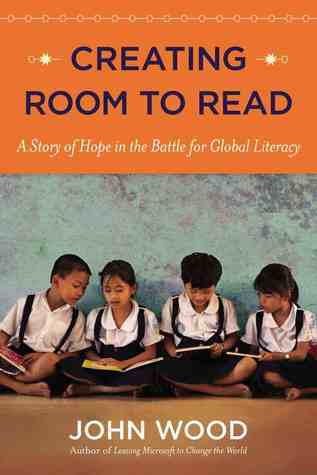
The inspirational story of a former Microsoft executive’s quest to build libraries around the world and share the love of books What’s happened since John Wood left Microsoft to change the world? Just ask six million kids in the poorest regions of Asia and Africa. In 1999, at the age of thirty-five, Wood quit a lucrative career to found the nonprofit Room to Read. Described by the San Francisco Chronicle as “the Andrew Carnegie of the developing world,” he strived to bring the lessons of the corporate world to the nonprofit sector—and succeeded spectacularly. In his acclaimed first book, Leaving Microsoft to Change the World, Wood explained his vision and the story of his start-up. Now, he tackles the organization’s next steps and its latest challenges—from managing expansion to raising money in a collapsing economy to publishing books for children who literally have no books in their native language. At its heart, Creating Room to Read shares moving stories of the people Room to Read works to help: impoverished children whose schools and villages have been swept away by war or natural disaster and girls whose educations would otherwise be ignored. People at the highest levels of finance, government, and philanthropy will embrace the opportunity to learn Wood’s inspiring business model and blueprint for doing good. And general readers will love Creating Room to Read for its spellbinding story of one man’s mission to put books within every child’s reach.

Too many working professionals still subscribe to the old Milton-Friedman logic that “the sole social purpose of a business is to generate profit for shareholders.” In this revolutionary book, authors John Wood and Amalia McGibbon show once and for all that cause is not the enemy of commercialism, but perhaps the new key to it. Based on over 100 interviews with entrepreneurs, executives and front-line staff, Wood and McGibbon provide a breath-taking tour of this new and inspiring world. You’ll learn from mom-and-pop shops and corporate giants like Google and Goldman Sachs why corporate social responsibility is more than just a buzzword or publicity stunt, but instead represents the new competitive advantage. You’ll learn how to: - win the war for talent - create a compelling bond with customers - motivate employees - reduce attrition - appease the regulators - and create a positive buzz on social media Purpose Incorporated is a “permission slip” to those businesspeople who want to have a positive impact on the world, but worry the corner office or cubicle isn't the place for it.

Emotions are like a rainbow--there is a color for every one we feel. And when the stressed feeling starts to take over the rainbow, it's time for The White Book! Simple activities, tips, and tricks help young readers whose stressed white shines brightest in the rainbows of their colorful minds. They can turn the pages from front to back or back to front. They can use every single page or open the book to just one random page. Soon, the other colors of their emotions rainbow will shine with this mindfulness book that supports readers exploring their emotions!

Zak, the Yak, loves to travel, and over a cup of tea with a new friend he hears the sad tale of local school children who are eager to learn but do not have the books or resources. Zak is determined to help the students.

Now, a lot of things have been written about the Trap Bar over the years and much of it is very useful, but to my knowledge no one has covered it in great detail, or for that matter, talked to Al Gerard directly to learn his side of the story. These are two of the biggest reasons for the training course you are now holding in your hands. Throughout the following pages we will be covering a variety of topics on the Trap Bar...how it came about...how Al Gerard has trained with it... some of the mistakes he made with his training... what worked... and why the Trap Bar is such an effective piece of training equipment. We will start things off with an interview with Al Gerard himself. As I mentioned previously, I don't believe that anyone has ever talked to Al directly about the history of the Trap Bar and this is a unique look at the real story as it unfolded. Throughout the interview, Al also provides a lot of great training advice so you are going to want to make sure to take plenty of notes. More importantly, you can take many of the tips and techniques that Al shares and start doing them right away in your workouts.

We released Book 1 of the Trap Bar Training Guide on Kindle back in April of 2017 and the moment we did, it took off like a rocket. We have released many titles since then and while all of them have done very well, none have come even close to that one, at least so far. What follows are more helpings of solid training bar training knowledge from some folks who have been "in the trenches" with the Trap Bar for a few decades now. I've been training with a Trap Bar for several decades now and have contributed a few interesting entries here. Dr. Ken and Paul Kelso's articles on trap bar training are classics but the sources where they originally appeared are not easy to find. This book will allow you can read, learn, and enjoy them -- and build a lot of muscle in the process. I view the Trap Bar much like the "Fosbury Flop" -- in other words, a true game changer. Whether Powerlifter, Bodybuilder, Football player, Mixed Martial Artist, or dare I even say Olympic Weightlifter, if you already didn't realize it, these articles should make it very clear that the Trap Bar can help you reach your training goals, regardless of what you might be training for. You can find a Trap Bar -- or some kind of a variation of a Trap Bar -- in nearly every gym in the land these days, which is rather amazing. The Trap Bar is clearly "over" to use a pro-wrestling term, but the question now is what are you going to do with it? That is exactly where this publication comes in. In the following pages, you'll find the specifics of all the basic Trap Bar exercises and how to perform them, MANY other unusual (but very effective) techniques and methods that the Trap Bar can be used for, specific workout examples, and all kinds of practical knowledge that will allow you to utilize the Trap Bar to its fullest potential. Before you go, there is one other detail that I wanted to mention and that is that there will be several other entries in this series. In the meantime, you'll find plenty of things to keep you busy in this volume. If you have any questions or need additional explanation on anything presented here, please don't hesitate to reach out, I can be contacted through any of the websites listed on the contact page in the book. Train hard, John Wood

If you already know who I am and what I'm all about, then I probably already sent you an email explaining the purpose of this ebook... If you're just joining us, then you'll want to take a quick visit to my websites and check out some of the other interesting strength-related things that I have going , , and my new membership site We put this particular ebook together for two one, to get some really great training information out there that most people would never have access to otherwise, and two, because we are getting into ebooks in a big way, so we made the incredibly cheap price tag to encourage people to take a chance on an ebook if they have been hesitant to do so in the past. We plan on compiling articles from many different classic strength resources, it just so happens that for "Volume I" of this series all the articles came from classic Iron Man magazine. I was fortunate enough to be in the once in a lifetime position to be granted permission from John Balik, former Editor-in-chief of Iron Man magazine, to re-print, in digital form, the entire Iron Man back catalog all the way to the beginning Anyone who was been around the Iron Game for any length of time will tell you that vintage issues of Iron Man are the some of the very best strength articles and resources ever put down on paper. Iron Man was a unique mix of bodybuilding, Olympic weight lifting, classic feats of strength and what would eventually become Powerlifting -- it was a publication the likes of which we will never see again, and these classic issues are like gold. Unfortunately, few people saved their old issues of Iron Man, and it would take a king's ransom to try to get your hands on these issues now -- if you can even find them for sale at all. All this amazing information would have otherwise been lost, but thanks to the wonders of modern technology, we can now bring you the treasure trove of strength knowledge from these classic issues of Iron Man and other great magazines from strength history. The following articles will give you a very nice selection of vintage -- but certainly still very effective -- training ideas. We have made every effort to include all the original images and image captions with each article. Sometimes the images help shown a particular technique, other times, they might simply show a point of interest which may or may not even be related to the article topic. Either way, we feel that these articles would be incomplete without them. The Power Rack training articles by Anthony Ditillo, which leads off the series, are some of the best articles that he ever wrote and the workouts found in the second installment are truly top notch. We've got an interesting "field report" on Isometric training, a useful article on building mind power, and advice on training for the Olympic lifts by Doug Hepburn, who should need no introduction to any serious strength athlete. Other than the fact that there are only two competitive Olympic lifts today, the training information in the following articles still holds up remarkably well, and should you follow the advice therein you'll understand why the training information from these old "Iron Man" mags were valued so highly. In time, there will be other volumes in this series, covering a wide-range of useful, interesting and most importantly effective training topics. There will be plenty of other article from the Iron Man archives but we'll have articles from other resources as well. For the time being, the following articles should give you more than enough to work on.

Many people know the dangers of coming in contact with different types of bacteria, but what they may not be familiar with are the good types of bacteria. This accessible text explains the various types of good and bad bacteria and their value to different ecosystems. Readers will deepen their understanding of these organisms after seeing what they look like under a microscope. Informative fact boxes and bright, full-color photographs presented as part of an engaging design add extra insight into this interesting science curriculum topic, and help make learning about science fun.

It is not a mystery to those “in the know” that AIDS, CANCER and HEART DISEASE can be healed and that there are treatments that exist, yet are difficult to find. It has been proven that these treatments have been kept from the public for political reasons. This book will uncover the known cures for the top ten illnesses. This is not a book of conspiracy, it is a proven fact and is evidenced by the fact that many people have reversed terminal conditions using the information in this book.

The Arctic is home to many different animal species. These animals make their habitats in this region's chilly climate, which can sometimes be difficult to survive in because of the subzero temperatures and scarce amount of food. This accessible text provides readers with fun facts about life in the Arctic, along with eye-catching, full-color photographs. Animal lovers will be captivated by the creatures that call this extreme environment home, and their Arctic adventure will introduce them to essential science concepts, including the adaptations these animals developed to survive in the coldest places on Earth.
Computers cannot think for themselves. Find out how code monkeys must tell computers exactly what to do.

THE POWER OF LETTING GO: Simple steps on how to drop what is holding you back and embrace life
by John Wood
Rating: 4.7 ⭐
Do people sometimes tell you to just let go? It is not always easy. The truth is that change is hard!We often struggle to let something go, especially when we want it, mostly because of fear. We question the universe, we question ourselves and we question everyone around us but we never truly get our answers. Letting go takes time, patience, and commitment to actively stop ourselves from relapsing and thinking about what we want again.Furthermore, letting go, for many of us, is new. To let go means we’re enacting new behavior. Many of us hold on to things when we’re actively drinking and drugging. We hold on to resentments, fears, anger, betrayals, frustrations, self-doubt; the list goes on. Our mental health and well-being depend on our capacity for self-care. So, what does it mean to let go? And, more importantly, how do we do it?"The Power Of Letting Go" helps you understand why, how, and when you should let something go so you can move on and never look back.John Wood, (PhD) is a Psychologist who has more than 14years of experience in the field of mental health disorders.To drop all negativity and enjoy life to the fullest then "The Power Of Letting Go" is here to guide you through the way!Scroll up and click the buy button.

People come in all sorts of shapes and sizes. This series talks about all the ways in which our bodies are different and wonderful. Each book features an inclusive selection of people from all walks of life.

It's normal to feel angry sometimes, but the way someone handles this feeling is extremely important. With this captivating book, young readers will learn what anger can look like, and how they can deal with it when they or someone around them is experiencing it. They'll follow the story of Anita, an alligator whose family helps her comprehend and deal with her anger. Eye-catching illustrations correlate closely with the text, helping readers of all ages and levels understand the story.
Find out how code monkeys must talk in a special code so that computers and smart devices will understand.

The Gray Book - Basic Nonfiction Reading for Grades 2-3 with Exciting Illustrations & Photos - Developmental Learning for Young Readers - Fusion Books ... Minds: Tips for Managing Your Emotions)
by John Wood
Rating: 4.0 ⭐
Emotions are like a rainbow--there is a color for every one we feel. And when the lonely feeling starts to take over the rainbow, it's time for The Gray Book! Simple activities, tips, and tricks help young readers whose lonely gray shines brightest in the rainbows of their colorful minds. They can turn the pages from front to back or back to front. They can use every single page or open the book to just one random page. Soon, the other colors of their emotions rainbow will shine with this mindfulness book that supports readers exploring their emotions!

In his introductory essay to this monograph--featuring the diverse photo practice that has characterized John Wood's nearly 50-year career--David Levi Strauss states, "In photo-historical terms, Wood is thought of as one of those renegades who went against 'pure photography' by incorporating drawing, painting, collage and every other technique he could get his hands on (not to mention explicit political content), into his practice, thus ushering in the multi-media of the 1960s that caused crisis in 'straight photography.' Long before it became the signal medium of the avant-garde, collage was a folk art, practiced by children, lovers and grandmothers." This comprehensive volume accompanies a retrospective that begins in Rochester, New York at The George Eastman House, The Memorial Art Gallery and the Visual Studies Workshop, then travels to The International Center for Photography and The Grey Art Gallery in New York before concluding at Syracus' Light Work gallery. It includes a DVD.

Emotions are like a rainbow--there is a color for every one we feel. And when the confident feeling starts to take over the rainbow, it's time for The Orange Book! Simple activities, tips, and tricks help young readers make confident orange shine brightest in the rainbows of their colorful minds. They can turn the pages from front to back or back to front. They can use every single page or open the book to just one random page. Soon, the other colors of their emotions rainbow will shine with this mindfulness book that supports readers exploring their emotions!

The Gold Book - Basic Nonfiction Reading for Grades 2-3 with Exciting Illustrations & Photos - Developmental Learning for Young Readers - Fusion Books ... Minds: Tips for Managing Your Emotions)
by John Wood
Rating: 4.0 ⭐
Emotions are like a rainbow—there is a color for every one we feel. And when the proud feeling starts to take over the rainbow, it’s time for The Gold Book! Simple activities, tips, and tricks help young readers shine proud gold brightest in the rainbows of their colorful minds. They can turn the pages from front to back or back to front. They can use every single page or open the book to just one random page. Soon, the other colors of their emotions rainbow will shine with this mindfulness book that supports readers exploring their emotions!

Dr. Seymour Skinless takes readers on an adventure under the skin in this exciting look at the skeletal system. Through comprehensive main text, readers are presented with interesting facts on the different types of bones in our bodies, what bones are made of, and how they help us to move. Additional information is relayed through eye-catching fact boxes, a thorough glossary full of helpful terms, and detailed diagrams. Charming illustrations and vivid, full-color photographs add an exciting visual component to this introduction on a basic science curriculum topic.

Grome is the monster that all other monsters fear. This is because he is the one that wakes them up in the morning with a big trombone. But one day the trombone goes missing...

A smart but silly alien companion and toy-making activity make learning about levers tons of fun! Readers can discover how levers work and the types of levers we see in our everyday lives.

Working is inevitable. It has always been and always will be. If not for nothing at all, at least for the need to survive. Of course, there are people who work with pleasure and out of dedication. Unfortunately, these people are much rarer than one would expect them to be. The society we now live in, has taken away most of the pleasure of working, and in most cases these days, going to job is just a matter of earning money to survive. Our choices have little to do with what we fill our daily lives with. It does not matter if you like your job or not, if your boss is a nice or a difficult person, money has to be made. This is the ugly truth for many of us. There is still a way to have a better chance when it comes to choosing what you want to do with your life. And that is going to college. Having a higher education offers the possibility of specializing in a specific field, one that you like and find more suitable for who you are. In the early ages, Academia was a place where all knowledge was gathered and where studying was the only important thing. There were no specific and separate fields, a scholar had to know mathematics, biology, history and art as well. It was learning for the sake of knowing, and earning money had almost nothing to do with it. With progress and science discoveries each subject became more and more vast. So, the necessity to differentiate each field from the others appeared. Professionals were educated in specific fields of interest. What You'll Get Part-time Jobs for Students List Where can you find a proper part-time job? How to apply for a desired job How to keep a job you like Take a Sneak Peak Inside (page 6): "There is a wide variety of part-time jobs, depending on the country, region and city you live in. we will further present some of the most often found in the job markets around the world. • Waiter/ this is probably the best known job for students. Probably because you can find a pub, a bar or a restaurant everywhere. The long program such places have offers the possibility to have very changeable working hours. Not much training is required and almost anybody can do it. Also, the tips are a big advantage and in a way give you the possibility to earn as much as you work. On the other hand, this job can be tiresome for many people and if you are at your first job, you might have difficulty adapting to it. Remember that you will be working with all sort of clients, and you have to constantly smile and be nice. However, if you are a calm, sociable person who wants to jump straight in the working class, this could be an interesting experience. • this is very similar to being a waiter, except for the hard effort of standing all day long. But a cashier job is not as easy to find, and even harder to keep. In most cases, you are offered a simpler job to start, and if you prove you..." Buy Now! Start Looking Today, Be Hired Tomorrow!

Pig Man is clumsy and often gets things wrong. However, after spilling coffee, annoying commuters, and falling over a lot, he can finally go to bed for a well deserved rest.


A Visit to South Korea - Geographical & Cultural Non-Fiction Reading for Grade 2, Developmental Learning for Young Readers - Country Explorers
by John Wood
Rating: 3.3 ⭐
Take a trip to South Korea! Start in the city of Seoul, where you'll see the tall N Seoul Tower and traditional hanok houses. Then, go watch a K-Pop concert or an eSports competition. And don't forget to eat some kimchi! Learn all about South Korea as you explore the country through this fun and engaging book.

When you see a spider, does it scare you? Many people are afraid of spiders, but what they may not know is how valuable spiders are to the environment. These tiny creatures are important because they eat many other insects that can be harmful to humans, animals, and other crops. This engaging and age-appropriate text gives readers the tools to see that most spiders are helpful. Fun-filled fact boxes and striking, full-color photographs add excitement to this guide that presents basic science curriculum topics such as ecosystems and food chains.

Thousands of people get organ transplants every year, but the need greatly outweighs the supply of organs. What if scientists could grow organs to help make people well? The technology isn't so far fetched anymore. Readers learn all about how this could be possible, as well as work in areas like genetics, and much more in the riveting pages of this book. Chock full of STEM topics, including careers in the medical, research, and technology fields, this volume is a great complement to the science curriculum and classroom library.

What is a wheel and how is it used? Readers will learn the answer to these questions and more in this title all about wheels. A project where readers make a toy car adds opportunity for hands-on learning!