
Confucius
Chinese philosopher Confucius, originally Kong Fuzi and born circa 551 BC, promoted a system of social and political ethics, emphasizing order, moderation, and reciprocity between superiors and subordinates; after his death in 479 BC, disciples compiled the Analects , which contains a collection of his sayings and dialogues. Teachings of this social thinker deeply influenced Korean, Japanese, and Vietnamese life. 孔子 - Kong Zi 孔夫子 - Kong Fuzi (Kung Fu-Tzu) https://en.wikipedia.org/wiki/Confucius
28 Books Written

Confucius ' famous Analects , written down by his students, are explaining the basic essence of life.Heart and mind are equally important and both have to found on loyalty, humanity, righteousness, propriety and wisdom.A great work of far eastern philosophy!

Central to the study of Chinese civilization at its widest extension is the thought of the great sage K'ung, usually known in the West by the Latinized form of his name, Confucius. His works form the core of more than two thousand years of Oriental civilization, and even today, when he has been officially discarded, his thought remains important for understanding the present as well as the past. Yet Confucius is the property of not only the his ideas stood behind much of the rational social thought of the European Enlightenment, as great philosophers from Leibnitz on seized with delight "the perfect ethic without that China offered them.The present edition of the wisdom of Confucius is certainly the best edition ever prepared in the West. The results of many years of study in China by the great Sinologist James Legge, it contains the entire Chinese text of the Analects (or sayings) of Confucius in large, readable characters, and beneath this Legge's full translation, which has been accepted as the definitive, standard English version. The book also includes The Great Learning and The Doctrine of the Mean .In addition to the texts and translation, a wealth of helpful material is offered to the countless notes embodying textual studies, commentators' opinions, interpretation of individual characters, disputed meanings, and similar material. More than 125 pages of introduction cover the Chinese classics, the history of the texts in this volume, and the life and influence of Confucius. Most useful, too, is a complete dictionary of all the Chinese characters in the book, with meanings, grammatical comments, place locations, and similar data. Subject and name indexes enable you to find material easily.

While there are no stirrings of pleasure, anger, sorrow, or joy, the mind may be said to be in the state of Equilibrium. When those feelings have been stirred, and they act in their due degree, there ensues what may be called the state of Harmony. This Equilibrium is the great root from which grow all the human actings in the world, and this Harmony is the universal path which they all should pursue.

Ta The Great Learning of Confucius is a book that explores the teachings of the ancient Chinese philosopher and scholar, Confucius. The book is a collection of Confucius' writings and teachings, which are intended to guide individuals towards a life of virtue, wisdom, and personal growth. The teachings cover a wide range of topics, including morality, ethics, education, government, and the importance of self-cultivation. Through his teachings, Confucius emphasizes the importance of living a balanced and harmonious life, and the book provides a roadmap for achieving this through the cultivation of one's mind, body, and spirit. Ta The Great Learning of Confucius is a timeless classic that continues to inspire individuals around the world to lead a life of purpose and meaning.This scarce antiquarian book is a facsimile reprint of the old original and may contain some imperfections such as library marks and notations. Because we believe this work is culturally important, we have made it available as part of our commitment for protecting, preserving, and promoting the world's literature in affordable, high quality, modern editions, that are true to their original work.

Includes a section on the life of Confucius, chapters on central harmony, ethics and politics, Confucius's aphorisms and discourses, and excerpts from Mencius. These literary translations are from Lin Yutang, one of China's most famous translators and scholars. Stories, poems, and other translations have been gathered from Lin's long career as a translator. Lin's intent in translating Chinese works into English was to help Chinese students of the English language, but readers of all backgrounds and languages will enjoy these selections from the wealth of China's literary tradition.

Belki de tüm zamanların en çok okunan düşünürü olan Konfüçyüs, hayattaki en büyük gayenin "Yol"u takip etmek olduğu yönündeki inancıyla Çin felsefesini büyük bir dönüşümden geçirdi: "Yol"a göre, bu ya da öteki dünyada vaat edilen ödüller için değil, insan varoluşunun doruk noktası olarak erdemin peşinden koşulmalıydı.
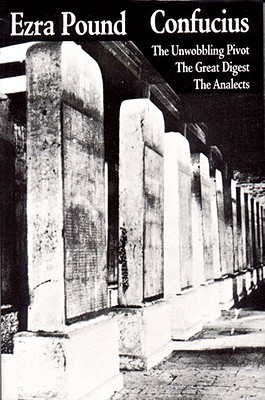
The study of Chinese culture was a dominant concern in Ezra Pound’s life and work. His great Canto XIII is about Kung (Confucius), Cantos LII-LXI deal with Chinese history, and in the later Cantos key motifs are often given in Chinese quotations with the characters set into the English text. His introduction to Oriental literature was chiefly through Ernest Fenollosa whose translations and notes were given him by the scholars widow in London about 1913. From these notebooks came, in time, the superb poems entitled Cathay and Pound’s edition of Fenollosa’s Chinese Written Character as a Medium for Poetry. But it was Confucius’ ethical and political teachings––that most influenced Pound. And now, for the first time, his versions, with commentary, of three basic texts that he translated have been assembled in one volume: The Great Digest (Ta Hsio), first published in 1928; The Unwobbling Pivot (Chung Yung), 1947; and The Analects (Lun-yü), 1950. For the first two, the Chinese characters from the ancient “Stone Classics” are printed en face in our edition, with a note by Achilles Fang. Pound never wanted to be a literal translator. What he could do, as no other could, is to identify the essence, pick out “what matters now,” and phrase it so pungently, so beautifully, that it will stick in the head and start new thinking.

Shijing, Book of Odes: Bilingual Edition, English and Chinese 詩經: Classic of Poetry, Book of Songs
by Confucius
Rating: 4.0 ⭐
This complete edition of The Book of Odes (Shijing) features both English and Chinese side-by-side for easy reference and bilingual support. The poems are linked and organized for easy reading. The Book of Odes, also known as the Classic of Poetry, is the oldest existing collection of Chinese poetry, comprising 305 works dating from the 11th to 7th centuries BC. It is one of the "Five Classics" traditionally said to have been compiled by Confucius, and has been studied and memorized by scholars in China and neighboring countries over two millennia. Since the Qing dynasty, its rhyme patterns have also been analysed in the study of Old Chinese phonology. This edition also includes a Classical Chinese Quick Study Guide, with an added study reference for the 100 most frequent classical Chinese characters. 《诗经》是中国最早的诗歌总集。《诗经》原本叫《诗》,共有诗歌305首(除此之外还有6篇有题目无内容,即有目无辭,称为笙诗六篇。没有内容的是南陔、白华、华黍、由康、崇伍和由仪)[1],因此又称“诗三百”。[2]从汉朝起儒家将其奉为经典,因此称为《诗经》。(正式使用《诗经》,應該起於南宋初年-屈萬里)。[3]汉朝毛亨、毛苌曾注释《诗经》,因此又称《毛诗》。《诗经》中的诗的作者,绝大部分已经无法考证。其所涉及的地域,主要是黄河流域,西起山西和甘肃东部,北到河北省西南,东至山东,南及江汉流域。

The teachings of the great Chinese philosopher Confucius have had as great an impact on the culture of the Far East as The Bible has had on that of West. As they are presented here, "The Teachings of Confucius" consists of "The Analects," "The Great Learning" and "The Doctrine of the Mean.""The Analects" is the most important of the teachings of Confucius. It is a collection of speeches and discussions between Confucius and his various disciples that illustrate his that anyone, regardless of his station in life, could become a superior man by living a virtuous life."The Great Learning" is a protocol for living, even the humblest actions of everyday living. It is embodied by the practice illustrated by the Seven Steps."The Doctrine of the Mean" deals with the means of achieving perfect virtue by following the middle way. It is a Heavenly prescription of the golden path by which learning and teaching ultimately unfold into perfect virtue.Like other great teachers, Confucius advocated action based on empathy; on practicing The Golden Rule by only doing unto others as you would have them do unto you. His aim was to improve the value and quality of life for all mankind.Also available in the "Eastern Philosophy - Special Edition" "Zen Buddhism - The Path to Enlightenment - Special Edition (Hardcover, Kindle)"Tao - The Way - Special Edition" (Hardcover, Paperback, Kindle)

Chinese Literature Comprising the Analects of Confucius, the Sayings of Mencius, the Shi-King, the Travels of Fâ-Hien, and the Sorrows of Han
by Confucius
Rating: 4.0 ⭐
This book was converted from its physical edition to the digital format by a community of volunteers. You may find it for free on the web. Purchase of the Kindle edition includes wireless delivery.

A cura di Paolo SantangeloDa più di due millenni la dottrina di Confucio rappresenta un modello e un’ispirazione per milioni, miliardi di donne e uomini.Mentre in India predicavano Buddha e Mahavira e in Iran Zarathustra, mentre a Gerusalemme fioriva il profetismo ebraico e in Grecia operavano i primi grandi filosofi, Confucio diffondeva la sua concezione morale − in cui si fondono un ideale di armonia interiore ed esteriore e la volontà di un costante impegno sociale. E per i suoi insegnamenti sceglieva un linguaggio semplice, diretto e concreto, la forma di brevi battute, lo humor di un epigramma, l’allusività di un apologo, perché un sistema organico e una teoria articolata avrebbero impoverito e travisato l’infinita ricchezza della verità. Un messaggio in grado di generare una profonda eco nel cuore del lettore ancora ai giorni nostri.Confuciovisse tra il 551 e il 479 a.C. Costretto nel 496 a lasciare il proprio paese, il principato di Lu, perché in contrasto con i governanti, iniziò a peregrinare alla ricerca di un signore che fosse disposto ad accettare le sue teorie; ma nel 483 ritornò nel suo paese natale, per dedicarsi all’insegnamento. Soltanto nei secoli successivi la sua opera avrebbe rivelato al mondo il suo pensiero.

“COMPLETE WORKS OF CONFUCIUS” CONTAINS:•AN AESTHETIC BOOK COVER•A BEGINNING CLICK-ABLE TABLE OF CONTENT FOR ALL TITLES •INNER CLICK-ABLE TABLES OF CONTENT FOR ALL INDIVIDUAL BOOKS WITH MULTIPLE CHAPTERS.•NICELY FORMATTED CHAPTERS AND TEXT.AUTHOR’S WORKS INCLUDE:•THE ANALECTS•THE DOCTRINE OF THE MEAN•THE GREAT LEARNING

The ideal edition for a survey course or a course in which the Analects is one of several works studied, this volume provides a representative selection from Slingerland's acclaimed translation of the full work, including passages covering all major themes. An appendix of selected traditional commentaries keyed to each passage provides access to the text and to its reception and interpretation. Also included are a concise general Introduction, bibliography, notes, and three additional appendices: Traditional Chinese Commentators Cited; Disciples of Confucius; and Glossary of Terms.

This work has been selected by scholars as being culturally important and is part of the knowledge base of civilization as we know it. This work is in the public domain in the United States of America, and possibly other nations. Within the United States, you may freely copy and distribute this work, as no entity (individual or corporate) has a copyright on the body of the work. Scholars believe, and we concur, that this work is important enough to be preserved, reproduced, and made generally available to the public. To ensure a quality reading experience, this work has been proofread and republished using a format that seamlessly blends the original graphical elements with text in an easy-to-read typeface. We appreciate your support of the preservation process, and thank you for being an important part of keeping this knowledge alive and relevant.

A collection of ancient Chinese literature with an active table of contents.Works ""The Analects of Confucius"" by Confucius""The Art of War"" by Sun Tzu""Dream of the Red Book I"" by Cao Xueqin""Dream of the Red Book II"" by Cao Xueqin""The Sayings of Book I"" by Mencius""The Shi-King"" by Confucius""The Sorrows of Han""""The Tao the King or The Tao and Its Characteristics"" by Lao-Tse""The Travels of Fâ-Hien"" by Fâ-Hien

Philosophe et penseur chinois, Confucius a marqué de son empreinte la culture asiatique. Retrouvez 230 citations réunies autour des grands thèmes suivants : La sagesse, Le bonheur, La famille, L'âme, La perfection, Le pouvoir, La droiture, La morale, L'humanité.

Knigi serii "Klassika kitaiskoi mudrosti" vsestoronne i na luchshikh obraztcakh znakomiat chitatelei s vershinami kitaiskoi filosofii. Prakticheskoe primenenie etikh znanii pozvolit posledovatelno razvit v sebe sposobnost upravliat soboi, svoim razumom, a zatem i vsem osoznavaemym mirom vokrug. Kniga "Rassuzhdeniia v izrecheniiakh" byla sostavlena uchenikami Konfutciia uzhe posle smerti Uchitelia. Ona vkliuchaet vyskazyvaniia Uchitelia, ego kommentarii po povodu tekh ili inykh liudei i sobytii i opisaniia ego postupkov, dopolnennye nebolshimi rasskazami o privychkakh i uklade zhizni Uchitelia. V tcelom zhe "Rassuzhdeniia v izrecheniiakh" sostavliaiut osnovu konfutcianskogo ucheniia i okhvatyvaiut vse aspekty nravstvennogo sovershenstvovaniia, a takzhe iskusstvo ponimat i vzaimodeistvovat s liudmi i napravliat ikh k vysokim dostizheniiam, kak v malykh delakh, tak i v velikom i obshchestvenno znachimom. Kniga v pervuiu ochered posviashchena uchebe i nachinae

The Book of Rites (simplified 礼记; traditional 禮記; Lǐjì), literally the Record of Rites, is a collection of texts describing the social forms, administration, and ceremonial rites of the Zhou Dynasty as they were understood in the Warring States and the early Han periods. The Book of Rites, along with the Rites of Zhou (Zhouli) and the Book of Etiquette and Rites (Yili), which are together known as the "Three Li (San li)," constitute the ritual (li) section of the Five Classics which lay at the core of the traditional Confucian canon (Each of the "five" classics is a group of works rather than a single text). As a core text of the Confucian canon, it is also known as the Classic of Rites (simplified 礼经; traditional 禮經; Lǐjīng), which some scholars believe this was the original title before it was changed by Dai Sheng.
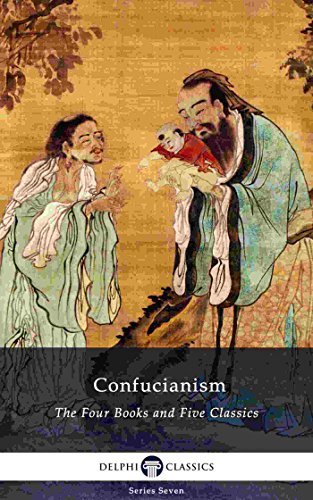
The philosophy of Confucius emphasises personal and governmental morality, correctness of social relationships, justice and sincerity, which were developed into a system known as Confucianism. Confucius is traditionally credited with having authored or edited many of the Chinese classic texts including all of the Five Classics. This comprehensive eBook presents the Four Books and Five Classics of Confucianism, with numerous illustrations, rare texts appearing in digital print for the first time, informative introductions and the usual Delphi bonus material. (Version 1)

Analectas. el manga, ambientado en el siglo XXI, convierte esta obra clásica del pensamiento en una auténtica guía de sabiduría para lectores de todas las edades. Síntesis En sus viajes por todo el país, el sabio Confucio arrastró tras de sí a unos 3000 discípulos, que se encargaron de redactar sus diálogos con el Maestro y propagar sus ideas por toda Asia. Estos escritos se compilaron bajo el título de Analectas, convirtiéndose en el texto de referencia del confucianismo. Según la filosofía política de Confucio, el gobernante ideal para el Estado ideal, es el hombre que llega a ser virtuoso a través de la cultura, el conocimiento y el ejercicio de la virtud, ya que. para Confucio, el amor al estudio, los valores humanitarios y la integridad son los medios necesarios para el perfeccionamiento personal y la armonía social. Sin duda, estas enseñanzas contienen una filosofía práctica, para la vida, que tiene vigencia todavía hoy. Autor Confucio (551-479 a. C.) fue un sabio de la antigua China que vivió en una época política y socialmente turbulenta. Miembro de la pequeña nobleza tradicional, dedicó su vida a propagar una doctrina religiosa y moral para fundamentar la armonía social. El confucianismo fue y sigue siendo hoy muy influyente en China y Asia Oriental.

Suurele hiina mõtlejale Konfutsiusele (u. 551 – u. 479 e.m.a.) omistatud teoste kommenteeritud ja põhjaliku järelsõnaga varustatud väljaanne, mis peale «Vestete ja vestluste» sisaldab ka «Keskmise tavalise» ja «Suure õpetuse».

Tiger Mother, Dragon Father: Confucian Classic Secrets for Raising Disciplined, Respectful and Happy Children
by Confucius
Rating: 3.4 ⭐
Recently, there has been much discussion on the best way to raise children. Amy Chua’s book The Battle Hymn of the Tiger Mother has brought this topic to national, and indeed, global attention. On the one hand, there is the permissive, self-esteem focused approach that is often practiced in modern day America. On the other, there is the discipline, respect and order based approach that is found in many Asian cultures such as China and Korea. While the debate is often seen as one between the rise of Asia versus the decline of the U.S., in fact, this battle arises from two fundamentally different philosophical views. Indeed, this book is designed to help bridge this gap and to introduce to American readers the thoughts of China’s greatest philosopher, Confucius.It was Confucius who first wrote down the intellectual foundations of this philosophical view. And yet, strangely enough, his writing are still not very well known in the U.S. Very few, even educated American have actually read Confucius ... even once. This is unlike the case in China, where Confucius is read and reread with the utmost reverence. By reading Confucius, we too can gain an appreciation for how to create disciplined, respectful and happy children, as well as a disciplined, respectful and happy society. The Confucian Sayings must be read by all who wish to understand the Asian approach to raising children and to building a respectful society. Should it be taken wholesale and simply grafted onto our own families as is? Of course not. Instead, it should be read, reread, understood and adapted, so that we can create the best of both worlds for our families and for our country ... one that combines the discipline of the East with the creativity and freedoms of the West.CONTENTSThis book contains an introduction, the complete text of the Sayings of Confucius as well as a fully interactive table of contents specially formatted for Nook.SPECIAL NOOK ENABLED FEATURES:This edition contains special Kindle enabled features, including interactive table of contents and Nook Masterlink technology.

Esta é uma seleção de ensinamentos de Confúcio (551-479 a.C.), um dos maiores vultos da filosofia e da religião. Confúcio ensinava que a sobrevivência da civilização depende do exercício correto de uma cultura racional, da prática de uma moral eficaz em inibir o mal e ensejar o altruísmo e a bondade. Os preceitos confucionistas defendem uma base humanística na educação, cujo cerne é o aspecto humano e moral. Para o Mestre, o tipo ideal de indivíduo é o Junzi, o “educado”, uma pessoa de bons modos, instrução e qualidades morais elevadas. Traduzidos direto do chinês, estes pensamentos compõem um guia indispensável para nos aconselhar em tempos confusos e de relativismo moral como os de hoje.

Κανένας άλλος από τους μεγάλους πολιτισμούς της ανθρωπότητας δεν ταυτίστηκε τόσο απόλυτα με ένα και μόνο ιστορικό πρόσωπο -που μοιάζει έτσι να 'ναι από κοινού ο θεμελιωτής και ο κύριος εκφραστής του- όπως ταυτίστηκε με τον Κομφούκιο ο πολιτισμός της Κίνας και της Άπω Ανατολής γενικότερα. Όσο κι αν ξέρουμε σήμερα ότι η ταύτιση αυτή δεν ήταν καθόλου αυτονόητη την εποχή που έζησε ο ίδιος και ότι συνδέθηκε, αιώνες μετά, με την ανάγκη ν' αποκτήσει η νεοσύστατη "Ενιαία Αυτοκρατορία" "επίσημη φιλοσοφία", παραμένει το γεγονός πως από τότε ως τις μέρες μας η οποιαδήποτε κοινωνική, πολιτική και πνευματική εκδήλωση στην Κίνα και τις άλλες χώρες της περιοχής μοιάζει να πηγάζει κατ' ευθείαν από τη διδασκαλία του Κομφούκιου.

A Story from Confucius is a lesson in self-control, published in Chinese Fables and Folk Stories (1908), translated by Mary Hayes Davis and Chow-Leung.Confucius once heard two of his pupils quarreling. One was of a gentle nature and was called by all the students a peaceful man. The other had a good brain and a kind heart, but was given to great anger. If he wished to do a thing, he did it, and no man could prevent; if any one tried to hinder him, he would show sudden and terrible rage.One day, after one of these fits of temper, the blood came from his mouth, and, in great fear, he went to Confucius. "What shall I do with my body?" he asked, "I fear I shall not live long. It may be better that I no longer study and work. I am your pupil and you love me as a father. Tell me what to do for my body."Confucius answered, "Tsze-Lu, you have a wrong idea about your body. It is not the study, not the work in school, but your great anger that causes the trouble."I will help you to see this. You remember when you and Nou-Wui quarreled. He was at peace and happy again in a little time, but you were very long in overcoming your anger. You can not expect to live long if you do that way. Every time one of the pupils says a thing you do not like, you are greatly enraged. There are a thousand in this school. If each offends you only once, you will have a fit of temper a thousand times this year. And you will surely die, if you do not use more self-control. I want to ask you some questions:—"How many teeth have you?""I have thirty-two, teacher.""How many tongues?""Just one.""How many teeth have you lost?""I lost one when I was nine years old, and four when I was about twenty-six years old.""And your tongue—is it still perfect?""Oh, yes.""You know Mun-Gun, who is quite old?""Yes, I know him well.""How many teeth do you think he had at your age?""I do not know.""How many has he now?""Two, I think. But his tongue is perfect, though he is very old.""You see the teeth are lost because they are strong, and determined to have everything they desire. They are hard and hurt the tongue many times, but the tongue never hurts the teeth. Yet, it endures until the end, while the teeth are the first of man to decay. The tongue is peaceful and gentle with the teeth. It never grows angry and fights them, even when they are in the wrong. It always helps them do their work, in preparing man's food for him, although the teeth never help the tongue, and they always resist everything."And so it is with man. The strongest to resist, is the first to decay; and you, Tsze-Lu, will be even so if you learn not the great lesson of self-control."


Konfüçyüs geleneğinin en saygın metni olan Seçmeler (Lun Yü), üstadın öğrencileriyle yaptığı konuşmalardan derlenmiştir. Konfüçyüs'ün yazılı ve sözlü düşüncelerinden önemli bir bölümünü içeren Erdemin Ardından Git, Konfüçyüsçü yolu ve onun yaşam biçimini yaşayan bir gelenek olarak koruma, bir ortak bellek yaratma düşüncelerinin belgesi olarak okunmalıdır. Konfüçyüs'ün bütün sözleri insanları düşünmeye çağırma, yaşam karşısında insanın kendisini sınama amacına dönüktür. İnsanın iyi olana yönelmesi, kişiliğini geliştirmesi, insanlara ve topluma yararlı bir insan olmak için çaba göstermesi için sayısız öneride bulunur Konfüçyüs. Asıl olan da erdemliliktir. (...) Düşünmeden Öğrenmek Zaman Kaybıdır I. Üstat dedi ki: "Ülkesini erdemle yöneten bir kişi, konumunu hep koruyan ve tüm yıldızları kendisine bağlı kılan kutup yıldızı ile karşılaştırılabilir." II. Üstat dedi ki: "Şiir kitabında 300 parça şiir var. Fakat tümünü bir cümleyle anlatabilirsiniz: Fesat düşüncelere sahip olma." III. Üstat dedi ki: "Eğer halk yasalarla yönetilir ve cezalarla yola getirilmek istenirse, onlar kendilerini cezalardan kurtarmaya çalışacak ve bundan hiç utanç duymayacaktır. Eğer onlar erdemle yönetilir ve eğitimle yola getirilmek istenirse, utanç duyacaklar ve böylece iyi olmaya çalışacaktır." IV. Üstat dedi ki: "Kendimi on beş yaşında öğrenmeye verdim. "İrademe otuz yaşında sahip olabildim. "Kuşkulardan kırk yaşında kurtuldum. "Göğün düzenini elli yaşında öğrendim. "Sezgilerim yoluyla her şeyi altmış yaşında kavradım. "Kalbimin isteklerini, doğru olan şeylere zarar vermeden yetmiş yaşında gerçekleştirebildim..." V. Meng İ,1 "anaya babaya sevgi ve bağlılığın ne olduğunu" sordu. Üstat yanıtladı: "Onlara itaatsizlik etmemek demektir." Daha sonra Fan Ch'ıh2 ile giderken dedi ki: "Meng-sun (Meng İ) bana, ana babaya sevgi ve bağlılığın ne olduğunu sordu. Ben de, onlara itaatsizlik etmemektir dedim.

Confucius n''explique rien, ne sous-entend rien, ne fait aucun mystère ; il remet simplement les choses à leur place. Sa pensée est le rappel d''un ordre très ancien et pourtant très proche, mais dont l''évidence est telle qu''il passe inaperçu. Il concerne la manière dont l''homme doit se tenir pour faire apparaître le miracle de son humanité. Or, lorsque l''homme devient humain, le monde lui-même peut à son tour apparaître dans sa forme et sa vérité natives. La langue chinoise le dit à même les signes de son vocabulaire : l''homme, lorsqu''il se tient debout, c''est-à-dire en homme, joint la terre au ciel. L''ordonnancement harmonieux des éléments et des êtres - le monde - et la vérité de l''humanité se font écho. Ils se soutiennent et se détruisent l''un l''autre. Le pourquoi est un mystère que Confucius ne cherche pas à mettre au jour. Seul le comment l''occupe. Comment habiter le monde comme on habite sa propre humanité ? Telle est la voie royale et nécessaire qu''ouvre le geste confucéen.