Loading themes...
Explore the best books about Short Stories theme.

A publishing event: Bestselling author Ken Liu selects his award-winning science fiction and fantasy tales for a groundbreaking collection—including a brand-new piece exclusive to this volume.With his debut novel, The Grace of Kings, taking the literary world by storm, Ken Liu now shares his finest short fiction in The Paper Menagerie. This mesmerizing collection features all of Ken’s award-winning and award-finalist stories, including: “The Man Who Ended History: A Documentary” (Finalist for the Hugo, Nebula, and Theodore Sturgeon Awards), “Mono No Aware” (Hugo Award winner), “The Waves” (Nebula Award finalist), “The Bookmaking Habits of Select Species” (Nebula and Sturgeon award finalists), “All the Flavors” (Nebula award finalist), “The Litigation Master and the Monkey King” (Nebula Award finalist), and the most awarded story in the genre’s history, “The Paper Menagerie” (The only story to win the Hugo, Nebula, and World Fantasy awards).A must-have for every science fiction and fantasy fan, this beautiful book is an anthology to savor.
At once funny, wistful and unsettling, Sum is a dazzling exploration of unexpected afterlives—each presented as a vignette that offers a stunning lens through which to see ourselves in the here and now. In one afterlife, you may find that God is the size of a microbe and unaware of your existence. In another version, you work as a background character in other people’s dreams. Or you may find that God is a married couple, or that the universe is running backward, or that you are forced to live out your afterlife with annoying versions of who you could have been. With a probing imagination and deep understanding of the human condition, acclaimed neuroscientist David Eagleman offers wonderfully imagined tales that shine a brilliant light on the here and now.

First published in 1979, Joan Didion's The White Album records indelibly the upheavals and aftermaths of the 1960s. Examining key events, figures, and trends of the era—including Charles Manson, the Black Panthers, and the shopping mall—through the lens of her own spiritual confusion, Joan Didion helped to define mass culture as we now understand it. Written with a commanding sureness of tone and linguistic precision, The White Album is a central text of American reportage and a classic of American autobiography.

In his most extraordinary book, Oliver Sacks recounts the stories of patients lost in the bizarre, apparently inescapable world of neurological disorders. These are case studies of people who have lost their memories and with them the greater part of their pasts; who are no longer able to recognize people or common objects; whose limbs have become alien; who are afflicted and yet are gifted with uncanny artistic or mathematical talents. In Dr Sacks' splendid and sympathetic telling, each tale is a unique and deeply human study of life struggling against incredible adversity.

The adventures of Christopher Robin and his friends in which Pooh Bear uses a balloon to get honey, Piglet meets a Heffalump, and Eeyore has a birthday.

Isaac Asimov's I, Robot launches readers on an adventure into a not-so-distant future where man and machine , struggle to redefinelife, love, and consciousness—and where the stakes are nothing less than survival. Filled with unforgettable characters, mind-bending speculation, and nonstop action, I, Robot is a powerful reading experience from one of the master storytellers of our time. I, ROBOT They mustn't harm a human being, they must obey human orders, and they must protect their own existence...but only so long as that doesn't violate rules one and two. With these Three Laws of Robotics, humanity embarked on perhaps its greatest adventure: the invention of the first positronic man. It was a bold new era of evolution that would open up enormous possibilities—and unforeseen risks. For the scientists who invented the earliest robots weren't content that their creations should ' remain programmed helpers, companions, and semisentient worker-machines. And soon the robots themselves; aware of their own intelligence, power, and humanity, aren't either. As humans and robots struggle to survive together—and sometimes against each other—on earth and in space, the future of both hangs in the balance. Human men and women confront robots gone mad, telepathic robots, robot politicians, and vast robotic intelligences that may already secretly control the world. And both are asking the same questions: What is human? And is humanity obsolete? In l, Robot Isaac Asimov changes forever our perception of robots, and human beings and updates the timeless myth of man's dream to play god. with all its rewards—and terrors.--front flap

A modern classic, Einstein's Dreams is a fictional collage of stories dreamed by Albert Einstein in 1905, when he worked in a patent office in Switzerland. As the defiant but sensitive young genius is creating his theory of relativity, a new conception of time, he imagines many possible worlds. In one, time is circular, so that people are fated to repeat triumphs and failures over and over. In another, there is a place where time stands still, visited by lovers and parents clinging to their children. In another, time is a nightingale, sometimes trapped by a bell jar.Now translated into thirty languages, Einstein's Dreams has inspired playwrights, dancers, musicians, and painters all over the world. In poetic vignettes, it explores the connections between science and art, the process of creativity, and ultimately the fragility of human existence.

Alternate cover edition of ISBN 0553213695 / 9780553213690"As Gregor Samsa awoke one morning from uneasy dreams he found himself transformed in his bed into a gigantic insect. He was laying on his hard, as it were armor-plated, back and when he lifted his head a little he could see his domelike brown belly divided into stiff arched segments on top of which the bed quilt could hardly keep in position and was about to slide off completely. His numerous legs, which were pitifully thin compared to the rest of his bulk, waved helplessly before his eyes." With it's startling, bizarre, yet surprisingly funny first opening, Kafka begins his masterpiece, The Metamorphosis. It is the story of a young man who, transformed overnight into a giant beetle-like insect, becomes an object of disgrace to his family, an outsider in his own home, a quintessentially alienated man. A harrowing—though absurdly comic—meditation on human feelings of inadequacy, guilt, and isolation, The Metamorphosis has taken its place as one of the most widely read and influential works of twentieth-century fiction. As W.H. Auden wrote, "Kafka is important to us because his predicament is the predicament of modern man."

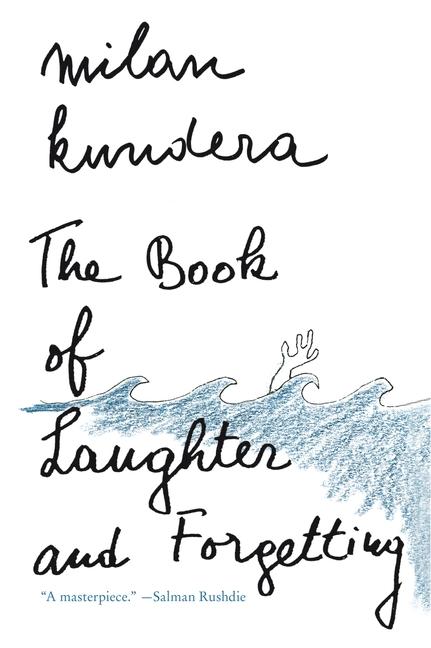
Rich in its stories, characters, and imaginative range, The Book of Laughter and Forgetting is the novel that brought Milan Kundera his first big international success in the late 1970's. Like all his work, it is valuable for far more than just its historical implications. In seven wonderfully integrated parts, different aspects of human existence are magnified and reduced, reordered and emphasized, newly examined, analyzed and experienced.

Brings together three hilarious pieces by America's comic genius: Without Feathers, a secret journal that addresses life's "big" questions; Getting Even, Woody as psychologist, historian, and philosopher; and Side Effects, Woody's take on UFOs and more.

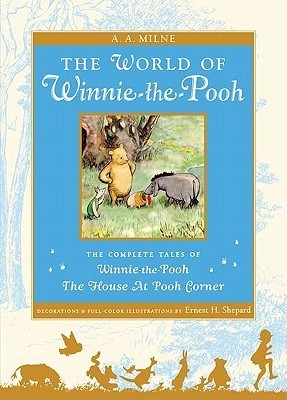
In 1926, "Winnie-the-Pooh," a collection of stories about a rather stout, somewhat confused bear, was published in England and America. The enchanting tales of Pooh, Piglet, Eeyore, Christopher Robin, and the others were an immediate success, and firmly established A.A. Milne, already an acclaimed dramatist, as a major author of children's books. "Winnie-the-Pooh" was followed in 1928 by a second collection, "The House at Pooh Corner," which continued the adventures from the Hundred Acre Wood and introduced bouncy, lovable Tigger.This deluxe volume brings all of the Pooh stories together in one full-colour, large-format book. The texts are complete and unabridged, and all of the illustrations, each gloriously recoloured, are included. Here are the beloved stories of Pooh stuck in Rabbit's doorway, of gloomy Eeyore and his nearly forgotten birthday, of playing Poohsticks on the bridge, and so many more.

A classic work of American literature that has not stopped changing minds and lives since it burst onto the literary scene, The Things They Carried is a ground-breaking meditation on war, memory, imagination, and the redemptive power of storytelling. The Things They Carried depicts the men of Alpha Company: Jimmy Cross, Henry Dobbins, Rat Kiley, Mitchell Sanders, Norman Bowker, Kiowa, and the character Tim O’Brien, who has survived his tour in Vietnam to become a father and writer at the age of forty-three. Taught everywhere—from high school classrooms to graduate seminars in creative writing—it has become required reading for any American and continues to challenge readers in their perceptions of fact and fiction, war and peace, courage and fear and longing. The Things They Carried won France's prestigious Prix du Meilleur Livre Etranger and the Chicago Tribune Heartland Prize; it was also a finalist for the Pulitzer Prize and the National Book Critics Circle Award.

Do lobsters feel pain? Did Franz Kafka have a funny bone? What is John Updike's deal, anyway? And what happens when adult video starlets meet their fans in person? David Foster Wallace answers these questions and more in essays that are also enthralling narrative adventures. Whether covering the three-ring circus of a vicious presidential race, plunging into the wars between dictionary writers, or confronting the World's Largest Lobster Cooker at the annual Maine Lobster Festival, Wallace projects a quality of thought that is uniquely his and a voice as powerful and distinct as any in American letters.Contains: "Big Red Son," "Certainly the End of Something or Other, One Would Sort of Have to Think," "Some Remarks on Kafka's Funniness from Which Probably Not Enough Has Been Removed," "Authority and American Usage," "The View from Mrs. Thompson's," "How Tracy Austin Broke My Heart," "Up, Simba," "Consider the Lobster," "Joseph Frank's Dostoevsky" and "Host."

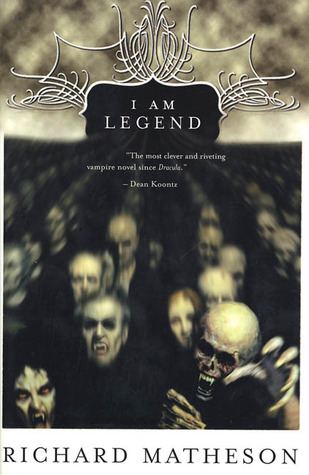
Robert Neville is the last living man on Earth...but he is not alone. Every other man, woman, and child on Earth has become a vampire, and they are all hungry for Neville's blood.By day, he is the hunter, stalking the sleeping undead through the abandoned ruins of civilization. By night, he barricades himself in his home and prays for dawn.How long can one man survive in a world of vampires?I am legend --Buried talents --The near departed --Prey --Witch war --Dance of the dead --Dress of white silk --Mad house --The funeral --From shadowed places --Person to person.

Alternate-cover edition can be found here In his second collection, Carver establishes his reputation as one of the most celebrated and beloved short-story writers in American literature—a haunting meditation on love, loss, and companionship, and finding one’s way through the dark.

A laugh-out-loud, adults-only bedtime story for parents familiar with the age-old struggle of putting their kids to bed“Hell no, you can’t go to the bathroom. You know where you can go? The f**k to sleep.”Go the Fuck to Sleep is a book for parents who live in the real world, where a few snoozing kitties and cutesy rhymes don’t always send a toddler sailing blissfully off to dreamland. Profane, affectionate, and radically honest, it captures the familiar—and unspoken—tribulations of putting your little angel down for the night. Read by a host of celebrities, from Samuel L. Jackson to Jennifer Garner, this subversively funny bestselling storybook will not actually put your kids to sleep, but it will leave you laughing so hard you won’t care.

'There is no harm in a man's cub.'Best known for the 'Mowgli' stories, Rudyard Kipling's The Jungle Book expertly interweaves myth, morals, adventure and powerful story-telling. Set in Central India, Mowgli is raised by a pack of wolves. Along the way he encounters memorable characters such as the foreboding tiger Shere Kahn, Bagheera the panther and Baloo the bear. Including other stories such as that of Rikki-Tikki-Tavi, a heroic mongoose and Toomai, a young elephant handler, Kipling's fables remain as popular today as they ever were.

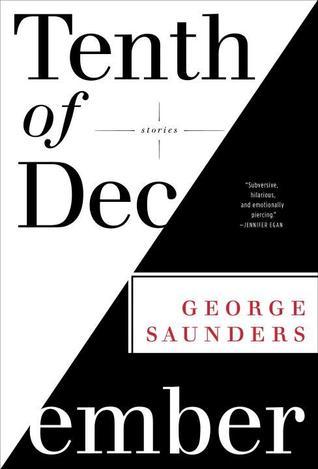
One of the most important and blazingly original writers of his generation, George Saunders is an undisputed master of the short story, and Tenth of December is his most honest, accessible, and moving collection yet.In the taut opening, "Victory Lap," a boy witnesses the attempted abduction of the girl next door and is faced with a harrowing choice: Does he ignore what he sees, or override years of smothering advice from his parents and act? In "Home," a combat-damaged soldier moves back in with his mother and struggles to reconcile the world he left with the one to which he has returned. And in the title story, a stunning meditation on imagination, memory, and loss, a middle-aged cancer patient walks into the woods to commit suicide, only to encounter a troubled young boy who, over the course of a fateful morning, gives the dying man a final chance to recall who he really is. A hapless, deluded owner of an antique store; two mothers struggling to do the right thing; a teenage girl whose idealism is challenged by a brutal brush with reality; a man tormented by a series of pharmaceutical experiments that force him to lust, to love, to kill—the unforgettable characters that populate the pages of Tenth of December are vividly and lovingly infused with Saunders' signature blend of exuberant prose, deep humanity, and stylistic innovation.Writing brilliantly and profoundly about class, sex, love, loss, work, despair, and war, Saunders cuts to the core of the contemporary experience. These stories take on the big questions and explore the fault lines of our own morality, delving into the questions of what makes us good and what makes us human.Unsettling, insightful, and hilarious, the stories in Tenth of December—through their manic energy, their focus on what is redeemable in human beings, and their generosity of spirit—not only entertain and delight; they fulfill Chekhov's dictum that art should "prepare us for tenderness."

The winner of the NBCC Award for Poetry offers up a spirited collection of short lyric essays, written daily over a tumultuous year, reminding us of the purpose and pleasure of praising, extolling, and celebrating ordinary wonders. Ross Gay’s The Book of Delights is a genre-defying book of essays—some as short as a paragraph; some as long as five pages—that record the small joys that occurred in one year, from birthday to birthday, and that we often overlook in our busy lives. His is a meditation on delight that takes a clear-eyed view of the complexities, even the terrors, in his life, including living in America as a black man; the ecological and psychic violence of our consumer culture; the loss of those he loves. Among Gay’s funny, poetic, philosophical delights: the way Botan Rice Candy wrappers melt in your mouth, the volunteer crossing guard with a pronounced tremor whom he imagines as a kind of boat-woman escorting pedestrians across the River Styx, a friend’s unabashed use of air quotes, pickup basketball games, the silent nod of acknowledgment between black people. And more than any other subject, Gay celebrates the beauty of the natural world—his garden, the flowers in the sidewalk, the birds, the bees, the mushrooms, the trees. This is not a book of how-to or inspiration, though it could be read that way. Fans of Roxane Gay, Maggie Nelson, and Kiese Laymon will revel in Gay’s voice, and his insights. The Book of Delights is about our connection to the world, to each other, and the rewards that come from a life closely observed. Gay’s pieces serve as a powerful and necessary reminder that we can, and should, stake out a space in our lives for delight.

Teeming with life and crackling with energy — a love song to modern Britain and black womanhoodGirl, Woman, Other follows the lives and struggles of twelve very different characters. Mostly women, black and British, they tell the stories of their families, friends and lovers, across the country and through the years.Joyfully polyphonic and vibrantly contemporary, this is a gloriously new kind of history, a novel of our times: celebratory, ever-dynamic and utterly irresistible.

An explosive, character-driven odyssey through the world of baseballJason Goodyear is the star outfielder for the Los Angeles Lions, stationed with the rest of his team in the punishingly hot Arizona desert for their annual spring training. Handsome, famous, and talented, Goodyear is nonetheless coming apart at the seams. And the coaches, writers, wives, girlfriends, petty criminals, and diehard fans following his every move are eager to find out why--as they hide secrets of their own.Humming with the energy of a ballpark before the first pitch, Emily Nemens' The Cactus League unravels the tightly connected web of people behind a seemingly linear game. Narrated by a sportscaster, Goodyear's story is interspersed with tales of Michael Taylor, a batting coach trying to stay relevant; Tamara Rowland, a resourceful spring-training paramour, looking for one last catch; Herb Allison, a legendary sports agent grappling with his decline; and a plethora of other richly drawn characters, all striving to be seen as the season approaches. It's a journey that, like the Arizona desert, brims with both possibility and destruction.Anchored by an expert knowledge of baseball's inner workings, Emily Nemens's The Cactus League is a propulsive and deeply human debut that captures a strange desert world that is both exciting and unforgiving, where the most crucial games are the ones played off the field.

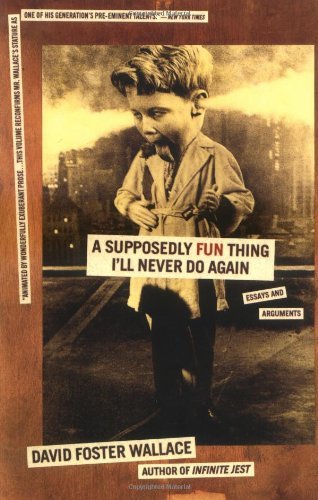
In this exuberantly praised book — a collection of seven pieces on subjects ranging from television to tennis, from the Illinois State Fair to the films of David Lynch, from postmodern literary theory to the supposed fun of traveling aboard a Caribbean luxury cruiseliner — David Foster Wallace brings to nonfiction the same curiosity, hilarity, and exhilarating verbal facility that has delighted readers of his fiction, including the bestselling Infinite Jest.

Novelist, poet, dramatist and author of many of the best American short stories of our time, Joyce Carol Oates shows yet another aspect of her unbounded creativity in these tales of the grotesque. Haunted, a collection of sixteen tales that range from classic ghost stories to portrayals of chilling psychological terror, raises the genre to the level of fine literature - complex, multi-layered, and gripping fiction that is very scary indeed. In the title story, "Haunted, " the pubescent Melissa and her best friend, the sexually precocious Mary Lou, ignore "no trespassing" signs to explore forbidden houses. But the deserted Minton farm is one place where they should not have gone, and years later Melissa is tormented by her memories of its malevolence...and the murder of Mary Lou. In the novella, "The Model, " a sexual threat seems to underlie the interaction between young Sybil Blake and "Mr. Starr, " who asks her to be his model, but the truth about her own identity, and his, shows that the danger is lurking in a different part of the heart. The "Accursed Inhabitants of the House of Bly, " a macabre reworking of Henry James's "The Turn of the Screw, " resurrects the evil of Miss Jessel and Quint, who are up to their old tricks with the children, Miles and Flora, but with new, perverse, and brilliant revelations. The tales in this collection plunge the reader into nightmare worlds where violence slips in unexpectedly, where reality turns into a funhouse mirror, and where American culture goes awry in shocking, provocative ways. Joyce Carol Oates is a master storyteller of the dark side. She writes with skillfully controlled prose, tightly woven plots, and deep psychological insight that m her fictional horror worthy to set alongside the stories of Edgar Allan Poe - and far above all the rest.Haunted --The doll --The bingo master --The white cat --The model --Extenuating circumstances --Don't you trust me --The guilty party --The premonition --Phase change --Poor Bibi --Thanksgiving --Blind --The radio astronomer --Accursed inhabitants of the House of Bly --Martyrdom

The first nonfiction work by one of the most distinctive prose stylists of our era, Joan Didion's Slouching Towards Bethlehem remains, decades after its first publication, the essential portrait of America—particularly California—in the sixties.It focuses on such subjects as John Wayne and Howard Hughes, growing up a girl in California, ruminating on the nature of good and evil in a Death Valley motel room, and, especially, the essence of San Francisco's Haight-Ashbury, the heart of the counterculture.It contains Didion's famous essay, "Goodbye to All That".

Carried Away is a dazzling selection of stories–seventeen favorites chosen by the author from across her distinguished career.Alice Munro has been repeatedly hailed as one of our greatest living writers, a reputation that has been growing for years. The stories brought together here span a quarter century, drawn from some of her earliest books, The Beggar Maid and The Moons of Jupiter, through her recent best-selling collection, Runaway. Here are such favorites as “Royal Beatings” in which a young girl, her father, and stepmother release the tension of their circumstances in a ritual of punishment and reconciliation; “Friend of My Youth” in which a woman comes to understand that her difficult mother is not so very different from herself; and “The Albanian Virgin," a romantic tale of capture and escape in Central Europe that may or may not be true, told by an elderly married woman to her younger friend who is on a desperate adventure of her own..Munro’s incomparable empathy for her characters, the depth of her understanding of human nature, and the grace and surprise of her narrative add up to a richly layered and capacious fiction. Like the World War I soldier in the title story, whose letters from the front to a small-town librarian he doesn’t know change her life forever, Munro’s unassuming characters insinuate themselves in our hearts and take permanent hold.Carried Away, Alice Munro's Best and My Best Stories contain the same 17 works: Royal beatings -- The beggar maid -- The turkey season -- The moons of Jupiter -- The progress of love -- Miles City, Montana -- Friend of my youth -- Meneseteung -- Differently -- Carried away -- The Albanian virgin -- A wilderness station -- Vandals -- Hateship, friendship, courtship, loveship, marriage -- Save the reaper -- Runaway -- The bear came over the mountain.

Whatever the cause of Bertie Wooster's consternation — Bobbie Wickham gives away fierce Aunt Agatha's dog; again in the bad books of Sir Roderick Glossop; Tuppy crushes on robust opera singer — Jeeves can untangle the most ferocious muddle. 1 Jeeves and the Impending Doom2 The Inferiority Complex of Old Sippy3 Jeeves and the Yule-Tide Spirit4 Jeeves and the Song of Songs5 Episode of the Dog McIntosh6 The Spot of Art7 Jeeves and the Kid Clementina8 The Love that Purifies9 Jeeves and the Old School Chum10 Indian Summer of an Uncle11 The Ordeal of Young Tuppy

Αυτή η συλλογή αποτελείται από τέσσερα κείμενα που γράφτηκαν το 1936 και το 1937 κι εκδόθηκαν το 1950."Οι γάμοι στην Τιπαζά": Ένας νεαρός, παιδί «ενός λαού γεννημένου από τον ήλιο και τη θάλασσα», τραγουδά τη χαρά του για τη ζωή και την υπερηφάνεια του που μπορεί ν' αγαπά απεριόριστα."Ο άνεμος στην Τζεμιλά": Στον τραγικό διάκοσμο μιας νεκρής πολιτείας που τη σαρώνει ο άνεμος, ο συγγραφέας εκφράζει «τη συνειδητή βεβαιότητά του ενός ανέλπιδου θανάτου». Μα ακόμα κι η φρίκη αυτού του θανάτου δεν θα τον αποσπάσει από τους στοχασμούς του."Το καλοκαίρι στο Αλγέρι": Ψυχολογική περιγραφή μιας πόλης χωρίς παρελθόν, που αγνοεί την έννοια της αρετής, μα που έχει την ηθική της και που οι άνθρωποί της βρίσκουν «καθ’ όλη τη διάρκεια της νιότης τους μια ζωή στα μέτρα της ομορφιάς τους»."Η έρημος": Ο συγγραφέας ανακαλύπτει ότι η συμφωνία που ενώνει έναν άνθρωπο με τη ζωή του, σ' έναν κόσμο που η ομορφιά του θα χαθεί, είναι «η διπλή συνείδηση της επιθυμίας του να διαρκέσει και της μοίρας του να πεθάνει».

This special limited edition of A Convergence of Birds follows the successful publication of the trade edition of this wonderful anthology of new fiction and poetry inspired by the art of Joseph Cornell. This book features writing from 22 of the best American writers working today; authors such as Joyce Carol Oates, Robert Pinsky, Rick Moody, Howard Norman and Barry Lopez, all invited to participate by editor and contributor Jonathan Safran Foer. The limited edition of only 225 copies is linen-bound and slipcased, and signed by each author on individual sheets of vellum that are bound into the book at the beginning of their contributions. A wonderful and highly collectable edition that will be treasured by lovers of contemporary writing and fine books.In order to insure safe delivery for this item we can only ship Federal Express 3rd Day. An additional charge of $25.00 will be added to your purchase.

The first volume consists of the stories previously collected in Earth Is Room Enough, Nine Tomorrows, and Nightfall and Other Stories (but not the commentary from Nightfall and Other Stories). Volume One contains the following 48 short stories:- The Dead Past- The Foundation of S. F. Success- Franchise- Gimmicks Three- Kid Stuff- The Watery Place- Living Space- The Message- Satisfaction Guaranteed- Hell-Fire- The Last Trump- The Fun They Had- Jokester- The Immortal Bard- Someday- The Author's Ordeal- Dreaming Is a Private Thing- Profession- The Feeling of Power- The Dying Night- I'm in Marsport Without Hilda- The Gentle Vultures- All the Troubles of the World- Spell My Name with an S- The Last Question- The Ugly Little Boy- Nightfall- Green Patches- Hostess- Breeds There a Man…?- C-Chute- In a Good Cause—- What If—- Sally- Flies- Nobody Here But—- It's Such a Beautiful Day- Strikebreaker- Insert Knob A in Hole B- The Up-to-Date Sorcerer- Unto the Fourth Generation- What Is This Thing Called Love?- The Machine That Won the War- My Son, the Physicist- Eyes Do More Than See- Segregationist- I Just Make Them Up, See!- Rejection Slips.

Who is Ted L. Nancy? He's a superstitious Vegas high-roller who wants to gamble at a casino in his lucky shrimp outfit...He's the genius inventor of "Six Day Underwear"...He's a stage actor who only travels while dressed as a stick of butter...He is, in reality, a twisted prankster—a supremely off-kilter alter ego who sends patently ridiculous letters to corporate honchos, entertainment conglomerates, national publications, politicians, celebrities and heads of state. His innocent requests, queries, complaints, demands, and suggestions are so absurd it is amazing they fool anyone—but often the deadpan responses he receives are even more hilarious: "Dear Mr. Nancy, It is not often that we receive such enthusiastic support for the paper bag." —The Paper Bag Council"On behalf of Greyhound, there should be no problem traveling while in your butter costume." —Greyhound Bus Lines"I look forward to working with you to create a better future for this great nation." —Vice President Al GoreLetters From A Nut is an insanely inspired, truly madcap collection of Nancy correspondence, a wet-yourself-in-a-public place funny aggregation of official—and officially certifiable—requests, complaints, fan mail and questions that could not possibly have been taken seriously...but, amazingly, were.

From familiar fairy tales and legends - Red Riding Hood, Bluebeard, Puss in Boots, Beauty and the Beast, vampires and werewolves - Angela Carter has created an absorbing collection of dark, sensual, fantastic stories.

An epic chess match on a transatlantic liner unearths a story of persecution and obsession. One of the most perfectly gripping novellas from a master of the form, Stefan Zweig.Chess world champion Mirko Czentovic is travelling on an ocean liner to Buenos Aires. Dull-witted in all but chess, he entertains himself on board by allowing others to challenge him in the game, before beating each of them and taking their money. But there is another passenger with a passion for chess: Dr B, previously driven to insanity during Nazi imprisonment by the chess games in his imagination. But in agreeing to take on Czentovic, what price will Dr B ultimately pay?A moving portrait of one man's madness, A Chess Story is a searing examination of the power of the mind and the evil it can do."The rediscovery of this extraordinary writer could well be on a par with last year's refinding of the long-lost Stoner, by John Williams, and which similarly could pluck his name out of a dusty obscurity." - Simon Winchester, Telegraph"Perhaps the best chess story ever written, perhaps the best about any game. Never mind that you may have never moved a pawn to King four; the story will grip you." - Economist"His great achievement in short form" - The TimesA staunch pacifist after his time in the Ministry of War during the First World War, Stefan Zweig was, at his peak, one of the bestselling and most widely acclaimed authors in the world. Following Hitler's rise to power, he and his second wife fled Austria; first to England, then to America, and finally, in 1940, they travelled together to Brazil, where the couple took an overdose and died. Much of his work is available from Pushkin Press.

Eve Babitz captured the voluptuous quality of L.A. in the1960s in a wildly original, totally unique voice. These stories are time capsule gems, as poignant and startling today as they were when published in the early 1970s. Eve Babitz is not well known today, but she should be. Her first hand experiences in the L.A. cultural scene, translated into haunting fiction, are an unforgettable glimpse at a lost world and a magical time.

To these seven paradoxical tales of neurological disorder and creativity, Oliver Sacks brings the profound compassion and ceaseless curiosity that made "Awakenings" and "The Man Who Mistook His Wife for a Hat" international bestsellers. He transports us into the uncanny worlds of his subjects, including an artist who loses his ability to see (or even imagine) color; a surgeon who performs delicate operations in spite of the compulsive tics and outbursts of Tourette's syndrome; and an autistic professor who holds a Ph.D. in animal science but is so bewildered by the complexity of human emotion that she feels "like an anthropologist on Mars."Through these extraordinary people, Sacks explores what it is to feel, to sense, to remember - to be, ultimately, a coherent self in the world.

The Collected Stories of Colette beings together in one volume for the first time in any language the comprehensive collection of short stories by the novelist known worldwide as Colette, and now acknowledged, with Proust, as the most original French narrative writer of the first half of our century. of the one hundred stories gathered here, thirty-one appear for the first time in English and another twenty-nine have been newly translated for this volume.

W. Somerset Maugham led many lives, including that of a doctor in London's slums, a successful playwright and novelist, an agent for British Intelligence during World War I, and a world traveler. In 1917, he took the first of many voyages to the Pacific Islands and the Far East, where his keen sense of observation found inspiration for some of his finest writing.Rain and Other South Sea Stories features one of Maugham's most famous tales, concerning the clash between a missionary and a prostitute. "Rain" was adapted for the stage and filmed on three separate occasions, its leading character portrayed by Gloria Swanson, Joan Crawford, and Rita Hayworth. This collection also includes "Macintosh," a psychological study of the competition between two officials; "The Fall of Edward Barnard," a tale of social rebellion that foreshadows The Razor's Edge; "The Pool," a portrait of a marriage between people from different cultures; and other compelling stories of life in the tropics.

A selection of E.B. White's penetrating and thoughtful observations on the conditions of life

Four prized selections by one of America's greatest writers: "The Open Boat," based on a harrowing incident in the author's life: the 1897 sinking of a ship on which he was a passenger; "The Blue Hotel" and "The Bride Comes to Yellow Sky," reflecting Crane's early travels in Mexico and the American Southwest; and the novella Maggie: A Girl of the Streets, a galvanizing portrait of life in the slums of New York City.

Like his father and grandfather before him, Kino is a poor diver, gathering pearls from the gulf beds that once brought great wealth to the kings of Spain and now provide Kino, Juana, and their infant son with meager subsistence. Then, on a day like any other, Kino emerges from the sea with a pearl as large as a sea gull’s egg, as “perfect as the moon.” With the pearl comes hope, the promise of comfort and of security…A story of classic simplicity, based on a Mexican folk tale, The Pearl explores the secrets of man’s nature, greed, the darkest depths of evil, and the luminous possibilities of love.

The Lottery, one of the most terrifying stories written in this century, created a sensation when it was first published in The New Yorker. "Power and haunting," and "nights of unrest" were typical reader responses. This collection, the only one to appear during Shirley Jackson's lifetime, unites "The Lottery:" with twenty-four equally unusual stories. Together they demonstrate Jackson's remarkable range--from the hilarious to the truly horrible--and power as a storyteller.

An assessment of the works of Franz Kafka aimed at a definiton of the basic components of his style

Big Cats opens with "Charlotte," in which a young girl with a broken pelvis spies on her voluptuous neighbor during a long, hot summer night, setting the tone of irrepressible curiosity and yearning that is evident throughout the collection. In "Get Away from Me, David," a bank manager tries to overcome his haunted past as he deals with the aftermath of a minor earthquake and the body of a customer who died in the lobby. "Big Cats" pits two teenage girls against each other in an escalating catfight at the zoo where they work, culminating in a blowout in front of the lion cage.

Der Große Märchenerzähler Hans Christian Andersen hat diese legendäre Geschichte am Meer in Dänemark geschrieben. Die kleine Meerjungfrau taucht furchtlos in den grenzenlosen und gefährlichen Ozean der Liebe. Ihr Herz ist voll von Mut, Hoffnung und unendlicher Sehnsucht. Sie ist bereit, ihr sorgloses Leben einer Meerprinzessin hinter sich zu lassen, für eine neue geheimnisvolle Welt.

'I regret to see that my book has turned out un fiasco solenne.' James Joyce's disillusion with the publication of Dubliners in 1914 was the result of ten years battling with publishers, resisting their demands to remove swear words, real place names and much else, including two entire stories. Although only 24 when he signed his first publishing contract for the book, Joyce already knew its worth: to alter it in any way would 'retard the course of civilisation in Ireland'.Joyce's aim was to tell the truth — to create a work of art that would reflect life in Ireland at the turn of the last century and by rejecting euphemism, reveal to the Irish the unromantic reality the recognition of which would lead to the spiritual liberation of the country.Each of the fifteen stories offers a glimpse of the lives of ordinary Dubliners — a death, an encounter, an opportunity not taken, a memory rekindled — and collectively they paint a portrait of a nation.

From Beauty to Compassion, from Pleasure to Terror, from Resignation to Joy -- here is an insightful exploration of the rich diversity of human qualities. J. Ruth Gendler's evocative book has as its cast of familiar characters our own emotions, brought to life with a poet's wisdom and an artist's perceptive eye. In The Book of Qualities' magical community, Excitement wears orange socks, Faith lives in the same apartment building as Doubt, and Worry makes lists of everything that could go wrong while she is waiting for the train. In portraying the complexities of the psyche, Gendler uses the Qualities to bridge the distinctions between literature and psychology, and has created an original work that challenges us to look at our emotions in new and inspiring ways.

Dervish tales are more than fable, legend, or folklore. For centuries dervish masters have instructed their disciples by means of these teaching stories, which are said to increase perception and knowledge and provide a better understanding of man and the world. In wit, construction, and piquancy, they compare with the finest tales of any culture. Idries Shah spent many years traveling through three continents to collect and compare oral versions of these remarkable stories. This anthology, presented in the dervish manner, contains stories drawn from the repertories of dervish masters over a period of more than a thousand years.

A wine connoisseur with an infallible palate and a sinister taste in wagers. A decrepit old man with a masterpiece tattooed on his back. A voracious adventuress, a gentle cuckold, and a garden sculpture that becomes an instrument of sadistic vengeance. Social climbers who climb a bit too quickly. Philanderers whose deceptions are a trifle too ornate. Impeccable servants whose bland masks slip for one vertiginous instant.In these deliciously nasty stories an internationally acclaimed practitioner of the short narrative works his own brand of black magic: tantalizing, amusing, and sometimes terrifying readers into a new sense of what lurks beneath the ordinary. Included in Roald Dahl's Tales of the Unexpected are such notorious gems of the bizarre as "The Sound Machine," "Lamb to Slaughter," "Neck," and "The Landlady."Cover illustration by Seth JabenCover design by Heidi NorthContents:- Taste- Lamb to the Slaughter- Man from the South- My Lady Love, My Dove- Dip in the Pool- Galloping Foxley- Skin - Neck - Nunc Dimittis - The Landlady - William and Mary - The Way Up to Heaven- Parson's Pleasure- Mrs. Bixby and the Colonel's Coat- Royal Jelly- Edward the Conqueror- The Sound Machine- Georgy Porgy - The Hitchhiker- Poison - The Boy Who Talked with Animals- The Umbrella Man- Genesis and Catastrophe- The Butler

Although his work has been restricted to the short story, the essay, and poetry, Jorge Luis Borges of Argentina is recognized all over the world as one of the most original and significant figures in modern literature. In his preface, Andre Maurois writes: "Borges is a great writer who has composed only little essays or short narratives. Yet they suffice for us to call him great because of their wonderful intelligence, their wealth of invention, and their tight, almost mathematical style."Labyrinths is a representative selection of Borges' writing, some forty pieces drawn from various books of his published over the years. The translations are by Harriet de Onis, Anthony Kerrigan, and others, including the editors, who have provided a biographical and critical introduction, as well as an extensive bibliography.

A flop house, a pumping station, a maid's room, a homeless center, a former brothel, a Richard Meier building, a circus trailer, a sail boat, a skyscraper, buildings named Esther and Loraine--just a few of the places New Yorkers call home. For the past eight years writer Toni Schlesinger has been bringing us these "conversation places" in her weekly column in the Village Voice. Through her incisive questioning, original writing, and comic parallel reveries, Schlesinger creates miniature documentaries on the lives, passions, hopes, and heartbreaks of many of New York City's millions.Five Flights Up chronicles people living in New York's extremes, occupying 150-square-foot spaces, paying over half their income for rent, living eight in an apartment, and taking showers in twos to save time. These are people who make movies in their living room and then sleep in it later. They surround themselves with their baby teeth, with 500 volumes of Moby Dick, plaster rabbis, birds' nests, 30 modernist chairs, 50 loaves of Wonder Bread, and more. In Schlesinger's hands,their stories are much more than novelties.Artists, actors, dancers, librarians, social workers, bus boys, bankers, porn stars, au pairs, urban planners, bakers, shamans, masseuses, web designers, and students come alive when they discuss where they came from and where they're going. Each interview is a vivid and insightful portrait, revealing the creative energy, camaraderie, desperation, and hope that fuel the daily lives of people in New York and everywhere.

Among the characters you'll find in this collection of twelve stories by Tobias Wolff, are a teenage boy who tells morbid lies about his home life, a timid professor who, in the first genuine outburst of her life, pours out her opinions in spite of a protesting audience, a prudish loner who gives an obnoxious hitchhiker a ride, and an elderly couple on a golden anniversary cruise who endure the offensive conviviality of the ship's social director.Fondly yet sharply drawn, Wolff's characters stumble over each other in their baffled yet resolute search for the "right path."

Barcelona. 20 cm. 176 p. Encuadernación en tapa dura de editorial con sobrecubierta ilustrada. Colección 'Colección Infinitum Ciencia Ficción'. Heinlein, Robert A. 1907-1988 .. Este libro es de segunda mano y tiene o puede tener marcas y señales de su anterior propietario. 8436505220

The Complete Stories brings together all of Kafka’s stories, from the classic tales such as “The Metamorphosis,” “In the Penal Colony,” and “A Hunger Artist” to shorter pieces and fragments that Max Brod, Kafka’s literary executor, released after Kafka’s death. With the exception of his three novels, the whole of Kafka’s narrative work is included in this volume. --penguinrandomhouse.comTwo Introductory parables: Before the law --Imperial message --Longer stories: Description of a struggle --Wedding preparations in the country --Judgment --Metamorphosis --In the penal colony --Village schoolmaster (The giant mole) --Blumfeld, and elderly bachelor --Warden of the tomb --Country doctor --Hunter Gracchus --Hunter Gracchus: A fragment --Great Wall of China --News of the building of the wall: A fragment --Report to an academy --Report to an academy: Two fragments --Refusal --Hunger artist --Investigations of a dog --Little woman --The burrow --Josephine the singer, or the mouse folk --Children on a country road --The trees --Clothes --Excursion into the mountains --Rejection --The street window --The tradesman --Absent-minded window-gazing --The way home --Passers-by --On the tram --Reflections for gentlemen-jockeys --The wish to be a red Indian --Unhappiness --Bachelor's ill luck --Unmasking a confidence trickster --The sudden walk --Resolutions --A dream --Up in the gallery --A fratricide --The next village --A visit to a mine --Jackals and Arabs --The bridge --The bucket rider --The new advocate --An old manuscript --The knock at the manor gate --Eleven sons --My neighbor --A crossbreed (A sport) --The cares of a family man --A common confusion --The truth about Sancho Panza --The silence of the sirens --Prometheus --The city coat of arms --Poseidon --Fellowship --At night --The problem of our laws --The conscripton of troops --The test --The vulture --The helmsman --The top --A little fable --Home-coming --First sorrow --The departure --Advocates --The married couple --Give it up! --On parables.

Auf einer Safari am Fuße des Kilimandscharo erleidet der Schriftsteller Harry eine Beinverletzung, die Wundbrand entwickelt. Während seine Frau und er auf das Rettungsflugzeug warten, lässt er sein Leben in Gedanken Revue passieren.

From the writer who shocked and delighted the world with his novels Lolita, Pale Fire, and Ada, or Ardor, and so many others, comes a magnificent collection of stories. Written between the 1920s and 1950s, these sixty-five tales—eleven of which have been translated into English for the first time—display all the shades of Nabokov's imagination. They range from sprightly fables to bittersweet tales of loss, from claustrophobic exercises in horror to a connoisseur's samplings of the table of human folly. Read as a whole, The Stories of Vladimir Nabokov offers an intoxicating draft of the master's genius, his devious wit, and his ability to turn language into an instrument of ecstasy.The Wood-SpriteRussian Spoken HereSoundsWingstrokeGodsA Matter of ChanceThe SeaportRevengeBeneficenceDetails of A SunsetThe ThunderstormLa VenezianaBachmannThe DragonChristmasA Letter That Never Reached RussiaThe FightThe Return of ChorbA Guide to BerlinA Nursery TaleTerrorRazorThe PassengerThe DoorbellAn Affair of HonorThe Christmas StoryThe Potato ElfThe AurelianA Dashing FellowA Bad DayThe Visit to the MuseumA Busy ManTerra IncognitaThe ReunionLips to LipsOracheMusicPerfectionThe Admiralty SpireThe LeonardoIn Memory of L.I. ShigaevThe CircleA Russian BeautyBreaking the NewsTorpid SmokeRecruitingA Slice of LifeSpring in FialtaCloud, Castle, LakeTyrants DestroyedLikMademoiselle OVasiliy ShishkovUltima ThuleSolus RexThe Assistant ProducerThat in Aleppo OnceA Forgotten PoetTime and EbbConversation Piece, 1945Signs and SymbolsFirst LoveScenes From the Life of A Double MonsterThe Vane SistersLance

In The Gateless Gate, one of modern Zen Buddhism's uniquely influential masters offers classic commentaries on the Mumonkan, one of Zen's greatest collections of teaching stories. This translation was compiled with the Western reader in mind, and includes Koan Yamada's clear and penetrating comments on each case. Yamada played a seminal role in bringing Zen Buddhism to the West from Japan, going on to be the head of the Sanbo Kyodan Zen Community.The Gateless Gate would be invaluable if only for the translation and commentary alone, yet it's loaded with extra material and is a fantastic resource to keep close by:An in-depth Introduction to the History of Zen PracticeLineage chartsJapanese-to-Chinese and Chinese-to-Japanese conversion charts for personal names, place names, and names of writingsPlus front- and back-matter from ancient and modern figures: Mumon, Shuan, Kubota Ji'un, Taizan Maezumi, Hugo Enomiya-Lasalle, and Yamada Roshi's son, Masamichi Yamada.A wonderful inspiration for the koan practitioner, and for those with a general interest in Zen Buddhism.

Nous sommes au bord de la voie ferrée, dans un hôtel du Nebraska, en 1898. C'est dans cet hôtel que se fabrique l'Amérique, et des Américains qui donc n'en sont pas encore, s'y rencontrent. Il y a le Suédois, l'homme de l'Est, le père irlandais, le jeune fils, et l'incontournable cow-boy. Ils improvisent une table et jouent aux cartes. Mais c'est en fait leur devenir qu'ils jouent.

Douglas Adams changed the face of science fiction with his cosmically comic novel The Hitchhiker’s Guide to the Galaxy and its classic sequels. Sadly for his countless admirers, he hitched his own ride to the great beyond much too soon. Culled posthumously from Adams’s fleet of beloved Macintosh computers, this selection of essays, articles, anecdotes, and stories offers a fascinating and intimate portrait of the multifaceted artist and absurdist wordsmith.Join Adams on an excursion to climb Kilimanjaro…dressed in a rhino costume; peek into the private life of Genghis Khan—warrior and world-class neurotic; root for the harried author’s efforts to get a Hitchhiker movie off the ground in Hollywood; thrill to the further exploits of private eye Dirk Gently and two-headed alien Zaphod Beeblebrox. Though Douglas Adams is gone, he’s left us something very special to remember him by. Without a doubt.

Responsibility. Courage. Compassion. Honesty. Friendship. Persistence. Faith. Everyone recognizes these traits as essentials of good character. In order for our children to develop such traits, we have to offer them examples of good and bad, right and wrong. And the best places to find them are in great works of literature and exemplary stories from history.William J. Bennett has collected hundreds of stories in The Book of Virtues, an instructive and inspiring anthology that will help children understand and develop character -- and help adults teach them. From the Bible to American history, from Greek mythology to English poetry, from fairy tales to modern fiction, these stories are a rich mine of moral literacy, a reliable moral reference point that will help anchor our children and ourselves in our culture, our history, and our traditions -- the sources of the ideals by which we wish to live our lives. Complete with instructive introductions and notes, The Book of Virtues is a book the whole family can read and enjoy -- and learn from -- together.

"Je me souviens du moins d'une grande fille magnifique qui avait dansé tout l'après-midi. Elle portait un collier de jasmin sur sa robe bleue collante, que la sueur mouillait depuis les reins jusqu'aux jambes. Elle riait en dansant et renversait la tête. Quand elle passait près des tables, elle laissait après elle une odeur mêlée de fleurs et de chair."

Here is a handsome edition of one of Borges' "ficciones," in a translation first published in Labyrinths in 1962. It's an important story in the Borges' canon, incorporating most of the author's philosophical and esthetic preoccupations in a typically brief compass. With great solemnity and a convincing array of scholarly detail (including annotated references to imaginary books and articles), Borges concocts a fable of an alternate world and its infiltration of our own. The reality of Tlön is idealist: material objects have no existence; language has no nouns; its principal discipline is psychology, since its inhabitants see the universe as nothing but a series of mental processes. A series of 24 illustrations accompanies the text. Their disturbing resemblances to our reality make them appropriate reflections of Borges's imaginative constructs.' —The Kingston Whig-Standard

* A European classic * Set in Romania, Austria and Germany between the last century's world wars, this is the story of one man. Our hero tells of his childhood: his passion for hunting, his love of the wild landscape of Romania, his ridiculous social snobbery. He leads us through his youth, and between fantastic and colourful stories of Bucharest in the late twenties and early thirties, he dissects his own complicated, at times agonizing, development as a moral creature. We are with him as the Nazis take over Austria; as his own anti-semitism - already such a mixture of belief, caprice, and compromise - is shaken to its core. And later on we meet him as a much older man, one haunted by his own protean character, by the beautiful but tragic web of memories and events that together form his history, and by the greatest love of his life, a beautiful Jewess.

This collection includes: How Wang-fo was Saved, Marko's Smile, The Milk of Death, The Last Love of Princess Genji, The Man Who Loved the Nereids, Our Lady of the Swallows, Aphrodissia; the Widow, Kali Beheaded, The End of Marko Kraljevic, The Sadness of Cornelius Berg, and a Postscript by the Author.

Anyone that has read NAKED and BARREL FEVER, or heard David Sedaris speaking live or on the radio will tell you that a new collection from him is cause for jubilation. His recent move to Paris from New York inspired these hilarious new pieces, including 'Me Talk Pretty One Day', about his attempts to learn French from a sadistic teacher who declares that 'every day spent with you is like having a caesarean section'. His family is another inspiration. 'You Can't Kill the Rooster' is a portrait of his brother, who talks incessant hip-hop slang to his bewildered father. And no one hones a finer fury in response to such modern annoyances as restaurant meals presented in ludicrous towers of food and cashiers with six-inch fingernails.

Jesus' Son, the first collection of stories by Denis Johnson, presents a unique, hallucinatory vision of contemporary American life unmatched in power and immediacy and marks a new level of achievement for this acclaimed writer. In their intensity of perception, their neon-lit evocation of a strange world brought uncomfortably close to our own, the stories in Jesus' Son offer a disturbing yet eerily beautiful portrayal of American loneliness and hope.Contains:Car Crash While HitchhikingTwo MenOut on BailDundunWorkEmergencyDirty WeddingThe Other ManHappy HourSteady Hands at Seattle GeneralBeverly Home'

With this, his first collection, Carver breathed new life into the short story. In the pared-down style that has since become his hallmark, Carver showed us how humour and tragedy dwelt in the hearts of ordinary people, and won a readership that grew with every subsequent brilliant collection of stories, poems and essays that appeared in the last eleven years of his life.

A gallery attendant at the Hermitage. A young jazz buff in Tokyo. A crooked British lawyer in Hong Kong. A disc jockey in Manhattan. A physicist in Ireland. An elderly woman running a tea shack in rural China. A cult-controlled terrorist in Okinawa. A musician in London. A transmigrating spirit in Mongolia. What is the common thread of coincidence or destiny that connects the lives of these nine souls in nine far-flung countries, stretching across the globe from east to west? What pattern do their linked fates form through time and space?A writer of pyrotechnic virtuosity and profound compassion, a mind to which nothing human is alien, David Mitchell spins genres, cultures, and ideas like gossamer threads around and through these nine linked stories. Many forces bind these lives, but at root all involve the same universal longing for connection and transcendence, an axis of commonality that leads in two directions—to creation and to destruction. In the end, as lives converge with a fearful symmetry, Ghostwritten comes full circle, to a point at which a familiar idea—that whether the planet is vast or small is merely a matter of perspective—strikes home with the force of a new revelation. It marks the debut novel of a writer with astonishing gifts.

David Foster Wallace made an art of taking readers into places no other writer even gets near. In his exuberantly acclaimed collection, BRIEF INTERVIEWS WITH HIDEOUS MEN, he combined hilarity and an escalating disquiet in stories that astonish, entertain, and expand our ideas of the pleasures that fiction can afford.

The Decameron (c.1351) is an entertaining series of one hundred stories written in the wake of the Black Death. The stories are told in a country villa outside the city of Florence by ten young noble men and women who are seeking to escape the ravages of the plague. Boccaccio's skill as a dramatist is masterfully displayed in these vivid portraits of people from all stations in life, with plots that revel in a bewildering variety of human reactions.Translated with an Introduction and Notes by G. H. McWilliam

The only novel from Alice Munro -- award-winning author of The Love of a Good Woman -- is an insightful, honest book, "autobiographical in form but not in fact," that chronicles a young girl's growing up in rural Ontario in the 1940s.Del Jordan lives out at the end of the Flats Road on her father's fox farm, where her most frequent companions are an eccentric bachelor family friend and her rough younger brother. When she begins spending more time in town, she is surrounded by women -- her mother, an agnostic, opinionated woman who sells encyclopedias to local farmers; her mother's boarder, the lusty Fern Dogherty; and her best friend, Naomi, with whom she shares the frustrations and unbridled glee of adolescence.Through these unwitting mentors and in her own encounters with sex, birth, and death, Del explores the dark and bright sides of womanhood. All along she remains a wise, witty observer and recorder of truths in small-town life. The result is a powerful, moving, and humorous demonstration of Alice Munro's unparalleled awareness of the lives of girls and women.

A riveting collection of literary journalism by the bestselling author of The Perfect Storm, capped off brilliantly by a new Afterword and a timely essay about war-torn Afghanistan -- a superb eyewitness report about the Taliban's defeat in Kabul -- new to book form. Sebastian Junger has made a specialty of bringing to life the drama of nature and human nature. Few writers have been to so many disparate and desperate corners of the globe. Fewer still have met the standard of great journalism more consistently. None has provided more starkly memorable evocations of extreme events. From the murderous mechanics of the diamond trade in Sierra Leone, to an inferno forest fire burning out of control in the steep canyons of Idaho, to the forensics of genocide in Kosovo, this collection of Junger's reporting will take readers to places they need to know about but wouldn't dream of going on their own. In his company we travel to these places, pass through frightening checkpoints, actual and psychological, and come face-to-face with the truth.

In a career spanning nearly 50 years, Isaac Asimov - science writer, historian, and futurist - accurately predicted how technological breakthroughs would be developed and utilized, years before they became reality. His foresight envisioned calculators, computerized cars, and advances in the field of robotics as chronicled in such popular books as I, Robot; Robots and Empire; and The Robots of Dawn.Robot Dreams spans the body of his fiction from the 1940s to the mid ’80s, featuring all of the classic Asimovian themes - from the scientific puzzle and the extraterrestrial thriller to the psychological discourse. In addition to the title story (a Locus poll winner and Hugo and Nebula Award finalist), this collection features several of Asimov’s robot tales. A robopsychologist must outwit a machine determined to stay hidden in "Little Lost Robot"; a woman’s talent for "Light Verse" overshadows her true accomplishments with her robot servants; "The Last Question" presented to computer after computer over a hundred billion years may remain forever unanswered…and 17 more future visions from the grand master of science fiction.

Set in Mississippi during the Civil War and Reconstruction, THE UNVANQUISHED focuses on the Sartoris family, who, with their code of personal responsibility and courage, stand for the best of the Old South's traditions.

Composed of seven dark tales, A Tomb for Boris Davidovich presents variations on the theme of political and social self-destruction throughout Eastern Europe in the first half of the twentieth century. The characters in these stories are caught in a world of political hypocrisy, which ultimately leads to death, their common fate. Although the stories Kis tells are based on historical events, the beauty and precision of his prose elevates these ostensibly true stories into works of literary art that transcend the politics of their time.

Nursery magic is very strange and wonderful, and only those playthings that are old and wise and experienced like the Skin Horse understand all about it.Like the Skin Horse, Margery Williams understood how toys—and people—become real through the wisdom and experience of love. This reissue of a favorite classic, with the original story and illustrations as they first appeared in 1922, will work its magic for all who read it.

DeDaumier-Smith's Blue Period, Teddy, and A Perfect Day for Bananafish are among the nine works in a collection of Salinger's perceptive and realistic short stories

This book contains two separate stories: "Raise High the Roof Beam, Carpenters" is the first, and "Seymour: An Introduction" is the second."Raise High the Roof Beam, Carpenters" is a story about the Glass family, narrated by Buddy, the second oldest brother. Buddy is attending his brother Seymour's wedding to a gal named Muriel, but he's on Army leave during active duty in World War II. At the wedding, everyone is stunned when Seymour does not show up.The action of the story picks up when several characters end up carpooling together following the failed wedding. The others (the Matron of Honor and her husband, and a couple of stragglers) are talking about Seymour and the disappointment of his not showing up, and Buddy never tells them that he is secretly Seymour's brother, so they talk more openly with him than they otherwise would.They criticize Seymour and speculate about his character flaws and deficiencies, but Buddy finds their assessments quite judgmental and biased. He then decides to tell the car who he really is, shaming them for their loose criticisms.He finds Seymour's journal, and he discovers a strange message from their sister Boo Boo for Seymour on their bathroom mirror: "Raise high the roof beam, carpenters. Like Ares comes the bridegroom/ taller far than a tall man." This is a fragment from the Greek poet Sappho."Seymour: An Introduction" is a kind of elegy for Seymour from Buddy, told in the form of an introduction to the reader. The reader makes Seymour's acquaintance while knowing that Seymour technically isn't alive when the story is published, having killed himself in 1948.This portion of the story is told in stream of consciousness, and it discusses Eastern religious mysticism.

Two of America's best-loved inspirational speakers share the very best of their collected stories and favorite tales that have touched the hearts of people everywhere. Canfield and Hansen bring you wit and wisdom, hope and empowerment to buoy you through life's dark moments.

Sixteen stories deal with a grieving widower, murder, revenge, and a jealous wife

The incomparable Alice Munro’s bestselling and rapturously acclaimed Runaway is a book of extraordinary stories about love and its infinite betrayals and surprises, from the title story about a young woman who, though she thinks she wants to, is incapable of leaving her husband, to three stories about a woman named Juliet and the emotions that complicate the luster of her intimate relationships. In Munro’s hands, the people she writes about–women of all ages and circumstances, and their friends, lovers, parents, and children–become as vivid as our own neighbors. It is her miraculous gift to make these stories as real and unforgettable as our own. (back cover)RunawayChanceSoonSilencePassionTrespassesTricksPowers

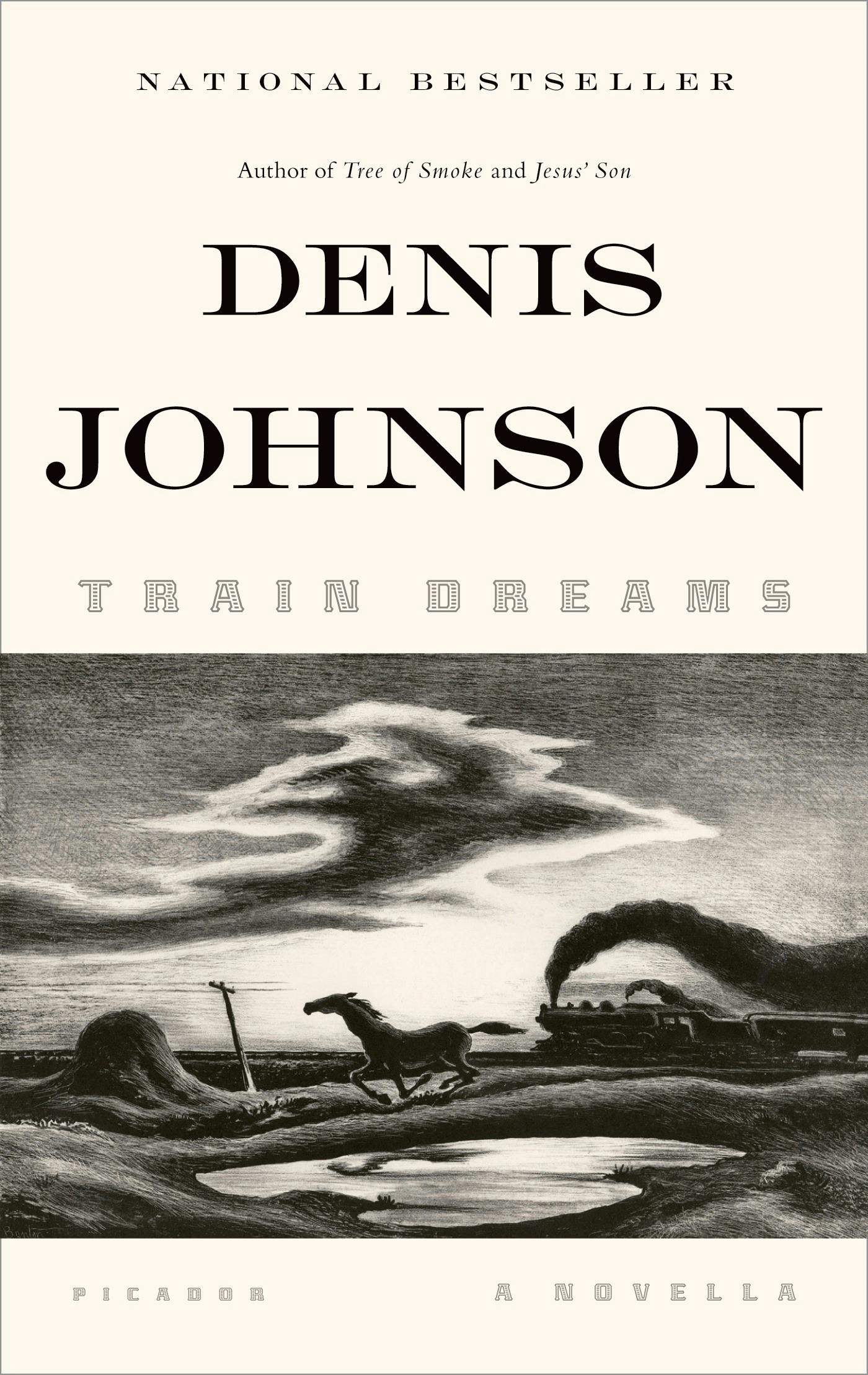
Suffused with the history and landscapes of the American West—its otherworldly flora and fauna, its rugged loggers and bridge builders—this extraordinary novella poignantly captures the disappearance of a distinctly American way of life.Train Dreams tells the story of Robert Grainer, a day laborer in the American West at the start of the twentieth century—an ordinary man in extraordinary times. Buffeted by the loss of his family, Grainer struggles to make sense of this strange new world. As his story unfolds, we witness both his shocking personal defeats and the radical changes that transform America in his lifetime.First published in The Paris Review [Issue 162, Summer 2002]

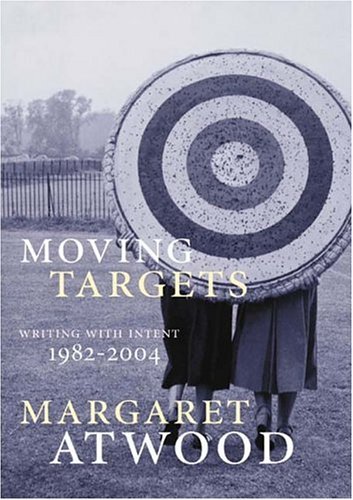
The most precious treasure of this collection is that it gives us the rich back-story and diverse range of influences on Margaret Atwood's work. From the aunts who encouraged her nascent writing career to the influence of George Orwell's Nineteen Eighty-Four on The Handmaid's Tale, we trace the movement of Atwood's fertile and curious mind in action over the years.Atwood's controversial political pieces, Napoleon's Two Biggest Mistakes and Letter to America -- both not-so-veiled warnings about the repercussions of the war in Iraq -- also appear, alongside pieces that exhibit her active concern for the environment, the North, and the future of the human race. Atwood also writes about her John Updike, Marina Warner, Italo Calvino, Marian Engel, Toni Morrison, Angela Carter, Gabriel Garcia Marquez, Mordecai Richler, Elmore Leonard, and Ursula Le Guin.This is a landmark volume from a major writer whose worldwide readership is in the millions, and whose work has influenced and entertained generations. Moving Targets is the companion volume to Second Words.

In the stories that make up Oblivion, David Foster Wallace joins the rawest, most naked humanity with the infinite involutions of self-consciousness—a combination that is dazzlingly, uniquely his. These are worlds undreamt-of by any other mind. Only David Foster Wallace could convey a father's desperate loneliness by way of his son's daydreaming through a teacher's homicidal breakdown ("The Soul Is Not a Smithy"). Or could explore the deepest and most hilarious aspects of creativity by delineating the office politics surrounding a magazine profile of an artist who produces miniature sculptures in an anatomically inconceivable way ("The Suffering Channel"). Or capture the ache of love's breakdown in the painfully polite apologies of a man who believes his wife is hallucinating the sound of his snoring ("Oblivion"). Each of these stories is a complete world, as fully imagined as most entire novels, at once preposterously surreal and painfully immediate. Oblivion is an arresting and hilarious creation from a writer "whose best work challenges and reinvents the art of fiction" (Atlanta Journal-Constitution).Mister squishy --The soul is not a smithy --Incarnations of burned children --Another pioneer --Good old neon --Philosophy and the mirror of nature --Oblivion --The suffering channel

A collection of "uncommonly good stories" ( The Chicago Tribune ) from a true American master of the short story—disturbing, comic, and moving takes that find deeper meanings in ordinary domestic life.With unforgettable characters, places, and events—a young divorcee, a shared summer home, a troubled family, a wedding, the death of a pet—Williams takes her readers on journey after journey, as only she can.

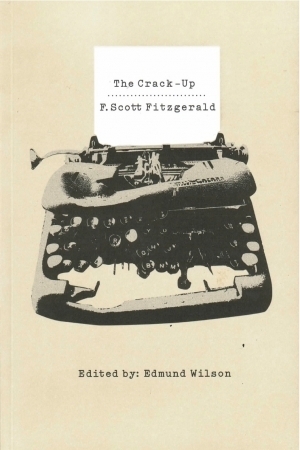
"The Crack-Up" was first published by New Directions in 1945 and is now being rediscovered by a new generation of readers. Compiled and edited by Edmund Wilson shortly after Fitzgerald's death, "The Crack-Up" tells the story of Fitzgerald's sudden descent at age thirty-nine from a life of success and glamor to one of emptiness and despair, and his determined recovery. This vigorous and revealing collection of essays and letters renders the tale of a man whose personality still charms us all and whose reckless gaiety and genious made him a living symbol and the Jazz Age. For those who grew up with "The Great Gatsby" or "Tender is the Night," this extraordinary autobiographical collection provides a unique personal blend of the romance and reality embodied by Fitzgerald's literature and his life.

"The intricately plotted progress of characters from near to farfuture... on an Earth which, like an abandon playground, has long ago been left behind by an evolving humanity... human-scale action within a vast canvas."-- The Excyclopedia of Science Fiction.Encompassing time-travel, powerful mystery and the future history of humanity to its last handful of survivors, Across Realtime spans millions of years and is an utterly engrossing SF classic."You can hardly turn the pages fast enough. As sheer entertainment, it's a winner"-- Locus

A spaceship captain determined to gather a cupful of the sun. . .a nubile young witch who yearns to taste human love. . .an expedition that hunts dinosaurs across the fragile and dangerous chasm of time. . . These strange and wonderful tales of beauty and terror will transport you from the begininng of time to the outermost limits of the future. Selected from his best-selling collections "The Golden Apples Of The Sun" and "R Is For Rocket," here are thirty-two superb stories from one of the master fantastics of our age--the inimitable Ray Bradbury.CONTENTS1 • The Fog Horn • (1951) • short story by Ray Bradbury10 • The April Witch • [The Elliott Family] • (1952) • short story by Ray Bradbury21 • The Wilderness • [The Martian Chronicles] • (1952) • short story by Ray Bradbury31 • The Fruit at the Bottom of the Bowl • non-genre • (1948) • short story by Ray Bradbury43 • The Flying Machine • (1953) • short story by Ray Bradbury49 • The Murderer • (1953) • short story by Ray Bradbury58 • The Golden Kite, the Silver Wind • (1953) • short story by Ray Bradbury63 • I See You Never • non-genre • (1947) • short story by Ray Bradbury67 • Embroidery • (1951) • short story by Ray Bradbury71 • The Big Black and White Game • (1945) • short story by Ray Bradbury83 • The Great Wide World Over There • (1952) • short story by Ray Bradbury96 • Powerhouse • (1948) • short story by Ray Bradbury106 • En la Noche • (1952) • short story by Ray Bradbury111 • Sun and Shadow • non-genre • (1953) • short story by Ray Bradbury119 • The Meadow • (1953) • short story by Ray Bradbury135 • The Garbage Collector • (1953) • short story by Ray Bradbury141 • The Great Fire • [Green Town] • (1949) • short story by Ray Bradbury148 • The Golden Apples of the Sun • (1953) • short story by Ray Bradbury157 • R Is for Rocket • (1943) • short story by Ray Bradbury174 • The End of the Beginning • (1956) • short story by Ray Bradbury180 • The Rocket • (1950) • short story by Ray Bradbury191 • The Rocket Man • (1951) • short story by Ray Bradbury203 • A Sound of Thunder • (1952) • short story by Ray Bradbury216 • The Long Rain • (1950) • short story by Ray Bradbury231 • The Exiles • (1949) • short story by Ray Bradbury246 • Here There Be Tygers • (1951) • short story by Ray Bradbury260 • The Strawberry Window • (1955) • short story by Ray Bradbury269 • The Dragon • (1955) • short story by Ray Bradbury273 • Frost and Fire • (1946) • novella by Ray Bradbury316 • Uncle Einar • [The Elliott Family] • (1947) • short story by Ray Bradbury324 • The Time Machine • [Dandelion Wine] • (1955) • short story by Ray Bradbury332 • The Sound of Summer Running • [Dandelion Wine] • (1956) • short story by Ray Bradbury

Newbery Medalist Virginia Hamilton tells 24 stories that kept her ancestors' culture alive during slavery, from spirited animal trickster tales and robust tall tales to spine-chilling tales of the supernatural and moving narratives of slaves in search of freedom. Twelve of these tales are on the 78-minute CD, including the hauntingly beautiful title story, "The People Could Fly." Booklist praised the recording as "an outstanding and most welcome production that both complements and extends the original work."

In the her tenth collection (the title story of which is the basis for the new film Hateship Loveship), Alice Munro achieves new heights, creating narratives that loop and swerve like memory, and conjuring up characters as thorny and contradictory as people we know ourselves.A tough-minded housekeeper jettisons the habits of a lifetime because of a teenager’s practical joke. A college student visiting her brassy, unconventional aunt stumbles on an astonishing secret and its meaning in her own life. An incorrigible philanderer responds with unexpected grace to his wife’s nursing-home romance. Hateship, Friendship, Courtship, Loveship, Marriage is Munro at her best, tirelessly observant, serenely free of illusion, deeply and gloriously humane.

The world-renowned classic that has enthralled and delighted millions of readers with its timeless tales of gods and heroes.Edith Hamilton's Mythology succeeds like no other book in bringing to life for the modern reader the Greek, Roman, and Norse myths that are the keystone of Western culture--the stories of gods and heroes that have inspired human creativity from antiquity to the present. We meet the Greek gods on Olympus and Norse gods in Valhalla. We follow the drama of the Trojan War and the wanderings of Odysseus. We hear the tales of Jason and the Golden Fleece, Cupid and Psyche, and mighty King Midas. We discover the origins of the names of the constellations. And we recognize reference points for countless works of art, literature, and cultural inquiry--from Freud's Oedipus complex to Wagner's Ring Cycle of operas to Eugene O'Neill's Mourning Becomes Electra. Praised throughout the world for its authority and lucidity, Mythology is Edith Hamilton's masterpiece--the standard by which all other books on mythology are measured.

Oates, Joyce Carol, By The North Gate

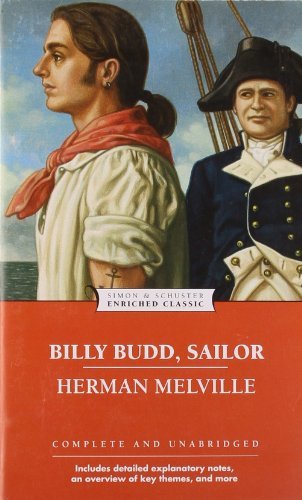
A handsome young sailor is unjustly accused of plotting mutiny in this timeless tale of the sea.--back cover

The Beggar King and the Secret of Happiness is an altogether original true story about a storyteller who loses his voice and believes he's lost everything. An encounter with his old teacher shows him that, in fact, he's been given a great gift. Their meetings lead him on a journey into the timeless wisdom of ancient tales - a world of beggars and kings, monks and tigers, lost horses and buried treasures - and, ultimately, toward the secret of happiness.

Andy, Dag and Claire have been handed a society priced beyond their means. Twentysomethings, brought up with divorce, Watergate and Three Mile Island, and scarred by the 80s fall-out of yuppies, recession, crack and Ronald Reagan, they represent the new generation — Generation X.Fiercely suspicious of being lumped together as an advertiser's target market, they have quit dreary careers and cut themselves adrift in the California desert. Unsure of their futures, they immerse themselves in a regime of heavy drinking and working at no-future McJobs in the service industry.Underemployed, overeducated, intensely private and unpredictable, they have nowhere to direct their anger, no one to assuage their fears, and no culture to replace their anomie. So they tell stories; disturbingly funny tales that reveal their barricaded inner world. A world populated with dead TV shows, 'Elvis moments' and semi-disposable Swedish furniture...

“My name is Tucker Max, and I am an asshole." With these words Tucker Max launched a classic humor bestseller that has sold more than two million copies in the US and hundreds of thousands more throughout the world. I HOPE THEY SERVE BEER IN HELL was on The New York Times bestseller list for five years including the #1 position.The new edition, released in September 2015, includes a new 6-page Afterword that will delight Tucker's fans. In it he describes his life in the 10 years since the book was first published, including his marriage and becoming a dad. His anecdotes are, as always, funny and revealing, told in the unique voice that millions of readers have come to love.Actual reader feedback:"I am completely baffled as to how you can congratulate yourself for being a womanizer and a raging drunk, or think anyone cares about an idiot like you. Do you really think that exploiting the insecurities of others while getting wasted is a legitimate thing to offer?""Thank you, thank you, thank you--for sharing with us your wonderful tales of drunken revelry, for teaching me what it means to be a man, for just existing so I know that there is another option; I too can say 'screw the system' and be myself and have fun. My life truly began when I finished reading your stories. Now, when faced with a quandary about what course of action I should take, I just ask myself, 'What Would Tucker Do?'--and I do it, and I am a better man for it.""I find it truly appalling that there are people in the world like you. You are a disgusting, vile, repulsive, repugnant, foul creature. Because of you, I don't believe in God anymore. No just God would allow someone like you to exist.""I'll stay with God as my lord, but you are my savior. I just finished reading your brilliant stories, and I laughed so hard I almost vomited. I want to bring that kind of joy to people. You're an artist of the highest order and a true humanitarian to boot. I'm in both shock and awe at how much I want to be you.""You are the coolest person I can even imagine existing. If you slept with my girlfriend, it'd make me love her more."

‘Everything everybody does is so—I don’t know—not wrong, or even mean, or even stupid necessarily. But just so tiny and meaningless and—sad-making. And the worst part is, if you go bohemian or something crazy like that, you’re conforming just as much only in a different way.’First published in The New Yorker as two sequential stories, ‘Franny’ and ‘Zooey’ offer a dual portrait of the two youngest members of J. D. Salinger’s fictional Glass family.Franny Glass is a pretty, effervescent college student on a date with her intellectually confident boyfriend, Lane. They appear to be the perfect couple, but as they struggle to communicate with each other about the things they really care about, slowly their true feelings come to the surface. The second story in this book, ‘Zooey’, plunges us into the world of her ethereal, sophisticated family. When Franny’s emotional and spiritual doubts reach new heights, her older brother Zooey, a misanthropic former child genius, offers her consolation and brotherly advice.Written in Salinger’s typically irreverent style, these two stories offer a touching snapshot of the distraught mindset of early adulthood and are full of the insightful emotional observations and witty turns of phrase that have helped make Salinger’s reputation what it is today.