
Shirley Jackson
Shirley Jackson was an influential American author. A popular writer in her time, her work has received increasing attention from literary critics in recent years. She has influenced such writers as Stephen King, Nigel Kneale, and Richard Matheson. She is best known for her dystopian short story, "The Lottery" (1948), which suggests there is a deeply unsettling underside to bucolic, smalltown America. In her critical biography of Shirley Jackson, Lenemaja Friedman notes that when Shirley Jackson's story "The Lottery" was published in the June 28, 1948, issue of The New Yorker, it received a response that "no New Yorker story had ever received." Hundreds of letters poured in that were characterized by, as Jackson put it, "bewilderment, speculation and old-fashioned abuse." Jackson's husband, the literary critic Stanley Edgar Hyman, wrote in his preface to a posthumous anthology of her work that "she consistently refused to be interviewed, to explain or promote her work in any fashion, or to take public stands and be the pundit of the Sunday supplements. She believed that her books would speak for her clearly enough over the years." Hyman insisted the darker aspects of Jackson's works were not, as some critics claimed, the product of "personal, even neurotic, fantasies", but that Jackson intended, as "a sensitive and faithful anatomy of our times, fitting symbols for our distressing world of the concentration camp and the Bomb", to mirror humanity's Cold War-era fears. Jackson may even have taken pleasure in the subversive impact of her work, as revealed by Hyman's statement that she "was always proud that the Union of South Africa banned The Lottery', and she felt that they at least understood the story". In 1965, Jackson died of heart failure in her sleep, at her home in North Bennington Vermont, at the age of 48.
30 Books Written

First published in 1959, Shirley Jackson’s The Haunting of Hill House has been hailed as a perfect work of unnerving terror. It is the story of four seekers who arrive at a notoriously unfriendly pile called Hill House: Dr. Montague, an occult scholar looking for solid evidence of a “haunting”; Theodora, his lighthearted assistant; Eleanor, a friendless, fragile young woman well acquainted with poltergeists; and Luke, the future heir of Hill House. At first, their stay seems destined to be merely a spooky encounter with inexplicable phenomena. But Hill House is gathering its powers—and soon it will choose one of them to make its own.

The Lottery, one of the most terrifying stories written in this century, created a sensation when it was first published in The New Yorker. "Power and haunting," and "nights of unrest" were typical reader responses. This collection, the only one to appear during Shirley Jackson's lifetime, unites "The Lottery:" with twenty-four equally unusual stories. Together they demonstrate Jackson's remarkable range--from the hilarious to the truly horrible--and power as a storyteller.
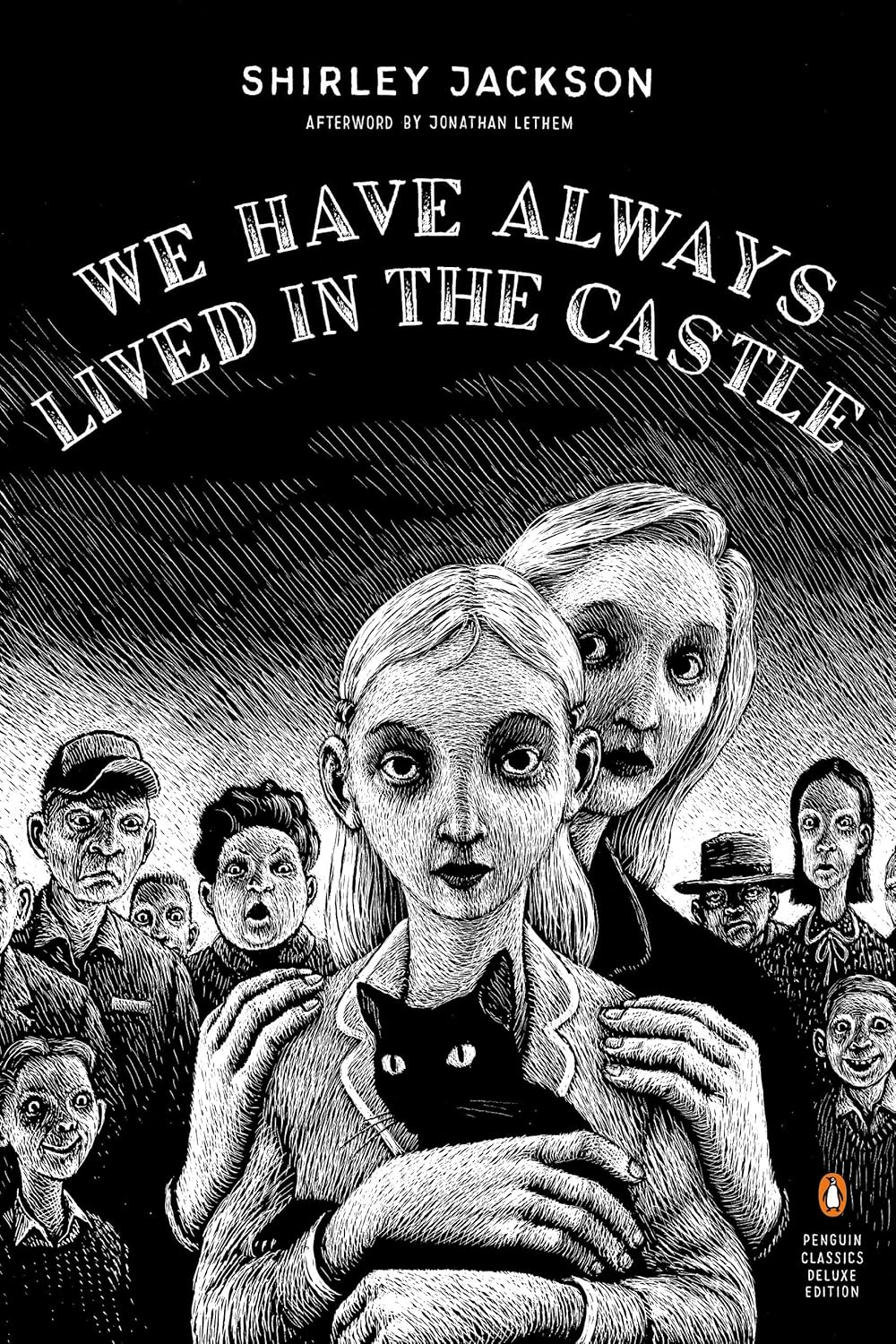
Shirley Jackson's beloved gothic tale of a peculiar girl named Merricat and her family's dark secret.Taking readers deep into a labyrinth of dark neurosis, We Have Always Lived in the Castle is a deliciously unsettling novel about a perverse, isolated, and possibly murderous family and the struggle that ensues when a cousin arrives at their estate. This edition features an afterword by Jonathan Lethem.

In a small American town, the local residents are abuzz with excitement and nervousness when they wake on the morning of the twenty-seventh of June. Everything has been prepared for the town’s annual tradition—a lottery in which every family must participate, and no one wants to win. “The Lottery” stands out as one of the most famous short stories in American literary history. Originally published in The New Yorker, the author immediately began receiving letters from readers who demanded an explanation of the story’s meaning. “The Lottery” has been adapted for stage, television, radio and film.

Hangsaman is Miss Jackson's second novel. The story is a simple one but the overtones are immediately present. "Natalie Waite who was seventeen years old but who felt that she had been truly conscious only since she was about fifteen lived in an odd corner of a world of sound and sight, past the daily voices of her father and mother and their incomprehensible actions." In a few graphic pages, the family is before us—Arnold Waite, a writer, egotistical and embittered; his wife, the complaining martyr; Bud, the younger brother who has not yet felt the need to establish his independence; and Natalie, in the nightmare of being seventeen. The Sunday afternoon cocktail party, to which Arnold Waite has invited his literary friends and neighbors, serves to etch in the details of this family's life, and to draw Natalie into the vortex. The story concentrates on the next few critical months in Natalie's life, away at college, where each experience reproduces on a larger scale the crucial failure of her emotional life at home. With a mounting tension rising from character and situation as well as the particular magic of which Miss Jackson is master, the novel proceeds inexorably to the stinging melodrama of its conclusion. The bitter cruelty of the passage from adolescence to womanhood, of a sensitive and lonely girl caught in a world not of her own devising, is a theme well suited to Miss Jackson's brilliant talent.

For the first time in one volume, a collection of Shirley Jackson's scariest stories, with a foreword by PEN/Hemingway Award winner Ottessa Moshfegh After the publication of her short story "The Lottery" in the New Yorker in 1948 received an unprecedented amount of attention, Shirley Jackson was quickly established as a master horror storyteller. This collection of classic and newly reprinted stories provides readers with more of her unsettling, dark tales, including the "The Possibility of Evil" and "The Summer People." In these deliciously dark stories, the daily commute turns into a nightmarish game of hide and seek, the loving wife hides homicidal thoughts and the concerned citizen might just be an infamous serial killer. In the haunting world of Shirley Jackson, nothing is as it seems and nowhere is safe, from the city streets to the crumbling country pile, and from the small-town apartment to the dark, dark woods. There's something sinister in suburbia.For more than seventy years, Penguin has been the leading publisher of classic literature in the English-speaking world. With more than 1,700 titles, Penguin Classics represents a global bookshelf of the best works throughout history and across genres and disciplines. Readers trust the series to provide authoritative texts enhanced by introductions and notes by distinguished scholars and contemporary authors, as well as up-to-date translations by award-winning translators.

Shirley Jackson, author of the classic short story "The Lottery", was known for her terse, haunting prose. But the writer possessed another side, one which is delightfully exposed in this hilariously charming memoir of her family's life in rural Vermont. Fans of Please Don't Eat the Daisies, Cheaper by the Dozen, and anything Erma Bombeck ever wrote will find much to recognize in Shirley Jackson's home and neighborhood: children who won't behave, cars that won't start, furnaces that break down, a pugnacious corner bully, household help that never stays, and a patient, capable husband who remains lovingly oblivious to the many thousands of things mothers and wives accomplish every single day."Our house," writes Jackson, "is old, noisy, and full. When we moved into it we had two children and about five thousand books; I expect that when we finally overflow and move out again we will have perhaps twenty children and easily half a million books." Jackson's literary talents are in evidence everywhere, as is her trenchant, unsentimental wit. Yet there is no mistaking the happiness and love in these pages, which are crowded with the raucous voices of an extraordinary family living a wonderfully ordinary life.

An “entertaining, absorbing, and disturbing” Earphones Award winner (Chicago Tribune): When an aging heiress learns of an impending apocalypse while on a garden walk, her family becomes fixated on preparing for the imminent doom. “One of the premiere gothic horror writers of the 20th century’s funniest and strangest endeavors… Think P. G. Wodehouse meets The Twilight Zone” (AudioFile).Before there was Hill House, there was the Halloran mansion of Jackson’s stunningly creepy fourth novel, The Sundial. Aunt Fanny has always been somewhat peculiar. When the Halloran clan gathers at the family home for a funeral, no one is surprised when she wanders off into the secret garden. But then Aunt Fanny returns to report an astonishing vision of an apocalypse from which only the Hallorans and their hangers-on will be spared, and the family finds itself engulfed in growing madness, fear, and violence as they prepare for a terrible new world. For Aunt Fanny's long-dead father has given her the precise date of the final cataclysm!

Elizabeth is a demure twenty-three-year-old wiling her life away at a dull museum job, living with her neurotic aunt, and subsisting off her dead mother's inheritance. When Elizabeth begins to suffer terrible migraines and backaches, her aunt takes her to the doctor, then to a psychiatrist. But slowly, and with Jackson's characteristic chill, we learn that Elizabeth is not just one girl—but four separate, self-destructive personalities. The Bird's Nest, Jackson's third novel, develops hallmarks of the horror master's most unsettling work: tormented heroines, riveting familial mysteries, and a disquieting vision inside the human mind.

A detailed account of one of the strangest and most shocking episodes in American history, written by the author of "The Lottery"Stories of magic, superstition, and witchcraft were strictly forbidden in the little town of Salem Village. But a group of young girls ignored those rules, spellbound by the tales told by a woman named Tituba. When questioned about their activities, the terrified girls set off a whirlwind of controversy as they accused townsperson after townsperson of being witches. Author Shirley Jackson examines in careful detail this horrifying true story of accusations, trials, and executions that shook a community to its foundations.

' "Of course, no one would want to say anything about a girl like this that's missing..." 'Malice, paranoia and creeping dread lie beneath the surface of ordinary American life in these chilling miniature masterworks of unease.Contains:- The Missing Girl- Journey with a Lady- Nightmare

Named one of the best books of the year by NPR • From the renowned author of “The Lottery” and The Haunting of Hill House, a spectacular new volume of previously unpublished and uncollected stories, essays, and other writings.Features “Family Treasures,” nominated for the Edgar Award for Best Short StoryShirley Jackson is one of the most important American writers of the last hundred years. Since her death in 1965, her place in the landscape of twentieth-century fiction has grown only more exalted.As we approach the centenary of her birth comes this astonishing compilation of fifty-six pieces—more than forty of which have never been published before. Two of Jackson’s children co-edited this volume, culling through the vast archives of their mother’s papers at the Library of Congress, selecting only the very best for inclusion.Let Me Tell You brings together the deliciously eerie short stories Jackson is best known for, along with frank, inspiring lectures on writing; comic essays about her large, boisterous family; and whimsical drawings. Jackson’s landscape here is most frequently domestic: dinner parties and bridge, household budgets and homeward-bound commutes, children’s games and neighborly gossip. But this familiar setting is also her most subversive: She wields humor, terror, and the uncanny to explore the real challenges of marriage, parenting, and community—the pressure of social norms, the veins of distrust in love, the constant lack of time and space.For the first time, this collection showcases Shirley Jackson’s radically different modes of writing side by side. Together they show her to be a magnificent storyteller, a sharp, sly humorist, and a powerful feminist.This volume includes a foreword by the celebrated literary critic and Jackson biographer Ruth Franklin.
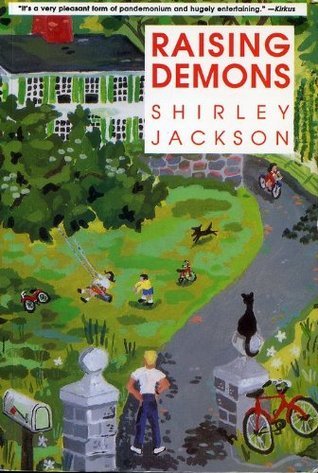
Life Among the Savages charmed thousands with its insightful wit and contrasting warmth. In this sequel, Shirley Jackson continues her affectionate, hilarious, sophisticated tale of dubious parental equilibrium in the face of four children, assorted dogs and cats, and the uncounted heaps of small intrusive possessions which pile up in corners everywhere.

Acclaimed in her own time for her short story 'The Lottery' and her novel The Haunting of Hill House—classics ranking with the work of Edgar Allan Poe—Shirley Jackson blazed a path for contemporary writers with her explorations of evil, madness, and cruelty. Soon after her untimely death in 1965, Jackson’s children discovered a treasure trove of previously unpublished and uncollected stories, many of which are brought together in this remarkable collection. Here are tales of torment, psychological aberration, and the macabre, as well as those that display her lighter touch with humorous scenes of domestic life. Reflecting the range and complexity of Jackson’s talent, Just an Ordinary Day reaffirms her enduring influence and celebrates her singular voice, rich with magic and resonance.
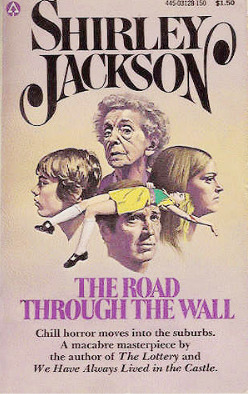
Everyone knew the residents of Pepper Street were "nice" people -- especially the residents themselves. Among the self-satisfied group were: Mrs Merriam, the sanctimonious shrew who was turning her husband into a nonentity and her daughter into a bigoted spinster; Mr Roberts, who found relief from the street's unending propriety in shoddy side-street amours; Miss Fielding, who considered it more important to boil an egg properly than to save a disturbed girl from destruction. It took the gruesome act of a desperate boy who lived among them to pierce the shell of their complacency and force them to see their own ugliness.

Tre dei racconti qui riuniti hanno come protagoniste quelle creaturine infide, pericolose, enigmatiche che Shirley Jackson conosceva molto bene per aver cresciuto quattro «demoni», come chiamava – scherzosamente ma non troppo – i figli. Un bambino che, viaggiando in treno, vede streghe ovunque, e non è detto che non abbia ragione. Una ragazza che, sotto gli occhi di un presunto adulto un po’ alticcio, sfoggia un sapere e una saggezza apocalittici, mentre nella stanza accanto gli invitati a una festa sproloquiano sul futuro del mondo: «Non credo proprio che abbia molto futuro,» sentenzia con placido e inquietante distacco «almeno per com’è adesso ... Se quando lei era giovane la gente si fosse spaventata davvero, oggi non saremmo messi così male». E uno scolaretto che ne combina di tutti i colori, forse invisibile ma non per questo assente, come diceva sant’Agostino dei defunti, benché il marmocchio in questione sia vivo e vegeto. Tre boîtes à surprise con le quali Shirley Jackson suscita, a partire dal candore arcano dei ragazzi, sorrisi e brividi glaciali in egual misura. Senza rinunciare a condurci, al seguito di una donna che deve farsi estrarre un molare, nel suo territorio d’elezione: quella zona d’ombra ai confini della follia dove le cose note perdono i loro connotati familiari e appaiono estranee e perturbanti, dove un luciferino sconosciuto, materializzatosi dal nulla al nostro fianco, può prenderci per mano e, in un battito di ciglia, portarci a correre sulla sabbia calda, mentre le onde «tintinnano come campanelli sulla spiaggia» e «i flauti suonano tutta la notte».

The Lottery and Other Stories; The Haunting of Hill House; We Have Always Lived in the Castle
by Shirley Jackson
Rating: 4.4 ⭐
"The world of Shirley Jackson is eerie and unforgettable," writes A. M. Homes. "It is a place where things are not what they seem; even on a morning that is sunny and clear there is always the threat of darkness looming, of things taking a turn for the worse." Jackson's characters-mostly unloved daughters in search of a home, a career, a family of their own-chase what appears to be a harmless dream until, without warning, it turns on its heel to seize them by the throat. We are moved by these characters' dreams, for they are the dreams of love and acceptance shared by us all. We are shocked when their dreams become nightmares, and terrified by Jackson's suggestion that there are unseen powers-"demons" both subconscious and supernatural-malevolently conspiring against human happiness. In this volume Joyce Carol Oates, our leading practitioner of the contemporary Gothic, presents the essential works of Shirley Jackson, the novels and stories that, from the early 1940s through the mid-1960s, wittily remade the genre of psychological horror for an alienated, postwar America. She opens with "The Lottery" (1949), Jackson's only collection of short fiction, whose disquieting title story-one of the most widely anthologized tales of the 20th century-has entered American folklore. Also among these early works are "The Daemon Lover," a story Oates praises as "deeper, more mysterious, and more disturbing than 'The Lottery, ' " and "Charles," the hilarious sketch that launched Jackson's secondary career as a domestic humorist. Here too are Jackson's masterly short novels: "The Haunting of Hill House" (1959), the tale of an achingly empathetic young woman chosen by a haunted house to be its new tenant, and "We Have Always Lived in the Castle" (1962), the unrepentant confessions of Miss Merricat Blackwood, a cunning adolescent who has gone to quite unusual lengths to preserve her ideal of family happiness. Rounding out the volume are 21 other stories and sketches that showcase Jackson in all her many modes, and the essay "Biography of a Story," Jackson's acidly funny account of the public reception of "The Lottery," which provoked more mail from readers of "The New Yorker" than any contribution before or since.

A haunting and psychologically driven collection from Shirley Jackson that includes her best-known story "The Lottery"At last, Shirley Jackson's "The Lottery" enters Penguin Classics, sixty-five years after it shocked America audiences and elicited the most responses of any piece in New Yorker history. In her gothic visions of small-town America, Jackson, the author of such masterworks as The Haunting of Hill House and We Have Always Lived in the Castle, turns an ordinary world into a supernatural nightmare. This eclectic collection goes beyond her horror writing, revealing the full spectrum of her literary genius. In addition to Come Along with Me, Jackson's unfinished novel about the quirky inner life of a lonely widow, it features sixteen short stories and three lectures she delivered during her last years.

Novels & Stories: The Lottery / The Haunting of Hill House / We Have Always Lived in the Castle / Other Stories and Sketches
by Shirley Jackson
Rating: 4.3 ⭐
“The world of Shirley Jackson is eerie and unforgettable,” writes A. M. Homes. “It is a place where things are not what they seem; even on a morning that is sunny and clear there is always the threat of darkness looming, of things taking a turn for the worse.” Jackson’s characters–mostly unloved daughters in search of a home, a career, a family of their own–chase what appears to be a harmless dream until, without warning, it turns on its heel to seize them by the throat. We are moved by these characters’ dreams, for they are the dreams of love and acceptance shared by us all. We are shocked when their dreams become nightmares, and terrified by Jackson’s suggestion that there are unseen powers–“demons” both subconscious and supernatural–malevolently conspiring against human happiness.In this volume Joyce Carol Oates, our leading practitioner of the contemporary Gothic, presents the essential works of Shirley Jackson, the novels and stories that, from the early 1940s through the mid-1960s, wittily remade the genre of psychological horror for an alienated, postwar America. She opens with The Lottery (1949), Jackson’s only collection of short fiction, whose disquieting title story–one of the most widely anthologized tales of the twentieth century–has entered American folklore. Also among these early works are “The Daemon Lover,” a story Oates praises as “deeper, more mysterious, and more disturbing than ‘The Lottery,’” and “Charles,” the hilarious sketch that launched Jackson’s secondary career as a domestic humorist.Here too are Jackson’s masterly short novels The Haunting of Hill House (1959), the tale of an achingly empathetic young woman chosen by a haunted house to be its new tenant, and We Have Always Lived in the Castle (1962), the unrepentant confessions of Miss Merricat Blackwood, a cunning adolescent who has gone to quite unusual lengths to preserve her ideal of family happiness. Rounding out the volume are 21 other stories and sketches that showcase Jackson in all her many modes, and the essay “Biography of a Story,” Jackson’s acidly funny account of the public reception of “The Lottery,” which provoked more mail from readers of The New Yorker than any contribution before or since.

'The Summer People' is a rather creepy and mysterious short story by author Shirley Jackson. A New York City couple encounter sinister resistance when they decide to stay at their summer cottage past Labor Day.

"The Possibility of Evil" is about an old lady named Miss Strangeworth. She treasures her roses, passed down from her grandmother, and those roses are her pride. In order to keep a town, which she thinks is hers, she tries to keep the town from becoming evil by sending letters with messages based on gossip to the townspeople about events in their lives that may be troubling.

A short story about a woman searching for her fiancé.

In 'Charles,' the main character, Laurie, and his alter ego, Charles, are loosely based on Jackson's son Laurence. It is told from the mother's point-of-view and focuses on Laurie's search for identity. The story begins with Laurie's mother describing her son's first day of kindergarten

Una mujer pasa el día de su boda buscando frenéticamente a su futuro marido, otra hace un extraño viaje nocturno en autobús, un librero satisface la, en apariencia, inofensiva solicitud de un cliente. Y, en el cuento más celebrado de Shirley Jackson, los pobladores de una aldea se reúnen para oficiar un inquietante ritual. «La lotería», uno de los relatos más turbadores que se hayan escrito nunca y un ícono en la historia de la literatura norteamericana, encendió la polémica cuando se publicó por primera vez, en la revista The New Yorker. Este volumen presenta una selección de los cuentos de Shirley Jackson e incluye tres conferencias de la autora, una de las cuales dedicada, precisamente, al escándalo que supuso la publicación de su texto más conocido.

Including her iconic tale The Lottery, The Tooth brings together a short selection of Shirley Jackson's most sinister stories. "Her stories are among the most terrifying ever written". (Donna Tartt). 'Her tooth, which had brought her here unerringly, seemed now the only part of her to have any identity. It seemed to have had its picture taken without her; it was the important creature which must be recorded and examined and gratified; she was only its unwilling vehicle...' The creeping unease of lives squandered and the bloody glee of lives lost is chillingly captured in these five tales of casual cruelty by a master of the short story. Portraying insanity, disturbing encounters, troubling children and a sinister lottery, Shirley Jackson's work has an unmatched power to unnerve and unsettle. Shirley Jackson was born in California in 1916. When her short story The Lottery was first published in The New Yorker in 1948, readers were so horrified they sent her hate mail; it has since become one of the greatest American stories of all time. Her first novel, The Road Through the Wall, was published in the same year and was followed by five Hangsaman, The Bird's Nest, The Sundial, The Haunting of Hill House and We Have Always Lived in the Castle, widely seen as her masterpiece. Shirley Jackson died in her sleep at the age of 48. "An amazing writer". (Neil Gaiman). "The world of Shirley Jackson is eerie and unforgettable...It is a place where things are not what they seem; even on a morning that is sunny and clear there is always the threat of darkness looming, of things taking a turn for the worse". (A. M. Homes). "Shirley Jackson is unparalleled as a leader in the field of beautifully written, quiet, cumulative shudders". (Dorothy Parker).

A terrifying short story from Shirley Jackson, the master of the macabre tale. Shirley Jackson's chilling tales of creeping unease and random cruelty have the power to unsettle and terrify unlike any other. When her story The Lottery was first published in The New Yorker in 1948, readers were so horrified they sent her hate mail. It became known as one of the greatest short stories ever written. Have you read her yet?'Shirley Jackson's stories are among the most terrifying ever written' Donna Tartt'An amazing writer ... if you haven't read any of her short stories ... you have missed out on something marvellous' Neil Gaiman'Her stories are stunning, timeless - as relevant and terrifying now as when they were first published ... 'The Lottery' is so much an icon in the history of the American short story that one could argue it has moved from the canon of American twentieth-century fiction directly into the American psyche, our collective unconscious' A. M. Homes Shirley Jackson was born in California in 1916. When her short story The Lottery was first published in The New Yorker in 1948, readers were so horrified they sent her hate mail; it has since become one of the greatest American stories of all time. Her first novel, The Road Through the Wall, was published in the same year and was followed by five more: Hangsaman, The Bird's Nest, The Sundial, The Haunting of Hill House and We Have Always Lived in the Castle, widely seen as her masterpiece. Shirley Jackson died in her sleep at the age of 48.

A bewitchingly brilliant collection of never-before-published letters from the renowned author of "The Lottery" and The Haunting of Hill HouseShirley Jackson is one of the most important American authors of the last hundred years and among America's greatest chroniclers of the female experience. This extraordinary compilation of personal correspondence has all the hallmarks of Jackson's beloved fiction: flashes of the uncanny in the domestic, sparks of horror in the quotidian, and the veins of humor that run through good times and bad."I am having a fine time doing a novel with my left hand and a long story—with as many levels as Grand Central Station—with my right hand, stirring chocolate pudding with a spoon held in my teeth, and tuning the television with both feet."Written over the course of nearly three decades, from Jackson's college years to six days before her early death at the age of forty-eight, these letters become the autobiography Shirley Jackson never wrote. As well as being a bestselling author, Jackson spent much of her adult life as a mother of four in Vermont, and the landscape here is often the everyday: raucous holidays and trips to the dentist, overdue taxes and frayed lines of Christmas lights, new dogs, and new babies. But in recounting these events to family, friends, and colleagues, she turns them into remarkable stories: entertaining, revealing, and wise. At the same time, many of these letters provide fresh insight into the genesis and progress of Jackson's writing over nearly three decades."The novel is getting sadder. It's always such a strange feeling—I know something's going to happen, and those poor people in the book don't; they just go blithely on their ways."Compiled and edited by her elder son, Laurence Jackson Hyman, in consultation with Jackson scholar Bernice M. Murphy and featuring Jackson's own witty line drawings, this intimate collection holds the beguiling prism of Shirley Jackson—writer and reader, mother and daughter, neighbor and wife—up to the light.

Who can forget the first time they heard the story? Considered one of the masterpieces of American literature, "The Lottery" created a sensation when it was first published in The New Yorker . Since then it has become one of the most anthologized stories in American literature. Powerful and haunting, subtle and horrifying, the tale demonstrates Shirley Jackson's mastery of storytelling. This one-of-a-kind audio collection, from the only anthology published during the author's lifetime, unites "The Lottery" with seven other equally unique stories. Jackson reveals the hidden evils of the human mind and society in these compelling stories. Carol Stewart, an award-winning reader, combines her extensive background as a voice talent for audiobooks with her deft sense of delivery, tone, and pacing to illuminate Jackson's uncommon characters and storytelling artistry.

«Mrs. Smith tirò un sospiro di sollievo e andò a riordinare la cucina. Lavò e asciugò le tazze e i piattini, quindi prese una tazza pulita, la riempì e si sedette alla finestra del soggiorno. Guardando la strada buia e sporca, ripiombò ancora una volta nel suo stato di quieta felicità; tre settima ne fa, si disse, ero disperata e senza nessuno al mondo. Mio padre era morto e io me ne stavo seduta davanti al mare, tutta sola, a chiedermi – sorvolò frettolosamente su questo pensiero – come sarebbe stato entrare in acqua e camminare, camminare sempre più avanti. Poi lui si è seduto accanto a me: “Spero di non sembrarle sfrontato”. Mrs. Smith fece un risolino segreto, sorseggiando il caffè».«Casa nostra spesso era piena di letterati e artisti eminenti» raccontano i figli di Shirley Jackson. «Si tenevano feste leggendarie e partite a poker con pittori, scultori, musicisti, compositori, poeti, insegnanti e scrittori di ogni genere. Ma il suono della sua macchina da scrivere non mancava mai, la sentivamo battere sui tasti fino a notte fonda». E da quell’ostinato ticchettio della Royal di mamma Shirley usciva a getto continuo una produzione che ha pochi paragoni: celebri romanzi dell’orrore come L’incubo di Hill House e clamorose perle nere come La lotteria, certo, ma anche una mole imponente di racconti destinati a rimanere a lungo sconosciuti – e che solo trent’anni dopo la morte della Jackson verranno alla luce, con un coup de théâtre degno di una delle sue storie: alcuni estratti da uno scatolone ritrovato in un fienile del Vermont e spedito senza preavviso alla famiglia, e altri, moltissimi altri, scoperti alla Library of Congress di Washington e alla San Francisco Public Library. Racconti di cui questo libro offre una ricca scelta, dove il lettore troverà non solo il thriller nero e la fiaba gotica di cui la Jackson è riconosciuta maestra, ma anche – e sarà una gradita sorpresa – commedie surreali, sketch stranianti, comici quadri familiari, esplorazioni della psiche, con fulminanti incursioni nei territori di confine tra normalità e follia. E sempre sarà felice, il lettore, di lasciarsi inghiottire dagli ingranaggi di una macchina narrativa di diabolica perfezione.

Experience The Magic of Shirley Jackson with this generous selection of the author's greatest work.This collection consists of three completeThe Bird's NestLife Among the SavagesRaising Demonsand eleven short stories--including the world-famous "The Lottery."