Loading genres...
Explore the best books about The United States Of America genre.

William Stoner ha una vita che sembra essere assai piatta e desolata. Non si allontana mai per più di centocinquanta chilometri da Booneville, il piccolo paese rurale in cui è nato, mantiene lo stesso lavoro per tutta la vita, per quasi quarantanni è infelicemente sposato alla stessa donna, ha sporadici contatti con l'amata figlia e per i suoi genitori è un estraneo, per sua ammissione ha soltanto due amici, uno dei quali morto in gioventù. Non sembra materia troppo promettente per un romanzo e tuttavia, in qualche modo, quasi miracoloso, John Williams fa della vita di William Stoner una storia appassionante, profonda e straziante. Come riesce l'autore in questo miracolo letterario? A oggi ho letto Stoner tre volte e non sono del tutto certo di averne colto il segreto, ma alcuni aspetti del libro mi sono apparsi chiari. E la verità è che si possono scrivere dei pessimi romanzi su delle vite emozionanti e che la vita più silenziosa, se esaminata con affetto, compassione e grande cura, può fruttare una straordinaria messe letteraria. È il caso che abbiamo davanti. (Dalla postfazione di Peter Cameron)
#1 NEW YORK TIMES BESTSELLERIt was never supposed to be this close. And of course she was supposed to win. How Hillary Clinton lost the 2016 election to Donald Trump is the riveting story of a sure thing gone off the rails. For every Comey revelation or hindsight acknowledgment about the electorate, no explanation of defeat can begin with anything other than the core problem of Hillary's campaign--the candidate herself. Through deep access to insiders from the top to the bottom of the campaign, political writers Jonathan Allen and Amie Parnes have reconstructed the key decisions and unseized opportunities, the well-intentioned misfires and the hidden thorns that turned a winnable contest into a devastating loss. Drawing on the authors' deep knowledge of Hillary from their previous book, the acclaimed biography HRC, Shattered offers an object lesson in how Hillary herself made victory an uphill battle, how her difficulty articulating a vision irreparably hobbled her impact with voters, and how the campaign failed to internalize the lessons of populist fury from the hard-fought primary against Bernie Sanders. Moving blow-by-blow from the campaign's difficult birth through the bewildering terror of election night, Shattered tells an unforgettable story with urgent lessons both political and personal, filled with revelations that will change the way readers understand just what happened to America on November 8, 2016.

Leading political innovation activist Katherine Gehl and world-renowned business strategist Michael Porter bring fresh perspective, deep scholarship, and a real and actionable solution, Final Five Voting, to the grand challenge of our broken political and democratic system. Final Five Voting has already been adopted in Alaska and is being advanced in states across the country. The truth is, the American political system is working exactly how it is designed to work, and it isn't designed or optimized today to work for us—for ordinary citizens. Most people believe that our political system is a public institution with high-minded principles and impartial rules derived from the Constitution. In reality, it has become a private industry dominated by a textbook duopoly—the Democrats and the Republicans—and plagued and perverted by unhealthy competition between the players. Tragically, it has therefore become incapable of delivering solutions to America's key economic and social challenges. In fact, there's virtually no connection between our political leaders solving problems and getting reelected. In The Politics Industry , business leader and path-breaking political innovator Katherine Gehl and world-renowned business strategist Michael Porter take a radical new approach. They ingeniously apply the tools of business analysis—and Porter's distinctive Five Forces framework—to show how the political system functions just as every other competitive industry does, and how the duopoly has led to the devastating outcomes we see today. Using this competition lens, Gehl and Porter identify the most powerful lever for change—a strategy comprised of a clear set of choices in two key how our elections work and how we make our laws. Their bracing assessment and practical recommendations cut through the endless debate about various proposed fixes, such as term limits and campaign finance reform. The true political innovation. The Politics Industry is an original and completely nonpartisan guide that will open your eyes to the true dynamics and profound challenges of the American political system and provide real solutions for reshaping the system for the benefit of all. THE INSTITUTE FOR POLITICAL INNOVATIONThe authors will donate all royalties from the sale of this book to the Institute for Political Innovation.

Brings together three hilarious pieces by America's comic genius: Without Feathers, a secret journal that addresses life's "big" questions; Getting Even, Woody as psychologist, historian, and philosopher; and Side Effects, Woody's take on UFOs and more.

From the bestselling author of The Ascent of Money and The Square and the TowerIs America an empire? Certainly not, according to our government. Despite the conquest of two sovereign states in as many years, despite the presence of more than 750 military installations in two thirds of the world’s countries and despite his stated intention "to extend the benefits of freedom...to every corner of the world," George W. Bush maintains that "America has never been an empire." "We don’t seek empires," insists Defense Secretary Rumsfeld. "We’re not imperialistic." Nonsense, says Niall Ferguson. In Colossus he argues that in both military and economic terms America is nothing less than the most powerful empire the world has ever seen. Just like the British Empire a century ago, the United States aspires to globalize free markets, the rule of law, and representative government. In theory it’s a good project, says Ferguson. Yet Americans shy away from the long-term commitments of manpower and money that are indispensable if rogue regimes and failed states really are to be changed for the better. Ours, he argues, is an empire with an attention deficit disorder, imposing ever more unrealistic timescales on its overseas interventions. Worse, it’s an empire in denial—a hyperpower that simply refuses to admit the scale of its global responsibilities. And the negative consequences will be felt at home as well as abroad. In an alarmingly persuasive final chapter Ferguson warns that this chronic myopia also applies to our domestic responsibilities. When overstretch comes, he warns, it will come from within—and it will reveal that more than just the feet of the American colossus is made of clay.

"Fante was my god." —Charles Bukowski, in his introduction to Ask the DustArturo Bandini, a young, struggling Italian-American writer living in a seedy hotel in 1930s Los Angeles, falls hard for the elusive, mocking, unstable Camilla Lopez, a Mexican waitress. The pair embark on a strange and strained love-hate relationship, which slowly, but inexorably, descends into the realm of madness.Ask the Dust is one of the truly great, yet unsung, American novels of the twentieth century. A tough and unsentimental story with a soft and tender heart, it remains as fresh and affecting as the day it was written.

Set in Los Angeles in the early 1980s, this coolly mesmerizing novel is a raw, powerful portrait of a lost generation that experienced sex, drugs, and disaffection at too early an age, growing up in a world shaped by casual nihilism, passivity, and too much money.Clay comes home for Christmas vacation from his Eastern college and re-enters a landscape of limitless privilege and absolute moral entropy, where everyone drives Porches, dines at Spago, and snorts mountains of cocaine. He tries to renew feelings for his girlfriend, Blair, and for his best friend from high school, Julian, who is careering into hustling and heroin. Clay's holiday turns into a dizzying spiral of desperation that takes him through the relentless parties in glitzy mansions, seedy bars, and underground rock clubs, and into the seamy world of L.A. after dark.

A Simon & Schuster eBook. Simon & Schuster has a great book for every reader.

This definitive poetry collection, originally published in 1954 to honor Stevens on his 75th birthday, contains:- "Harmonium"- "Ideas of Order"- "The Man With the Blue Guitar"- "Parts of the World"- "Transport Summer"- "The Auroras of Autumn"- "The Rock"

Alternate-cover edition can be found here In his second collection, Carver establishes his reputation as one of the most celebrated and beloved short-story writers in American literature—a haunting meditation on love, loss, and companionship, and finding one’s way through the dark.

From the two-time NBCC Finalist, an emotionally resonant, fiercely imaginative new novel about a family whose road trip across America collides with an immigration crisis at the southwestern border--an indelible journey told with breathtaking imagery, spare lyricism, and profound humanity.A mother and father set out with their two children, a boy and a girl, driving from New York to Arizona in the heat of summer. Their destination: Apacheria, the place the Apaches once called home.Why Apaches? asks the ten-year-old son. Because they were the last of something, answers his father.In their car, they play games and sing along to music. But on the radio, there is news about an "immigration crisis": thousands of kids trying to cross the southwestern border into the United States, but getting detained--or lost in the desert along the way.As the family drives--through Virginia to Tennessee, across Oklahoma and Texas--we sense they are on the brink of a crisis of their own. A fissure is growing between the parents, one the children can almost feel beneath their feet. They are led, inexorably, to a grand, harrowing adventure--both in the desert landscape and within the chambers of their own imaginations.Told through several compelling voices, blending texts, sounds, and images, Lost Children Archive is an astonishing feat of literary virtuosity. It is a richly engaging story of how we document our experiences, and how we remember the things that matter to us the most. With urgency and empathy, it takes us deep into the lives of one remarkable family as it probes the nature of justice and equality today.

Set against the backdrop of a lush and exotic Greece, The Names is considered the book which began to drive "sharply upward the size of his readership" (Los Angeles Times Book Review). Among the cast of DeLillo's bizarre yet fully realized characters in The Names are Kathryn, the narrator's estranged wife; their son, the six-year-old novelist; Owen, the scientist; and the neurotic narrator obsessed with his own neuroses. A thriller, a mystery, and still a moving examination of family, loss, and the amorphous and magical potential of language itself, The Names stands with any of DeLillo's more recent and highly acclaimed works. "The Names not only accurately reflects a portion of our contemporary world but, more importantly, an original world of its own is created."--Chicago Sun-Times"DeLillo sifts experience through simultaneous grids of science and poetry, analysis and clear sight, to make a high-wire prose that is voluptuously stark."--Village Voice Literary Supplement"DeLillo verbally examines every state of consciousness from eroticism to tourism, from the idea of America as conceived by the rest of the world, to the idea of the rest of the world as conceived by America, from mysticism to fanaticism."--New York Times

Low-life writer and unrepentant alcoholic Henry Chinaski was born to survive. After decades of slacking off at low-paying dead-end jobs, blowing his cash on booze and women, and scrimping by in flea-bitten apartments, Chinaski sees his poetic star rising at last. Now, at fifty, he is reveling in his sudden rock-star life, running three hundred hangovers a year, and maintaining a sex life that would cripple Casanova.

Who is Ted L. Nancy? He's a superstitious Vegas high-roller who wants to gamble at a casino in his lucky shrimp outfit...He's the genius inventor of "Six Day Underwear"...He's a stage actor who only travels while dressed as a stick of butter...He is, in reality, a twisted prankster—a supremely off-kilter alter ego who sends patently ridiculous letters to corporate honchos, entertainment conglomerates, national publications, politicians, celebrities and heads of state. His innocent requests, queries, complaints, demands, and suggestions are so absurd it is amazing they fool anyone—but often the deadpan responses he receives are even more hilarious: "Dear Mr. Nancy, It is not often that we receive such enthusiastic support for the paper bag." —The Paper Bag Council"On behalf of Greyhound, there should be no problem traveling while in your butter costume." —Greyhound Bus Lines"I look forward to working with you to create a better future for this great nation." —Vice President Al GoreLetters From A Nut is an insanely inspired, truly madcap collection of Nancy correspondence, a wet-yourself-in-a-public place funny aggregation of official—and officially certifiable—requests, complaints, fan mail and questions that could not possibly have been taken seriously...but, amazingly, were.

One of the most highly regarded novels of 1986, Vikram Seth's story in verse made him a literary household name in both the United States and India.John Brown, a successful yuppie living in 1980s San Francisco meets a romantic interest in Liz, after placing a personal ad in the newspaper. From this interaction, John meets a variety of characters, each with their own values and ideas of "self-actualization." However, Liz begins to fall in love with John's best friend, and John realizes his journey of self-discovery has only just begun.

An award-winning poet's testimony of the war in Vietnam.

The Crash of '79 is a book so real that its plot reads like today's headlines. The central figure is that world traveler, playboy, despot, and winter-sports enthusiast His Imperial Majesty the Shah of Iran, whose grandiose and megalomaniacal dreams, nurtured in secret and financed by oil money, engulf the lives of Erdman's characters, each of whom, unknowingly, is contributing to the event that will bring about the Crash of '79 and the demise of the industrial West.Bill Hitchcock, the hero, is a successful banker, divorced skirt-chaser, confirmed cynic and financial genius. It is Hitchcock whom the Saudi Arabians pick to manage their vast hoard of accumulated oil profits and to fire a warning shot across the bows of the Western financial community. And no sooner has Hitchcock sat down at his desk in Riyadh than he learns just how precariously balanced the Western world's financial system really is.Before long Hitchcock is wheeling and dealing at the highest levels of government, while pursuing Ursula Hartmann, beautiful Swiss daughter of one of the world's most distinguished nuclear scientists. Through her he becomes aware that the Saudi's, for all their oil and money, have a problem of their own - the Shah or Iran's ambition to control the entire Middle East and its precious oil...

Bitter Fruit is a comprehensive and insightful account of the CIA operation to overthrow the democratically elected government of Jacobo Arbenz of Guatemala in 1954. First published in 1982, this book has become a classic, a textbook case of the relationship between the United States and the Third World. The authors make extensive use of U.S. government documents and interviews with former CIA and other officials. It is a warning of what happens when the United States abuses its power.

Packed With Magnificent Material On Southern California's Galaxy of Person Alities, This Book Provides Insights Into Subjects Ranging From The Origins Hollywood To The Flowering of International-Style Architecture. and It Does That By Looking At Personalities As Diverse As Helen Hunt Jackson To Aimee Semple McPherson, Huntington The Finan- Cier To Hatfield The Rainmaker.

If the Kennedys are America's royal family, then John F. Kennedy was the nation's crown prince. Magnetic, handsome, and charismatic, his perfectly coifed image overshadowed the successes and failures of his presidency, and his assassination cemented his near-mythological status in American culture and politics. Struck down in his prime, he represented the best and the brightest of America's future, and when he died, part of the nation's promise and innocence went with him. That, at least, is the public version of the story.The private version, according to Pulitzer Prize-winning journalist Seymour M. Hersh, is quite different. His meticulous investigation of Kennedy has revealed a wealth of indiscretions and malfeasance, ranging from frequent liaisons with prostitutes and mistresses to the attempted assassination of Fidel Castro to involvement in organized crime. Though scandals in the White House are nothing new, Hersh maintains that Kennedy's activities went beyond minor abuses of power and personal indulgences: they threatened the security of the nation--particularly in the realm of foreign policy--and the integrity of the office. Hersh believes it was only a matter of time before Kennedy's dealings were exposed, and only his popularity and charm, compounded by his premature death, spared such an investigation for so long. Exposure was further stalled by Bobby Kennedy's involvement in nefarious dealings, enabling him to bury any investigation of his brother and--by extension--himself.Based on interviews with former Kennedy administration officials, former Secret Service agents, and hundreds of Kennedy's personal friends and associates, The Dark Side of Camelot rewrites the history of John F. Kennedy and his presidency.

With the publication of Bright Lights, Big City in 1984, Jay McInerney became a literary sensation, heralded as the voice of a generation. The novel follows a young man, living in Manhattan as if he owned it, through nightclubs, fashion shows, editorial offices, and loft parties as he attempts to outstrip mortality and the recurring approach of dawn. With nothing but goodwill, controlled substances, and wit to sustain him in this anti-quest, he runs until he reaches his reckoning point, where he is forced to acknowledge loss and, possibly, to rediscover his better instincts. This remarkable novel of youth and New York remains one of the most beloved, imitated, and iconic novels in America.

A stunning exposé of official hypocrisy, The Politics of Heroin probes the failure of the U.S. “war on drugs” and meticulously documents CIA complicity in international drug trafficking both during and after the Cold War – in Afghanistan, Southeast Asia, Central America, and Latin America. The consequences of this complicity are evident today in an eruption of heroin trafficking worldwide, just as the legacy of the CIA’s covert wars is manifest in vast regions that have become black holes of global instability.After five U.S. drug wars at a cost of over $150 billion, production and consumption of narcotics are currently at record levels. Drug prosecutions in America have packed our prisons without curtailing drug use. This book confronts the utter failure of U.S. drug policy at home and abroad, and raises disturbing questions about the future role of the Central Intelligence Agency in U.S. foreign policy.

With his stirring, rapturous first novel--originally published in 1956 --James Salter established himself as the most electrifying prose stylist since Hemingway. Four decades later, it is clear that he also fashioned the most enduring fiction ever about aerial warfare.Captain Cleve Connell arrives in Korea with a single to become an ace, one of that elite fraternity of jet pilots who have downed five MIGs. But as his fellow airmen rack up kill after kill--sometimes under dubious circumstances--Cleve's luck runs bad. Other pilots question his guts. Cleve comes to question himself. And then in one icy instant 40,000 feet above the Yalu River, his luck changes forever. Filled with courage and despair, eerie beauty and corrosive rivalry, The Hunters is a landmark in the literature of war.

Capital Ideas traces the origins of modern Wall Street, from the pioneering work of early scholars and the development of new theories in risk, valuation, and investment returns, to the actual implementation of these theories in the real world of investment management. Bernstein brings to life a variety of brilliant academics who have contributed to modern investment theory over the Louis Bachelier, Harry Markowitz, William Sharpe, Fischer Black, Myron Scholes, Robert Merton, Franco Modigliani, and Merton Miller. Filled with in-depth insights and timeless advice, Capital Ideas reveals how the unique contributions of these talented individuals profoundly changed the practice of investment management as we know it today.

Is the United States a force for democracy? This overview of US foreign policy presents an impressive catalog of cases showing how, since World War II, the CIA has helped engineer the downfall of legitimate, democratically elected governments throughout the world. Covering US interventions in more than fifty countries, this book describes the grim role played by the United States in overthrowing governments, perverting elections, assassinating leaders, suppressing revolutions, manipulating trade unions, and manufacturing “news.”

This timely reissue of Richard Hofstadter's classic work on the fringe groups that influence American electoral politics offers an invaluable perspective on contemporary domestic affairs. In The Paranoid Style in American Politics, acclaimed historian Richard Hofstadter examines the competing forces in American political discourse and how fringe groups can influence — and derail — the larger agendas of a political party. He investigates the politics of the irrational, shedding light on how the behavior of individuals can seem out of proportion with actual political issues, and how such behavior impacts larger groups. With such other classic essays as “Free Silver and the Mind of 'Coin' Harvey” and “What Happened to the Antitrust Movement?”, The Paranoid Style in American Politics remains both a seminal text of political history and a vital analysis of the ways in which political groups function in the United States."Recent months have witnessed an attack of unprecedented passion and ferocity against the national government. The Republican Party has apparently embarked on a crusade to destroy national standards, national projects, and national regulations and to transfer domestic governing authority from the national government to the states. A near majority of the Supreme Court even seems to want to replace the Constitution by the Articles of Confederation…"Unbridled rhetoric is having consequences far beyond anything that antigovernment politicians intend. The flow of angry words seems to have activated and in a sense legitimized what the historian Richard Hofstadter called the 'paranoid strain' in American politics." - Arthur Schlesinger, Jr., Wall Street Journal, June 7, 1995

Writer and critic Vivian Gornick's classic exploring how Left politics gave depth and meaning to American life."Before I knew that I was Jewish or a girl I knew that I was a member of the working class." So begins Vivian Gornick's exploration of how the world of socialists, communists, and progressives in the 1940s and 1950s created a rich, diverse world where ordinary men and women felt their lives connected to a larger human project.The Romance of American Communism is a landmark work of new journalism, profiling American Communist Party members and fellow travelers as they joined the Party, lived within its orbit, and left in disillusionment and disappointment as Stalin's crimes became public.

Economics Explained has an announced purpose to explain that mysterious thing called economics. But there is a new urgency to the book. It is announced in the first sentence of the introduction: "Just in case the reader-to-be hasn't noticed, disturbing things are going on in the American economy these days." This new edition is about these disturbing things: a trend toward inequality of incomes, the appearance of a new "globalized" capitalism, the "specter" of inflation. As before, Robert Heilbroner and Lester Thurow treat these problems in language that seeks to make clear their causes and treatments. In this straightforward, highly accessible reference, Heilbroner and Thurow--two of America's most respected and articulate economists--offer all the economics essential for becoming an effective investor, a savvy business decision maker, or simply an informed member of society.

A brilliant and urgent appraisal of one of the most profound conflicts of our timeEven before George W. Bush gained reelection by wooing religiously devout "values voters," it was clear that church-state matters in the United States had reached a crisis. With Divided by God , Noah Feldman shows that the crisis is as old as this country--and looks to our nation's past to show how it might be resolved.Today more than ever, ours is a religiously diverse Muslim, Hindu, and Buddhist as well as Catholic, Protestant, and Jewish. And yet more than ever, committed Christians are making themselves felt in politics and culture.What are the implications of this paradox? To answer this question, Feldman makes clear that again and again in our nation's history diversity has forced us to redraw the lines in the church-state divide. In vivid, dramatic chapters, he describes how we as a people have resolved conflicts over the Bible, the Pledge of Allegiance, and the teaching of evolution through appeals to shared values of liberty, equality, and freedom of conscience. And he proposes a brilliant solution to our current crisis, one that honors our religious diversity while respecting the long-held conviction that religion and state should not mix.Divided by God speaks to the headlines, even as it tells the story of a long-running conflict that has made the American people who we are.

“A California classic . . . California, it should be remembered, was very much the wild west, having to wait until 1850 before it could force its way into statehood. so what tamed it? Mr. Starr’s answer is a combination of great men, great ideas and great projects.”— The EconomistFrom the age of exploration to the age of Arnold, the Golden State’s premier historian distills the entire sweep of California’s history into one splendid volume. Kevin Starr covers it Spain’s conquest of the native peoples of California in the early sixteenth century and the chain of missions that helped that country exert control over the upper part of the territory; the discovery of gold in January 1848; the incredible wealth of the Big Four railroad tycoons; the devastating San Francisco earthquake of 1906; the emergence of Hollywood as the world’s entertainment capital and of Silicon Valley as the center of high-tech research and development; the role of labor, both organized and migrant, in key industries from agriculture to aerospace. In a rapid-fire epic of discovery, innovation, catastrophe, and triumph, Starr gathers together everything that is most important, most fascinating, and most revealing about our greatest state.Praise for California“[A] fast-paced and wide-ranging history . . . [Starr] accomplishes the feat with skill, grace and verve.” — Los Angeles Times Book Review“Kevin Starr is one of california’s greatest historians, and California is an invaluable contribution to our state’s record and lore.” —MarIa ShrIver, journalist and former First Lady of California“A breeze to read.” — San Francisco

Among the characters you'll find in this collection of twelve stories by Tobias Wolff, are a teenage boy who tells morbid lies about his home life, a timid professor who, in the first genuine outburst of her life, pours out her opinions in spite of a protesting audience, a prudish loner who gives an obnoxious hitchhiker a ride, and an elderly couple on a golden anniversary cruise who endure the offensive conviviality of the ship's social director.Fondly yet sharply drawn, Wolff's characters stumble over each other in their baffled yet resolute search for the "right path."

From one of the great political journalists of our time comes a boldly argued reinterpretation of the central event in our collective past--a book that portrays the American Revolution not as a clash of ideologies but as a Machiavellian struggle for power.

“Vintage Iacocca . . . He is fast-talking, blunt, boastful, and unabashedly patriotic. Lee Iacocca is also a genuine folk hero. . . . His career is breathtaking.”— Business WeekHe’s an American legend, a straight-shooting businessman who brought Chrysler back from the brink and in the process became a media celebrity, newsmaker, and a man many had urged to run for president.The son of Italian immigrants, Lee Iacocca rose spectacularly through the ranks of Ford Motor Company to become its president, only to be toppled eight years later in a power play that should have shattered him. But Lee Iacocca didn’t get mad, he got even. He led a battle for Chrysler’s survival that made his name a symbol of integrity, know-how, and guts for millions of Americans.In his classic hard-hitting style, he tells us how he changed the automobile industry in the 1960s by creating the phenomenal Mustang. He goes behind the scenes for a look at Henry Ford’s reign of intimidation and manipulation. He recounts the miraculous rebirth of Chrysler from near bankruptcy to repayment of its $1.2 billion government loan so early that Washington didn’t know how to cash the check.

Critics called the movie JFK fiction, but they won't be able to say that about this shocking, unimpeachably convincing book that pieces together startling new disclosures behind John F. Kennedy's assassination. David Lifton's skilled analysis leads to one irrefutable that the plot did not begin in the twisted mind of a lone assassin but was a successfully executed conspiracy that reached the highest level of the federal government. "Sometime during Kennedy's thousand days, a secret veto was cast on his presidency and his life."Lifton's obsession with unanswered questions has led him again and again to the "best evidence" - that the president's body fell into the hands of people who deceived the nation and the world and who, to this day, have not been brought to justice.

The first major biography of the Carter Family, the musical pioneers who almost single-handedly created the sounds and traditions that grew into modern folk, country, and bluegrass music.Meticulously researched and lovingly written, it is a look at a world and a culture that, rather than passing, has continued to exist in the music that is the legacy of the Carters—songs that have shaped and influenced generations of artists who have followed them.Brilliant in insight and execution, Will You Miss Me When I'm Gone? is also an in-depth study of A.P., Sara, and Maybelle Carter, and their bittersweet story of love and fulfillment, sadness and loss. The result is more than just a biography of a family; it is also a journey into another time, almost another world, and theirs is a story that resonates today and lives on in the timeless music they created.

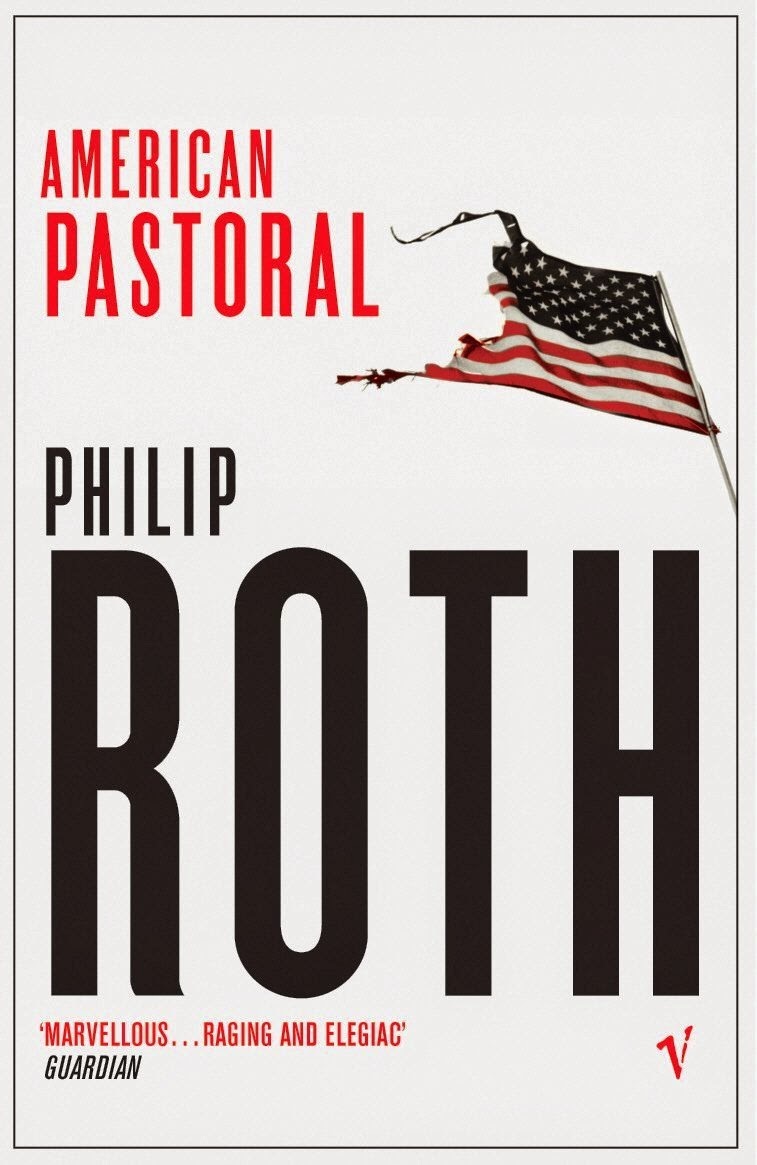
Pulitzer Prize Winner (1998)In American Pastoral, Philip Roth gives us a novel of unqualified greatness that is an elegy for all the twentieth century's promises of prosperity, civic order, and domestic bliss. Roth's protagonist is Seymour 'Swede' Levov—a legendary high school athlete, a devoted family man, a hard worker, the prosperous inheritor of his father's Newark glove factory—comes of age in thriving, triumphant post-war America. And then one day in 1968, Swede's beautiful American luck deserts him.For Swede's adored daughter, Merry, has grown from a loving, quick-witted girl into a sullen, fanatical teenager—a teenager capable of an outlandishly savage act of political terrorism. And overnight Swede is wrenched out of the longed-for American pastoral and into the indigenous American berserk. Compulsively readable, propelled by sorrow, rage, and a deep compassion for its characters, this is Roth's masterpiece.

Budd Schulberg's celebrated novel of the prize ring has lost none of its power since its first publication almost fifty years ago. Crowded with unforgettable characters, it is a relentless expose of the fight racket. A modern Samson in the form of a simple Argentine peasant is ballyhooed by an unscrupulous fight promoter and his press agent and then betrayed and destroyed by connivers. Mr. Schulberg creates a wonderfully authentic atmosphere for this book that many critics hailed as even better than What Makes Sammy Run? "The quintessential novel of boxing and corruption."― USA Today "The book will stand not only as the novel about boxing but also as a book that indirectly tells more about civilization than do most books about civilization itself."―Arthur Miller. "Brilliant, witty, and amusing―the best book on fighting that I have read."―Gene Tunney.

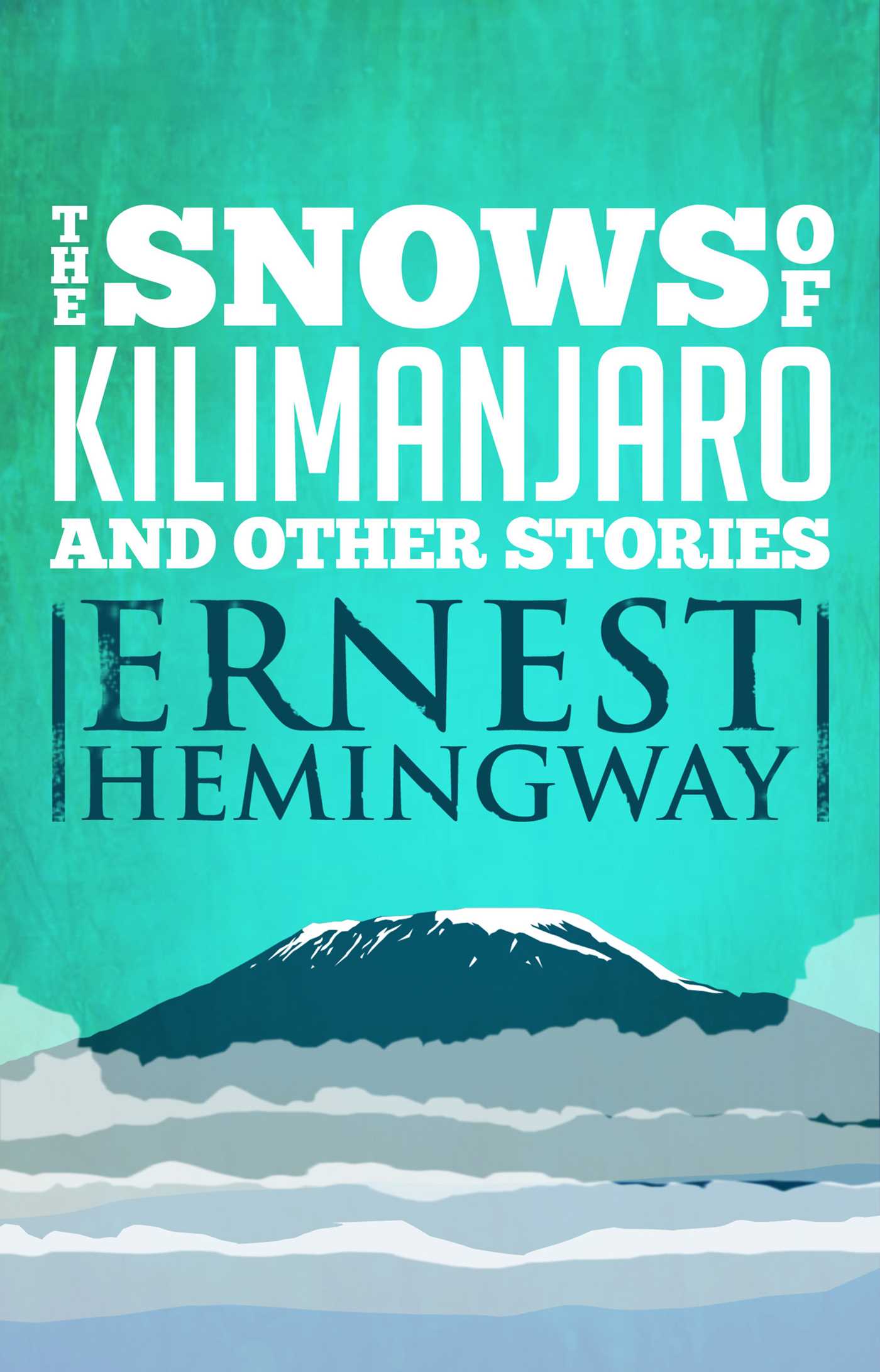
Auf einer Safari am Fuße des Kilimandscharo erleidet der Schriftsteller Harry eine Beinverletzung, die Wundbrand entwickelt. Während seine Frau und er auf das Rettungsflugzeug warten, lässt er sein Leben in Gedanken Revue passieren.

The Fifties is a sweeping social, political, economic, and cultural history of the ten years that Halberstam regards as seminal in determining what our nation is today. Halberstam offers portraits of not only the titans of the age: Eisenhower Dulles, Oppenheimer, MacArthur, Hoover, and Nixon, but also of Harley Earl, who put fins on cars; Dick and Mac McDonald and Ray Kroc, who mass-produced the American hamburger; Kemmons Wilson, who placed his Holiday Inns along the nation's roadsides; U-2 pilot Gary Francis Powers; Grace Metalious, who wrote Peyton Place; and "Goody" Pincus, who led the team that invented the Pill.A NEW YORK TIMES BESTSELLER

John D. Rockefeller, J. P. Morgan, Cornelius Vanderbilt, Andrew Carnegie, E. H. Harriman, Jay Gould, Henry Clay Frick . . . their names carry a powerful historical ring, still echoing today in the countless institutions that are part of their legacy, from universities to museums to banks. But who were the people behind the legends, and how did they rise to their positions of vast wealth and influence in the latter half of the nineteenth century? The Robber Barons is a classic work on the financiers and industrialists of the Gilded Age, who shaped their own era as well as the future of the United States—“not a mere series of biographies but a genuine history” (The New York Times Book Review).

In Salthill-on-Hudson, a half-hour train ride from Manhattan, everyone is rich, beautiful, and -- though they look much younger -- middle-aged. But when Adam Berendt, a charismatic, mysterious sculptor, dies suddenly in a brash act of heroism, shock waves rock the town. But who was Adam Berendt? Was he in fact a hero, or someone more flawed and human?

Qui n'éprouve, un jour ou l'autre, la tentation de s'approprier complètement ce qu'il aime, non seulement par désir de possession intime, mais par besoin de communier et de s'identifier avec l'objet aimé ? Tel est le cas d'Hermann Mack, fils du propriétaire d'un cimetière de voitures. Son originalité, toutefois, c'est d'être amoureux d'une automobile, une Ford dernier modèle. Aussi est-il à peine paradoxal de dire que Car est avant tout un roman d'amour. Herman, pour se l'approprier, se mettra à manger sa Ford, morceau par morceau, il ne se nourrira plus d'autre chose que de métal fondu, de bouts de moteurs et de pneus. Mais la mort plane sur ce roman, comme elle plane sur les routes : le dieu-voiture ne cesse de prélever sa dîme parmi les adorateurs. C'est donc une parabole, une fable cruelle que nous livre Harry Crews. Sa verve truculente, son humour noir et sarcastique, son refus des tabous contribuent à faire de Car à la fois un pamphlet virulent et un plaidoyer pour le retour de l'homme au bon sens et à la nature.

A masterpiece of surrealist fiction, steeped in controversy upon its first publication in 1984, Blood and Guts in High School is the book that established Kathy Acker as the preeminent voice of post-punk feminism. In the Mexican city of Merida, ten-year-old Janey lives with Johnny--her "boyfriend, brother, sister, money, amusement, and father"--until he leaves her for another woman. Bereft, Janey travels to New York City, plunging into an underworld of gangs and prostitution. After escaping imprisonment, she flees to Tangiers where she meets Jean Genet, and they begin a torrid affair that will lead Janey to her demise. Fantastical, sensual, and fearlessly radical, this hallucinatory collage is both a comic and tragic portrait of erotic awakening.

Charles Bukowski examines cats and his childhood in You Get So Alone at Times, a book of poetry that reveals his tender side. The iconic tortured artist/everyman delves into his youth to analyze its repercussions.“The Walt Whitman of Los Angeles.” —Joyce Carol Oates“[Bukowski] brought everybody down to earth, even the angels.” —Leonard Cohen, songwriter

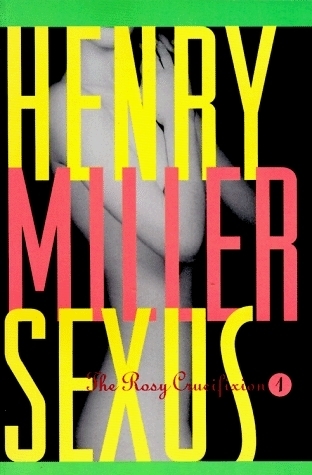
Sexus is the first volume of the scandalous trilogy The Rosy Crucifixion, Henry Miller's major life workHenry Miller called the end of his life in America and the start of a new, bohemian existence in 1930s Paris his 'rosy crucifixion'. His searing fictionalized autobiography of this time of liberation was banned for nearly twenty years. Sexus, the first volume in The Rosy Crucifixion trilogy, looks back to his early sexual escapades in Brooklyn, and his growing infatuation with the playful, teasing dance hall hostess who will become the great obsession of his life.

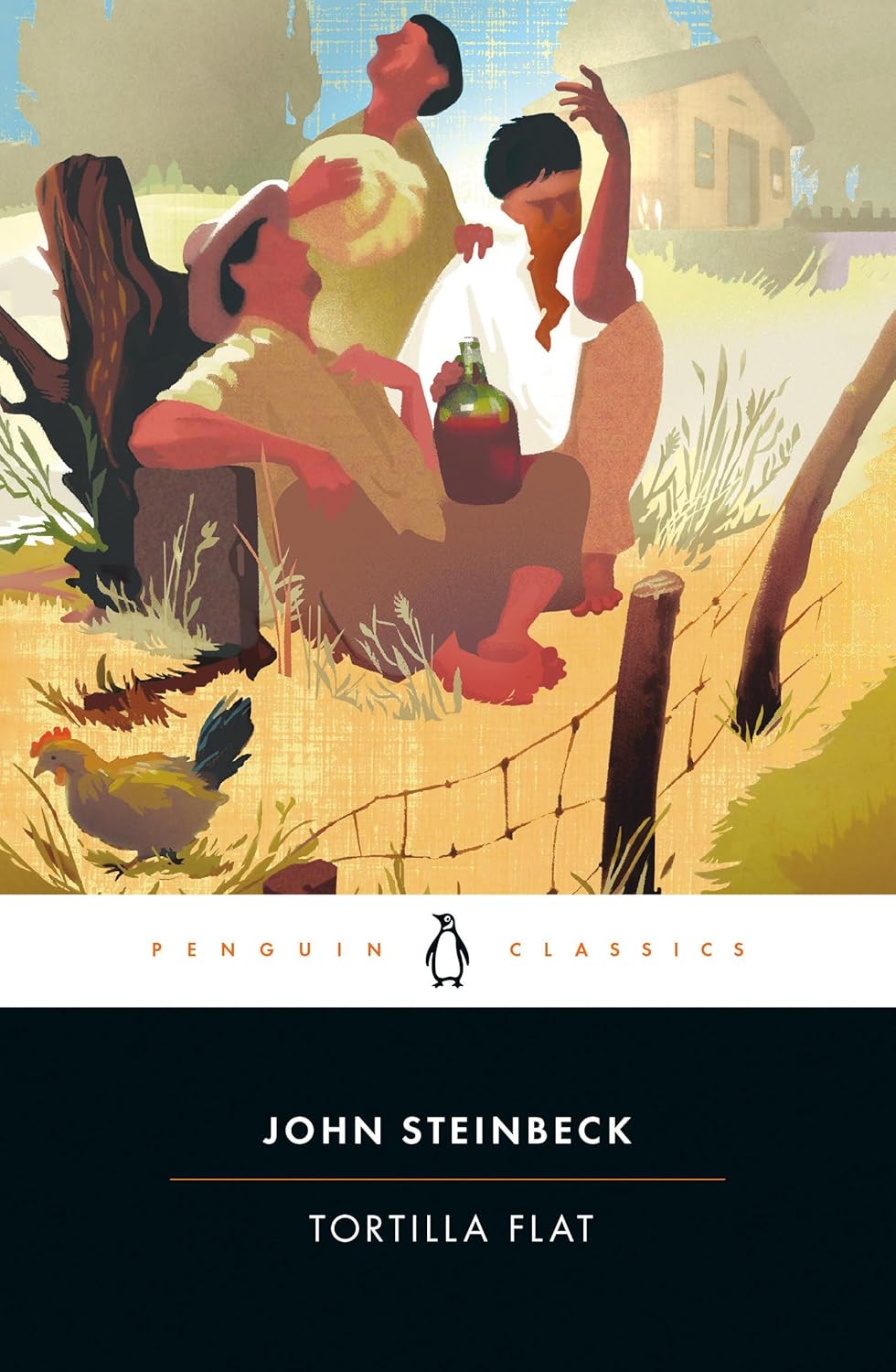
Danny is a paisano, descended from the original Spanish settlers who arrived in Monterey, California, centuries before. He values friendship above money and possessions, so when he suddenly inherits two houses, Danny is quick to offer shelter to his fellow gentlemen of the road. Together, their love of freedom and scorn for material things draws them into daring and often hilarious adventures. That is, until Danny, tiring of his new responsibilities, suddenly disappears...

When Chris Kraus, an unsuccessful artist pushing 40, spends an evening with a rogue academic named Dick, she falls madly and inexplicably in love, enlisting her husband in her haunted pursuit. Dick proposes a kind of game between them, but when he fails to answer their letters Chris continues alone, transforming an adolescent infatuation into a new form of philosophy.Blurring the lines of fiction, essay and memoir, Chris Kraus's novel was a literary sensation when it was first published in 1997. Widely considered to be the most important feminist novel of the past two decades, I Love Dick is still essential reading; as relevant, fierce and funny as ever.

There is September 11 and then there are the days after, and finally the years.Falling Man is a magnificent, essential novel about the event that defines turn-of-the-century America. It begins in the smoke and ash of the burning towers and tracks the aftermath of this global tremor in the intimate lives of a few people.First there is Keith, walking out of the rubble into a life that he'd always imagined belonged to everyone but him. Then Lianne, his estranged wife, memory-haunted, trying to reconcile two versions of the same shadowy man. And their small son Justin, standing at the window, scanning the sky for more planes.These are lives choreographed by loss, grief and the enormous force of history.

In what is widely hailed as the best of his many novels, Charles Bukowski details the long, lonely years of his own hardscrabble youth in the raw voice of alter ego Henry Chinaski. From a harrowingly cheerless childhood in Germany through acne-riddled high school years and his adolescent discoveries of alcohol, women, and the Los Angeles Public Library's collection of D. H. Lawrence, "Ham on Rye" offers a crude, brutal, and savagely funny portrait of an outcast's coming-of-age during the desperate days of the Great Depression.

Beginning with All the Pretty Horses and continuing through The Crossing and Cities of the Plain, McCarthy chronicles the lives of two young men coming of age in the Southwest and Mexico, poised on the edge of a world about to change forever. Hauntingly beautiful, filled with sorrow and humor, The Border Trilogy is a masterful elegy for the American frontier.

George Webber has written a successful novel about his family and hometown. When he returns to that town he is shaken by the force of the outrage and hatred that greets him. Family and friends feel naked and exposed by the truths they have seen in his book, and their fury drives him from his home. He begins a search for his own identity that takes him to New York and a hectic social whirl; to Paris with an uninhibited group of expatriates; to Berlin, lying cold and sinister under Hitler's shadow. At last Webber returns to America and rediscovers it with love, sorrow, and hope.

From the author of White Noise (winner of the National Book Award) and The Silence , an eerily convincing fictional speculation on the events leading up to the assassination of John F. KennedyIn this powerful, unsettling novel, Don DeLillo chronicles Lee Harvey Oswald's odyssey from troubled teenager to a man of precarious stability who imagines himself an agent of history. When "history" presents itself in the form of two disgruntled CIA operatives who decide that an unsuccessful attempt on the life of the president will galvanize the nation against communism, the scales are irrevocably tipped.A gripping, masterful blend of fact and fiction, alive with meticulously portrayed characters both real and created, Libra is a grave, haunting, and brilliant examination of an event that has become an indelible part of the American psyche.

With this, his first collection, Carver breathed new life into the short story. In the pared-down style that has since become his hallmark, Carver showed us how humour and tragedy dwelt in the hearts of ordinary people, and won a readership that grew with every subsequent brilliant collection of stories, poems and essays that appeared in the last eleven years of his life.

In the United States the Cold War shaped our political culture, our institutions, and our national priorities. Abroad, it influenced the destinies of people everywhere. It divided Europe, split Germany, and engulfed the Third World. It led to a feverish arms race and massive sales of military equipment to poor nations. For at least four decades it left the world in a chronic state of tension where a miscalculation could trigger nuclear holocaust. Documents, oral histories, and memoirs illuminating the goals, motives, and fears of contemporary U.S. officials were already widely circulated and studied during the Cold War, but in the 1970s a massive declassification of documents from the Army, Navy, Air Force, the Joint Chiefs of Staff, the Department of Defense, and some intelligence agencies reinvigorated historical study of this war which became the definitive conflict of its time. While many historians used these records to explore specialized topics, this author marshals the considerable available evidence on behalf of an overall analysis of national security policy during the Truman years. To date, it is the most comprehensive history of that administration's progressive embroilment in the Cold War.

On June 24, 1993, David Gelernter opened a package that exploded, blowing off most of his right hand and damaging his hearing, eyesight, and chest. Ironically, the perpetrator, the technology-phobic "mad genius" we know as the Unabomber, managed to punish one of the very few people who are deeply skeptical about computers and openly critical of technology. Perhaps the greater irony is that the bomb meant to destroy a man's life remade it, and the wounds meant to break his spirit only strengthened it. Now, in this haunting memoir, Gelernter makes a metaphor of himself, seeing in his own near-death and recovery the same disfigurement and promise for American society as a whole. As he ponders his own spiritual condition and the healing power he found in family, religion, community, and art, he critiques the American soul and its devaluing of these very treasures. Instead of teaching and lauding the virtues of courage, critical thinking, and good judgment, Americans have made a media circus out of crime. We are so busy peeking pruriently into the twisted minds of madmen that we have forgotten the acts of violence are not significant because they tickle our bloodlust, but because they force us to rethink our priorities. In a power analysis of the media's response to his experience, for example, Gelernter points out that the Unabomber was described as a "genius, " as "sick, " as "fascinating, " but never as evil. Gelernter asks the chilling question: What does it mean when a culture no longer believes in evil? What happens to a society that has lost its ability to react morally in a crisis? After all, when a man is blown up by a bomb, we should question, not gawk; learn the deeper lessons, not bask in the lurid details. A gripping and poignant narrative as well as a thought-provoking analysis of our culture and where it's headed, Drawing Life is about the resurrection of an extremely thoughtful human being and the extraordinary power of one man's will to live.

In the hopeful 1950s, Frank and April Wheeler appear to be a model American couple: bright, beautiful, talented, with two young children and a starter home in the suburbs. Perhaps they married too young and started a family too early. Maybe Frank's job is dull. And April never saw herself as a housewife. Yet they have always lived on the assumption that greatness is only just around the corner. But now that certainty is now about to crumble. With heartbreaking compassion and remorseless clarity, Richard Yates shows how Frank and April mortgage their spiritual birthright, betraying not only each other, but their best selves.

When the New York Times finally apologized for its coverage of Iraq’s weapons of mass destruction in 2004, it was too late. The newspaper had already supported the invasion. The Bush administration was not only violating international law, it was lying to the public, using major media like the Times to spread its message.In this meticulously researched study—the first part of a two-volume work—Howard Friel and Richard Falk demonstrate how the newspaper of record in the United States has consistently, over the last 50 years, misreported the facts related to the wars waged by the United States. From Vietnam in the 1960s to Nicaragua in the 1980s and Iraq today, the authors accuse the New York Times of serial distortions. They claim that such coverage now threatens not only world legal order but constitutional democracy in the United States.Falk and Friel show, for example, that, despite numerous US threats to invade Iraq, and despite the fact that an invasion of one country by another implicates fundamental aspects of the UN Charter and international law, the New York Times editorial page never mentioned the words “UN Charter” or “international law” in any of its 70 editorials on Iraq from September 11, 2001, to March 20, 2003. The authors also show that the editorial page supported the Bush administration’s WMD claims against Iraq, and that its magazine, op-ed and news pages performed just as poorly.In conclusion the authors suggest an alternative editorial policy of “strict scrutiny” that incorporates the UN Charter and the US Constitution in the Times coverage of the use and threat of force by the United States and the protection of civil and human rights at home and abroad.

In The Easter Parade, first published in 1976, we meet sisters Sarah and Emily Grimes when they are still the children of divorced parents. We observe the sisters over four decades, watching them grow into two very different women. Sarah is stable and stalwart, settling into an unhappy marriage. Emily is precocious and independent, struggling with one unsatisfactory love affair after another. Richard Yates's classic novel is about how both women struggle to overcome their tarnished family's past, and how both finally reach for some semblance of renewal.

Raised within the confines of a system that has done nothing but provide him with pain, Alex Hamilton's frustration and anger are completely natural--and inherently dangerous.Since his parents split up, Alex has been constantly running from foster homes and institutions, yearning to be with his father, a broken man who cannot give his son the home he desperately needs. The only constant in Alex's life is no-good, criminally-minded peers, who are all too ready to plant illegal ideas in an intelligent mind. Bunker writes, "His unique potential would develop into unique destructiveness."

A powerfully moving biography of JFK by one of his closest friends and advisors. Sorensen's work was first published in 1965 when the wounds caused by the assassination had barely time to heal. It has remained a classic and is indispensable for an evaluation of Kennedy and his place in history.

The novel, for which Bellow won the Pulitzer Prize for Fiction in 1976, is a self-described "comic book about death," whose title character is modeled on the self-destructive lyric poet Delmore Schwartz. Charlie Citrine, an intellectual, middle-aged author of award-winning biographies and plays, contemplates two significant figures and philosophies in his life: Von Humboldt Fleisher, a dead poet who had been his mentor, and Rinaldo Cantabile, a very-much-alive minor mafioso who has been the bane of Humboldt's existence. Humboldt had taught Charlie that art is powerful and that one should be true to one's own creative spirit. Rinaldo, Charlie's self-appointed financial adviser, has always urged Charlie to use his art to turn a profit. At the novel's end, Charlie has managed to set his own course.

DeDaumier-Smith's Blue Period, Teddy, and A Perfect Day for Bananafish are among the nine works in a collection of Salinger's perceptive and realistic short stories

This book contains two separate stories: "Raise High the Roof Beam, Carpenters" is the first, and "Seymour: An Introduction" is the second."Raise High the Roof Beam, Carpenters" is a story about the Glass family, narrated by Buddy, the second oldest brother. Buddy is attending his brother Seymour's wedding to a gal named Muriel, but he's on Army leave during active duty in World War II. At the wedding, everyone is stunned when Seymour does not show up.The action of the story picks up when several characters end up carpooling together following the failed wedding. The others (the Matron of Honor and her husband, and a couple of stragglers) are talking about Seymour and the disappointment of his not showing up, and Buddy never tells them that he is secretly Seymour's brother, so they talk more openly with him than they otherwise would.They criticize Seymour and speculate about his character flaws and deficiencies, but Buddy finds their assessments quite judgmental and biased. He then decides to tell the car who he really is, shaming them for their loose criticisms.He finds Seymour's journal, and he discovers a strange message from their sister Boo Boo for Seymour on their bathroom mirror: "Raise high the roof beam, carpenters. Like Ares comes the bridegroom/ taller far than a tall man." This is a fragment from the Greek poet Sappho."Seymour: An Introduction" is a kind of elegy for Seymour from Buddy, told in the form of an introduction to the reader. The reader makes Seymour's acquaintance while knowing that Seymour technically isn't alive when the story is published, having killed himself in 1948.This portion of the story is told in stream of consciousness, and it discusses Eastern religious mysticism.

'I come from Des Moines. Somebody had to'And, as soon as Bill Bryson was old enough, he left. Des Moines couldn't hold him, but it did lure him back. After ten years in England, he returned to the land of his youth, and drove almost 14,000 miles in search of a mythical small town called Amalgam, the kind of trim and sunny place where the films of his youth were set. Instead, his search led him to Anywhere, USA; a lookalike strip of gas stations, motels and hamburger outlets populated by lookalike people with a penchant for synthetic fibres. Travelling around thirty-eight of the lower states - united only in their mind-numbingly dreary uniformity - he discovered a continent that was doubly lost; lost to itself because blighted by greed, pollution, mobile homes and television; lost to him because he had become a stranger in his own land.The Lost Continent is a classic of travel literature - hilariously, stomach-achingly funny, yet tinged with heartache - and the book that first staked Bill Bryson's claim as the most beloved writer of his generation.

In the stories that make up Oblivion, David Foster Wallace joins the rawest, most naked humanity with the infinite involutions of self-consciousness—a combination that is dazzlingly, uniquely his. These are worlds undreamt-of by any other mind. Only David Foster Wallace could convey a father's desperate loneliness by way of his son's daydreaming through a teacher's homicidal breakdown ("The Soul Is Not a Smithy"). Or could explore the deepest and most hilarious aspects of creativity by delineating the office politics surrounding a magazine profile of an artist who produces miniature sculptures in an anatomically inconceivable way ("The Suffering Channel"). Or capture the ache of love's breakdown in the painfully polite apologies of a man who believes his wife is hallucinating the sound of his snoring ("Oblivion"). Each of these stories is a complete world, as fully imagined as most entire novels, at once preposterously surreal and painfully immediate. Oblivion is an arresting and hilarious creation from a writer "whose best work challenges and reinvents the art of fiction" (Atlanta Journal-Constitution).Mister squishy --The soul is not a smithy --Incarnations of burned children --Another pioneer --Good old neon --Philosophy and the mirror of nature --Oblivion --The suffering channel

A beat movement icon and visionary poet, Allen Ginsberg broke boundaries with his fearless, pyrotechnic verse. The apocalyptic "Howl" became the subject of an obscenity trial when it was first published in 1956 -- its vindication was a watershed moment in twentieth-century history. Dark, ecstatic and rhapsodic, "Howl" shows why Ginsberg was one of the most influential poets of the twentieth century.Howl and Other Poems is a collection of Ginsberg's finest work, including "Howl," one of the principal works of the Beat Generation as well as "A Supermarket in California," "Transcription of Organ Music," "Sunflower Sutra," "America," "In the Baggage Room at Greyhound," and some of his earlier works.

Politically insightful, Nixonland recaptures the turbulent 60s & early 70s, revealing how Dick Nixon rose from the political grave to seize and hold the presidency. Perlstein's account begins with the '65 Watts riots, nine months after Johnson's landslide victory over Goldwater appeared to herald a permanent liberal consensus. Yet the next year, scores of liberals were tossed from Congress, America was more divided than ever and a disgraced politician was on his way to a shocking comeback.Between 1965 and 1972, America experienced a second civil war. From its ashes, today's political world was born. It was the era not only of Nixon, Johnson, Agnew, Humphrey, McGovern, Daley and Wallace; but Abbie Hoffman, Ronald Reagan, Angela Davis, Ted Kennedy, Charles Manson, John Lindsay and Jane Fonda. There are glimpses of Jimmy Carter, George H.W. Bush, Jesse Jackson, John Kerry and even of two ambitious young men named Karl Rove and Bill Clinton--and an unambitious young man named George W. Bush.Filled with prodigious research, driven by a powerful narrative, Perlstein's account of how America divided confirms his place as one of our country's most celebrated historians.

Joyce Carol Oates' Wonderland Quartet comprises four remarkable novels that explore social class in America and the inner lives of young Americans. As powerful and relevant today as it on its initial publication, them chronicles the tumultuous lives of a family living on the edge of ruin in the Detroit slums, from the 1930s to the 1967 race riots. Praised by The Nation for her "potent, life-gripping imagination," Oates traces the aspirations and struggles of Loretta Wendall, a dreamy young mother who is filled with regret by the age of sixteen, and the subsequent destinies of her children, Maureen and Jules, who must fight to survive in a world of violence and danger. Winner of the National Book Award, them is an enthralling novel about love, class, race, and the inhumanity of urban life. It is, raves The New York Times, "a superbly accomplished vision." Them is the third novel in the Wonderland Quartet. The books that complete this acclaimed series, A Garden of Earthly Delights, Expensive People, and Wonderland, are also available from the Modern Library.

An American Iliad in the guise of contemporary political reportage, What It Takes penetrates the mystery at the heart of all presidential campaigns: How do presumably ordinary people acquire that mixture of ambition, stamina, and pure shamelessness that makes a true candidate? As he recounts the frenzied course of the 1988 presidential race -- and scours the psyches of contenders from George Bush and Robert Dole to Michael Dukakis and Gary Hart -- Pulitzer Prize-winning journalist Richard Ben Cramer comes up with the answers, in a book that is vast, exhaustively researched, exhilarating, and sometimes appalling in its revelations.

A classic in the Bukowski poetry canon, Love Is a Dog from Hell is a raw, lyrical exploration of the exigencies, heartbreaks, and limits of love.Charles Bukowski was a man of intense emotions, someone an editor once called a “passionate madman.” Alternating between tough and gentle, sensitive and gritty, Bukowski lays bare the myriad facets of love—its selfishness and its narcissism, its randomness, its mystery and its misery, and, ultimately, its true joyfulness, endurance, and redemptive power.

First published in 1943, this autobiography is also a superb portrait of America's Depression years, by the folk singer, activist, and man who saw it all.Woody Guthrie was born in Oklahoma and traveled this whole country over—not by jet or motorcycle, but by boxcar, thumb, and foot. During the journey of discovery that was his life, he composed and sang words and music that have become a national heritage. His songs, however, are but part of his legacy. Behind him Woody Guthrie left a remarkable autobiography that vividly brings to life both his vibrant personality and a vision of America we cannot afford to let die.

‘Everything everybody does is so—I don’t know—not wrong, or even mean, or even stupid necessarily. But just so tiny and meaningless and—sad-making. And the worst part is, if you go bohemian or something crazy like that, you’re conforming just as much only in a different way.’First published in The New Yorker as two sequential stories, ‘Franny’ and ‘Zooey’ offer a dual portrait of the two youngest members of J. D. Salinger’s fictional Glass family.Franny Glass is a pretty, effervescent college student on a date with her intellectually confident boyfriend, Lane. They appear to be the perfect couple, but as they struggle to communicate with each other about the things they really care about, slowly their true feelings come to the surface. The second story in this book, ‘Zooey’, plunges us into the world of her ethereal, sophisticated family. When Franny’s emotional and spiritual doubts reach new heights, her older brother Zooey, a misanthropic former child genius, offers her consolation and brotherly advice.Written in Salinger’s typically irreverent style, these two stories offer a touching snapshot of the distraught mindset of early adulthood and are full of the insightful emotional observations and witty turns of phrase that have helped make Salinger’s reputation what it is today.

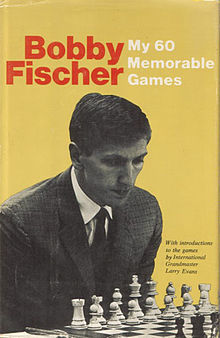
In this book, published by Simon and Schuster in 1969, Bobby Fischer analyzes his most important and representative games. He shows the strategic considerations, the tactics, and sometimes the blunders, that occur during the pressure of tournament play. He assesses his opponents’ thinking as well. Each game has, in addition to Fischer's own annotations, an analytical introduction by International Grandmaster Larry Evans.

1961 Common Reader Classic Bestseller. A narrative history of American politics in action. 2004 Barnes and Noble edition.

The nuanced mysteries of light, darkness, presence, and memory are central themes in W.S. Merwin’s new book of poems. “I have only what I remember,” Merwin admits, and his memories are focused and profound—the distinct qualities of autumn light, a conversation with a boyhood teacher, well-cultivated loves, and “our long evenings and astonishment.” In “Photographer,” Merwin presents the scene where armloads of antique glass negatives are saved from a dumpcart by “someone who understood.” In “Empty Lot,” Merwin evokes a child lying in bed at night, listening to the muffled dynamite blasts of coal mining near his home, and we can’t help but ask: How shall we mine our lives?somewhere the Perseids are fallingtoward us already at a speed that wouldburn us alive if we could believe itbut in the stillness after the rain endsnothing is to be heard but the drops falling

The average professional in this country wakes up in the morning, goes to work, comes home, eats dinner, and then goes to sleep, unaware that he or she has likely committed several federal crimes that day. Why? The answer lies in the very nature of modern federal criminal laws, which have exploded in number but also become impossibly broad and vague. In Three Felonies a Day, Harvey A. Silverglate reveals how federal criminal laws have become dangerously disconnected from the English common law tradition and how prosecutors can pin arguable federal crimes on any one of us, for even the most seemingly innocuous behavior. The volume of federal crimes in recent decades has increased well beyond the statute books and into the morass of the Code of Federal Regulations, handing federal prosecutors an additional trove of vague and exceedingly complex and technical prohibitions to stick on their hapless targets. The dangers spelled out in Three Felonies a Day do not apply solely to “white collar criminals,” state and local politicians, and professionals. No social class or profession is safe from this troubling form of social control by the executive branch, and nothing less than the integrity of our constitutional democracy hangs in the balance.

William Faulkner was the greatest American novelist of the twentieth century, yet he lived a life marked by a pervasive sense of failure. Throughout his career, he remained haunted by his inability to master a series of personal and professional his less-than-heroic military career; the loss of his brother in an airplane crash; a disappointing stint as a Hollywood screenwriter; and a destructive bout with alcoholism. In this imaginative biography, Philip Weinstein--a leading authority on the great novelist--targets Faulkner's embattled sense of self as central to both his life and his work. Weinstein shows how Faulkner's troubled interactions with time, place, and history--with antebellum practices and racial division--take on their fullest meanings in his fiction. Exploring the resonance of his own unpreparedness, Faulkner invented a singular language that captured human consciousness under stress as never before. Becoming Faulkner joins Faulkner's life and art in a bold new way, giving readers a full vantage from which to better understand this twentieth-century literary genius.Weinstein shows how Faulkner's troubled interactions with time, place, and history--with antebellum practices and southern heritage--form a pattern that played out over the course of his entire life. At the same time, these incidents take on their fullest meanings in his fiction. It was in meditating on his failures, his own unreadiness, Weinstein argues, that Faulkner came up with his singular language, one that captured human consciousness under stress as never before. His fruitless striving catapulted American literature to a new level of sophistication.Narrating the events that comprised Faulkner's life, biographers have long struggled to depict his personal complexity, the paradoxes that shaped his decisions and dogged his relationships. But without a consideration of the writing as well, the troubles in the life fail to reveal their deeper resonance. By skillfully analyzing the work while tracing the events, Weinstein achieves a full portrait, revealing struggles that animate his life and shadows that complicate his work. Becoming Faulkner thus conjoins Faulkner's life and art in a bold new way, giving readers a full vantage from which to better understand this twentieth-century literary genius.

America's post--Cold War strategic dominance and its pre-recession affluence inspired pundits to make celebratory comparisons to ancient Rome at its most powerful. Now, with America no longer perceived as invulnerable, engaged in protracted fighting in Iraq and Afghanistan, and suffering the worst economic downturn since the Great Depression, comparisons are to the bloated, decadent, ineffectual later Empire. In Why America Is Not a New Rome , Vaclav Smil looks at these comparisons in detail, going deeper than the facile analogy-making of talk shows and glossy magazine articles. He finds profound differences. Smil, a scientist and a lifelong student of Roman history, focuses on several fundamental the very meaning of empire; the actual extent and nature of Roman and American power; the role of knowledge and innovation; and demographic and economic basics--population dynamics, illness, death, wealth, and misery. America is not a latter-day Rome, Smil finds, and we need to understand this in order to look ahead without the burden of counterproductive analogies. Superficial similarities do not imply long-term political, demographic, or economic outcomes identical to Rome's.

Writing with access to thousands of recently released official documents, new interviews & perspectives coming from a decade of research & reflection, Anthony Summers & Robbyn Swan deliver the 1st panoramic, authoritative look at 9/11. For many Americans, 9/11/2001, is the darkest date in the nation's history. What exactly happened? Could it have been prevented? How & why did so much acrimony & bad information arise from the ashes of the World Trade Center, the Pentagon & a Pennsylvania field? What remains unresolved? What is certain: Discord & dissent continue to this day. Beginning with the 1st brutal actions of the hijackers of American Airlines Flight 11, The Eleventh Day tracks the sequence of events & introduces the players: pilots, terrorists, passengers & those who died on the ground. Drawing on previously classified records & raw transcripts, Summers & Swan investigate the response of President Bush & the military that day, & the failure to intercept the hijacked airliners. They document the untruths told afterward by US officials &, as counterpoint, consider the contentions of the 9/11 Truth movement. With meticulous research, they examine the personalities of those behind the onslaught, analyze their motives & expose the US intelligence blunders preceding the attacks. They note how afterward--without good evidence--the Bush administration tried to link 9/11 to Iraq. Finally, they confront the question the 9/11 Commission's report blurred: Were the terrorists backed by powerful figures in a foreign nation long viewed as a friend? Riveting, revelatory, thoroughly sourced & complete with extensive endnotes, The Eleventh Day is the essential one-volume work on a pivotal event.

Based on classified documents and first-person interviews, a startling history of the American war on Vietnamese civiliansAmericans have long been taught that events such as the notorious My Lai massacre were isolated incidents in the Vietnam War, carried out by “a few bad apples.” But as award-winning journalist and historian Nick Turse demonstrates in this groundbreaking investigation, violence against Vietnamese noncombatants was not at all exceptional during the conflict. Rather, it was pervasive and systematic, the predictable consequence of orders to “kill anything that moves.”Drawing on more than a decade of research in secret Pentagon files and extensive interviews with American veterans and Vietnamese survivors, Turse reveals for the first time how official policies resulted in millions of innocent civilians killed and wounded. In shocking detail, he lays out the workings of a military machine that made crimes in almost every major American unit all but inevitable. Kill Anything That Moves takes us from archives filled with Washington’s long-suppressed war crimes investigations to the rural Vietnamese hamlets that bore the brunt of the war; from boot camps where young American soldiers learned to hate all Vietnamese to bloodthirsty campaigns like Operation Speedy Express, in which a general obsessed with body counts led soldiers to commit what one participant called “a My Lai a month.”Thousands of Vietnam books later, Kill Anything That Moves, devastating and definitive, finally brings us face-to-face with the truth of a war that haunts Americans to this day.

El desmoronamiento narra los últimos treinta años de la historia de Estados Unidos, la época del declive americano, a través de las vidas de varias personas: Dean Price, hijo de granjeros, que se convierte en un abanderado de la nueva economía en el Sur rural; Tammy Thomas, una obrera del cinturón industrial del país que intenta sobrevivir al colapso de su ciudad; Jeff Connaughton, miembro del círculo político de Washington, que oscila entre el idealismo y el atractivo del dinero, y Peter Thiel, un multimillonario de Silicon Valley que cuestiona la importancia de internet y construye una visión radical del futuro. Packer entrelaza estas historias personales con perfiles biográficos de las grandes figuras públicas de la época, desde Newt Gingrich hasta el rapero Jay-Z, y con collages de titulares de periódico, lemas publicitarios y letras de canciones, que captan la evolución de los acontecimientos y sus corrientes subterráneas.El desmoronamiento es el retrato de una superpotencia a punto de derrumbarse, con élites que ya no son élite, instituciones que ya no funcionan y la gente corriente abandonada a su suerte. La historia narrativa y caleidoscópica de la nueva América es la obra más ambiciosa publicada en mucho tiempo.

Three classic works--including the virtuosic "Revolutionary Road, "soon to be a major motion picture--that exemplify the remarkable gifts of this great American master.Richard Yates's first novel, "Revolutionary Road "is the unforgettable portrait of a marriage built on dreams that tragically never come to fruition. In "The Easter Parade, "he tells the story of two sisters whose parents' divorce overshadows their entire lives. And in the stories in "Eleven Kinds of Loneliness, "we witness men and women striving for better lives amid discouragement and disillusion. (Book Jacket Status: Jacketed)

A book about the world of drugs in Las Vegas. "The best book on the dope decade." -- "NY Times Book Review"

Born in Amherst, Massachusetts in 1830, Dickinson began life as an energetic, outgoing young woman who excelled as a student. However, in her mid-twenties she began to grow reclusive, and eventually she rarely descended from her room in her father’s house. She spent most of her time working on her poetry, largely without encouragement or real interest from her family and peers, and died at age fifty-five. Only a handful of her 1,775 poems had been published during her lifetime. When her poems finally appeared after her death, readers immediately recognized an artist whose immense depth and stylistic complexities would one day make her the most widely recognized female poet to write in the English language. Dickinson’s poetry is remarkable for its tightly controlled emotional and intellectual energy. The longest poem covers less than two pages. Yet in theme and tone her writing reaches for the sublime as it charts the landscape of the human soul. A true innovator, Dickinson experimented freely with conventional rhythm and meter, and often used dashes, off rhymes, and unusual metaphors—techniques that strongly influenced modern poetry. Dickinson’s idiosyncratic style, along with her deep resonance of thought and her observations about life and death, love and nature, and solitude and society, have firmly established her as one of America’s true poetic geniuses.

Written with the raw honesty and poignant insight that were the hallmarks of her acclaimed bestseller A Widow’s Story, an affecting and observant memoir of growing up from one of our finest and most beloved literary masters The Lost Landscape is Joyce Carol Oates’ vivid chronicle of her hardscrabble childhood in rural western New York State. From memories of her relatives, to those of a charming bond with a special red hen on her family farm; from her first friendships to her earliest experiences with death, The Lost Landscape is a powerful evocation of the romance of childhood, and its indelible influence on the woman and the writer she would become.In this exceptionally candid, moving, and richly reflective account, Oates explores the world through the eyes of her younger self, an imaginative girl eager to tell stories about the world and the people she meets. While reading Alice in Wonderland changed a young Joyce forever and inspired her to view life as a series of endless adventures, growing up on a farm taught her harsh lessons about sacrifice, hard work, and loss. With searing detail and an acutely perceptive eye, Oates renders her memories and emotions with exquisite precision, transporting us to a forgotten place and time—the lost landscape of her youth, reminding us of the forgotten landscapes of our own earliest lives.

Violent crime has been rising sharply in many American cities after two decades of decline. Homicides jumped nearly 17 percent in 2015 in the largest 50 cities, the biggest one-year increase since 1993. The reason is what Heather Mac Donald first identified nationally as the “Ferguson effect”: Since the 2014 police shooting death of Michael Brown in Ferguson, Missouri, officers have been backing off of proactive policing, and criminals are becoming emboldened. This book expands on Mac Donald’s groundbreaking and controversial reporting on the Ferguson effect and the criminal-justice system. It deconstructs the central narrative of the Black Lives Matter that racist cops are the greatest threat to young black males. On the contrary, it is criminals and gangbangers who are responsible for the high black homicide death rate. The War on Cops exposes the truth about officer use of force and explodes the conceit of “mass incarceration.” A rigorous analysis of data shows that crime, not race, drives police actions and prison rates. The growth of proactive policing in the 1990s, along with lengthened sentences for violent crime, saved thousands of minority lives. In fact, Mac Donald argues, no government agency is more dedicated to the proposition that “black lives matter” than today’s data-driven, accountable police department. Mac Donald gives voice to the many residents of high-crime neighborhoods who want proactive policing. She warns that race-based attacks on the criminal-justice system, from the White House on down, are eroding the authority of law and putting lives at risk. This book is a call for a more honest and informed debate about policing, crime, and race.

New York Times bestselling author of Satchel: The Life and Times of an American Legend Larry Tye was given unprecedented access by the Kennedy family to write this in-depth, vibrant and editorially independent biography.History remembers Robert F. Kennedy as a racial healer, a tribune for the poor, and the last progressive knight. But Kennedy—nurtured on the rightist orthodoxies of his dynasty-building father—started his public life as counsel to the left-baiting, table-thumping Senator Joseph McCarthy.A bare-knuckled political operative who masterminded his brother’s whatever-it-takes bids for senator and president, Kennedy okayed FBI wiretaps of Martin Luther King Jr. and cloak-and-dagger operations against communist Cuba that included blowing up railroad bridges, sabotaging crops, and plotting the elimination of President Fidel Castro.Remembered now as a rare optimist in an age of political cynicism, RFK’s profoundly moving journey from cold warrior to hot-blooded liberal also offers a lens into two of the most chaotic and confounding decades of twentieth century America.

Edited by Abel Debritto, the definitive collection of poems from an influential writer whose transgressive legacy and raw, funny, and acutely observant writing has left an enduring mark on modern culture. Few writers have so brilliantly and poignantly conjured the desperation and absurdity of ordinary life as Charles Bukowski. Resonant with his powerful, perceptive voice, his visceral, hilarious, and transcendent poetry speaks to us as forcefully today as when it was written. Encompassing a wide range of subjects—from love to death and sex to writing—Bukowski’s unvarnished and self-deprecating verse illuminates the deepest and most enduring concerns of the human condition while remaining sharply aware of the day to day. With his acute eye for the ridiculous and the troubled, Bukowski speaks to the deepest longings and strangest predilections of the human experience. Gloomy yet hopeful, this is tough, unrelenting poetry touched by grace. This is Essential Bukowski .

The definitive history of the military's decades-long investigation into mental powers and phenomena, from the author of Pulitzer Prize finalist The Pentagon's Brain and international bestseller Area 51This is a book about a team of scientists and psychics with top secret clearances.For more than forty years, the U.S. government has researched extrasensory perception, using it in attempts to locate hostages, fugitives, secret bases, and downed fighter jets, to divine other nations' secrets, and even to predict future threats to national security. The intelligence agencies and military services involved include CIA, DIA, NSA, DEA, the Navy, Air Force, and Army-and even the Joint Chiefs of Staff.Now, for the first time, New York Times bestselling author Annie Jacobsen tells the story of these radical, controversial programs, using never before seen declassified documents as well as exclusive interviews with, and unprecedented access to, more than fifty of the individuals involved. Speaking on the record, many for the first time, are former CIA and Defense Department scientists, analysts, and program managers, as well as the government psychics themselves.Who did the U.S. government hire for these top secret programs, and how do they explain their military and intelligence work? How do scientists approach such enigmatic subject matter? What interested the government in these supposed powers and does the research continue? Phenomena is a riveting investigation into how far governments will go in the name of national security.

John Lahr has produced a theater biography like no other. Tennessee Williams: Mad Pilgrimage of the Flesh gives intimate access to the mind of one of the most brilliant dramatists of his century, whose plays reshaped the American theater and the nation's sense of itself. This astute, deeply researched biography sheds a light on Tennessee Williams's warring family, his guilt, his creative triumphs and failures, his sexuality and numerous affairs, his misreported death, even the shenanigans surrounding his estate.With vivid cameos of the formative influences in Williams's life--his fierce, belittling father Cornelius; his puritanical, domineering mother Edwina; his demented sister Rose, who was lobotomized at the age of thirty-three; his beloved grandfather, the Reverend Walter Dakin--Tennessee Williams: Mad Pilgrimage of the Flesh is as much a biography of the man who created A Streetcar Named Desire, The Glass Menagerie, and Cat on a Hot Tin Roof as it is a trenchant exploration of Williams's plays and the tortured process of bringing them to stage and screen.The portrait of Williams himself is unforgettable: a virgin until he was twenty-six, he had serial homosexual affairs thereafter as well as long-time, bruising relationships with Pancho Gonzalez and Frank Merlo. With compassion and verve, Lahr explores how Williams's relationships informed his work and how the resulting success brought turmoil to his personal life.Lahr captures not just Williams's tempestuous public persona but also his backstage life, where his agent Audrey Wood and the director Elia Kazan play major roles, and Marlon Brando, Anna Magnani, Bette Davis, Maureen Stapleton, Diana Barrymore, and Tallulah Bankhead have scintillating walk-on parts. This is a biography of the highest order: a book about the major American playwright of his time written by the major American drama critic of his time.Winner of the 2015 Sheridan Morley Prize for Theatre Biography American Academy of Arts and Letters' Harold D. Vursell Memorial AwardChicago Tribune Best Books of 2014USA Today 10 Books We Loved ReadingWashington Post 10 Best Books of 2014

A slyly political collection of stories about immigration, broken dreams, Los Angeles gang members, Latin American families, and other tales of high stakes journeys, from the award-winning author of War by Candlelight and At Night We Walk in Circles. Migration. Betrayal. Family secrets. Doomed love. Uncertain futures. In Daniel Alarcon's hands, these are transformed into deeply human stories with high stakes. In -The Thousands, - people are on the move and forging new paths; hope and heartbreak abound. A man deals with the fallout of his blind relatives' mysterious deaths and his father's mental breakdown and incarceration in -The Bridge.- A gang member discovers a way to forgiveness and redemption through the haze of violence and trauma in -The Ballad of Rocky Rontal.- And in the tour de force novella, -The Auroras-, a man severs himself from his old life and seeks to make a new one in a new city, only to find himself seduced and controlled by a powerful woman. Richly drawn, full of unforgettable characters, The King is Always Above the People reveals experiences both unsettling and unknown, and yet eerily familiar in this new world.The thousands --The ballad of Rocky Rontal --The king is always above the people --Abraham Lincoln has been shot --The provincials --Extinct anatomies --República and Grau --The bridge --The lord rides a swift cloud --The auroras

A singularly inventive and unforgettable debut novel about love, luck, and the inextricability of life and art, from 2017 Whiting Award winner Lisa Halliday.Told in three distinct and uniquely compelling sections, Asymmetry explores the imbalances that spark and sustain many of our most dramatic human relations: inequities in age, power, talent, wealth, fame, geography, and justice. The first section, Folly tells the story of Alice, a young American editor, and her relationship with the famous and much older writer Ezra Blazer. A tender and exquisite account of an unexpected romance that takes place in New York during the early years of the Iraq War, Folly also suggests an aspiring novelist’s coming-of-age. By contrast, Madness is narrated by Amar, an Iraqi-American man who, on his way to visit his brother in Kurdistan, is detained by immigration officers and spends the last weekend of 2008 in a holding room in Heathrow. These two seemingly disparate stories gain resonance as their perspectives interact and overlap, with yet new implications for their relationship revealed in an unexpected coda.A stunning debut from a rising literary star, Asymmetry is an urgent, important, and truly original work that will captivate any reader while also posing arresting questions about the very nature of fiction itself.

From Donna Brazile, former DNC chair and legendary political operative, an explosive and revealing new look at the 2016 election: the first insider account of the Russian hacking of the DNC and the missteps by the Clinton campaign and Obama administration that enabled a Trump victory.In the fallout of the Russian hacking of the Democratic National Committee--and as chaos threatened to consume the party's convention--Democrats turned to a familiar figure to right the ship: Donna Brazile. Known to millions from her frequent TV appearances, she was no stranger to high stakes and dirty opponents, and the longtime Democratic strategist had a reputation in Washington as a one-stop shop for fixing sticky problems. What Brazile found at the DNC was unlike anything she had experienced before--and much worse than is commonly known. The party was beset by infighting, scandal, and hubris, while reeling from a brazen and wholly unprecedented attempt by a foreign power to influence the presidential election. Plus, its candidate, Hillary Clinton, faced an opponent who broke every rule in the political playbook. Packed with never-before-reported revelations about what went down in 2016, Hacks is equal parts campaign thriller, memoir, and roadmap for the future. With Democrats now in the wilderness after this historic defeat, Hacks argues that staying silent about what went wrong helps no one. Only by laying bare the missteps, miscalculations, and crimes of 2016, Brazile contends, will Americans be able to salvage their democracy.

The Largesse of the Sea Maiden is the long-awaited new story collection from Denis Johnson. Written in the luminous prose that made him one of the most beloved and important writers of his generation, this collection finds Johnson in new territory, contemplating the ghosts of the past and the elusive and unexpected ways the mysteries of the universe assert themselves.Finished shortly before Johnson’s death, this collection is the last word from a writer whose work will live on for many years to come.The largesse of the sea maidenThe starlight on IdahoStrangler BobTriumph over the graveDoppelganger, poltergeist

"Belew's book helps explain how we got to today's alt right."―Terry Gross, Fresh AirThe white power movement in America wants a revolution. Its soldiers are not lone wolves but highly organized cadres motivated by a coherent and deeply troubling worldview made up of white supremacy, virulent anticommunism, and apocalyptic faith. In Bring the War Home, Kathleen Belew gives us the history of a movement that consolidated in the 1970s and 1980s around a potent sense of betrayal in the Vietnam War and made tragic headlines in Waco and Ruby Ridge and with the Oklahoma City bombing and is resurgent under President Trump.Returning to an America ripped apart by a war they felt they were not allowed to win, a small group of veterans and active-duty military personnel and civilian supporters concluded that waging war on their own country was justified. They unified people from a variety of militant groups, including Klansmen, neo-Nazis, skinheads, radical tax protestors, and white separatists to form a new movement of loosely affiliated independent cells to avoid detection. The white power movement operated with discipline and clarity, undertaking assassinations, armed robbery, counterfeiting, and weapons trafficking. Its command structure gave women a prominent place and put them in charge of brokering alliances and birthing future recruits.Belew's disturbing and timely history reminds us that war cannot be contained in time and space: grievances intensify and violence becomes a logical course of action. Based on years of deep immersion in previously classified FBI files and on extensive interviews, Bring the War Home tells the story of American paramilitarism and the birth of the alt-right.