
Emily Dickinson
Emily Dickinson was an American poet who, despite the fact that less than a dozen of her nearly eighteen hundred poems were published during her lifetime, is widely considered one of the most original and influential poets of the 19th century. Dickinson was born to a successful family with strong community ties, she lived a mostly introverted and reclusive life. After she studied at the Amherst Academy for seven years in her youth, she spent a short time at Mount Holyoke Female Seminary before returning to her family's house in Amherst. Thought of as an eccentric by the locals, she became known for her penchant for white clothing and her reluctance to greet guests or, later in life, even leave her room. Most of her friendships were therefore carried out by correspondence. Although Dickinson was a prolific private poet, fewer than a dozen of her nearly eighteen hundred poems were published during her lifetime.The work that was published during her lifetime was usually altered significantly by the publishers to fit the conventional poetic rules of the time. Dickinson's poems are unique for the era in which she wrote; they contain short lines, typically lack titles, and often use slant rhyme as well as unconventional capitalization and punctuation.Many of her poems deal with themes of death and immortality, two recurring topics in letters to her friends. Although most of her acquaintances were probably aware of Dickinson's writing, it was not until after her death in 1886—when Lavinia, Emily's younger sister, discovered her cache of poems—that the breadth of Dickinson's work became apparent. Her first collection of poetry was published in 1890 by personal acquaintances Thomas Wentworth Higginson and Mabel Loomis Todd, both of whom heavily edited the content. A complete and mostly unaltered collection of her poetry became available for the first time in 1955 when The Poems of Emily Dickinson was published by scholar Thomas H. Johnson. Despite unfavorable reviews and skepticism of her literary prowess during the late 19th and early 20th century, critics now consider Dickinson to be a major American poet. For more information, please see http://www.answers.com/topic/emily-di...
29 Books Written

Emily Dickinson (1830-1886), the reclusive and intensely private poet saw only a few of her poems (she wrote well over a thousand) published during her life. After discovering a trove of manuscripts left in a wooden box, Dickinson’s sister Lavinia, fortunately, chose to disobey Emily’s wishes for her work to be burned after death. With the help of Amherst professors, Lavinia brought her sister’s gifted verse into print. “The Collected Poems of Emily Dickinson” brings together the first three series of her posthumous publications which debuted respectively in 1890, 1891, and 1896. It is here in this collection that we witness her poetic depth and range of style. The myth that surrounds Dickinson’s life is enhanced by the ethereal quality of her poetry. Dickinson’s idiom is as varied as her meter, and her unconventional use of punctuation, metaphor, and image make her an innovator of the lyric akin to many of the early modernists. These poems examine love, death, and nature with an effortless yet complex tone and voice. Now one of the most read and admired American poets, Dickinson’s poetry deservedly continues to resonate with modern readers. This edition is printed on premium acid-free paper.

THE ONLY ONE-VOLUME EDITION CONTAINING ALL 1,775 OF EMILY DICKINSON’S POEMSOnly eleven of Emily Dickinson’s poems were published prior to her death in 1886; the startling originality of her work doomed it to obscurity in her lifetime. Early posthumously published collections-some of them featuring liberally “edited” versions of the poems-did not fully and accurately represent Dickinson’s bold experiments in prosody, her tragic vision, and the range of her intellectual and emotional explorations. Not until the 1955 publication of The Complete Poems of Emily Dickinson, a three-volume critical edition compiled by Thomas H. Johnson, were readers able for the first time to assess, understand, and appreciate the whole of Dickinson’s extraordinary poetic genius.This book, a distillation of the three-volume Complete Poems, brings together the original texts of all 1,775 poems that Emily Dickinson wrote.
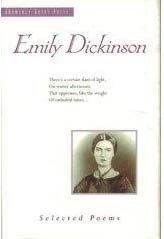
Wonderful selection of this great poet's greatest, most popular poems. Includes "There's a certain slant of light," "Because I could not stop for death," "It was not death for I stood up."

'It's coming - the postponeless Creature'. This title features electrifying poems of isolation, beauty, death and eternity from a reclusive genius and one of America's greatest writers. It is one of 46 new books in the bestselling Little Black Classics series, to celebrate the first ever Penguin Classic in 1946. Each book gives readers a taste of the Classics' huge range and diversity, with works from around the world and across the centuries - including fables, decadence, heartbreak, tall tales, satire, ghosts, battles and elephants.

Another gorgeous copublication with the Christine Burgin Gallery, Emily Dickinson's Envelope Poems is a compact clothbound gift book, a full-color selection from The Gorgeous Nothings. Although a very prolific poet―and arguably America’s greatest―Emily Dickinson (1830–1886) published fewer than a dozen of her eighteen hundred poems. Instead, she created at home small handmade books. When, in her later years, she stopped producing these, she was still writing a great deal, and at her death she left behind many poems, drafts, and letters. It is among the makeshift and fragile manuscripts of Dickinson’s later writings that we find the envelope poems gathered here. These manuscripts on envelopes (recycled by the poet with marked New England thrift) were written with the full powers of her late, most radical period. Intensely alive, these envelope poems are charged with a special poignancy―addressed to no one and everyone at once.Full-color facsimiles are accompanied by Marta L. Werner and Jen Bervin’s pioneering transcriptions of Dickinson’s handwriting. Their transcriptions allow us to read the texts, while the facsimiles let us see exactly what Dickinson wrote (the variant words, crossings-out, dashes, directional fields, spaces, columns, and overlapping planes).

The more than one hundred poems presented here are some of Emily Dickinson's finest works. These unique and gemlike lyrics are pure distillations of profound feeling and great intellect. They contain a world of imagination, observation, and precisely articulated spiritual and emotional experience. Unlike other editions of Dickinson's work, which contain the public-domain versions of poems published shortly after her death, the ones reprinted here are reconstructions based on Dickinson's original manuscripts.

The complete three volumes of poetry by Emily Dickinson. Including Epigrams, Letters to Susan Gilbert, and her Black Cake Recipe. Edited by Robert John Mestre

Morí por la belleza, de la colección «Poesía portátil», es una selección de poemas de Emily Dickinson que nos permite adentrarnos en los anhelos que la autora encerró en sus versos. Textos desprovistos de adornos y reglas que hablan de la mujer, de la enfermedad, de la muerte y de lo que nos espera después.Emily Dickinson es sin duda una de las eruditas más enigmáticas de la historia de la literatura, una mujer que murió a los cincuenta y cinco años siendo una desconocida y habiendo publicado solo siete poemas. En realidad había escrito casi dos mil y fue su hermana quién los encontró en un cajón, garabateados en pedazos de papel o cuidadosamente cosidos en cuadernillos.Dickinson vivió los últimos años de su vida sin salir de casa, recluida en una intimidad oscura que plasmó en cada verso. En ellos se respira la rabia contra una sociedad patriarcal que castigaba cualquier atisbo de independencia femenina, son poemas que se rebelan contra el mundo que la rodea y piden a gritos más libertad. Radical en fondo y forma, eliminó verbos, signos de puntuación y conectores; escribía sin adornos y sin reglas. La contundencia de su obra, su manera de entender el verso, la rima, la oración y la gramática, han marcado la poesía moderna.-------«Es la esperanza lo que lleva plumasy se posa en el alma,cantando una tonada sin palabrasque nunca tiene fin.»-------

Librarian's Note: this is an alternate edition to ISBN-10 0316184152Though generally overlooked during her lifetime, Emily Dickinson's poetry has achieved acclaim due to her experiments in prosody, her tragic vision and the range of her emotional and intellectual explorations.

This scarce antiquarian book is a selection from Kessinger Publishing's Legacy Reprint Series. Due to its age, it may contain imperfections such as marks, notations, marginalia and flawed pages. Because we believe this work is culturally important, we have made it available as part of our commitment to protecting, preserving, and promoting the world's literature. Kessinger Publishing is the place to find hundreds of thousands of rare and hard-to-find books with something of interest for everyone

Open Me Carefully: Emily Dickinson's Intimate Letters to Susan Huntington Dickinson
by Emily Dickinson
Rating: 4.6 ⭐
For the first time, selections from Emily Dickinson's thirty-six year correspondence to her neighbor and sister-in-law, Susan Huntington Dickinson, are compiled in a single volume. Open Me Carefully invites a dramatic new understanding of Emily Dickinson's life and work, overcoming a century of censorship and misinterpretation.For the millions of readers who love Emily Dickinson's poetry, Open Me Carefully brings new light to the meaning of the poet's life and work. Gone is Emily as lonely spinster; here is Dickinson in her own words, passionate and fully alive.

A beautiful hardcover selection of Emily Dickinson’s best-loved, most enduring poems. AN EVERYMAN’S LIBRARY POCKET POET. Virtually unknown as a poet in her lifetime, Emily Dickinson is now recognized as one of the most unaccountably strange and marvelous of the world’s great writers. Unique in their form, their psychic urgency, and their uncanny, crystalline power, her poems represent a mind unlike any other to be found in literature.This Everyman’s Library Pocket Poets hardcover edition of Emily Dickinson collects the most famous and beloved of her poems, and includes an index of first lines.Including:• “Because I could not stop for death”• “Tell all the Truth but tell it slant”• “I dwell in Possibility”• “I heard a fly buzz – when I died”• “Forever – is composed of Nows”• “The Fact that Earth is Heaven”
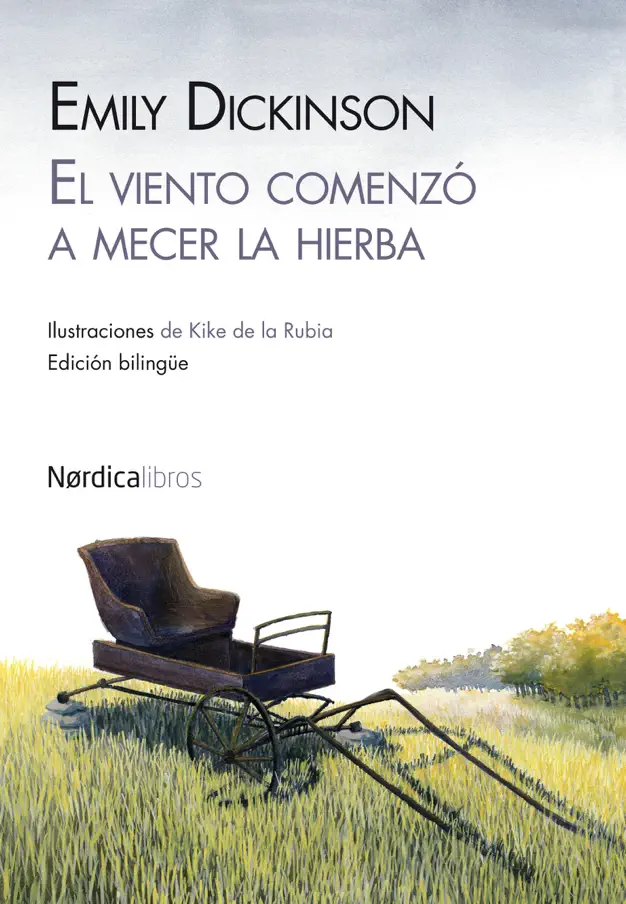
Emily Dickinson fue una mujer inteligente, rebelde y culta que, en su encierro voluntario en la habitación de su casa en Amherst, construyó una de las obras más sólidas de la literatura universal. Como señala Juan Marqués en la presentación, sus poemas «además de ser escritos, en principio, exclusivamente para la inmensa minoría de sí misma, fueron, a un tiempo, complicadísimos y simples, alegres y tristes, transparentes y enigmáticos. Son poemas que acompañan y ayudan a vivir a quien los lee, que enseñan a observar mejor, que obligan a ser más compasivo».Aunque su obra es muy extensa, hemos preferido editar un libro pequeño, íntimo, dickinsoniano, para lo que ha sido fundamental la visión poética de las ilustraciones de Kike de la Rubia.Edición bilingüe.

SELECTED AND INTRODUCED BY JOYCE CAROL OATESBetween them, our great visionary poets of the American nineteenth century, Emily Dickinson and Walt Whitman, have come to represent the extreme, idiosyncratic poles of the American psyche....Dickinson never shied away from the great subjects of human suffering, loss, death, even madness, but her perspective was intensely private; like Rainer Maria Rilke and Gerard Manley Hopkins, she is the great poet of inwardness, of the indefinable region of the soul in which we are, in a sense, all alone.

Includes both poems and letters of Dickinson, as well as a contemporary description of the poet in Thomas Wentworth Higginson's account of his correspondence with the poet and his visit to her in Amherst.

For most of her life Emily Dickinson regularly embedded poems, disguised as prose, in her lively and thoughtful letters. Although many critics have commented on the poetic quality of Dickinson's letters, William Shurr is the first to draw fully developed poems from them. In this remarkable volume, he presents nearly 500 new poems that he and his associates excavated from her correspondence, thereby expanding the canon of Dickinson's known poems by almost one-third and making a remarkable addition to the study of American literature. Here are new riddles and epigrams, as well as longer lyrics that have never been seen as poems before. While Shurr has reformatted passages from the letters as poetry, a practice Dickinson herself occasionally followed, no words, punctuation, or spellings have been changed. Shurr points out that these new verses have much in common with Dickinson's well-known poems: they have her typical punctuation (especially the characteristic dashes and capitalizations); they use her preferred hymn or ballad meters; and they continue her search for new and unusual rhymes. Most of all, these poems continue Dickinson's remarkable experiments in extending the boundaries of poetry and human sensibility.
The classic poem "Because I Could not Stop for Death" by Emily Dickinson.

The Gorgeous Nothings — the first full-color facsimile edition of Emily Dickinson’s manuscripts ever to appear — is a deluxe edition of her late writings, presenting this crucially important, experimental late work exactly as she wrote it on scraps of envelopes. A never-before-possible glimpse into the process of one of our most important poets.The book presents all the envelope writings — 52 — reproduced life-size in full color both front and back, with an accompanying transcription to aid in the reading, allowing us to enjoy this little-known but important body of Dickinson’s writing. Envisioned by the artist Jen Bervin and made possible by the extensive research of the Dickinson scholar Marta L. Werner, this book offers a new understanding and appreciation of the genius of Emily Dickinson.

Rimaste ignote fino alla sua morte, le poesie di Emily Dickinson, enigmatiche, sfuggenti, tormentate, esercitano da più di un secolo un fascino straordinario sui lettori e sulla critica che in vario modo le ha apprezzate ed esaltate, ritenendole l’espressione di un’esperienza umana di profondissima intensità, di un’esistenza lacerante, di una sensibilità altissima, quasi estrema, di una solitudine scelta e cantata senza alcun compiacimento, con un linguaggio decisamente allusivo, talvolta frammentato, costantemente teso alla conquista di una dimensione spirituale universale e assoluta.

An excerpt from the book-REAL RICHES.'T is little I could care for pearls Who own the ample sea;Or brooches, when the Emperor With rubies pelteth me;Or gold, who am the Prince of Mines; Or diamonds, when I seeA diadem to fit a dome Continual crowning me.II.SUPERIORITY TO FATE.Superiority to fate Is difficult to learn.'T is not conferred by any, But possible to earnA pittance at a time, Until, to her surprise,The soul with strict economy Subsists till Paradise.III.HOPE.Hope is a subtle glutton; He feeds upon the fair;And yet, inspected closely, What abstinence is there!His is the halcyon table That never seats but one,And whatsoever is consumed The same amounts remain.IV.FORBIDDEN FRUIT.I.Forbidden fruit a flavor has That lawful orchards mocks;How luscious lies the pea within The pod that Duty locks!

An illustrated collection of poems by an outstanding 19th-century American poet whose works were published posthumously.

Features more than 35 of Dickinson's best loved poems, including "I'm nobody, who are you?" and "I started early, took my dog." "The choice of...Emily Dickinson is a good one....Chi Chung's illustrations...are precise and sometimes whimsical....Attractive and inviting....will give young readers something special."--Quill & Quire. "Bolin's four-page introduction describes and explains Emily Dickinson's odd life style and creative productivity....prettily colored watercolors."--LJ. "...footnotes glossing antiquated diction are well-handled and the precis on Dickinson's church-hymnal metric is a model of its kind."--Washington Post. ". . . shot through with magical charm and graceful beauty . . ."--Buzz Weekly. 48 pages (all in color), 8 1/2 x 10.

Visions in Poetry is an innovative and award-winning series of classic poems reinterpreted for today's readers by outstanding contemporary artists in distinctively beautiful editions. This is My Letter to the World and Other Poems by Emily Dickinson is brilliantly illustrated by Isabelle Arsenault. The artist's interpretation displays a rich understanding of Dickinson's poetry, which is known for its economy, unexpected imagery and hauntingly personal point of view. Arsenault has created a subtle meditation on Dickinson's life and its intersection with her verse. In the dream-like illustrations, the poet -- sometimes serene, often sad and always enigmatic -- is an omnipresent figure in her ghostly white dress. Dickinson's "letters," the words she left to the world, have found their ideal visual complement.

The eagerness with which the first volume of Emily Dickinson's poems has been read shows very clearly that all our alleged modern artificiality does not prevent a prompt appreciation of the qualities of directness and simplicity in approaching the greatest themes, --life and love and death. That "irresistible needle-touch," as one of her best critics has called it, piercing at once the very core of a thought, has found a response as wide and sympathetic as it has been unexpected even to those who knew best her compelling power. This second volume, while open to the same criticism as to form with its predecessor, shows also the same shining beauties.

When the complete Letters of Emily Dickinson appeared in three volumes in 1958, Robert Kirsch welcomed them in the Los Angeles Times , saying “The missives offer access to the mind and heart of one of America’s most intriguing literary personalities.” This one-volume selection is at last available in paperback. It provides crucial texts for the appreciation of American literature, women’s experience in the nineteenth century, and literature in general.

The same voice and insights that make Emily Dickinson’s poems immortal can be found in the letters she wrote to her family and friends throughout her life. The selection of letters presented here provides a fuller picture of the eccentric recluse of legend, showing how immersed in life she was: we see her tending her garden; baking bread; marking the marriages, births, and deaths of those she loved; reaching out for intellectual companionship; and confessing her personal joys and sorrows.

Por primera vez se publica el facsímil del herbario que confeccionó Emily Dickinson entre 1839 y 1846, acompañado de una antología botánica de poemas que giran en torno a las plantas, árboles y flores, en edición bilingüe con traducción de Eva Gallud.

Sottoposta a correzioni e censure, travisata dai contemporanei che non capendola la vissero come il prodotto di un'immaginazione confusa, ristretta, romanticamente persa nella lettura della Bibbia e nella ricerca dell'amore, la poesia di Emily Dickinson solo con l'edizione critica del 1955 è conosciuta nella sua forma originaria. Eppure anche le versioni in lingua italiana più recenti, salvo rare eccezioni, offuscano il senso che in quella poesia si racchiude, continuando a operare nei suoi confronti un conciliante addomesticamento. Con questa raccolta Barbara Lanati intende smentire l'immagine tuttora prevalente della Dickinson come vergine riservata, chiusa e timida del New England, la ragazza perbene vittima del potere del padre e del vittorianesimo imperante, e intende restituirne, con la traduzione, la scrittura inquieta e inquietante, astratta e insieme raffinatamente sensuale sgorgata da una vita fatta di reclusione, silenzio. Scabra, dura, ironica, spoglia di rime e facili assonanze che ne avrebbero ammorbidito il passo spasmodico, la poesia della Dickinson trascrive l'esperienza di una donna che seppe abbracciare la condizione della solitudine e farne un provocatorio strumento di conoscenza e avvicinamento all'uomo, una donna che visse nell'ostinata interrogazione del silenzio e a quel silenzio riuscì a dare un corpo: la parola poetica.
