
David Gelernter
Librarian Note: There is more than one author by this name in the Goodreads database. David Hillel Gelernter (born March 5, 1955) is an artist, writer, and professor of computer science at Yale University. He is a former national fellow at the American Enterprise Institute and senior fellow in Jewish thought at the Shalem Center, and sat on the National Endowment for the Arts. He publishes widely; his work has appeared in the Wall Street Journal, New York Post, LA Times, Weekly Standard, Frankfurter Allgemeine Zeitung, and elsewhere. His paintings have been exhibited in New Haven and Manhattan. He is known for contributions to parallel computation and for books on topics including computed worlds ("Mirror Worlds"), and what he sees as the destructive influence of liberal academia on American society, expressed most recently in his book America-Lite: How Imperial Academia Dismantled Our Culture (and Ushered in the Obamacrats). In 1993 he was sent a mail bomb in the post by Ted Kaczynski, known as the Unabomber, which almost killed him and left him with some permanent disabilities: he lost the use of his right hand and his right eye was permanently damaged. (From Wikipedia)
21 Books Written
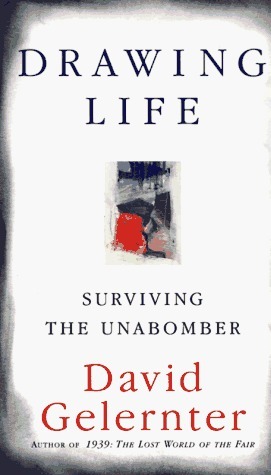
On June 24, 1993, David Gelernter opened a package that exploded, blowing off most of his right hand and damaging his hearing, eyesight, and chest. Ironically, the perpetrator, the technology-phobic "mad genius" we know as the Unabomber, managed to punish one of the very few people who are deeply skeptical about computers and openly critical of technology. Perhaps the greater irony is that the bomb meant to destroy a man's life remade it, and the wounds meant to break his spirit only strengthened it. Now, in this haunting memoir, Gelernter makes a metaphor of himself, seeing in his own near-death and recovery the same disfigurement and promise for American society as a whole. As he ponders his own spiritual condition and the healing power he found in family, religion, community, and art, he critiques the American soul and its devaluing of these very treasures. Instead of teaching and lauding the virtues of courage, critical thinking, and good judgment, Americans have made a media circus out of crime. We are so busy peeking pruriently into the twisted minds of madmen that we have forgotten the acts of violence are not significant because they tickle our bloodlust, but because they force us to rethink our priorities. In a power analysis of the media's response to his experience, for example, Gelernter points out that the Unabomber was described as a "genius, " as "sick, " as "fascinating, " but never as evil. Gelernter asks the chilling question: What does it mean when a culture no longer believes in evil? What happens to a society that has lost its ability to react morally in a crisis? After all, when a man is blown up by a bomb, we should question, not gawk; learn the deeper lessons, not bask in the lurid details. A gripping and poignant narrative as well as a thought-provoking analysis of our culture and where it's headed, Drawing Life is about the resurrection of an extremely thoughtful human being and the extraordinary power of one man's will to live.

A “rock star” ( New York Times ) of the computing world provides a radical new work on the meaning of human consciousness. The holy grail of psychologists and scientists for nearly a century has been to understand and replicate both human thought and the human mind. In fact, it's what attracted the now-legendary computer scientist and AI authority David Gelernter to the discipline in the first place. As a student and young researcher in the 1980s, Gelernter hoped to build a program with a dial marked "focus." At maximum "focus," the program would "think" rationally, formally, reasonably. As the dial was turned down and "focus" diminished, its "mind" would start to wander, and as you dialed even lower, this artificial mind would start to free-associate, eventually ignoring the user completely as it cruised off into the mental adventures we know as sleep. While the program was a only a partial success, it laid the foundation for The Tides of Mind , a groundbreaking new exploration of the human psyche that shows us how the very purpose of the mind changes throughout the day. Indeed, as Gelernter explains, when we are at our most alert, when reasoning and creating new memories is our main mental business, the mind is a computer-like machine that keeps emotion on a short leash and attention on our surroundings. As we gradually tire, however, and descend the "mental spectrum," reasoning comes unglued. Memory ranges more freely, the mind wanders, and daydreams grow more insistent. Self-awareness fades, reflection blinks out, and at last we are completely immersed in our own minds. With far-reaching implications, Gelernter’s landmark "Spectrum of Consciousness" finally helps decode some of the most mysterious wonders of the human mind, such as the numinous light of early childhood, why dreams are so often predictive, and why sadism and masochism underpin some of our greatest artistic achievements. It’s a theory that also challenges the very notion of the mind as a machine―and not through empirical studies or "hard science" but by listening to our great poets and novelists, who have proven themselves as humanity's most trusted guides to the subjective mind and inner self. In the great introspective tradition of Wilhelm Wundt and René Descartes, David Gelernter promises to not only revolutionize our understanding of what it means to be human but also to help answer many of our most fundamental questions about the origins of creativity, thought, and consciousness.

Yesterday’s World of Tomorrow.In a narrow corridor of time between the Great Depression and the most destructive war in history, a World’s Fair was held in the city of New York. It was an event that transformed an entire generation with its vision of things to come. Millions of people came from every corner of the globe to gaze in awe at the Trylon and Perisphere, and to experience for an afternoon a thrilling yet humane utopia in which every citizen lived “the good life” that art, science, technology, and moral fervor had created. In 1939, David Gelernter gives us an intensely evocative picture of the World's Fair — and of a fleeting era of innocent expectation when the world looked forward in wonder rather than backward with regret.

Mirror Worlds: or the Day Software Puts the Universe in a Shoebox...How It Will Happen and What It Will Mean
by David Gelernter
Rating: 3.7 ⭐
Technology doesn't flow smoothly; it's the big surprises that matter, and Yale computer expert David Gelernter sees one such giant leap right on the horizon. Today's small scale software programs are about to be joined by vast public software works that will revolutionize computing and transform society as a whole. One such vast program is the "Mirror World."Imagine looking at your computer screen and seeing reality--an image of your city, for instance, complete with moving traffic patterns, or a picture that sketches the state of an entire far-flung corporation at this second. These representations are called Mirror Worlds, and according to Gelernter they will soon be available to everyone. Mirror Worlds are high-tech voodoo by interacting with the images, you interact with reality. Indeed, Mirror Worlds will revolutionize the use of computers, transforming them from (mere) handy tools to crystal balls which will allow us to see the world more vividly and see into it more deeply. Reality will be replaced gradually, piece-by-piece, by a software imitation; we will live inside the imitation; and the surprising thing is--this will be a great humanistic advance. We gain control over our world, plus a huge new measure of insight and vision.In this fascinating book--part speculation, part explanation--Gelernter takes us on a tour of the computer technology of the near future. Mirror Worlds, he contends, will allow us to explore the world in unprecedented depth and detail without ever changing out of our pajamas. A hospital administrator might wander through an entire medical complex via a desktop computer. Any citizen might explore the performance of the local schools, chat electronically with teachers and other Mirror World visitors, plant software agents to report back on interesting topics; decide to run for the local school board, hire a campaign manager, and conduct the better part of the campaign itself--all by interacting with the Mirror World.Gelernter doesn't just speculate about how this amazing new software will be used--he shows us how it will be made, explaining carefully and in detail how to build a Mirror World using technology already available. We learn about "disembodied machines," "trellises," "ensembles," and other computer components which sound obscure, but which Gelernter explains using familiar metaphors and terms. (He tells us that a Mirror World is a microcosm just like a Japanese garden or a Gothic cathedral, and that a computer program is translated by the computer in the same way a symphony is translated by a violinist into music.)Mirror Worlds offers a lucid and humanistic account of the coming software revolution, told by a computer scientist at the cutting edge of his field.

America-Lite (where we all live) is just like America, only turned into an amusement park or a video game or a supersized Pinkberry, where the past and future are blank and there is only a big NOW. How did we come to expect no virtue and so much cynicism from our culture, our leaders—and each other?In this refreshingly judgmental book, David Gelernter connects the historical dots to reveal a stealth revolution carried out by post-religious globalist intellectuals who, by and large, “can’t run their own universities or scholarly fields, but are very sure they can run you.” These imperial academics have deployed their students into the top echelon of professions once monopolized by staid and steady WASPs. In this simple way, they have installed themselves as the new designated drivers of American culture.Imperial academics live in a world of theory; they preach disdain for mere facts and for old-fashioned fact-based judgments like true or false. Schoolchildren are routinely taught theories about history instead of actual history—they learn, for example, that all nations are equally nice except for America, which is nearly always nasty.With academic experts to do our thinking for us, we’ve politely shut up and let second-raters take the wheel. In fact, we have handed the keys to the star pupil and teacher’s pet of the post-religious globalist intellectuals, whose election to the presidency of the United States constituted the ultimate global group hug.How do we finally face the truth and get back into the driver’s seat? America-Lite ends with a one-point plan.

When something works well, you can feel it; there is a sense of rightness to it. We call that rightness beauty, and it ought to be the single most important component of design.This recognition is at the heart of David Gelernter's witty argued essay, Machine Beauty, which defines beauty as an inspired mating of simplicity and power. You can see it in a Bauhaus chair, the Hoover Dam, or an Emerson radio circa 1930. In contrast, too many contemporary technologists run out of ideas and resort to gimmicks and features; they are rarely capable of real, structural ingenuity.Nowhere is this more evident than in the world of computers. You don't have to look far to see how oblivious most computer technologists are to the idea of beauty. Just look at how ugly your computer cabinet is, how unwieldy and out of sync it feels with the manner and speed with which you process thought.The best designers, however, are obsessed with beauty. Both hardware and software should afford us the greatest opportunity to achieve deep beauty, the kind of beauty that happens when many types of loveliness reinforce one another, when design expresses an underlying technology, a machine logic. Program software ought to be transparent; it should engage what Gelernter calls ”a thought-amplifying feedback loop,” a creative symbiosis with its user. These principles, beautiful in themselves, will set the stage for the next technological revolution, in which the pursuit of elegance will lead to extraordinary innovations. Machine Beauty will delight Gelernter's growing audience, fans of his provocative and biting journalism. Anyone who manufactures, designs, or uses computers will be galvanized by his cogent arguments and tantalizing glimpse of a bright future, where beautiful technology abounds.

A leading mind in the world of artificial intelligence answers the provocative “Can we introduce emotion into the computer?”Can we introduce emotion into the computer? David Gelernter, one of the leading lights in artificial intelligence today, begins The Muse in the Machine with this provocative question. In providing an answer, he not only points to a future revolution in computers, but radically changes our views of the human mind itself. Bringing together insights from computer science, cognitive psychology, philosophy of mind, and literary theory, David Gelernter presents what is sure to be a much debated view of how humans have thought, how we think today, and how computers will learn to think in the future.

Written for observant and non-observant Jews and anyone interested in religion, this remarkable book by the distinguished scholar David Gelernter seeks to answer the deceptively simple What is Judaism really about? Gelernter views Judaism as one of humanity’s most profound and sublimely beautiful achievements. But because Judaism is a way of life rather than a formal system of thought, it has been difficult for anyone but a practicing Jew to understand its unique intellectual and spiritual structure. Gelernter explores compelling questions, such In discussing these and other questions, Gelernter seeks to lay out Jewish beliefs on four basic topics—the sanctity of everyday life; man and God; the meaning of sexuality and family; good, evil, and the nature of God’s justice in a cruel world—and to convey a profound and stirring sense of what it means to be Jewish.

What does it mean to “believe” in America? Why do we always speak of our country as having a mission or purpose that is higher than other nations?Modern liberals have invested a great deal in the notion that America was founded as a secular state, with religion relegated to the private sphere. David Gelernter argues that America is not secular at all, but a powerful religious idea—indeed, a religion in its own right.Gelernter argues that what we have come to call “Americanism” is in fact a secular version of Zionism. Not the Zionism of the ancient Hebrews, but that of the Puritan founders who saw themselves as the new children of Israel, creating a new Jerusalem in a new world. Their faith-based ideals of liberty, equality, and democratic governance had a greater influence on the nation’s founders than the Enlightenment.Gelernter traces the development of the American religion from its roots in the Puritan Zionism of seventeenth-century New England to the idealistic fighting faith it has become, a militant creed dedicated to spreading freedom around the world. The central figures in this process were Abraham Lincoln, Teddy Roosevelt, and Woodrow Wilson, who presided over the secularization of the American Zionist idea into the form we now know as Americanism.If America is a religion, it is a religion without a god, and it is a global religion. People who believe in America live all over the world. Its adherents have included oppressed and freedom-loving peoples everywhere—from the patriots of the Greek and Hungarian revolutions to the martyred Chinese dissidents of Tiananmen Square.Gelernter also shows that anti-Americanism, particularly the virulent kind that is found today in Europe, is a reaction against this religious conception of America on the part of those who adhere to a rival religion of pacifism and appeasement.A startlingly original argument about the religious meaning of America and why it is loved—and hated—with so much passion at home and abroad.
"Programming Linguistics" examines a wide range of programming language designs, from Fortran to the newest research languages, to discover their common patterns, relationships, and antecedents. In studying the evolution of programming languages, the authors are also studying a series of answers to the central (and still unanswered) questions of what programs are and how they should be built.Programming Linguistics approaches language design as an attempt to define the nature of programming and the shape and structure of programs, rather than as the attempt to solve a series of narrow, disjoint technical problems. It emphasizes the structural-engineering rather than mathematical approach to programming, the importance of aesthetics and elegance in the success of language design, and provides an integrated treatment of concurrency and parallelism.Its readable and informal but rigorous coverage of the gamut of programming language designs is based on a simple and general programming model called the Ideal Software Machine. There are helpful exercises throughout.
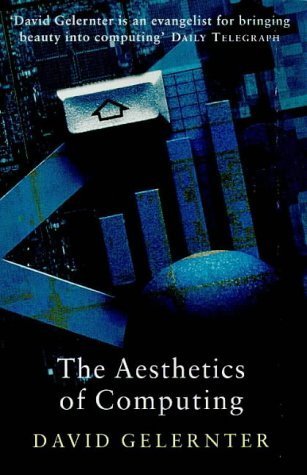
Defining beauty as the mating of simplicity and power, Gelernter draws analogies with the design of cars and of bridges, and shows how the most innovative minds in computing, from Alan Turing onwards, have always been obsessed by elegance.
These contributions provide a timely overview of research being done in universities and industry on state-of-the-art programming languages and compilers for parallel computers. The topics covered include languages and language extensions for parallel computing - a status report on CONSUL, a future-based parallel language for a general-purpose high-parallel computer; COOL, blackboard programming in shared Prolog, refined C, the XYZ abstraction levels of pokerlike languages, and the PARSEQ project. There are chapters on interactive/graphical environments that extend or complement traditional programming languages, on fundamental parallelization techniques and parallelization systems, on techniques for the automatic extraction of fine-grain parallelism, and on parallelization techniques targeted at shared-memory parallel processors, distributed memory parallel processors, and dataflow computers. Tools for parallel programming, debugging, and performance enhancement are investigated, and work being done on the parallelization of C and Lisp reported. In the area of compilation and restructuring of parallel programs, there are chapters on the translation of C-Linda, machine code optimization for the Cray computer, and techniques for the further parallelization of parallel programs. David Gelernter is an Associate Professor in the Department of Computer Science at Yale University. Alexandru Nicolau is an Associate Professor at the University of California, Irvine, and David Padua is Associate Director of the Center for Supercomputing Research and Development at the University of Illinois, Urbana.

The Muse in the Computers and Creative Thought

Wenn wir verstehen wollen, wie unser Geist funktioniert, dann müssen wir nicht in die Labore der Neurologen und Technologen schauen, sondern in die Schreibzimmer der großen Literaten. Das Spektrum unseres Bewusstseins ist so schöpferisch und so einzigartig, dass kein Computerprogramm dem je gleichkäme. Unser Geist kann sich von Regeln frei machen und gänzlich Neues erschaffen. Gezeiten des Geistes lotet das Spektrum des Bewusstseins aus und gibt uns ein neues Verständnis von dem, was das Wesen des Menschen ausmacht.
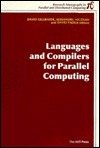
Languages and Compilers for Parallel Computing
by David Gelernter
These contributions provide a timely overview of research being done in universities and industry on state-of-the-art programming languages and compilers for parallel computers. The topics covered include languages and language extensions for parallel computing - a status report on CONSUL, a future-based parallel language for a general-purpose high-parallel computer; COOL, blackboard programming in shared Prolog, refined C, the XYZ abstraction levels of pokerlike languages, and the PARSEQ project. There are chapters on interactive/graphical environments that extend or complement traditional programming languages, on fundamental parallelization techniques and parallelization systems, on techniques for the automatic extraction of fine-grain parallelism, and on parallelization techniques targeted at shared-memory parallel processors, distributed memory parallel processors, and dataflow computers. Tools for parallel programming, debugging, and performance enhancement are investigated, and work being done on the parallelization of C and Lisp reported. In the area of compilation and restructuring of parallel programs, there are chapters on the translation of C-Linda, machine code optimization for the Cray computer, and techniques for the further parallelization of parallel programs.

The Empty Computer:Afloat in the Cybersphere
by David Gelernter
Applications and Systems for Large-Scale Adaptive Parallelism
by David Gelernter
Using the Process Trellis to Organize Large-Scale Parallel Realtime Monitors and Expert Systems
by David Gelernter

Don't Forget What I Told You...: Life Lessons I Learned From the School of Hard Knocks
by David Gelernter
A Little Book of Big LessonsThis little gem is packed with the secrets of success drawn from a long life in the ‘School of Hard Knocks’.Short, sharp and easy to read, the tips can make a real difference if you put them into practice – whether you want to be rich, famous, a top sportsperson, the best partner to your spouse,the best parent you can be, or simply the very best version of yourself.David, the 80-year-old author, says, ‘I believe this little booklet contains some hard-won secrets which, if younger people can apply them, will be inspirational in providing success in their own lives.’So, whatever your ambitions, goals or dreams – start here.

Don't Forget What I Told You...: Life Lessons I Learned From the School of Hard Knocks
by David Gelernter