
Chris Kraus
Chris Kraus is a writer and critic. She studied acting and spent almost two decades making performances and experimental films in New York before moving to Los Angeles where she began writing. Her novels include Aliens & Anorexia, I Love Dick, Torpor, and Summer of Hate. She has published three books of cultural criticism—Video Green: Los Angeles Art and the Triumph of Nothingness, Where Art Belongs, and Social Practices. I Love Dick was adapted for television and her literary biography After Kathy Acker was published by Semiotext(e) and Penguin Press. A former Guggenheim Fellow, Kraus held the Mary Routt Chair of Writing at Scripps College in 2019 and was Writer-in-Residence at ArtCenter College between 2020–2024. She has written for various magazines and has been a coeditor of the independent press Semiotext(e) since 1990. Her work has been praised for its damning intelligence, vulnerability, and dazzling speed and has been translated into seventeen languages. She lives in Los Angeles.
26 Books Written

When Chris Kraus, an unsuccessful artist pushing 40, spends an evening with a rogue academic named Dick, she falls madly and inexplicably in love, enlisting her husband in her haunted pursuit. Dick proposes a kind of game between them, but when he fails to answer their letters Chris continues alone, transforming an adolescent infatuation into a new form of philosophy.Blurring the lines of fiction, essay and memoir, Chris Kraus's novel was a literary sensation when it was first published in 1997. Widely considered to be the most important feminist novel of the past two decades, I Love Dick is still essential reading; as relevant, fierce and funny as ever.

As the rope was tightening around my neck, an Alien made love to me. Belief is a technology for softening the landscape. The world becomes more beautiful when God is in it. Here is what happens inside a person's body when they starve.Written in the shadow of Georg Buchner's Lenz at razor pitch, Aliens & Anorexia, first published in 2000, defines a female form of chance that is both emotional and radical. The book unfolds like a set of Chinese boxes, using stories and polemics to travel through a maze that spirals back into itself. Its characters include Simone Weil, the first radical philosopher of sadness, the artist Paul Thek, Kraus herself, and "Africa," her virtual S&M partner who's shooting a big-budget Hollywood film in Namibia while Kraus holes up in the Northwest Woods for the winter to chronicle the failure of Gravity & Grace, her own low-budget independent film.In Aliens & Anorexia, Kraus argues for empathy as the ultimate perceptive tool, and reclaims anorexia from the psychoanalytic girl-ghetto of poor "self-esteem." Anorexia, Kraus writes, could be an attempt to leave the body a rejection of the cynicism this culture hands us through its food.

Sylvie wanted to believe that misery could simply be replaced with happiness. Time was a straight line, stretching out before you. If you could create a golden kind of time and lay it right beside the other time, the time of horror, Bad History could just recede into the distance without ever having to be resolved.--from TorporSet at the dawn of the New World Order, Chris Kraus's third novel, Torpor loops back to the beginning of the decade that was the basis of I Love Dick, her pseudo-confessional cult-classic debut. It's summer, 1991, post-MTV, pre-AOL. Jerome Shafir and Sylvie Green, two former New Yorkers who can no longer afford an East Village apartment, set off on a journey across the entire former Soviet Bloc with the specious aim of adopting a Romanian orphan. Nirvana's on the radio everywhere, and wars are erupting across Yugoslavia.Unhappily married to Jerome, a 53-year-old Columbia University professor who loathes academe, Sylvie thinks only of happiness. At 35, she dreams of stuffed bears and wonders why their lives lack the tremulous sincerity that pervades thirtysomething, that season's hot new TV show. There are only two things, Sylvie thinks, that will save them: a child of their own, and the success of The Anthropology of Unhappiness, her husband's long-postponed book on the Holocaust. But as they move forward toward impoverished Romania, Jerome's memories of his father's extermination at Auschwitz and his own childhood survival impede them.Savagely ironic and deeply lyrical, Torpor explores the swirling mix of nationalisms, capital flows and negative entropy that define the present, haunted by the persistence of historical memory. Written in the third person, it is her most personal novel to date.

"In his journal, Paul liked to make lists: What he ordered from Commissary (shaving cream, toothpaste, deodorant, the transistor radio he had for a week before the guards took it away). The books he picked off the cart (The Bible, Dean Koontz, Stephen King, Codependent No More.) What phone calls he made and received; also, Bible Study certificates, letters and cards, his workout routines and his moods (Anxious, Nervous, Trusting in God, but mostly Depressed). Paul has a record of every push-up he did while he was in prison but he cannot remember shit about what happened before his arrest."--from " Summer of Hate"Waking up from the chilling high of a near-death sex game, Catt Dunlop travels to Albuquerque in 2005 to reinvest some windfall real-estate gains and reengage with something approximating "real life." Aware that the critical discourse she has used to build her career as a visiting professor and art critic is really a cipher for something else, she hopes that buying and fixing slum buildings will bring her more closely in touch with American life than the essays she writes.In Albuquerque, she becomes romantically involved with Paul Garcia, a recently sober ex-con who has just served sixteen months in state prison for defrauding Halliburton Industries, his former employer, of $873. Almost forty years old, Paul is highly intelligent but has only been out of New Mexico twice. He has no information. With Catt's help, he makes plans to attend UCLA, only to be arrested on a ten-year-old bench warrant en route.Caught in the nightmarish Byzantine world of the legal system, Catt and Paul's empathic attempts to save each other's lives seems doomed to dissolve. " Summer of Hate" is a novel about flawed reciprocity and American justice, recording recent events through the prism of a beleaguered romance. As lucid and trenchant as ever, Kraus in her newest novel reminds us that the writer can be a first responder of sorts when power becomes invisible, or merely banal.

Kathy Acker: Rich girl, street punk, scholar, stripper, victim, media-whore ... and cultural icon.The late Kathy Acker's legend and writings are wrapped in mythologies, many of them created by her. Twenty years after her untimely death at age 50, Acker's legend has faded, but her writing has become clearer.A few years ago, the writer Chris Kraus, author of I Love Dick, found that her own experiences were becoming more and more like Kathy's. She began writing about Acker 'through the distance, but with this incredible frisson of feeling that often I could write "I" instead of "she."'This is 'literary friction': The first fully authorised biography of the avant-garde writer Kathy Acker, by the woman who arrived on the scene straight after her, who shared some of her boyfriends and friends, and her artistic ambitionsUsing exhaustive archival research and ongoing conversations with mutual colleagues and friends, Kraus traces the woman behind the notorious novels, and places her at the centre of a kaleidoscopic artistic world.

Chris Kraus examines artistic enterprises of the past decade that reclaim the use of lived time as a material in the creation of visual art.In Where Art Belongs, Chris Kraus examines artistic enterprises of the past decade that reclaim the use of lived time as a material in the creation of visual art. In four interlinked essays, Kraus expands the argument begun in her earlier book Video Green that “the art world is interesting only insofar as it reflects the larger world outside it.” Moving from New York to Berlin to Los Angeles to the Pueblo Nuevo barrio of Mexicali, Kraus addresses such subjects as the ubiquity of video, the legacy of the 1960s Amsterdam underground newspaper Suck, and the activities of the New York art collective Bernadette Corporation. She examines the uses of boredom, poetry, privatized prisons, community art, corporate philanthropy, vertically integrated manufacturing, and discarded utopias, revealing the surprising persistence of microcultures within the matrix. Chronicling the sometimes doomed but persistently heroic efforts of small groups of artists to reclaim public space and time, Where Art Belongs describes the trend towards collectivity manifested in the visual art world during the past decade, and the small forms of resistance to digital disembodiment and the hegemony of the entertainment/media/culture industry. For all its faults, Kraus argues, the art world remains the last frontier for the desire to live differently.

Video Green examines the explosion of late 1990s Los Angeles art driven by high-profile graduate programs. Probing the surface of art-critical buzzwords, Chris Kraus brilliantly chronicles how the City of Angels has suddenly become the epicenter of the international art world and a microcosm of the larger culture. Why is Los Angeles so completely divorced from other realities of the city? Shrewd, analytic and witty, Video Green is to the Los Angeles art world what Roland Barthes' Mythologies were to the society of the spectacle: the live autopsy of a ghost city.

An unforgettable new novel from the “powerfully original” (Dwight Garner, The New York Times) author of the cult classic I Love Dick—a stark, witty journey into a fractured, violent America, culminating in the investigation of a teenage murder on Minnesota’s Iron Range.On the Iron Range of northern Minnesota, at the end of the last decade, three teenagers shot and killed an older acquaintance after spending the day with him. In a cold, depressed town, on the fringes of the so-called “meth community,” the three young people were quickly arrested and imprisoned.At the time of the murder, Catt Greene and her husband, Paul Garcia, are living nearby in a house they’d bought years earlier as a summer escape from Los Angeles. Locked into a period of personal turmoil, moving between LA and Minnesota—between the art world and the urban poverty of Paul’s addiction therapist jobs, the rural poverty of the icy, depressed Iron Range—Catt turns away from her own life and towards the murder case, which soon becomes an obsession. In her attempt to pierce through the brutality and despair surrounding the murder and to understand the teenagers’ lives, Catt is led back to the idiosyncratic, aspirational lives of her parents in the working-class Bronx and small-town, blue-collar Milford, Connecticut.Written in three linked parts, The Four Spent the Day Together explores the tensions of unclaimed futures and unchosen circumstances in the age of social media, paralyzing interconnectedness, and the ever-widening gulf between the rich and poor.
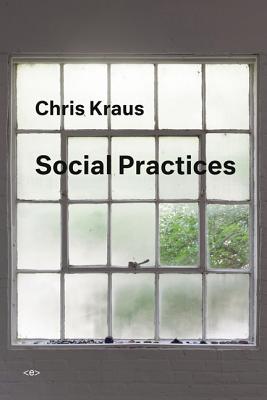
Essays on and around art and art practices by the author of I Love Dick.A border isn't a metaphor. Knowing each other for over a decade makes us witnesses to each other's lives. My escape is his prison. We meet in a bar and smoke Marlboros.—from Social PracticesMixing biography, autobiography, fiction, criticism, and conversations among friends, with Social Practices Chris Kraus continues the anthropological exploration of artistic lives and the art world begun in 2004 with Video Green: Los Angeles Art and the Triumph of Nothingness.Social Practices includes writings from and around the legendary “Chance Event—Three Days in the Desert with Jean Baudrillard” (1996), and “Radical Localism,” an exhibition of art and media from Puerto Nuevo's Mexicali Rose that Kraus co-organized with Marco Vera and Richard Birkett in 2012. Attuned to the odd and the anomalous, Kraus profiles Elias Fontes, an Imperial Valley hay merchant who has become an important collector of contemporary Mexican art, and chronicles the demise of a rural convenience store in northern Minnesota. She considers the work of such major contemporary artists as Jason Rhoades, Channa Horowitz, Simon Denny, Yayoi Kusama, Henry Taylor, Julie Becker, Ryan McGinley, and Leigh Ledare. Although Kraus casts a skeptical eye at the genre that's come to be known as “social practice,” her book is less a critique than a proposition as to how art might be read through desire and circumstance, delirium, gossip, coincidence, and revenge. All art, she implies, is a social practice.

"Kelly Lake Store & Other Stories dwells in out-of-the-way places - communities and landscapes obscured by poverty and decline - yet it does so with an eagle eye that extends the reader's vision upward and outward to encompass the old problems of the center: power, class, and lineage. Kraus's narrative propels us forward on a cross-country journey through obscure border towns, big cities, fancy parties, and dusty hippie encampments. The essay's three interwoven sections construct a rather monstrous architecture in which a desolate Mexican pueblo cuts a path to the offices of the Guggenheim Foundation."- Taken from the introduction by Stephanie Synder, Kylie Gilchrist, and Megan Stockton.

Sie waren beste Freundinnen, starteten gemeinsam eine Bühnenkarriere, doch dann kam der Bruch. Sonja, genannt Sonne, wurde von Jana von Mond verraten. Jahre später steht Jana – inzwischen ein Comedy-Star – vor der Tür von Sonnes Bestattungsunternehmen und bittet sie, die Trauerfeier für ihren Liebsten auszurichten. Alte Wunden brechen auf, neue werden zugefügt. Die Sonne und die Mond können ihre Umlaufbahn nicht verlassen, sie leuchten weiter, jede auf ihre Art, mal kalt, mal warm.

This book assembles all the talks and media presented at Aliens & A Chris Kraus Symposium, which took place in March 2013 at the Royal College of Art, London. Since her first book, I Love Dick, published in 1997, writer and film-maker Chris Kraus has authored a further six books ranging from fiction to art criticism to political commentary, via continental philosophy, feminism and queer theory. This collection begins to engage with questions Kraus' work where, if at all, is the line between 'life' as private and 'practice' as public? How, if the body is always performing one or other of these, can they be delineated? Can this map onto the relations between other ever blurring artwork and critic, subject and object, masochist and sadist, unknown and known, embodied and disembodied, fiction and criticism? You Must Make Your Death Public features essays and media by Travis Jeppesen, Helen Stuhr-Rommereim, Hestia Peppé, Samira Ariadad, Beth Rose Caird, Jesse Dayan, Karolin Meunier, Linda Stupart, Lodovico Pignatti Morano, Trine Riel, Rachal Bradley, David Morris, Jonathan Lahey Dronsfield and Chris Kraus.

Chris Kraus' The Bastard Factory tells the story of an entire epoch: a drama of betrayal and self-delusion spanning the years 1905 to 1975, taking us from Riga to Moscow, Berlin and Munich all the way to Tel Aviv.Hubert and Konstantin Solm are brothers, born in Riga at the beginning of the twentieth century, they will find themselves - along with their Jewish adopted sister, Ev Solm - caught up in in the maelstrom of their changing times.As the two brothers climb the rungs of society - working first for the government in Nazi Germany, then as agents for the Allied Forces, and eventually becoming spies for the young West Germany - Ev will be their constant companion, and eventually a lover to them both. The passionate love triangle that emerges will propel the characters to terrifying moral and political depths.The story of the Solms is also the story of twentieth-century Germany: the decline of an old world and the rise of a new one - under new auspices but with the same familiar protagonists.

Poetry. LGBT Studies. Limited Edition. In this special series of eight perfect-bound books, each book is an anthology and a conversation between the guest curator and the elder(s) she hosts. In ELDERS SERIES #3, Tisa Bryant hosts Chris Kraus.Belladonna* has featured over 150 writers of wildly diverse age and origin, writers who work in conversation and collaboration within and between multiple forms, languages, and critical fields. 2009 marked the tenth anniversary of their mission to promote the work of women writers who are adventurous, experimental, politically involved, multi-form, multicultural, multi-gendered, impossible to define, delicious to talk about, unpredictable, and dangerous with language. As performance and as printed text, the work collects, gathers over time and space, and forms a kind of conversation about the feminist avant what it is and how it comes to be. The anniversary ELDERS SERIES is a continuation of this conversation, which highlights the fact of influence and continuity of the ideas, poetics, and concerns we circle through.

LA Artland is a survey of one of the most vibrant and influential art scenes of recent decades. Having produced world-renowned artists such as Mike Kelley, Paul McCarthy, Chris Burden, Catherine Opie and Jim Shaw, Los Angeles since the 90s has rivaled New York as the US contemporary art capital. With the continuing success of LA-based art programs at CalArts, Art Center and UCLA, as well as a growing gallery scene stretching from blue-chip to artist-run spaces, Los Angeles as an art center continues to thrive, producing increasingly successful generations of artists. The focus of this publication is on extensive visual documentation of contemporary artists working in Los Angeles now, ranging from well-established international names to emerging talent.Alongside this visual survey are three essays. Chris Kraus incorporates interviews with artists and gallery owners providing insight into the network of scenes that make up contemporary LA art now. Jan Tumlir (independent art critic) contextualizes contemporary art in Los Angeles, commenting on recent trends and the influence of the LA-based MFA programs. Jane McFadden (art historian currently teaching at Art Center) traces specific trajectories between artists living and working in Los Angeles from the 60s to today, forming a unique history of the area.

Everyone wants to be an artist. The number of undergraduate students completing fine arts degrees at US colleges doubled in the years between 1985–2010, according to the Digest of Education Statistics. But being an artist doesn’t necessarily mean making drawings or paintings or sculpture or even installations or videos. The desire to pursue a life in “fine art” simply means a desire to respond creatively to the present, just as the disciplines of “poetry” or “rock & roll” were ciphers for countercultural lifestyles in other eras.

Chris Kraus escribe novelas y hace crítica cultural. En uno y otro género, elige la primera persona del singular. Le interesan las comunidades artísticas fronterizas, el arte procesual y ultraconceptual. Traducidos por primera vez al español, estos ensayos presentan una forma de escribir sobre arte que no se limita a lo técnico o teórico: narran la relación de la escritora con la obra o el artista, colocándose entre el ejercicio etnográfico, el diario personal y la crónica.

Ehrgeiz, Demut, Glück – seit über dreißig Jahren kreist Chris Kraus' Werk um diese Koordinaten. Sei es in ihren Essays zur Kunst, in denen zugleich die Kunst der Freundschaft Thema ist. Sei es in ihren berühmten Romanen oder den Texten über befreundete Immer geht es um das unbedingte Streben, aus dem Wenigsten das Meiste zu machen – und um die zähe Überzeugung, selbst den widrigsten Umständen dieses Meiste abringen zu können. Mit einer Mischung aus Biografie, Autobiografie, Fiktion, Kritik und Gespräch erfindet Chris Kraus in den hier versammelten Texten eine neue Form der anthropologischen Ein Bericht über die Sex Workers' Art Show Tour reiht sich an eine Reportage über experimentelle Kleinstgalerien. Der Besuch bei einer autodidaktischen Tänzerin in der mexikanischen Wüste folgt Kraus' eigenen Erinnerungen an die Gründung des von ihr mitgeleiteten Theorie-Verlages Semiotext(e). Einblicke in ihre Zeit als Oben-ohne-Tänzerin sind zugleich Porträts der Gentrifizierung New Yorks wie von Nischen fragiler Freiheit. Ausgewählt von den Kevin Vennemann und Heike Geißler, vermitteln die Texte Eindrücke in eine lebenslange Auseinandersetzung an den Rändern der Kunstwelt sowie mit den Verhältnissen, die darüber entscheiden, wer an diese Ränder gebannt ist. Chris Kraus' Texte sind weniger Kritik als ein Vorschlag, wie gegenwärtige Kunstproduktion durch Begehren und Umstände, Delirium, Klatsch, Zufall und Rache gelesen werden kann. Alle Kunst, so impliziert sie, ist eine soziale Praxis. Und trotz all ihrer Fehler bleibt die Kunstwelt, so Kraus, die letzte Grenze für den Wunsch, anders zu leben.


Dans un hôpital bavarois, Koja Solm, vieil homme avec une balle nichée dans la tête, décide de raconter sa vie à son voisin de chambre, un jeune hippie pacifiste. Son enfance à Riga, dans les années 1920, sa carrière dans l'Allemagne nazie, puis comme espion dans la jeune République fédérale. Sa relation destructrice avec son frère aîné, Hubert. Leur amour commun, dévastateur, pour leur sœur adoptive, Ev, d'origine juive. Un ménage à trois électrique nourri de sang, de passion et de larmes, une histoire qui va épouser tout un pan du XXe siècle, de Riga à Tel Aviv en passant par Auschwitz et Paris.Une magnifique fresque historique et familiale qui nous emporte à travers les plus sombres années du XXe siècle.La fabrique des salauds a été découpé en 3 tomes :Tome 1 : La pomme rouge / L'ordre noir ; Tome 2 : Le veau d'or ; Tome 3 : Noir Rouge Or.

Dans un hôpital bavarois, Koja Solm, vieil homme avec une balle nichée dans la tête, décide de raconter sa vie à son voisin de chambre, un jeune hippie pacifiste. Son enfance à Riga, dans les années 1920, sa carrière dans l'Allemagne nazie, puis comme espion dans la jeune République fédérale. Sa relation destructrice avec son frère aîné, Hubert. Leur amour commun, dévastateur, pour leur sœur adoptive, Ev, d'origine juive. Un ménage à trois électrique nourri de sang, de passion et de larmes, une histoire qui va épouser tout un pan du XXe siècle, de Riga à Tel Aviv en passant par Auschwitz et Paris.Une magnifique fresque historique et familiale qui nous emporte à travers les plus sombres années du XXe siècle.La fabrique des salauds a été découpé en 3 tomes :Tome 1 : La pomme rouge / L'ordre noir ; Tome 2 : Le veau d'or ; Tome 3 : Noir Rouge Or.

Dans un hôpital bavarois, Koja Solm, vieil homme avec une balle nichée dans la tête, décide de raconter sa vie à son voisin de chambre, un jeune hippie pacifiste. Son enfance à Riga, dans les années 1920, sa carrière dans l'Allemagne nazie, puis comme espion dans la jeune République fédérale. Sa relation destructrice avec son frère aîné, Hubert. Leur amour commun, dévastateur, pour leur sœur adoptive, Ev, d'origine juive. Un ménage à trois électrique nourri de sang, de passion et de larmes, une histoire qui va épouser tout un pan du XXe siècle, de Riga à Tel Aviv en passant par Auschwitz et Paris.Une magnifique fresque historique et familiale qui nous emporte à travers les plus sombres années du XXe siècle.La fabrique des salauds a été découpé en 3 tomes :Tome 1 : La pomme rouge / L'ordre noir ; Tome 2 : Le veau d'or ; Tome 3 : Noir Rouge Or.

Murder Story
by Chris Kraus

I Love Dick: Gyldendal Skala
by Chris Kraus
Chris, en eksperimenterende filminstruktør på næsten 40, forelsker sig øjeblikkeligt og uopretteligt i sin 56-årige akademikermands yngre kollega Dick. Chris indvier manden Sylvère i sin voldsomme betagelse, og idéen om en slags kunstprojekt med Dick i centrum opstår. Fra hver sin position går parret sammen i gang med at skrive kærlighedsbreve til objektet Dick. Chris er i sin erotiske besættelse kreativt forløst som aldrig før, men pludselig befinder hun sig i spidsen af et altopslugende trekantsdrama, der udfordrer og truer hele hendes livsforståelse. "I Love Dick" er en afsindig vittig, selvironisk og tåkrummende roman om desperat forelskelse og en radikal og yderst konkret kunstnerisk afsøgning af størrelser som begær og patriarkat.