
Richard Yates
Richard Yates shone bright upon the publication of his first novel, Revolutionary Road, which was nominated for the National Book Award in 1961. It drew unbridled praise and branded Yates an important, new writer. Kurt Vonnegut claimed that Revolutionary Road was The Great Gatsby of his time. William Styron described it as "A deft, ironic, beautiful novel that deserves to be a classic." Tennessee Williams went one further and said, "Here is more than fine writing; here is what, added to fine writing, makes a book come immediately, intensely, and brilliantly alive. If more is needed to make a masterpiece in modern American fiction, I am sure I don't know what it is." In 1962 Eleven Kinds of Loneliness was published, his first collection of short stories. It too had praise heaped upon it. Kurt Vonnegut said it was "the best short-story collection ever written by an American." Yates' writing skills were further utilized when, upon returning from Los Angeles, he began working as a speechwriter for then-Senator Robert F. Kennedy until the assassination of JFK. From there he moved onto Iowa where, as a creative writing teacher, he would influence and inspire writers such as Andre Dubus and Dewitt Henry. His third novel, Disturbing the Peace, was published in 1975. Perhaps his second most well-known novel, The Easter Parade, was published in 1976. The story follows the lives of the Grimes sisters and ends in typical Yatesian fashion, replicating the disappointed lives of Revolutionary Road. However, Yates began to find himself as a writer cut adrift in a sea fast turning towards postmodernism; yet, he would stay true to realism. His heroes and influences remained the classics of F. Scott Fitzgerald, Flaubert and short-story master, Chekov. It was to his school and army days that Richard turned to for his next novel, A Good School, which was quickly followed by his second collection of short stories, Liars in Love. Young Hearts Crying emerged in 1984 followed two years later with Cold Spring Harbour, which would prove to be his final completed novel. Like the fate of his hero, Flaubert, whose novel Madame Bovary influenced Revolutionary Road and The Easter Parade, Richard Yates' works are enjoying a posthumous renaissance, attracting newly devoted fans across the Atlantic and beyond.
28 Books Written

Revolutionary Road / The Easter Parade / Eleven Kinds of Loneliness
by Richard Yates
Rating: 4.3 ⭐
• 2 recommendations ❤️
Three classic works--including the virtuosic "Revolutionary Road, "soon to be a major motion picture--that exemplify the remarkable gifts of this great American master.Richard Yates's first novel, "Revolutionary Road "is the unforgettable portrait of a marriage built on dreams that tragically never come to fruition. In "The Easter Parade, "he tells the story of two sisters whose parents' divorce overshadows their entire lives. And in the stories in "Eleven Kinds of Loneliness, "we witness men and women striving for better lives amid discouragement and disillusion. (Book Jacket Status: Jacketed)

In The Easter Parade , first published in 1976, we meet sisters Sarah and Emily Grimes when they are still the children of divorced parents. We observe the sisters over four decades, watching them grow into two very different women. Sarah is stable and stalwart, settling into an unhappy marriage. Emily is precocious and independent, struggling with one unsatisfactory love affair after another. Richard Yates's classic novel is about how both women struggle to overcome their tarnished family's past, and how both finally reach for some semblance of renewal.

From the moment of its publication in 1961, Revolutionary Road was hailed as a masterpiece of realistic fiction and as the most evocative portrayal of the opulent desolation of the American suburbs. It's the story of Frank and April Wheeler, a bright, beautiful, and talented couple who have lived on the assumption that greatness is only just around the corner. With heartbreaking compassion and remorseless clarity, Richard Yates shows how Frank and April mortgage their spiritual birthright, betraying not only each other, but their best selves.

Richard Yates's unflinchingly realistic stories explore loneliness, but they don't neglect failure, cruelty, and heartbreak. Most of the stories feature men who have been disappointed, somehow, by their inability to go on and fulfill the promise of their youth.Contents "Doctor Jack-o'-lantern" "The Best of Everything" "Jody Rolled The Bones" "No Pain Whatsoever" "A Glutton for Punishment" "A Wrestler with Sharks" "Fun with a Stranger" "The B.A.R. Man" "A Really Good Jazz Piano" "Out with the Old" "Builders"

Richard Yates was acclaimed as one of the most powerful, compassionate and accomplished writers of America's post-war generation. Whether addressing the smothered desire of suburban housewives, the white-collar despair of Manhattan office workers or the heartbreak of a single mother with artistic pretensions, Yates ruthlessly examines the hopes and disappointments of ordinary people with empathy and humour.Contents: Doctor Jack-o'-Lantern --The best of everything --Jody rolled the bones --No pain whatsoever --A glutton for punishment --A wrestler with sharks --Fun with a stranger --The B.A.R. man --A really good jazz piano --Out with the old --Builders --Oh, Joseph, I'm so tired --A natural girl --Trying out for the race --Liars in love --A compassionate leave --Regards at home --Saying goodbye to Sally --The canal --A clinical romance --Bells in the morning --Evening on the Cote d'Azur --Thieves --A private possession --The comptroller and the wild wind --A last fling, like --A convalescent ego.

Hailed as “America’s finest realistic novelist” by the Boston Globe, Richard Yates, author of Revolutionary Road, garnered rare critical acclaim for his bracing, unsentimental portraits of middle-class American life.Disturbing the Peace is no exception. Haunting, troubling, and mesmerizing, it shines a brilliant, unwavering light into the darkest recesses of a man’s psyche.To all appearances, John Wilder has all the trappings of success, circa 1960: a promising career in advertising, a loving family, a beautiful apartment, even a country home. John’s evenings are spent with associates at quiet Manhattan lounges and his weekends with friends at glittering cocktail parties. But something deep within this seemingly perfect life has long since gone wrong. Something has disturbed John’s fragile peace, and he can no longer find solace in fleeting affairs or alcohol. The anger, the drinking, and the recklessness are building to a crescendo—and they’re about to take down John’s family and his career. What happens next will send John on a long, strange journey—at once tragic and inevitable.
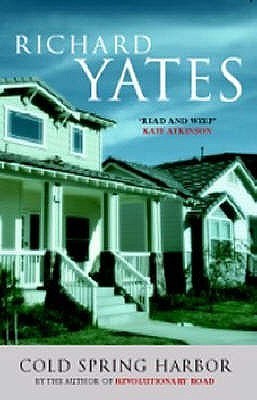
When the Shepards' car breaks down in pre-War New York City, a chain of events is set in motion that will transform the lives of the beautiful but stupid Evan Shepard, his doomed lover Rachel, and both their families. Fated to play out the mistakes of their parents, Evan and Rachel quickly discover the betrayal behind the dream, and desperately try every avenue of escape, only to find that all paths lead back to the small Long Island coastal town of Cold Spring Harbor, and to each other. But if there is no better chronicler than Yates of the quiet tragedy of thwarted suburban lives, Cold Spring Harbor is a testament to the absolute necessity of dreaming; for Yates's protagonists, hope may be all there is.

Another masterpiece from the author of Revolutionary Road Michael Davenport, a minor poet, is an intensely ambitious young man - just old enough to have served in the US Air Force at the tail end of World War Two. Every failure he suffers in his efforts to become established as a professional writer weighs against the uneasy knowledge that his wife, Lucy, has an untapped private fortune amounting to millions of dollars. Lucy, for her part, always elegant but often shy, is never quite certain what is expected of her. And as a couple, the Davenports are repeatedly dismayed at meeting other people whose lives appear brighter and better than their own. In this magnificent novel, at once bitterly sad and achingly funny, Richard Yates again shows himself to be the supreme, tenderly ironic chronicler of the 'American Dream' and its casualties. 'Yates is good at bad couples, sad, sour marriages, young hopes corroded by suburban life...These are bitterly perceptive books, depressing but difficult to put down' Grace Ingoldby, New Statesman'Yates intends to spare his readers nothing. He is a truthful and ruthless writer' Robert Nye, Guardian'A natural story-teller' Nina Bawden, Daily Telegraph

Richard Yates, who died in 1992, is today ranked by many readers, scholars, and critics alongside such titans of modern American ficiton as Updike, Roth, Irving, Vonnegut, and Mailer.In this work, he offers a spare and autumnal novel about a New England prep school. At once a meditation on the twilight of youth and an examination of America's entry into World War II, A Good School tells the stories of William Grove, the quiet boy who becomes an editor of the school newspaper; Jack Draper, a crippled chemistry teacher; and Edith Stone, the schoolmaster's young daughter, who falls in love with most celebrated boy in the class of 1943.

Robert Prentice is 18. His mother, Alice Prentice, is 53. Both are damaged souls: Robert, by war; Alice, by thwarted dreams of prosperity. In two deeply humanizing portraits, the great American writer Richard Yates crafts a novel of postwar America, at once at odds with its own sense of identity and mercilessly prohibitive to its like-minded citizens.

A collection of short stories--including "Trying Out for the Race," "A Compassionate Leave," "Oh, Joseph, I'm So Tired," and "Saying Good-bye to Sally"--explores troubled human relationships and family life

La riscoperta di Richard Yates, magistrale autore americano antesignano del realismo di Raymond Carver, è stata una delle operazioni di maggior successo nella storia editoriale di minimum fax: il pubblico e la critica l’hanno accolta con enorme favore e le opere di Yates hanno venduto più di 150.000 copie. Arriva ora per la prima volta in Italia quest’antologia di racconti mai pubblicati in volume durante la vita dell’autore; un paio erano usciti su riviste, gli altri erano rimasti completamente inediti fino a quando, dopo la sua morte, sono stati riportati alla luce e raccolti. Un’occasione preziosa per immergersi ancora una volta nella sua scrittura intensa e commovente: storie di esistenze comuni ambientate perlopiù nell’America del secondo do- poguerra, un luogo di tensioni nascoste sotto l’apparente prosperità, di ambizioni e fallimenti che Yates racconta con uno sguardo lucido e inconfondibile.



Специально для журнала Esquire знаменитый переводчик Виктор Голышев перевел рассказ американского писателя Ричарда Йейтса "Настоящий джазовый пианист", а режиссер Борис Хлебников (автор фильма "Коктебель", получившего призы на Берлинском кинофестивале 2001 года и ХХV Московском кинофестивале, а также обладатель приза за лучшую режиссуру на "Кинотавре-2006" за фильм "Свободное плавание") осуществил его постановку. В записи аудиокниги приняли участие Евгений Цыганов (актер труппы "Мастерская Петра Фоменко", исполнитель главных ролей в фильмах "Прогулка", "Космос как предчувствие", "Питер FM") и Юлия Панкратова, ведущая новостей на "Первом канале". Музыку к рассказу Ричарда Йейтса написал и исполнил пианист Андрей Разин, лучший джазовый композитор 2002 года по версии Российской ассоциации джазовых композиторов, лидер ансамбля "Второе приближение", объездившего с гастролями пол-Европы и всю Россию. Ричард Йейтс (Richard Yates), американский писатель, признанный критиками крупнейшим прозаиком второй половины XX века, при жизни не завоевал популярности у широкой аудитории. Лишь спустя годы после его смерти его книги добились заметного успеха.

Stories for the Sixties
by Richard Yates
Stories for the Sixties. Vivid and unconventional stories by never-before-published authors. The fifteen best short stories, including the three prize winners, from the Esquire-Bantam short story contest. This 1963 volume is notable for containing the first published story of Judith Rossner (1935-2005) who went on to write the acclaimed 1975 bestseller Looking for Mr. Goodbar.

Un dernier moment de folie
by Richard Yates
Les nouvelles posthumes de Richard Yates : un dernier moment de folie, une ultime jubilation. Après Onze histoires de solitude et Menteurs amoureux , Un dernier moment de folie est le troisième recueil des nouvelles complètes du grand Richard Yates. Il rassemble neuf histoires non publiées de son vivant, sans doute les plus belles qu'il ait jamais écrites. Neuf histoires qui se déroulent dans les années 1950, neuf instantanés de vies qui en disent long sur le destin de leurs personnages, toujours aussi déconcertés par l'existence. Dans ce recueil moins ouvertement autobiographique que Menteurs amoureux , on retrouve par touches certains de ses sujets favoris – l'ancien combattant revenu brisé de la Seconde Guerre mondiale, la mère qui rêve d'une autre vie, la fascination naïve de tous pour l'Europe – mais on découvre aussi de nouveaux motifs, de nouvelles figures, comme cette petite fille qui fait l'amère expérience de l'arbitraire ( Une chose bien à soi ) ou bien ce contrôleur de gestion d'une firme new-yorkaise qui reçoit une cruelle leçon de management ( Le Contrôleur des finances et le jeune loup )... On reconnaît surtout cette patte d'entomologiste qui permet à Yates de croquer en quelques lignes les déconvenues de ces losers magnifiques : il raconte avec une rapidité et une précision prodigieuses les blessures narcissiques subies par ses personnages, que ce soit lors d'un dîner où chacun raconte sa guerre ou lors d'une réunion entre collègues où l'on vante sa carrière, au cours d'une convalescence forcée ou le temps d'une nuit avec un inconnu en uniforme. Tous se voudraient plus brillants, plus courageux, plus séduisants, plus forts. Humains, trop humains. Invariablement, leurs histoires serrent le cœur... mais ravissent l'âme.
Lincoln Herald Quarterly Magazine (Winter 1968) "John C. Fremont" "Mississippi Ram Fleet"
by Richard Yates
7" x 10"; pages 181 - 216. Vol. 70, No. 4.
A Glutton for Punishment in Short Story International Volume 1 Number 12, October 1964
by Richard Yates
Also includes stories by Frank Roberts, Istvan Szabo, Cora Sandel, Pierre Gascar and Michael Murphy.

Short Story 1
by Richard Yates
The Transcriber's Art
by Richard Yates
A collection of articles and music transcribed for solo classical guitar gathered from ten years of the popular series in the journal Soundboard. Each of the music scores is accompanied by an article describing the process of transcription for the guitar,
I non conformisti
by Richard Yates
In the hopeful 1950s, Frank and April Wheeler appear to be a model bright, beautiful, talented, with two young children and a starter home in the suburbs. Perhaps they married too young and started a family too early. Maybe Frank's job is dull. And April never saw herself as a housewife. Yet they have always lived on the assumption that greatness is only just around the corner. But now that certainty is about to crumble.With heartbreaking compassion and remorseless clarity, Richard Yates shows how Frank and April mortgage their spiritual birthright, betraying not only each other, but their best selves.

Set ones Heart on Revenge DNF
by Richard Yates
Young Hearts
by Richard Yates
The homestead bill: Remarks of Mr. Yates, of Illinois, in the House of Representatives, February 28, 1854
by Richard Yates

Evolving Shades
by Richard Yates