
Thomas Wolfe
People best know American writer Thomas Clayton Wolfe for his autobiographical novels, including Look Homeward, Angel (1929) and the posthumously published You Can't Go Home Again (1940). Wolfe wrote four lengthy novels and many short stories, dramatic works and novellas. He mixed highly original, poetic, rhapsodic, and impressionistic prose with autobiographical writing. Wolfe wrote and published books that vividly reflect on American culture and the mores, filtered through his sensitive, sophisticated and hyper-analytical perspective. People widely knew him during his own lifetime. Wolfe inspired the works of many other authors, including Betty Smith with A Tree Grows in Brooklyn, Robert Morgan with Gap Creek; Pat Conroy, author of Prince of Tides, said, "My writing career began the instant I finished Look Homeward, Angel." Jack Kerouac idolized Wolfe. Wolfe influenced Ray Bradbury, who included Wolfe as a character in his books. (from Wikipedia)
30 Books Written
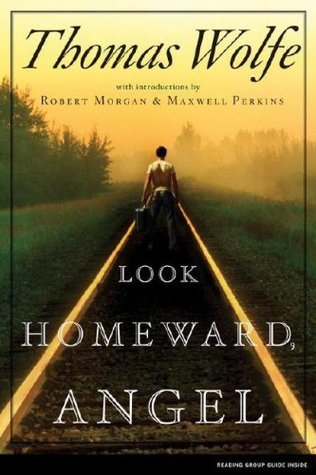
Look Homeward, Angel: A Story of the Buried Life is a 1929 novel by Thomas Wolfe. It is Wolfe's first novel, and is considered a highly autobiographical American Bildungsroman. The character of Eugene Gant is generally believed to be a depiction of Wolfe himself. The novel covers the span of time from Gant's birth to the age of 19. The setting is the fictional town and state of Altamont, Catawba, a fictionalization of his home town, Asheville, North Carolina. Playwright Ketti Frings wrote a theatrical adaptation of Wolfe's work in a 1957 play of the same title.

Now available from Thomas Wolfe’s original publisher, the final novel by the literary legend, that “will stand apart from everything else that he wrote” ( The New York Times Book Review )—first published in 1940 and long considered a classic of twentieth century literature.A twentieth-century classic, Thomas Wolfe’s magnificent novel is both the story of a young writer longing to make his mark upon the world and a sweeping portrait of America and Europe from the Great Depression through the years leading up to World War II.Driven by dreams of literary success, George Webber has left his provincial hometown to make his name as a writer in New York City. When his first novel is published, it brings him the fame he has sought, but it also brings the censure of his neighbors back home, who are outraged by his depiction of them. Unsettled by their reaction and unsure of himself and his future, Webber begins a search for a greater understanding of his artistic identity that takes him deep into New York’s hectic social whirl; to London with an uninhibited group of expatriates; and to Berlin, lying cold and sinister under Hitler’s shadow. He discovers a world plagued by political uncertainty and on the brink of transformation, yet he finds within himself the capacity to meet it with optimism and a renewed love for his birthplace. He is a changed man yet a hopeful one, awake to the knowledge that one can never fully “go back home to your family, back home to your childhood…away from all the strife and conflict of the world…back home to the old forms and systems of things which once seemed everlasting but which are changing all the time.”

The sequel to Thomas Wolfe's remarkable first novel, Look Homeward, Angel, Of Time and the River is one of the great classics of American literature. The book chronicles the maturing of Wolfe's autobiographical character, Eugene Gant, in his desperate search for fulfillment, making his way from small-town North Carolina to the wider world of Harvard University, New York City, and Europe. In a massive, ambitious, and boldly passionate novel, Wolfe examines the passing of time and the nature of the creative process, as Gant slowly but ecstatically embraces the urban life, recognizing it as a necessary ordeal for the birth of his creative genius as a writer.The work of an exceptionally expressive writer of fertile imagination and startling emotional intensity, Of Time and the River illuminates universal truths about art and life, city and country, past and present. It is a novel that is majestic and enduring. As P. M. Jack observed in The New York Times, "It is a triumphant demonstration that Thomas Wolfe has the stamina to produce a magnificent epic of American life."This edition, published in celebration of Wolfe's centennial anniversary, contains a new introduction by Pat Conroy.

Thomas Wolfe's The Lost Boy is a captivating and poignant retelling of an episode from Wolfe's childhood. The story of Wolfe's brother Grover and his trip to the 1904 St. Louis World's Fair is told from four perspectives, each articulating the sentiments of a different family member. The Lost Boy also captures beautifully the experiences of growing up at the turn of the century and the exhilaration and loss of childhood. For this illustrated edition, James Clark unearthed Wolfe's original manuscript, which was first published in the 1930s in a heavily abridged form.
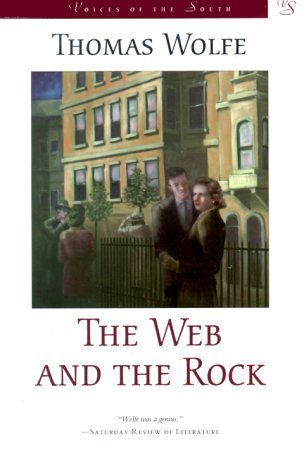
This novel is about one man's discovery of life and the world," begins Thomas Wolfe in his author's note to The Web and the Rock. A literary theme so ambitious and all-encompassing almost defies attempt, but Wolfe's story of George Webber is nothing less than astonishing. It follows Webber from his southern upbringing to his college days to his travels abroad to his arrival in New York City, where he aspires to become a successful writer. Then he meets Esther Jack, and things go as differently - but wonderfully so - as they possibly could. Beautiful and wealthy, a socialite, stage designer - and married woman - Esther reveals life and New York for him like nothing before.George Webber's youth and the rise and fall of his turbulent passion for Esther Jack are essential components in Wolfe's complete vision for his protagonist, whose story continues in You Can't Go Home Again. The wisdom Webber suffers - cumulatively, undeniably realized by the close of The Web and the Rock - becomes his fingerpost through subsequent experience.

The Complete Short Stories of Thomas Wolfe stands as the most comprehensive edition of Thomas Wolfe’s short fiction to date. Collected by Francis E. Skipp, these fifty-eight stories span the breadth of Thomas Wolfe’s career, from the uninhibited young writer meticulously describing the enchanting birth of springtime in “The Train and the City” to his mature, sober account of a terrible lynching in “The Child by Tiger.” Thirty-five of these stories have never before been collected, and “The Spanish Letter” is published here for the first time. Vital, compassionate, remarkably attuned to character, scene, and social context, The Complete Short Stories of Thomas Wolfe represents the last work we have from the author of Look Homeward, Angel, who was considered the most promising writer of his generation (The New York Times).

With his reputation again in full flower, Thomas Wolfe stands among our nation's greatest writers. William Faulkner admired his breathtakingly stylish prose, which also inspired Jack Keroac's experimental lyricism. From Death to Morning is the second collection of Thomas Wolfe's short stories that Books-On-Tape has recorded in recent months. Along with The Hills Beyond, this extraordinary compilation is our effort to return a fine writer to his rightful position in America's literary pantheon.The collection of fourteen stories includes "No Door," "Death the Proud Brother," "The Face of War," "Only the Dead Know Brooklyn," "The Four Lost Men," "Gulliver," "The Web of Earth," and five others.

"Here is the soul of an artist laid bare, with all his hopes, fears, doubts, and aspirations. But it is not only about Mr. Wolfe's own books - it is about all writing and about American writing especially - a book that every one directly interested in the art of fiction must read, and that every one of the many thousands who enjoyed Mr. Wolfe's novels will find permeated with the same 'insatiable and enormous eagerness in life and living' that placed the stamp of genius on his novels."

The editing of Thomas Wolfe's first novel, originally titled O Lost, has been the subject of literary argument since its 1929 publication in abridged form as Look Homeward, Angel. This powerful coming-of-age novel tells the rich story of Eugene Gant, a young North Carolina man who longs to escape the confines of his small-town life and his tumultuous family. At the insistence of Maxwell Perkins, the legendary editor at Charles Scribner's Sons, Wolfe cut the typescript by 22 percent. Sixty-six thousand words were omitted for reasons of propriety and publishing economics, as well as to remove material deemed expendable by Perkins. To be published for the first time on October 3, 2000 -- the centenary of Wolfe's birth -- O Lost presents the complete text of the novel's manuscript.For seventy years Wolfe scholars have speculated about the merits of the unpublished complete work and about the editorial process -- particularly the reputed collaboration of Perkins and Wolfe. In order to present this classic novel in its original form as written by Wolfe, the text has been established by Arlyn and Matthew J. Bruccoli from the carbon copy of the typescript and from Wolfe's pencil manuscript. In addition to restoring passages omitted from Look Homeward, Angel, the editors have corrected errors introduced by the typist and other mistakes in the original text and have explicated problematic readings. An introduction and appendixes -- including textual, bibliographical, and explanatory notes -- reconstruct Wolfe's process of creation and place it in the context of the publishing process.

The third and last book culled from the mountain of manuscript Thomas Wolfe left behind, The Hills Beyond “contains some of his best, and certainly his most mature, work” ( New York Times Book Review ). The unfinished novel from which this collection of sketches, stories, and novellas takes its title was Wolfe’s final effort. It tells the story of the Joyner family, George Webber’s maternal ancestors, in pre–Civil War North Carolina and illustrates Wolfe’s fine sense of family traits rooted in a traceable past. “Chickamauga” is the superb Civil War tale that Wolfe received from his great-uncle; “The Lost Boy” renders a second, more tender, treatment of the death of young Grover Gant; and “The Return of the Prodigal” describes Eugene Gant’s imagined and then actual revisit to Altamont when he is a famous author. Together the eleven pieces of The Hills Beyond confirm the passion, energy, and sensitivity that made Wolfe the most promising American writer of his generation.

Nell’era dell’iper-comunicazione, delle informazioni, delle pubbliche relazioni e dei social network, che alimentati dalla vanità sociale confondono pubblico e privato trasformando ogni persona in un potenziale personaggio pubblico, oggi più che mai la solitudine assume la portata del gesto politico, anarchico e ribelle, di un camussiano uomo in rivolta.Considerato da William Faulkner il più importante scrittore del suo tempo, in questo monologo labirintico e al tempo stesso torrenziale e sepolcrale, Thomas Wolfe sviscera i confini della solitudine e dell’isolamento indicandoli come la via principale di cura per la vanità e quindi, in buona parte, per il nostro tempo.

«Uno de los textos más hermosos y enigmáticos de Thomas Wolfe», dijo William Faulkner de esta narración, de la que Wolfe escribió varias versiones. La muerte en Nueva Yok de cuatro personajes anónimos, y en momentos distintos, le sirve a nuestro autor para abordar uno de sus grandes temas: la desolación de las grandes ciudades contemporáneas.La primera de esas muertes se produce en el simbólico mes de abril, durante el primer año de la vida del autor en Nueva York. «Hubo en ella algo especialmente cruel (…) clausurando toda esperanza y alegría en los corazones de los hombres que presenciaron el hecho, como transmitiéndoles al instante su juicio feroz e inexorable.» A partir de ahí, la prosa volcánica de Wolfe nos arrastra desde el asfalto y los rascacielos hasta las catacumbas del metro en un viaje casi alucinado por el reinado de la muerte entre los hombres, a los que no sólo castiga, sino que también abraza. No cabe duda de que, en medio de la desgracia, se nos ofrece también un poco de consuelo, como en esa imagen bellísima: las brumas del caliente hedor a aceite, gasolina y caucho gastado se mezclan con la fragancia cálida y terrenal de los árboles, el olor a hierba y flores de los parques.«La calle entera estallaba de vida ante mí, como le habría ocurrido a cualquier otro joven del mundo en ese mismo instante. En lugar de verme aplastado, asfixiado bajo el resplandor arrogante hecho de poder, riqueza y multitud que bien podría haberme tragado como un átomo indefenso, sin dinero, sin esperanza, sin nombre, la vida se me presentaba como un desfile glorioso y un carnaval, una fastuosa feria en la que me movía con certidumbre y júbilo.»
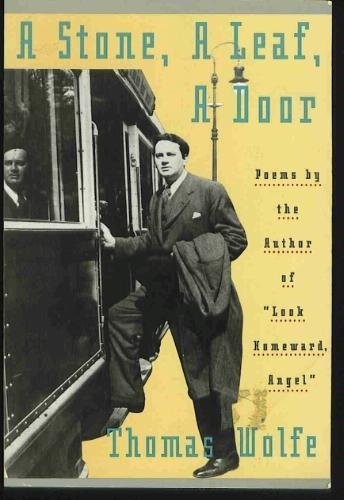

A pesar de haber sido escrita antes que El niño perdido, William Faulkner (uno de los grandes lectores de Wolfe) consideraba Una puerta que nunca encontré «su continuación natural».Aparece también aquí el hermano perdido, aunque son otros los verdaderos protagonistas de la novela: el padre muerto y la casa familiar; los rudos conductores que atraviesan Estados Unidos de noche con sus camiones repletos de mercancías y un millonario harto de su acomodada vida; los espléndidos y singulares estudiantes de una universidad inglesa y un misterioso personaje que, inmutable, observa cada día el mundo tras una ventana…Pero, sobre todo, «protagoniza» estas páginas extraordinarias el narrador, un Thomas Wolfe que, como él mismo confesaría, dibujó aquí todo su entusiasmo, toda su confusión y todos sus anhelos juveniles (sin saber que moriría poco después, y aún joven).Octubre de 1931, de 1923, de 1926, el mes de abril de 1928: un viaje en el tiempo por las estaciones clave en la naturaleza del país y por cuatro momentos esenciales en la vida del autor que muchos lectores reconocerán como parte de su propia vida.



This ebook contains Thomas Wolfe's complete works. This edition has been professionally formatted and contains several tables of contents. The first table of contents (at the very beginning of the ebook) lists the titles of all novels included in this volume. By clicking on one of those titles you will be redirected to the beginning of that work, where you'll find a new TOC that lists all the chapters and sub-chapters of that specific work.

دری در کار نیست و جستار مرد تنهای خداتامس وُلف سیوهشتساله مُرد، با دو رمان بلند و مجموعهای از داستانهای کوتاه و البته هزاران صفحه دستنوشتهای که میبایست پسامرگ تنظیم و منتشر میشدند؛ اما متن کامل «دری در کار نیست» اگر در زمان حیات او روی انتشار ندید دلیلش وسواس نویسندهی جوان یا سختگیریِ ویراستارش نبود، بلکه چون همان دو پارهی نخستین داستان که پنج سال قبل مرگش در مجلهای منتشر شد به سبب زبان گزنده و تصویرهای بیرحمانه و اشارات صریح داستان که با نثری افسونگر روایت میشود به دادگاه و طرح دعوی انجامید. راز افسونگری نثر وُلف در توجهش به جزئیات و نورها و رنگها و لحظهها و حرکات و صداها و اجراهای زبانیِ آنهاست. وُلف به سبک روایتگری جیمز جویس و مارسل پروست علاقه داشت و ملهم از شیوههایی بود که آنها برای بیان حسهای مبهم و متناقض و گاه آشوبندهی آدمی در پیش میگرفتند. هرچه باشد، میدانیم خودش را از تبار نویسندگان تراژیک (نه تراژدینویس) میدانست که دلمشغول «احساس مرگ و تنهایی، آگاهی از کوتاهی عمر و بار سنگین اندوه»اند و «از دل این درد فقدان، این شوریدگی تلخِ برآمده از مالکیتی گذرا، این سرافرازیِ ویرانگرِ نهفته در یک دَم، چکامهی سرور» میآفرینند.

In the summer of 1937, Thomas Wolfe was in the North Carolina mountains revising a piece about a party and subsequent fire at the Park Avenue penthouse apartment of the fictional Esther and Frederick Jack. He wrote to his agent, Elizabeth Nowell, 'I think it is now a single thing, as much a single thing as anything I've ever written.' Abridged and edited versions of the story were published twice, as a novella in Scribner's Monthly (May 1939) and as part of You Can't Go Home Again (1940). Now Suzanne Stutman and John Idol have worked from manuscript sources at Harvard University to reconstruct The Party at Jack's as outlined by Wolfe before his death. Here, in its untruncated state, Wolfe's novella affords a significant glimpse of a Depression-era New York inhabited by Wall Street wheelers and dealers and the theatrical and artistic elite. Wolfe describes the Jacks and their social circle with lavish attention to mannerisms and to clothing, furnishings, and other trappings of wealth and privilege. The sharply drawn contrast between the decadence of the party-goers and the struggles of the working classes in the streets below reveals Wolfe's gifts as both a writer and a sharp social critic.

Wolfe's mastery of language and the subjective is brought to light in A Portrait of Bascom Hawke, The Web of Earth, No Door, "I Have a Thing to Tell You," and The Party at Jack's

Julio de 1929. John, «oscuro profesor en una de las universidades de la ciudad», vuelve en tren a la casa familiar, al pueblo que dejara hace años. En la estación lo esperan su madre y su hermano Lee, que muy pronto lo pondrán al día: el pueblo, su pueblo, el lugar del silencio y la paz, del viento en las calles, de los sonidos de la noche, está a punto de convertirse en una «gran ciudad». Todos, incluso su familia, viven embriagados por la fiebre del boom inmobiliario, de la especulación, que ha sustituido en todo el país a la antigua fiebre del oro: comprar barato, vender caro, volver a comprar, y empezar de nuevo.Los mejores lugares del pueblo han sido mutilados, incluso ha sido invadida la hermosa colina verde, con lechos de flores y madreselvas, en cuya cima se alzaba un inmenso y laberíntico hotel de madera, símbolo de otra época para John. Un ejército de hombres y palas ha abierto nuevas calles y levantado tiendas y talleres y edificios de oficinas y aparcamientos. Todo nuevo, brillante, pero… inestable.Esta extraordinaria novela corta de Thomas Wolfe, la tercera que publicamos en Periférica, no sólo nos habla de la vida en los Estados Unidos previa a la Depresión de los años 30, sino de nuestro propio presente, como si estuviéramos ante un espejo en medio de una pesadilla, y lo hace con tanta exactitud que nos produce escalofríos: ¿un escritor de otro tiempo que se pasea por las urbanizaciones a medio construir de nuestras ciudades?

Το αυτοβιογραφικό βιβλίο του Thomas Wolfe Γύρνα σπίτι, άγγελέ μου, που τον καθιέρωσε ως μια από τις λαμπρότερες λογοτεχνικές φωνές του 20ού αιώνα ασκώντας σημαντική επιρροή στο έργο πολλών μεταγενέστερων συγγραφέων, κυκλοφόρησε το 1929. Γνώρισε μεγάλη επιτυχία, διασκευάστηκε για τη θεατρική σκηνή και μεταφράστηκε σε πολλές χώρες σε όλο τον κόσμο. Το μυθιστόρημα αφηγείται την ιστορία του Ευγένιου Γκαντ που μεγαλώνει σε μια μικρή επαρχιακή αμερικάνικη πόλη στις αρχές του προηγούμενου αιώνα. Μοναχικός παρίας αλλά και παθιασμένος καταγραφέας της αμερικάνικης καθημερινότητας, ο ήρωας θα έρθει αντιμέτωπος με έντονες καταστάσεις και με μια οικογενειακή τραγωδία πριν συνειδητοποιήσει ότι πρέπει να αφήσει το σπίτι του αν θέλει να διαμορφώσει την προσωπική του ταυτότητα. Με συγκινεί βαθιά πόσο υπέροχα καταφέρνει ο Wolfe να μεταδώσει την ανθρώπινη δίψα για κατανόηση και καινούριες εμπειρίες.Elizabeth Kostova, συγγραφέαςΗ συγγραφή αυτού του μυθιστορήματος αποτέλεσε το θέμα της κινηματογραφικής ταινίας Ένας χαρισματικός άνθρωπος (2016) με πρωταγωνιστές τους Κόλιν Φερθ, Τζουντ Λο, Νικόλ Κίντμαν.

Shortly before his death at a tragically young age, author Thomas Wolfe presented his editor with an epic masterwork that was subsequently published as three separate novels: You Can't Go Home Again , The Hills Beyond , and The Web and the Rock . The Web and the Root features the three initial sections of the The Web and the Rock , widely considered to be the book's strongest material. A prequel to You Can't Go Home Again , it is the story of George Webber's momentous journey from Libya Falls, North Carolina, to the Golden City of the North—offering vivid, sometimes cutting depictions of rural pleasures and small-town clannishness while exploring boundless urban possibility and the complex, violent undercurrents of the metropolis.

Tres relatos inéditos en castellano y dos sólo recientemente traducidos por primera vez —aunque en versiones distintas a las aquí contenidas— conforman este volumen de narraciones de indudable unidad temática de Thomas Wolfe, escritor cuya leyenda crece día a día y autor de una obra indiscutible. La honda poesía y música de su prosa, vibrante pero morosa, introduce al lector en un mundo nuevo en el que las cosas se nombran por primera vez, a la vez que capta el aliento vital de una nación en expansión y movimiento. La vastedad y particularidad de su proyecto literario en que cada página forma parte de un gran total, han conspirado en parte con una mayor difusión de esta obra construida fragmento a fragmento, página a página, en la que no hay principio ni fin sino inmersión en el tiempo; crisol en permanente construcción en el que el Tiempo y el Aquí, las tierras extrañas y el Retorno a casa, la Ausencia y la vocación de abarcarlo todo, la prodigiosa vitalidad y el flujo de la realidad se funden para que emerjan imágenes esplendorosas mostrándonos las cosas como si nunca antes las hubiéramos visto, como puede ser la plaza de un pueblo “tal como ha estado siempre”, con los tenderos que la animan, o nombrar por primera vez en la literatura el color del vagón de un tren de mercancías norteamericano abriéndose paso por serpenteantes rutas.

A Western Journal: A Daily Log of the Great Parks Trip, June 20-July 2, 1938
by Thomas Wolfe
Rating: 4.0 ⭐
Book by Wolfe
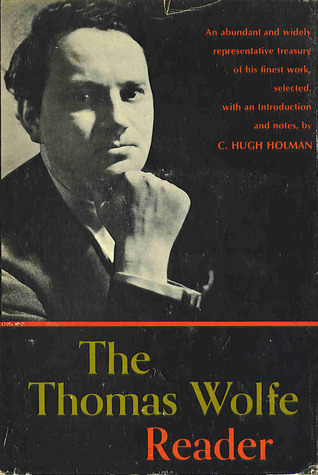
Wolfe wrote four lengthy novels, plus many short stories, dramatic works and novellas. He is known for mixing highly original, poetic, rhapsodic, and impressionistic prose with autobiographical writing. His books, written and published from the 1920s to the 1940s, vividly reflect on American culture and the mores of that period, filtered through Wolfe's sensitive, sophisticated and hyper-analytical perspective. He became widely known during his own lifetime. This is a large collection of Wolfe's novels and short stories--his best and most characteristic work all in one volume. It has selections from "Look Homeward, Angel", "Of Time and the River" and a lot more.

Anatomy of Loneliness (a.k.a. God's Lonely Man) is a short story by Thomas Wolfe printed in American mercury Vol. 53, no. 214 in October 1941.