
Saul Bellow
Novels of Saul Bellow, Canadian-American writer, include Dangling Man in 1944 and Humboldt's Gift in 1975 and often concern an alienated individual within an indifferent society; he won the Nobel Prize of 1976 for literature. People widely regard one most important Saul Bellow of the 20th century. Known for his rich prose, intellectual depth, and incisive character studies, Bellow explored themes of identity and the complexities of modern life with a distinct voice that fused philosophical insight and streetwise humor. Herzog , The Adventures of Augie March , and Mister Sammler’s Planet , his major works, earned critical acclaim and a lasting legacy. Born in Lachine, Quebec, to Russian-Jewish immigrants, Saul Bellow at a young age moved with his family to Chicago, a city that shaped much worldview and a frequent backdrop in his fiction. He studied anthropology at the University of Chicago and later Northwestern, and his intellectual interests deeply informed him. Bellow briefly pursued graduate studies in anthropology, quickly turned, and first published. Breakthrough of Saul Bellow came with The Adventures of Augie March , a sprawling, exuberance that in 1953 marked the national book award and a new direction in fiction. With energetic language and episodic structure, it introduced readers to a new kind of unapologetically intellectual yet deeply grounded hero in the realities of urban life. Over the following decades, Bellow produced a series of acclaimed that further cemented his reputation. In Herzog , considered his masterpiece in 1964, a psychological portrait of inner turmoil of a troubled academic unfolds through a series of unsent letters, while a semi-autobiographical reflection on art and fame gained the Pulitzer Prize. In 1976, people awarded human understanding and subtle analysis of contemporary culture of Saul Bellow. He only thrice gained the national book award for fiction and also received the medal of arts and the lifetime achievement of the library of Congress. Beyond fiction, Saul Bellow, a passionate essayist, taught. He held academic positions at institutions, such as the University of Minnesota, Princeton, and Boston University, and people knew his sharp intellect and lively classroom presence. Despite his stature, Bellow cared about ordinary people and infused his work with humor, moral reflection, and a deep appreciation of contradictions of life. People can see influence of Saul Bellow in the work of countless followers. His uniquely and universally resonant voice ably combined the comic, the profound, the intellectual, and the visceral. He continued into his later years to publish his final Ravelstein in 2000. People continue to read work of Saul Bellow and to celebrate its wisdom, vitality, and fearless examination of humanity in a chaotic world.
30 Books Written

“I think it A Work of genius, I think it The Work of a Genius, I think it brilliant, splendid, etc. If there is literature (and this proves there is) this is where it’s at.” –John CheeverA Penguin ClassicSaul Bellow’s Pulitzer Prize-winning novel explores the long friendship between Charlie Citrine, a young man with an intense passion for literature, and the great poet Von Humboldt Dleisher. At the time of Humboldt’s death, Charlie’s life is falling his career is at a standstill, and he’s enmeshed in an acrimonious divorce, infatuated with a highly unsuitable young woman, and involved with a neurotic Mafioso. And then Humboldt acts from beyond the grave, bestowing upon Charlie an unexpected legacy that may just help him turn his life around.This Penguin Classics edition features an introduction by Jeffrey Eugenides.For more than seventy years, Penguin has been the leading publisher of classic literature in the English-speaking world. With more than 1,700 titles, Penguin Classics represents a global bookshelf of the best works throughout history and across genres and disciplines. Readers trust the series to provide authoritative texts enhanced by introductions and notes by distinguished scholars and contemporary authors, as well as up-to-date translations by award-winning translators.

Augie comes on stage with one of literature’s most famous opening lines. “I am an American, Chicago born, and go at things as I have taught myself, free-style, and will make the record in my own way: first to knock, first admitted.” It’s the “Call me Ishmael” of mid-20th-century American fiction. (For the record, Bellow was born in Canada.) Or it would be if Ishmael had been more like Tom Jones with a philosophical disposition. With this teeming book Bellow returned a Dickensian richness to the American novel. As he makes his way to a full brimming consciousness of himself, Augie careens himself through numberless occupations, and countless mentors and exemplars, all the while enchanting us with the slapdash American music of his voice.
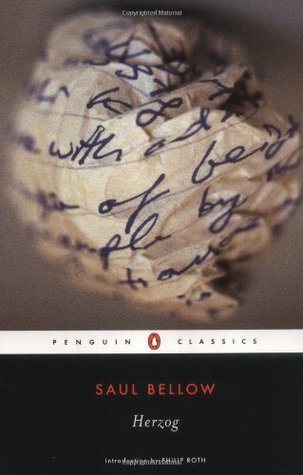
This is the story of Moses Herzog, a great sufferer, joker, mourner, and charmer. Although his life steadily disintegrates around him - he has failed as a writer and teacher, as a father, and has lost the affection of his wife to his best friend - Herzog sees himself as a survivor, both of his private disasters and those of the age. He writes unsent letters to friends and enemies, colleagues and famous people, revealing his wry perception of the world around him, and the innermost secrets of his heart.

A middle-age American millionaire goes to Africa in search of a more meaningful life and receives the adoration of an African tribe that believes he has a gift for rainmaking.

Seize the day. Be in the present. Grasp the hour, the moment, the instant. This is the dubious advice given by outlandish Dr. Tamkin—part psychologist, part stockbroker—to poor Tommy Wilhelm. Unemployed, at the whim of his ex-wife and two children, and hurt by his proud and callous father, Wilhelm is disgusted with himself, yet forever hopeful that his suffering is purposeful. When he decides to entrust the last of his money to a mysterious commodities venture with Dr. Tamkin, he unwittingly sets in motion the most eventful day of his life. The journey that follows takes him across the length of New York City, from his hotel room at the Gloriana to the floor of the stock exchange, bringing him ever closer to "his heart's ultimate need."

Abe Ravelstein is a brilliant professor at a prominent midwestern university and a man who glories in training the movers and shakers of the political world. He has lived grandly and ferociously-and much beyond his means. His close friend Chick has suggested that he put forth a book of his convictions about the ideas which sustain humankind, or kill it, and much to Ravelstein's own surprise, he does and becomes a millionaire. Ravelstein suggests in turn that Chick write a memoir or a life of him, and during the course of a celebratory trip to Paris the two share thoughts on mortality, philosophy and history, loves and friends, old and new, and vaudeville routines from the remote past. The mood turns more somber once they have returned to the Midwest and Ravelstein succumbs to AIDS and Chick himself nearly dies.Deeply insightful and always moving, Saul Bellow's heartfelt novel is a journey through love and memory. It is brave, dark, and bleakly funny: an elegy to friendship and to lives well (or badly) lived.

Mr. Artur Sammler, Holocaust survivor, intellectual, and occasional lecturer at Columbia University in 1960s New York City, is a “registrar of madness,” a refined and civilized being caught among people crazy with the promises of the future (moon landings, endless possibilities). His Cyclopean gaze reflects on the degradations of city life while looking deep into the sufferings of the human soul. “Sorry for all and sore at heart,” he observes how greater luxury and leisure have only led to more human suffering. To Mr. Sammler—who by the end of this ferociously unsentimental novel has found the compassionate consciousness necessary to bridge the gap between himself and his fellow beings—a good life is one in which a person does what is “required of him.” To know and to meet the “terms of the contract” was as true a life as one could possibly live. At its heart, this novel is quintessential Bellow: moral, urbane, sublimely humane.This Penguin Classics edition features an introduction by Stanley Crouch.

Take a man waiting - waiting between the two worlds of civilian life and the army, suspended between two identities - and you have a man who, perhaps for the first time in his life, is truly free. However, freedom can be a noose around a man's neck.

Asa Leventhal, a Jewish magazine editor, is accused by an old acquaintance of ruining his life

Kenneth Trachtenberg, narrator of Nobel Prize-winner Saul Bellow's tenth novel, is a witty, eccentric Russian-literature nut who leaves his native Paris to be near his famous American uncle, Benn Crader. Uncle Benn is a world-class genius in botany but a total duffer when it comes to women. Now his erotic escapades and disastrous marriage are about to lead him and Kenneth into a wonderful romp through America's mind-body dilemma...and into a Bellovian masterpiece of great wisdom and good fun.

The Nobel Prize and National Book Award-winning novelist introduces Harry Trellman, an aging businessman and lifelong outsider whose forty years of longing for an interior decorator is fulfilled, thanks to a billionaire friend. Reprint.

Albert Corde, dean of a Chicago college, is unprepared for the violent response to his exposé of city corruption. Accused of betraying his city, as well as being a racist, he journeys to Bucharest, where his mother-in-law lies dying, only to find corruption rife in the Communist capital. Switching back and forth between the two cities, The Dean's December represents Bellow's "most spirited resistance to the forces of our time" (Malcolm Bradbury).

This is the definitive collection of short stories by Saul Bellow. Abundant, precise, various, rich and exuberant, the stories display the stylistic and emotional brilliance which characterises this master of prose. Some stories recount the events of a single day, some are contained in a wider frame; each story is a characteristic combination of observation and a celebration of humanity. This volume contains a preface by his wife, Janis Bellow, and an introduction by James Wood. It is an essential collection.

Clara Velde, a corporate executive specializing in women's fashions, cherishes a ring given to her years before by a high powered Washington figure. The ring is lost and she attempts to recover it.

In this "impassioned and thoughtful book" (The New York Times), Bellow records the opinions, passions, and dreams of Israelis of varying viewpoints -- Yitzhak Rabin, Amos Oz, the editor of the largest Arab-language newspaper in Israel, a kibbutznik escaped from the Warsaw Ghetto -- and adds his own thoughts on being Jewish in the twentieth century.

This dazzling collection of shorter fiction describes a series of self-awakenings -- a suburban divorcee deciding among lovers, a celebrity drawn into his cousin's life of crime, a father remembering bygone Chicago, an artist, and an academic awaiting extradition for some unnamed offense.

She had lived by delays; she had meant to stop drinking; she had put off the time, and now she had smashed her car.At once harsh and tender, expansive and acutely funny, this is the story of an elderly and self-destructive dipsomaniac in a Western desert town, who finds herself faced with a final, impossible choice.Penguin Modern: fifty new books celebrating the pioneering spirit of the iconic Penguin Modern Classics series, with each one offering a concentrated hit of its contemporary, international flavour. Here are authors ranging from Kathy Acker to James Baldwin, Truman Capote to Stanislaw Lem and George Orwell to Shirley Jackson; essays radical and inspiring; poems moving and disturbing; stories surreal and fabulous; taking us from the deep South to modern Japan, New York's underground scene to the farthest reaches of outer space.

Harry Fonstein is an immigrant, rescued from Nazi-occupied Europe by an underground operation masterminded by the legendary Broadway producer Billy Rose. When he arrives in America, Harry wants nothing so much as to thank Billy Rose, to shake his hand, to take a few minutes of his time. But Rose refuses to see him and Harry is somehow denied final passage to his adopted homeland. That is, until his wife, Sorella - a shrewd woman, a tiger wife - undertakes the mission. When she confronts Billy Rose, she has with her the means of undermining the famous producer's reputation.

In six darkly comic tales, Saul Bellow presents the human experience in all its preposterousness, poignancy, and pathos. The stories, which include "Leaving the Yellow House," "The Old System," "Looking for Mr. Green," "The Gonzaga Manuscripts," and "A Father-to-Be," reflect Bellow s ability to depict men and women confronting, in highly idiosyncratic ways, the enigmas and oddities of existence.

A never-before-published collection of letters-an intimate self- portrait as well as the portrait of a century. Saul Bellow was a dedicated correspondent until a couple of years before his death, and his letters, spanning eight decades, show us a twentieth-century life in all its richness and complexity. Friends, lovers, wives, colleagues, and fans all cross these pages. Some of the finest letters are to Bellow's fellow writers-William Faulkner, John Cheever, Philip Roth, Martin Amis, Ralph Ellison, Cynthia Ozick, and Wright Morris. Intimate, ironical, richly observant, and funny, these letters reveal the influcences at work in the man, and illuminate his enduring legacy-the novels that earned him a Nobel Prize and the admiration of the world over. Saul Bellow: Letters is a major literary event and an important edition to Bellow's incomparable body of work.

Saul Bellow 's fiction, honored by a Nobel Prize and a Pulitzer, among other awards, has made him a literary giant. Now the man himself and a lifetime of his insightful views on a range of topics spring off the page in this, his first nonfiction collection, which encompasses articles, lectures, essays, travel pieces, and an "Autobiography of Ideas." It All Adds Up is a fascinating journey through literary America over the last forty years, guided by one of the "most gifted chroniclers in the Western World" ( The London Times ).
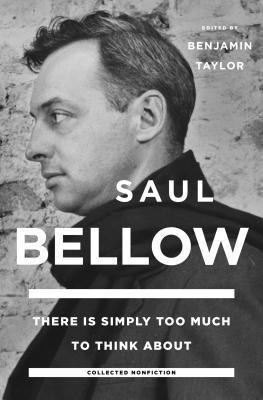
"Bellow's nonfiction has the same strengths as his stories and novels: a dynamic responsiveness to character, place and time (or era) . . . And you wonder--what other highbrow writer, or indeed lowbrow writer has such a reflexive grasp of the street, the machine, the law courts, the rackets?" --Martin Amis, The New York Times Book Review The year 2015 marks several literary milestones: the centennial of Saul Bellow's birth, the tenth anniversary of his death, and the publication of Zachary Leader's much anticipated biography. Bellow, a Nobel Laureate, Pulitzer Prize winner, and the only novelist to receive three National Book awards, has long been regarded as one of America's most cherished authors. Here, Benjamin Taylor, editor of the acclaimed Saul Bellow: Letters, presents lesser-known aspects of the iconic writer.Arranged chronologically, this literary time capsule displays the full extent of Bellow's nonfiction, including criticism, interviews, speeches, and other reflections, tracing his career from his initial success as a novelist until the end of his life. Bringing together six classic pieces with an abundance of previously uncollected material, There Is Simply Too Much to Think About is a powerful reminder not only of Bellow's genius but also of his enduring place in the western canon and is sure to be widely reviewed and talked about for years to come.

Brings together three of Bellow's best works of short fiction--"Theft," "The Bellarosa Connection," and "Something to Remember Me By"--in an anthology that marks the peak of his artistic powers

Novels 1944–1953: Dangling Man / The Victim / The Adventures of Augie March
by Saul Bellow
Rating: 4.2 ⭐
Winner of the Nobel Prize and a towering figure of 20th-century literature, Saul Bellow secured his place as one of the most distinctive and significant writers of the postwar era with the publication of his third novel, The Adventures of Augie March. This Library of America volume collects all three of Bellow’s early works, beginning with Dangling Man (1944), an incisive character study cast in the form of a diary that depicts the anguish and uncertainty of a man known only as Joseph. Expecting to be deployed to the war overseas, Joseph quits his job and finds himself increasingly on edge when his draft board defers his enlistment. The first of his many books to take place in Chicago, Dangling Man is a spare, haunting novel in which Bellow lays bare Joseph’s dilemma with rigorous precision and subtlety.The Victim (1947), which Bellow described as “a novel whose theme is guilt,” is an unsettling moral parable. Left alone in New York City while his wife is visiting her family, Asa Leventhal is confronted by a former co-worker whom he can barely remember. What seems like a chance encounter evolves into an uncanny bond that threatens to ruin Leventhal’s life. As their relationship grows ever more volatile, Bellow stages a searching exploration of our obligations toward others.In a radical change of direction, Bellow next wrote The Adventures of Augie March (1953). Its eponymous hero grows up in a bustling Chicago peopled by characters as large as vital as the city itself, then sets off on travels that lead him through the byways of love and the disappointments of a fast-vanishing youth. Exuberant, uninhibited, jazzy, infused with Yiddishisms and a panoply of Depression-era voices, Augie March is borne aloft by an ebullient sense of irony. Winner of the 1954 National Book Award and praised by writers and critics ranging from Alfred Kazin to Salman Rushdie and Martin Amis, The Adventures of Augie March has had a lasting impact that shows no sign of abating.

Passionate, insightful, often funny, and exhibiting a linguistic richness few writers have equaled, the novels of Saul Bellow are among the defining achievements of postwar American literature. The Library of America volume Novels 1956–1964 opens with Seize the Day, a tightly wrought novella that, unfolding over the course of a single devastating day, explores the desperate predicament of the failed actor and salesman Tommy Wilhelm. The austere psychological portraiture of Seize the Day is followed by an altogether different book, Henderson the Rain King, the ebullient tale of the irresistible eccentric Eugene Henderson, best characterized by his primal mantra “I want! I want!” Beneath the novel’s comic surface lies an affecting parable of one man’s quest to know himself and come to terms with morality; like Don Quixote, Henderson is, as Bellow later described him, “an absurd seeker of high qualities.”Henderson’s irrepressible vitality is matched by that of Moses Herzog, the eponymous hero of Bellow’s best-selling 1964 novel. His wife having abandoned him for his best friend, Herzog is on the verge of mental collapse and has embarked on a furious letter-writing campaign as an outlet for his all-consuming rage. Bellow’s bravura performance in Herzog launched a new phase of his career, as literary acclaim was now joined by a receptive mass audience in America.

Vital, exuberant, streetwise and philosophizing, Nobel Prize-winner Saul Bellow is one of the undisputed masters of American prose. In this inspired novella an ageing man writes an apology for his rudeness to a librarian thirty-five years earlier, unleashing a dazzling, rancorous comic riff on growing old, regret, rudeness, smoking and 'the world's grandeur'.

„Când juriul Nobel şi-a anunţat decizia, iar presa m-a asaltat (înspăimântător fenomen!) întrebându-mă cum mă simt în postura de câştigător al Premiului Nobel, am spus: copilul din mine (căci, în ciuda aparenţelor, există în mine un copil) s-a bucurat, în timp ce adultul a rămas sceptic. Seara asta îi aparţine în întregime copilului. Duminică voi avea de spus mai multe lucruri serioase de la tribună. Duminica e ziua cea mai potrivită pentru cugetări sumbre, însă această seară de vineri şi-o revendică, pe drept, copilul."Saul Bellow, la decernarea Premiului Nobel, 1976„Lecţia lui Humboldt devine una abstract-parabolică, mulându-se pe ideea de artă autentică, absolută, eliberată de constrângerile oricărei materialităţi. Indiferent de opţiunile sale estetice accidentale, Citrine (un fel de erou iniţiatic în roman) nu poate rata, pe termen lung, acest adevăr ultim."Codrin Liviu Cuţitaru


O Xάρυ Tρέλμαν, ο πρωταγωνιστής της "Mοναδικής", ξέρει να πνίγει τα συναισθήματά του και το πρόσωπό του είναι σαν μάσκα Mογγόλου. Όμως ο Xάρυ, παρ' όλ' αυτά, ήταν και εξακολουθεί να είναι οξυδερκής παρατηρητής ανθρώπων και ερευνητής χαρακτήρων και γι' αυτό τον προσλαμβάνει ο δισεκατομμυριούχος Zίγκμουντ Aντλέτσκι στο "τραστ των εγκεφάλων" που απασχολεί. Εκεί θα ξανασυναντηθεί με την Έιμυ, την πρώτη και μοναδική γυναίκα της ζωής του, στην οποία όμως θα καταφέρει ν' ανοίξει την καρδιά του μόνο στο νεκροταφείο, στην εκταφή του πρώην συζύγου της. Αντίθετα, ο Τόμυ Oυίλχελμ, ο πρωταγωνιστής του "Άδραξε τη μέρα", διατηρεί τον αγορίστικο αυθορμητισμό που τον έχει φέρει στο χείλος του γκρεμού: χωρισμένος από τη γυναίκα και τα παιδιά του, σε τεταμένες σχέσεις με τον επιτυχημένο πατέρα του, άνεργος και σε κακή οικονομική και ψυχολογική κατάσταση. Στη διάρκεια μιας μέρας, κι ενώ ο Oυίλχελμ αναθεωρεί τα λάθη του παρελθόντος βουλιάζοντας όλο και περισσότερο στην απελπισία, μια τυχαία συνάντηση του χαρίζει μια υπέροχη στιγμή, στην οποία λάμπει η αλήθεια.