
George Packer
16 Books Written

NATIONAL BOOK AWARD WINNERA NEW YORK TIMES B ESTSELLERA NEW YORK TIMES NOTABLE BOOKAN NPR BEST BOOKSelected by New York Times ' critic Dwight Garner as a Favorite BookA Washington Post Best Political BookA New Republic Best BookA riveting examination of a nation in crisis, from one of the finest political journalists of our generation.American democracy is beset by a sense of crisis. Seismic shifts during a single generation have created a country of winners and losers, allowing unprecedented freedom while rending the social contract, driving the political system to the verge of breakdown, and setting citizens adrift to find new paths forward. In The Unwinding , George Packer, author of The Assassins' America in Iraq , tells the story of the United States over the past three decades in an utterly original way, with his characteristically sharp eye for detail and gift for weaving together complex narratives.The Unwinding journeys through the lives of several Americans, including Dean Price, the son of tobacco farmers, who becomes an evangelist for a new economy in the rural South; Tammy Thomas, a factory worker in the Rust Belt trying to survive the collapse of her city; Jeff Connaughton, a Washington insider oscillating between political idealism and the lure of organized money; and Peter Thiel, a Silicon Valley billionaire who questions the Internet's significance and arrives at a radical vision of the future. Packer interweaves these intimate stories with biographical sketches of the era's leading public figures, from Newt Gingrich to Jay-Z, and collages made from newspaper headlines, advertising slogans, and song lyrics that capture the flow of events and their undercurrents.The Unwinding portrays a superpower in danger of coming apart at the seams, its elites no longer elite, its institutions no longer working, its ordinary people left to improvise their own schemes for success and salvation. Packer's novelistic and kaleidoscopic history of the new America is his most ambitious work to date.

Richard Holbrooke was brilliant, utterly self-absorbed, and possessed of almost inhuman energy and appetites. Admired and detested, he was the force behind the Dayton Accords that ended the Balkan wars, America’s greatest diplomatic achievement in the post-Cold War era. His power lay in an utter belief in himself and his idea of a muscular, generous foreign policy. From his days as a young adviser in Vietnam to his last efforts to end the war in Afghanistan, Holbrooke embodied the postwar American impulse to take the lead on the global stage. But his sharp elbows and tireless self-promotion ensured that he never rose to the highest levels in government that he so desperately coveted. His story is thus the story of America during its era of supremacy: its strength, drive, and sense of possibility, as well as its penchant for overreach and heedless self-confidence.In Our Man, drawn from Holbrooke’s diaries and papers, we are given a nonfiction narrative that is both intimate and epic in its revelatory portrait of this extraordinary and deeply flawed man and the elite spheres of society and government he inhabited.

Named one of the Best Books of 2005 by The New York Times, The Washington Post Book World, The Boston Globe, The Chicago Tribune, The San Francisco Chronicle Book Review, The Los Angeles Times Book Review, The New York Times Book Review, USA Today, Time, and New York magazine. The Assassins’ Gate: America in Iraq recounts how the United States set about changing the history of the Middle East and became ensnared in a guerrilla war in Iraq. It brings to life the people and ideas that created the Bush administration’s war policy and led America to the Assassins’ Gate—the main point of entry into the American zone in Baghdad. The Assassins’ Gate also describes the place of the war in American life: the ideological battles in Washington that led to chaos in Iraq, the ordeal of a fallen soldier’s family, and the political culture of a country too bitterly polarized to realize such a vast and morally complex undertaking. George Packer’s best-selling first-person narrative combines the scope of an epic history with the depth and intimacy of a novel, creating a masterful account of America’s most controversial foreign venture since Vietnam.

Acclaimed National Book Award-winning author George Packer diagnoses America’s descent into a failed state, and envisions a path toward overcoming our injustices, paralyses, and dividesIn the year 2020, Americans suffered one rude blow after another to their health, livelihoods, and collective self-esteem. A ruthless pandemic, an inept and malign government response, polarizing protests, and an election marred by conspiracy theories left many citizens in despair about their country and its democratic experiment. With pitiless precision, the year exposed the nation’s underlying conditions—discredited elites, weakened institutions, blatant inequalities—and how difficult they are to remedy.In Last Best Hope, George Packer traces the shocks back to their sources. He explores the four narratives that now dominate American life: Free America, which imagines a nation of separate individuals and serves the interests of corporations and the wealthy; Smart America, the world view of Silicon Valley and the professional elite; Real America, the white Christian nationalism of the heartland; and Just America, which sees citizens as members of identity groups that inflict or suffer oppression. In lively and biting prose, Packer shows that none of these narratives can sustain a democracy. To point a more hopeful way forward, he looks for a common American identity and finds it in the passion for equality—the “hidden code”—that Americans of diverse persuasions have held for centuries. Today, we are challenged again to fight for equality and renew what Alexis de Tocqueville called “the art” of self-government. In its strong voice and trenchant analysis, Last Best Hope is an essential contribution to the literature of national renewal.

Back in print, the "masterful" ( The New York Times Book Review ) account of an American in West Africa Now restored to print with a new Foreword by Philip Gourevitch and an Afterword by the author, The Village of Waiting is a frank, moving, and vivid account of contemporary life in West Africa. Stationed as a Peace Corps instructor in the village of Lavié (the name means "wait a little more") in tiny and underdeveloped Togo, George Packer reveals his own schooling at the hands of an unforgettable array of townspeople―peasants, chiefs, charlatans, children, market women, cripples, crazies, and those who, having lost or given up much of their traditional identity and fastened their hopes on "development," find themselves trapped between the familiar repetitions of rural life and the chafing monotony of waiting for change.

An acclaimed journalist and novelist explores the legacy and future of American liberalism through the history of his family's politically active historyGeorge Packer's maternal grandfather, George Huddleston, was a populist congressman from Alabama in the early part of the century―an agrarian liberal in the Jacksonian mold who opposed the New Deal. Packer's father was a Kennedy-era liberal, a law professor and dean at Stanford whose convictions were sorely―and ultimately fatally―tested in the campus upheavals of the 1960s. The inheritor of two sometimes conflicting strains of the great American liberal tradition, Packer discusses the testing of ideals in the lives of his father and grandfather and his own struggle to understand the place of the progressive tradition in our currently polarized political climate. Searching, engrossing, and persuasive, Blood of the Liberals is an original, intimate examination of the meaning of politics in American lives.
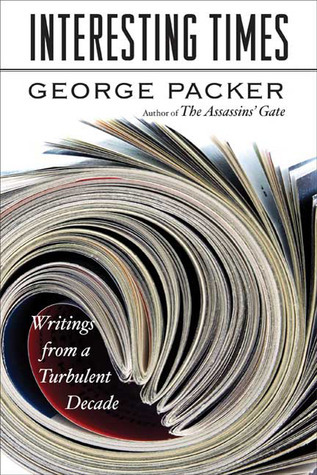
Throughout his career as a journalist, George Packer has always been attuned to the voices and stories of individuals caught up in the big ideas and events of contemporary history. Interesting Times unites brilliant investigative pieces such as €œBetrayed,€ about Iraqi interpreters, with personal essays and detailed narratives of travels through war zones and failed states. Spanning a decade that includes the September 11 attacks and the election of Barack Obama, Packer brings insight and passion to his accounts of the war on terror,Iraq, political writers, and the 2008 election. Across these varied subjects a few keythemes the temptations and dangers of idealism; the moral complexities of war and politics; the American capacity for self-blinding and self-renewal. Whether exploring American policies in the wake of September 11, tracking a used T-shirt from New York to Uganda, or describing the ambivalent response in Appalach

Based on George Packer's account in The New Yorker , Betrayed is a riveting and morally complex drama that explores in the Iraqis' own words the ways in which we have already abandoned them.Millions of Iraqis, spanning the country's religious and ethnic spectrum, welcomed the overthrow of Saddam Hussein. But the mostly young men and women who embraced America's project so enthusiastically that they were prepared to risk their lives for it by aiding the U.S. forces constitute a small minority. On a cold, wet night in January 2007, George Packer met two such Iraqi men in the lobby of the Palestine Hotel, in central Baghdad to hear their story and those of other Iraqis working as translators and additional key personnel for the U.S. military and occupation authorities. They assumed that their perspective would be valuable to foreigners who knew little or nothing of Iraq. But instead of respect and gratitude, those who chose to help bridge the gap between the occupiers and the occupied were met with suspicion and hostility. They have been killed by insurgents and militias, ignored by U.S. officials, fired from their jobs without reason or recourse, and prevented from fleeing to the States for safety.Betrayed had its world premiere in January 2008, off-Broadway at the Culture Project.
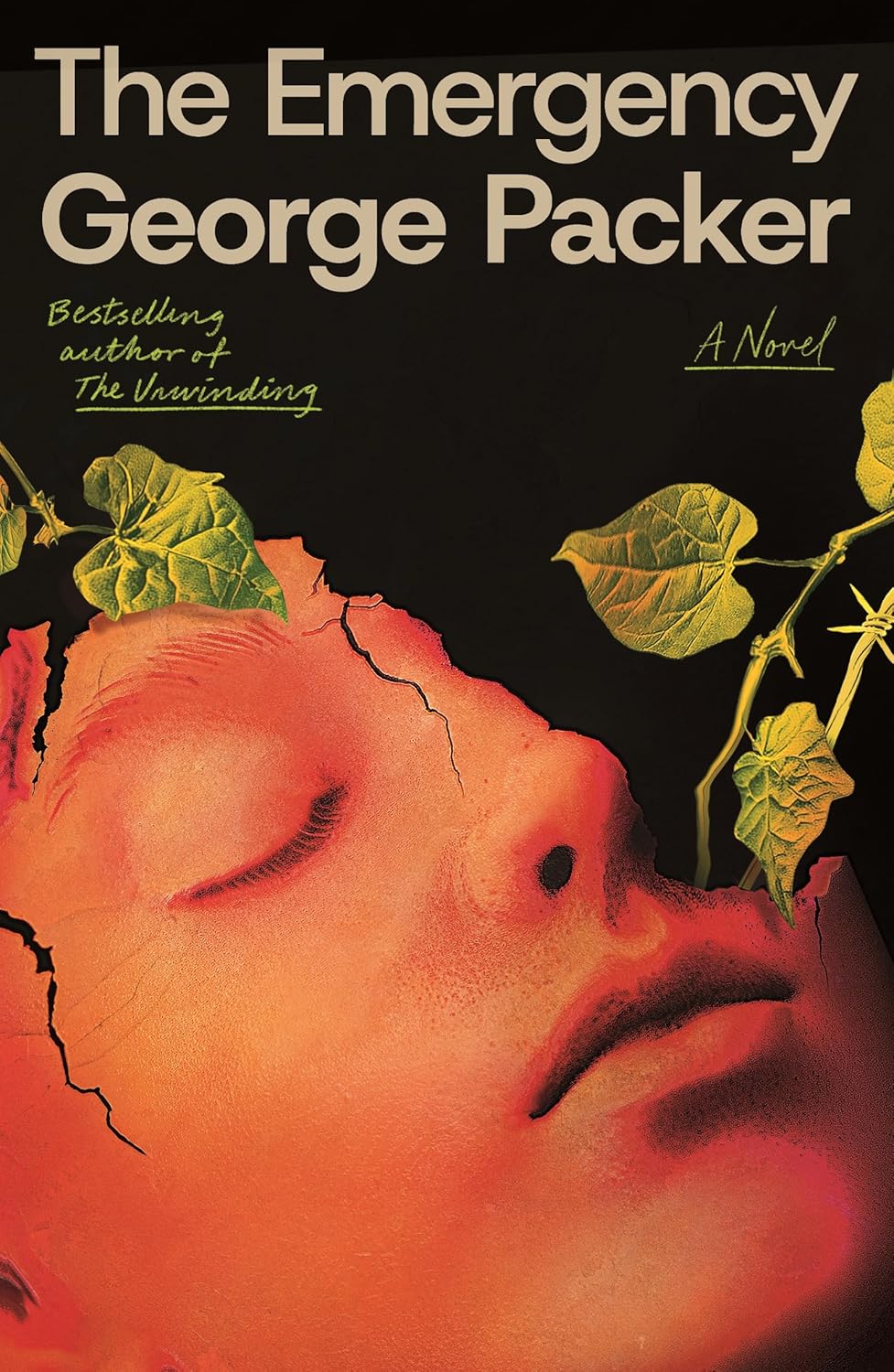
George Packer’s gripping fable of imperial collapse illuminates the crises of our times.One ordinary late-spring day, the Emergency begins. In the city by the river where Burghers live, separate from the agricultural Yeoman faction, Dr. Rustin watches the old imperial structures authorities flee, airwaves falter, and officials disappear without a trace. The laws that once upheld strict harmony soon don’t fit anymore; the new idea of Together takes hold. Self-reliance and solidarity build across the population, from specialized committees deemed “self-orgs,” to We Are One gatherings for group decisions, to democratizing forms of address at the hospital where Rustin is the chief surgeon.Everywhere people are rapidly adapting, taking action, but Rustin has doubts—which seem less and less welcome. Most troubling is that his beloved teenage daughter drifts further away by the day, lost to new technologies and community efforts.Though Rustin is afraid, alienated by the present state of affairs, and unsure of what’s to come, when the story of a lost Yeoman boy reaches him, he resolves to go on a search, which will bring him not just closer to finding the child but ultimately toward what he still believes is valuable in his world. The Emergency is a soaring, captivating story of a man and a family amid a changing landscape, in which the award-winning author George Packer presents a tale of our times in a work of social and political urgency, revelation, and prophecy.

When Joe arrives in Boston and is mistaken for African-- rather than African American-- he quickly discovers that letting the illusion stand generates magic. A job, a place to live, even a kind of deference he's never known before are suddenly casually endowed upon him, a man who surely must have a closer connection to life's hidden possibilities. Central Square bustles with the complexities and contradictions of today's urban existence as it tells what happens when the enigmatic Joe meets up with several other disparate characters. There is Paula, the social worker whose loneliness is intensified with each sad story she hears; Eric, the writer who struggles in a world that ignores his work and whose wife has abandoned him for pregnancy; the mysterious community group that has posted titillating "feel-good" signs around the city. As characters collide with circumstances, and each other, George Packer's bold novel explores the conflict between personal desires and social constraints, and the unattainable balance between private life and the life of a community. Unafraid to expose the difficult truths about contemporary society, Central Square asks how we can find something decent to which to commit our lives.


Covering the civil war on an island nation off the coast of Asia, ambitious journalist Daniel Levin abandons his visting American fiancee to interview the leader of the guerilla movement and becomes an unwitting player in the political events

Six Plain Sermons On Subjects of the Day
by George Packer
This work has been selected by scholars as being culturally important, and is part of the knowledge base of civilization as we know it. This work was reproduced from the original artifact, and remains as true to the original work as possible. Therefore, you will see the original copyright references, library stamps (as most of these works have been housed in our most important libraries around the world), and other notations in the work.This work is in the public domain in the United States of America, and possibly other nations. Within the United States, you may freely copy and distribute this work, as no entity (individual or corporate) has a copyright on the body of the work.As a reproduction of a historical artifact, this work may contain missing or blurred pages, poor pictures, errant marks, etc. Scholars believe, and we concur, that this work is important enough to be preserved, reproduced, and made generally available to the public. We appreciate your support of the preservation process, and thank you for being an important part of keeping this knowledge alive and relevant.
![Missionary Notices. [Continued As] the Wesleyan Missionary Notices](https://m.media-amazon.com/images/S/compressed.photo.goodreads.com/books/1677828117i/31894538.jpg)
This work has been selected by scholars as being culturally important, and is part of the knowledge base of civilization as we know it. This work was reproduced from the original artifact, and remains as true to the original work as possible. Therefore, you will see the original copyright references, library stamps (as most of these works have been housed in our most important libraries around the world), and other notations in the work.This work is in the public domain in the United States of America, and possibly other nations. Within the United States, you may freely copy and distribute this work, as no entity (individual or corporate) has a copyright on the body of the work.As a reproduction of a historical artifact, this work may contain missing or blurred pages, poor pictures, errant marks, etc. Scholars believe, and we concur, that this work is important enough to be preserved, reproduced, and made generally available to the public. We appreciate your support of the preservation process, and thank you for being an important part of keeping this knowledge alive and relevant.

English Literature - New Edition Including Recent Authors
by George Packer

Winter 2003 Lincoln Center Theater Review Dinner at Eight
by George Packer