
Philip Roth
Philip Milton Roth was an American novelist and short-story writer. Roth's fiction—often set in his birthplace of Newark, New Jersey—is known for its intensely autobiographical character, for philosophically and formally blurring the distinction between reality and fiction, for its "sensual, ingenious style" and for its provocative explorations of American identity. He first gained attention with the 1959 short story collection Goodbye, Columbus, which won the U.S. National Book Award for Fiction. Ten years later, he published the bestseller Portnoy's Complaint. Nathan Zuckerman, Roth's literary alter ego, narrates several of his books. A fictionalized Philip Roth narrates some of his others, such as the alternate history The Plot Against America. Roth was one of the most honored American writers of his generation. He received the National Book Critics Circle award for The Counterlife, the PEN/Faulkner Award for Operation Shylock, The Human Stain, and Everyman, a second National Book Award for Sabbath's Theater, and the Pulitzer Prize for American Pastoral. In 2005, the Library of America began publishing his complete works, making him the second author so anthologized while still living, after Eudora Welty. Harold Bloom named him one of the four greatest American novelists of his day, along with Cormac McCarthy, Thomas Pynchon, and Don DeLillo. In 2001, Roth received the inaugural Franz Kafka Prize in Prague.
31 Books Written

Here is Philip Roth’s masterpiece—an elegy for the American century’s promises of prosperity, civic order, and domestic bliss. Roth’s protagonist is Swede Levy, a legendary athlete at his Newark high school who grows up in the booming postwar years to marry a former Miss New Jersey, inherit his father’s glove factory, and move into a stone house in the idyllic hamlet of Old Rimrock. And then one day in 1968, Swede’s beautiful American luck deserts him.For Swede’s adored daughter, Merry, has grown from a loving, quick-witted girl into a sullen, fanatical teenager—a teenager capable of an outlandishly savage act of political terrorism. And overnight Swede is wrenched out of the longed-for American postural and Ito the indigenous American berserk. Compulsively readable, propelled by sorrow, rage, and a deep compassion for its characters, American Pastoral gives us Philip Roth at the height of his powers.—from the back cover

In an astonishing feat of narrative invention, our most ambitious novelist imagines an alternate version of American history. In 1940 Charles A. Lindbergh, heroic aviator and rabid isolationist, is elected President. Shortly thereafter, he negotiates a cordial "understanding" with Adolf Hitler, while the new government embarks on a program of folksy anti-Semitism.For one boy growing up in Newark, Lindbergh's election is the first in a series of ruptures that threatens to destroy his small, safe corner of America - and with it, his mother, his father, and his older brother.

Patrimony, a true story, touches the emotions as strongly as anything Philip Roth has ever written. Roth watches as his eighty-six-year-old father—famous for his vigor, charm, and his repertoire of Newark recollections—battles with the brain tumor that will kill him. The son, full of love, anxiety, and dread, accompanies his father through each fearful stage of his final ordeal, and, as he does so, discloses the survivalist tenacity that has distinguished his father's long, stubborn engagement with life.
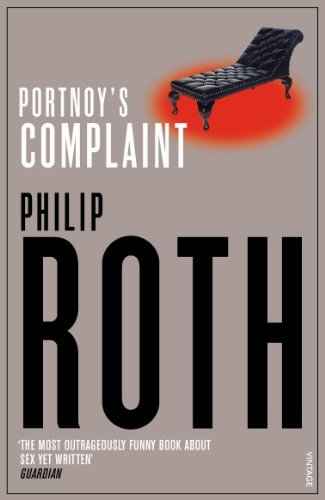
This is an alternative cover edition for ISBN 9780099399018Portnoy's Complaint n. [after Alexander Portnoy (1933– )] A disorder in which strongly-felt ethical and altruistic impulses are perpetually warring with extreme sexual longings, often of a perverse nature. Spielvogel says: ‘Acts of exhibtionism, voyeurism, fetishism, auto-eroticism and oral coitus are plentiful; as a consequence of the patient's “morality,” however neither fantasy or act issues in genuine sexual gratification, but rather in overriding feelings of shame and the dread of retribution, particularly in the form of castration.’ (Spielvogel, O. ‘The Puzzled Penis’, Internationale Zeitschrift für Psychoanalyse, Vol. XXIV, p. 909.) It is believed by Spielvogel that many of the symptoms can be traced to the bonds obtaining in the mother-child relationship.

It is 1998, the year in which America is whipped into a frenzy of prurience by the impeachment of a president, and in a small New England town an aging Classics professor, Coleman Silk, is forced to retire when his colleagues decree that he is a racist. The charge is a lie, but the real truth about Silk would astonish even his most virulent accuser.Coleman Silk has a secret, one which has been kept for fifty years from his wife, his four children, his colleagues, and his friends, including the writer Nathan Zuckerman. It is Zuckerman who stumbles upon Silk's secret and sets out to reconstruct the unknown biography of this eminent, upright man, esteemed as an educator for nearly all his life, and to understand how this ingeniously contrived life came unraveled. And to understand also how Silk's astonishing private history is, in the words of the Wall Street Journal, "magnificently" interwoven with "the larger public history of modern America."
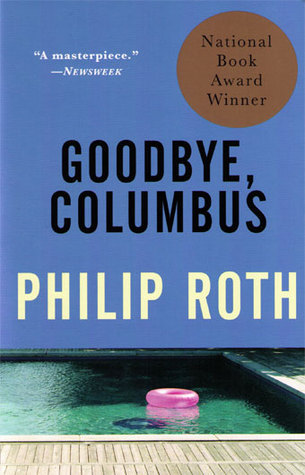
Neil Klugman and pretty, spirited Brenda Patimkin - he of poor Newark, she of suburban Short Hills - meet one summer and dive into an affair that is as much about social class and suspicion as it is about love. The novella, the first book published by Phillip Roth, explores issues of both class and Jewish assimilation into American culture. It won the National Book Award in 1960.©1993 Phillip Roth (P)2009
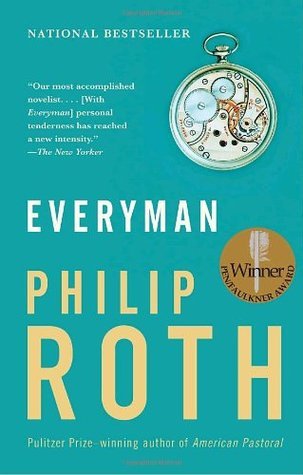
There is no more decorated American writer living today than Philip Roth, the New York Times best-selling author of American Pastoral, The Human Stain, and The Plot Against America. He has won a Pulitzer Prize, two National Book Awards, two National Book Critics Circle Awards, two PEN/Faulkner Awards, and numerous other distinctions.The hero of Everyman is obsessed with mortality. As he reminds himself at one point, "I'm 34! Worry about oblivion when you're 75." But he cannot help himself. He is the ex-husband in three marriages gone wrong. He is the father of two sons who detest him, despite a daughter who adores him. And as his health worsens, he is the envious brother of a much fitter man. A masterful portrait of one man's inner struggles, Everyman is a brilliant showcase for one of the world's most distinguished novelists.

In the “stifling heat of equatorial Newark,” a terrifying epidemic is raging, threatening the children of the New Jersey city with maiming, paralysis, lifelong disability, and even death. This is the startling theme of Philip Roth’s wrenching new a wartime polio epidemic in the summer of 1944 and the effect it has on a closely knit, family-oriented Newark community and its children. At the center of Nemesis is a vigorous, dutiful twenty-three-year-old playground director, Bucky Cantor, a javelin thrower and weightlifter, who is devoted to his charges and disappointed with himself because his weak eyes have excluded him from serving in the war alongside his contemporaries. Focusing on Cantor’s dilemmas as polio begins to ravage his playground — and on the everyday realities he faces — Roth leads us through every inch of emotion such a pestilence can the fear, the panic, the anger, the bewilderment, the suffering, and the pain. Moving between the smoldering, malodorous streets of besieged Newark and Indian Hill, a pristine children’s summer camp high in the Poconos — whose “mountain air was purified of all contaminants” — Roth depicts a decent, energetic man with the best intentions struggling in his own private war against the epidemic. Roth is tenderly exact at every point about Cantor’s passage into personal disaster, and no less exact about the condition of childhood. Through this story run the dark questions that haunt all four of Roth’s recent short novels, Everyman, Indignation, The Humbling, and now What kind of choices fatally shape a life? How does the individual withstand the onslaught of circumstance?

Against the backdrop of the Korean War, a young man faces life’s unimagined chances and terrifying consequences.It is 1951 in America, the second year of the Korean War. A studious, law-abiding, intense youngster from Newark, New Jersey, Marcus Messner, is beginning his sophomore year on the pastoral, conservative campus of Ohio’s Winesburg College. And why is he there and not at the local college in Newark where he originally enrolled? Because his father, the sturdy, hard-working neighborhood butcher, seems to have gone mad -- mad with fear and apprehension of the dangers of adult life, the dangers of the world, the dangers he sees in every corner for his beloved boy.As the long-suffering, desperately harassed mother tells her son, the father’s fear arises from love and pride. Perhaps, but it produces too much anger in Marcus for him to endure living with his parents any longer. He leaves them and, far from Newark, in the midwestern college, has to find his way amid the customs and constrictions of another American world.Indignation, Philip Roth’s twenty-ninth book, is a story of inexperience, foolishness, intellectual resistance, sexual discovery, courage, and error. It is a story told with all the inventive energy and wit Roth has at his command, at once a startling departure from the haunted narratives of old age and experience in his recent books and a powerful addition to his investigations of the impact of American history on the life of the vulnerable individual.

When talented young writer Nathan Zuckerman makes his pilgrimage to sit at the feet of his hero, the reclusive master of American Literature, E. I. Lonoff, he soon finds himself enmeshed in the great Jewish writer's domestic life, with all its complexity, artifice and drive for artistic truth. As Nathan sits in breathlessly awkward conversation with his idol, a glimpse of a dark-haired beauty through a closing doorway leaves him reeling. He soon learns that the entrancing vision is Amy Bellette, but her position in the Lonoff household - student? mistress? - remains tantalisingly unclear. Over a disturbed and confusing dinner, Nathan gleans snippets of Amy's haunting Jewish background, and begins to draw his own fantastical conclusions...

'No matter how much you know, no matter how much you think, no matter how much you plot and you connive and you plan, you're not superior to sex' With these words America's most unflaggingly energetic and morally serious novelist launches perhaps his fiercest book. The speaker is David Kepesh, white-haired and over sixty, an eminent TV culture critic and star lecturer at a New York college - as well as an articulate propagandist of the sexual revolution. For years he has made a practice of sleeping with adventurous female students while maintaining an aesthete's critical distance. But now that distance has been annihilated.The agency of Kepesh's undoing is Consuela Castillo, the decorous, humblingly beautiful twenty-four-year-old daughter of Cuban exiles. When he becomes involved with her, Kepesh finds himself dragged helplessly into the quagmire of sexual jealousy and loss. In chronicling the themes of eros and mortality, licence and repression, freedom and sacrifice. The Dying Animal is a burning coal of a book, filled with intellectual heat and not a little danger.

Winner of the National Book Award for FictionSabbath's Theater is a comic creation of epic proportions, and Mickey Sabbath is its gargantuan hero. At sixty-four Sabbath is still defiantly antagonistic and exceedingly libidinous; sex is an obsession and a principle, an instrument of perpetual misrule in his daily existence. But after the death of his long-time mistress - an erotic free spirit whose great taste for the impermissible matches his own - Sabbath embarks on a turbulent journey into his past. Bereft and grieving, tormented by the ghosts of those who loved and hated him, he contrives a succession of farcical disasters that take him to the brink of madness and extinction.

I Married a Communist is the story of the rise and fall of Ira Ringold, a big American roughneck who begins life as a teenage ditch-digger in 1930s Newark, becomes a big-time 1940s radio star, and is destroyed, as both a performer and a man, in the McCarthy witchhunt of the 1950s.In his heyday as a star—and as a zealous, bullying supporter of "progressive" political causes—Ira marries Hollywood's beloved silent-film star, Eve Frame. Their glamorous honeymoon in her Manhattan townhouse is shortlived, however, and it is the publication of Eve's scandalous bestselling exposé that identifies him as "an American taking his orders from Moscow."In this story of cruelty, betrayal, and revenge spilling over into the public arena from their origins in Ira's turbulent personal life, Philip Roth—who Commonweal calls the "master chronicler of the American twentieth century—has written a brilliant fictional portrayal of that treacherous postwar epoch when the anti-Communist fever not only infected national politics but traumatized the intimate, innermost lives of friends and families, husbands and wives, parents and children.

Everything is over for Simon Axler, the protagonist of Philip Roth's startling new book. One of the leading American stage actors of his generation, now in his 60s, he has lost his magic, his talent, and his assurance. His Falstaff and Peer Gynt and Vanya, all his great roles, "are melted into air, into thin air". When he goes on stage he feels like a lunatic and looks like an idiot. His confidence in his powers has drained away; he imagines people laughing at him; he can no longer pretend to be someone else. "Something fundamental has vanished." His wife has gone, his audience has left him, his agent can't persuade him to make a comeback. Into this shattering account of inexplicable and terrifying self-evacuation bursts a counterplot of unusual erotic desire, a consolation for the bereft life so risky and aberrant that it points not toward comfort and gratification but to a yet darker and more shocking end. In this long day's journey into night, told with Roth's inimitable urgency, bravura, and gravity, all the ways that we persuade ourselves of our solidity, all our life's performances - talent, love, sex, hope, energy, reputation - are stripped off. Following the dark meditations on mortality and endings in Everyman and Exit Ghost, and the bitterly ironic retrospective on youth and chance in Indignation, Roth has written another in his haunting group of late novels.

The Counterlife is about people enacting their dreams of renewal and escape, some of them going so far as to risk their lives to alter seemingly irreversible destinies. Wherever they may find themselves, the characters of The Counterlife are tempted unceasingly by the prospect of an alternative existence that can reverse their fate.Illuminating these lives in transition and guiding us through the book's evocative landscapes, familiar and foreign, is the mind of the novelist Nathan Zuckerman. His is the skeptical, enveloping intelligence that calculates the price that's paid in the struggle to change personal fortune and reshape history, whether in a dentist's office in suburban New Jersey, or in a tradition-bound English Village in Gloucestershire, or in a church in London's West End, or in a tiny desert settlement in Israel's occupied West Bank.

Like Rip Van Winkle returning to his hometown to find that all has changed, Nathan Zuckerman comes back to New York, the city he left eleven years before. Alone on his New England mountain, Zuckerman has been nothing but a writer: no voices, no media, no terrorist threats, no women, no news, no tasks other than his work and the enduring of old age.Walking the streets like a revenant, he quickly makes three connections that explode his carefully protected solitude. One is with a young couple with whom, in a rash moment, he offers to swap homes. They will flee post-9/11 Manhattan for his country refuge, and he will return to city life. But from the time he meets them, Zuckerman also wants to swap his solitude for the erotic challenge of the young woman, Jamie, whose allure draws him back to all that he thought he had left behind: intimacy, the vibrant play of heart and body.The second connection is with a figure from Zuckerman’s youth, Amy Bellette, companion and muse to Zuckerman’s first literary hero, E. I. Lonoff. The once irresistible Amy is now an old woman depleted by illness, guarding the memory of that grandly austere American writer who showed Nathan the solitary path to a writing vocation.The third connection is with Lonoff’s would-be biographer, a young literary hound who will do and say nearly anything to get to Lonoff’s “great secret.” Suddenly involved, as he never wanted or intended to be involved again, with love, mourning, desire, and animosity, Zuckerman plays out an interior drama of vivid and poignant possibilities.Haunted by Roth’s earlier work The Ghost Writer, Exit Ghost is an amazing leap into yet another phase in this great writer’s insatiable commitment to fiction.
Following the wild success of his novel, Carnovsky, Nathan Zuckerman has been catapulted into the literary limelight. As he ventures out onto the streets of Manhattan he finds himself accosted on all sides, the target of admonishers, advisers, would-be literary critics, and – worst of all – fans.An incompetent celebrity, ill at ease with his newfound fame, and unsure of how to live up to his fictional creation’s notoriety, Zuckerman flounders his way through a high-profile affair, the disintegration of his family life, and fends off the attentions of his most tenacious fan yet, as the turbulent decade of the sixties draws to a close around him.But beneath the uneasy glamour are the spectres of the recently murdered Robert Kennedy and Martin Luther King, Jr., and an unsettled Zuckerman feels himself watched…

Librarian note: An alternate cover for this ISBN can be found here.Like a latter-day Gregor Samsa, Professor David Kepesh wakes up one morning to find that he has been transformed. But where Kafka's protagonist turned into a giant beetle, the narrator of Philip Roth's richly conceived fantasy has become a 155-pound female breast. What follows is a deliriously funny yet touching exploration of the full implications of Kepesh's metamorphosis — a daring, heretical book that brings us face to face with the intrinsic strangeness of sex and subjectivity.

A fiendishly imaginative book that features Israeli intelligence agents, Palestinian exiles, an accused war criminal, and an enticing charter member of an organization called Anti-Semites Anonymous.In this book (which may or may not be fiction), Philip Roth meets a man who may or may not be Philip Roth. Because someone with that name has been touring Israel, promoting a bizarre reverse exodus of the Jews. Roth is intent on stopping him, even if that means impersonating his own impersonator.With excruciating suspense, unfettered philosophical speculation, and a wild cast of characters, Operation Shylock barrels across the frontier between fact and fiction, seriousness and high comedy, history and nightmare.

David Kepesh, an adventurous man of intelligence and feeling, tries to make his way to both pleasure and dignity through a world of sensual possibilities. Temptation comes to him in both its ordinary and spectacular forms, and the novel charts the history of his desire from the early years, when he is acceded to it totally, to the time when he attempts to domesticate his passions (and his wife's) and finally to that most surprising moment when desire ebbs and, frighteningly, seems on the brink of disappearance. The book explores in all its painful ramifications, the pursuit and loss of erotic happiness.

In this funny and chilling novel, the setting is a small town in the 1940s Midwest, and the subject is the heart of a wounded and ferociously moralistic young woman, one of those implacable American moralists whose "goodness" is a terrible disease. When she was still a child, Lucy Nelson had her alcoholic failure of a father thrown in jail. Ever since then she has been trying to reform the men around her, even if that ultimately means destroying herself in the process. With his unerring portraits of Lucy and her hapless, childlike husband, Roy, Roth has created an uncompromising work of fictional realism, a vision of provincial American piety, yearning, and discontent that is at once pitiless and compassionate.

From the Pulitzer Prize-winning author of American Pastoral--and one of the most renowned writers of the twentieth century--"a ferocious, heartfelt book" (The New Yorker) featuring Nathan Zuckerman whose life is about to unravel when he comes down with a mysterious affliction. Roth has a genius for the comedy of entrapment.... [He] writes America's most raucously funny novels. --TimeAt forty, the writer Nathan Zuckerman comes down with a mysterious affliction--pure pain, beginning in his neck and shoulders, invading his torso, and taking possession of his spirit. Zuckerman, whose work was his life, is unable to write a line. Now his work is trekking from one doctor to another, but none can find a cause for the pain and nobody can assuage it. Zuckerman himself wonders if the pain can have been caused by his own books. And while he is wondering, his dependence on painkillers grows into an addiction to vodka, marijuana, and Percodan.The Anatomy Lesson is a great comedy of illness written in what the English critic Hermione Lee has described as a manner at once ... brash and thoughtful ... lyrical and wry, which projects through comic expostulations and confessions...a knowing, humane authority. The third volume of the trilogy and epilogue Zuckerman Bound, The Anatomy Lesson provides some of the funniest scenes in all of Roth's fiction as well as some of the fiercest.

"With the lover everyday life recedes," Roth writes - and exhibiting all his skill as a brilliant observer of human passion, he presents in Deception the tightly enclosed world of adulterous intimacy with a directness that has no equal in American fiction.At the center of Deception are two adulterers in their hiding place. He is a middle-aged American writer named Philip, living in London, and she is an articulate, intelligent, well-educated Englishwoman compromised by a humiliating marriage to which, in her 30s, she is already nervously half-resigned.The book's action consists of conversation - mainly the lovers talking to each other before and after making love. That dialogue - sharp, rich, playful, inquiring, "moving", as Hermione Lee writes, "on a scale of pain from furious bafflement to stoic gaiety" - is nearly all there is to this audiobook, and all there needs to be.


At its heart lies the marriage of Peter and Maureen Tarnopol, a gifted young writer and the woman who wants to be his muse but who instead is his nemesis. Their union is based on fraud and shored up by moral blackmail, but it is so perversely durable that, long after Maureen’s death, Peter is still trying—and failing—to write his way free of it.Out of desperate inventions and cauterizing truths, acts of weakness, tenderheartedness, and shocking cruelty, Philip Roth creates a work worthy of Strindberg—a fierce tragedy of sexual need and blindness.

In search of the unpublished manuscript of a martyred Yiddish writer, American novelist Nathan Zuckerman travels to Soviet-occupied Prague in the mid-1970s. There, in a nation straightjacketed by totalitarian Communism, he discovers a literary predicament marked by an institutionalised oppression that is rather different from his own. He also discovers, among the subjugated writers with whom he quickly becomes embroiled in a series of bizarre and poignant adventures, an appealingly perverse kind of heroism.The Prague Orgy, consisting of entries from Zuckerman's notebooks recording his sojourn among these outcast artists, completes the trilogy and epilogue Zuckerman Bound. It provides a startling ending to Roth's intricately designed magnum opus on the unforeseen consequences of art.

Letting Go is Roth's first full-length novel, published just after Goodbye, Columbus, when he was twenty-nine. Set in 1950s Chicago, New York, and Iowa city, Letting Go presents as brilliant a fictional portrait as we have of a mid-century America defined by social and ethical constraints and by moral compulsions conspicuously different from those of today.Newly discharged from the Korean War army, reeling from his mother's recent death, freed from old attachments and hungrily seeking others, Gabe Wallach is drawn to Paul Herz, a fellow graduate student in literature, and to Libby, Paul's moody, intense wife. Gabe's desire to be connected to the ordered "world of feeling" that he finds in books is first tested vicariously by the anarchy of the Herzes' struggles with responsible adulthood and then by his own eager love affairs. Driven by the desire to live seriously and act generously, Gabe meets an impassable test in the person of Martha Reganhart, a spirited, outspoken, divorced mother of two, a formidable woman who, according to critic James Atlas, is masterfully portrayed with "depth and resonance."The complex liason between Gabe and Martha and Gabe's moral enthusiasm for the trials of others are at the heart of this tragically comic work.

Zuckerman Bound: The Ghost Writer / Zuckerman Unbound / The Anatomy Lesson / The Prague Orgy
by Philip Roth
Rating: 4.2 ⭐
Four complete works by Philip Roth in one volume. The complete comic saga of Nathan Zuckerman, his ordeals of conscience, from Manhattan, to Miami Beach, to Czechoslovakia!"Roth has transcended himself . . . . A comic genius . . . Certainly Philip Roth's finest achievement to date, eclipsing even his best single fictions . . . ZUCKERMAN BOUND binds together THE GHOST WRITER, ZUCKERMAN UNBOUND, and THE ANATOMY LESSON, adding to them as epilogue a wild short novel, THE PRAGUE ORGY, which is at once the bleakest and the funniest writing Roth has done."-- The New York Times Book Review"ZUCKERMAN BOUND proves that no one now writing can be funnier and, at the same time, more passionately serious than Philip Roth." -- Time"ZUCKERMAN BOUND shows the author's always ebullient invention and artful prose at their most polished and concentrated." -- The New Yorker

From the Pulitzer Prize–winning author of American Pastoral comes a brilliantly indignant response to the phenomenon that was Richard M. Nixon. • “Disturbing, logical...and very funny.... In short, a masterpiece" — The New York Times Book ReviewIn the character of Trick E. Dixon, Roth shows us a man who outdoes the severest cynic, a peace-loving Quaker and believer in the sanctity of human life who doesn’t have a problem with killing unarmed women and children in self-defense. A master politician with an honest sneer, he finds himself battling the Boy Scouts, declaring war on Pro-Pornography Denmark, all the time trusting in the basic indifference of the voting public.

The unconventional autobiography of the Pulitzer Prize–winnning, bestselling author—"the most vigorous and truthful of American writers" ( Newsday )—who reshaped our idea of fiction. A work of compelling candor and inventiveness, instructive particularly in its revelation of the interplay between life and art.Philip Roth concentrates on five episodes from his his secure city childhood in the thirties and forties; his education in American life at a conventional college; his passionate entanglement, as an ambitious young man, with the angriest person he ever met (the "girl of my dreams" Roth calls her); his clash, as a fledgling writer, with a Jewish establishment outraged by Goodbye, Columbus; and his discovery, in the excesses of the sixties, of an unmined side to his talent that led him to write Portnoy's Complaint.The book concludes surprisingly—in true Rothian fashion—with a sustained assault by the novelist against his proficiencies as an autobiographer.

Amerika ontlokt bij de een een zekere angst door het mateloze dat dit land altijd uitstraalt, bij de ander roept het een gevoel van bewondering of van afschuw op.Niemand blijft onberoerd wanneer er over Amerika gesproken wordt.De hier verzamelde auteurs drukken allen een levensgevoel uit van onbegrensde mogelijkheden, zowel naar boven als naar beneden. Van "Staggering Genius" bij Dave Eggers tot melancholische zelfreflektie bij Jonathan Franzen.Van Amerika genieten kan ook en daar staan alle auteurs van 'Short Cuts' garant voor.Met bijdragen van: George Saunders, Bret Easton Ellis, Douglas Coupland, Tom Wolfe, Joe Eszterhas, Philip Roth, Michael Cunningham, Don DeLillo, Dave Eggers, Matthew Klam, Rick Moody, Jonathan Franzen, E.L. Doctorow, John Updike, Jay McInerney.