
Allen Ginsberg
Allen Ginsberg was a groundbreaking American poet and activist best known for his central role in the Beat Generation and for writing the landmark poem Howl. Born in 1926 in Newark, New Jersey, to Jewish parents, Ginsberg grew up in a household shaped by both intellectualism and psychological struggle. His father, Louis Ginsberg, was a published poet and a schoolteacher, while his mother, Naomi, suffered from severe mental illness, which deeply affected Ginsberg and later influenced his writing—most notably in his poem Kaddish. As a young man, Ginsberg attended Columbia University, where he befriended other future Beat luminaries such as Jack Kerouac, William S. Burroughs, and Neal Cassady. These relationships formed the core of what became known as the Beat Generation—a loose-knit group of writers and artists who rejected mainstream American values in favor of personal liberation, spontaneity, spiritual exploration, and radical politics. Ginsberg rose to national prominence in 1956 with the publication of Howl and Other Poems, released by City Lights Books in San Francisco. Howl, an emotionally charged and stylistically experimental poem, offered an unfiltered vision of America’s underbelly. It included candid references to homosexuality, drug use, and mental illness—subjects considered taboo at the time. The poem led to an obscenity trial, which ultimately concluded in Ginsberg’s favor, setting a precedent for freedom of speech in literature. His work consistently challenged social norms and addressed themes of personal freedom, sexual identity, spirituality, and political dissent. Ginsberg was openly gay at a time when homosexuality was still criminalized in much of the United States, and he became a vocal advocate for LGBTQ+ rights throughout his life. His poetry often intertwined the personal with the political, blending confessional intimacy with a broader critique of American society. Beyond his literary achievements, Ginsberg was also a dedicated activist. He protested against the Vietnam War, nuclear proliferation, and later, U.S. foreign policy in Latin America. He was present at many pivotal cultural and political moments of the 1960s and 1970s, including the 1968 Democratic National Convention and various countercultural gatherings. His spiritual journey led him to Buddhism, which deeply influenced his writing and worldview. He studied under Tibetan teacher Chögyam Trungpa and helped establish the Jack Kerouac School of Disembodied Poetics at Naropa University in Boulder, Colorado. Ginsberg’s later years were marked by continued literary output and collaborations with musicians such as Bob Dylan and The Clash. His poetry collections, including Reality Sandwiches, Planet News, and The Fall of America, were widely read and respected. He received numerous honors for his work, including the National Book Award for Poetry in 1974. He died of liver cancer in 1997 at the age of 70. Today, Allen Ginsberg is remembered not only as a pioneering poet, but also as a courageous voice for free expression, social justice, and spiritual inquiry. His influence on American literature and culture remains profound and enduring.
30 Books Written
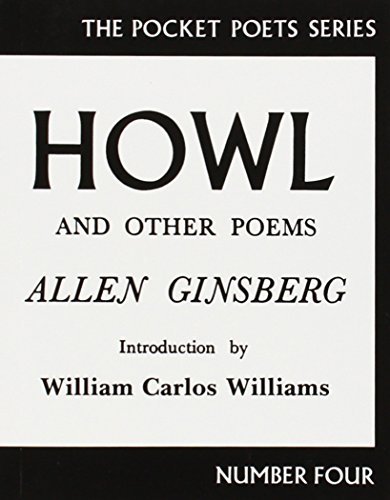
Allen Ginsberg's Howl and Other Poems was originally published by City Lights Books in the Fall of 1956. Subsequently seized by U.S. customs and the San Francisco police, it was the subject of a long court trial at which a series of poets and professors persuaded the court that the book was not obscene.Howl & Other Poems is the single most influential poetic work of the post-World War II era, with over 1,000,000 copies now in print.

Great strange visionary poems by the author of Howl, “in the midst of the broken consciousness of mid-twentieth century . . .”In the midst of the broken consciousness of mid-twentieth century suffering anguish of separation from my own body and its natural infinity of feeling its own self one with all self, I instinctively seeking to reconstitute that blissful union which I experience so rarely. I took it to be supernatural an gave it holy Name thus made hymn laments of longing and litanies of triumphancy of Self over mind-illusion mechano-universe of un-feeling Time in which I saw my self my own mother and my very nation trapped desolate our worlds of consciousness homeless and at war except for the original trembling of bliss in breast and belly of every body that nakedness rejected in suits of fear that familiar defenseless living hurt self which is myself same as all others abandoned scared to own unchanging desire for each other. These poems almost unconscious to confess the beatific human fact, the language intuitively chosen as in trance & dream, the rhythms rising on breath from belly thru breast, the hymn completed in tears, the movement of the physical poetry demanding and receiving decades of life while chanting Kaddish the names of Death in many worlds the self seeking the Key to life found at last in our self.

"Ginsberg is both tragic and dynamic, a lyrical genius, con-man extraordinaire and probably the single greatest influence on American poetical voice since Walt Whitman."--Bob Dylan
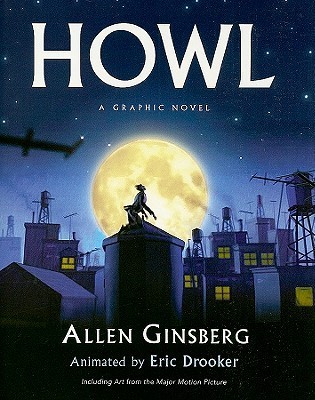
Now a Major Motion PictureFirst published in 1956, Allen Ginsberg's "Howl" is a prophetic masterpiece—an epic raging against dehumanizing society that overcame censorship trials and obscenity charges to become one of the most widely read poems of the century.

Beat movement icon and visionary poet, Allen Ginsberg broke boundaries with his fearless, pyrotechnic verse. This new collection brings together the famous poems that made his name as a defining figure of the counterculture. They include the apocalyptic 'Howl', which became the subject of an obscenity trial when it was first published in 1956; the moving lament for his dead mother, 'Kaddish'; the searing indictment of his homeland, 'America'; and the confessional 'Mescaline'. Dark, ecstatic and rhapsodic, they show why Ginsberg was one of the most influential poets of the twentieth century.

“Taken all together, Ginsberg’s poems are X-rays of a considerable part of American society during the last four decades.” — The New Yorker This magnificent volume gathers the published verse of Allen Ginsberg in its entirety, a half-century of brilliant work from one of America’s greatest poets. A chief figure among the Beats, Ginsberg changed the course of American poetry, liberating it from closed academic forms with the creation of open, vocal, spontaneous, and energetic postmodern verse in the tradition of Whitman, Apollinaire, Hart Crane, Pound, and William Carlos Williams. Ginsberg’s raw tones and attitudes of spiritual liberation also helped catalyze a psychological revolution that has become a permanent part of our cultural heritage, profoundly influencing not only poetry and popular song and speech, but also our views of the world.

"Scribbled secret notebooks, and wild typewritten pages for yr own joy." Many of Ginsberg's most famous poems.Wake-up nightmares in Lower East Side, musings in public library, across the U.S. in dream auto, drunk in old Havana, brooding in Mayan ruins, sex daydreams on the West Coast, airplane vision of Kansas, lonely in a leafy cottage, lunch hour on Berkeley, beer notations on Skid Row, slinking to Mexico, wrote this last night in Paris, back on Times square dreaming of Times Square, bombed in NY again, loony tunes in the dentist chair, screaming at old poets in South America, aethereal zigzag Poesy in blue hotel room in Peru—a wind-up book of dreams, psalms, journal enigmas & nude minutes from 1953 to 1960 poems scattered in fugitive magazines here collected.

BRAND NEW, Exactly same ISBN as listed, Please double check ISBN carefully before ordering.

National Book Award for Poetry, 1973Beginning with "long poem of these States," The Fall of America continues Planet News chronicle tape-recorded scribed by hand or sung condensed, the flux of car bus airplane dream consciousness Person during Automated Electronic War years, newspaper headline radio brain auto poesy & silent desk musings, headline flashing on road through these states of consciousness. . . .

Assembled by Allen Ginsberg, Selected Poems 1947-1995 is the definitive collection of the best works of one of the most influential and revolutionary poets of the twentieth century. Allen Ginsberg, famous for helping catalyze the Beat Generation, wrote poetry for more than fifty years. His innovative verse and provocative attitudes of spiritual, political, and sexual liberation inspired countless poets, musicians, and visual and performance artists worldwide, and helped shape several generations' views of the world. Selected Poems 1947-1995 commemorates Ginsberg's brilliant career as one of America's most distinguished poets. Here are well-known masterpieces such as the lyric "Howl" and the narrative "Kaddish" -- classic works of American literature -- as well as more recent gems, including the long dream poem "White Shroud," the visionary "After Lalon," and the political rock lyric "The Ballad of the Skeletons," a song he recorded in 1996 with a stellar band that included Philip Glass, Lenny Kaye, and Paul McCartney.

Featuring the legendary and groundbreaking poem “Howl,” this remarkable volume showcases a selection of Allen Ginsberg’s poems, songs, essays, letters, journals, and interviews and contains sixteen pages of his personal photographs. One of the Beat Generation’s most renowned poets and writers, Allen Ginsberg became internationally famous not only for his published works but for his actions as a human rights activist who championed the sexual revolution, human rights, gay liberation, Buddhism and eastern religion, and the confrontation of societal norms—all before it became fashionable to do so. He was also the dynamic leader of war protesters, artists, Flower Power hippies, musicians, punks, and political radicals. The Essential Ginsberg collects a mosaic of materials that displays the full range of Ginsberg’s mental landscape. His most important poems, songs, essays, letters, journals, and interviews are displayed in chronological order. His poetic masterpieces, “Howl” and “Kaddish,” are presented here along with lesser-known and difficult to find songs and prose. Personal correspondence with William Burroughs and Jack Kerouac is included as well as photographs—shot and captioned by Ginsberg himself—of his friends and fellow rogues William Burroughs, Neal Cassady, and more. Through his essays, journals, interviews, and letters, this definitive volume will inspire readers to delve deeper into a body of work that remains one of the most impressive literary canons in American history.

Planet News collecting seven years’ Poesy scribed to 1967 begins with electronic politics disassociation & messianic rhapsody TV Baby in New York, continues picaresque around the globe, elan perceptions notated at Mediterranean, Galilee & Ganges till next breakthrough, comedown Poem at heart & soul last days in Asia The Change 1963; tenement doldrums & police-state paranoia in Manhattan then half year behind Socialist Curtain climaxed as Kral Majales May King Prague 1965, same years’ erotic gregariousness writ as Who Be Kind To for International Poetry Incarnation Albert Hall London; next trip West Coast thru center America Midwest Wichita Vortex Sutra . . . at last across Atlantic Wales Visitation promethian text recollected in emotion revised in tranquility continuing tradition of ancient Nature Language mediates between psychedelic inspiration and humane ecology & integrated acid classic Unitive Vision with democratic eyeball particulars-book closes on politics to exorcise Pentagon phantoms who cover Earth with dung-colored gas. " Planet News is a great book of poems. It encourages the reader to release their pre-conceived notions of poetry, and allow themselves to dance disturbingly through a picture that Ginsberg paints. . . . Planet News is a beautiful read. If it’s not something you’re immediately interested in, the read is worth it for the mere significance Allen Ginsberg has had on the art of poetry."—Ned Tobin, Chronicles of Time "In this collection, the shorter poems, with their impressive grip on exact description, are the best, and remind us of how Ginsberg sees everything-railroads, cloverleafs, Dino Sinclair signs, 'tiny human trees' in the plains, newspaper stories and their reduction of the real to the ("continued from page one") verbal, football fields, J. Edgar Hoover, and above all himself. For his contemporaries, he is the biographer of his time-its high schools, its streets, its telephones, its monsters ('television was a baby crawling toward that deathchamber"), its bland head counts, its drugs, its cops, its cities, its freeways, and most of all its short-cut language."—Helen Vendler, New York Times

Rainy night on Union Square, full moon. Want more poems? Wait till I’m dead. —Allen Ginsberg, August 8, 1990, 3:30 A.M.The first new Ginsberg collection in over fifteen years, Wait Till I’m Dead is a landmark publication, edited by renowned Ginsberg scholar Bill Morgan and introduced by award-winning poet and Ginsberg enthusiast Rachel Zucker. Ginsberg wrote incessantly for more than fifty years, often composing poetry on demand, and many of the poems collected in this volume were scribbled in letters or sent off to obscure publications and unjustly forgotten. Wait Till I’m Dead, which spans the whole of Ginsberg’s long writing career, from the 1940s to the 1990s, is a testament to Ginsberg’s astonishing writing and singular aesthetics.Following the chronology of his life, Wait Till I’m Dead reproduces the poems together with extensive notes. Containing 104 previously uncollected poems and accompanied by original photographs, Wait Till I’m Dead is the final major contribution to Ginsberg’s sprawling oeuvre, a must-read for Ginsberg neophytes and longtime fans alike.

Allen Ginsberg was one of the bravest and most admired poets of this century. Famous for energizing the Beat Generation literary movement upon his historic encounter with Gregory Corso, Jack Kerouac, and William Burroughs in mid-century New York City, Ginsberg influenced several generations of writers, musicians, and poets. When he died on April 5, 1997, we lost one of the greatest figures of twentieth-century American literary and cultural history. This singular volume of final poems commemorated the anniversary of Ginsberg's death, and includes the verses he wrote in the years shortly before he died.

Half a century after "founding" the Beat Generation, Allen Ginsberg has written this powerful collection of poems that are suffused with a range of emotional colors that gives Ginsberg's work an elegiac tone.

In 1977, twenty years after the publication of his landmark poem “Howl,” and Jack Kerouac’s seminal book On the Road , Allen Ginsberg decided it was time to teach a course on the literary history of the Beat Generation. Through the creation of this course, which he ended up teaching five times, first at the Naropa Institute and later at Brooklyn College, Ginsberg saw an opportunity to present the history of Beat Literature in his own inimitable way. Compiled and edited by renowned Beat scholar Bill Morgan, and with an introduction by Anne Waldman, The Best Minds of My Generation presents the lectures in edited form, complete with notes, and paints a portrait of the Beats as Ginsberg knew friends, confidantes, literary mentors, and fellow revolutionaries.Ginsberg was seminal to the creation of a public perception of Beat writers and knew all of the major figures personally, making him uniquely qualified to be the historian of the movement. In The Best Minds of My Generation , Ginsberg shares anecdotes of meeting Kerouac, Burroughs, and other writers for the first time, explains his own poetics, elucidates the importance of music to Beat writing, discusses visual influences and the cut-up method, and paints a portrait of a group who were leading a literary revolution. For Beat aficionados and neophytes alike, The Best Minds of My Generation is a personal yet critical look at one of the most important literary movements of the twentieth century.

Meditations, rhapsodies, elegies, confessions, and mindful chronicle writings filling inward and outward space thru mid-Seventies decade. Mind Breaths: Australian songsticks measure oldest known poetics, broken-leg meditations march thru Six Worlds singing crazy Wisdom’s hopeless suffering, the First Noble Truth, inspiring quiet Sung sunlit greybeard soliloquies, English moonlit night-gleams, ambitious mid-life fantasies, Ah crossed-legged thoughts sitting straight-spine paying attention to empty breath flowing ‘round the globe;’ then Dharma elegy & sharp-eyed haiku. Pederast rhapsody, exorcism of mid-East battlegods, workaday sad dust glories, American ego confession & mugging downfall Lower East Side, hospital sickness moan, hydrogen Jukebox Prophecy, Sex come-all-ye, mountain cabin flashes, Buddhist country western chord changes, Rolling Thunder snowballs, a Jersey Shaman dream, Father Death in a graveyard near Newark, Poe bones, two hot hearted love poems: Here chronicled mid Seventies’ half decade inward & outward Mindfulness in many Poetries

Poems by a modern master. "[Ginsberg's] powerful mixture of Blake, Whitman, Pound, and Williams, to which he added his own volatile, grotesque, and tender humor, has assured him a memorable place in modern poetry."-- Helen Vendler

Street-smart, hip urban graphics accompany a collection of some fifty poems that span the poet's creative evolution from 1948 to the present, including the complete text of "Howl," as well as four never-before-anthologized works. Simultaneous. IP.

In the 1950s and early 1960s, Allen Ginsberg and his fellow Beats led an insurrection that profoundly altered the American literary and cultural landscapes. Collected here are journal entries culled from eighteen notebooks that Ginsberg kept during this extraordinary period—thoughts, poems, dreams, reflections, and diary notes that intimately illuminate Ginsberg's actual travels and his mental journeys. They reveal a remarkable and fascinating life: conversations with William Carlos Williams; drug experiences; a chance meeting with Dylan Thomas; stays in Mexico, San Francisco, and New York; first impressions of "Naked Lunch"; bits and pieces of "America, Kaddish" and other poems; political "ravings"; and, of course, times with William S. Burroughs, Jack Kerouac, Gergory Corso, Herbert Huncke, Peter Orlovsky, and many, many others. What emerges is a truly unique personal account that will touch the mind and the soul.

Allen Ginsberg's essays, collected here for the first time, were written over the course of a long, productive, and politically engaged life. With his finger ever on the pulse of America, Ginsberg was consistently outspoken and passionate about his beliefs. Whether criticizing the American government, protesting the proliferation of nuclear weapons or the waging of war in Vietnam, or denouncing the injustice of capitalists Ginsberg gave voice to a moral conscience of the nation. His views on free speech and the drug, culture, his quest for inner peace, the creation of the Beat generation, and his innovative poetics reflect the, concerns of a postwar American culture that he helped shape. Arranged by subject, these essays offer a fascinating counterpoint to Allen Ginsberg's poems. Hey are provocative, playful, eloquent, and of the moment. In the section titled "Politics and Prophecies," Ginsberg takes on everyone from the Federal Drug Administration to the Pentagon to the Hell's Angels. Included here are his notes on how to make march/spectacle (drawn up in 1965 when a march was planned at Berkeley to support the cause of peace in Vietnam and to protest the draft), and his thoughts on how the raging issues of the day'China, Vietnam, and the 1968 Democratic National Convetion in Chicago. In another section, "Censorship and Sex Laws," Ginsberg's pieces demonstrate the strength of his belief in the right to free speech, which leads him to defend NAMBLA (North America Man Boy Love Association), comedian Lenny Bruce, and writer William S. Burroughs, author of Naked Lunch. Ginsberg's essays on "Writers" focus on those he particularly admired, including William Blake. Walt Whitman, Gregory Corso, Jack Kerouac, and Robert Creely. Through a combination of literary criticism and personal reflection, Ginsberg illuminates the life and work of these artists. Also, profiled are such influential figures as jean Genet, W. H. Auden, John Lennon and Yoko Ono, Andy Warhol, Robert Frank, and Philip Glass, artists whose work and sensibility deeply affected him. Personal as well as political, Deliberate Prose is more than a collection of essays from one of the greatest cultural figures of our time. It is also a social history of modern America that reminds us of the events and issues that preoccupied the minds of a nation in the postwar years.

Plutonian Ode: Title poem combines scientific info on 24,000-year cycle of the Great Year compared with equal half-life of Plutonium waste, accounting Homeric formula for appeasing underground millionaire Pluto Lord of Death, jack in the gnostic box of Aeons, and Adamantine Truth of ordinary mind inspiration, unhexing nuclear ministry of fear. Following poems chronologies Wyoming grass blues, a punk-rock sonnet, personal grave musing, Manhattan landscape hypertension, lovelorn heart thumps, mantric rhymes, Neruda’s tearful Lincoln ode retranslated to U.S. vernacular oratory, Nagasaki Bomb anniversary haikus, Zen Bluegrass raunch, free verse demystification of sacred fame, Reznikoffian filial epiphanies, hot pants Skeltonic doggerel, a Kerouackian New Year’s eve ditty, professional homework, New Jersey quatrains, scarecrow haiku, improvised dice roll for high school kids, English rock-and-roll sophistications, an old love glimpse, little German movies, old queen conclusions, a tender renaissance song, ode to hero-flop, Peace protest prophecies, Lower East Side snapshots, national flashed in the Buddhafields, Sapphic stanzas in quantitative idiom, look out at the bedroom window, feverish birdbrain verses from Eastern Europe for chanting with electric bands, Beethovinean ear strophes drowned in rain, a glance at Cloud Castle, poems 1977-1980 end with International new wave hit lyric Capitol Air"“Plutonian Ode” has the best of intentions . . . [I]t is perhaps the most complete package of political action from poem to protest." —Marc Olmstead, Sensitive Skin MagazineFamous Beat poet Allen Ginsberg was born June 3, 1926, the son of Naomi Ginsberg, Russian émigré, and Louis Ginsberg, lyric poet and school teacher, in Paterson, N.J. To these facts Ginsberg adds: "High school in Paterson till 17, Columbia College, merchant marine, Texas and Denver copyboy, Times Square, amigos in jail, dishwashing, book reviews, Mexico City, market research, Satori in Harlem, Yucatan and Chiapas 1954, West Coast 3 years. Later Arctic Sea trip, Tangier, Venice, Amsterdam, Paris, read at Oxford Harvard Columbia Chicago, quit, wrote "Kaddish" 1959, made tape to leave behind & fade in Orient awhile." His other famous poetry collections including The Fall of America, Howl, Mind Breaths, Plutonian Ode, and Reality Sandwiches are also published by City Lights Publishers.

Allan Ginsberg was the leading poet and conscience of the Beat generation. Indian Journals collects Ginsberg’s writings from his trip to India in 1962–63.

The Book of Martyrdom and Artifice: First Journals and Poems, 1937-1952
by Allen Ginsberg
Rating: 3.9 ⭐
Allen Ginsberg (1926-1997) kept journals his entire life, beginning at the age of eleven. These first journals detail the inner thoughts of the awkward boy from Paterson, New Jersey, who would become the major poet and spokesperson of the literary phenomenon called the Beat Generation. The Book of Martyrdom and Artifice covers the most important and formative years of Ginsberg's storied life. It was during these years that he met Jack Kerouac and William S. Burroughs, both of whom would become lifelong friends and significant literary figures. Ginsberg's journals--so candid he insisted they be published only after his death--also document his relationships with such notable figures of Beat lore as Carl Solomon, Lucien Carr, and Herbert Huncke. Conversations with Kerouac, his beloved muse Neal Cassady, and others have been transcribed from Ginsberg's memory, and information will be found here relating to the famous murder of David Kammerer by Carr--a startlingly violent chapter in Beat prehistory--which has been credited in New York magazine as "giving birth to the Beat Generation." It was also during this period that he began to recognize his homosexuality, and to think of himself as a poet. Illustrated with photos from Ginsberg's private archive and enhanced by an appendix of over 100 of Ginsberg's earliest poems, The Book of Martyrdom and Artifice is a major literary event.

Allen Ginsberg (1926–1997) was one of twentieth-century literature’s most prolific letter-writers. This definitive volume showcases his correspondence with some of the most original and interesting artists of his time, including Jack Kerouac, William S. Burroughs, Gregory Corso, Neal Cassady, Lionel Trilling, Charles Olson, Lawrence Ferlinghetti, Philip Whalen, Peter Orlovsky, Philip Glass, Arthur Miller, Ken Kesey, and hundreds of others.Through his letter writing, Ginsberg coordinated the efforts of his literary circle and kept everyone informed about what everyone else was doing. He also preached the gospel of the Beat movement by addressing political and social issues in countless letters to publishers, editors, and the news media, devising an entirely new way to educate readers and disseminate information. Drawing from numerous sources, this collection is both a riveting life in letters and an intimate guide to understanding an entire creative generation.

«Ho visto le menti migliori della mia generazione distrutte dalla pazzia…» È l’attacco potente di Urlo, l’opera poetica che, alla sua uscita nel 1956, scandalizzò l’America e condannò al carcere il suo editore; un grido di sdegno nei confronti del conformismo borghese americano, una poesia nuova che coniugava potenza onirica e visionaria alle immagini dell’universo urbano e tecnologico. A quasi mezzo secolo di distanza in Urlo, come negli altri versi raccolti in Jukebox all’idrogeno, il lettore sentirà risuonare la protesta e lo scandalo, la potenza sovversiva del famoso poeta beat.

From his conversation with the conservative William F. Buckley on PBS to his testimony at the Chicago Seven trial to his passionate riffs on Cezanne, Blake, Whitman, and Pound, the interviews collected in Spontaneous Mind , chronologically arranged and in some cases previously unpublished, were conducted throughout Allen Ginsberg's long career. From the late 1950s to the mid-1990s, Ginsberg speaks frankly about his life, his work, and major events, allowing us to hear once again the impassioned voice of one of the most influential literary and cultural figures of our time.


A collection of recordings written and read by one of the greatest literary and cultural figures of the 20th. The collection is accompanied by a special 64 page booklet containing the poems.Upon the release of his first published work, Howl and Other Poems (1956), Allen Ginsberg became the unlikely force of a movement that would change a generation: art, literature, sex, love, family and politics. None would ever be seen the same way again. The Beat Generation was born. And with it, the legend of the free-spirited, rule-breaking, brillian group of friends Ginsberg kept close--Jack Keroac, William Burroughts, Gregory Corso and Neal Cassady.Including Ginsberg’s two seminal works, Howl and Kaddish, as well as nearly two dozen other works, this collection celebrates a cultural icon who was of his time, ahead of his time, and whose legacy will transcend time. The collection includes such important works as:Who Be Kind To, White Shroud, Footnote to Howl, Sunflower Sutra, America, Supermarket in California, My Sad Self, Wales Visitation, Sad Dust Glories, Plutonian Ode, My Green Automobile, Neal’s Ashes, Many Loves, The Names, September on Jessore Road, Father Death Blues, and more...What makes this collection very special is the accompanying 64 page booklet featuring the text of the poems.

Paperback in acceptable condition. General shelf and handling wear, including fading and tanning to cover, creasing and wear to edges, corners and spine point, some age-related discolouration. Pageblock is tanned and discoloured, with light foxing to inside covers front and back. Within, pages are wellbound, content is clear and unmarked. CN