Loading themes...
Explore the best books about Cultural theme.


Ben Horowitz, a leading venture capitalist, modern management expert, and New York Times bestselling author combines lessons both from history and modern organisational practice with practical and often surprising advice to help us build cultures that can weather both good and bad times.The times and circumstances in which people were raised often shape them – yet a few leaders have managed to shape their times. In this follow-up to the bestselling business classic The Hard Thing About Hard Things, Ben Horowitz turns his attention to a question crucial to every How do you create and sustain the culture you want?This book is a journey through cultures ancient to modern, spotlighting models of leadership and culture-building from the samurai to prison gangs. Along the way, it answers fundamental Who are we? How do people talk about us when we’re not around? How do we treat our customers? Can we be trusted? Because who you are is not the values you list on the wall. It’s not what you say in a company-wide meeting. It’s not your marketing campaign. It’s not even what you believe. Who you are is what you do. This book will help you do the things needed to become the kind of leader you want to be – and others want to follow.
What do Pixar, Google and the San Antonio Spurs basketball team have in common?The answer is that they all owe their extraordinary success to their team-building skills. In The Culture Code, Daniel Coyle goes inside some of the most effective organisations in the world and reveals their secrets. He not only explains what makes such groups tick, but also identifies the key factors that can generate team cohesion in any walk of life. He examines the verbal and physical cues that bring people together. He determines specific strategies that encourage collaboration and build trust. And he offers cautionary tales of toxic cultures and advises how to reform them, above all demonstrating the extraordinary achievements that result when we know how to cooperate effectively.

From the creator of the wildly popular blog Wait But Why, a fun and fascinating deep dive into what the hell is going on in our strange, unprecedented modern times.Between 2013 and 2016, Tim Urban became one of the world’s most popular bloggers, writing dozens of viral, long-form articlesabout everything from AI to colonizing Mars to procrastination. Then, he turned his attention to a new topic: the society around him. Why was everything such a mess? Why was everyone acting like such a baby? When did things get so tribal? Why do humans do this stuff?This massive topic sent Tim tumbling down his deepest rabbit hole yet, through mountains of history, evolutionary psychology, political theory, neuroscience, and modern-day political movements, as he tried to figure out the answer to a simple question: What’s our problem?Six years later, he emerged from the hole holding this book. What’s Our Problem? is a deep and expansive analysis of our modern times, in the classic style of Wait But Why, packed with original concepts, sticky metaphors, and 300 drawings. The book provides an entirely new framework and language for thinking and talking about today’s complex world. Instead of focusing on the usual left-center-right horizontal political axis, which is all about what we think, the book introduces a verticalaxis that explores how we think, as individuals and as groups. Readers will find themselves on a delightful and fascinating journey that will ultimately change the way they see the world around them.Anyway he wanted to say a lot more about all of this but there was a word limit on this book description so just go read the book.

More and more business leaders are catching on to an often-overlooked fact: consciousness is our basic faculty for survival and success. Without it, we forget what's important to us and lose sight of the steps we might take to reach those goals. Conscious business, explains Fred Kofman, means shining this awareness on every area of your work: in recognizing the needs of others and expressing your own; in seeing the hidden emotional obstacles that may be holding your team back; in making good decisions under pressure; and even in delving into such spiritual questions as "Who am I?" and "What is my real purpose here?" In Conscious Business, this visionary teacher and consultant to Google, Microsoft, Yahoo! and other leading companies presents the complete training manual in the breakthrough techniques he has shared with over 20,000 executives on four continents.

"Verbalizing visceral feelings about technology, whether attraction or repulsion, Kelly explores the “technium,” his term for the globalized, interconnected stage of technological development. Arguing that the processes creating the technium are akin to those of biological evolution, Kelly devotes the opening sections of his exposition to that analogy, maintaining that the technium exhibits a similar tendency toward self-organizing complexity. Having defined the technium, Kelly addresses its discontents, as expressed by the Unabomber (although Kelly admits to trepidation in taking seriously the antitechnology screeds of a murderer) and then as lived by the allegedly technophobic Amish. From his observations and discussions with some Amish people, Kelly extracts some precepts of their attitudes toward gadgets, suggesting folk in the secular world can benefit from the Amish approach of treating tools as servants of self and society rather than as out-of-control masters. Exploring ramifications of technology on human welfare and achievement, Kelly arrives at an optimistic outlook that will interest many, coming, as it does, from the former editor of Wired magazine."Gilbert Taylor, Booklist

Harvard University’s Joseph Henrich, Chair of the Department of Human Evolutionary Biology, delivers a bold, epic investigation into the development of the Western mind, global psychological diversity, and its impact on the worldPerhaps you are raised in a society that is Western, Educated, Industrialized, Rich, and Democratic. If so, you’re rather psychologically peculiar.Unlike much of the world today, and most people who have ever lived, WEIRD people are highly individualistic, self-obsessed, control-oriented, nonconformist, and analytical. They focus on themselves—their attributes, accomplishments, and aspirations—over their relationships and social roles. How did WEIRD populations become so psychologically distinct? What role did these psychological differences play in the industrial revolution and the global expansion of Europe during the last few centuries? Did these differences have an impact on the development of the laws, economic systems, and governments that now dominate the world?In W.E.I.R.D. Minds, Joseph Henrich draws on cutting-edge research in anthropology, psychology, economics, and evolutionary biology to explore these questions and more. He illuminates the origins and evolution of family structures, marriage, and religion, and the profound impact these cultural transformations had on human psychology. Mapping these shifts through ancient history and late antiquity, Henrich reveals that the most fundamental institutions of kinship and marriage changed dramatically under pressure from the Roman Catholic Church. It was these changes that gave rise to the WEIRD psychology that would coevolve with impersonal markets, occupational specialization, and free competition—laying the foundation for the modern world.Provocative and engaging in both its broad scope and its surprising details, W.E.I.R.D. Minds explores how culture, institutions, and psychology shape one another, and explains what this means for both our most personal sense of who we are as individuals and also the large-scale social, political, and economic forces that drive human history.

Covers a seventy year span in chronological essays. Includes end notes and master index.

В излязлата през 1996 г. книга „Сблъсъкът на цивилизациите” Хънтингтън развива своите идеи, изложени първоначално в лекция, изнесена в American Enterprise Institute през 1993 г. и в статия от 1996 г. в сп. „Форин Афеърс”. Основната теза на неговото изследване е, че бъдещети световни конфликти ще се основават не на политическа идеология, а на национално културните и религиозни различия на човечеството. „Историята на човечеството е история на цивилизациите... Всяка цивилизация разглежда себе си като център на света и пише собствената си история като основен драматичен сюжет в историята на човечеството.Пришпорена от модернизацията, световната политика се преструктурира съобразно културни критерии. Сближават се народи и страни със сходни култури. Народите и страните с различни култури се разединяват. Съюзи, дефинирани от идеологията и от отношенията между свръхсилите, отстъпват място на съюзи, основаващи се на обща култура и цивилизация. Политическите граници се преначертават така, че да съвпаднат с културните граници: етнически, религиозни и цивилизационни. Културни общности заменят блоковете от периода на Студената война, а разломите между цивилизациите се превръщат във фронтови линии на глобалната политика.”Самюъл Хънтингтън„Сблъсъкът на цивилииациите” е една от най-значимите книги, появили се след края на Студената война. ~Хенри Кисинджър„Върховно интелектуално постижение, смело, провокативно и наситено с въображение. Основополагащ и оригинален труд, който ще предизвика революция в представите ни за международна политика.” ~Збигнев Бжежински

A scientific investigation and personal adventure story about zombis and the voudoun culture of Haiti by a Harvard scientist.In April 1982, ethnobotanist Wade Davis arrived in Haiti to investigate two documented cases of zombis—people who had reappeared in Haitian society years after they had been officially declared dead and had been buried. Drawn into a netherworld of rituals and celebrations, Davis penetrated the vodoun mystique deeply enough to place zombification in its proper context within vodoun culture. In the course of his investigation, Davis came to realize that the story of vodoun is the history of Haiti—from the African origins of its people to the successful Haitian independence movement, down to the present day, where vodoun culture is, in effect, the government of Haiti’s countryside.The Serpent and the Rainbow combines anthropological investigation with a remarkable personal adventure to illuminate and finally explain a phenomenon that has long fascinated Americans.

Nothing "goes viral." If you think a popular movie, song, or app came out of nowhere to become a word-of-mouth success in today's crowded media environment, you're missing the real story. Each blockbuster has a secret history--of power, influence, dark broadcasters, and passionate cults that turn some new products into cultural phenomena. Even the most brilliant ideas wither in obscurity if they fail to connect with the right network, and the consumers that matter most aren't the early adopters, but rather their friends, followers, and imitators--the audience of your audience.In his groundbreaking investigation, The Atlantic senior editor Derek Thompson uncovers the hidden psychology of why we like what we like and reveals the economics of cultural markets that invisibly shape our lives. Shattering the sentimental myths of hit-making that dominate pop culture and business, Thompson shows that quality is insufficient for success; nobody has "good taste"; and some of the most popular products in history were one bad break away from utter failure. It may be a new world, but there are some enduring truths to what audiences and consumers want. People love a familiar surprise: a product that is bold yet sneakily recognizable.Every business, every artist, every person looking to promote themselves and their work wants to know what makes some works so successful while others disappear. Hit Makers is a magical mystery tour through the last century of pop culture blockbusters and the most valuable currency of the twenty-first century--people's attention. From the dawn of impressionist art to the future of Facebook, from small Etsy designers to the origin of Star Wars, Thompson leaves no Pet Rock unturned to tell the fascinating story of how culture happens and why things become popular.

When it comes to recruiting, motivating, and creating great teams, Patty McCord says most companies have it all wrong. McCord helped create the unique and high-performing culture at Netflix, where she was chief talent officer. In her new book, Powerful: Building a Culture of Freedom and Responsibility, she shares what she learned there and elsewhere in Silicon Valley.McCord advocates practicing radical honesty in the workplace, saying good-bye to employees who don’t fit the company’s emerging needs, and motivating with challenging work, not promises, perks, and bonus plans. McCord argues that the old standbys of corporate HR―annual performance reviews, retention plans, employee empowerment and engagement programs―often end up being a colossal waste of time and resources. Her road-tested advice, offered with humor and irreverence, provides readers a different path for creating a culture of high performance and profitability.Powerful will change how you think about work and the way a business should be run.

Think a newspaper can’t be responsible for mass murder? Think again.As flagship of the American news media, the New York Times is the world’s most powerful news outlet. With thousands of reporters covering events from all corners of the globe, the Times has the power to influence wars, foment revolution, shape economies and change the very nature of our culture. It doesn’t just cover the news: it creates it.But the institution that is the New York Times is showing cracks. No longer the fact-stringing paper of record once known as the Gray Lady, the Times has become a political lightning rod that divides more often than it unites. It is frequently beset by scandal and has even emerged as a symbol of the political, cultural and social ills plaguing our society.The Gray Lady Winked pulls back the curtain on this illustrious institution to reveal a quintessentially human organization where ideology, ego, power and politics compete with the more humble need to present the facts. In its 10 gripping chapters, The Gray Lady Winked offers readers an eye-opening, often shocking, look at the New York Times’s greatest journalistic failures, so devastating they changed the course of history.These are the stories that mattered most, including the Times’s disastrous coverage of the:Second World War – Holocaust – Rise of the Soviet Union – Cuban Revolution – Vietnam War – Second Palestinian Intifada – Atomic Bombing of Japan – Iraq War – Founding of AmericaThe result is an essential look at the tangled relationship between media, power and politics in a post-truth world told with novelistic flair to reveal a uniquely powerful institution’s tortured relationship with the truth.Most importantly of all, The Gray Lady Winked presents a cautionary tale that shows what happens when the guardians of the truth abandon that sacred value in favor of self-interest and ideology—and what this means for our future as much as for our past.

One of the most salient features of our culture is that there is so much bullshit. Everyone knows this. Each of us contributes his share. But we tend to take the situation for granted. Most people are rather confident of their ability to recognize bullshit and to avoid being taken in by it. So the phenomenon has not aroused much deliberate concern. We have no clear understanding of what bullshit is, why there is so much of it, or what functions it serves. And we lack a conscientiously developed appreciation of what it means to us. In other words, as Harry Frankfurt writes, "we have no theory."Frankfurt, one of the world's most influential moral philosophers, attempts to build such a theory here. With his characteristic combination of philosophical acuity, psychological insight, and wry humor, Frankfurt proceeds by exploring how bullshit and the related concept of humbug are distinct from lying. He argues that bullshitters misrepresent themselves to their audience not as liars do, that is, by deliberately making false claims about what is true. In fact, bullshit need not be untrue at all.Rather, bullshitters seek to convey a certain impression of themselves without being concerned about whether anything at all is true. They quietly change the rules governing their end of the conversation so that claims about truth and falsity are irrelevant. Frankfurt concludes that although bullshit can take many innocent forms, excessive indulgence in it can eventually undermine the practitioner's capacity to tell the truth in a way that lying does not. Liars at least acknowledge that it matters what is true. By virtue of this, Frankfurt writes, bullshit is a greater enemy of the truth than lies are.

Controversies in politics arise from many sources, but the conflicts that endure for generations or centuries show a remarkably consistent pattern. In this classic work, Thomas Sowell analyzes this pattern. He describes the two competing visions that shape our debates about the nature of reason, justice, equality, and power: the "constrained" vision, which sees human nature as unchanging and selfish, and the "unconstrained" vision, in which human nature is malleable and perfectible. A Conflict of Visions offers a convincing case that ethical and policy disputes circle around the disparity between both outlooks.

Winner of the 1963 Caldecott Medal!No book has captured the magic and sense of possibility of the first snowfall better than The Snowy Day. Universal in its appeal, the story has become a favorite of millions, as it reveals a child's wonder at a new world, and the hope of capturing and keeping that wonder forever.The adventures of a little boy in the city on a very snowy day."Keats's sparse collage illustrations capture the wonder and beauty a snowy day can bring to a small child."—Barnes & Noble"Ezra Jack Keats's classic The Snowy Day, winner of the 1963 Caldecott Medal, pays homage to the wonder and pure pleasure a child experiences when the world is blanketed in snow."—Publisher's Weekly"The book is notable not only for its lovely artwork and tone, but also for its importance as a trailblazer. According to Horn Book magazine, The Snowy Day was "the very first full-color picture book to feature a small black hero"—yet another reason to add this classic to your shelves. It's as unique and special as a snowflake."—Amazon.com

Trickster Makes This World solidifies Lewis Hyde's reputation as, in Robert Bly's words, "the most subtle, thorough, and brilliant mythologist we now have." In it, Hyde now brings to life the playful and disruptive side of human imagination as it is embodied in trickster mythology. He first revisits the old stories--Hermes in Greece, Eshu in West Africa, Krishna in India, Coyote in North America, among others--and then holds them up against the life and work of more recent Picasso, Duchamp, Ginsberg, John Cage, and Frederick Douglass. Authoritative in its scholarship, loose-limbed in its style, Trickster Makes This World ranks among the great works of modern cultural criticism.

One of America’s pre-eminent economists offers a provocative critique of the failures of liberalismIn The Vision of the Anointed , Thomas Sowell presents a devastating critique of the mind-set behind the failed social policies of the past thirty years. Sowell sees what has happened during that time not as a series of isolated mistakes but as a logical consequence of a tainted vision whose defects have led to crises in education, crime, and family dynamics, and to other social pathologies. In this book, he describes how elites—the anointed—have replaced facts and rational thinking with rhetorical assertions, thereby altering the course of our social policy.

Machen's classic defense of orthodox Christianity establishes the importance of scriptural doctrine and contrasts the teachings of liberalism and orthodoxy on God and man, the Bible, Christ, salvation, and the church. Though originally published nearly seventy years ago, the book maintains its relevance today.

Explores the epic human drama behind the making of the five movies nominated for Best Picture in 1967-Guess Who's Coming to Dinner, The Graduate, In the Heat of the Night, Doctor Doolittle, and Bonnie and Clyde-and through them, the larger story of the cultural revolution that transformed Hollywood, and America, forever.

When Voluptuous Panic: The Erotic World of Weimar Berlin first appeared in the fall of 2000, it inspired wide acclaim and multiple printings. Anticipating the expanded edition, Feral House placed Voluptuous Panic out of print, and for the past year buyers paid as much as $460 to online sellers for a used copy.This sourcebook of hundreds of rare visual delights from pre-Nazi, Cabaret-period “Babylon on the Spree” has the distinction of being praised both by scholars and avatars of contemporary culture, inspiring hip clubgoers, filmmakers, gay historians, graphic designers, and musicians like the Dresden Dolls and Marilyn Manson.Voluptuous Panic’s expanded edition includes the new illustrated chapter, “Sex Magic and the Occult,” documenting German pagan cults and their bizarre erotic rituals, including instructions for entering into the “Sexual Fourth Dimension.” The deluxe hardcover edition also includes sensational accounts of hypno-erotic cabaret acts, Berlin Fetish prostitution (“The Boot Girl Visit”), gay life (“A Wild-Boy Initiation!”), descriptions and illustrations of Aleister Crowley’s Berlin OTO Secret Society, and sex crime (“the Curious Career and Untimely Death of Fritz Ulbrich”).

If you cut off a spider’s leg, it’s crippled; if you cut off its head, it dies. But if you cut off a starfish’s leg it grows a new one, and the old leg can grow into an entirely new starfish.What’s the hidden power behind the success of Wikipedia, Craigslist, and Skype? What do eBay and General Electric have in common with the abolitionist and women’s rights movements? What fundamental choice put General Motors and Toyota on vastly different paths? How could winning a Supreme Court case be the biggest mistake MGM could have made?After five years of ground-breaking research, Ori Brafman and Rod Beckstrom share some unexpected answers, gripping stories, and a tapestry of unlikely connections. The Starfish and the Spider argues that organizations fall into two categories: traditional “spiders,” which have a rigid hierarchy and top-down leadership, and revolutionary “starfish,” which rely on the power of peer relationships.The Starfish and the Spider explores what happens when starfish take on spiders (such as the music industry vs. Napster, Kazaa, and the P2P services that followed). It reveals how established companies and institutions, from IBM to Intuit to the US government, are also learning how to incorporate starfish principles to achieve success. The book explores:* How the Apaches fended off the powerful Spanish army for 200 years* The power of a simple circle* The importance of catalysts who have an uncanny ability to bring people together * How the Internet has become a breeding ground for leaderless organizations* How Alcoholics Anonymous has reached untold millions with only a shared ideology and without a leaderThe Starfish and the Spider is the rare book that will change how you understand the world around you.

This down-and-dirty romp through Hollywood in the 1970s introduces the young filmmakers--Coppola, Scorsese, Lucas, Spielberg, Altman, and Beatty--and recreates an era that transformed American culture forever.

A revelatory look at how our environment unconsciously yet dramatically shapes the judgments and decisions we make every day.Most of us go through life believing that we are in control of the choices we make, that we think and behave almost independently from the world around us, but as Drunk Tank Pink illustrates, the truth is our environment shapes our thoughts and actions in myriad ways without our permission or even our knowledge. Armed with surprising data and endlessly fascinating examples, Adam Alter addresses the subtle but substantial ways in which outside forces influence us--such as color’s influence on mood, our bias in favor of names with which we identify, and how sunny days can induce optimism as well as aggression. Drunk Tank Pink proves that the truth behind our feelings and actions goes much deeper than the choices we take for granted every day.

We live in a culture of casual certitude. This has always been the case, no matter how often that certainty has failed. Though no generation believes there’s nothing left to learn, every generation unconsciously assumes that what has already been defined and accepted is (probably) pretty close to how reality will be viewed in perpetuity. And then, of course, time passes. Ideas shift. Opinions invert. What once seemed reasonable eventually becomes absurd, replaced by modern perspectives that feel even more irrefutable and secure—until, of course, they don’t.But What If We’re Wrong? visualizes the contemporary world as it will appear to those who'll perceive it as the distant past. Chuck Klosterman asks questions that are profound in their simplicity: How certain are we about our understanding of gravity? How certain are we about our understanding of time? What will be the defining memory of rock music, five hundred years from today? How seriously should we view the content of our dreams? How seriously should we view the content of television? Are all sports destined for extinction? Is it possible that the greatest artist of our era is currently unknown (or—weirder still—widely known, but entirely disrespected)? Is it possible that we “overrate” democracy? And perhaps most disturbing, is it possible that we’ve reached the end of knowledge?Kinetically slingshotting through a broad spectrum of objective and subjective problems, But What If We’re Wrong? is built on interviews with a variety of creative thinkers—George Saunders, David Byrne, Jonathan Lethem, Kathryn Schulz, Neil deGrasse Tyson, Brian Greene, Junot Díaz, Amanda Petrusich, Ryan Adams, Nick Bostrom, Dan Carlin, and Richard Linklater, among others—interwoven with the type of high-wire humor and nontraditional analysis only Klosterman would dare to attempt. It’s a seemingly impossible achievement: a book about the things we cannot know, explained as if we did. It’s about how we live now, once “now” has become “then.”

Has liberalism failed because it has succeeded? Of the three dominant ideologies of the twentieth century—fascism, communism, and liberalism—only the last remains. This has created a peculiar situation in which liberalism’s proponents tend to forget that it is an ideology and not the natural end-state of human political evolution. As Patrick Deneen argues in this provocative book, liberalism is built on a foundation of contradictions: it trumpets equal rights while fostering incomparable material inequality; its legitimacy rests on consent, yet it discourages civic commitments in favor of privatism; and in its pursuit of individual autonomy, it has given rise to the most far-reaching, comprehensive state system in human history. Here, Deneen offers an astringent warning that the centripetal forces now at work on our political culture are not superficial flaws but inherent features of a system whose success is generating its own failure.

From the Pulitzer Prize–winning critic comes an impassioned critique of America’s retreat from reason.We live in a time when the very idea of objective truth is mocked and discounted by the occupants of the White House. Discredited conspiracy theories and ideologies have resurfaced, proven science is once more up for debate, and Russian propaganda floods our screens. The wisdom of the crowd has usurped research and expertise, and we are each left clinging to the beliefs that best confirm our biases. How did truth become an endangered species in contemporary America? This decline began decades ago, and in The Death of Truth, former New York Times critic Michiko Kakutani takes a penetrating look at the cultural forces that contributed to this gathering storm. In social media and literature, television, academia, and politics, Kakutani identifies the trends—originating on both the right and the left—that have combined to elevate subjectivity over factuality, science, and common values. And she returns us to the words of the great critics of authoritarianism, writers like George Orwell and Hannah Arendt, whose work is newly and eerily relevant. With remarkable erudition and insight, Kakutani offers a provocative diagnosis of our current condition and points toward a new path for our truth-challenged times.

Douglas Murray examines the twenty-first century's most divisive issues: sexuality, gender, technology and race. He reveals the astonishing new culture wars playing out in our workplaces, universities, schools and homes in the names of social justice, identity politics and intersectionality.We are living through a postmodern era in which the grand narratives of religion and political ideology have collapsed. In their place have emerged a crusading desire to right perceived wrongs and a weaponization of identity, both accelerated by the new forms of social and news media. Narrow sets of interests now dominate the agenda as society becomes more and more tribal--and, as Murray shows, the casualties are mounting.

Jacqueline Novogratz, author of the New York Times bestseller The Blue Sweater and founder and CEO of Acumen, shares an original short-list of essential leadership tools for the 21st century.In 2001, when Jacqueline Novogratz founded Acumen, a global community of socially and environmentally responsible partners dedicated to changing the way the world tackles poverty, few had heard of impact investing—Acumen’s practice of “doing well by doing good.” Nineteen years later, there’s been a seismic shift in how corporate boards and other stakeholders evaluate businesses: impact investment is not only morally defensible but now also economically advantageous, even necessary. Still, it isn’t easy to reach a success that includes profits as well as mutually favorable relationships with workers and the communities in which they live. So how can today’s leaders, who often kick off their enterprises with high hopes and short timetables, navigate the challenges of poverty and war, of egos and impatience, which have stymied generations of investors who came before?Drawing on inspiring stories from change-makers around the world and on memories of her own most difficult experiences, Jacqueline divulges the most common leadership mistakes and the mind-sets needed to rise above them. The culmination of thirty years of work developing sustainable solutions for the problems of the poor, So You Want to Change the World offers the perspectives necessary for all those—whether ascending the corporate ladder or bringing solar light to rural villages—who seek to leave this world better off than they found it.

Popular consensus says that the US rose over two centuries to Cold War victory and world domination, and is now in slow decline. But is this right? History’s great civilisations have always lasted much longer, and for all its colossal power, the US was overshadowed by Europe until recently. What if this isn’t the end?Bruno Maçães offers a compelling vision of America’s future, both fascinating and unnerving. From the early American Republic, Maçães takes us to the turbulent present, when, he argues, America is finally forging its own path. We can see the birth pangs of this new civilisation in today’s debates on guns, religion, foreign policy and the significance of Trump. What will its values be, and what will this new America look like?

Updated to include a new chapter about the influence of social media and the Internet—the 20th anniversary edition of Bowling Alone remains a seminal work of social analysis, and its examination of what happened to our sense of community remains more relevant than ever in today’s fractured America. Twenty years, ago, Robert D. Putnam made a seemingly simple observation: once we bowled in leagues, usually after work; but no longer. This seemingly small phenomenon symbolized a significant social change that became the basis of the acclaimed bestseller, Bowling Alone, which The Washington Post called “a very important book” and Putnam, “the de Tocqueville of our generation.” Bowling Alone surveyed in detail Americans’ changing behavior over the decades, showing how we had become increasingly disconnected from family, friends, neighbors, and social structures, whether it’s with the PTA, church, clubs, political parties, or bowling leagues. In the revised edition of his classic work, Putnam shows how our shrinking access to the “social capital” that is the reward of communal activity and community sharing still poses a serious threat to our civic and personal health, and how these consequences have a new resonance for our divided country today. He includes critical new material on the pervasive influence of social media and the internet, which has introduced previously unthinkable opportunities for social connection—as well as unprecedented levels of alienation and isolation. At the time of its publication, Putnam’s then-groundbreaking work showed how social bonds are the most powerful predictor of life satisfaction, and how the loss of social capital is felt in critical ways, acting as a strong predictor of crime rates and other measures of neighborhood quality of life, and affecting our health in other ways. While the ways in which we connect, or become disconnected, have changed over the decades, his central argument remains as powerful and urgent as ever: mending our frayed social capital is key to preserving the very fabric of our society.

With a new Introduction by the author, this “erudite and brilliantly readable book” (The Observer, London) expertly dissects the political, economic, and social origins of Western civilization to reveal a culture cripplingly enslaved to crude notions of rationality and expertise.With a new introduction by the author, this “erudite and brilliantly readable book” (The Observer, London) astutely dissects the political, economic and social origins of Western civilization to reveal a culture cripplingly enslaved to crude notions of rationality and expertise. The Western world is full of paradoxes. We talk endlessly of individual freedom, yet we’ve never been under more pressure to conform. Our business leaders describe themselves as capitalists, yet most are corporate employees and financial speculators. We call our governments democracies, yet few of us participate in politics. We complain about invasive government, yet our legal, educational, financial, social, cultural and legislative systems are deteriorating. All these problems, John Ralston Saul argues, are largely the result of our blind faith in the value of reason. Over the past 400 years, our “rational elites” have turned the modern West into a vast, incomprehensible, directionless machine, run by process-minded experts—“Voltaire’s bastards”—whose cult of scientific management is empty of both sense and morality. Whether in politics, art, business, the military, entertainment, science, finance, academia or journalism, these experts share the same outlook and methods. The result, Saul maintains, is a civilization of immense technological power whose ordinary citizens are increasingly excluded from the decision-making process. In this wide-ranging anatomy of modern society and its origins—whose “pages explode with insight, style and intellectual rigor” (Camille Paglia, The Washington Post)—Saul presents a shattering critique of the political, economic and cultural establishments of the West.

For the first time, the full story of what happened when Frank brought his best pals to party in a land called VegasJanuary 1960. Las Vegas is at its smooth, cool peak. The Strip is a jet-age theme park, and the greatest singer in the history of American popular music summons a group of friends there to make a movie. One is an insouciant singer of Italian songs, ex-partner to the most popular film comedian of the day. One is a short, black, Jewish, one-eyed, singing, dancing wonder. One is an upper-crust British pretty boy turned degenerate B-movie star actor, brother-in-law to an ascendant politician. And one is a stiff-shouldered comic with the quintessential Borscht Belt emcee’s knack for needling one-liners. The architectonically sleek marquee of the Sands Hotel announces their presence simply by listing their FRANK SINATRA. DEAN MARTIN. SAMMY DAVIS, JR. PETER LAWFORD. JOEY BISHOP. Around them an entire cast actors, comics, singers, songwriters, gangsters, politicians, and women, as well as thousands of starstruck everyday folks who fork over pocketfuls of money for the privilege of basking in their presence. They call themselves The Clan. But to an awed world, they are known as The Rat Pack.They had it all. Fame. Gorgeous women. A fabulouse playground of a city and all the money in the world. The backing of fearsome crime lords and the blessing of the President of the United States. But the dark side–over the thin line between pleasure and debauchery, between swinging self-confidence and brutal arrogance–took its toll. In four years, their great ride was over, and showbiz was never the same.Acclaimed Jerry Lewis biographer Shawn Levy has written a dazzling portrait of a time when neon brightness cast sordid shadows. It was Frank’s World, and we just lived in it.

This is a remarkable book about a man (perhaps the most important and original philosopher of our age), a society (the corrupt Austro-Hungarian Empire on the eve of dissolution), and a city (Vienna, with its fin-de siecle gaiety and corrosive melancholy). The central figure in this study of a crumbling society that gave birth to the modern world is Wittgenstein, the brilliant and gifted young thinker. With others, including Freud, Viktor Adler, and Arnold Schoenberg, he forged his ideas in a classical revolt against the stuffy, doomed, and moralistic lives of the old regime. As a portrait of Wittgenstein, the book is superbly realized; it is even better as a portrait of the age, with dazzling and unusual parallels to our own confused society. Allan Janik and Stephen Toulmin have acted on a striking premise: an understanding of prewar Vienna, Wittgenstein s native city, will make it easier to comprehend both his work and our own problems .This is an independent work containing much that is challenging, new, and useful. New York Times Book Review."

Thought-provoking essays on science as an integral part of the culture of our age from a leader in the scientific humanism movement. "A profoundly moving, brilliantly perceptive essay by a truly civilized man."-- Scientific American

We live in the age of speed. We strain to be more efficient, to cram more into each minute, each hour, each day. Since the Industrial Revolution shifted the world into high gear, the cult of speed has pushed us to a breaking point. Consider these Americans on average spend seventy-two minutes of every day behind the wheel of a car, a typical business executive now loses sixty-eight hours a year to being put on hold, and American adults currently devote on average a mere half hour per week to making love. Living on the edge of exhaustion, we are constantly reminded by our bodies and minds that the pace of life is spinning out of control. In Praise of Slowness traces the history of our increasingly breathless relationship with time and tackles the consequences of living in this accelerated culture of our own creation. Why are we always in such a rush? What is the cure for time sickness? Is it possible, or even desirable, to slow down? Realizing the price we pay for unrelenting speed, people all over the world are reclaiming their time and slowing down the pace -- and living happier, healthier, and more productive lives as a result. A Slow revolution is taking place. Here you will find no Luddite calls to overthrow technology and seek a preindustrial utopia. This is a modern revolution, championed by cell-phone using, e-mailing lovers of sanity. The Slow philosophy can be summed up in a single word -- balance. People are discovering energy and efficiency where they may have been least expected -- in slowing down. In this engaging and entertaining exploration, award-winning journalist and rehabilitated speedaholic Carl Honoré details our perennial love affair with efficiency and speed in a perfect blend of anecdotal reportage, history, and intellectual inquiry. In Praise of Slowness is the first comprehensive look at the worldwide Slow movements making their way into the mainstream -- in offices, factories, neighborhoods, kitchens, hospitals, concert halls, bedrooms, gyms, and schools. Defining a movement that is here to stay, this spirited manifesto will make you completely rethink your relationship with time.

It's the end of the world as we know it...Someday soon, you might wake up to the call to prayer from a muezzin. Europeans already are. And liberals will still tell you that "diversity is our strength"--while Talibanic enforcers cruise Greenwich Village burning books and barber shops, the Supreme Court decides sharia law doesn't violate the "separation of church and state," and the Hollywood Left decides to give up on gay rights in favor of the much safer charms of polygamy. If you think this can't happen, you haven't been paying attention, as the hilarious, provocative, and brilliant Mark Steyn--the most popular conservative columnist in the English-speaking world--shows to devastating effect. The future, as Steyn shows, belongs to the fecund and the confident. And the Islamists are both, while the West is looking ever more like the ruins of a civilization. But America can survive, prosper, and defend its freedom only if it continues to believe in itself, in the sturdier virtues of self-reliance (not government), in the centrality of family, and in the conviction that our country really is the world's last best hope. Mark Steyn's America Alone is laugh-out-loud funny--but it will also change the way you look at the world.

The fabled 1964 cross-country bus trip of Ken Kesey and the Merry Pranksters - on a psychedelically painted school bus crammed with amplifiers, cameras, costumes, and assorted contraband as cargo and Beat legend Neal Cassady at the wheelmarked the irreversible end of the "Eisenhower Era, " and set an American cultural revolution in motion. On the Bus is a celebration of the unforgettable exploits of the Merry Pranksters, immortalized in Tom Wolfe's bestselling book. In this engrossing popular history, the spirit of the era is captured in a remarkable living chronicle, combining analysis and history with colorful additional narrative by Kesey sidekick Ken Babbs. It features over 100 never-before-seen photos by Prankster photographer Ron Bevirt, Allen Ginsberg, and others, alongside candid and insightful interviews with participants and leading countercultural figures.

Using the designing and building of the Clock of the Long Now as a framework, this is a book about the practical use of long time how to get it, how to use it, how to keep it in and out of sight. Here are the central questions it How do we make long-term thinking automatic and common instead of difficult and rare? Discipline in thought allows freedom. One needs the space and reliability to predict continuity to have the confidence not to be afraid of revolutions Taking the time to think of the future is more essential now than ever, as culture accelerates beyond its ability to be measured Probable things are vastly outnumbered by countless near-impossible eventualities. Reality is statistically forced to be extraordinary; fiction is not allowed this freedom This is a potent book that combines the chronicling of fantastic technology with equally visionary philosophical inquiry.

"As our machines are increasingly jacked into global networks of information, it becomes more and more difficult to imagine the dataspace at our fingertips, to picture all that complexity in our mind's eye . . . Representing all that information is going to require a new visual language, as complex and meaningful as the great metropolitan narratives of the 19th-century novel."--from Interface Culture In this hip, erudite manifesto, Steven Johnson--one of the most influential people in cyberspace, according to Newsweek bridges the gap that yawns between technology and the arts. Drawing on his own expertise in the humanities and on the Web, he not only demonstrates how interfaces--those buttons, graphics and words on the screen through which we control information--influence our daily lives, but also tracks their roots back to Victorian novels, early cinema and even medieval urban planning. The result is a lush cultural and historical tableau in which today's interfaces take their rightful place in the lineage of artistic innovation. With Interface Culture , Johnson brilliantly charts the vital role interface design plays in modern society. Just as the great novels of Melville, Dickens and Zola explain a rapidly industralizing society to itself, he argues, web sites, Microsoft Bob, flying toasters and the landscapes of video games tell the digital society how to imagine itself and how to get around in cyberspace's unfamiliar realm. The role once played by novelists is now fulfilled by the interface designer, who has bridged the gap between technology and everyday life by providing a conceptual framework for the vast amounts of information and computation that surround us. Johnson boldly explores the past--a terrain few tech thinkers have dared enter, and one that throws dazzling light on the modern interface's roots. From the great cathedrals of the Middle Ages to the rise of perspective drawing in the Renaissance, from Enlightenment satire to the golden age of television, Interface Culture uses a wealth of venerable "interface innovation" to place newfangled creations like Windows 95 and the Web in a rich historical context. Controversial, clear-sighted and challenging, Interface Culture also looks at the future--from what PC screens will look like in 10 years to how new interfaces will alter the style of our conversation, prose and thoughts. With a distinctively accessible style, Interface Culture brings new intellectual depth to the vital discussion of how technology has transformed society, and is sure to provoke wide debate in both literary and technological circles.

An invaluable set of career-length interviews with the German genius hailed by François Truffaut as "the most important film director alive" Most of what we've heard about Werner Herzog is untrue. The sheer number of false rumors and downright lies disseminated about the man and his films is truly astonishing. Yet Herzog's body of work is one of the most important in postwar European cinema.His international breakthrough came in 1973 with Aguirre, The Wrath of God , in which Klaus Kinski played a crazed Conquistador. For The Enigma of Kaspar Hauser , Herzog cast in the lead a man who had spent most of his life institutionalized, and two years later he hypnotized his entire cast to make Heart of Glass . He rushed to an explosive volcanic Caribbean island to film La Soufrière , paid homage to F. W. Murnau in a terrifying remake of Nosferatu , and in 1982 dragged a boat over a mountain in the Amazon jungle for Fitzcarraldo . More recently, Herzog has made extraordinary "documentary" films such as Little Dieter Needs to Fly . His place in cinema history is assured, and Paul Cronin's volume of dialogues provides a forum for Herzog's fascinating views on the things, ideas, and people that have preoccupied him for so many years.

When The Universe Next Door was first introduced nearly thirty years ago, it set the standard for a clear, readable introduction to worldviews. In concise, easily understood prose, James W. Sire explained the basics of theism, deism, naturalism, nihilism, existentialism, Eastern monism and the new consciousness. The second edition was updated and expanded to include sections on Marxism and secular humanism, as well as a completely reworked chapter on what is now widely known as New Age philosophy rather than new consciousness. And the third edition offered further updating and revisions, including a thoroughly revised chapter on New Age philosophy and, perhaps most importantly, a new chapter on postmodernism. Now the fourth edition refines the definition of worldview itself, incorporating Sire's thinking and teaching during the past decade. (His recent work is showcased in a new book, Naming the Elephant, also published by IVP.) The Universe Next Door has been translated into several languages and has been used as a text at over one hundred colleges and universities in courses ranging from apologetics and world religions to history and English literature. With the publication of the fourth edition, this book will continue to aid students, teachers and anyone who wants to understand the variety of worldviews that compete with Christianity for the allegiance of our minds and hearts.

Winner of the E.M. Forster Award and shortlisted for the Booker Prize, this brutal and beautiful narration of the guerrilla war against the Indonesians in Timor, praised by Fretilin Foreign Minister and Nobel prize-winner Jose Ramos-Hortafor its 'perfect authenticity', reappears now in this handsome edition at a topical moment in history as Timor fully joins the UN at last.

“Fascists,” “Brownshirts,” “jackbooted stormtroopers”—such are the insults typically hurled at conservatives by their liberal opponents. Calling someone a fascist is the fastest way to shut them up, defining their views as beyond the political pale. But who are the real fascists in our midst?Liberal Fascism offers a startling new perspective on the theories and practices that define fascist politics. Replacing conveniently manufactured myths with surprising and enlightening research, Jonah Goldberg reminds us that the original fascists were really on the left, and that liberals from Woodrow Wilson to FDR to Hillary Clinton have advocated policies and principles remarkably similar to those of Hitler's National Socialism and Mussolini's Fascism.Contrary to what most people think, the Nazis were ardent socialists (hence the term “National socialism”). They believed in free health care and guaranteed jobs. They confiscated inherited wealth and spent vast sums on public education. They purged the church from public policy, promoted a new form of pagan spirituality, and inserted the authority of the state into every nook and cranny of daily life. The Nazis declared war on smoking, supported abortion, euthanasia, and gun control. They loathed the free market, provided generous pensions for the elderly, and maintained a strict racial quota system in their universities—where campus speech codes were all the rage. The Nazis led the world in organic farming and alternative medicine. Hitler was a strict vegetarian, and Himmler was an animal rights activist.Do these striking parallels mean that today’s liberals are genocidal maniacs, intent on conquering the world and imposing a new racial order? Not at all. Yet it is hard to deny that modern progressivism and classical fascism shared the same intellectual roots. We often forget, for example, that Mussolini and Hitler had many admirers in the United States. W.E.B. Du Bois was inspired by Hitler's Germany, and Irving Berlin praised Mussolini in song. Many fascist tenets were espoused by American progressives like John Dewey and Woodrow Wilson, and FDR incorporated fascist policies in the New Deal.Fascism was an international movement that appeared in different forms in different countries, depending on the vagaries of national culture and temperament. In Germany, fascism appeared as genocidal racist nationalism. In America, it took a “friendlier,” more liberal form. The modern heirs of this “friendly fascist” tradition include the New York Times, the Democratic Party, the Ivy League professoriate, and the liberals of Hollywood. The quintessential Liberal Fascist isn't an SS storm trooper; it is a female grade school teacher with an education degree from Brown or Swarthmore.These assertions may sound strange to modern ears, but that is because we have forgotten what fascism is. In this angry, funny, smart, contentious book, Jonah Goldberg turns our preconceptions inside out and shows us the true meaning of Liberal Fascism.

Mumford explains the forces that have shaped technology since prehistoric times and shaped the modern world. He shows how tools developed because of significant parallel inventions in ritual, language, and social organization. “It is a stimulating volume, informed both with an enormous range of knowledge and empathetic spirit” (Eliot Fremont-Smith, New York Times). Index; photographs.

The Lonely Crowd is considered by many to be the most influential book of the twentieth century. Its now-classic analysis of the “new middle class” in terms of inner-directed and other-directed social character opened exciting new dimensions in our understanding of the psychological, political, and economic problems that confront the individual in contemporary American society. The 1969 abridged and revised edition of the book is now reissued with a new foreword by Todd Gitlin that explains why the book is still relevant to our own era.

An Adventure of the Mind and SpiritFather Jared Osborne has received an extraordinary assignment from his superiors: Investigate an itinerant preacher stirring up deep trouble in central Europe. His followers all him B, but his enemies say he’s something else: the Antichrist. However, the man Osborne tracks across a landscape of bars, cabarets, and seedy meeting halls is no blasphemous monster—though an earlier era would undoubtedly have rushed him to the burning stake. For B claims to be enunciating a gospel written not on any stone or parchment but in our very genes, opening up a spiritual direction for humanity that would have been unimaginable to any of the prophets or saviors of traditional religion. Pressed by his superiors for a judgment, Osborne is driven to penetrate B’s inner circle, where he soon finds himself an anguished collaborator in the dismantling of his own religious foundations. More than a masterful novel of adventure and suspense, The Story of B is a rich source of compelling ideas from an author who challenges us to rethink our most cherished beliefs.

This new collection of essays bears the unmistakable stamp of Theodore Dalrymple's bracingly clearsighted view of the human condition. In these twenty-six pieces, Dr. Dalrymple ranges over literature and ideas, from Shakespeare to Marx, from the break-down of Islam to the legalization of drugs. The book includes "When Islam Breaks Down," named by David Brooks of the New York Times as the best journal article of 2004.Informed by years of medical practice in a wide variety of settings, Dr. Dalrymple's acquaintance with the outer limits of human experience allows him to discover the universal in the local and the particular, and makes him impatient with the humbug and obscurantism that have too long marred our social and political discourse.His essays are incisive yet undogmatic, beautifully composed and devoid of disfiguring jargon. Our Culture, What's Left of It is a book that restores our faith in the central importance of literature and criticism to our civilization.

Here is a searing account-probably the best yet published-of life in the underclass and why it persists as it does. Theodore Dalrymple, a British psychiatrist who treats the poor in a slum hospital and a prison in England, has seemingly seen it all. Yet in listening to and observing his patients, he is continually astonished by the latest twist of depravity that exceeds even his own considerable experience. Dalrymple's key insight in Life at the Bottom is that long-term poverty is caused not by economics but by a dysfunctional set of values, one that is continually reinforced by an elite culture searching for victims. This culture persuades those at the bottom that they have no responsibility for their actions and are not the molders of their own lives. Drawn from the pages of the cutting-edge political and cultural quarterly City Journal, Dalrymple's book draws upon scores of eye-opening, true-life vignettes that are by turns hilariously funny, chillingly horrifying, and all too revealing-sometimes all at once. And Dalrymple writes in prose that transcends journalism and achieves the quality of literature.

The definitive book on workplace accountability by the New York Times bestselling authors of How Did That Happen?Since it was originally published in 1994, The Oz Principle has sold nearly 600,000 copies and become the worldwide bible on accountability. Through its practical and invaluable advice, thousands of companies have learned just how vital personal and organizational accountability is for a company to achieve and maintain its best results.At the core of the authors' message is the idea that when people take personal ownership of their organization's goals and accept responsibility for their own performance, they become more invested and work at a higher level to ensure not only their own success, but everyone's. Now more than ever, The Oz Principle is vital to anyone charged with obtaining results. It is a must have, must read, and must apply classic business book.

First published in 1962, this wonderfully provocative book introduced the notion of “pseudo-events”—events such as press conferences and presidential debates, which are manufactured solely in order to be reported—and the contemporary definition of celebrity as “a person who is known for his well-knownness.” Since then Daniel J. Boorstin’s prophetic vision of an America inundated by its own illusions has become an essential resource for any reader who wants to distinguish the manifold deceptions of our culture from its few enduring truths.Cover design by Matt Dorfman.

Hailed by national leaders as politically diverse as former Vice President Al Gore and former House Speaker Newt Gingrich, Generations has been heralded by reviewers as a brilliant, if somewhat unsettling, reassessment of where America is heading.William Strauss and Neil Howe posit the history of America as a succession of generational biographies, beginning in 1584 and encompassing everyone through the children of today. Their bold theory is that each generation belongs to one of four types, and that these types repeat sequentially in a fixed pattern. The vision of Generations allows us to plot a recurring cycle in American history—a cycle of spiritual awakenings and secular crises—from the founding colonists through the present day and well into this millenium.Generations is at once a refreshing historical narrative and a thrilling intuitive leap that reorders not only our history books but also our expectations for the twenty-first century.

Winner of a Newbery Honor!Soonie's great-grandma was just seven years old when she was sold to a big plantation without her ma and pa, and with only some fabric and needles to call her own. She pieced together bright patches with names like North Star and Crossroads, patches with secret meanings made into quilts called Show Ways -- maps for slaves to follow to freedom. When she grew up and had a little girl, she passed on this knowledge. And generations later, Soonie -- who was born free -- taught her own daughter how to sew beautiful quilts to be sold at market and how to read.From slavery to freedom, through segregation, freedom marches and the fight for literacy, the tradition they called Show Way has been passed down by the women in Jacqueline Woodson's family as a way to remember the past and celebrate the possibilities of the future. Beautifully rendered in Hudson Talbott's luminous art, this moving, lyrical account pays tribute to women whose strength and knowledge illuminate their daughters' lives.

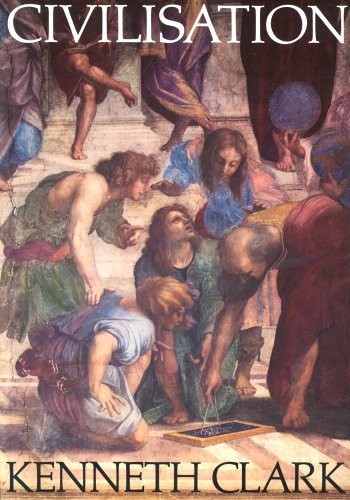
A personal view of how Western Europe evolved after the collapse of the Roman Empire and produced the ideas, books, buildings, works of art and great individuals that make up a Civilisation.

When Coca-Cola entered the French market with a hard-core bottom-line management style, they were met with boycotts in cafes and supermarkets. At the launch of Euro Disney in Paris, Mickey Mouse was greeted by angry protestors hurling tomatoes and eggs. As a culture, the French are fiercely independent yet romantic, conservative yet avant-garde, rational yet emotional.Written for anyone interested in or interacting with the French, Au Contraire!: Figuring Out the French unearths the often-invisible cultural forces that govern behavior. Gilles Asselin and Ruth Mastron draw upon their own experiences as consultants and trainers, as well as that of expatriate students and professionals, to offer the best and most useful analysis and advice on French-American intercultural relations. Going beyond the obvious, this bilingual and bicultural author team explores what lies behind what we the assumptions, attitudes, patterns of thought and beliefs that make the French so.French.In a global world filled with multinational mergers and international partnerships, Au Contraire! provides context and perspective on what happens when Americans and the French come together at work, at home, and in any social setting, touching on issues like education, play, friendship, romance and politics. They highlight the dynamics of working and managing across the French and American cultural divide with an in-depth case study of how pharmaceutical giant Rhone-Poulenc Rorer overcame challenges by fostering cross-cultural teamwork. With a quick and useful guide to social etiquette and professional guidelines for managers working in the United States and in France, Au Contraire! provides critical tools to develop creative and appropriate responses to any situation, based on a deep understanding of the unique dynamics of these two cultures.

The notion that our society, its education system and its intellectual life, is characterised by a split between two cultures—the arts or humanities on one hand, and the sciences on the other—has a long history. But it was C. P. Snow's Rede lecture of 1959 that brought it to prominence and began a public debate that is still raging in the media today. This 50th anniversary printing of The Two Cultures and its successor piece, A Second Look (in which Snow responded to the controversy four years later) features an introduction by Stefan Collini, charting the history and context of the debate, its implications and its afterlife. The importance of science and technology in policy run largely by non-scientists, the future for education and research, and the problem of fragmentation threatening hopes for a common culture are just some of the subjects discussed.

Can we continue to believe in progress? In this sobering analysis of the Western human condition, Christopher Lasch seeks the answer in a history of the struggle between two ideas: one is the idea of progress - an idea driven by the conviction that human desire is insatiable and requires ever larger production forces. Opposing this materialist view is the idea that condemns a boundless appetite for more and better goods and distrusts "improvements" that only feed desire. Tracing the opposition to the idea of progress from Rousseau through Montesquieu to Carlyle, Max Weber and G.D.H. Cole, Lasch finds much that is desirable in a turn toward moral conservatism, toward a lower-middle-class culture that features egalitarianism, workmanship and loyalty, and recognizes the danger of resentment of the material goods of others.

"A definitive portrait of the madness of big-time moviemaking" ( Newsweek ), now the basis for the new season of TCM's hit podcast, "The Plot Thickens"When Brian De Palma agreed to allow Julie Salamon unlimited access to the film production of Tom Wolfe's best-selling book The Bonfire of the Vanities , both director and journalist must have felt like they were on to something big. How could it lose? But instead Salamon got a front-row seat at the Hollywood disaster of the decade. She shadowed the film from its early stages through the last of the eviscerating reviews, and met everyone from the actors to the technicians to the studio executives. They'd all signed on for a blockbuster, but there was a sense of impending doom from the start--heart-of-gold characters replaced Wolfe's satiric creations; affable Tom Hanks was cast as the patrician heel; Melanie Griffith appeared mid-shoot with new, bigger breasts. With a keen eye and ear, Salamon shows us how the best of intentions turned into a legendary Hollywood debacle.The Devil's Candy joins John Gregory Dunne's The Studio, Steven Bach's Final Cut, and William Goldman's Adventures in the Screen Trade as a classic for anyone interested in the workings of Hollywood. With a new afterword profiling De Palma ten years after the movie's devastating flop (and this book's best-selling publication), Julie Salamon has created a riveting insider's portrait of an industry where art, talent, ego, and money combine and clash on a monumental scale.

From the New York Times bestselling author of How We Got To Now and FarsightedForget everything you’ve ever read about the age of dumbed-down, instant-gratification culture. In this provocative, unfailingly intelligent, thoroughly researched, and surprisingly convincing big idea book, Steven Johnson draws from fields as diverse as neuroscience, economics, and media theory to argue that the pop culture we soak in every day—from Lord of the Rings to Grand Theft Auto to The Simpsons —has been growing more sophisticated with each passing year, and, far from rotting our brains, is actually posing new cognitive challenges that are actually making our minds measurably sharper. After reading Everything Bad is Good for You , you will never regard the glow of the video game or television screen the same way again. With a new afterword by the author.

The comedians of the 1950s and 1960s were a totally different breed of relevant, revolutionary performer from any that came before or after, comics whose humor did much more than pry guffaws out of audiences. Gerald Nachman presents the stories of the groundbreaking comedy stars of those years, each one a cultural • Mort Sahl, of a new political cynicism• Lenny Bruce, of the sexual, drug, and language revolution• Dick Gregory, of racial unrest• Bill Cosby and Godfrey Cambridge, of racial harmony• Phyllis Diller, of housewifely complaint• Mike Nichols & Elaine May and Woody Allen, of self-analytical angst and a rearrangement of male-female relations• Stan Freberg and Bob Newhart, of encroaching, pervasive pop media manipulation and, in the case of Bob Elliott & Ray Goulding, of the banalities of broadcasting• Mel Brooks, of the Yiddishization of American comedy• Sid Caesar, of a new awareness of the satirical possibilities of television• Joan Rivers, of the obsessive craving for celebrity gossip and of a latent bitchy sensibility• Tom Lehrer, of the inane, hypocritical, mawkishly sentimental nature of hallowed American folkways and, in the case of the Smothers Brothers, of overly revered folk songs and folklore• Steve Allen, of the late-night talk show as a force in American comedy• David Frye and Vaughn Meader, of the merger of showbiz and politics and, along with Will Jordan, of stretching the boundaries of mimicry• Shelley Berman, of a generation of obsessively self-confessional humor• Jonathan Winters and Jean Shepherd, of the daring new free-form improvisational comedy and of a sardonically updated view of Midwestern archetypes• Ernie Kovacs, of surreal visual effects and the unbounded vistas of videoTaken together, they made up the faculty of a new school of vigorous, socially aware satire, a vibrant group of voices that reigned from approximately 1953 to 1965.Nachman shines a flashlight into the corners of these comedians’ chaotic and often troubled lives, illuminating their genius as well as their demons, damaged souls, and desperate drive. His exhaustive research and intimate interviews reveal characters that are intriguing and all too human, full of rich stories, confessions, regrets, and traumas. Seriously Funny is at once a dazzling cultural history and a joyous celebration of an extraordinary era in American comedy.

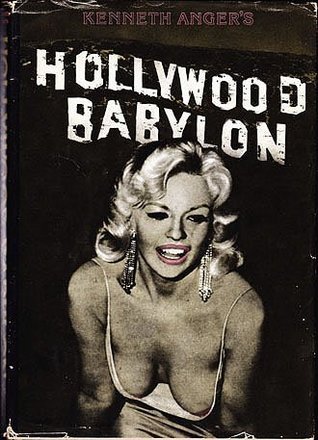
Originally published in Paris, this is a collection of Hollywood's darkest and best kept secrets from the pen of Kenneth Anger, a former child movie actor who grew up to become one of America's leading underground film-makers.

This book is about the great moral issues underlying many of the headline-making political controversies of our times. It is not a comforting book but a book about disturbing and dangerous trends. The Quest for Cosmic Justice shows how confused conceptions of justice end up promoting injustice, how confused conceptions of equality end up promoting inequality, and how the tyranny of social visions prevents many people from confronting the actual consequences of their own beliefs and policies. Those consequences include the steady and dangerous erosion of fundamental principles of freedom - amounting to a quiet repeal of the American revolution. The Quest for Cosmic Justice is the summation of a lifetime of study and thought about where we as a society are headed - and why we need to change course before we do irretrievable damage.

This award-winning poetry collection includes sixteen poems that tell of love and the simple joys of everyday life seen through the eyes of a child, by legendary author Eloise Greenfield with illustrations by Caldecott Medal-winning illustrators Diane and Leo Dillon. Each of these sixteen poems is spoken straight from the perspective of a child. Riding on a train, listening to music, playing with a friend...each poem elicits a new appreciation of the rich content of everyday life. The poems are accompanied by both portrait and panorama drawings that deepen the insights contained in the words. This beloved book of poetry is a Reading Rainbow Selection, an ALA Notable Children's Book, and the winner of George C. Stone Center for Children's Books' Recognition of Merit Award.

The first major biography of the Carter Family, the musical pioneers who almost single-handedly created the sounds and traditions that grew into modern folk, country, and bluegrass music.Meticulously researched and lovingly written, it is a look at a world and a culture that, rather than passing, has continued to exist in the music that is the legacy of the Carters—songs that have shaped and influenced generations of artists who have followed them.Brilliant in insight and execution, Will You Miss Me When I'm Gone? is also an in-depth study of A.P., Sara, and Maybelle Carter, and their bittersweet story of love and fulfillment, sadness and loss. The result is more than just a biography of a family; it is also a journey into another time, almost another world, and theirs is a story that resonates today and lives on in the timeless music they created.

The end of the Cold War has brought about more than the triumph of some political ideologies and the disappearance of others. In fact, the collapse of communism has created a vacuum quickly being filled by various alternative visions, ranging from ethnic nationalism to individualistic liberalism. But political ideologies are not merely a matter of governmental efficacy. Rather, political ideologies are intrinsically and inescapably religious --each carries certain assumptions about the nature of reality, individuals and society, as well as a particular vision for the common good. These fundamental beliefs transcend the political sphere, and the astute Christian observer should thus discern the subtle ways in which ideologies are rooted in idolatrous worldviews. In this comprehensive study, political scientist David Koyzis surveys the key political ideologies of our era, including liberalism, conservatism, nationalism, democracy and socialism. Each philosophy is given careful analysis and fair critique, unpacking the worldview issues inherent to each and pointing out essential strengths and weaknesses. Koyzis concludes by proposing alternative models that flow out of Christianity's historic engagement with the public square, retrieving approaches that hold promise for the complex political realities of the twenty-first century. Writing with broad, international perspective and keen analytical insight, Koyzis offers a sound guide for Christians working in the public square, culture watchers, political pundits and all students of modern political thought.

With a new Afterword to the 2002 edition, No Logo employs journalistic savvy and personal testament to detail the insidious practices and far-reaching effects of corporate marketing—and the powerful potential of a growing activist sect that will surely alter the course of the 21st century. First published before the World Trade Organization protests in Seattle, this is an infuriating, inspiring, and altogether pioneering work of cultural criticism that investigates money, marketing, and the anti-corporate movement.As global corporations compete for the hearts and wallets of consumers who not only buy their products but willingly advertise them from head to toe—witness today's schoolbooks, superstores, sporting arenas, and brand-name synergy—a new generation has begun to battle consumerism with its own best weapons. In this provocative, well-written study, a front-line report on that battle, we learn how the Nike swoosh has changed from an athletic status-symbol to a metaphor for sweatshop labor, how teenaged McDonald's workers are risking their jobs to join the Teamsters, and how "culture jammers" utilize spray paint, computer-hacking acumen, and anti-propagandist wordplay to undercut the slogans and meanings of billboard ads (as in "Joe Chemo" for "Joe Camel").No Logo will challenge and enlighten students of sociology, economics, popular culture, international affairs, and marketing."This book is not another account of the power of the select group of corporate Goliaths that have gathered to form our de facto global government. Rather, it is an attempt to analyze and document the forces opposing corporate rule, and to lay out the particular set of cultural and economic conditions that made the emergence of that opposition inevitable." —Naomi Klein, from her Introduction

'Jamaican music at last has the book it deserves' Prince Buster, from his Foreword'The first comprehensive history of every aspect of reggae (and) it could be the last that talked to those who were there at stage one...Bradley leaves no stone unturned in a coruscating rollercoaster ride through murder, major label gripes, ganja paranoia and racism, ending with Luciano hoping for a return to good songs and good singers. And if UB 40 get a mention, I missed it. Isn`t that recommendation enough for you?' Mojo'Switches between informed analysis and intoxicating aural history...With epic contributions from major players such as PrinceBuster, Horace Andy, Bunny Lee and Dennis Bovell' GQ'Fascinating...written with passion, style and gusto. This is a book many musicians would benefit from reading' Jah Wobble, Independent on Sunday'A compelling social and musical history running from Fifties soundsystem roots to contemporary dancehall...filled to the brim with anecdotes to keep the most hardened music-head happy' Face'A classic...Hilarious in places, peppered with social and historical comment in others, this is a fascinating account detailing how reggae evolved in Jamaica and became a global phenomenon' New Nation

“This makes entertaining reading. Many accounts of the birth of personal computing have been written, but this is the first close look at the drug habits of the earliest pioneers.” —New York TimesMost histories of the personal computer industry focus on technology or business. John Markoff’s landmark book is about the culture and consciousness behind the first PCs—the culture being counter– and the consciousness expanded, sometimes chemically. It’s a brilliant evocation of Stanford, California, in the 1960s and ’70s, where a group of visionaries set out to turn computers into a means for freeing minds and information. In these pages one encounters Ken Kesey and the phone hacker Cap’n Crunch, est and LSD, The Whole Earth Catalog and the Homebrew Computer Lab. What the Dormouse Said is a poignant, funny, and inspiring book by one of the smartest technology writers around.

TRAGEDY AND HOPE shows the years 1895-1950 as a period of transition from the world dominated by Europe in the nineteenth century to the world of three blocs in the twentieth century. With clarity, perspective, and cumulative impact, Professor Quigley examines the nature of that transition through two world wars and a worldwide economic depression. As an interpretative historian, he tries to show each event in the full complexity of its historical context. The result is a unique work, notable in several ways. It gives a picture of the world in terms of the influence of different cultures and outlooks upon each other; it shows, more completely than in any similar work, the influence of science and technology on human life; and it explains, with unprecedented clarity, how the intricate financial and commercial patterns of the West prior to 1914 influenced the development of today's world.

For generations the traditional focus for those wishing to understand the roots of the modern world has been France on the eve of the Revolution. Porter certainly acknowledges France's importance, but here makes an overwhelming case for consideringBritain the true home of modernity - a country driven by an exuberance, diversity and power of invention comparable only to twentieth-century America. Porter immerses the reader in a society which, recovering from the horrors of the Civil War and decisively reinvigorated by the revolution of 1688, had emerged as something new and extraordinary - a society unlike any other in the world.

"I did not, I wish to state, become a journalist because there was no other 'profession' that would have me. I became a journalist because I did not want to rely on newspapers for information." Love, Poverty and War: Journeys and Essays showcases America's leading polemicist's rejection of consensus and cliché whether he's reporting from abroad in Indonesia, Kurdistan, Iraq, North Korea, or Cuba, or when his pen is targeted mercilessly at the likes of William Clinton, Mother Theresa ("a fanatic, a fundamentalist and a fraud"), the Dalai Lama, Noam Chomsky, Mel Gibson and Michael Bloomberg. Hitchens began the nineties as a "darling of the left" but has become more of an "unaffiliated radical" whose targets include those on the "left," who he accuses of "fudging" the issue of military intervention in the Balkans, Afghanistan and Iraq. Yet, as Hitchens shows in his reportage, cultural and literary criticism, and opinion essays from the last decade, he has not jumped ship and joined the right but is faithful to the internationalist, contrarian and democratic ideals that have always informed his work.

The Medium is the Massage is Marshall McLuhan's most condensed, and perhaps most effective, presentation of his ideas. Using a layout style that was later copied by Wired, McLuhan and coauthor/designer Quentin Fiore combine word and image to illustrate and enact the ideas that were first put forward in the dense and poorly organized Understanding Media. McLuhan's ideas about the nature of media, the increasing speed of communication, and the technological basis for our understanding of who we are come to life in this slender volume. Although originally printed in 1967, the art and style in The Medium is the Massage seem as fresh today as in the summer of love, and the ideas are even more resonant now that computer interfaces are becoming gateways to the global village.

Forty years in the making, a new cultural canon that celebrates truth over hypocrisy, literature over totalitarianism.Echoing Edward Said’s belief that “Western humanism is not enough, we need a universal humanism,” the renowned critic Clive James presents here his life’s work. Containing over one hundred original essays, organized by quotations from A to Z, Cultural Amnesia illuminates, rescues, or occasionally destroys the careers of many of the greatest thinkers, humanists, musicians, artists, and philosophers of the twentieth century. In discussing, among others, Louis Armstrong, Walter Benjamin, Sigmund Freud, F. Scott Fitzgerald, Franz Kafka, Marcel Proust, and Ludwig Wittgenstein, James writes, “If the humanism that makes civilization civilized is to be preserved into the new century, it will need advocates. These advocates will need a memory, and part of that memory will need to be of an age in which they were not yet alive.” Soaring to Montaigne-like heights, Cultural Amnesia is precisely the book to burnish these memories of a Western civilization that James fears is nearly lost.

From the bestselling social commentator and cultural historian, a fascinating exploration of one of humanity's oldest the celebration of communal joyIn the acclaimed Blood Rites , Barbara Ehrenreich delved into the origins of our species' attraction to war. Here, she explores the opposite impulse, one that has been so effectively suppressed that we lack even a term for the desire for collective joy, historically expressed in ecstatic revels of feasting, costuming, and dancing.Ehrenreich uncovers the origins of communal celebration in human biology and culture. Although sixteenth-century Europeans viewed mass festivities as foreign and "savage," Ehrenreich shows that they were indigenous to the West, from the ancient Greeks' worship of Dionysus to the medieval practice of Christianity as a "danced religion." Ultimately, church officials drove the festivities into the streets, the prelude to widespread Protestants criminalized carnival, Wahhabist Muslims battled ecstatic Sufism, European colonizers wiped out native dance rites. The elites' fear that such gatherings would undermine social hierarchies was the festive tradition inspired French revolutionary crowds and uprisings from the Caribbean to the American plains. Yet outbreaks of group revelry persist, as Ehrenreich shows, pointing to the 1960s rock-and-roll rebellion and the more recent "carnivalization" of sports.Original, exhilarating, and deeply optimistic, Dancing in the Streets concludes that we are innately social beings, impelled to share our joy and therefore able to envision, even create, a more peaceable future.

Grandpa explains that the golden rule is a simple statement on how to live that can be practiced by people of all ages and faiths, then helps his grandson figure out how to apply the rule to his own life. 20,000 first printing.

In Homo Ludens, the classic evaluation of play that has become a "must-read" for those in game design, Dutch philosopher Johan Huizinga defines play as the central activity in flourishing societies. Like civilization, play requires structure and participants willing to create within limits. Starting with Plato, Huizinga traces the contribution of Homo Ludens, or "Man the player" through Medieval Times, the Renaissance, and into our modern civilization. Huizinga defines play against a rich theoretical background, using cross-cultural examples from the humanities, business, and politics. Homo Ludens defines play for generations to come."A happier age than ours once made bold to call our species by the name of Homo Sapiens. In the course of time we have come to realize that we are not so reasonable after all as the Eighteenth Century with its worship of reason and naive optimism, though us; "hence moder fashion inclines to designate our species asHomo Faber Man the Maker. But though faber may not be quite so dubious as sapiens it is, as a name specific of the human being, even less appropriate, seeing that many animals too are makers. There is a third function, howver, applicable to both human and animal life, and just as important as reasoning and making--namely, playing. it seems to me that next to Homo Faber, and perhaps on the same level as Homo Sapiens, Homo Ludens, Man the Player, deserves a place in our nomenclature. "--from the Foreward, by Johan Huizinga

This collection of lectures of Max Muller portrays India, specially the Vedic India, as an epitome of a virtuosity and morality.

When The Culture of Narcissism was first published in 1979, Christopher Lasch was hailed as a “biblical prophet” (Time). Lasch’s identification of narcissism as not only an individual ailment but also a burgeoning social epidemic was groundbreaking. His diagnosis of American culture is even more relevant today, predicting the limitless expansion of the anxious and grasping narcissistic self into every part of American life.The Culture of Narcissism offers an astute and urgent analysis of what we need to know in these troubled times.

A witty, often terrifying that chronicles our transformation into a society that is shaped by technology—from the acclaimed author of Amusing Ourselves to Death."A provocative book ... A tool for fighting back against the tools that run our lives." — Dallas Morning NewsThe story of our society's transformation into a Technopoly: a society that no longer merely uses technology as a support system but instead is shaped by it—with radical consequences for the meanings of politics, art, education, intelligence, and truth.

The essays in The Gift of Good Land are as true today as when they were first published in 1981; the problems addressed here are still with us and the solutions no nearer to hand. One of the insistent themes of this book is the interdependence, the wholeness, the oneness of people, the land, weather, animals, and family. To touch one is to tamper with them all. We live in one functioning organism whose separate parts are artificially isolated by our culture.The twenty-four essays in this collection cover a variety of subjects; the author’s journeys to the Peruvian Andes, to the desert of southern Arizona, and to Amish country to study the evolution of ancient native agricultural practices. In “Solving for Pattern,” Mr. Berry lists fourteen critical standards for solving agricultural problems that can just as easily be used as standards for solving personal and family problems. In the title essay, the author examines our Judeo-Christian heritage to discover parallels with the Buddhist doctrine of “right livelihood” or “right occupation.” He develops the compelling argument that the “gift” of good land has strings attached. We have it only on loan and only for as long as we practice good stewardship.

In this acclaimed work, Gilder offers an illuminating discussion of how to increase wealth and curtail poverty, arguing that most welfare programs only serve to keep the poor in poverty as victims of welfare dependency. 9 cassettes.

Originally published in 1947, The Uneasy Conscience of Modern Fundamentalism has since served as the manifesto of evangelical Christians serious about bringing the fundamentals of the Christian faith to bear in contemporary culture. In this classic book Carl F. H. Henry, the father of modern fundamentalism, pioneered a path for active Christian engagement with the world -- a path as relevant today as when it was first staked out.Now available again and featuring a new foreword by Richard J. Mouw, The Uneasy Conscience of Modern Fundamentalism offers a bracing world-and-life view that calls for boldness on the part of the evangelical community. Henry argues that a reformation is imperative within the ranks of conservative Christianity, one that will result in an ecumenical passion for souls and in the power to meaningfully address the social and intellectual needs of the world.

While Gustave Eiffel was changing the skyline of Paris, large parts of France were still terra incognita. Even in the age of railways and newspapers, France was a land of ancient tribal divisions, prehistoric communication networks, and pre-Christian beliefs. French itself was a minority language.Graham Robb describes that unknown world in arresting narrative detail. He recounts the epic journeys of mapmakers, scientists, soldiers, administrators, and intrepid tourists, of itinerant workers, pilgrims, and herdsmen with their millions of migratory domestic animals. We learn how France was explored, charted, and colonized, and how the imperial influence of Paris was gradually extended throughout a kingdom of isolated towns and villages.The Discovery of France explains how the modern nation came to be and how poorly understood that nation still is today. Above all, it shows how much of France—past and present—remains to be discovered.

An astonishing new voice in teen literature, writing what is sure to be one of the most talked-about debuts of the year.Tyrell is a young, African American teen who can't get a break. He's living (for now) with his spaced-out mother and little brother in a homeless shelter. His father's in jail. His girlfriend supports him, but he doesn't feel good enough for her - and seems to be always on the verge of doing the wrong thing around her. There's another girl at the homeless shelter who is also after him, although the desires there are complicated. Tyrell feels he needs to score some money to make things better. Will he end up following in his father's footsteps?

This book challenges those who argue that we can change the world by changing the way people think. The author shows that no matter how bizarre a people's behavior may seem, it always stems from concrete social and economic conditions. It is by isolating and identifying these conditions that we will be able to understand and cope with some of our own apparently senseless life styles. In a devastating attack on the shamans of the counterculture, the author states the case for a return to objective consciousness and a rational set of political commitments.

Men, Machines, and Modern Times, though ultimately concerned with a positive alternative to an Orwellian 1984, offers an entertaining series of historical accounts taken from the nineteenth century to highlight a main theme: the nature of technological change, the fission brought about in society by such change, and society's reaction to that change. Beginning with a remarkable illustration of resistance to innovation in the U.S. Navy following an officer's discovery of a more accurate way to fire a gun at sea, Elting Morison goes on to narrate the strange history of the new model steamship, the Wapanoag, in the 1860s. He then continues with the difficulties confronting the introduction of the pasteurization process for milk; he traces the development of the Bessemer process; and finally, he considers the computer. While the discussions are liberally sprinkled with amusing examples and anecdotes, all are related to the more profound and current problem of how to organize and manage system of ideas, energies, and machinery so that it will conform to the human dimension.

It is at the same time a history of language, a guide to foreign tongues, and a method for learning them. It shows, through basic vocabularies, family resemblances of languages—Teutonic, Romance, Greek—helpful tricks of translation, key combinations of roots and phonetic patterns. It presents by common-sense methods the most helpful approach to the mastery of many languages; it condenses vocabulary to a minimum of essential words; it simplifies grammar in an entirely new way; and it teaches a languages as it is actually used in everyday life.But this book is more than a guide to foreign languages; it goes deep into the roots of all knowledge as it explores the history of speech. It lights up the dim pathways of prehistory and unfolds the story of the slow growth of human expression from the most primitive signs and sounds to the elaborate variations of the highest cultures. Without language no knowledge would be possible; here we see how language is at once the source and the reservoir of all we know.

Bushido. The Way of the Warrior presents a remarkably faithful mirror of many of the characteristics and habits of modern Japanese civilization, as it represents a tradition that enjoyed great power and prestige for centuries. This work was written to provide practical and moral instruction for warriors, and to outline the parameters of personal, social, and professional conduct characteristic of Bushido, or Way of the Warrior, the Japanese chivalric tradition.Personal responsibilities, family relationships, public duties, education, finances and ethics are treated in this text from the perspective of the spirit of Japanese gentlemen. Even the forms of political incompetence and corruption that Japan currently struggles with are accurately described in this more than 400-year-old book; So deep did the feudal and military modes of government that generated them take their roots in Japanese society. This manual is therefore an essential resource for anyone who wishes to understand Japan and the Japanese people in a realistic way.

Draws on the insights of an iPod music fan and an IT guru to counsel readers on the social and technological relevance of today's interface between pop culture and innovation, in an account that charts the rise of various youth movements, from pirate radio to remix culture, to track their broader influence on society. 35,000 first printing.

Historian Arthur Herman traces the roots of declinism and shows how major thinkers, past and present, have contributed to its development as a coherent ideology of cultural pessimism. From Nazism to the Sixties counterculture, from Britain's Fabian socialists to America's multiculturalists, and from Dracula and Freud to Robert Bly and Madonna, this work examines the idea of decline in Western history and sets out to explain how the conviction of civilization's inevitable end has become a fixed part of the modern Western imagination. Through a series of biographical portraits spanning the 19th and 20th centuries, the author traces the roots of declinism and aims to show how major thinkers of the past and present, including Nietzsche, DuBois, Sartre, and Foucault, have contributed to its development as a coherent ideology of cultural pessimism.

Rushdoony's study tells us an important part of American exactly what has public education been trying to accomplish? Before the 1830s and Horace Mann, no schools in the U.S. were state supported or state controlled. They were local, parent-teacher enterprises, supported without taxes, and taking care of all children. They were remarkably high in standard and were Christian. From Mann to the present, the state has used education to socialize the child. The school's basic purpose, according to its own philosophers, is not education in the traditional sense of the 3 R's. Instead, it is to promote 'democracy' and 'equality,' not in their legal or civic sense, but in terms of the engineering of a socialized citizenry. Public education became the means of creating a social order of the educator's design. Such men saw themselves and the school in messianic terms. This book was instrumental in launching the Christian school and homeschool movements.

An inside analysis of modern cultural and political upheavals in China by a fluent Beijing correspondent describes the power struggles currently taking place between the party elite and supporters of democracy, the outcome of which the author predicts will significantly affect China's rise to a world super-power. 125,000 first printing.

How does our fascination with technology intersect with the religious imagination? In TechGnosis - a cult classic now updated and reissued with a new afterword - Erik Davis argues that while the realms of the digital and the spiritual may seem worlds apart, esoteric and religious impulses have in fact always permeated (and sometimes inspired) technological communication. Davis uncovers startling connections between such seemingly disparate topics as electricity and alchemy; online role-playing games and religious and occult practices; virtual reality and gnostic mythology; programming languages and Kabbalah. The final chapters address the apocalyptic dreams that haunt technology, providing vital historical context as well as new ways to think about a future defined by the mutant intermingling of mind and machine, nightmare and fantasy.

An IRA-CBC Children's Choice.An American Bookseller "Pick of the Lists."When Ping admits that he is the only child in China unable to grow a flower from the seeds distributed by the Emperor, he is rewarded for his honesty.

Argues that future generations are being harmed by a restrictive copyright system that protects corporate interests, in a report that calls for an end of the practice of criminalizing artists who build on the creative works of others and for implementing a collaborative and profitable "hybrid economy" that protects both creative and ethical needs. 30,000 first printing.

The acclaimed author of TYRELL returns to PUSH with a striking novel about a mother and daughter who are only fourteen years apart, but need to learn to understand each other before it's too late.Kendra's mom, Renee, had her when she was only 14 years old. Renee and her mom made a deal -- Renee could get an education, and Kendra would live with her grandmother. But now Renee's out of grad school and Kendra's in high school ... and getting into some trouble herself. Kendra's grandmother lays down the It's time for Renee to take care of her daughter. Kendra wants this badly -- even though Renee keeps disappointing her. Being a mother isn't easy, but being a daughter can be just as hard. Now it's up to Kendra and Renee to make it work.