
James W. Sire
James W. Sire was a Christian author, speaker, and former editor for InterVarsity Press. Sire was an officer in the Army, a college professor of English literature, philosophy and theology, the chief editor of InterVarsity Press, a lecturer at over two hundred universities around the world and the author of twenty books on literature, philosophy and the Christian faith. His book The Universe Next Door, published in 1976 has sold over 350,000 copies. He held a B.A. in chemistry and English from the University of Nebraska, an M.A. in English from Washington State and a Ph.D. in English from the University of Missouri.
30 Books Written

The Universe Next Door: A Basic Worldview Catalog
by James W. Sire
Rating: 4.3 ⭐
• 2 recommendations ❤️
For more than forty years, The Universe Next Door has set the standard for a clear, readable introduction to worldviews. Using his widely influential model of eight basic worldview questions, James Sire examines prominent worldviews that have shaped the Western world:theismdeismnaturalismMarxismnihilismexistentialismEastern monismNew Age philosophypostmodernismIslamIntertwined with this analysis, he presents an overview of intellectual history giving insight into the current state of Western thought and culture. Critiquing each worldview within its own frame of reference and in comparison to others, Sire encourages readers to wrestle with life's biggest questions and examine the core beliefs and commitments on which they are building their lives. The sixth edition, updated by Sire's longtime editor Jim Hoover, features new explanatory sidebars, helpful charts comparing worldviews and illustrating their historical flow, and a chapter on challenges to a Christian worldview in the twenty-first century. New discussion questions will help readers reflect more deeply on the ideas in each chapter. The Universe Next Door has been translated into over a dozen languages and has been used as a text at over one hundred colleges and universities in courses ranging from apologetics and world religions to history and English literature. In a world of ever-increasing diversity, The Universe Next Door offers a unique resource for understanding the variety of worldviews that claim the allegiance of mind and heart.

A 2001 Christianity Today Book of the Year! What is an intellectual? How can you learn to think well? What does it mean to love God with your mind? Can the intellectual life be a legitimate Christian calling? Is the intellectual life your calling? James Sire brings wit and wisdom to bear on these questions and their possible answers. And he offers an unusual "insider's view" of learning how to think well for the glory of God and for the sake of his kingdom. In Habits of the Mind Sire challenges you to avoid one of the greatest pitfalls of intellectual life--by resisting the temptation to separate being from knowing. He shows you how to cultivate intellectual virtues and disciplines--habits of mind--that will strengthen you in pursuit of your calling. And he offers assurance that intellectual life can be a true calling for Christians: because Jesus was the smartest man who ever lived, Sire argues, you can and should accept the challenge to think as well as you are able.

What is a worldview? What lies behind your thoughts about almost everything? For more than thirty years, James W. Sire has grappled with this issue. In this book he offers readers his most mature thought on the concept of a worldview, addressing such questions as In his widely used textbook The Universe Next Door, first published in 1976, Sire offered a succinct definition of a worldview and catalogued in summary fashion seven basic worldview alternatives. Students, critics, new literature and continued reflection have led him to reexamine and refine his definition of a worldview. This companion volume to The Universe Next Door is the fruit of that effort. Here is an excellent resource for exploring more deeply how and why worldview thinking can aid you in navigating your pluralistic universe.
Established in 1968, the Wheaton Literary Series provides insightful books for the thoughtful reader, inspiring imagination, and reflection. These beautifully produced volumes feature prose and poetry of high literary, academic, and artistic merit, written by and about Christian artists of significant stature.
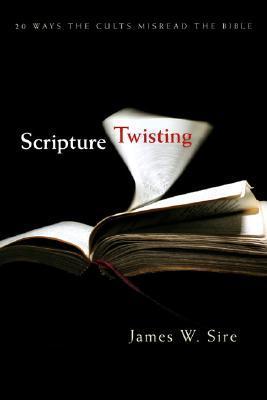
How often have you encountered some bizarre doctrine only to be stunned to hear a Bible verse quoted to support it? With new religious cults springing up almost daily and old ones growing rapidly, this is more and more common. How are they seemingly able to twist Scripture to mean something orthodox Christians have never believed it to mean in two thousand years? James Sire, author of The Universe Next Door and How to Read Slowly , has isolated twenty separate kinds of reading errors which are characteristically made by cultists as they interpret the Bible. He covers the full range from simple misquotation to complex argumentation which links one slightly eccentric interpretation to another, mixes in a few orthodox readings and ends with a conclusion totally foreign to the biblical world view. Sire also handles twisted translation, overspecification, virtue by association, ignoring the context and other flawed interpretations. A book to help us all become better readers of the Scriptures.

Believing. Most of us take it for granted. We just do it--whether it's trusting that the sun will come up tomorrow, that the lunch we are about to eat is not poisoned or that our religious beliefs are not ill-founded. But why should we believe any of these things? Why should anyone believe anything at all? With insight and humor, James W. Sire examines the reasons people give for believing what they do and suggests what are truly satisfying and compelling reasons for belief. He then turns to the question of a specific belief--namely, belief that the Christian faith is true. Sire tackles both the best reason for belief in Christianity (the identity of Jesus ) and the chief reason against it (the problem of evil). And he responds to these issues personally and philosophically. Here is a book to challenge the skeptic and reassure the doubter in us all.

Why Good Arguments Often Fail: Making a More Persuasive Case for Christ
by James W. Sire
Rating: 3.8 ⭐
You gave it your best shot. You made the best case you knew how, and your friend still wasn't persuaded to follow Christ. Why is it that solid, rational arguments for the Christian faith often fail? For over fifty years James Sire, noted author and public defender of the Christian faith, has asked himself that question. Sometimes, of course, the arguments themselves just aren't that good. How can we make them better? Sometimes the problem has to do with us and not the arguments. Our arrogance, aggressiveness or cleverness gets in the way, or we misread our audience. Sometimes the problem lies with the hearers. Their worldview or moral blindness keeps them from hearing and understanding the truth. With wisdom borne of both formal and informal experience, Sire grapples with these issues and offers practical insight into making a more persuasive case for Christ. Includes an annotated bibliography of resources for framing effective arguments.

Christians who are serious about their faith want to love God with all that they are -- heart and mind and strength. Books abound on the devotional life, on commitment, on evangelism and practical Christian living, but few take up what it means to love God with our minds. How do we learn to honor God in the ways we think? James Sire blazes a trail for Christians concerned about the discipleship of our minds. After looking at the attitudes toward God and ourselves necessary for the journey, he introduces us to the basics of the Christian world view. Separate chapters discuss the foundations of knowledge and the relationship between knowing and doing. With an eye to the practical, Sire offers specific suggestions on getting to know what is good and getting to know the world. He also provides valuable insights on how Christians might approach various academic disciplines as disciples of Christ. Here is a book for all who desire to love God with their minds.

Always be prepared to make your defense to anyone who demands from you an accounting for the hope that is in you; yet do it with gentleness and reverence. (1 Peter 3:15-16) We've all felt the tension. An opportunity to speak for Christ comes up, and either we jump in with both barrels blasting or we cower in the corner and say nothing. Is there a better way? Can we learn to speak boldly, yet humbly, about our faith in Christ? Veteran apologist Jim Sire offers salient counsel derived from over fifty years of experience in a vast array of settings. Through a variety of snapshots, both successful and unsuccessful, he helps us understand the nature, value and limits of apologetics, and suggests how to tailor our comments to respect our audience whether large or small, formal or informal. He then outlines five key arguments for the Christian faith and offers responses to five common objections. Finally, for those especially drawn to apologetics, he offers counsel on how to discern a call to apologetic ministry.

Weariness. Wonder. Joy. Longing. Anger. These are the feelings of the Psalms: honest expressions of pain and joy penned by real people in the midst of real life circumstances. Though they were written centuries ago, the Psalms still resonate deeply with us today, giving voice to our thoughts and longings:"Out of the depths I cry to you, O LORD." (Psalm 130:1) "God is our refuge and strength, an ever-present help in trouble." (Psalm 46:1) "As the deer pants for streams of water, so my soul pants for you, O God." (Psalm 84:2)In Learning to Pray Through the Psalms, James W. Sire teaches us to take our appreciation for this rich book of Scripture a step further. Choosing ten specific psalms, Sire offers background information that helps us read each one with deeper insight and then lays out a meditative, step-by-step approach to using the psalmists' words as a guide for our own personal conversation with God. A group study is also included in each chapter, along with a guide for praying through the psalm in community.The Lord loves when His people pray. And His Word is a powerful tool for framing honest, intimate prayers. Sire's innovative approach will enrich our minds and our souls as we read more perceptively and pray with all of our emotions.

Chris Chrisman Goes to College: and faces the Challenges of Relativism, Individualism and Pluralism
by James W. Sire
Rating: 3.5 ⭐
Chris Chrisman, a young Christian, goes to college only to have his world turned upside down. On campus he finds the challenges to his faith -- both intellectual and personal -- almost more than he can bear. Then he meets Bill Seipel and Bob Wong. Together, the three young men, two of them Christians and the other a self-styled atheist, forge a common bond in the quest for truth. In the process they confront some of the dominant ideologies of the secular university. Weaving the story of Chris's first year on campus with separate expository chapters on such forces as individualism, pluralism, relativism and privitization, James Sire offers a helpful apologetic for those who are searching for truth in a postmodern world. He identifies no fewer than six types of relativism, from "All religions boil down to the same thing" and "It's true for you; it's not true for me" to "God does not exist; naturalism is true." Then in down-to-earth language Sire helps readers to think through these and other complex issues.

"Look carefully. Listen closely. Do you see? Do you hear? There are a million signposts pointing toward the specific truth of God in Christ. I've seen many of them. But God is speaking to you too. Look and see. Listen and hear."In this accessible and engaging work, veteran apologist Jim Sire gives us eyes to see the myriad "signals of transcendence" all around us that point to the specific truth of God in Christ. Focusing on the power of good literature—even from those who deny the existence of God—enables us to perceive and testify to God's reality in ways that rational argument alone cannot."While reason can be very helpful in pointing us to God and helping us in our apologetics, what compels and convinces people is more multidimensional," says Sire. "What is needed is a more holistic apologetic that not only includes truth but also goodness and beauty."All inspiration is rooted in God the Creator, and some of God's truth lies buried until an artist exposes it. Good literature, written from a Christian standpoint or not, displays multiple examples of our human understandings of God, the universe and ourselves. It testifies to the existence of a transcendent realm and often, in fact, to the truth of the Christian faith.

Vaclav Havel: The Intellectual Conscience of International Politics : An Introduction, Appreciation & Critique
by James W. Sire
Rating: 3.9 ⭐
Book by Sire, James W.

At key moments in his life on earth, Jesus Christ, the very Son of God, turned to the Psalms for words to express his deepest thoughts and emotions. It is not hard to imagine Jesus, his mind and heart saturated with the words and thoughts of the Psalms as they were prayed aloud in the Temple, going off early in the morning to pray. How much must he have mouthed the words of the Psalms and given them a fulfillment? They became his answering speech to his heavenly Father. In these pages you will discover how the psalms that relate closely to the mission of Jesus can also become our answering speech. We will begin our journey into the mind of Christ by immersing ourselves in several psalms which Jesus himself refers to and fulfills. And then in the second half of the book, we will immerse ourselves in psalms that Jesus would have meditated on during his time on earth, focusing on the heart and mind of Jesus as he prayed the psalms. Structural analysis of each psalm will help us grow our ability to read the Psalms. The guided personal prayer liturgy with each chapter will help us go deeper in the experience of praying the Psalms. Through these psalms we will discover more of the human life of our Lord and Savior. And in the process we will discover more of who we are as we come before our holy God. Also included: a group discussion and prayer experience to accompany each chapter.

Christianity begins with God and ends with God. It is a story for all to know and understand. In this personal and easy-to-read book, James Sire offers a basic introduction to the foundational truths held by Christians at all times and in all places. The chapters are organized around a simple creation, fall, redemption, new life in Christ, and glorification. In this expanded edition, Sire added a chapter on the person of Jesus. With study questions for personal or group use, this is the ideal first book for seekers and believers who want to understand the central teachings of the Bible.

If you're looking for clear-cut answers to difficult questions about God--or for your guy to score a quick knock-out of a toughened sparring partner--then this book is not for you. But if you're open to an authentic, no-holds barred, respectful dialogue about one of life's most important issues, then take up and read. There are no straw men here. Sparked by a chance meeting between two book-club acquaintances and their discussion of Kurt Vonnegut's obituary, this dialogue between long-time Christian Jim Sire and forthright atheist Carl Peraino developed through extended email exchanges exploring minds and brains, science and morality, faith and reason, God and violence, doubt and rhetoric. You'll find much to ponder, weigh and explore in this lively, down-to-earth book. A study guide is included if you wish to delve deeper into any of the issues raised.

Subtitled Why I Am Still a Christian. These memoirs of a young boy growing up in the sandhills of Nebraska, attending a one-room schoolhouse, finish with his life as a teacher, lecturer, and editor. Here is a mature apologetic for the Christian faith. (Amazon Book Description)

Eclectic Apologetics: An Argument from Everything -- Especially Literature
by James W. Sire
Rating: 3.7 ⭐
"Look carefully. Listen closely. Do you see? Do you hear? There are a million signposts pointing toward the specific truth of God in Christ. I've seen many of them. But God is speaking to you too. Look and see. Listen and hear." In this accessible and engaging work, veteran apologist Jim Sire gives us eyes to see the myriad "signals of transcendence" all around us that point to the specific truth of God in Christ. Focusing on the power of good literature―even from those who deny the existence of God―enables us to perceive and testify to God's reality in ways that rational argument alone cannot. "While reason can be very helpful in pointing us to God and helping us in our apologetics, what compels and convinces people is more multidimensional," says Sire. "What is needed is a more holistic apologetic that not only includes truth but also goodness and beauty." All inspiration is rooted in God the Creator, and some of God?s truth lies buried until an artist exposes it. Good literature, written from a Christian standpoint or not, displays multiple examples of our human understandings of God, the universe and ourselves. It testifies to the existence of a transcendent realm and often, in fact, to the truth of the Christian faith.

Early evening, a young boy alone on his pony on the rim of the Nebraska Sandhills. Three darkening thunderclouds rising higher and higher on the horizon. An electric atmosphere, a quickening, light cooling breeze. A slight shiver and the boy wonders, "Am I being pursued by the Father, the Son, and the Holy Ghost?"These sudden, unbidden, unexpected, strange experiences. We all have them. What are they? Mere plucking on the emotional strings of our material selves? Or do they have a deeper meaning? Do they signal the Presence of something other, maybe some Other, maybe some one Other, some thing or some one, above, below, beyond our normal waking consciousness? James W. Sire has studied a massive number of these accounts. He pairs them with his own experiences and turns to scientists, philosophers, and theologians for explanation. These experiences, he concludes, are signals of transcendence or what N. T. Wright calls echoes of a voice--"the voice of Jesus, calling us to follow him into God's new world." This book is an account of the author's journey to this conclusion."Despite the grinding tyranny of contemporary materialism, the human spirit persists in longing for transcendence. Deeply personal and impressively erudite, Echoes of a Voice explores how our experiences constantly point us in a direction beyond this physical world and the various ways that we have tended to interpret those experiences. Ultimately, Sire challenges us to look for that which satisfies our deepest longings for meaning, for community, and for relationship with the God who constantly reveals himself to his creation."--Gene C. Fant Jr., author of God as Author"For dwellers in our modern 'world without windows,' or for prisoners in Plato's cave content with the flickering shadows on the wall, Sire has given us a brilliant and helpful survey of pathways to the sun and freedom--some sure and some illusory. Echoes of a Voice should be read by all who wrestle with communicating faith persuasively today."--Os Guinness, author of Long Journey Home"This book is both intellectually challenging and personally moving. Echoes of a Voice provides a vivid presentation of the ways in which God makes his presence known."--C. Stephen Evans, author of God and Moral ObligationJames W. Sire (PhD, University of Missouri) has been a professor of English literature, philosophy, and theology, chief editor of InterVarsity Press, and a lecturer in many universities in the United States, Canada, Eastern and Western Europe, and Asia. He is the author of twenty books, including The Universe Next Door (1976), now in its fifth edition and translated into eighteen languages. Rim of the Sandhills (eBook) traces his life from Nebraska rancher to international writer.

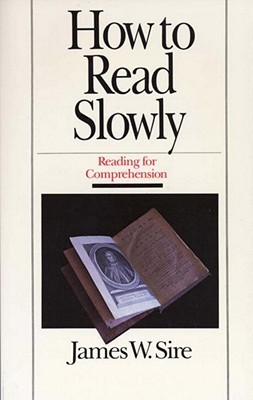
Is a good reader someone who reads a lot, reads fast, reads with comprehension? James Sire asserts that we are good readers only when we can read "between the lines" of whatever we read. Whether we read because we have to or because we want to, reading without understanding makes reading less enjoyable as well as less profitable. Every article, every poem, every book not only contains information but also projects a way of looking at life. Through practical chapters on reading fiction, non-fiction, and poetry, James Sire helps readers detect not only what writers say but what lies behind what they say. He concludes with practical and sensible counsel on how to choose what to read and when.

What reason do you have for believing Christianity is true? The best reason is Jesus himself. In this ten session LifeGuide ® Bible Study, James W. Sire invites you to meet Jesus by digging deep into the Bible. You'll discover what Jesus did and said. And you'll be encouraged to decide what place Jesus has in your life today. Whether you are reading the Gospels for the first time or for the fiftieth, you'll find these investigative Bible studies challenging and transforming. This revised LifeGuide Bible Study features additional questions for starting group discussions and for meeting God in personal reflection, together with expanded leader's notes and a "Now or Later" section in each study. For over three decades LifeGuide Bible Studies have provided solid biblical content and raised thought-provoking questions―making for a one-of-a-kind Bible study experience for individuals and groups. This series has more than 130 titles on Old and New Testament books, character studies, and topical studies.
The Universe Next Door: A Basic Worldview Catalog, 5th Edition by James W. Sire 05 edition
by James W. Sire
Rating: 5.0 ⭐
great book

James W. Sire offers an insightful, clear-headed analysis of New Age thought.
Jeremiah lived in an age of religious confusion, false prophecy, political corruption and foreign intervention. Because he spoke out for God, Jeremiah was imprisoned and almost silenced for good. Still, his message was true to his own day – and rings true to ours. Twelve individual or group Bible studies on the book of Jeremiah point up the contemporary relevance of Jeremiah’s life and message. Studies focus on true and false prophecy, the call of God, politics and religion, personal discouragement and ultimate hope.

Thirsting for God: Exploring Prayer Throught the Psalms
by James W. Sire
-Substantial new book exploring prayer through the Psalms - Contains text of ten significant Psalms - Forges a strong link between the Bible and prayer - Teaches readers to echop teh Psalms and pray with honesty and passion -Suitable for either individual or group use, with a small group leaders guide -Includes a helpful 'Teach us to pray' chapter -A practical, encouraging book for anyone who wants to improve their prayer life An 'Encounter with God' branded book Contains the following 32, 130, 4, 5, 42/43, 7, 84, 137, 139 and 46. There is also a concluding chapter 'Teach us to pray', and a guide for small group leaders.

Introducing Jesus
by James W. Sire
Universe Next Door: A Basic World View Catalog
by James W. Sire
Chris Chrisman Goes to College
by James W. Sire