
Kenneth M. Clark
Kenneth Mackenzie Clark was a British art historian, museum director, and broadcaster. After running two important art galleries in the 1930s and 1940s, he came to wider public notice on television, presenting a succession of programmes on the arts during the 1950s and 1960s, culminating in the Civilisation series in 1969. The son of rich parents, Clark was introduced to the arts at an early age. Among his early influences were the writings of John Ruskin, which instilled in him the belief that everyone should have access to great art. After coming under the influence of the connoisseur and dealer Bernard Berenson, Clark was appointed director of the Ashmolean Museum in Oxford aged twenty-seven, and three years later he was put in charge of Britain's National Gallery. His twelve years there saw the gallery transformed to make it accessible and inviting to a wider public. During the Second World War, when the collection was moved from London for safe keeping, Clark made the building available for a series of daily concerts which proved a celebrated morale booster during the Blitz. After the war, and three years as Slade Professor of Fine Art at Oxford, Clark surprised many by accepting the chairmanship of the UK's first commercial television network. Once the service had been successfully launched he agreed to write and present programmes about the arts. These established him as a household name in Britain, and he was asked to create the first colour series about the arts, Civilisation, first broadcast in 1969 in Britain and in many other countries soon afterwards. Among many honours, Clark was knighted at the unusually young age of thirty-five, and three decades later was made a life peer shortly before the first transmission of Civilisation. Three decades after his death, Clark was celebrated in an exhibition at Tate Britain in London, prompting a reappraisal of his career by a new generation of critics and historians. Opinions varied about his aesthetic judgment, particularly in attributing paintings to old masters, but his skill as a writer and his enthusiasm for popularising the arts were widely recognised. Both the BBC and the Tate described him in retrospect as one of the most influential figures in British art of the twentieth century.
28 Books Written

Kenneth Clark's sweeping narrative looks at how Western Europe evolved in the wake of the collapse of the Roman Empire, to produce the ideas, books, buildings, works of art and great individuals that make up our civilisation. The author takes us from Iona in the ninth century to France in the twelfth, from Florence to Urbino, from Germany to Rome, England, Holland and America. Against these historical backgrounds he sketches an extraordinary cast of characters -- the men and women who gave new energy to civilisation and expanded our understanding of the world and of ourselves. He also highlights the works of genius they produced -- in architecture, sculpture and painting, in philosophy, poetry and music, and in science and engineering, from Raphael's School of Athens to the bridges of Brunel.
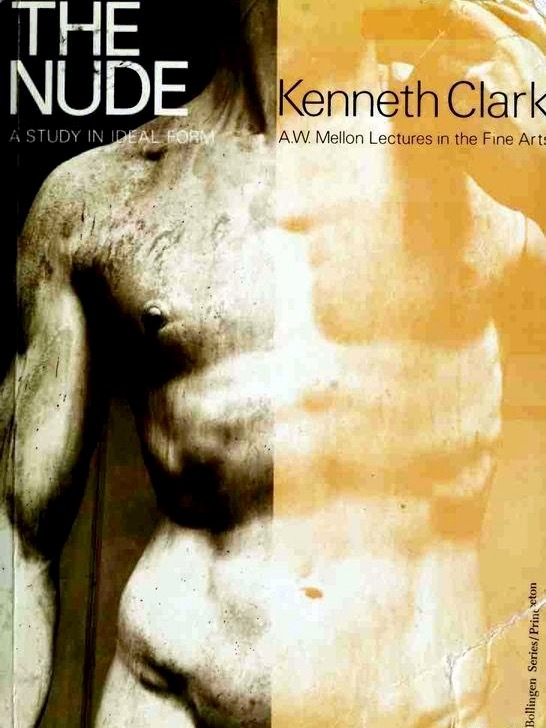
From the art of the Greeks to that of Renoir and Moore, this work surveys the ever-changing fashions in what has constituted the ideal nude as a basis of humanist form.In this classic book, Kenneth Clark, one of the most eminent art historians of the twentieth century, examines the ever-changing fashion in what constitutes the ideal nude as a basis of humanist form, from the art of the ancient Greeks to that of Renoir, Matisse, and Henry Moore. The Nude reveals the sensitivity of aesthetic theory to fashion, what distinguishes the naked from the nude, and just why the nude has played such an important role in art history. As Clark writes, “The nude gains its enduring value from the fact that it reconciles several contrary states. It takes the most sensual and immediately interesting object, the human body, and puts it out of reach of time and desire; it takes the most purely rational concept of which man is capable, mathematical order, and makes it a delight to the senses; and it takes the vague fears of the unknown and sweetens them by showing that the gods are like men and may be worshipped for their life-giving beauty rather than their death-dealing powers.”

A personally compelling introduction to Leonardo's genius, a classic monograph of Leonardo's art and his develpoment.

Many of the earliest books, particularly those dating back to the 1900s and before, are now extremely scarce and increasingly expensive. We are republishing these classic works in affordable, high quality, modern editions, using the original text and artwork.

With his extraordinary knowledge, clarity and style Kenneth Clark discusses thirteen important artists representing one of the greatest periods in the history of art - the second half of the eighteenth century to the middle of the nineteenth century.During the second half of the eighteenth century, when the spirit of revolution was rising through Europe, a division appeared in all the arts, deeper and more radical than any that had preceded it. Rivalry arose between two schools of painting, the Romantic and the Classic. The doctrine of Classic art aspired to the ideal found in Greco-Roman antiquities; subjects were drawn from episodes in antique history or poetry that pointed a moral - acts of self-sacrifice or patriotism. Romantic art appealed to the emotions, in particular the fear and exhilaration aroused by storm, bloodshed and ferocity, so prevalent at the time. The emotional effect of a picture was heightened by color, violent light and shade and exaggerated movement, made shockingly natural - far removed from the tranquility and sculptural forms of classicism. In practice, however, the two schools overlapped. Both attached importance to subject matter and looked to the past for it. "Every great classical artist was a romantic at heart and vice versa; the distinction between them is more convenient than real," writes Kenneth Clark.To trace this "rebellion" Kenneth Clark brings into focus the artistic creativity of thirteen artists: David, Goya, Piranesi, Fuseli, Blake, Ingres, Gericault, Delacroix, Turner, Constable, Millet, Degas and Rodin - all but one successful and influential, all part of the European movement.

Geïllustreerd / Illustrated / Illustré / Illustriert, Stofwikkel beschadigd / Dust jacket damaged / / General art / Engels / English / Anglais / Englisch / hard cover / dust jacket / 19 x 25 cm / 199 .pp /

Book by Kenneth Clark

Discusses the salient features of Rembrandt's character and personality and the ways in which they are reflected in his paintings, etchings, and drawings

There is no better or more sophisticated introduction to the important shift in taste that took place first in England in the late 18th century and continued into the next century. Clark was an important art historian.

Rejecting the tenet of modern art asserting that masterpieces do not exist, Clark explores those qualities which combine with the indefinable touch of genius to produce a work of art that truly represents the human spirit

Originally published in 1938 when Kenneth Clark was director of the National Gallery, London, this book presents Clark's favorite details from paintings in the museum's collection. Newly updated and handsomely illustrated, this landmark book juxtaposes pairs of details rarely viewed together; such as cupids from Velázquez's Rokeby Venus and Correggio's The School of Love to illuminate fascinating analogies and contrasts between paintings and artists. Clark's erudite but accessible responses to these works are broad in scope and approach, and range from a few lines to an entire history of the still life. Featuring all new color reproductions, One Hundred Details serves as an introduction to art history and offers a unique and intimate look at these paintings through the discerning eye of a world-renowned art historian and director.

Book by Clark, Kenneth

Kenneth McKenzie Clark, Baron Clark OM CH KCB FBA (13 July 1903 – 21 May 1983) was a British author, museum director, broadcaster, and one of the best-known art historians and aestheticians of his generation, writing a series of books that appealed to a wide public while remaining a serious scholar. In 1969, he achieved international fame as the writer, producer and presenter of the BBC Television series, Civilisation, which pioneered television documentary series combining expert personalized narration with lavish photography on location. This is a continuation (volume 2) of his autobiography.

Animals and men: Their relationship as reflected in Western art from prehistory to the present day
by Kenneth M. Clark
Rating: 3.7 ⭐
Libro usado en buenas condiciones, por su antiguedad podria contener señales normales de uso

Published December 22nd 1981 by Random House Value Publishing. Limiting himself to the Western world, Lord Clark presents his selection of sculptures and paintings of feminine beauty through the ages.

A selection of essays by the noted art critic and cultural historian discusses various facets of art, literature, and aesthetics

Libro usado en buenas condiciones, por su antiguedad podria contener señales normales de uso

Discusses the paintings, drawings, and sculpture of Donatello, Uccello, Alberti, Mantegna, and Botticelli

The Drawings By Sandro Botticelli For Dante's Divine Comedy After The Originals In The Berlin Museums And The Vatican
by Kenneth M. Clark
Rating: 4.0 ⭐
Book contains drawings by Sandro Boticelli, illustrating Dante's classic poem Inferno


The Artist Grows Old The Rede Lecture 1970


ヒューマニズムの芸術
by Kenneth M. Clark

Geijutsu to bunmei
by Kenneth M. Clark
Geijutsu to bunmei [Tankobon Hardcover] [Oct 01, 2003] Kenneth McKenzie Clark...

Ruskin Today
by Kenneth M. Clark
1964. No Edition Remarks. 362 pages. Pictorial dust jacket over green cloth. Contains black and white photographic and illustrated plates. Slight cracking to hinges, with exposed netting, front board slightly loose. Pages and plates are lightly tanned throughout. Pencil inscription to rear pastedown. Boards have light shelf-wear with corner bumping. Slight crushing to spine ends. Light mottling overall. Unclipped jacket has moderate edgewear with chips, tears, and creasing. Water staining to spine. Light tanning to spine and edges. Wear marks overall.

Animals and Men Their Relationship as Reflected in Western art from Prehistory to the Present Day
by Kenneth M. Clark
Book is in very good condition, pages and spine are clean and intact. The dust jacket has a small tear. There are no markings throughout the book. Eligible for free shipping via Amazon Prime.

名画とは何か
by Kenneth M. Clark