
Marshall McLuhan
Herbert Marshall McLuhan was a Canadian philosopher whose work is among the cornerstones of the study of media theory. He studied at the University of Manitoba and the University of Cambridge. He began his teaching career as a professor of English at several universities in the United States and Canada before moving to the University of Toronto in 1946, where he remained for the rest of his life. He is known as the "father of media studies". McLuhan coined the expression "the medium is the message" in the first chapter in his Understanding Media: The Extensions of Man and the term global village. He predicted the World Wide Web almost 30 years before it was invented. He was a fixture in media discourse in the late 1960s, though his influence began to wane in the early 1970s. In the years following his death, he continued to be a controversial figure in academic circles. However, with the arrival of the Internet and the World Wide Web, interest was renewed in his work and perspectives.
30 Books Written

The Medium is the Massage is Marshall McLuhan's most condensed, and perhaps most effective, presentation of his ideas. Using a layout style that was later copied by Wired, McLuhan and coauthor/designer Quentin Fiore combine word and image to illustrate and enact the ideas that were first put forward in the dense and poorly organized Understanding Media. McLuhan's ideas about the nature of media, the increasing speed of communication, and the technological basis for our understanding of who we are come to life in this slender volume. Although originally printed in 1967, the art and style in The Medium is the Massage seem as fresh today as in the summer of love, and the ideas are even more resonant now that computer interfaces are becoming gateways to the global village.

Terms and phrases such as "the global village" and "the medium is the message" are now part of the lexicon, and McLuhan's theories continue to challenge our sensibilities and our assumptions about how and what we communicate.This reissue of Understanding Media marks the thirtieth anniversary (1964-1994) of Marshall McLuhan's classic expose on the state of the then emerging phenomenon of mass media. Terms and phrases such as "the global village" and "the medium is the message" are now part of the lexicon, and McLuhan's theories continue to challenge our sensibilities and our assumptions about how and what we communicate.There has been a notable resurgence of interest in McLuhan's work in the last few years, fueled by the recent and continuing conjunctions between the cable companies and the regional phone companies, the appearance of magazines such as WiRed, and the development of new media models and information ecologies, many of which were spawned from MIT's Media Lab. In effect, media now begs to be redefined. In a new introduction to this edition of Understanding Media, Harper's editor Lewis Lapham reevaluates McLuhan's work in the light of the technological as well as the political and social changes that have occurred in the last part of this century.

Since its first appearance in 1962, the impact of The Gutenberg Galaxy has been felt around the world. It gave us the concept of the global village; that phrase has now been translated, along with the rest of the book, into twelve languages, from Japanese to Serbo-Croat. It helped establish Marshall McLuhan as the original 'media guru.' More than 200,000 copies are in print. The reissue of this landmark book reflects the continuing importance of McLuhan's work for contemporary readers.

Initiallly published in 1968, this text is regarded as a revolutionary work for its depiction of a planet made ever smaller by new technologies. A mosaic of pointed insights and probes, this text predicts a world without centres or boundaries. It illustrates how the electronic information travelling around the globe at the speed of light has eroded the rules of the linnear, literate world. No longer can there be fixed positions or goals.

This is the devastating book which first established Marshall McLuhan's reputation as the foremost critic of modern mass communications.The Mechanical Bride is vintage McLuhan so aptly illustrated by dozens of examples from ads, comic strips, columnists, etc., that those who were stung by McLuhan were hard put for rebuttals. It shows how sex was first used to sell industrial hardware, how Orphan Annie still keeps the world on track, and how an Arabian Nights wonderland of mass entertainment and suggestion makes information irrelevant, and sends us to bed at night too dazed to question whether we're happy or not.We live in an age in which legions of highly educated professionals dedicate themselves to the task of getting inside the collective public mind with the object of manipulating, exploiting and controlling.

The Global Village: Transformations in World Life and Media in the 21st Century
by Marshall McLuhan
Rating: 4.1 ⭐
Extending the visionary early work of the late Marshall McLuhan, The Global Village , one of his last collaborative efforts, applies that vision to today's worldwide, integrated electronic network.When McLuhan's groundbreaking Understanding Media was published in 1964, the media as we know it today did not exist. But McLuhan's argument, that the technological extensions of human consciousness were racing ahead of our ability to understand their consequences, has never been more compelling. And if the medium is the message, as McLuhan maintained, then the message is becoming almost impossible to decipher.In The Global Village , McLuhan and co-author Bruce R. Powers propose a detailed conceptual framework in terms of which the technological advances of the past two decades may be understood. At the heart of their theory is the argument that today's users of technology are caught between two very different ways of perceiving the world. On the one hand there is what they refer to as Visual Space--the linear, quantitative mode of perception that is characteristic of the Western world; on the other hand there is Acoustic Space--the holistic, qualitative reasoning of the East. The medium of print, the authors argue, fosters and preserves the perception of Visual Space; but, like television, the technologies of the data base, the communications satellite, and the global media network are pushing their users towards the more dynamic, "many-centered" orientation of Acoustic Space.The authors warn, however, that this movement towards Acoustic Space may not go smoothly. Indeed, McLuhan and Powers argue that with the advent of the global village--the result of worldwide communications--these two worldviews "are slamming into each other at the speed of light," asserting that "the key to peace is to understand both these systems simultaneously."Employing McLuhan's concept of the Tetrad--a device for predicting the changes wrought by new technologies--the authors analyze this collision of viewpoints. Taking no sides, they seek to do today what McLuhan did so successfully twenty-five years ago--to look around the corner of the coming world, and to help us all be prepared for what we will find there.

Marshall McLuhan’s insights are fresher and more applicable today than when he first announced them to a startled world. A whole new generation is turning to his work to understand a global village made real by the information superhighway and the overwhelming challenge of electronic transformation. “Before anyone could perceive the electric form of the information revolution, McLuhan was publishing brilliant explanations of the perceptual changes being experienced by the users of mass media. He seemed futuristic to some and an enemy of print and literacy to others. He was, in reality, a deeply literate man of astonishing prescience. Tom Wolfe suggested aloud that McLuhan’s work was as important culturally as that of Darwin or Freud. Agreement and scoffing ensued. Increasingly Wolfe’s wonder seems justified.” From the Introduction Here in one volume, are McLuhan’s key ideas, drawn from his books, articles, correspondence, and published speeches. This book is the essential archive of his constantly surprising vision.

Marshall McLuhan has been described as Canada's most exciting and original thinker, a member of the small company of intellectual geniuses this country has produced. Works such as The Gutenberg Galaxy , The Mechanical Bride , From Cliche to Archetype , and Understanding Media have established his reputation throughout the world and have profoundly influenced our understanding of contemporary communication. In his later years McLuhan was working on a 'unified field' theory of human culture, an effort in which he collaborated with and was assisted by his son, Eric McLuhan. This book is the result of that collaboration.The McLuhans are retrieving another way of understanding our world, a way known to some ancient Greeks (but not Aristotle), to medieval thinkers, to Francis Bacon and Giambattista Vico, and to T.S. Eliot and James Joyce in this century. It is based on the use of words and the conseuqent power of the 'logos' to shape all the elements of culture - media - with which we surround ourselves.The authors explain how the invention of the alphabet led to the dominance of visual-space conceptualizations over those of acoustic space and its creative words (and word-plays). They consider the differences between the left- and right-hand sides of our brains, and use Gestalt theories of figure and ground to explore the underlying principles that define media.'Media,' the word so closely connected with Marshall McLuhan's thought, is here explored in its broadest meaning, encompassing all that has been created by artefacts, information, ideas - every example of human innovation, from computer program to a tea cup, from musical arrangement to the formula for a cold remedy, from an X-ray machine to the sentence you're reading right now. All these are media to whcih can be applied the laws the McLuhans have developed.The laws are based on a set of four questions - a tetrad - that can be applied to any artefact or What does it enhance or intensify?What does it render obsolete or displace?What does it retrieve that was previoulsy obsolesced?What does it produce or become when pressed to an extreme?Inherent in every human innovation is an answer to each of the questions of this tetrad; anything that does not contain answers to these four questions is not the product of human creation.The laws identified by the McLuhans consitute a new scientific basis for media studies, testable, and able to allow for prediction. It takes in all human activities and speech; it breaks down barriers and reconsiders them as mere intervals. In the McLuhan tradition, this New Science offers a while new understanding of human creation, and a vision that could reshape our future.
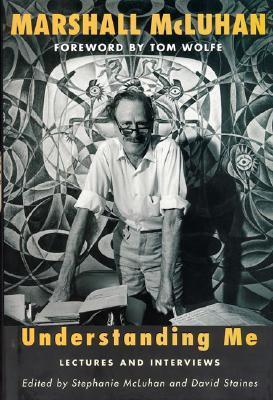
Previously unpublished lectures and interviews by the modern age's preeminent media seer—informal, accessible, provocative. In the last twenty years of his life, Marshall McLuhan published a series of books that established his reputation as a world-renowned communications theorist and the pre-eminent seer of the modern age. It was McLuhan who made the distinction between "hot" and "cool" media. And it was he who coined the phrases "the medium is the message" and "the global village" and popularized other memorable terms including "feedback" and "iconic." McLuhan was far more than a pithy phrasemaker, however. He foresaw the development of personal computers at a time when computers were huge, unwieldy machines available only to institutions. He anticipated the wide-ranging effects of the Internet. And he understood, better than any of his contemporaries, the transformations that would be wrought by digital technology—in particular, the globalization of communications and the instantaneous-simultaneous nature of the new, electric world. In many ways, we're still catching up to him—forty years after the publication of Understanding Media . In Understanding Me , Stephanie McLuhan and David Staines have brought together nineteen previously unpublished lectures and interviews either by or with Marshall McLuhan. They have in common the informality and accessibility of the spoken word. In every case, the text has been transcribed from the original audio, film, or videotape of McLuhan's actual appearances. This is not what McLuhan wrote but what he said—the spoken words of a surprisingly accessible public man. He comes across as outrageous, funny, perplexing, stimulating, and provocative. McLuhan will never seem quite the same again. The foreword by Tom Wolfe provides a twenty-first century perspective on McLuhan's life and work, and co-editor David Staines's insightful afterword offers a personal account of McLuhan as teacher and friend. Lectures and InterviewsElectronic Revolutionary Effects of New Media (1959) •Popular/Mass American Perspectives (1960) • Technology, the Media, and Culture • The Communications Revolution • Cybernetics and Human Culture (1964) • The Future of Man in the Electric Age (1965) • The Medium Is the Massage (1966) • Predicting Communication via the Internet (1966) • The Marfleet Lectures (1967) • Canada, the Borderline Case • Towards an Inclusive Consciousness • Fordham First Lecture (1967) • Open-Mind Surgery (1967) • TV News as a New Mythic Form (1970) • The Future of the Book (1972) • The End of the Work Ethic (1972) • Art as Survival in the Electric Age (1973) • Living at the Speed of Light (1974) • What TV Does Best (1976) • TV as a Debating Medium (1976) • Violence as a Quest for Identity (1977) • Man and Media (1979)

Book by McLuhan, Marshall

Until now, no book has explored the full expanse of Marshall McLuhan's thinking. Here we have assembled alongside his most prescient aphorisms excerpts from the full range of his astounding life's work. One revolutionary book distills the wisdom and wit of the man who explained to us the "the medium is the message" and that we are "now living in a global village", that "privacy invasion is now our most important knowledge industry" and that "obsolescence is the moment of superabundance". Cover to cover, Anthology is not only one hundred percent McLuhan's own words, these are McLuhan's finest words. McLuhan called these bold perceptions probes and today they gleam like gems embedded everywhere in his life's output - in his books, in more than 200 speeches, in his classes (especially the Monday Night Seminars), and most of all in the nearly 700 shorter writings that he published between 1945 and 1980. In recent years, his son Eric McLuhan and William Kuhns have combed through all these sources to compile and edit what has become Anthology - The Book of Probes. The collection is so fresh that most probes will be new to even the most avid readers of McLuhan, and opens a new portal to McLuhan's mind, one that promises to change the ways in which we recognize and interpret McLuhan in the future. Readers will marvel at how the consistency, the clarity of concept, and the abundant wealth of observations, some made twenty or thirty years apart, dovetail to form a whole. Art Director and Designer David Carson presents McLuhan's images with new insight, and has built a work of art that is reminiscent of those lasting works permanently commissioned and interpreted by new generations.

In 1969 Marshall McLuhan observed that "today we live invested with an electric information environment that is quite as imperceptible to us as water is to a fish." He was convinced that the new electronic media shape not only the information they convey but also our very consciousness and that in order to actually perceive this a counter environment is needed. To demonstrate his point McLuhan wrote Counterblast. More a manifesto than a book, Counterblast is a typographically explosive compilation of short essays and probes (complex ideas compressed into a few thought-provoking words), all of which focus on the effects of media on the human condition. It could be seen as a compilation of bold headlines and it is hauntingly prescient, as this superbly reproduced facsimile of the original edition will affirm. In true McLuhan style that title 'Counterblast' is a play on the word 'Blast', the name given to a magazine designed by Wyndham Lewis in 1914 and the first publication ever to be set in heavy headline type, albeit in the face of enormous resistance from the London printing establishment who considered it anti-literary.

Six years after the publication of his seminal work, Understanding Media, the Extensions of Man, Marshall McLuhan linked his insights into media to his love of literature and produced From Clichà  to Archetype. In the age of electronic retrieval, the entire phenomenal universe is at once junkyard and museum -- clichà  and archetype. Every culture now rides on the back of every other culture.In these pages, readers learn how to look at stale clichà Âs with fresh eyes, as artists do, and discover that clichà Âs provide the key to understanding Modernism, from the puns of James Joyce to Ionesco's Theater of the Absurd. McLuhan mines the greats of modern literature, such as Yeats, Eliot, and Pound, and points the way to richer understanding of their work. Discussion ranges over conventional topics of literary analysis such as genres, esthetics, rhetoric, paradox, mimesis, and parody, though never in conventional fashion, because McLuhan deliberately stakes his turf in a manner that draws technology and culture together. As a result, the key terms clichà  and archetype are not confined to language but are shown to have counterparts in the non-linguistic world. The present work reprises themes from à  Understanding Media, such as old media becoming the content of new media, and identifies for the first time the typical effect of a new technology retrieving an older form of technology. In this new and redesigned publication of McLuhan's neglected masterpiece, editorà  W. Terrence Gordon provides a richer reading with concise chapter introductions.

Examines our civilization as it manifests itself through th century's one great art form, advertising.

The Classical Trivium: The Place of Thomas Nashe in the Learning of His Time
by Marshall McLuhan
Rating: 4.6 ⭐
In this previously unpublished work, a young Marshall McLuhan, as cultural historian, illuminates the complexities of the classical trivium, provides the first ever close reading of the enigmatic Elizabethan writer Thomas Nashe, and implicitly challenges the reader to accept a new blueprint for literary education. Ideas that would ground McLuhan's media analysis of the 1960s and 70s are here in embryo, as he sets out in scrupulous detail the role of grammar (interpretation), dialectic, and rhetoric in classical learning. Under McLuhan's scholarly microscope, the internal dynamics of the trivium and its purpose are revealed. As is its indispensable role in giving full due to the rich prose of Thomas Nashe. In ranging over literature from Cicero to the sixteenth century, McLuhan discovers the source and significance of multiple traditions in Nashe's writings. Here, more than half a century after it was written, is a fresh, insightful, and richly coherent framework for studying Nashe and an unequivocal call for a program of education based on the ambitious and lofty ideal of reintegrating the classical trivium.

Poetry, Art Studies, Philosophy

The essay is for exploring; the book, for explaining. Such was McLuhan's philosophy about these two forms. The essay is the freer form and one better suited to exploration than the longer meditation, the book. Traditionally, when a writer published a new piece, the publisher would send a couple of copies of the magazine plus ten or a dozen copies of just the article with the mag's cover offprints to be given to friends, students, colleagues.This startling new series puts the reader in the place of colleague and co-researcher. Instead of giving the reader just another collection of articles and interviews, McLuhan Unbound gives you offprints of the original essays. You experience the feel of the ideas when they were fresh.The offprint is more portable than the book, and so lends itself to being carried around and read and discussed more easily than books. Here the reader can experience the full range of McLuhan's interests, the full scope and application of his techniques of discovery. See how the two McLuhans, the literary academic and the public media expert are really one.As a flint when struck produces many sparks some of which result in fire, so the essay form contains many sparks some of which resulted in books and others which ought to have, had the writer had time. Some of these articles were written before the subsequent book was envisioned: they are preliminary forays into new territory. Some were written after the book and encapsulate major themes; some set out additional discoveries or matters left out of the book; some present material discovered as a result of writing the book. The McLuhan Unbound offprints series is not the last word in presenting McLuhan's ideasand discoveries, but the first.

Media studies has been catching up with McLuhan over the last 50 years. These essays are drawn from themost productive quarter-century of his career (1952-1978), anddemonstrate his abiding interest in the materiality of mediation, from comic books to fashion, from technology to biology.Anchoring these essays are four meditations on the work of hisgreat predecessor, Harold adams innis, who first proposed thecentrality of mediation to every facet of our daily lives. McLuhan took this task literally; rejecting the specialist approachof academic study, he published in mainstream magazinessuch as Look and Harpers Bazaar on topics such as sexualityand the fashion industry, in each case bringing to these topics insights that remain startlinglyfresh. The essays offer a rare glimpse into a great mind as it works out the implications of theeffects of media not only on what we know but on how we are coming to understand our being.

Contents: The relation of environment to anti-environment / Marshall McLuhan --Causality in the electric world / Marshall McLuhan and Barrington Nevitt with responses by Joseph Owens and Frederick D. Willhelmsen --Formal causality in Chesterton / Marshall McLuhan --On formal cause / Eric McLuhan.

Of all our principal public and publicized thinkers, Marshall McLuhan is probably the most confused. The development of this confusion can be traced chronologically in "The Interior Landscape," a brilliant collection of literary essays dating from 1943. Its full flowering is displayed in the melange of liturgically repeated formulas which dominate "Counterblast."

Za razliku od Karla Marksa i tzv. "ekonomskih determinista“ koji tvrde da ekonomska organizacija društva određuje svaki važan društvenog života, za Maršala Mekluana (1911-1980), jednog od najuticajnijih teoretičara medija 20. veka, presudni uticaj na društvo i njegovu evoluciju imaju tehnološki pronalasci i to naročito oni koji se odnose na sredstva komunikacije. Izumevanja fonetskog pisma i štamparske prese, pojava elektronskih medija (od telegrafa, preko radija, televizije, filmova, telefona do kompjutera) preoblikovali su civilizaciju i ljudsku osećajnost, uticali na politiku, ekonomiju, na naše sposobnosti opažanja i psihološke odlike.U iscrpnom intevjuu koji je dao 1969, a koji donosimo po prvi put u prevodu na srpski, Mekluan iznosi, iznenađujuće jasno i sugestivno, najvažnije teze iz dve knjige koje su ga proslavile - Gutenbergove galaksije (1962) i Razumevanja medija (1964). Mekluanovi uvidi, često radikalni, provokativni i kontroverzni, čini se da su u eri interneta i rijaliti šoua, dobili novu snagu i aktuelnost.

Coiner of the famous phrase "the medium is the message" and author of two widely read, controversial volumes--The Guttenberg Galaxy and Understanding Media--Marshall McLuhan was one of the most talked about personalities of the 1960s. He appeared on the cover of Newsweek and The Saturday Review, was written about in Time, Life, The Nation, The New Yorker, and The National Review, was the subject of an hour-long documentary on NBC, and had an unforgettable walk-on role in Woody Allen's Annie Hall, playing himself. A seminal thinker, he introduced popular culture as a subject for serious thought, and started people thinking about how technology--especially electronic media--shapes the way we perceive the world. McLuhan corresponded with a vast number of people, from Hubert Humphrey and Jimmy Carter to popular advice columnist Ann Landers. Indeed, his correspondents amount to a Who's Who of western culture, both high and low, including Duke Ellington, Woody Allen, Jacques Maritain, Rollo May, Susan Sontag, Eugene Ionesco, Wyndham Lewis, Ezra Pound, and Bob Newhart. At times playful and at times profound, his letters offer an invaluable commentary on McLuhan's work and, in some instances, the most lucid and detailed explanation of his ideas available. A brilliant letter-writer and a genial man who made friends all over the world, Marshall McLuhan left behind a correspondence that brims with insight, good humor, and the love of language and word play. His letters offer an invaluable glimpse of the private life and inner thoughts of one of the great minds of the twentieth century.

Marshall McLuhan was the visionary theorist best known for coining the phrase “The medium is the message.” His work prefigures and underlies the themes of writers and artists as disparate and essential as Andy Warhol, Nam June Paik, Neil Postman, Seth Godin, Barbara Kruger, and Douglas Rushkoff, among countless others.Shortly before his death, together with his media scholar son Eric, McLuhan worked on a new literary/visual code–almost a cross between hieroglyphics and poetry–that he called “the tetrads.” This was the ultimate theoretical framework for analyzing any new medium, a koan-like poetics that transcends traditional means of discourse. Some of the tetrads were published, but only a few. Now Eric McLuhan has recovered all the “lost” tetrads that he and his father developed, and accompanies them here with accessible explanations of how they function.


Forward through the rearview mirror : reflections on and by Marshall McLuhan
by Marshall McLuhan
Rating: 4.1 ⭐
Communications thinker and prophet Marshall McLuhan gave us the phrases "the medium is the message" and "global village". Today, with the explosion of electronic technologies and on-line communication, his ideas are more relevant than ever. Forward Through the Rearview Mirror is an evocative and visually exciting exploration of McLuhan's life and work in the context of the information age. The book consists of short prose passages, aphorisms, interviews, letters, and dialogues by McLuhan -- many never before published -- interwoven with biographical text by his biographer Philip Marchand and commentary by such cultural critics as Louis Rossetto, Neil Postman, Camille Paglia, and Lewis Lapham.The book is organized into four Global Village and Identity, Medium is the Message, and Extensions of Man. In keeping with McLuhan's style of speaking and writing, the text consists of a series of brief entries, ranging in length from a single line to a page. The entries have been selected and positioned so that they can be read consecutively as a narrative or randomly as individual ideas. Throughout, the material by McLuhan appears in a different typeface and color from the material by others, to make the two clearly distinguishable. Part book, part magazine, part storyboard, this multidimensional look at the ideas and life of the patron saint of Wired magazine will appeal to anyone interested in technology, contemporary thought, and popular culture.

Herbert Marshall McLuhan (1911-1980) received his PhD in English literature from Cambridge University and taught in the United States and Canada. He is best known, however, as the founding father of media studies. McLuhan was Director of the Center for Culture and Technology at the University of Toronto. Among his ground-breaking works on the psychic and social dimensions of communication technology are The Gutenberg Galaxy (1962); Understanding the Extensions of Man (1964); and The Medium Is the An Inventory of Effects (1967).Michel Moos' premise is that Marshall McLuhan's importance derives from his achievements in rethinking the entire process of education and training itself, not with his popular fame as media guru, and he analyzes McLuhan's work from the feedback effect his vision continues to provide, rather than from the perspective of interpreting McLuhan's pronouncements on the electronic media. Moos contrasts McLuhan's thoughts with those of such thinkers as Roland Barthes, Fredric Jameson, Friedrich Kittler, Donna Haraway, and Deleuze and Guattari, and renders an updated account of the effect of the mass media on our society and ourselves.The concept "the medium is the message" is the hub around which Marshall McLuhan's explorations revolved. McLuhan's interests ranged from sixteenth-century literature to twentieth-century business practices. With wit and literary flair, he reported the media's influence on society and on the individual. He concluded that we could not escape being transformed by the forces that are hidden deeply within the electronic telecommunications revolution of the sixties. For McLuhan, the new mediums of film, television, and the emerging realm of the digital were the modern equivalent of Gutenberg's printing press.Essays by M. McLuhan. Edited and with a Commentary by M.A. Moos.

Fascinating explorations into the semiotics of communication using new media technologies and techniques.

In 1961, the name of Marshall McLuhan was unknown to everyone but his English students at the University of Toronto – and a coterie of academic admirers who followed his abstruse articles in small-circulation quarterlies. But then came two remarkable books – The Gutenberg Galaxy (1962) and Understanding Media (1964) – and the graying professor from Canada's western hinterlands soon found himself characterized by the San Francisco Chronicle as "the hottest academic property around."Norden, Eric. "Playboy Interview: Marshall McLuhan--A Candid Conversation with the High Priest of Popcult and Metaphysician of Media." Playboy, vol. 16, no. 3, 1969, pp. 53-74, 158.

Intervista a Playboy - Un dialogo diretto con il gran sacerdote della cultura pop e il metafisico dei media
by Marshall McLuhan
Rating: 3.7 ⭐
Trascrizione dell'intervista che nel 1969 il celebre sociologo Marshall McLuhan (conosciuto come il "guru dei media") rilascia all'altrettanto celebre rivista Playboy, nella quale ricopre ben 25 pagine. McLuhan ripercorre i tratti salienti delle sue teorie (da "Il medium è il messaggio/massaggio" alla teoria dei media caldi e media freddi) e analizza ciò che si aspetta accadrà nei decenni a venire a livello sociale, politico, tecnologico, religioso, etico e individuale.

Contents:1. Postures and impostures of managers past --2. Tribal community to magnetic city: irresponsible force by-passes immovable object --3. Households to world shopping centers: the real McCoy and geniune fakes --The etherealization of "Hardware" by "Software": from wired connections to resonant interfaces --5. The quantum leap from science to art --6. Old wars and new overkill --7. Tribal chiefs and conglomerate emperors --8. The crisis of identity --9. Everyman as dropout and drop-in.