
29 Books Written

Cultural Amnesia: Necessary Memories from History and the Arts
by Clive James
Rating: 4.3 ⭐
• 2 recommendations ❤️
"I can't remember when I've learned as much from something I've read―or laughed as much while doing it." ―Jacob Weisberg, SlateThis international bestseller is an encyclopedic A-Z masterpiece―the perfect introduction to the very core of Western humanism. Clive James rescues, or occasionally destroys, the careers of many of the greatest thinkers, humanists, musicians, artists, and philosophers of the twentieth century. Soaring to Montaigne-like heights, Cultural Amnesia is precisely the book to burnish these memories of a Western civilization that James fears is nearly lost.

A best-selling classic around the world, Clive James's hilarious memoir has long been unavailable in the United States.Before James Frey famously fabricated his memoir, Clive James wrote a refreshingly candid book that made no claims to be accurate, precise, or entirely truthful, only to entertain. In an exercise of literary exorcism, James set out to put his childhood in Australia behind him by rendering it as part novel, part memoir. Now, nearly thirty years after it first came out in England, Unreliable Memoirs is again available to American readers and sure to attract a whole new generation that has, through his essays and poetry, come to love James’s inimitable voice.

'When we got off the ship in Southampton in that allegedly mild January of 1962 I had nothing to declare at customs except goose-pimples under my white nylon drip-dry shirt.'In the first volume of "Unreliable Memoirs," we said farewell to our hero as he set sail from Sydney Harbour, bound for London, fame and fortune. Finding the first of these proved relatively simple; the second two less so. Undaunted, Clive moved into a bed and breakfast in a Swiss Cottage where he practised the Twist, anticipated poetical masterpieces and worried about his wardrobe.

In 2010, Clive James was diagnosed with terminal leukemia. Deciding that “if you don’t know the exact moment when the lights will go out, you might as well read until they do,” James moved his library to his house in Cambridge, where he would “live, read, and perhaps even write.” James is the award-winning author of dozens of works of literary criticism, poetry, and history, and this volume contains his reflections on what may well be his last reading list. A look at some of James’s old favorites as well as some of his recent discoveries, this book also offers a revealing look at the author himself, sharing his evocative musings on literature and family, and on living and dying. As thoughtful and erudite as the works of Alberto Manguel, and as moving and inspiring as Randy Pausch’s The Last Lecture and Will Schwalbe’s The End of Your Life Book Club, this valediction to James’s lifelong engagement with the written word is a captivating valentine from one of the great literary minds of our time.
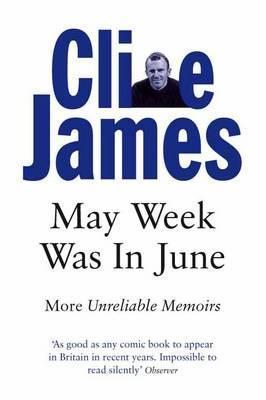
‘Arriving in Cambridge on my first day as an undergraduate, I could see nothing except a cold white October mist. At the age of twenty-four I was a complete failure, with nothing to show for my life except a few poems nobody wanted to publish in book form.’ Falling Toward England – the second volume of Clive James`s Unreliable Memoirs – was meant to be the last. Thankfully, that`s not the case. In Unrelaible Memoirs III, Clive details his time at Cambridge, including film reviewing, writing poetry, falling in love (often), and marrying (once). `Every line is propelled by a firecracker witticism` London Review of Books `He turns phrases, mixes together cleverness and clownishness, and achieves a fluency and a level of wit that make his pages truly shimmer... May Week Was In June is vintage James` Financial Times

In this new collection of "technically and emotionally heart-stopping poems" (Spectator)—including "Japanese Maple," which was published in The New Yorker to great acclaim—Clive James looks back over an extraordinarily rich life with a clear-eyed and unflinching honesty. There are regrets but no trace of self-pity in these verses, which—for all their grappling with death and illness—are primarily a celebration of what is treasurable and memorable in our time here. Again and again, James reminds us that he is not only a poet of effortless wit and lyric accomplishment but also an immensely wise one, who delights in using poetic form to bring a razor-sharp focus to his thought. Miraculously, these poems see James writing with his insight and energy not just undiminished but positively charged by his situation. The poems of Sentenced to Life represent a career high point for one of the greatest literary intellects of our age.

Essentially, this is Clive James' desert island a selection of his favourite verse and a personal commentary on each.The Fire of Joy was the final book Clive James completed before his death in 2019. It takes its title from the French expression Feu de Joie, which refers to a military celebration when all the riflemen of a regiment fire one shot after another in a wave of continuous it is a reminder that the regiment’s collective power relies on the individual, and vice versa.In this book, James has chosen a succession of English poems, exploding in sequence from Chaucer to the present day; they tell the story of someone writing something wonderful, and someone else coming along, reading it, and feeling impelled to write something even more wonderful. After a lifetime, these are the poems James found so good that he remembered them despite himself. In offering them to you, the main purpose of this book is to provide ammunition that will satisfy your urge to discover, learn and declaim verse.As well as his selection of poems, James offers a commentary on whether this is a biographical, historical or critical introduction to the poem, or a more personal anecdote about the role a particular poem has played in James’s life, these mini essays provide the joy of James’s enthusiasm and the benefit of his knowledge. Full of the flashing fires of poems you will not be able to forget, this book will ignite your passion and leave you with a contagious crackle rattling in your ears.

We left our hero sitting beside the River Cam one beautiful 1968 spring day, jotting down his thoughts in a journal. Newly married and about to leave the cloistered world of Cambridge academia for the racier, glossier life promised by Literary London, he was, so he informed his journal reasonably satisfied.From Fleet Street to Clive James on TV, from Russian department stores to Paris fashion shows, writing plays, poetry, lyrics, reviews, essays, articles, and novels - as well as Unreliable Memoirs volumes one, two, and three - Clive James was never not insanely busy. Throw in fatherhood, some killer bees, and a satire starring Anne Robinson as Mrs. Thatcher, and you still don't have the half of it.

The Blaze of The TV Years James, Clive


Clive James was one of our finest critics and best-loved cultural voices. He was also a prize-winning poet. With his customary wit, delightfully lucid prose style and wide-ranging knowledge, Poetry Notebook draws together his best writing on the art form that mattered to him most.'Marvellously entertaining' – Observer'He reminds us that poetry is, or can be, "the most exciting thing in the world"' – Martin AmisSince he was first enthralled by the mysterious power of poetry, Clive James was a dedicated student. For him, poetry was nothing less than the occupation of a lifetime; this book is a distillation of everything he learned.From Shakespeare to Larkin, Keats to Pound, James explains the difference between the innocuous stuff that often passes for poetry and a real the latter being a work of unity that insists on being heard entire and threatens never to leave the memory. A committed formalist and an astute commentator, he offers close and careful readings of individual poems and poets, and in some case second readings or re-readings late in life – just to be sure he wasn't wrong the first time. Whether discussing technical details of creativity or simply praising his five favourite collections of all time, he is never less than captivating.'I read Clive James's Poetry Notebook standing by my poetry wall to save getting up and down, and my wall turned out to be just railings' – Tom Stoppard

Always Unreliable: Unreliable Memoirs / Falling Towards England / May Week Was in June
by Clive James
Rating: 3.8 ⭐
Always Unreliable is a collection of Clive James sharp, brilliant and outrageously funny memoirs together in one volume. In Unreliable Memoirs, Falling Towards England, and May Week Was in June, we follow the life of the author, through his lifehood adventures.


Clive James has been close to death for several years, and he has written about the experience in a series of deeply moving poems. In Sentenced to Life, he was clear-sighted as he faced the end, honest about his regrets. In Injury Time, he wrote about living well in the time remaining, focusing our attention on the joys of family and art, and celebrating the immediate beauty of the world.When The River in the Sky opens, we find James in ill health but high spirits. Although his body traps him at home, his mind is free to roam, and this long poem is animated by his recollection of what life was and never will be again; as it resolves into a flowing stream of vivid images, his memories are emotionally supercharged ‘by the force of their own fading’. In this form, the poet can transmit the felt experience of his exceptional life to the reader.As ever with James, his enthusiasm is contagious; he shares his wide interests with enormous generosity, making brilliant and original connections, sparking passion in the reader so that you can explore the world’s treasures yourself. Because this is not just a reminiscence, it’s a wise and moving preparation for and acceptance of death. As James realizes that he is only one bright spot in a galaxy of stars, he passes the torch to the poets of the future, to his young granddaughter, and to you, his reader.A book that could not have been written by anyone else, this is Clive James at the height of his considerable powers: funny, wise, deeply felt, and always expressed with an unmatched power for clarity of expression and phrase-making that has been his been his hallmark.

Clive James is a life-long admirer of the work of Philip Larkin. Somewhere Becoming Rain gathers all of James’s writing on this towering literary figure of the twentieth century, together with extra material now published for the first time. The greatness of Larkin’s poetry continues to be obscured by the opprobrium attaching to his personal life and his private opinions. James writes about Larkin’s poems, his novels, his jazz and literary criticism; he also considers the two major biographies, Larkin’s letters and even his portrayal on stage in order to chart the extreme and, he argues, largely misguided equivocations about Larkin’s reputation in the years since his death. Through this joyous and perceptive book, Larkin’s genius is delineated and celebrated. James argues that Larkin’s poems, adored by discriminating readers for over half a century, could only have been the product of his reticent, diffident, flawed, and all-too-human personality. Erudite and entertaining in equal measure, Somewhere Becoming Rain is a love letter from one of the world’s best living writers to one of its most cherished poets.

Introduced by Julian Barnes, Reliable Essays is the definitive selection of Clive Jamess outstanding essays, chosen from thirty years of spellbinding prose. Including such classic pieces as his Postcard From Rome and his memorable observations on Margaret Thatcher, it also contains brilliantly funny examinations of characters like Barry Humphries, while elsewhere showcasing Jamess more reflective and analytical side. From Germaine Greer to Marilyn Monroe, from the nature of celebrity to German culpability for the Holocaust, Reliable Essays is an unmissable cultural index of the twentieth century.

The BBC Radio 4 series A Point of View has been on the air since 2007. Over the years, it’s had a variety of presenters – including the national treasure that is Clive James – talking for ten minutes about anything and everything that has captured their imagination, piqued their interest, raised their blood pressure or just downright incensed them that week. Clive James was one of the favourite presenters, and now, for the first time, his original pieces – sixty in total – and all-new postscripts are collected together in one volume. Read along with Clive James as he reflects on everything from wheelie bins to plastic surgery, Elizabeth Hurley to the Olympics, 24 to Damien Hirst, Harry Potter to giving up smoking, car parks to Chinese elections, Britain’s Got Talent to the expenses scandal – and plenty more besides. Essentially a chronicle of life in twenty-first-century Britain, A Point of View is informed and informative, thoughtful and thought-provoking – but above all, entertaining. In fact, in short, it’s a damn good read.

Brrm! Brrm! by Clive James is the hilarious story of Japanese high-flyer and would-be-diplomat Akira Suzuki who is sent to London for the first time to learn about a more cosmopolitan lifestyle but instead manages to make headlines for all the wrong reasons much to the embarrassment of the Japanese embassy.

From the man who made TV criticism an entertainment in its own right comes Visions Before Midnight , a selection from the column hundreds of thousands of devoted fans would turn to first thing on a Sunday morning.Clive James's comic brilliance is displayed here, from the 1972 Olympics ( But your paradigm no-no commentary can't be made up of fluffs alone. It needs flannel in lengthy widths, and it's here that Harry and Alan come through like a whole warehouse full of pyjamas ) to the 1976 Olympics (' Jenkins has a lot to do ' was a new way of saying that our man, of whom we had such high hopes, was not going to pull out the big one ). In between we have 'War and Peace' ( Tolstoy makes television history ), the Royal Wedding ( Dimbling suavely, Tom Fleming introduced the scene ), the Winter Olympics ( unintelligibuhl ), the Eurovision Song Contest ( The Hook of their song lasted a long time in the mind, like a kick in the knee. You could practically hear the Koreans singing it. 'Waterloo . . .' ), and much more.

For the first time in one volume all Clive James's treasured TV criticism, originally written for The Observer between the years 1972 and 1982. From the 1972 Olympics to the 1982 Eurovision Song Contest, here is a decade of the most trenchant, witty and thought-provoking criticism of any kind, with a foreword from Clive James himself, described as 'the funniest man in Britain'.Includes Visions Before Midnight; The Crystal Bucket; and Glued to the Box.

Corner of cover and spine creased, page edges tanned. Shipped from the U.K. All orders received before 3pm sent that weekday.

A collection of the Australian-born writer's TV criticism published in the London Observer during the period between 1979 and 1982. This is a paperback edition of a volume first published by Jonathan Cape in 1983. Clive James' earlier volumes of TV criticism include Visions Before Midnight (1977 & 1981) and The Crystal Bucket (1983). They have been published in a single volume with a new introduction and index as Clive James on Television (1991).

Sanjay is a Bombay street child who scales the dizzying heights of the "Silver Castle," the Indian film world, to stand at the parapet of success. Unfortunately for Sanjay, he is required to jump. Told with Clive James's trademark dry wit, The Silver Castle is a tragicomic morality tale for our time. Part Candide, part Oliver Twist, part Huckleberry Finn, The Silver Castle defies its reader to remain aloof from the suffering of the world's swarming poor while it inspires laughter over the human condition generally. It is a novel of wonder despite its unrelenting realism-- indeed, only wonderment is possible in the face of Sanjay's knack for survival and more than occasional good fortune. In his astonishing odyssey from the gutter to the soundstages and salons of Bollywood, Sanjay meets up with every variant of sinner and would-be savior, and along the way he trades on his "heart-breaking" physical beauty and canny lingual facility to grab at luck wherever it may be had--in the pocket of a tourist, as a guide for the Western news crews who regularly descend on Bombay to update their stock footage of grinding poverty, or in the bed of an older male protector or a past-her-prime cinema princess. Throughout, Sanjay's spirit is sustained by the movies, and by his first behind-the-scenes glimpse,as a young trespasser on the set of the Silver Castle, of the magical artifice of filmmaking.It is a true vision of an utterly false reality, the source of Sanjay's subsequent triumphs and of his ultimatemisfortune. But what happens to Sanjay in the end is not a singular event. As this deeply humane novelconvincingly argues, Sanjay's fate is the world's.Back Perhaps it would have been better for [Sanjay] if he had never seen the Silver Castle, never felt a guiding hand, never blinked at an unstained smile. Then he would not have missed these things. It is just possible, however, that the memory of his first visit to Long Ago sustained him. Imagination and energy are part of each other, and few of us, even though we live in circumstances far more favourable, would ever get to where we are going unless a picture of it, however inaccurate, was already in our minds. If we had to, we too would have to dodge the rain between rubbish dumps, on the long journey back to the taste of a cheese roll, the tang of sparkling water, trumpets that crackle and toe-nails stained with plums. We don't have to, but Sanjay did.

'James's confrontation with his approaching death is nothing short of inspirational' – Joan Bakewell, IndependentThe publication of Clive James's Sentenced to Life was a major literary event. Facing the end, James looked back over his life with a clear-eyed and unflinching honesty to produce his finest poems of extraordinary power that spoke to our most elemental emotions.Injury Time , following Sentenced to Life , finds James with more time on the clock than he had anticipated, and all the more determined to use it wisely – to capture the treasurable moment, and think about how best to live his remaining days while the sense of his own impending absence grows all the more powerfully acute. In a series of intimate poems – from childhood memories of his mother, to a vision of his granddaughter in graceful acrobatic flight – James declares ‘family’ to be our greatest blessing. He also writes beautifully of the Australia where he began his life, and where he hopes to 'reach the end'. Throughout Injury Time , James weaves poems which reflect on the consolation and wisdom to be found in the art, music and books which have become ever more precious to him in his last years.The poems in this moving, inspirational and unsentimental book are as accomplished as any he has ever written; indeed the unexpected gift of James's Injury Time shows him to be in the form of his life.

Literary critic, cultural commentator, TV personality, journalist, poet, political analyst, satirist and Formula One fan: Clive James is a man (and master) of many talents, and the essays collected here are testament to that fact. Whether discussing Bing Crosby, Bruno Schulz or Shakespeare, he manages to prioritize style and substance simultaneously, his tone never less than pitch-perfect, his argument always considered. With each phrase carefully crafted and each piece offering cause for thought, the resulting volumewhich takes the reader from London to Bali, theatre to library, from pre-election campaigning to sitting in front of the TV at home, watching The Sopranos and The West Wingis remarkable not only for its range and insight, but also its intimacy and honesty.
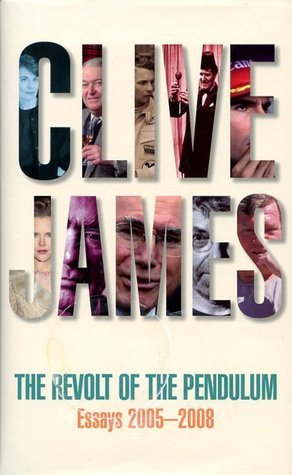
This collection of essays shows James at his most dazzling and versatile. From the rules of grammar to the fundamentals of religion, from the culture of fandom to the cult of the critic, it's all there: his customary wit, learning and understanding.

EVEN AS WE SPEAK is an illuminating and hilarious collection of essays from one of Picador’s most beloved authors. Reflecting his comprehensive knowledge, wide-ranging interests and eclectic style, Clive James explores the rise and fall of various celebrities, discusses Australian poetry, considers the state of television today, questions the culpability of the ordinary German in the holocaust, and contemplates – in a compellingly provocative and much-talked about piece – the death of Diana.

Clive James presents the “prequel” to his celebrated Cultural Amnesia ―forty-nine essays that form a cultural education in one brilliant volume. Six years after the much-heralded publication of Cultural Amnesia , Clive James presents his “prequel”―forty-nine essays that he has selected as the best of his half-century career. Originally appearing as As of This Writing , Cultural Cohesion examines the twisted cultural terrain of the twentieth century in one of the most accessible and cohesive volumes available. Divided into four sections―“Poetry,” “Fiction and Literature,” “Culture and Criticism,” and “Visual Images”―James comments on poets like W. H. Auden and Phillip Larkin, novelists like D. H. Lawrence and Raymond Chandler (not to mention Judith Krantz!), and filmmakers like Fellini and Bogdanovich. Throughout, James delights his readers with his manic energy and critical aplomb. This volume, featuring a new introduction, is a one-volume cultural education that few recent books can rival.

James, Clive. The Remake. London, Jonathan Cape, 1987. 22 cm x 32 cm. 223 pages. Original Hardcover with original dustjacket in protective collector's mylar. Excellent condition with only very minor signs of external wear. Joel Court has problems. He's lost his wife, his mistress, quite possibly his career as an astronomical wizard, and has ended up living with Chance Jenolan, to whom success is a way of life, and whose Barbican fortress is protected by a maze that would shame the Minotaur. To make matters worse, there is the Mole. Her heavenly body outshines all the celestial manifestations Joel has ever seen. Pretty soon, he will not be able to bear having her out of his sights . . . 'The Remake is a consideration of the artistic and the media-star lifestyle, full of brilliant observation.' London Evening Standard Magazine 'As sharp as a tack and as clever as eleven wagonloads of monkeys.' Guardian 'The reader is kept busy catching the glancing reflections, fitting together bits of puzzle and enjoying jokes. There is much that cries out to be quoted. Clive James's latest book is funny, serious, challenging, annoying, iconoclastic, elitist, erudite and erotic.' Adelaide Advertiser 'The Remake truly floored me. Very few books have forced me to compare form and content as powerfully as this novel and I use the word novel with caution. Dialogue, description, plot and situation, Clive James has mastered them all. Eloquent and erudite, he uses words with such ease, grace and effectiveness that levels of language and meaning are grasped in gestalt; a phrase can be a word.' Jerusalem Post (Amazon)