
Stewart Brand
Stewart Brand was a pioneer in the environmental movement in the 60s – his Whole Earth Catalog became the Bible for sustainable living, selling more than 10 million copies worldwide. Brand is President of The Long Now Foundation and chairs the foundation's Seminars About Long-term Thinking.
24 Books Written

Whole Earth Discipline: Why Dense Cities, Nuclear Power, Transgenic Crops, Restored Wildlands, and Geoengineering Are Necessary
by Stewart Brand
Rating: 4.2 ⭐
• 10 recommendations ❤️
“Incredible book . . . Best I’ve read this year.” —Jack Dorsey, via TwitterThis eye-opening book by the legendary author of the National Book Award-winning Whole Earth Catalog persuasively details a new approach to our stewardship of the planet. Lifelong ecologist and futurist Stewart Brand relies on scientific rigor to shatter myths concerning nuclear energy, urbanization, genetic engineering, and other controversial subjects, showing exactly where the sources of our dilemmas lie and offering a bold, inventive set of policies and design- based solutions for shaping a more sustainable society. Thought- provoking and passionately argued, this is a pioneering book on one of the hottest issues facing humanity today.

Clock of the Long Now: Time and Responsibility: The Ideas Behind the World's Slowest Computer
by Stewart Brand
Rating: 4.1 ⭐
• 2 recommendations ❤️
Using the designing and building of the Clock of the Long Now as a framework, this is a book about the practical use of long time how to get it, how to use it, how to keep it in and out of sight. Here are the central questions it How do we make long-term thinking automatic and common instead of difficult and rare? Discipline in thought allows freedom. One needs the space and reliability to predict continuity to have the confidence not to be afraid of revolutions Taking the time to think of the future is more essential now than ever, as culture accelerates beyond its ability to be measured Probable things are vastly outnumbered by countless near-impossible eventualities. Reality is statistically forced to be extraordinary; fiction is not allowed this freedom This is a potent book that combines the chronicling of fantastic technology with equally visionary philosophical inquiry.
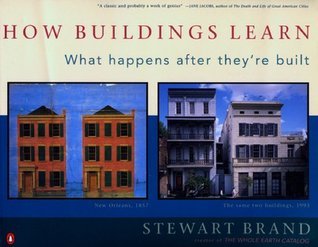
How Buildings Learn: What Happens After They're Built
by Stewart Brand
Rating: 4.3 ⭐
• 2 recommendations ❤️
Buildings have often been studied whole in space, but never before have they been studied whole in time. How Buildings Learn is a masterful new synthesis that proposes that buildings adapt best when constantly refined and reshaped by their occupants, and that architects can mature from being artists of space to becoming artists of time. From the connected farmhouses of New England to I.M. Pei's Media Lab, from "satisficing" to "form follows funding," from the evolution of bungalows to the invention of Santa Fe Style, from Low Road military surplus buildings to a High Road English classic like Chatsworth—this is a far-ranging survey of unexplored essential territory.More than any other human artifacts, buildings improve with time—if they're allowed to. How Buildings Learn shows how to work with time rather than against it.

Provides a look at the future as it is envisioned by the Media Lab at MIT, where scientists are retooling mass media to the desires and whims of the individual

In 1968, nine competitors set out in a race that had never before been attempted: to sail around the world, alone, without stopping.The route took them through the most dangerous waters on Earth. Seeking help was forbidden, and psychologists speculated that the 10 months alone at sea could drive the sailors mad. The winner was promised money and attention, but everyone knew that the real prize was to become a legend. What no one predicted was how. Three of the racers did indeed become legendary: the one who won, the one who didn’t bother to win, and the one who cheated. In this Audible Original, Stewart Brand (the Whole Earth Catalog, How Buildings Learn, The Clock of the Long Now) tells these men’s story, and lays out a new understanding of how and why each of them met their fate. His claim is that the core of the race came down to how each sailor approached the question of maintenance. And he explains how shifting our own understanding of maintenance may help us address the problems we face, from daily chores to issues that threaten our very existence.

Condensed ideas about long-term thinking summarized by Stewart Brand(with Kevin Kelly, Alexander Rose and Paul Saffo) and a forward by Brian Eno. These are summaries of talks by Jared Diamond, Craig Venter, Bruce Sterling, Jill Tarter, Martin Rees, Clay Shirky, Niall Ferguson, Jimmy Wales, Mary Catherine Bateson, Paul Hawken, Vernor Vinge, Ray Kurzweil, Sam Harris, Will Wright, Orville Schell, Nassim Taleb, Michael Pollan, Wade Davis, Lera Boroditsky, David Eagleman, Richard Rhodes, Paul Romer, Matt Ridley and more...

The Language Instinct: How the Mind Creates Language (P.S.) (Harper Perennial Modern Classics) by Steven Pinker, Harper Perennial Modern Classics
by Stewart Brand
Rating: 4.0 ⭐
In this classic, the world's expert on language and mind lucidly explains everything you always wanted to know about language: how it works, how children learn it, how it changes, how the brain computes it, and how it evolved. With deft use of examples of humor and wordplay, Steven Pinker weaves ...Download Link : readmeaway.com/download?i=0061336467 0061336467 The Language Instinct: How the Mind Creates Language (P.S.) (Harper Perennial Modern Classics) PDF by Steven PinkerRead The Language Instinct: How the Mind Creates Language (P.S.) (Harper Perennial Modern Classics) PDF from Harper Perennial Modern Classics,Steven PinkerDownload Steven Pinker's PDF E-book The Language Instinct: How the Mind Creates Language (P.S.) (Harper Perennial Modern Classics)

Whole earth software catalog
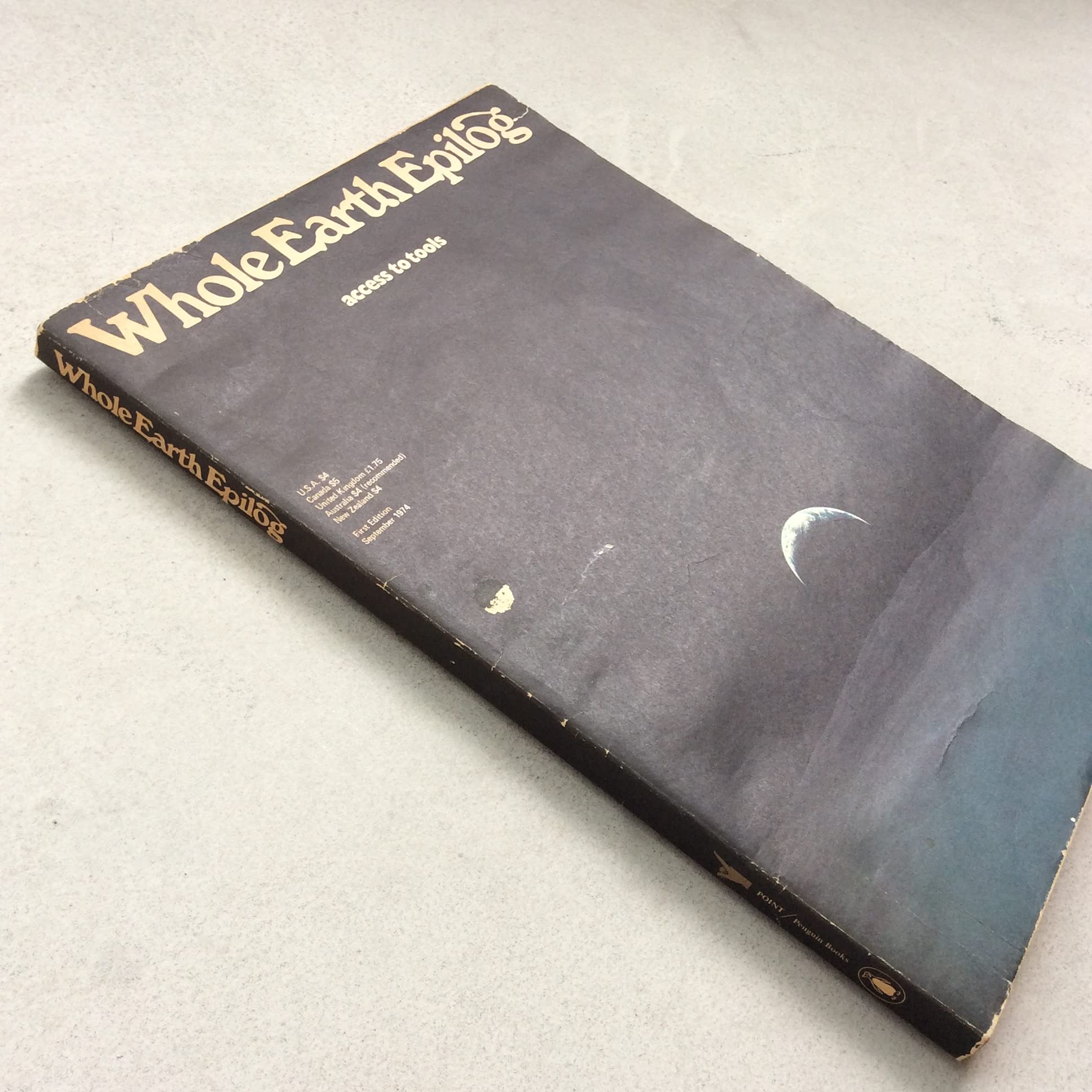
FUNCTION. The Whole Earth Epilog functions as an evaluation and access device. With it, the user should know better what is worth getting and where and how to do the getting. An item is listed in the EPILOG if it is 1) Useful as a tool, 2) Relevant to an independent education, 3) High quality or low cost, 4) Easily available by mail. PURPOSE. We are as gods, and may as well get used to it. This might include losing the pride that went before the fall we are in the process of taking. Rolling with such a fall is our present lesson - learning whatever resilience, ingenuity, basic skills, and enthused detachment that survival requires. And learning perhaps to reverence some Gods who are not as us.
Assesses the best products in every area of computer science and offers practical, anecdotal descriptions of how programs actually work and what they can and cannot do

This title has been removed from sale by Penguin Group, USA.
The Media Lab : Inventing the Future at MIT
by Stewart Brand

CoEvolution Quarterly #42 summer 1984
by Stewart Brand
Summer 1984 issue of CoEvolution Quarterly magazine (No. 42). With cover story on Crime and Capitalism in China plus articles on pictograms, Indian warriors vs. the Sandinistas in Nicaragua, Ken Kesey on his son's funeral, fears of nuclear winter, and much more. 144 pages.

The block of The long Now
by Stewart Brand
Two Cybernetic Frontiers
by Stewart Brand

The Bumper Book of Sudoku: 2022 Edition
by Stewart Brand
The Bumper Book of 2022 Edition is the ultimate Sudoku puzzle book to hone your skills. With over 300 puzzles of each level of difficulty, you can work your way through the book from beginner to advanced.With solutions available in a mirror of the book online via a QR code! The Bumper Book of Sudoku offers hours of entertainment and keeps the brain ticking.

Das Ticken des langen Jetzt. Zeit und Verantwortung am Beginn des neuen Jahrtausends.
by Stewart Brand

Whole Earth Discipline: An Ecopragmatist Manifesto (Hardcover)
by Stewart Brand
The book tells us that we should rely on scientific and technological progress, urbanization, nuclear power, and genetic engineering to protect environment. Genetically modified agriculture is a new green technology which should be mostly developed in future agriculture. Nuclear power is the safest and a very clean green energy. Measuring from the angle of science, city is the habitation form which damages to environment least.

RELOGIO DO LONGO AGORA , O
by Stewart Brand

Discipline pour la planète terre
by Stewart Brand
Stewart Brand, éditeur, scientifique et pionnier de l’écologie dès la fin des années 1960, s’est rendu célèbre il y a 40 ans en publiant la bible de la pensée environnementaliste : le Whole Earth Catalogue (National Book Award 1972).Discipline pour la planète Terre : vers une écologie des solutions en prolonge aujourd’hui tous les thèmes, et en renouvelle totalement la perspective ― car, 40 ans après, rien n’est comparable, tant face aux problèmes auxquels nous sommes confrontés que dans les solutions qui s’offrent à nous.Pourquoi les villes denses, l’énergie nucléaire, les cultures transgéniques, la restauration des espaces naturels et la géo-ingéniérie sont nécessaires. Autant dire qu’une telle démarche, qui se définit volontiers comme « écopragmatique », va à l’encontre de toute approche trop idéologique des problèmes liés au climat, à la croissance démographique et à ce qu’on appelle aujourd’hui le développement soutenable.Une publication destinée à faire débat.

Updated Last Whole Earth Catalog
by Stewart Brand
A scarce hardcover edition-1974 printing. Very Good condition-just some minor scratches/blemishes on back cover. The interior pages are clean, white and unmarked.